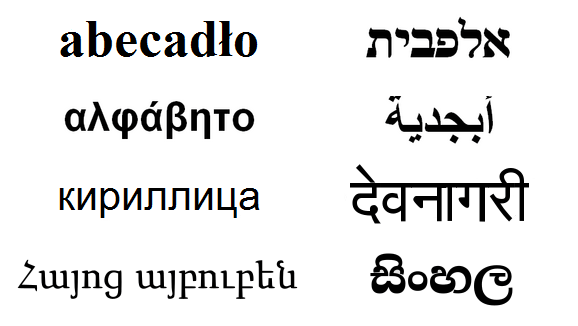

The question "which foreign language is hardest" has no universal answer. Difficulty is always relative to the learner's existing linguistic background. A Spanish speaker learning Portuguese will reach fluency in a small fraction of the time that same speaker would need for Mandarin Chinese, because Spanish and Portuguese share vocabulary, grammar structure, writing system, and most phonological features. For a native English speaker, the most widely cited ranking is the one produced by the Foreign Service Institute (FSI) of the U.S. Department of State, which has trained diplomats and foreign service officers for more than 70 years and has accumulated extensive data on how long it takes English-native adults to reach usable professional proficiency in different languages.
The FSI categorization is useful precisely because it is based on training outcomes, not theoretical linguistic distance. It measures what actually happens when motivated adult learners, under structured instruction, study a language full-time. It does not pretend that any language is universally easier or harder; it merely records what happens in one specific direction, from English to the target language. A Japanese speaker's experience learning Mandarin would be dramatically different, because Japanese already uses thousands of Chinese characters and shares many classical vocabulary items with Mandarin.
This reference compiles the FSI difficulty categories, explains what features actually produce difficulty for English speakers, examines specific challenges in five widely studied languages - Spanish, Russian, Mandarin Chinese, Japanese, and Arabic - and suggests practical ordering of language study for long-term learners. The aim is honesty. No language covered here is "easy." Spanish is the fastest to become functional in, not because Spanish is simple (Spanish grammar has more verb forms than English grammar), but because English shares enough vocabulary and structure with Spanish that an English speaker already knows a significant portion of Spanish before ever opening a textbook.
The FSI Difficulty Categories
The Foreign Service Institute classifies languages into four (sometimes five, with a "Category II" split out) difficulty categories for English native speakers. The classification is based on the approximate number of classroom hours required for the FSI's intensive training program to produce a speaker at ILR level 3 (Professional Working Proficiency) in speaking and ILR level 3 in reading.
Table 1: Complete FSI Language Difficulty Table
| Category | Approximate Classroom Hours | Weeks (FSI full-time) | Representative Languages |
|---|---|---|---|
| Category I | 600-750 hours | 24-30 weeks | Spanish, French, Italian, Portuguese, Romanian, Dutch, Afrikaans, Norwegian, Swedish, Danish |
| Category II | 900 hours | 36 weeks | German, Indonesian, Malay, Swahili |
| Category III | 1100 hours | 44 weeks | Russian, Polish, Czech, Greek, Hebrew, Hindi, Turkish, Finnish, Vietnamese, Thai, Persian |
| Category IV | 2200 hours | 88 weeks | Arabic, Mandarin, Cantonese, Japanese, Korean |
FSI sometimes separates Japanese as "Category V" or marks it with a star within Category IV, because Japanese adds complications (politeness system, multiple scripts) beyond even the other super-hard languages. Published FSI materials have used different configurations over the years; the table above is the common modern version.
"Classroom hours" here refers to instruction time only. FSI students also do roughly equivalent homework hours, so total study time is often doubled in practice. Hours outside this intensive setting are far less efficient. A casual learner spending an hour a week on a Category IV language should expect to need years, not the 88 weeks of the FSI timetable, to reach comparable fluency.
Why Spanish and French Are Category I
The Category I languages are mostly Romance languages, plus Germanic languages closely related to English (Dutch, Norwegian, Swedish, Danish, Afrikaans). All share the Latin alphabet, all have simple or at least familiar grammar, all have substantial vocabulary overlap with English through Norman French borrowings or common Germanic roots.
Spanish specifically offers the following advantages to an English speaker:
- Latin alphabet, nearly phonemic orthography: Reading Spanish is easy once five or six pronunciation rules are learned. Contrast English, where the same letter sequence can be pronounced multiple ways. See the Spanish alphabet and pronunciation guide.
- Enormous shared vocabulary: Estimates vary, but roughly 30-40% of English words have a Spanish cognate, largely through shared Latin roots. "Information," "nation," "professor," "university" are all nearly identical.
- Similar basic word order: Subject-Verb-Object in both, though Spanish is more flexible.
- No cases, no grammatical gender markings on verbs: Spanish has only gender on nouns and adjectives and only the two genders (masculine, feminine) with learnable patterns.
Spanish is not trivial. The 14 indicative tenses, the full subjunctive mood, the preterite-imperfect aspectual contrast, and the ser-estar split are real challenges. See the Spanish grammar rules complete beginners guide, the Spanish past tense preterite vs imperfect guide, and the ser vs estar complete guide. But these challenges rest on top of a language that is already familiar in shape, alphabet, and vocabulary.
Why Russian Is Category III
Russian is Category III because it presents several simultaneous obstacles that, while none is individually insurmountable, compound to roughly double the time required compared to Spanish.
Cyrillic alphabet: 33 letters, many visually similar to Latin letters but with different sound values (B = V, P = R, H = N, X = Kh). Learnable in one to three weeks but creates an initial barrier to reading. See the Russian Cyrillic alphabet complete guide.
Six grammatical cases: Every noun, adjective, and pronoun inflects for nominative, accusative, genitive, dative, instrumental, and prepositional. Each case has three gender paradigms in the singular plus a plural paradigm. This is the single largest grammatical task for Russian learners and takes most of the first two years to internalize. See the Russian grammar cases complete guide.
Aspect system: Every verb exists as a perfective-imperfective pair. Choosing the right aspect is not a grammatical decision tree but a pragmatic judgment about how to portray an event. See the Russian verb aspects perfective/imperfective guide.
Phonology: Includes sounds English speakers find challenging (the back vowel ы, the fricative х, the distinction between щ and ш, palatalized consonants). Stress is lexical and unpredictable, and unstressed vowels reduce in ways that substantially change word shape. See the Russian pronunciation and stress guide.
Gender agreement: Nouns are masculine, feminine, or neuter, and every adjective, past-tense verb, and determiner must agree. See the Russian gender nouns and adjectives agreement guide.
Russian is not harder than Spanish because any single feature is exotic. It is harder because Russian demands that a learner track four or five grammatical variables simultaneously on every phrase.
Why Chinese, Japanese, Arabic, and Korean Are Category IV
The Category IV languages share one defining feature: they are genealogically unrelated to English, share almost no vocabulary, and use writing systems that require years of dedicated study. Each also has its own distinct challenges on top of these shared obstacles.
Mandarin Chinese requires learning:
- Thousands of characters: Approximately 3,000-3,500 for basic literacy, 5,000-8,000 for fluent adult reading. Each character must be associated with its meaning, its pronunciation (including tone), and usually its role in various compound words. See the Chinese characters and radicals guide.
- Tones: Mandarin has four lexical tones plus a neutral tone. Tone is not optional; "mā" (mother) and "mǎ" (horse) are different words. See the Chinese tones complete guide and the pinyin complete guide.
- Measure words: Every count noun requires a specific classifier between number and noun. 一个人 (one [classifier] person), 一本书 (one [classifier] book), using different classifiers. See the Chinese measure words complete guide.
Chinese offers some surprising simplifications: no verb conjugation, no gender, no plural marking on nouns, no articles. But these simplifications do not compensate for the writing system, tones, and vocabulary gap.
Japanese combines:
- Three scripts used simultaneously: Hiragana, katakana, and kanji. See the Japanese hiragana complete guide and the katakana complete guide.
- Kanji with multiple readings: A kanji can have several on'yomi (Sino-Japanese) and kun'yomi (native Japanese) readings; context determines which applies.
- Politeness levels: Three broad registers (plain, polite, honorific/humble) that thoroughly restructure the verb system and affect vocabulary. Using the wrong register is as noticeable as using the wrong language.
- Particles instead of word order for grammatical roles: The subject is marked with が, object with を, topic with は, location with に or で, and so on. See the Japanese grammar particles complete guide.
- Verb conjugation based on verb class: See the Japanese verb conjugation beginners guide.
- Counter words for objects: Like Chinese classifiers, but more numerous and with irregular sound changes. See the Japanese counting and counters guide.
Arabic combines:
- Right-to-left script with positional letter forms: Each letter has up to four forms (isolated, initial, medial, final). See the Arabic alphabet complete guide.
- Sounds absent from English: Pharyngeal consonants (ع ح), emphatic consonants (ص ض ط ظ), the uvular q (ق), and the guttural kh (خ). Vowel length is phonemic. See the Arabic pronunciation guide for English speakers.
- Root-and-pattern morphology: Most words are derived from three-consonant roots fitted into vocalic patterns. The root k-t-b generates كتب (he wrote), يكتب (he writes), كتاب (book), كاتب (writer), مكتبة (library), and dozens more.
- Three cases, dual number, verb paradigms of 13 forms: See the Arabic grammar rules complete beginners guide and the Arabic verb conjugation present/past tense guide.
- Diglossia: Modern Standard Arabic (MSA) is used in writing, news, and formal speech; local dialects (Egyptian, Levantine, Gulf, Maghrebi, Iraqi) are used in everyday conversation. A learner often effectively studies two related but distinct languages.
Korean combines its own writing system (Hangul, relatively quick to learn), Subject-Object-Verb word order, a politeness and honorific system even more elaborate than Japanese, and, like Chinese and Japanese, almost no vocabulary shared with English. Hangul itself is considered one of the most rational writing systems ever designed and is learnable in days; the grammar and vocabulary are what justify the Category IV placement.
What Specifically Makes a Language Hard
Absolute difficulty is a sum of many independent factors. The following list identifies the main factors and ranks each Category I-IV language on each.
Table 2: Specific Difficulty Factors for English Speakers
| Factor | Spanish | German | Russian | Mandarin | Japanese | Arabic |
|---|---|---|---|---|---|---|
| Writing system | Latin (same) | Latin (same) | Cyrillic | Thousands of characters | Three scripts | Arabic script, RTL |
| Shared vocabulary with English | High | Medium | Low | Very low | Very low | Very low |
| Grammatical cases | None | 4 | 6 | None | Particles | 3 |
| Grammatical gender | 2 | 3 | 3 | None | None | 2 |
| Verb conjugation complexity | High | Medium | Medium (plus aspect) | None | High (plus politeness) | Very high |
| Tones or pitch accent | None | None | None | 4 tones | Pitch accent | None |
| Phonology distance from English | Low | Medium | Medium-high | High (tones) | Medium | High (pharyngeals) |
| Word order differs from English | Slight | V2 in main, V-final in sub. | Flexible | SVO (topic prominence) | SOV | VSO and SVO both used |
Each row represents a dimension of difficulty. A language is hard not because any one dimension is extreme but because several are simultaneously unfamiliar. Spanish is easy for an English speaker primarily because only the verb conjugation dimension is notably harder than English, and everything else is similar. Russian is hard because four dimensions (cases, gender, aspect, phonology) are all substantially different from English. Arabic is hard because nearly every dimension is different.
Specific Difficulty Analysis by Language
Spanish
Time to conversational fluency: 6-12 months of serious part-time study. Hardest aspect: The subjunctive mood, used far more extensively in Spanish than in English. Preterite vs imperfect aspectual distinction. Easiest aspect: Orthography and reading. Spanish is nearly phonemic once basic rules are learned. Main mistake English speakers make: Overusing ser when estar is correct, or vice versa. Failing to trigger subjunctive after certain conjunctions.
Russian
Time to conversational fluency: 18-24 months of serious part-time study. Hardest aspect: The case system, especially when paired with gender and number agreement across long noun phrases. Easiest aspect: Orthography is nearly phonemic once stress is known; pronunciation is systematic. Main mistake English speakers make: Treating aspect as a tense choice rather than as a framing choice. Omitting case endings in speech.
Mandarin Chinese
Time to conversational fluency: 2-4 years for speaking, longer for reading. Hardest aspect: Learning 3,000+ characters to read a newspaper. Tones for most learners. Easiest aspect: Grammar. No conjugation, no gender, no cases, simple SVO order. Main mistake English speakers make: Neglecting tones or treating tones as optional stress. Attempting to read without committing to daily character practice.
Japanese
Time to conversational fluency: 2-4 years for basic communication, 5-10+ years to master the writing system. Hardest aspect: The full politeness and honorific system. Kanji with multiple readings. Easiest aspect: Phonology is relatively simple (few phonemes, no tones, only pitch accent). Main mistake English speakers make: Treating particles as translatable prepositions. Underestimating how much politeness register affects every sentence.
Arabic
Time to conversational fluency: 2-4 years for MSA, plus ongoing work on a dialect. Hardest aspect: Root-and-pattern morphology requires thinking in a new way. Pharyngeal and emphatic consonants. Easiest aspect: Once root-and-pattern is internalized, vocabulary becomes systematically predictable within a root family. Main mistake English speakers make: Learning MSA and expecting to use it in conversation. Underestimating how different regional dialects are from each other.
Recommended Learning Order
For a learner planning multiple languages over a lifetime, order matters. Start with a language where early wins build momentum, then move to harder languages once learning skills are mature.
Table 3: Suggested Sequence for English Native Speakers
| Order | Language | Rationale |
|---|---|---|
| 1 | Spanish or French | Category I, high motivation through fast results, shared vocabulary |
| 2 | A second Romance language (Italian, Portuguese) | Category I, low incremental cost after Spanish/French, builds pattern recognition |
| 3 | German or a Germanic language | Category II, introduces case system gently (4 cases vs. Russian's 6) |
| 4 | Russian or another Slavic language | Category III, now familiar with cases from German |
| 5 | Mandarin or Japanese | Category IV, benefits from the patience and study habits built up earlier |
| 6 | Arabic | Category IV, benefits from familiarity with RTL scripts and non-IE grammar |
This order is not rigid. A learner passionate about Arabic should start with Arabic. A learner who needs Mandarin for work should start with Mandarin. But for a learner with no external constraint, building from Category I to Category IV produces better outcomes than starting with the hardest language.
Common Hardest Aspect of Each Language
Table 4: The Single Hardest Feature of Each Compared Language
| Language | Hardest Single Feature | Why |
|---|---|---|
| Spanish | Subjunctive mood | Used in many contexts where English uses the indicative, with subtle triggers |
| Russian | Case system | Six cases times three genders times singular/plural = complex paradigm per noun |
| Mandarin | Character memorization | 3,000+ items, each with a form, a meaning, and a tonal pronunciation |
| Japanese | Politeness system | Every verb has multiple levels that completely restructure the sentence |
| Arabic | Root-and-pattern morphology plus diglossia | Thinking via consonantal roots, plus MSA/dialect split |
Summary Comparison Table
Table 5: Learning Difficulty Summary
| Language | FSI Category | Classroom Hours | Primary Barrier | Time to Read a Newspaper |
|---|---|---|---|---|
| Spanish | I | 600-750 | Subjunctive and aspect | 6 months part-time |
| German | II | 900 | Case system and word order | 1 year part-time |
| Russian | III | 1100 | Case system and aspect | 1.5-2 years part-time |
| Mandarin | IV | 2200 | Characters and tones | 3-5 years part-time |
| Japanese | IV (V) | 2200+ | Kanji and politeness | 5-10 years part-time |
| Arabic | IV | 2200 | Script, phonology, diglossia | 3-5 years part-time |
FAQ
Q: Is any language "easy" for English speakers? A: No, but some are far easier than others. Esperanto and the Category I languages (especially Afrikaans and Norwegian among non-Romance options) can reach basic conversational level in a few months of dedicated study. "Easy" is always relative.
Q: What makes Japanese arguably harder than Chinese even though both are Category IV? A: Japanese uses three scripts and each kanji has multiple readings. Japanese politeness levels also require mastering what is effectively several parallel verb systems. Chinese has no inflection at all, which balances the character load.
Q: Is learning a Category I language before a Category IV actually helpful? A: Yes. Building a successful habit of independent language study with a Category I language gives a learner the confidence, self-knowledge, and technique to take on a Category IV. Jumping directly into Mandarin without study skills is a common reason motivated beginners quit.
Q: How much of language difficulty is the learner's first language? A: Nearly all of it. Japanese speakers learning Chinese have the reverse problem English speakers face: they share thousands of characters with Chinese but must adjust to Chinese tones and grammar. Difficulty rankings like FSI's are specifically for English native speakers.
Q: Do FSI categories apply to self-study? A: Not directly. FSI hours are intensive classroom hours. Self-study hours are typically far less efficient, especially for listening and speaking. Plan for two to three times the FSI hour estimate in self-study time.
Q: Can children learn any language equally easily? A: Children under approximately age 7-10 can acquire any language to native fluency given sufficient exposure. Adult learners face consistently greater difficulty with phonology (accent) and occasionally with grammar. Vocabulary acquisition is often more efficient in adults due to explicit study techniques.
Q: Is Korean easier than Japanese because Hangul is simple? A: Hangul is indeed one of the easiest writing systems to learn, but Korean grammar and politeness features are fully Category IV in difficulty. The script advantage saves a few weeks at the start, not years overall.
See Also
- Russian Cyrillic alphabet complete guide
- Russian grammar cases complete guide
- Russian verb aspects perfective imperfective guide
- Russian pronunciation and stress guide
- Russian gender nouns adjectives agreement guide
- Spanish alphabet and pronunciation guide
- Spanish grammar rules complete beginners guide
- Spanish past tense preterite vs imperfect guide
- Ser vs estar complete guide with examples
- Chinese characters and radicals guide for beginners
- Chinese tones complete guide with examples
- Chinese grammar rules complete beginners guide
- Japanese hiragana complete guide
- Japanese katakana complete guide
- Japanese grammar particles complete guide
- Japanese verb conjugation beginners guide
- Arabic alphabet complete guide for beginners
- Arabic pronunciation guide for English speakers
- Arabic grammar rules complete beginners guide
Frequently Asked Questions
Is any language 'easy' for English speakers?
No, but some are far easier than others. Esperanto and the FSI Category I languages (especially Afrikaans and Norwegian among non-Romance options) can reach basic conversational level in a few months of dedicated study. 'Easy' is always relative.
What makes Japanese arguably harder than Chinese even though both are Category IV?
Japanese uses three scripts and each kanji has multiple readings. Japanese politeness levels also require mastering what is effectively several parallel verb systems. Chinese has no inflection at all, which balances the character load.
Is learning a Category I language before a Category IV actually helpful?
Yes. Building a successful habit of independent language study with a Category I language gives a learner the confidence, self-knowledge, and technique to take on a Category IV.
How much of language difficulty is the learner's first language?
Nearly all of it. Japanese speakers learning Chinese have the reverse problem English speakers face: they share thousands of characters but must adjust to Chinese tones and grammar. Difficulty rankings like FSI's are specifically for English native speakers.
Do FSI categories apply to self-study?
Not directly. FSI hours are intensive classroom hours. Self-study hours are typically far less efficient. Plan for two to three times the FSI hour estimate in self-study time.
Can children learn any language equally easily?
Children under approximately age 7-10 can acquire any language to native fluency given sufficient exposure. Adult learners face consistently greater difficulty with phonology (accent). Vocabulary acquisition is often more efficient in adults due to explicit study techniques.
Is Korean easier than Japanese because Hangul is simple?
Hangul is indeed one of the easiest writing systems to learn, but Korean grammar and politeness features are fully Category IV in difficulty. The script advantage saves a few weeks at the start, not years overall.