
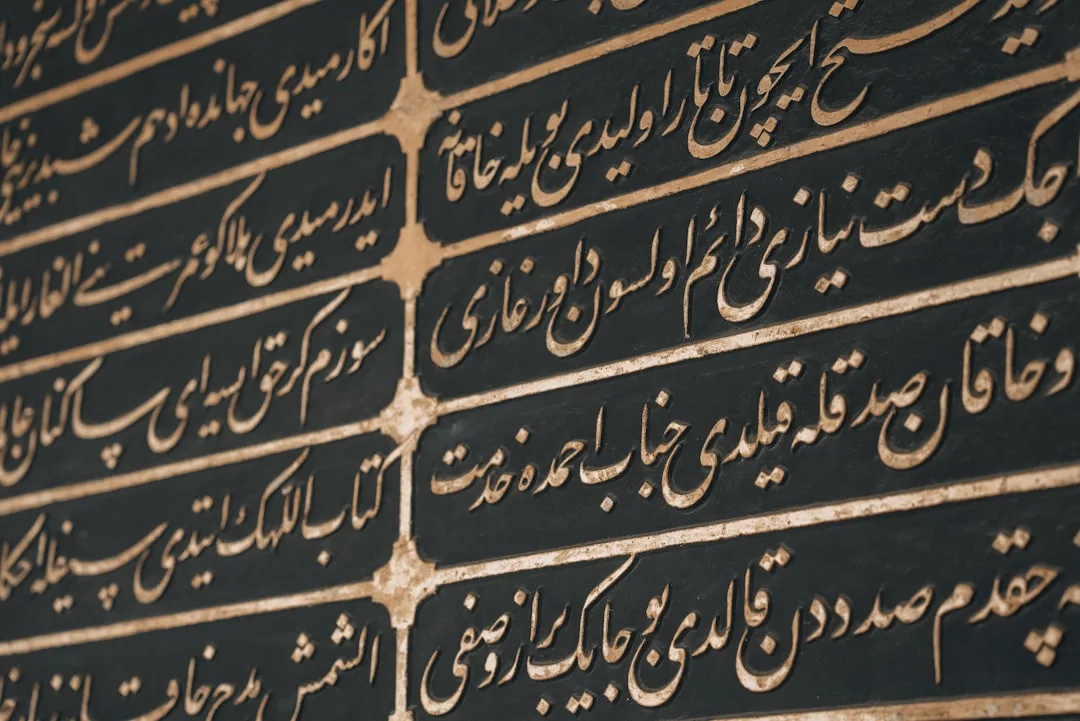
The Arabic alphabet is one of the most widely used writing systems in the world. It is the script for Modern Standard Arabic, the common literary and formal language shared across more than 20 countries, as well as dozens of regional Arabic dialects. Beyond Arabic itself, the same script - with minor modifications - is used for Persian, Urdu, Pashto, and several other languages, making familiarity with Arabic script a gateway to a broad range of languages and literatures.
For English-speaking learners, Arabic script presents several genuine challenges that differ from learning, say, a European language. The script is written and read from right to left. The letters connect to each other within words (like cursive writing, but mandatory).
Each letter has up to four different forms depending on its position in a word. And the script as standardized in most contexts omits short vowels, which must be inferred from knowledge of the word and context - like reading "y cn rd ths" without the short vowels.
Despite these challenges, the Arabic alphabet is entirely learnable, and many learners find they can recognize and produce all 28 letters within four to six weeks of consistent study. Unlike Arabic grammar, which is complex, the alphabet itself is the most mechanical part of the language - once you know the shapes and connections, you can read any Arabic text aloud even without understanding a single word.
This guide covers all 28 letters with their four positional forms, the sounds of each letter (including those without English equivalents), the direction of writing, sun and moon letters (which affect pronunciation of the definite article), the system of short vowel marks (harakat), and long vowels. By the end, you will be able to read Arabic text phonetically.
Writing Direction and Script Properties
Arabic is written from right to left. This applies to both individual letters within a word and words within a sentence. Pages in Arabic books open from what English readers would call the back. When Arabic and English text appear together, each follows its own direction.
Within a word, Arabic letters connect to each other in a continuous line, similar to cursive. However, unlike cursive which is a stylistic choice in English, connected script is mandatory in Arabic. You cannot write Arabic in "print" separate letters the way you can with the Latin alphabet. The connection is part of the script itself.
There are six letters that never connect to the letter that follows them (to their left): ا (alif), د (dal), ذ (dhal), ر (ra), ز (zayn), و (waw). These six letters always connect to the letter before them (on their right) but then break the connection, so the next letter starts a new joined segment within the same word.
The Complete Arabic Alphabet: All 28 Letters with Four Forms
Each letter appears in: isolated form (alone), initial form (beginning of a word), medial form (middle of a word), and final form (end of a word). The forms share the same basic shape but differ in how connecting strokes are added or removed.
| # | Letter Name | Isolated | Initial | Medial | Final | Transliteration | Sound Notes |
|---|---|---|---|---|---|---|---|
| 1 | Alif | ا | ا | ـا | ـا | a / aa | Long vowel a; also carries hamza |
| 2 | Ba | ب | بـ | ـبـ | ـب | b | Like English "b" |
| 3 | Ta | ت | تـ | ـتـ | ـت | t | Like English "t" |
| 4 | Tha | ث | ثـ | ـثـ | ـث | th | Like English "th" in "think" |
| 5 | Jim | ج | جـ | ـجـ | ـج | j | Like English "j" in most dialects |
| 6 | Ha | ح | حـ | ـحـ | ـح | H | Breathy h from deep in throat - no English equivalent |
| 7 | Kha | خ | خـ | ـخـ | ـخ | kh | Like German "ch" in "Bach" or Scottish "loch" |
| 8 | Dal | د | د | ـد | ـد | d | Like English "d" |
| 9 | Dhal | ذ | ذ | ـذ | ـذ | dh | Like English "th" in "this" |
| 10 | Ra | ر | ر | ـر | ـر | r | Rolled r, like Spanish "r" |
| 11 | Zayn | ز | ز | ـز | ـز | z | Like English "z" |
| 12 | Sin | س | سـ | ـسـ | ـس | s | Like English "s" |
| 13 | Shin | ش | شـ | ـشـ | ـش | sh | Like English "sh" |
| 14 | Sad | ص | صـ | ـصـ | ـص | S | Emphatic s - no English equivalent |
| 15 | Dad | ض | ضـ | ـضـ | ـض | D | Emphatic d - rarest sound in human language |
| 16 | Ta (emphatic) | ط | طـ | ـطـ | ـط | T | Emphatic t - no English equivalent |
| 17 | Dha (emphatic) | ظ | ظـ | ـظـ | ـظ | Dh | Emphatic dh - no English equivalent |
| 18 | Ayn | ع | عـ | ـعـ | ـع | ' | Voiced pharyngeal - no English equivalent |
| 19 | Ghayn | غ | غـ | ـغـ | ـغ | gh | Like French "r" or a soft gargle |
| 20 | Fa | ف | فـ | ـفـ | ـف | f | Like English "f" |
| 21 | Qaf | ق | قـ | ـقـ | ـق | q | Deep k from back of throat - no English equivalent |
| 22 | Kaf | ك | كـ | ـكـ | ـك | k | Like English "k" |
| 23 | Lam | ل | لـ | ـلـ | ـل | l | Like English "l" |
| 24 | Mim | م | مـ | ـمـ | ـم | m | Like English "m" |
| 25 | Nun | ن | نـ | ـنـ | ـن | n | Like English "n" |
| 26 | Ha (word) | ه | هـ | ـهـ | ـه | h | Like English "h" |
| 27 | Waw | و | و | ـو | ـو | w / uu | "w" or long vowel "uu" |
| 28 | Ya | ي | يـ | ـيـ | ـي | y / ii | "y" or long vowel "ii" |
Sounds That Require Special Attention
Arabic contains several sounds that have no equivalent in English. These are the sounds that take the most practice for native English speakers and are the primary phonetic challenge of Arabic.
The Pharyngeal Sounds
ع (ayn) is a voiced pharyngeal fricative. To produce it, tighten your throat as if gargling, but with voice. It is the "strangled" or "strained" vowel sound that defines Arabic phonology for English listeners. Every word containing ع sounds distinctly different from a word without it. There is no shortcut - this sound requires sustained practice with audio models.
ح (ha) is an unvoiced pharyngeal fricative. It is like ع but without voice. It sounds like a very intense, breathy exhalation from deep in the throat - much deeper than the simple English "h." Hold your hand in front of your mouth: the regular English h creates a gentle breath on your hand; ح creates a stronger, hotter, more focused stream of air.
The Emphatic Consonants
The four emphatic consonants - ص (sad), ض (dad), ط (ta), ظ (dha) - are pronounced with the back of the tongue raised toward the soft palate while the front of the tongue articulates the main consonant. This "dark" quality changes the resonance of the surrounding vowels, making them sound deeper and backer than non-emphatic equivalents.
The emphatic consonants are what give Arabic much of its characteristic sound to foreign ears. They also affect which vowels are possible in the same word - emphatic consonants require "heavy" vowels.
Uvular and Back-of-Throat Sounds
ق (qaf) is a k-sound made at the very back of the mouth, at the uvula - the dangling structure at the back of the throat. English "k" is made further forward on the soft palate. ق sounds deeper and more resonant.
غ (ghayn) is like the French "r" or the sound of gargling water. It is a voiced uvular fricative - produced at the uvula with the passage of air creating friction.
خ (kha) is the unvoiced counterpart of غ. It sounds like the "ch" in German "Bach" or Scottish "loch" - a raspy sound at the back of the mouth.
Learning tip: Do not try to produce these sounds correctly in the first week. Instead, listen intensively to native Arabic audio. Your ear must recognize the sound before your mouth can reproduce it. Use recordings of individual letters from professional Arabic pronunciation resources. Identify words with ayn and ha in authentic speech before attempting to produce them.
Short Vowels: Harakat
Arabic writing typically omits short vowels. Fully vowelized text (with harakat - diacritical marks placed above and below letters) appears in the Quran, in children's books, and in beginner learning materials. Standard adult Arabic text does not show short vowels.
The three short vowels:
| Name | Mark | Placement | Sound | Example |
|---|---|---|---|---|
| Fatha | - (small stroke above) | Above letter | a | kataba (he wrote) |
| Kasra | - (small stroke below) | Below letter | i | kitaab (book) |
| Damma | - (small curved mark above) | Above letter | u | kutub (books) |
Sukun
Sukun (a small circle above a letter) indicates that the letter carries no vowel - the consonant is pronounced without any following vowel sound.
Shadda
Shadda (a small w-shaped mark above a letter) indicates gemination - the consonant is doubled. Rather than writing the letter twice, Arabic writes it once with a shadda mark to indicate it should be held for double duration.
Example: مَدَّ (madda) - he extended. The doubled dal is written once with shadda.
Long Vowels
Long vowels in Arabic are written using three letters: alif (ا), waw (و), and ya (ي). These letters serve double duty as consonants and as long vowel markers.
| Long Vowel | Letter Used | Sound | Example |
|---|---|---|---|
| aa (long a) | ا alif | Like "a" in "father" held twice as long | كتاب kitaab - book |
| uu (long u) | و waw | Like "oo" in "moon" | نور nuur - light |
| ii (long i) | ي ya | Like "ee" in "see" | كبير kabiir - big |
The long/short vowel distinction is phonemically significant in Arabic - changing vowel length changes word meaning. كتب (kataba) means "he wrote"; كاتب (kaatib) means "writer/clerk." The long alif in the second word is a meaningful distinction.
Sun Letters and Moon Letters
When the definite article ال (al-) is added to a word, one of two things happens depending on the first letter of the word:
Moon letters (حروف قمرية - huruf qamariyya): The "l" in ال is pronounced clearly. The article sounds like "al-."
Sun letters (حروف شمسية - huruf shamsiyya): The "l" in ال assimilates to the first letter of the word, so the first letter is doubled instead. The article sounds like "a" + doubled first letter.
The name comes from the words for sun (شمس - shams) and moon (قمر - qamar). شمس starts with ش, a sun letter, so the article becomes "ash-shams." قمر starts with ق, a moon letter, so the article is "al-qamar."
Sun Letters (14 letters)
ت ث د ذ ر ز س ش ص ض ط ظ ل ن
When a word begins with any of these letters, the lam in the article assimilates:
- الشمس = ash-shams (the sun) - not "al-shams"
- النور = an-nuur (the light) - not "al-nuur"
- الرجل = ar-rajul (the man) - not "al-rajul"
Moon Letters (14 letters)
ا ب ج ح خ ع غ ف ق ك م ه و ي
When a word begins with any of these, the lam is pronounced clearly:
- القمر = al-qamar (the moon)
- الكتاب = al-kitaab (the book)
- البيت = al-bayt (the house)
Learning tip: The 14 sun letters are: t, th, d, dh, r, z, s, sh, S, D, T, Dh, l, n. Notice they are all coronal consonants - made with the tip of the tongue. The tongue is already in position for the "l" so it naturally assimilates. The moon letters are everything else. Knowing the physical phonetic principle (coronal consonants assimilate) makes the rule memorable.
Reading Practice: Common Arabic Words
| Arabic | Transliteration | English |
|---|---|---|
| بيت | bayt | house |
| كتاب | kitaab | book |
| ماء | maa' | water |
| خبز | khubz | bread |
| مدرسة | madrasa | school |
| طالب | taalib | student |
| معلم | mu'allim | teacher |
| يوم | yawm | day |
| ليل | layl | night |
| شمس | shams | sun |
| قمر | qamar | moon |
| نهر | nahr | river |
| بحر | bahr | sea |
| جبل | jabal | mountain |
| مدينة | madiina | city |
| قرية | qarya | village |
| باب | baab | door |
| نافذة | naafidha | window |
| طعام | ta'aam | food |
| ماء | maa' | water |
Common Mistakes with the Arabic Alphabet
Writing letters in isolation instead of connected. Arabic is always connected within a word. Writing separate print-style letters is not standard Arabic script and will be unrecognizable to native readers.
Confusing similar-looking letters. Several letters share the same basic shape and differ only in the number and placement of dots: ب/ت/ث (one dot below, two dots above, three dots above), ج/ح/خ (no dot, no dot with different pronunciation, one dot above), ر/ز (no dot, one dot above), س/ش (no dots, three dots above). Learning these in their families helps keep them distinct.
Pronouncing ع and ح as regular English sounds. The pharyngeal sounds are the defining feature of Arabic phonetics. Substituting a simple "a" sound for ع or a simple "h" for ح creates miscommunication, especially since these letters appear in extremely common words.
Ignoring the long/short vowel distinction. Treating all Arabic vowels as equal length creates both pronunciation errors and comprehension problems, since length distinguishes word meanings.
Quick Reference: Alphabet Families
Letters sharing the same basic shape (distinguished by dots):
- ب ت ث (ba, ta, tha) - one, two, three dots
- ج ح خ (jim, ha, kha) - curved base shape
- د ذ (dal, dhal) - angular shape, no dot vs. one dot
- ر ز (ra, zayn) - curved shape, no dot vs. one dot
- س ش (sin, shin) - three humps shape
- ص ض (sad, dad) - loop shape
- ط ظ (ta emphatic, dha emphatic) - loop with upright
- ع غ (ayn, ghayn) - no dot vs. one dot
- ف ق (fa, qaf) - one dot above vs. two dots above
Frequently Asked Questions
How long does it take to learn the Arabic alphabet? Most dedicated learners recognize all 28 letters and their forms within 4-6 weeks of daily practice. Reading fluency (recognizing letters quickly in connected text) takes longer, typically 2-3 months.
Is it possible to read Arabic without knowing short vowels? Literate Arabic speakers read unvowelized text fluently because they know the words. As a learner, you need vowelized (harakat) text initially. Use the Quran or graded readers with full vowelization for early reading practice.
Which form of a letter do I write when I write a word? Use initial form for the first letter, medial form for middle letters, and final form for the last letter. If a letter is the only letter or follows one of the six non-connecting letters, use isolated or final form as appropriate.
Do all Arabic-speaking countries use the same alphabet? Yes. The 28-letter Modern Standard Arabic alphabet is used across all Arabic-speaking countries. Some regional scripts add letters for sounds specific to local dialects (like a p-sound), but the core alphabet is universal.
Is Arabic written with any capital letters? No. Arabic has no capital letters. Proper nouns, names, and sentence beginnings are not capitalized.
Conclusion and Next Steps
The Arabic alphabet is the foundation of everything that follows in Arabic study. The investment of learning 28 letters in four forms, plus the short and long vowel systems, pays off for every subsequent stage of the language.
After securing the alphabet:
- Practice reading simple vowelized (harakat) texts - children's books and graded readers
- Learn the most common 100 Arabic words in written form
- Begin studying Arabic grammar: the definite article, basic sentence structures, and gender
- Practice recognizing common word patterns (wazan system) that organize Arabic vocabulary
- Work on the phonetically challenging sounds with dedicated listening and speaking practice
The phonetics - especially ayn, ha, the emphatic consonants, and qaf - will continue developing throughout your studies. Native-like pronunciation requires months of listening and practice, but functional pronunciation adequate for communication can be achieved much sooner.
Frequently Asked Questions
How long does it take to learn the Arabic alphabet?
Most dedicated learners recognize all 28 letters and their forms within 4-6 weeks of daily practice. Reading fluency in connected text takes longer, typically 2-3 months.
Is it possible to read Arabic without knowing short vowels?
Literate Arabic speakers read unvowelized text fluently because they know the words. As a learner, you need vowelized (harakat) text initially. Use graded readers with full vowelization for early reading practice.
Which form of a letter do I write when writing a word?
Use initial form for the first letter, medial form for middle letters, and final form for the last letter. If a letter follows one of the six non-connecting letters, use the appropriate isolated or initial form.
Do all Arabic-speaking countries use the same alphabet?
Yes. The 28-letter Modern Standard Arabic alphabet is used across all Arabic-speaking countries. The core alphabet is universal though some regional scripts add letters for dialect-specific sounds.
Is Arabic written with any capital letters?
No. Arabic has no capital letters. Proper nouns, names, and sentence beginnings are not capitalized in Arabic script.