
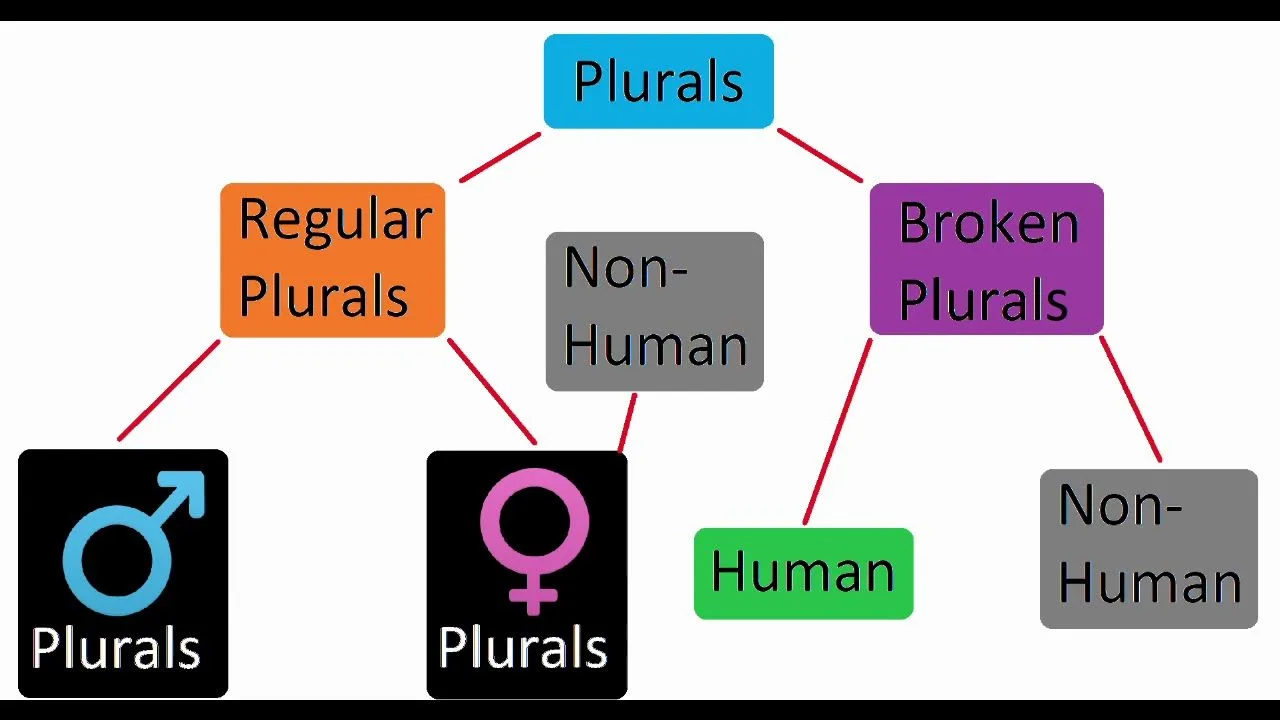
Arabic's broken plurals (جَمْع التَّكْسِير jamʿ at-taksīr, literally "plural of breaking") are one of the language's most distinctive morphological features. Where English simply adds -s, and many languages add a suffix, Arabic reshapes the singular noun internally by changing its vowel pattern while preserving its three root consonants.
The word كِتَاب (kitāb, book) becomes كُتُب (kutub, books). The word قَلْب (qalb, heart) becomes قُلُوب (qulūb, hearts). The shape of the plural must be learned with each noun, though patterns do exist, and frequent exposure teaches predictive instincts. Classical grammarians counted between 27 and 40 distinct broken-plural patterns; this reference presents the 30 most important.
Broken plurals coexist with "sound" plurals (جَمْع سَالِم jamʿ sālim): suffix-based plurals like -ūn/-īn for masculine humans and -āt for most feminines. Sound plurals are regular and predictable. Broken plurals are templatic: the root slots into a pattern. Mastering them requires memorizing nouns with their plurals from day one. For the broader morphological context, see the Arabic root system reference and the Arabic grammar rules guide.
The Basic Distinction: Sound vs Broken Plurals
Sound plurals (جَمْع سَالِم):
- Masculine: add ـُون (-ūn, nominative) or ـِين (-īn, accusative/genitive). Used for masculine humans, especially active participles. مُعَلِّم → مُعَلِّمُون (teachers).
- Feminine: add ـَات (-āt). Used for most feminine human and non-human nouns. مُعَلِّمَة → مُعَلِّمَات (female teachers); سَيَّارَة → سَيَّارَات (cars).
Broken plurals (جَمْع تَكْسِير):
- Internal vowel reshaping. No suffix. كِتَاب → كُتُب. بَيْت → بُيُوت.
Most primitive, concrete nouns take broken plurals. Derived and abstract nouns (participles, verbal nouns, relative adjectives, feminines ending in ة) often take sound plurals. This division is not strict, and dictionaries must be consulted.
The Thirty Essential Broken Plural Patterns
Each pattern is presented in the conventional فعل (F-ʿ-L) notation, where ف = first root consonant, ع = second, ل = third. Examples use real nouns.
Pattern 1: أَفْعُل (afʿul)
Used for singulars of shape فَعْل, typically denoting 3 to 10 in number.
- نَفْس nafs (self) → أَنْفُس anfus (few selves).
- نَهْر nahr (river) → أَنْهُر anhur.
- شَهْر shahr (month) → أَشْهُر ashhur.
- وَجْه wajh (face) → أَوْجُه awjuh.
Pattern 2: أَفْعَال (afʿāl)
Very common. Often used for plurals of 3 to 10 or for diverse small plurals.
- قَلَم qalam (pen) → أَقْلَام aqlām.
- وَلَد walad (boy) → أَوْلَاد awlād.
- بَاب bāb (door) → أَبْوَاب abwāb.
- شَغْل shughl (work) → أَشْغَال ashghāl.
Pattern 3: فِعَال (fiʿāl)
- جَبَل jabal (mountain) → جِبَال jibāl.
- جَمَل jamal (camel) → جِمَال jimāl.
- كَلْب kalb (dog) → كِلَاب kilāb.
- رَجُل rajul (man) → رِجَال rijāl.
Pattern 4: فُعُول (fuʿūl)
Very common for concrete nouns, especially monosyllabic roots.
- قَلْب qalb (heart) → قُلُوب qulūb.
- بَيْت bayt (house) → بُيُوت buyūt.
- مَلِك malik (king) → مُلُوك mulūk.
- نَجْم najm (star) → نُجُوم nujūm.
- شَيْخ shaykh (elder) → شُيُوخ shuyūkh.
Pattern 5: فُعَل (fuʿal)
- دَوْلَة dawla (state) → دُوَل duwal.
- غُرْفَة ghurfa (room) → غُرَف ghuraf.
- سُورَة sūra (Quran chapter) → سُوَر suwar.
- قِطْعَة qiṭʿa (piece) → قِطَع qiṭaʿ.
Pattern 6: فِعَل (fiʿal)
- كِسْرَة kisra (piece of bread) → كِسَر kisar.
- حِصَّة ḥiṣṣa (share) → حِصَص ḥiṣaṣ.
Pattern 7: فَعَل (faʿal)
- حَمْل ḥaml → حَمَل ḥamal (young camels).
Pattern 8: فُعُل (fuʿul)
- كِتَاب kitāb (book) → كُتُب kutub.
- مَدِينَة madīna (city) → مُدُن mudun.
- سَرِير sarīr (bed) → سُرُر surur.
- رَسُول rasūl (messenger) → رُسُل rusul.
- سَبِيل sabīl (path) → سُبُل subul.
Pattern 9: فَعَلَة (faʿala)
Used especially for human-male plurals.
- طَالِب ṭālib (student) → طَلَبَة ṭalaba.
- قَاضِي qāḍī (judge) → قُضَاة quḍā (with unusual ending).
Pattern 10: فُعَّال (fuʿʿāl)
For human-male singulars denoting doers or holders of quality.
- طَالِب ṭālib (student) → طُلَّاب ṭullāb.
- حَاكِم ḥākim (ruler) → حُكَّام ḥukkām.
- قَارِئ qāri' (reader) → قُرَّاء qurrā'.
- كَاتِب kātib (writer) → كُتَّاب kuttāb.
Pattern 11: فُعَلَاء (fuʿalā')
For human males denoting nobility, professions, or qualities.
- طَبِيب ṭabīb (doctor) → أَطِبَّاء aṭibbā' (also fits this pattern).
- عَالِم ʿālim (scholar) → عُلَمَاء ʿulamā'.
- شَاعِر shāʿir (poet) → شُعَرَاء shuʿarā'.
- أَمِير amīr (prince) → أُمَرَاء umarā'.
- خَلِيفَة khalīfa (caliph) → خُلَفَاء khulafā'.
- أَمِين amīn (trusted) → أُمَنَاء umanā'.
This pattern is diptote and does not take tanwīn.
Pattern 12: أَفْعِلَاء (afʿilā')
For singulars on فَعِيل denoting qualities, often of human males.
- صَدِيق ṣadīq (friend) → أَصْدِقَاء aṣdiqā'.
- نَبِيّ nabī (prophet) → أَنْبِيَاء anbiyā'.
- قَرِيب qarīb (relative) → أَقْرِبَاء aqribā'.
- غَنِيّ ghanī (rich) → أَغْنِيَاء aghniyā'.
Pattern 13: فَوَاعِل (fawāʿil)
A four-consonant pattern used for feminine singulars and some other shapes.
- جَارِيَة jāriya (maidservant) → جَوَارٍ jawārin.
- حَادِثَة ḥāditha (incident) → حَوَادِث ḥawādith.
- خَاتِم khātim (ring) → خَوَاتِم khawātim.
- قَائِمَة qā'ima (list) → قَوَائِم qawā'im.
Pattern 14: أَفَاعِل (afāʿil)
A four-consonant pattern, often for diminutives or nouns of place.
- أَصَابِع aṣābiʿ (fingers) , from إِصْبَع iṣbaʿ.
- أَقَارِب aqārib (relatives) , from أَقْرَب aqrab.
Pattern 15: مَفَاعِل (mafāʿil)
For nouns of place or instrument with م prefix.
- مَكْتَبَة maktaba (library) → مَكَاتِب makātib.
- مَدْرَسَة madrasa (school) → مَدَارِس madāris.
- مَلْعَب malʿab (playground) → مَلَاعِب malāʿib.
- مَسْجِد masjid (mosque) → مَسَاجِد masājid.
- مَنْدِيل mandīl (handkerchief) → مَنَادِيل manādīl.
Pattern 16: مَفَاعِيل (mafāʿīl)
For longer nouns on مِفْعَال.
- مَوْضُوع mawḍūʿ (topic) → مَوَاضِيع mawāḍīʿ.
- مِفْتَاح miftāḥ (key) → مَفَاتِيح mafātīḥ.
- مَشْرُوع mashrūʿ (project) → مَشَارِيع mashārīʿ.
- مِقْدَار miqdār (quantity) → مَقَادِير maqādīr.
Pattern 17: فَعَالِل (faʿālil)
Quadriliteral root plural.
- دَفْتَر daftar (notebook) → دَفَاتِر dafātir.
- فُنْدُق funduq (hotel) → فَنَادِق fanādiq.
- جَوْهَر jawhar (jewel) → جَوَاهِر jawāhir.
Pattern 18: فَعَالِيل (faʿālīl)
- تِلْمِيذ tilmīdh (pupil) → تَلَامِيذ talāmīdh.
- دِينَار dīnār (dinar) → دَنَانِير danānīr.
- قِنْدِيل qindīl (lamp) → قَنَادِيل qanādīl.
Pattern 19: فُعَلَاء (fuʿalā') applied to feminine nouns
Less common; see the masculine usage as Pattern 11.
Pattern 20: فِعَلَة (fiʿala)
- أَخ akh (brother) → إِخْوَة ikhwa.
Pattern 21: فِعْلَان (fiʿlān)
- صِبْيَان ṣibyān (boys) from صَبِيّ.
- جِيرَان jīrān (neighbors) from جَار.
- إِخْوَان ikhwān (brothers) from أَخ.
Pattern 22: فُعْلَان (fuʿlān)
- بُلْدَان buldān (countries) from بَلَد.
- شُبَّان shubbān (young men) from شَابّ.
Pattern 23: فَعَالَى (faʿālā)
- أَيَامَى ayāmā (widows) from أَيِّم.
Pattern 24: فِعْلَى (fiʿlā)
- مَرْضَى marḍā (sick people) from مَرِيض.
- قَتْلَى qatlā (slain) from قَتِيل.
Pattern 25: فَعَالَى (faʿālā)
- أَسْرَى asrā (captives) from أَسِير.
- جَرْحَى jarḥā (wounded) from جَرِيح.
Pattern 26: فُعَّل (fuʿʿal)
- رُكَّع rukkaʿ (bowers, those who kneel) from رَاكِع.
- صُوَّم ṣuwwam (fasters) from صَائِم.
Pattern 27: فِعْل (fiʿl)
- سِتْر sitr , limited use.
Pattern 28: فَعَالَة (faʿāla)
- رَسَائِل rasā'il (letters) from رِسَالَة.
Pattern 29: فُعُولَة (fuʿūla)
- بُعُولَة buʿūla (husbands) from بَعْل.
- خُؤُولَة khu'ūla (maternal uncles) from خَال.
Pattern 30: Irregular and suppletive plurals
Some plurals defy any of the above patterns.
- اِمْرَأَة imra'a (woman) → نِسَاء nisā' (women). Completely different root.
- أَب ab (father) → آبَاء ābā'.
- أُم umm (mother) → أُمَّهَات ummahāt.
- اِبْن ibn (son) → أَبْنَاء abnā' or بَنُون banūn.
- اِبْنَة ibna (daughter) → بَنَات banāt.
Diptote Plurals: Two Case Endings Only
Many broken-plural patterns are diptote (مَمْنُوع مِن الصَّرْف mamnūʿ min aṣ-ṣarf), meaning they lack tanwīn and use the -a ending for both accusative and genitive.
Diptote broken plural patterns include:
- أَفْعَال (afʿāl)
- فُعَلَاء (fuʿalā')
- أَفْعِلَاء (afʿilā')
- فَوَاعِل (fawāʿil)
- مَفَاعِل (mafāʿil)
- مَفَاعِيل (mafāʿīl)
- فَعَالِل (faʿālil)
Example: the plural of مَسْجِد (mosque) is مَسَاجِد. Its case behavior is:
- Nominative: مَسَاجِدُ (masājidu).
- Accusative/Genitive: مَسَاجِدَ (masājida).
It never takes tanwīn (no ٌ or ً or ٍ). If it becomes definite with ال or is the first term of an iḍāfa, it takes the regular -i genitive ending.
The great 9th-century grammarian Sībawayh classified diptotes as nouns whose morphology already signals "distinction" and therefore do not need tanwīn. His analysis, though over a millennium old, still structures how Arabic grammar is taught today.
Predicting Plurals: Tendencies (Not Rules)
Though broken plurals are not fully predictable, these tendencies help:
- Monosyllabic فَعْل nouns often take فُعُول: قَلْب → قُلُوب, بَيْت → بُيُوت, سَيْف → سُيُوف.
- Disyllabic فَعَل nouns often take أَفْعَال for small numbers: قَلَم → أَقْلَام, جَبَل → أَجْبَال (also جِبَال).
- فَعِيل active-adjective-like singulars for human males often take فُعَلَاء: كَرِيم → كُرَمَاء, شَرِيف → شُرَفَاء.
- Feminine nouns on فَعْلَة often take فُعَل: غُرْفَة → غُرَف, دَوْلَة → دُوَل.
- Nouns with م prefix (place/instrument) often take مَفَاعِل or مَفَاعِيل: مَدْرَسَة → مَدَارِس, مِفْتَاح → مَفَاتِيح.
Language teachers commonly observe that a learner who memorizes several hundred common Arabic nouns together with their plurals develops reliable instincts for guessing the plurals of new nouns. Pattern recognition emerges from exposure, not from rote rules.
The Non-Human Plural Rule
Critical for grammar: plurals of non-humans take feminine singular adjectives and verbs.
- البُيُوت جَمِيلَة (al-buyūt jamīla) The houses are beautiful. (jamīla = feminine singular adjective, not plural.)
- الكِلَاب نَبَحَتْ (al-kilāb nabaḥat) The dogs barked. (nabaḥat = feminine singular verb, not plural.)
- الأَقْلَام المُسْتَعْمَلَة (al-aqlām al-mustaʿmala) The used pens. (mustaʿmala = feminine singular adjective.)
Only plurals of humans take properly plural agreement:
- الرِّجَال طِوَال (ar-rijāl ṭiwāl) The men are tall. (ṭiwāl = masculine plural.)
- المُعَلِّمُون يَعْمَلُون (al-muʿallimūn yaʿmalūn) The teachers work. (yaʿmalūn = masculine plural.)
See the Arabic colors and adjectives reference for the full agreement rules.
Sound Plurals: The Simpler Alternative
Masculine sound plural (جَمْع مُذَكَّر سَالِم): -ūn nominative, -īn accusative/genitive. Used for masculine humans, especially active participles and nisba adjectives.
- مُهَنْدِس muhandis (engineer) → مُهَنْدِسُون (masc. plural nom.) / مُهَنْدِسِين (oblique).
- مِصْرِيّ miṣrī (Egyptian m.) → مِصْرِيُّون / مِصْرِيِّين.
- مُسْلِم muslim → مُسْلِمُون / مُسْلِمِين.
Feminine sound plural (جَمْع مُؤَنَّث سَالِم): -āt. Used for feminine humans, for many feminine inanimates, and for loanwords.
- مُهَنْدِسَة muhandisa → مُهَنْدِسَات.
- سَيَّارَة sayyāra → سَيَّارَات.
- تِلِفُون → تِلِفُونَات.
These sound plurals are regular and predictable. The challenge is knowing when a noun takes a sound plural versus a broken one; default to dictionary reference.
Common Mistakes English Speakers Make
Assuming plurals are predictable. كِتَاب → كُتُب but كُتَيِّب (booklet) → كُتَيِّبَات. Plurals must be memorized with each noun; even close morphology can take different plurals.
Using -āt plurals for everything. Many English speakers overgeneralize -āt as "Arabic plural" and attach it to nouns that require broken plurals. بَيْتَات for "houses" is wrong; the plural is بُيُوت.
Taking tanwīn on diptotes. Writing أَصْدِقَاءً with tanwīn is ungrammatical because أَصْدِقَاء is diptote. Use أَصْدِقَاءَ in accusative without tanwīn.
Giving non-human plurals plural agreement. البُيُوت كَبِيرُون is wrong; it must be البُيُوت كَبِيرَة (fem. sg. agreement for non-human plural).
Misidentifying plurals of loanwords. تِلِفِزْيُون → تِلِفِزْيُونَات (sound feminine plural), not a broken plural. Loanwords almost always take -āt.
Confusing broken plurals with verbal nouns. Some broken-plural patterns look like verbal nouns (maṣādir). Context distinguishes: رُسُل (messengers, plural of رَسُول) vs رُسُل (the act of sending, verbal noun) , in this case same form, but usage differs.
Not learning a noun with its plural. The biggest time-saving habit: every time you learn a new noun, note its plural(s). Some dictionaries place the plural in parentheses after the entry; always record both.
Quick Reference
The 10 broken plural patterns to memorize first:
- فُعُول fuʿūl: قُلُوب, بُيُوت.
- أَفْعَال afʿāl: أَقْلَام, أَوْلَاد.
- فِعَال fiʿāl: جِبَال, رِجَال.
- فُعُل fuʿul: كُتُب, مُدُن.
- فُعَلَاء fuʿalā': عُلَمَاء, شُعَرَاء.
- فُعَّال fuʿʿāl: طُلَّاب, كُتَّاب.
- مَفَاعِل mafāʿil: مَدَارِس, مَسَاجِد.
- مَفَاعِيل mafāʿīl: مَفَاتِيح, تَلَامِيذ.
- أَفْعِلَاء afʿilā': أَصْدِقَاء, أَقْرِبَاء.
- فَعَالِل faʿālil: دَفَاتِر, فَنَادِق.
Frequently Asked Questions
Why does Arabic have broken plurals? Semitic templatic morphology reshapes vowels instead of adding suffixes.
How do I know which broken plural a noun takes? Memorize each noun with its plural. Patterns give tendencies, not guarantees.
When are sound plurals used? Masculine for human male participles and nisba adjectives; feminine for feminine-ending nouns and many inanimates.
What are diptote plurals? Patterns (أفعال, فعلاء, مفاعل, etc.) that take only -u and -a endings, no tanwīn.
Can a word have multiple plurals? Yes. عَيْن → أَعْيُن (eyes), عُيُون (eyes/springs), أَعْيَان (notables).
Does the broken plural take feminine agreement? Non-humans: yes, feminine singular. Humans: masculine/feminine plural.
Are broken plurals used in dialects? Yes. All dialects preserve them for common nouns.
See Also
- Arabic root system trilateral roots word formation reference
- Arabic grammar rules complete beginners guide
- Arabic colors adjectives descriptions reference
- Arabic pronouns attached detached complete reference
- Arabic idafa construction possession and genitive reference
- Arabic verb forms 1-10 complete conjugation reference
- Arabic top 100 common verbs reference
- Arabic alphabet complete guide for beginners
Author: Kalenux Team
Frequently Asked Questions
Why does Arabic have 'broken' plurals?
Semitic languages form plurals in multiple ways: sound plurals add suffixes (-ūn/-īn for masculine human plurals, -āt for feminine), while broken plurals (جمع التكسير jamʿ at-taksīr) remold the root vowels into a new pattern. Classical grammarians counted 27 to 40 broken-plural patterns. The system reflects Arabic’s preference for templatic morphology over agglutinative suffixing.
How do I know which broken plural a noun takes?
You largely memorize them, but there are tendencies. Singular nouns on فَعْل pattern often take أَفْعُل or فُعُول (e.g., كَلْب → كِلَاب). Nouns on فَعِيل often take فُعَلَاء (professions) or فِعَال. Feminine singulars on فَعْلَة often take فُعُل. Dictionaries list the plural; native-speaker exposure locks it in. Always learn a noun with its plural.
When are sound plurals used instead of broken?
Sound masculine plurals (-ūn/-īn) apply almost exclusively to masculine humans, especially active participles (مُعَلِّم → مُعَلِّمُون). Sound feminine plurals (-āt) apply to feminine human nouns and to most inanimate nouns ending in ة. Most primitive Arabic nouns take broken plurals, while derived nouns (participles, verbal nouns) often take sound plurals.
What is the diptote behavior of some broken plurals?
Certain broken-plural patterns (like أَفْعَال, أَفَاعِل, مَفَاعِل, فَعَالِل) are diptote (ممنوع من الصرف mamnūʿ min aṣ-ṣarf): they take only two case endings (-u nominative, -a accusative/genitive) and cannot take tanwīn. So أَعْيَان (notables) is أَعْيَانُ (nom.) / أَعْيَانَ (acc./gen.), never أَعْيَانٌ with tanwīn.
Can a single word have multiple broken plurals?
Yes. بَيْت (house) takes بُيُوت. عَيْن (eye) takes أَعْيُن, عُيُون, and أَعْيَان with different meanings (eyes, springs, notables). رَجُل (man) takes رِجَال. قَلْب (heart) takes قُلُوب. Some dialects prefer one plural; MSA accepts all listed in classical dictionaries.
Does the broken plural take feminine agreement?
If it refers to non-humans, yes: the plural takes feminine singular adjectives and verbs. البُيُوت جَمِيلَة (the houses are beautiful, with fem. sg. adj.). If it refers to human males, proper masculine plural agreement: الرِّجَال طِوَال (the men are tall). This ‘non-human plural = feminine singular agreement’ rule is strict in MSA.
Are broken plurals used in modern dialects?
Yes, extensively. All dialects preserve broken plurals for common nouns. They may simplify some patterns or merge minor ones, but plurals like كُتُب (books), بُيُوت (houses), أَوْلَاد (children), طُلَّاب (students), رِجَال (men) are identical across MSA and all major dialects.