
workplace-emails
How to Write a Meeting Recap Email (With Templates)
Learn to write a clear meeting recap email that captures decisions and action items, with ready-to-use templates for team, client, and decision meetings.
Ready-to-use email templates for resignations, follow-ups, thank you notes, outreach, apologies, and every professional scenario you will encounter.
The right email can open doors, repair relationships, and advance your career. The wrong one can burn bridges in seconds. Whether you are resigning from a position, following up after an interview, apologizing to a client, or introducing yourself to a new team, the stakes are real and the margin for error is small.
This collection provides expert-written, ready-to-use email templates for every professional scenario. Each template includes multiple variations, guidance on tone and timing, and the reasoning behind each structural choice so you understand not just what to write, but why it works.
What you will find: Resignation emails, follow-up templates, thank you notes, cold outreach scripts, apology emails, meeting requests, complaint emails, promotion requests, and dozens more - all written by communication professionals and tested in real business environments.
Professional resignation email templates for every situation
4 articlesInterview, meeting, and business follow-up email templates
7 articlesProfessional thank you email templates for meetings, interviews, and more
4 articlesCold outreach and networking email templates that get replies
8 articlesProfessional apology email templates for clients and colleagues
4 articlesNew team, new role, and professional introduction email templates
3 articlesRequest emails for meetings, references, and professional asks
4 articlesFormal and polite complaint email templates for any situation
2 articlesPromotion requests, sick leave, feedback, and internal email templates
8 articlesWelcome emails, onboarding, and HR communication templates
4 articlesProject updates, scope changes, and client-facing email templates
4 articles Learn to write a clear meeting recap email that captures decisions and action items, with ready-to-use templates for team, client, and decision meetings.

Write a handover email that keeps work running after you leave. Learn the core sections, how to document ongoing tasks, and why honesty about loose ends matters.

Propose a partnership that gets a reply. Learn what makes collaboration outreach different from sales, plus templates for audience, product, and content partners.
Chase overdue invoices without damaging relationships. Use these polite, escalating payment reminder email templates from friendly nudge to final notice.
Learn when and how to follow up after sending a proposal, with a spaced sequence, ready templates, and tone tips that keep you present without pressure.
Professional request email templates that get yes answers: four-element framework, ask calibration, reply friction reduction, timing principles, and reciprocity patterns.

Networking email templates for career changers: five-element framework, informational interviews, referral requests, transition language, and six-month momentum plan.
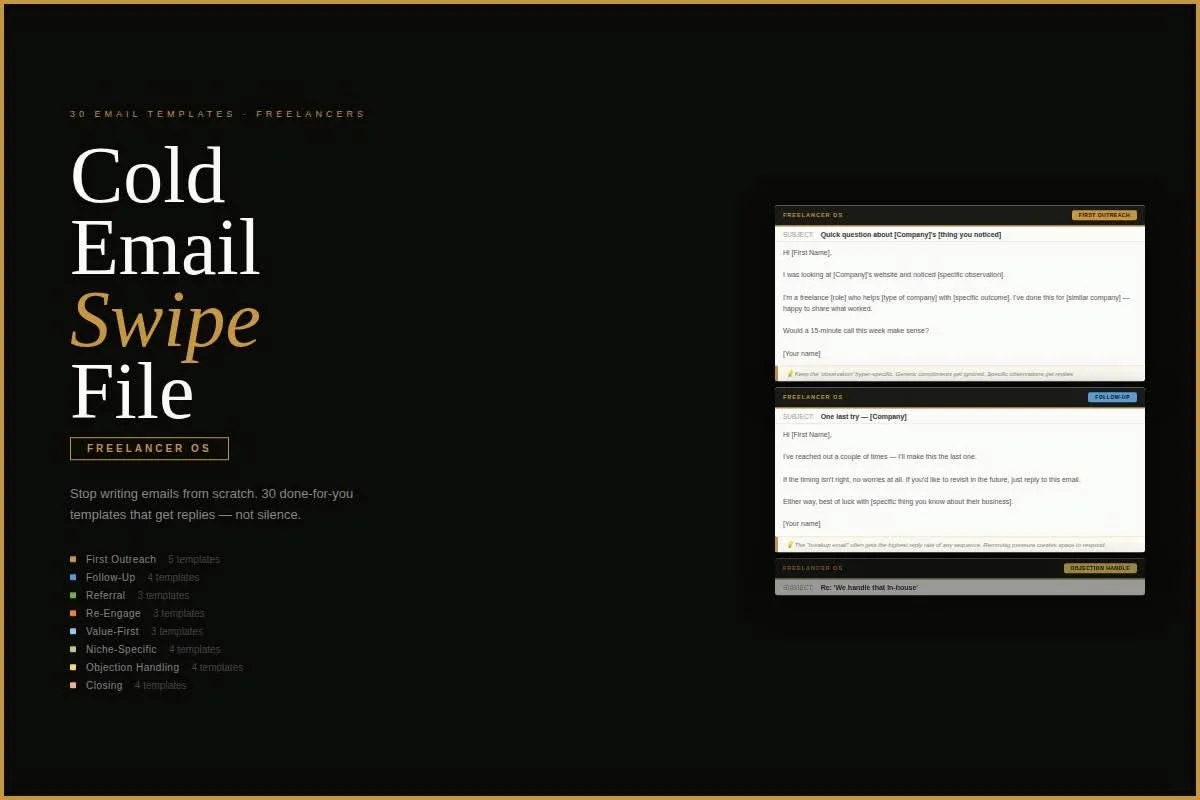
Cold outreach email templates that get replies: four-element framework, trigger-based intros, subject line patterns, follow-up sequencing, and calibrated asks.
Email HR with clarity and credibility: five-part framework, templates for incidents, patterns, accommodations, and policy concerns, with documentation guidance.
Follow-up email templates that convert silence to replies: four-touch sequence, short bumps, value drops, graceful close, and language that reduces reply friction.
Deliver bad news by email with clarity and respect: five-part framework, templates for cancellations, rejections, denials, and layoffs, and honest language that builds trust.

Delegate tasks via email with clarity and respect: five-element framework, templates for routine, complex, peer, and urgent delegation, and language that builds trust.
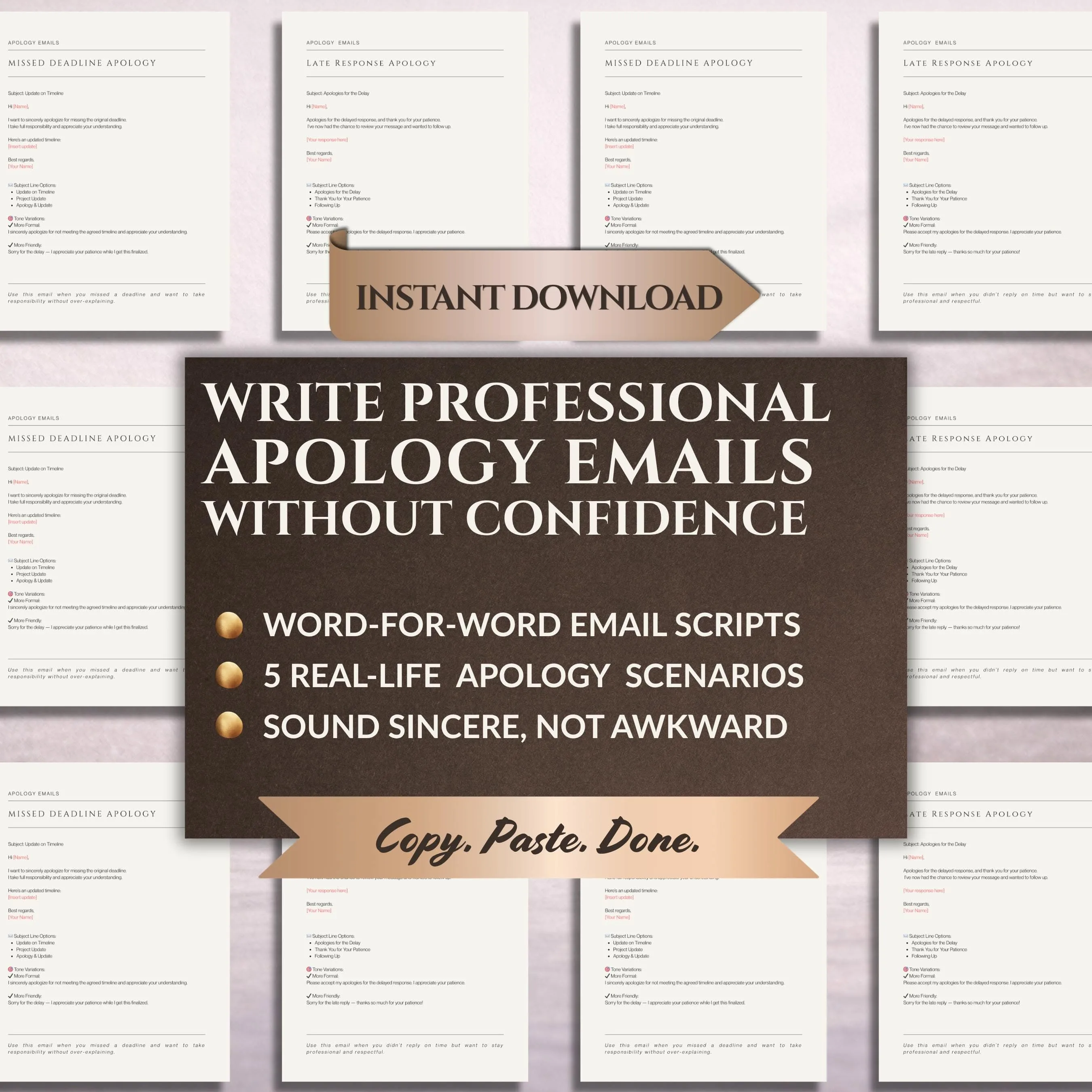
Apology email templates for missed deadlines: five-part framework, proactive notifications, client-facing formal apologies, language of ownership, and trust rebuild patterns.

Professional apology email templates for your boss. 12 examples for missed deadlines, mistakes, being late, extra leave, missed targets and more, with expert guidance.

Professional client rejection email templates for consultants, agencies, and freelancers with four-part framework, tone calibration, and referral patterns.

Project update email templates for clients, internal stakeholders, and executives with four-section framework, status label discipline, and copy-ready examples.
Scope change email templates for consultants, agencies, and project managers with four-part framework, three options pattern, and relationship-preserving language.
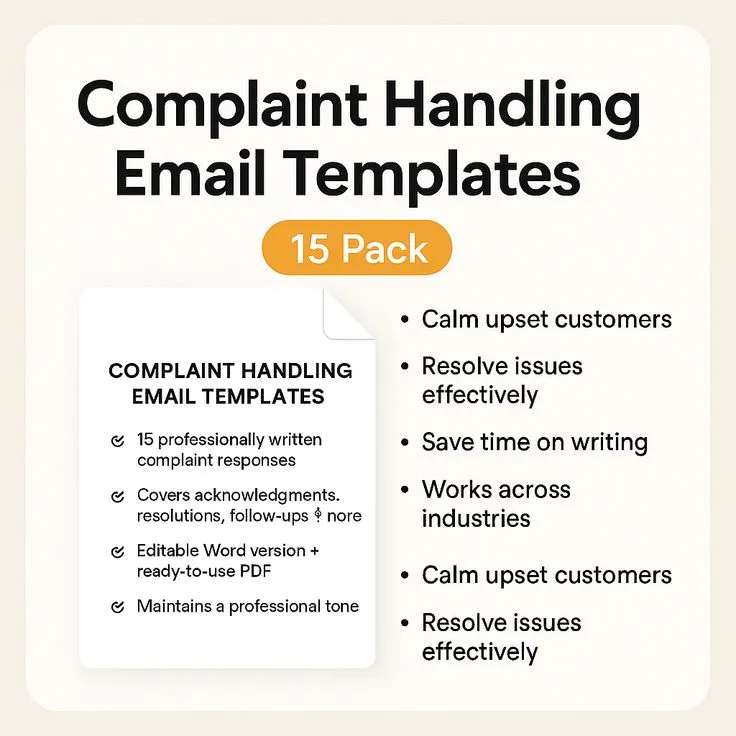
Professional customer complaint email templates. 10 examples for product defects, billing errors, poor service, delayed delivery, and refund requests with expert guidance.
Ready-to-paste polite follow-up email templates plus timing tables, language swaps, and psychology-backed phrasing that earn replies without sounding pushy.
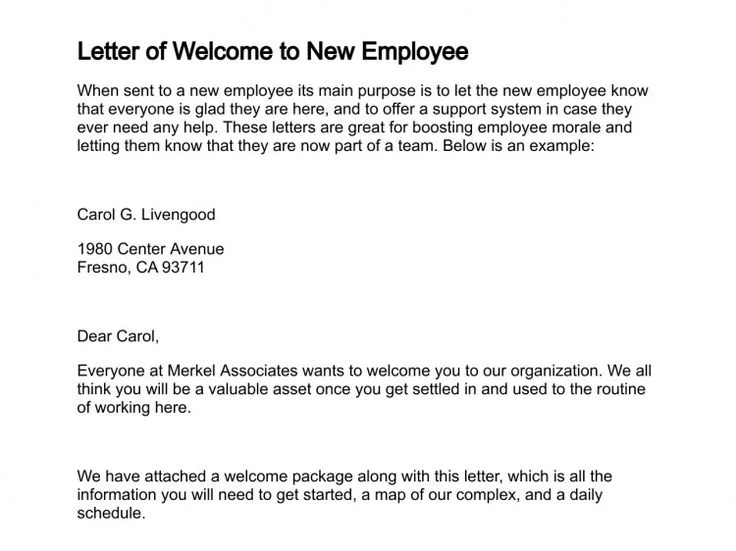
12 ready-to-use welcome email templates for HR teams: pre-boarding, day one, first week, remote hires, senior executives, interns, returning employees and more.
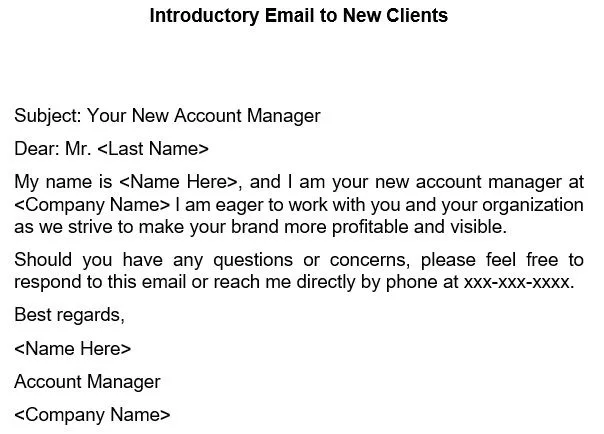
Professional introduction email templates to new and existing clients. 10 examples for new account managers, account takeovers, first outreach, and post meeting intros.
Direct hiring manager email templates that bypass ATS filters, with five-part framework, subject line patterns, proof structures, and response-rate data.
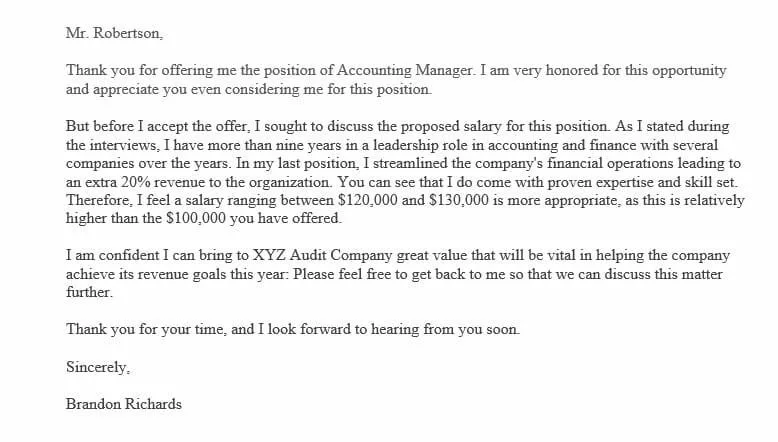
Salary expectation email templates for job applications with four-part framework, researched ranges, total compensation framing, and counter-offer patterns.
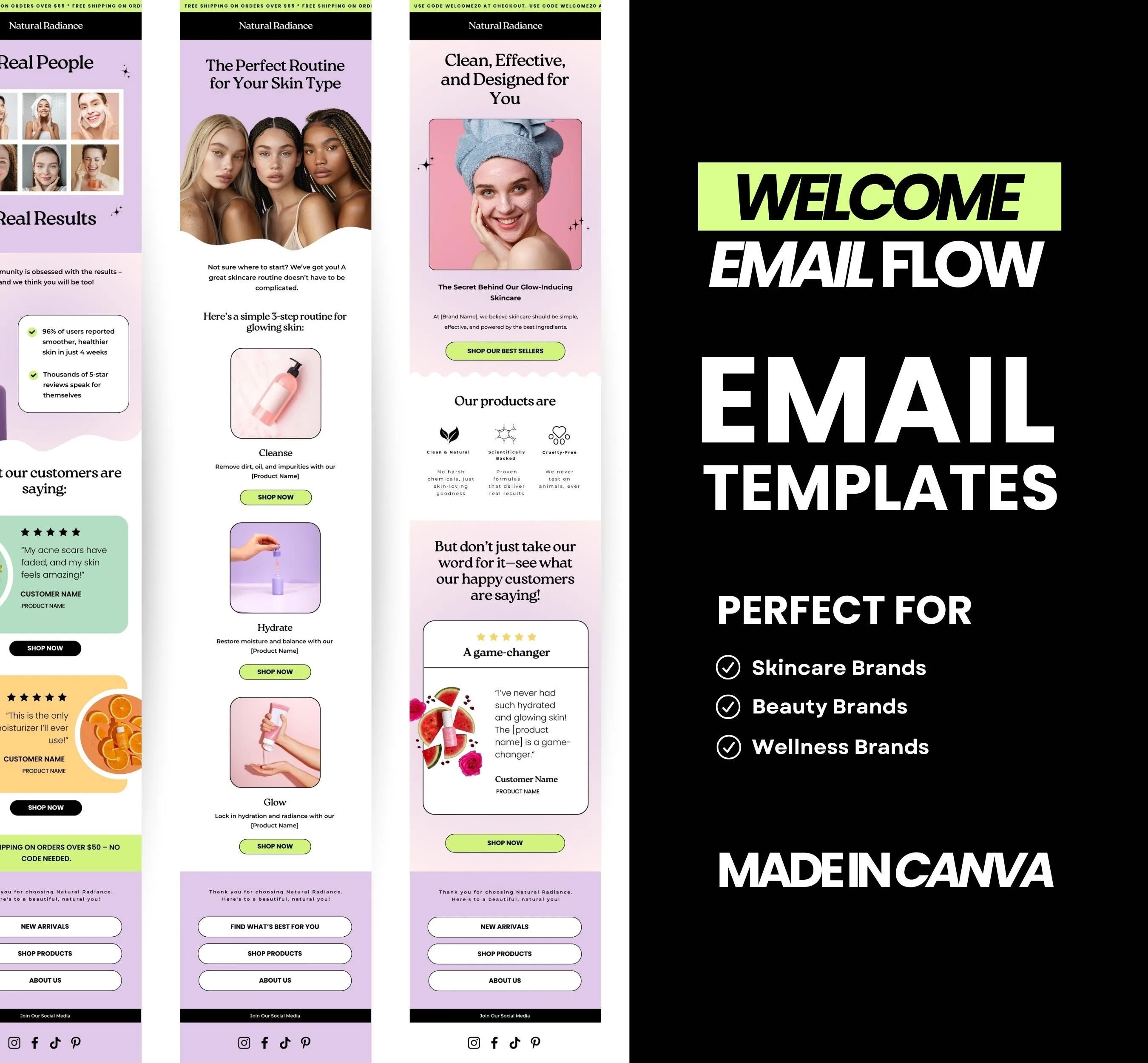
Cold outreach email templates with formal, warm, and direct variations plus response rate benchmarks, subject line patterns, and psychology-backed structure that earns replies.
Professional cold email templates for B2B sales. 12 proven examples for initial outreach, follow up sequences, breakup emails, and referral asks that get replies.
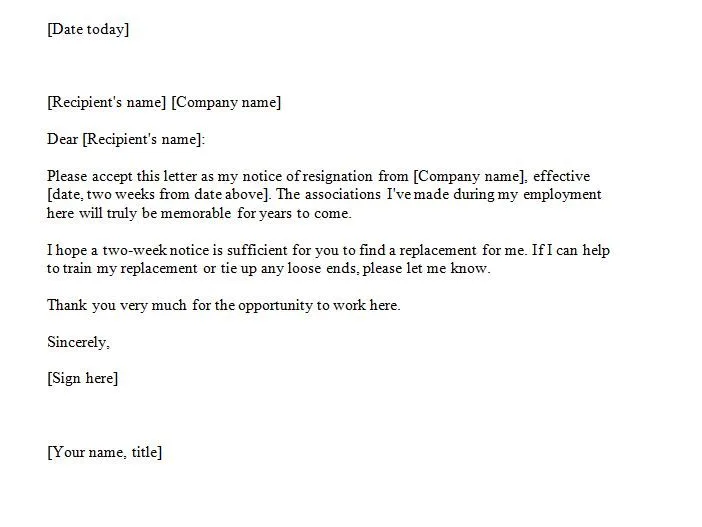
Professional two weeks notice email templates with formal, warm, and direct variations plus timing guidance, language swaps, and counter-offer handling.
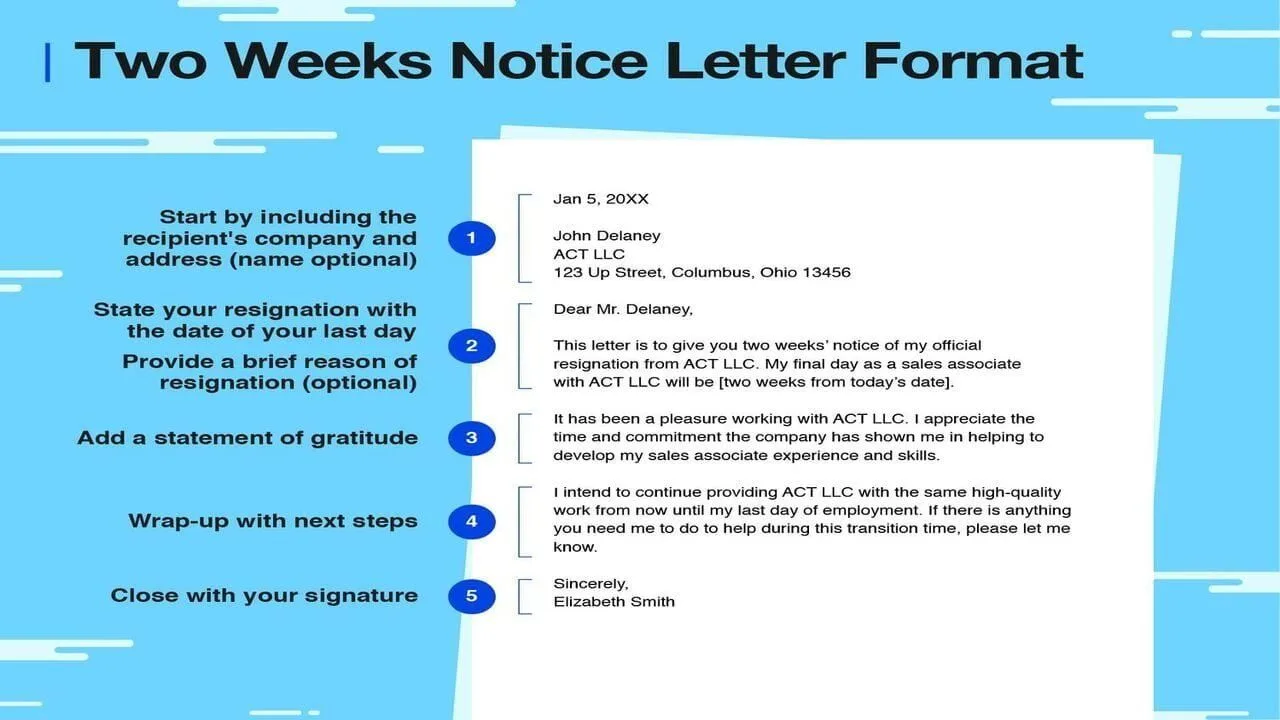
12 two weeks notice email templates: standard, short notice, better opportunity, relocation, health, formal, grateful tones. Professional resignation examples.
Same-day thank you email templates for job interviews with formal, warm, and direct variations, plus timing guidance, panel strategies, and phrases to avoid.
12 post-interview thank you email templates: same day, next day, phone screen, panel, final round, after rejection, status check. Ready to copy and send.
Mental health day email templates for formal, casual, and same-day workplace requests with three-part framework and privacy-preserving language.

Time off request email templates for formal and casual workplaces with four-part framework, coverage planning, and tone calibration for PTO and leave.
Formal request letter templates for records, accommodations, and institutional requests with five-part framework, delivery guidance, and escalation patterns.
Professional apology email templates for missed deadlines, communication errors, and interpersonal missteps, with language swaps, timing guidance, and research-backed structure.
Professional apology email templates for clients. 10 examples for missed deadlines, billing errors, poor service, data breaches, and more with expert guidance.
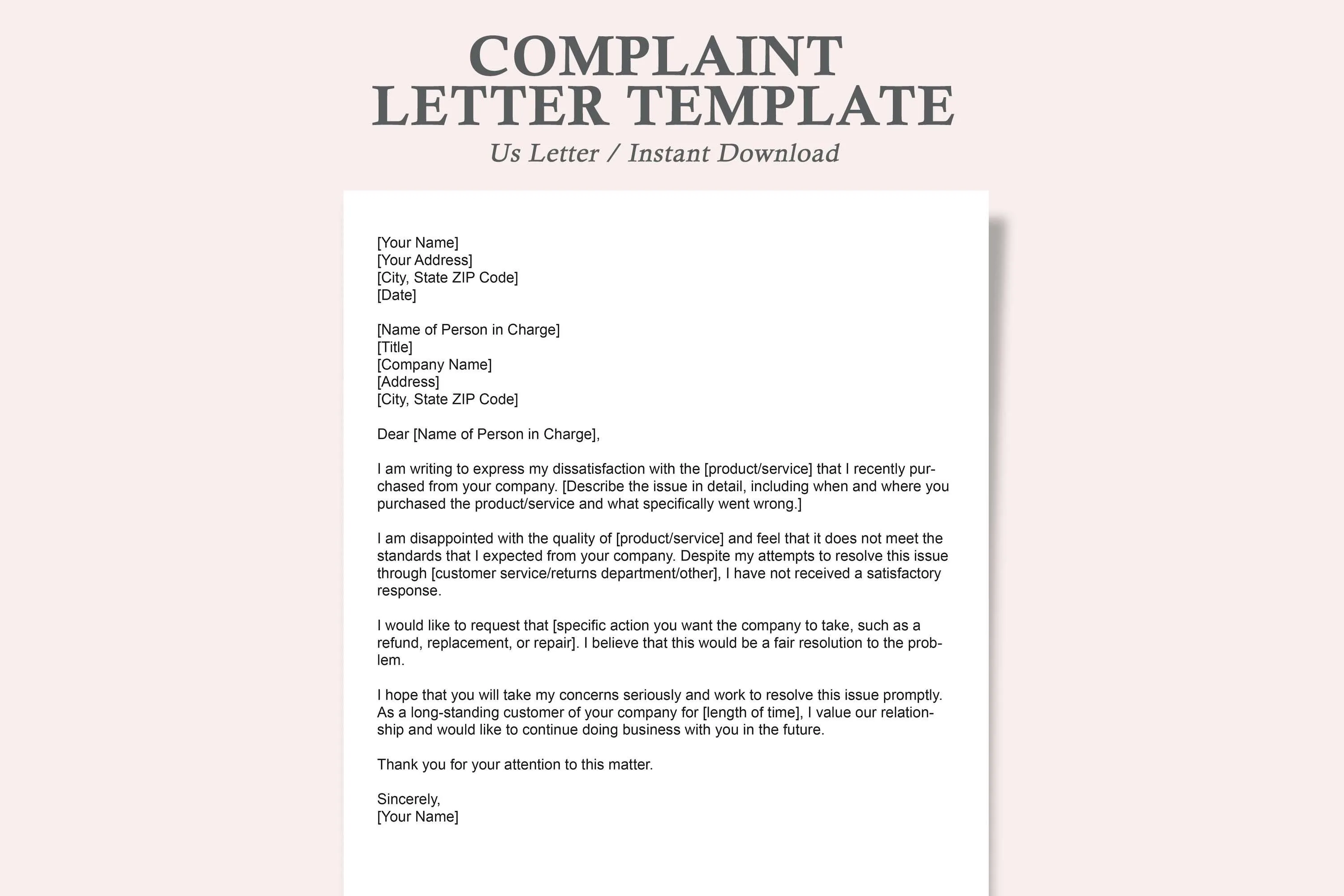
Formal and polite complaint email templates for products, services, billing, HR, and more. Copy-paste examples with escalation strategies and legal tips.
Evidence-based guide to follow-up emails covering optimal timing from Boomerang's research, subject line psychology, tone calibration, and templates for job applications, sales, networking, and meetings.
15 proven follow-up email templates for after interviews. Phone screen, first interview, second round, no response, and rejection follow-ups with exact wording.
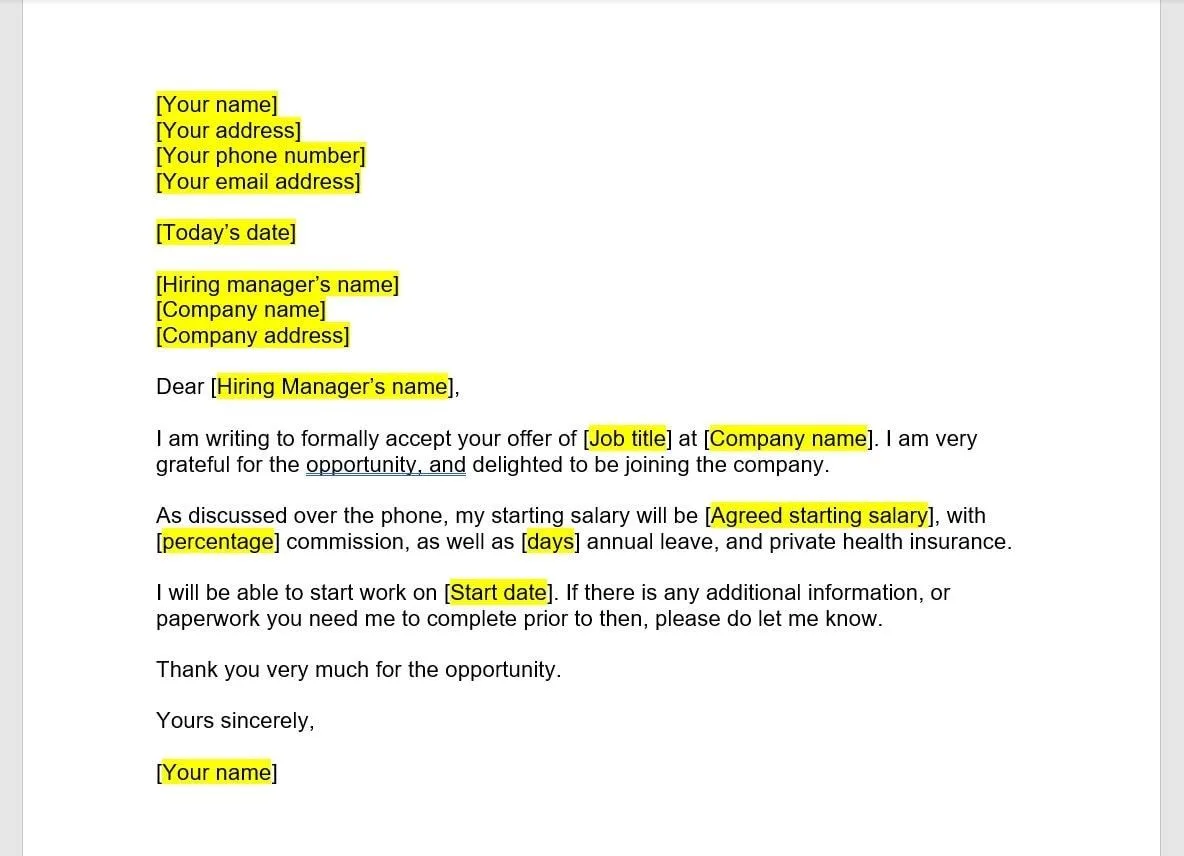
Graceful job rejection response email templates. 10 copy-paste examples for after interviews, applications, and internal rejections.
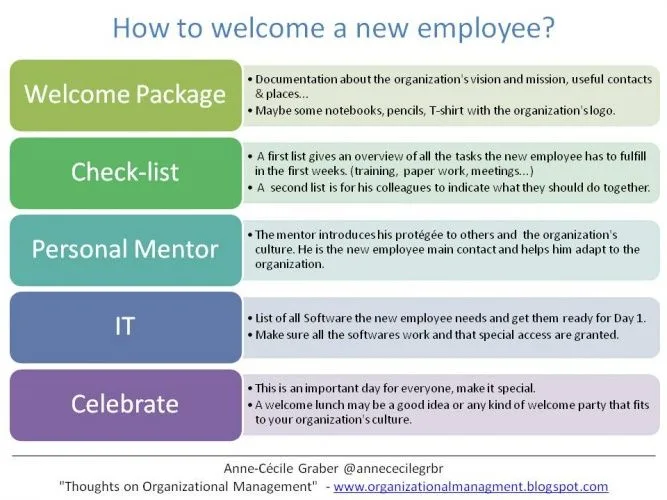
10 professional welcome email templates for new employees from HR, managers, and executives. Copy-paste examples with first day logistics and onboarding tips.
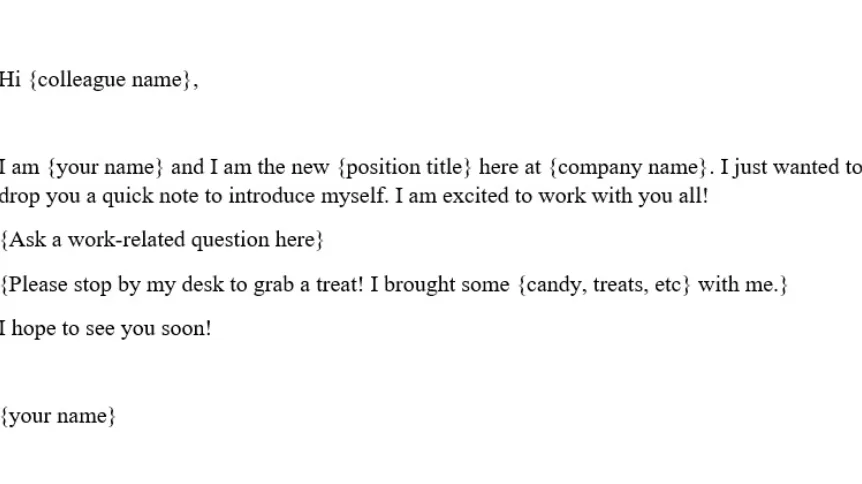
Professional introduction email templates for new teams. Copy-paste examples for managers, employees, and department introductions with expert writing tips.
Ten networking email templates with measured reply rates. Cold outreach, warm reconnection, informational interview, and referral introductions.
Proven cold outreach email templates for sales, partnerships, guest posting, networking, and freelance pitching. Real examples with follow-up sequences.
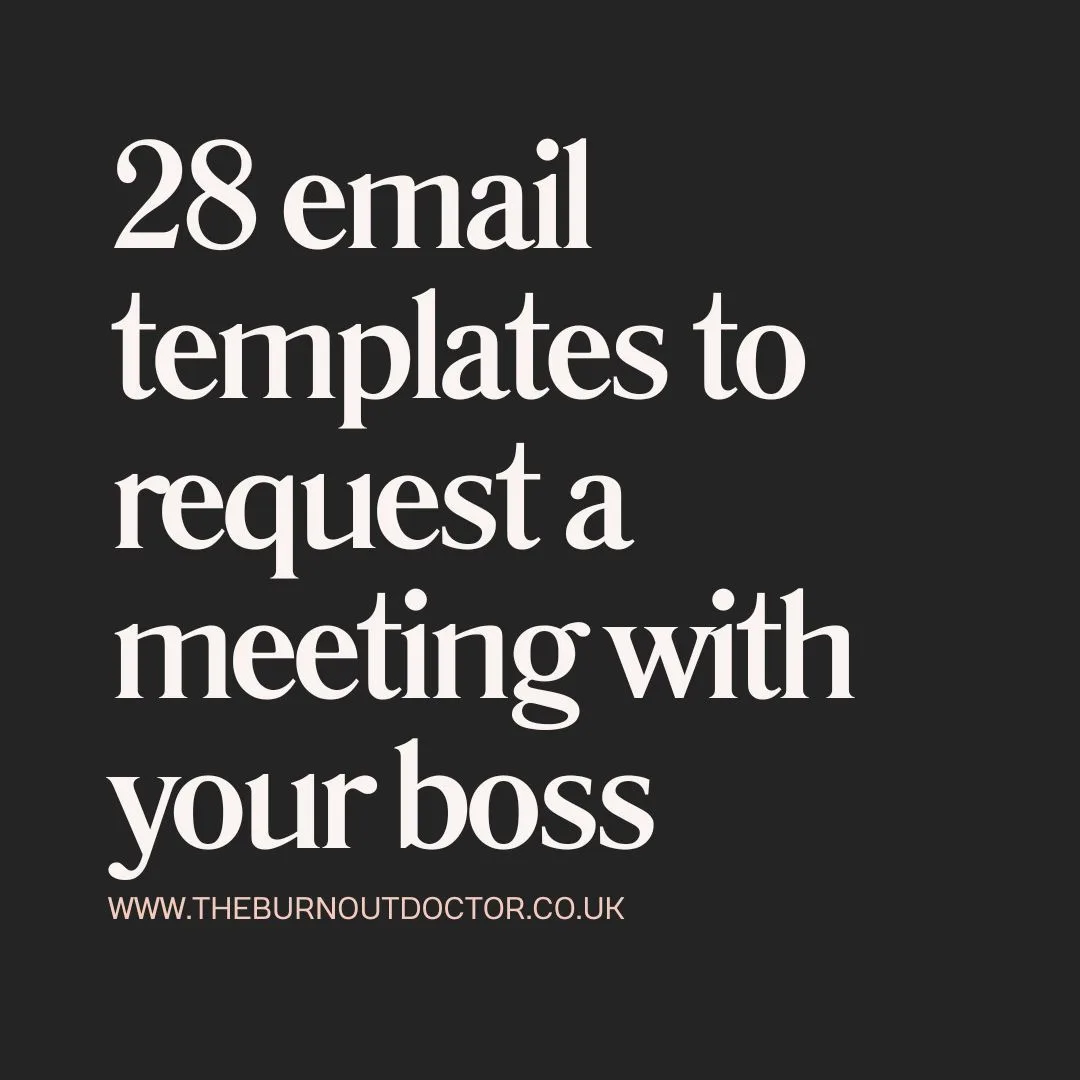
10 professional meeting request email templates for bosses, clients, vendors, and teams. Copy-paste examples with subject lines, agendas, and follow-ups.
Professional reference request email templates. 10 copy-paste examples for managers, professors, colleagues, and LinkedIn recommendations.
Professional resignation letter guide with 5 ready-to-use templates, legal considerations, timing strategy, and expert advice for every departure scenario.
Professional resignation email templates for every situation. 10 copy-paste examples including brief, detailed, immediate, career change, and retirement notices.

Send a thank you email after an interview that moves you to the short list. Ten tested templates, timing rules, subject-line formulas, and recruiter-backed data.

12 professional thank you email templates for after meetings. Business, client, networking, mentorship, and conference follow-up examples ready to customize.
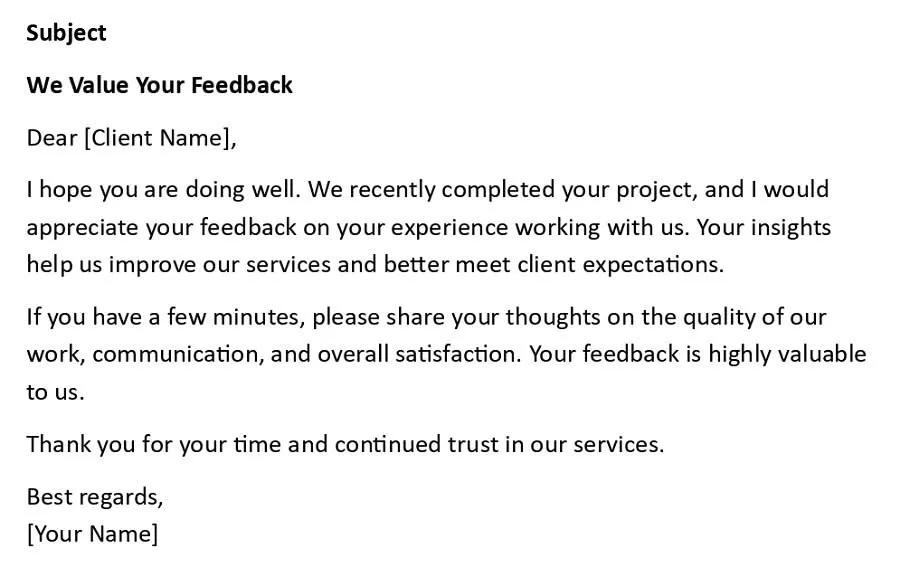
Professional feedback request email templates. 10 copy-paste examples for managers, clients, team members, and mentors that get results.

Proven promotion request email templates with strategies for timing, building your case, and professional tone. Copy-paste templates for raises and title changes.
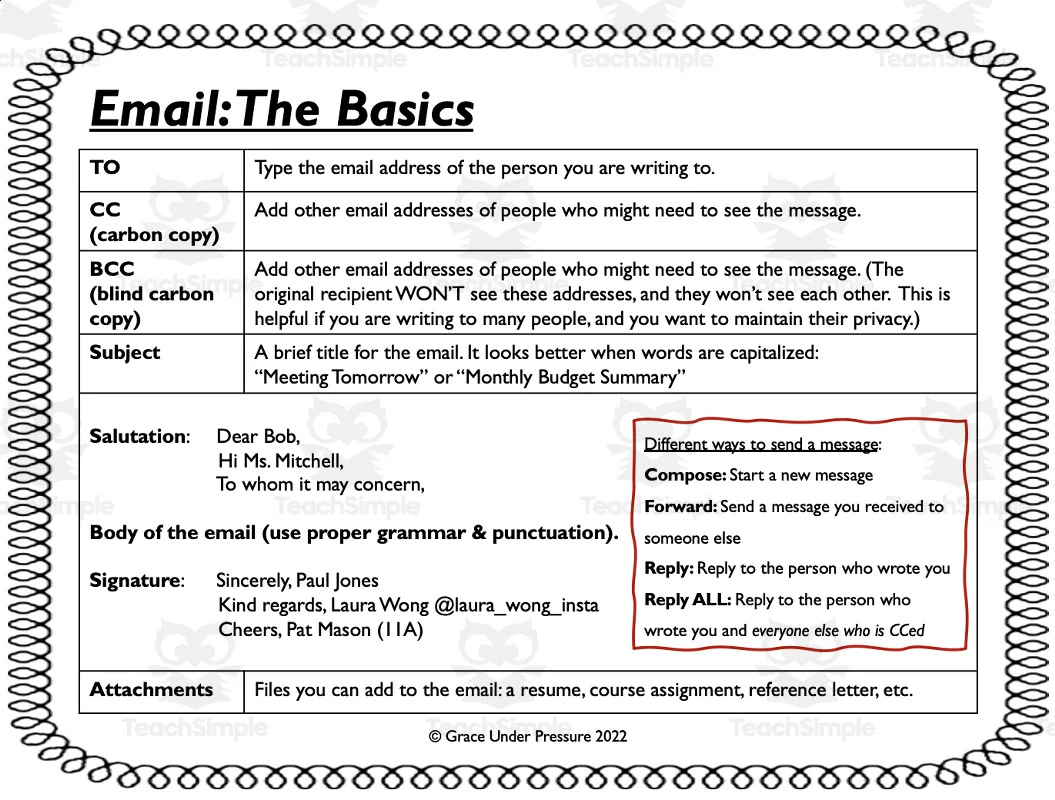
A professional email starts with a clear subject line that summarizes your purpose. Open with an appropriate greeting, state your purpose in the first sentence, provide necessary context in the body, and close with a clear call to action. Keep paragraphs short, use bullet points for lists, proofread before sending, and always include a professional signature with your name, title, and contact information.
The best opening depends on the context. For formal emails, use 'Dear [Name]' or 'Dear Mr./Ms. [Last Name]'. For semi-formal business emails, 'Hello [Name]' or 'Hi [Name]' works well. Avoid 'To Whom It May Concern' unless you genuinely cannot identify the recipient. After the greeting, lead with your purpose: 'I am writing to...' or 'Following up on our conversation about...' Never bury your reason for writing.
Most professional emails should be between 50 and 200 words. Research shows emails between 75 and 100 words get the highest response rates. If your email exceeds 200 words, consider whether the information would be better communicated in a meeting, phone call, or attached document. Use formatting like bullet points and bold text to make longer emails scannable.
Wait 2 to 3 business days before following up on a standard business email. For job applications, wait 5 to 7 business days. For time-sensitive matters, following up after 24 hours is appropriate. When you follow up, reference your original email, restate your request briefly, and add new value rather than simply asking if they received your message.
A resignation email should be brief and professional. Include a clear subject line like 'Resignation - [Your Name]', state your intention to resign, specify your last working day (typically two weeks from the date), express gratitude for the opportunity, and offer to help with the transition. Keep the tone positive regardless of your reasons for leaving. Do not use a resignation email to air grievances or criticize the company.