
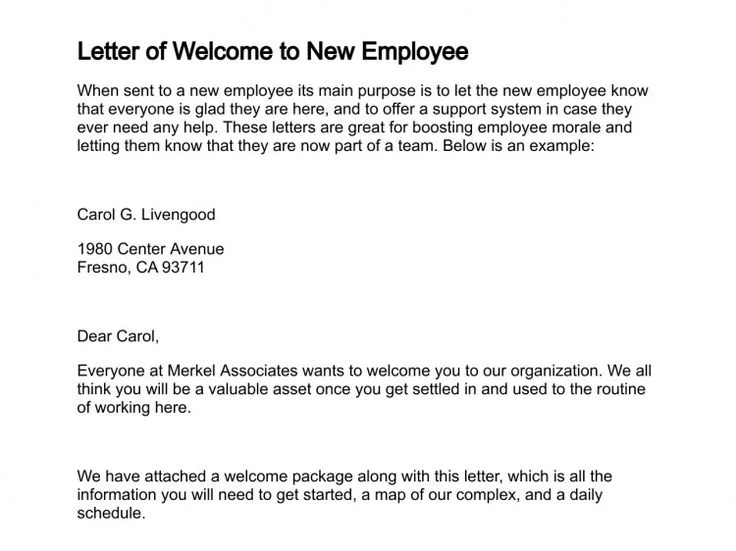
The welcome email is the first formal message a new employee receives from their future employer, and it carries far more weight than most HR teams realize. It lands in an inbox during a genuinely uncertain moment - after the offer is signed, the previous job is resigned, and doubt about the decision is quietly setting in. A warm, specific, well-organized welcome email replaces that doubt with confidence. A templated, vague, or late welcome email does the opposite.
This guide collects twelve welcome email templates built for real scenarios HR teams face every week - the pre-boarding note before day one, the logistics email for the first week, the personal welcome from a direct manager, the remote employee package, the senior executive hire, the returning boomerang employee, and several more.
Each template is written to be copied, edited, and sent without rewriting from scratch, and each is paired with notes on tone, timing, and small variations for different company cultures.
Why Welcome Emails Deserve Real Effort
Onboarding research from SHRM, Gallup, and the Aberdeen Group converges on one finding: employees who feel welcomed during their first ten days are significantly more likely to still be in the role at the two-year mark. The welcome email is the earliest signal in that window, and it is the only signal that reaches the new hire before they physically or virtually enter the workplace.
Treated properly, the welcome email does three things at once. It confirms the decision to join by reinforcing why the company is excited. It removes uncertainty by answering the practical questions new hires are too nervous to ask. And it introduces the humans they will be working with, which is the single largest predictor of early engagement.
A welcome email is not a transaction confirmation. It is a promise about what this company is going to feel like. If the email is warm, specific, and well-prepared, the new hire will expect the same from their first week. If it is cold, generic, and last-minute, they will expect that too - and often they will be right.
The Measurable Business Case
First-year turnover costs between 50 and 200 percent of an employee's annual salary once recruiting, onboarding, lost productivity, and backfill are counted. New hires who disengage in the first thirty days are roughly three times more likely to leave within twelve months. A welcome email sequence that takes one hour to build and five minutes per hire to personalize is one of the highest-leverage investments an HR team can make against that risk.
What Every Welcome Email Must Contain
Before the templates, a short checklist. Any welcome email, regardless of sender or scenario, should contain these elements. Templates that are missing any of them should be edited before sending.
- A genuine, specific congratulations that mentions something concrete about the hire
- The start date, time, and exact location or login procedure
- Dress code and what to bring, down to the specific documents required
- The name, title, and contact details of the direct manager
- The name and contact details of the HR contact and IT support
- A high-level first-week outline with at least the Monday schedule
- A short mention of why the team is excited about this specific hire
- A clear invitation to reply with any questions before day one
Tone Calibration Across Company Cultures
Not every company should write like the same company. Use the table below to calibrate the welcome email tone to your actual culture. The wrong tone is almost as damaging as a missing email - a formal law firm welcome written in casual startup language signals that the sender does not understand the environment the new hire is entering.
| Company Type | Greeting Style | Signature Style | Typical Length | Documents |
|---|---|---|---|---|
| Law firm or financial services | Dear Mr. or Ms. Surname | Full name, title, firm, direct line | 400 to 600 words | PDF packet |
| Enterprise tech or consulting | Dear First Name | First name, title, mobile | 350 to 500 words | Linked portal |
| Startup under 100 people | Hi First Name | First name only | 200 to 350 words | Notion page |
| Creative agency or media | Hey First Name | First name, pronoun, mobile | 150 to 300 words | Drive folder |
| Healthcare or public sector | Dear First Name Surname | Full name, department, extension | 500 to 800 words | Printed packet |
Template 1: Pre-Boarding Welcome Sent Within 24 Hours of Offer Acceptance
This is the earliest message. It should go out the same day the signed offer comes back, or at latest the next morning. Its only job is to confirm the decision emotionally and let the new hire know a logistics email is coming.
Subject: Welcome to [Company Name], [First Name] - we are so glad you are joining us
Hi [First Name],
I wanted to be the first to officially welcome you to [Company Name]. We are genuinely excited that you have accepted the offer, and the team has already started planning for your arrival on [Start Date].
Over the next two weeks you will receive a few short emails from me covering logistics, documents, and your first-week schedule, so you will not have to guess at anything before you walk in the door. If anything comes up in the meantime, you can reach me directly at [Email] or [Phone].
In the meantime, enjoy the gap. Rest, travel, read something that is not work - we will be ready for you when you arrive.
Welcome aboard, [Your Name] [Title], People Team [Company Name]
Template 2: Logistics Email Sent One Week Before Start Date
This is the substantive logistics message. It should arrive roughly seven days before the start date, early enough that the new hire can gather documents and late enough that they will still remember it.
Subject: Your first day at [Company Name] - what to expect on [Start Date]
Hi [First Name],
Your start date is one week away, and I wanted to send you everything you need for a smooth first day.
Logistics:
- Start date: [Day, Date]
- Arrival time: 9:00 AM
- Address: [Full address, including suite and entrance]
- Parking: [Instructions, visitor spot number or garage validation]
- Ask for: [Name at reception], who will walk you up to our floor
What to bring:
- Government-issued photo ID
- Passport or birth certificate for I-9 verification
- A voided check or routing and account number for direct deposit
- Any documents listed in your offer packet
Dress code: [Specific description, for example business casual, no jeans, or smart casual, jeans are fine].
Your first day, in broad strokes:
- 9:00 to 10:00: Welcome, workstation setup, badge photo
- 10:00 to 12:00: New hire orientation with me
- 12:00 to 1:30: Team lunch (on us)
- 1:30 to 3:00: Intro meetings with your direct team
- 3:00 to 4:30: One-on-one with your manager, [Manager Name]
- 4:30 to 5:00: Wrap-up and end of day
Key contacts you should save:
- [Manager Name], your manager - [Email], [Phone]
- [HR Contact], your HR business partner - [Email], [Phone]
- [IT Contact], help desk - [Email], [Phone]
- [Buddy Name], your onboarding buddy - [Email]
If anything on this list is unclear or if you need accommodations for your first day, reply to this email and we will sort it out before [Start Date].
See you Monday, [Your Name]
Template 3: Personal Welcome from Direct Manager
The direct manager welcome should land separately from the HR logistics email, usually two or three days after offer acceptance. It is the single most important email in the sequence for engagement and retention.
Subject: Looking forward to having you on the team, [First Name]
Hi [First Name],
I could not be happier that you signed. I know you had [mention of competing offer or situation if relevant] in the mix, and the fact that you chose us means a lot.
A quick note on what I am excited about. [One or two sentences referencing something specific from the interview - a project they mentioned, a skill they bring, a problem they are uniquely positioned to solve. This is the sentence that separates a generic welcome from a real one.]
Before your first day, you do not need to prepare anything. If you want a head start, I would suggest skimming [short, optional reading, such as a recent company announcement, a product demo link, or a team handbook page] - but it is genuinely optional. Your first few weeks will be structured and we will ramp you up together.
I will be the one meeting you at 1:30 PM on your first day for our first one-on-one. Until then, if anything at all comes up, text or email me directly - [Phone], [Email]. No question is too small.
Welcome to the team, [Manager First Name]
Template 4: Remote Employee Welcome with Hardware Shipment
Remote hires require a heavier welcome sequence because they lose the physical cues of an office environment. This email should arrive the day their hardware ships.
Subject: Your laptop is on its way - remote onboarding details inside
Hi [First Name],
Your [Laptop Model] is on its way to the address we have on file - [Partial address for confirmation]. It should arrive on [Expected Delivery Date] via [Carrier], and I will send tracking when it goes out.
Inside the box you will find:
- Your laptop, pre-configured with your email and core applications
- A welcome note from the team
- A [branded item, such as a hoodie or notebook]
- A printed setup card with your temporary password and help desk contact
On day one, [Start Date], here is what to expect:
- 9:00 AM: Log in and follow the setup card. It should take 20 to 30 minutes.
- 9:30 AM: I will send you a calendar invite for a video welcome. Join from the link in the invite.
- 10:00 AM to 11:30 AM: Virtual orientation covering benefits, policies, and tools.
- 12:00 PM: Lunch break. We have deposited a meal stipend on your [Meal Platform] account - feel free to use it.
- 1:00 PM to 5:00 PM: Meet-and-greet video calls with your direct team, spaced out with breaks.
For your first two weeks, you will have a daily 15-minute check-in with your onboarding buddy, [Buddy Name]. These are informal and optional - skip any you do not need.
A note on boundaries: our standard working hours in your region are [Hours]. Please do not feel obligated to be online before or after those hours during your first month. We are measuring your ramp-up by understanding, not by hours logged.
Welcome aboard, [Your Name]
Template 5: Senior Executive or Director-Level Welcome
Senior hires expect a different tone - more direct, fewer logistics, more context about the business. They also usually want to start meeting stakeholders before day one.
Subject: Welcome to [Company Name] - initial context and first-week plan
Dear [First Name],
It is a pleasure to formally welcome you as our new [Title]. I will keep this brief since I know you have plenty to wrap up before [Start Date].
A few items to set expectations:
Your first two weeks will be structured around listening. I have scheduled thirty-minute introductions with each of your direct reports, peer executives, and the three board members who requested early time with you. The full calendar is attached. Please feel free to edit or add as you see fit.
Your office is on the [Floor], adjacent to mine. Your executive assistant, [Assistant Name], has been briefed and will reach out to you directly this week to align on preferences, travel, and scheduling norms.
Ahead of day one, I have shared three documents in [Platform] that provide the context you asked for during our final conversation: the current strategic plan, last quarter's board deck, and the open search slate for the two open roles on your team. Review at whatever depth is useful.
If it helps, I would be glad to find an hour for a casual conversation before your start date. Otherwise I will see you at 9:00 AM on [Start Date].
Welcome, [CEO or Hiring Executive Name]
Template 6: Welcome Email for an Intern or Early-Career Hire
Early-career hires benefit from extra reassurance and more explicit guidance. Assume they have never been through corporate onboarding before.
Subject: Welcome to [Company Name], [First Name] - here is everything you need
Hi [First Name],
Welcome to the [Team Name] team! We are so glad you are joining us for the [Internship or Early Career Program] starting [Start Date].
I want to take a moment to say - it is completely normal to feel nervous before day one. Every person on our team was in your shoes once, and we have built this program to support you.
Here is the practical information for your first day:
- Start date and time: [Day, Date] at 9:30 AM (slightly later than normal, so you have time to settle in)
- Address: [Full address and entrance]
- Dress code: Business casual. Think nice jeans, a collared shirt or blouse, and closed-toe shoes. You do not need a suit.
- What to bring: A photo ID, a notebook if you like paper, and any questions you have been saving up.
What your first day looks like:
- 9:30 to 10:30: Check-in and welcome breakfast with the other new hires
- 10:30 to 12:00: Program orientation
- 12:00 to 1:30: Lunch with your cohort
- 1:30 to 3:30: Introduction to your team and your first project
- 3:30 to 4:30: Shadowing your team's afternoon standup
- 4:30 to 5:00: Q&A with me
Your onboarding buddy is [Buddy Name], a [Buddy Title] who started [Timeframe] ago and knows exactly what you are about to experience. They will meet you on day two for coffee.
A small piece of advice: in your first month, ask as many questions as you can. No question is wrong, and people love answering them.
See you on [Start Date], [Your Name]
Template 7: Welcome Email for a Boomerang or Returning Employee
Returning employees (boomerangs) should be welcomed warmly but not as newcomers. The email should honor both their past history and their new role.
Subject: Welcome back, [First Name] - we have been hoping for this day
Hi [First Name],
I cannot describe how excited the team is that you are coming back to [Company Name] as our new [Title]. Many of the folks you worked with are still here, and the ones who have joined since you left have heard plenty about you.
Since you know the lay of the land, I will not repeat the basics. A few things that have changed since you were last in the office:
- We moved to the [New Building] in [Year], so the address is now [New Address]
- Our stack has moved from [Old Tool] to [New Tool] for [Function]
- The team has grown from [Number] to [Number], so expect a lot of new faces at the all-hands
Your start date is [Date]. Payroll, benefits, and IT are already in motion based on your old records, so day one will be short on paperwork. [Manager Name] will meet you at 9:30 AM at the [Floor] reception.
Welcome home, [Your Name]
Template 8: Welcome Email for a Hire Joining After a Layoff or Reorg
When a new hire is joining a company that recently went through a painful layoff or restructuring, the welcome email should acknowledge reality without dwelling on it.
Subject: Welcome to [Company Name] - what to expect as you join us
Hi [First Name],
Welcome to [Company Name]. We are delighted to have you joining the [Team Name] team on [Start Date].
I want to be upfront with you. You are joining us in a period of change - we announced a restructuring earlier this year, and the team you are joining has been reshaped as part of that. The role you are stepping into is a deliberate investment in the team's future, not a backfill.
On day one you will receive a full briefing on the reorg, the strategic priorities that drove it, and the specific reasons we prioritized your role. My goal is for you to have context, not rumor.
The practical logistics for [Start Date]:
- Arrival: 9:00 AM at [Address]
- Ask for: [Reception Contact]
- Bring: Photo ID, I-9 documents, and direct deposit details
- Dress: Business casual
[Manager Name] will be your primary point of contact from day one, and we have scheduled coffee with three of your peers during your first week so you can start building relationships immediately.
If anything about the current moment gives you pause, please reply and we can talk before [Start Date]. We want you to start with clear eyes and real excitement.
Welcome aboard, [Your Name]
Template 9: Welcome Email for an International Hire or Relocation
When the new hire is relocating domestically or internationally, the welcome email should include relocation logistics and cultural orientation alongside the usual items.
Subject: Welcome to [Company Name] - relocation and first-day details
Hi [First Name],
Welcome to [Company Name]. We are honored that you and your family are making the move to [City] to join us on [Start Date].
Relocation status:
- Your relocation package confirmation was sent on [Date]. If you did not receive it, let me know immediately.
- [Relocation Partner] is your primary contact for moving logistics, temporary housing, and school searches. Their representative, [Name], will be in touch this week.
- Your visa or work authorization is on track for [Status]. Any updates go through [Immigration Partner Contact].
Your first day:
- Date and time: [Day, Date] at 10:00 AM (delayed start to accommodate any jet lag)
- Address: [Full address in local format]
- Dress code: [Description]
- Bring: Passport, work authorization documents, and the original copies of any items flagged in your offer packet
We have also arranged a short local orientation during your first week - banking, phone service, public transit - so you are not trying to figure everything out on your own. Your onboarding buddy, [Buddy Name], has made the same move themselves and volunteered to help.
Welcome to [City] and to [Company Name], [Your Name]
Template 10: Team Announcement Welcome Email
This email goes to the existing team, not the new hire, but it is part of the welcome sequence. Send it two or three business days before the new hire's start date.
Subject: Welcome [First Name Last Name] to the [Team Name] team
Team,
I am thrilled to announce that [First Name Last Name] is joining us as our new [Title] on [Start Date].
[One paragraph about their background and what they are bringing to the team. Two to four sentences, specific and genuine.]
[First Name] will be sitting [Location description] and reporting to [Manager Name]. During their first week they will be focused on meeting each of you - if you have not already received a calendar invite for a short intro chat, expect one soon.
Please welcome [First Name] in your own way - a Slack message, a dropped-by hello, or a coffee invite in the first couple of weeks. The team culture they experience in the first month will be shaped by each of you.
More soon, [Your Name]
Template 11: Day-One Arrival Welcome Email
This is the email that lands in the new hire's inbox on the morning of their first day. It should be short and cheerful.
Subject: Today is the day - welcome to [Company Name]
Hi [First Name],
Welcome. We have been looking forward to today.
Your workstation is set up, your email is working (you are reading proof), and your manager is expecting you. Our reception team has your name on their list and is ready to walk you up.
If anything goes sideways between now and 9:00 AM - traffic, a lost badge, a wrong turn - text me at [Phone] and I will sort it out.
See you in a few hours, [Your Name]
Template 12: End-of-First-Day Follow-Up Welcome
A brief follow-up email at the end of day one closes the welcome sequence and signals that the company is paying attention.
Subject: Great to have you with us, [First Name]
Hi [First Name],
You made it through day one. I hope it felt welcoming, organized, and - most importantly - not overwhelming.
A short note on tomorrow: [One or two sentences on what to expect tomorrow, any logistical notes, or a warm touchpoint].
If anything about today left a question mark - a policy that was glossed over, a person you wish you had met, a system that did not click - reply and let me know. The first week is the easiest time to fix anything that did not land.
Glad you are here, [Your Name]
Timing the Welcome Email Sequence
Use the table below as a reference for when each template in the sequence should go out. The dates are relative to the offer acceptance (OA) and the start date (SD).
| Template | Timing | Sender | Primary Goal |
|---|---|---|---|
| 1. Pre-boarding | OA + 1 day | HR | Emotional confirmation |
| 3. Manager personal | OA + 3 days | Direct manager | Relationship kickoff |
| 2. Logistics | SD - 7 days | HR | Operational readiness |
| 4. Remote hardware | SD - 5 days (remote only) | HR or IT | Hardware and remote prep |
| 10. Team announcement | SD - 2 days | Hiring manager | Prepare the existing team |
| 11. Day-one arrival | SD morning | HR | Warm arrival |
| 12. End-of-first-day | SD evening | HR or manager | Feedback and reassurance |
The sequence matters as much as the individual emails. A perfect logistics email that arrives the night before the start date cannot rescue a silent gap of six weeks after the offer was signed. Cadence is content.
Common Pitfalls to Avoid
Even well-intentioned welcome emails fall into a few traps that reliably damage the experience.
- Sending on a Friday night or weekend, which signals unhealthy work-hour norms
- Using a no-reply email address, which discourages questions and feels cold
- Attaching large PDF packets that the new hire cannot practically read
- Forgetting to bcc or reply-to the new hire's personal email if their corporate email is not live yet
- Addressing the new hire by the wrong name, pronoun, or title - a fatal first-impression error
- Writing in corporate jargon that contradicts the actual team culture
The welcome email is a mirror. Whatever it reflects - warmth or coldness, care or carelessness, clarity or confusion - the new hire will assume is what every email at the company looks like. Build it once, carefully, and reuse it with confidence.
Quick FAQ
Should I send a gift before day one? For most roles, a small branded package (notebook, mug, hoodie) sent two to three days before the start date is a meaningful gesture. Avoid expensive items that could feel transactional.
Should the welcome email include the salary or offer details? No. Those have already been confirmed in the offer letter. The welcome email is about arrival, not compensation.
What if the new hire does not reply? A non-response is normal. Most new hires simply do not know what to reply with. Send the next email in the sequence on schedule.
Should I reference LinkedIn, Glassdoor, or online reviews of the company? No. Stay focused on the relationship and the role.
How long should a welcome email be? Between 200 and 600 words for most scenarios. Logistics emails can run longer; personal manager notes should stay short.
Closing
A welcome email is the cheapest, highest-leverage moment in onboarding. It costs almost nothing to send and almost everything to get wrong. Use the twelve templates above as a starting library, personalize the details that matter (names, context, specifics), and send the emails on the cadence the sequence demands. New hires who feel welcomed in the first week outperform and outlast new hires who do not, and that difference begins in the inbox.
Author: Kalenux Team
Frequently Asked Questions
How many welcome emails should a new hire receive before their start date?
Most well-run onboarding programs send between two and four welcome communications between offer acceptance and day one. The first email, sent within 24 hours of acceptance, congratulates the new hire and confirms the start date.
A second email, sent roughly one week before day one, delivers logistics such as parking, dress code, documents to bring, and a first-week agenda.
A third, optional email from the direct manager introduces the team and shares a light first project or reading list.
For remote hires, add a fourth email that arrives with their laptop shipment and covers setup, credentials, and a video call invitation. Avoid overwhelming the new hire by spacing these messages across the waiting period rather than dumping everything into a single dense email. Each touchpoint should have one clear purpose and one clear next step.
Should the welcome email come from HR, the direct manager, or the CEO?
All three are valuable and serve different purposes, but the most important welcome email comes from the direct manager because that relationship drives day-to-day engagement and early retention. HR should send the logistical welcome email with paperwork, schedules, and policy links. The direct manager should send a warmer personal welcome that references specific reasons the team is excited about the hire.
The CEO or department head welcome matters most at smaller companies or for senior hires, where it signals that leadership is personally invested. Skipping the manager welcome is the most common mistake - new hires consistently report that a silent manager before day one is the single biggest source of pre-start anxiety.
How do you write a welcome email for a remote employee that feels personal?
Remote welcome emails must compensate for the absence of physical cues like a decorated desk, office tour, or hallway introductions. Start by sending a physical welcome package to their home address with branded items, a handwritten note from the team, and any hardware they will need.
Reference the package in your email so they know it is coming.
Include a short video from the team introducing themselves rather than a text-only team roster. Schedule a virtual coffee with each team member during the first two weeks and put those meetings on the calendar before day one so the new hire can see a full schedule.
Assign an onboarding buddy who is also remote and who will proactively check in daily during the first week. Most importantly, be explicit about communication norms - which channels, what response times, and when it is okay to sign off - because remote hires often overwork in the first month trying to signal commitment.
What is the biggest mistake companies make in their welcome emails?
The single biggest mistake is treating the welcome email as an administrative task rather than a cultural moment. Symptoms include generic copy that could describe any company, PDF attachments of policies the new hire cannot possibly read before day one, no mention of the specific person they are replacing or the specific problem they were hired to solve, and no signal that anyone is personally excited about their arrival.
A close second is logistical vagueness - saying Report to reception at 9 AM without mentioning which building, which floor, which entrance, what to wear, or who to ask for.
Third is the trap of the silent week, where the offer is accepted and then nothing is heard until the night before the start date. Each of these signals disorganization and causes a measurable spike in no-shows and early resignations.
When is it appropriate to include team members on a welcome email?
Copying the immediate team on the welcome email is appropriate and encouraged once the start date is roughly two weeks out. It signals to the team that a new member is joining, invites them to respond with their own welcomes, and gives the new hire a glimpse of team communication style before day one.
Avoid copying the entire company unless the hire is very senior or the company is small enough that every arrival is company news. Never copy external vendors, clients, or partners on the initial welcome email - introductions to those relationships should be sequenced deliberately once the new hire has context.
A middle path is to send the primary welcome email directly to the new hire and then post a brief announcement in a team channel inviting existing team members to reach out with their own welcomes.