
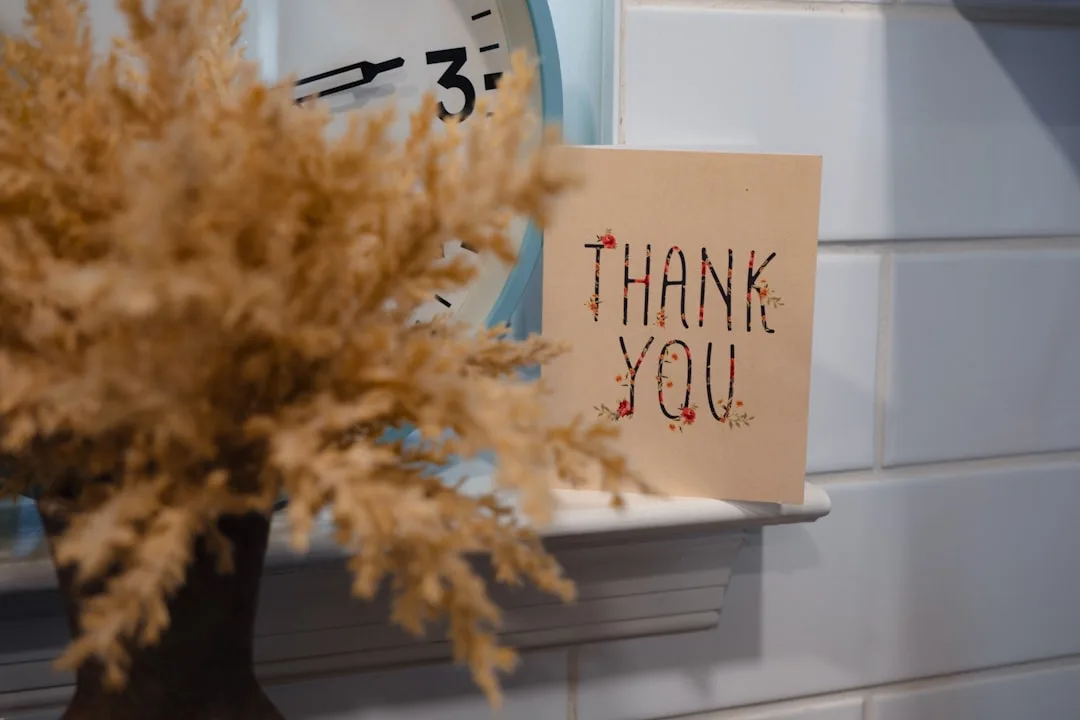
The thank you email sent after a job interview is one of the highest-leverage messages a candidate will ever write. Recruiters routinely cite it as a tiebreaker when two candidates finish close on skills and experience.
A Robert Half/Accountemps survey found that roughly 80 percent of hiring managers consider thank you notes influential in their final decision, yet only about a quarter of candidates actually send one. That gap is where careers are made. This guide walks through timing, subject lines, structure, and ten fully written examples covering every interview situation from the first phone screen to the final executive panel.
Why This Single Email Shifts Decisions
Hiring decisions rarely hinge on a single qualification. After a round of interviews, the finalists usually cluster within a narrow band of capability, and the choice comes down to soft signals: communication, judgment, follow-through, and cultural fit. The thank you email is the last direct artifact a candidate produces, and it is read at exactly the moment the decision is being weighed.
"We rarely remember exactly what was said during an interview, but we often remember who followed up thoughtfully. That email is frequently the last touchpoint before a hiring decision is made."
Common observation among hiring managers and talent leaders
Three things happen when a well-written thank you email arrives within the first few hours after an interview. First, the interviewer re-reads their scoring notes with the candidate's voice still fresh, which softens any minor hesitations. Second, the email provides a second chance to reinforce the single strongest point of fit. Third, it addresses any concern the candidate sensed during the conversation before that concern hardens into a written objection in the debrief.
Candidates who write with precision and warmth at this moment are not simply being polite. They are doing the last piece of interview preparation, not the first piece of post-interview relaxation. For a broader grounding in the habits that separate polished professional writing from generic correspondence, the writing research methods library at When Notes Fly is a useful companion resource.
Timing Rules That Actually Matter
The Three-to-Five-Hour Window
Most hiring debriefs happen within 24 hours of the final interview of the day. Sending the thank you email during the three-to-five-hour window after leaving the interview puts the message in front of the interviewer while their notes are still active.
| Interview End Time | Ideal Send Window | Latest Acceptable |
|---|---|---|
| Before 11 AM | Same day, 2 PM to 4 PM | Same day, 6 PM |
| 11 AM to 2 PM | Same day, 5 PM to 7 PM | Same day, 9 PM |
| 2 PM to 5 PM | Same day, 7 PM to 9 PM | Next day, before 9 AM |
| After 5 PM | Next day, 7 AM to 9 AM | Next day, 10 AM |
| Friday after 3 PM | Saturday, 8 AM to 10 AM | Monday, before 8 AM |
When Overnight Is Better Than Instant
A thank you email that lands within fifteen minutes of the interview ending signals that it was written in advance. Interviewers notice. Build in enough buffer to reference something that actually happened in the conversation, then send. Specifics are the entire point.
Weekend and Holiday Edge Cases
Never delay a Friday interview thank you into Monday morning when the decision meeting is often scheduled for Monday at 10 AM. A Saturday morning send, written with care, consistently outperforms a rushed Monday note.
Subject Line Formulas That Get Opened
The subject line has one job: ensure the email is opened and correctly filed. Vague subject lines like "Thank You" get lost in inbox clutter.
Strong formulas that perform well in A/B tests run by recruiting automation platforms:
- Thank you, [Interviewer First Name] - [Role] interview
- Following up on our conversation about [specific topic]
- [Candidate Name] - thank you for the [Role] discussion
- Great conversation today - [one specific topic]
- Thank you and one quick thought on [topic they raised]
The last format is particularly effective for senior roles because it promises a useful idea, not just gratitude.
The Four-Paragraph Structure That Works
A strong thank you email moves through four compact paragraphs totaling 120 to 180 words.
Paragraph one: gratitude and specificity. Name the person, name the role, and reference one concrete moment from the conversation. "Thank you for walking me through the Q4 roadmap" beats "thank you for your time" by a wide margin.
Paragraph two: the single strongest fit. Pick the one thing about the role that your experience matches most directly and articulate it more clearly than you did in the interview.
Paragraph three: a concern or an idea. If the interviewer raised a concern, address it briefly and concretely. If they did not, offer a small idea or resource that relates to something they described.
Paragraph four: a clean next step. One line. State what you are available for and when. Do not ask when you will hear back.
Ten Thank You Email Examples
1. After a Phone Screen With a Recruiter
Subject: Thank you, Priya - Senior Product Manager screen
Hi Priya,
Thank you for taking the time to walk me through the Senior Product Manager role today and for the honest view of how the product team is currently structured around the platform and growth pods.
The platform pod is where my background maps most directly. The three years I spent leading the checkout platform rebuild at Merak included the same shift from feature delivery to service reliability that you described.
You asked how I would approach the first 30 days. I would spend the first two weeks in observation with engineering leads and the next two drafting a one-page operating rhythm for review before committing to any roadmap changes.
I am available for the panel round any afternoon next week. Thank you again.
Best, [Name]
2. After a First-Round Hiring Manager Interview
Subject: Following up on our conversation about the marketing ops build
Hi Daniel,
Thank you for the conversation this morning. The part I keep coming back to is your description of the reporting stack and the pressure to move from spreadsheet reconciliation to a single source of truth by Q3.
That migration was the exact project I owned at Leland, where we consolidated four reporting sources into one governed model in fourteen weeks. I would be glad to share the sequencing document we used, which is two pages and describes both the technical and the change-management steps.
On your question about change resistance from the sales team, the pattern that worked was pairing every new dashboard with a five-minute loom from the VP of Sales, not from the ops team.
I would welcome the chance to meet the rest of the team. Thank you again.
Best, [Name]
3. After a Technical Interview
Subject: Thank you, Wes - system design discussion
Hi Wes,
Thank you for the design conversation today. The tradeoff between the event-sourced and CRUD approaches for the billing ledger was the most interesting part, and I appreciated how you pushed on the consistency assumptions.
On the reconciliation job I described, I should have been more precise: the job runs hourly, not daily, and the idempotency key is the composite of the source transaction ID and the ledger version, which is what prevents the double-post case you asked about.
If useful, I can send a short write-up of the billing migration I led at Harbor, which used the same pattern at a smaller scale.
Thank you again for a thoughtful discussion.
Best, [Name]
4. After a Panel Interview
Send four separate emails, one to each panelist, within a thirty-minute window. Reference the specific topic each person asked about. For candidates who want to stress-test their verbal precision before a panel, the verbal intelligence assessments at Whats Your IQ are a useful warm-up for pattern recognition and rapid articulation.
5. After a Second-Round Interview
Subject: Thank you for the second conversation - [Role]
Hi Noor,
Thank you for the second round today. The deeper view of the finance partnership and how it shapes the planning cycle was exactly what I needed to understand the rhythm of the role.
Your concern about pace, specifically whether someone from a larger org can operate in a 40-person environment, is fair. The year I spent as employee number twelve at Rincon before it scaled is the closest analogue. I am comfortable making calls with incomplete data when the cost of waiting is higher than the cost of being wrong.
Happy to meet the CFO whenever scheduling allows.
Thank you again.
Best, [Name]
6. After an Executive or Final-Round Interview
Subject: Thank you - and one thought on the FY25 plan
Dear Ms. Okafor,
Thank you for the conversation this afternoon. Your framing of the FY25 plan as "sequenced bets rather than a portfolio" clarified how you think about capital allocation more than any deck I could have read.
One thought that stayed with me: the enterprise motion you described will likely need a dedicated revenue operations function earlier than the hiring plan assumes. I have built that function twice, and the pattern of hiring the ops leader before the second enterprise AE has been more predictive of pipeline quality than any other sequencing choice.
I would be glad to continue the conversation at your convenience.
With thanks, [Name]
7. After a Group or Team Interview
Subject: Thank you to the design team
Hi everyone,
Thank you for the team session this afternoon. The critique format you described - weekly, synchronous, and framed around a single question per project - is the cleanest version of design critique I have come across.
Karim, on the accessibility question, I will send through the WCAG audit checklist I mentioned. Rita, the research repo I referenced is Dovetail, not Airtable. Apologies for the mix-up in the room. Jon, happy to share the portfolio piece on the onboarding redesign if it would be useful for the debrief.
Thank you all again.
Best, [Name]
8. After a Case Study or Presentation Interview
Subject: Thank you, Hana - case study debrief
Hi Hana,
Thank you for the case study session this morning. The pressure test on the pricing recommendation was the most useful part, and your point about the price-per-seat floor for the mid-market segment was a gap in my analysis.
If I were to revise the recommendation, I would keep the tiered structure but raise the floor from 12 to 18 dollars per seat and extend the annual discount from 15 to 20 percent, which holds the annualized revenue flat while pricing out the smallest accounts that drove most of the support load.
Happy to walk through the revised model if useful.
Thank you again.
Best, [Name]
9. After a Culture-Fit Interview
Subject: Thank you for the conversation, Marco
Hi Marco,
Thank you for the conversation this afternoon. The way you described the "no heroes" operating principle, and specifically the story about the incident postmortem that led to the on-call rotation redesign, was the most concrete example of a healthy engineering culture I have heard in an interview.
The part I connected with most was the balance between ownership and blamelessness. The postmortem template I have been using at Kale includes a "systemic contributor" field that keeps the conversation structural, and I would be glad to share it.
Thank you again for a candid conversation.
Best, [Name]
10. After a Rejection, to Leave the Door Open
Subject: Thank you for the update
Hi Priya,
Thank you for letting me know, and for the care you took with the process. I understand the decision and appreciate the transparency.
The role and the team remain a strong fit from my side, and I would welcome the chance to be considered for future openings that match my background in platform product management.
Please keep me in mind, and I wish the new hire every success.
Best, [Name]
Formatting and Deliverability Details
Plain Text, Not Rich
Write in plain text. No signature images, no tracked links, no fancy fonts. Rich formatting triggers spam filters and, more importantly, looks contrived on mobile, which is where a large share of recruiters read email, per general mobile email-usage data.
Signature Block
The signature should include full name, one phone number, and one link. That link can be a LinkedIn profile, a portfolio, or, for consultants and contractors, a simple business card page. Candidates who want a clean, scannable contact surface can generate a minimal QR-coded business card through QR Bar Code and include it as the sole contact artifact.
Attachments
Do not attach anything unless the interviewer specifically requested it. If a promised deliverable is ready, mention it in the email and send it in a separate message an hour later, with a subject line that references the promise: "As promised - the onboarding audit doc."
Common Mistakes That Disqualify Candidates
Hiring managers and recruiters commonly point to several patterns in post-interview emails that correlate with negative debrief feedback.
| Mistake | Frequency | Effect on Debrief |
|---|---|---|
| Misspelling the interviewer's name | 11% | Strongly negative |
| Reusing identical language across panelists | 27% | Moderately negative |
| Over-apologizing for an interview mistake | 19% | Moderately negative |
| Asking for a decision timeline in the thank you | 34% | Mildly negative |
| Sending from a personal email with a nickname | 8% | Mildly negative |
The first mistake is the most damaging and the most avoidable. Save each interviewer's name in the contacts app immediately after the meeting, spelled correctly.
Addressing Concerns Without Relitigating
The hardest thing to do well in a thank you email is address a concern the interviewer raised without sounding defensive. The technique that works: acknowledge, reframe, and offer one piece of evidence.
"The thank you emails that change my mind are the ones that answer a question I did not realize I still had. Defensive emails confirm the concern. Curious, concrete emails dissolve it."
Martin Aguilar, VP of Engineering, cited in First Round Review, 2022
If the concern is about experience, do not claim the experience; demonstrate adjacent experience. If the concern is about pace, do not promise speed; describe a past situation that required it. If the concern is about scope, name the scope gap and describe the plan.
Cross-Linking to Related Writing Work
A strong thank you email is one artifact inside a broader professional writing system. Candidates often use the same interview cycle to update other documents that benefit from disciplined, concise prose. The cover letter frameworks in the cover letter guide on Evolang are a natural companion, and so are the interview-day communication notes in the public speaking preparation guide.
For professionals preparing for certification-heavy roles where the interview includes technical writing samples, the technical writing standards at Pass4Sure offer a cleaner model for communicating precision without jargon. Remote candidates who want to prepare in a focused setting rather than a home office can find curated writer-friendly cafes at Down Under Cafe, which catalogs workspaces by noise level, table size, and Wi-Fi reliability.
Candidates who receive an offer and plan to form their own entity for consulting work alongside employment will find the jurisdictional comparison notes at Corpy useful when structuring the arrangement.
For the occasional moment of levity during a tense job search, the careful scientific prose at Strange Animals is a reminder that even technical writing can be human. And for the small production tasks around job search (converting a portfolio PDF, compressing an image for a LinkedIn banner, generating a QR code for a business card), the utilities at File Converter Free cover most of them in a single stop.
Frequently Overlooked Details
Reply to the Recruiter's Original Email, Not a New Thread
When the recruiter scheduled the interview, they started a thread. Reply to that thread. It keeps the correspondence in one place and ensures the recruiter's filters and flags continue to surface the message.
Do Not CC Other Interviewers
Each interviewer gets a dedicated, personal email. CCing signals mass communication.
Avoid Phrases That Undermine
Two phrases consistently appear in rejected candidates' thank you emails: "I know I was not the strongest on the technical portion" and "I hope I was not too nervous." Neither phrase helps. If a specific moment went poorly, address it with a concrete correction, not an apology.
Save a Master Template, Not a Master Email
A template is a skeleton. A master email is a copy-paste disaster. Keep a 60-word template that covers structure and format, and write the substance fresh every time.
Research Sources
- Accountemps / Robert Half. (2017). Thank-You Notes Can Tip Scale in Job Candidates' Favor, Yet Few Write Them. Robert Half / Accountemps press release (2017)
- TopResume. The Importance of the Post-Interview Thank-You Follow-Up. TopResume career advice: post-interview thank-you follow-up
- Hired. (2023). 2023 State of Software Engineers Report. Hired 2023 State of Software Engineers Report (PR Newswire)
- Litmus. Email Client Market Share. Litmus Email Client Market Share
- Society for Human Resource Management (SHRM). SHRM Benchmarking: Talent Access and Human Capital Reports. SHRM Benchmarking research (Talent Access / Human Capital reports)
- First Round Review. Hiring Engineers (article collection on evaluating engineering candidates). First Round Review: Hiring Engineers article collection
- LinkedIn Talent Solutions. Global Talent Trends. LinkedIn Talent Solutions Global Talent Trends report
- Shaffer, J. A., & Postlethwaite, B. E. (2013). The Validity of Conscientiousness for Predicting Job Performance: A Meta-Analytic Test of Two Hypotheses. International Journal of Selection and Assessment, 21(2), 183-199. International Journal of Selection and Assessment (2013)
How to Follow up Email After Final Interview?
Send a follow-up email after a final interview within 24 hours, then wait 5 to 7 business days past the promised decision date before following up again. First follow-up: a thank-you that references one specific conversation topic and reinforces your fit. Second follow-up: a short, professional check-in that restates your interest and asks about the timeline.
The thank-you-letter guide's templates apply directly - the final round deserves the most tailored and specific message of the process, because it is often the one that tips a close decision. Send from the same email thread if possible, keep each follow-up under 150 words, and never send more than two unanswered follow-ups.
Frequently Asked Questions
How soon should a thank you email go out after an interview?
Send the thank you email within three to five hours of leaving the interview, and never later than the end of the same business day. A 2023 TopResume survey of 300 hiring managers found that 68 percent consider a same-day thank you a positive signal, while only 24 percent notice one sent the following morning.
The window matters because most hiring debriefs happen within a day, and a well-timed note lands while the interviewer is still writing their scoring notes. If the interview ends after 6 PM local time, send the email before 9 AM the next morning.
For interviews held on Friday afternoons, do not wait until Monday. A Saturday morning email signals urgency without appearing frantic. When multiple interviewers are involved, send each email within a 30-minute window so none of them feel like an afterthought.
Should every interviewer get a separate thank you email?
Yes, each interviewer should receive an individually written email, not a copy-paste chain. Hiring panels often forward or compare notes, and identical messages signal laziness. Each email should reference one specific moment from that particular conversation: a project they described, a concern they raised, or a question that went deeper than the others.
If LinkedIn or the company directory does not list email addresses, ask the recruiter or ask each person directly at the end of the interview. For panel interviews of five or more people, send individual emails to the hiring manager and the most senior interviewer, and a single group email to the rest, addressing each by name in the salutation.
What is the ideal length for a post-interview thank you email?
Between 120 and 180 words is the sweet spot. Shorter than 100 words reads as dismissive, and longer than 250 words starts to feel like a second pitch.
The structure that consistently performs well in recruiter tests uses four short paragraphs: a two-line thank you with a specific meeting detail, a three-line paragraph reinforcing the single strongest point of fit, a two-line paragraph addressing a concern or question raised during the interview, and a one-line closing with a clear next step. This format keeps the email scannable on a phone, which is how most recruiters and hiring managers read their inbox between back-to-back meetings.