
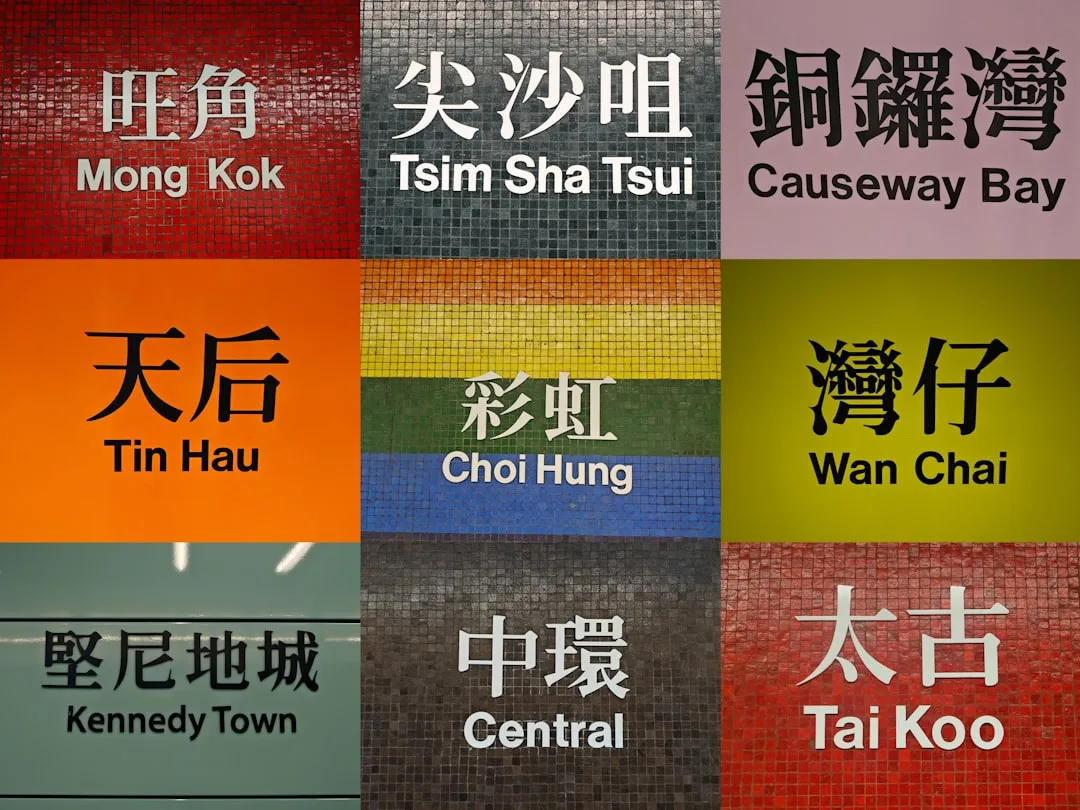
Pinyin is the official romanization system for Standard Chinese (Mandarin). Its name comes from the Chinese 拼音 (pinyin), which means "to spell out sounds" or "phonetic spelling." Developed in the 1950s by Chinese linguists and officially adopted by the People's Republic of China in 1958, pinyin uses the 26 letters of the Latin alphabet - with tone marks added above vowels - to represent the sounds of Mandarin. This guide explains Pinyin Pronunciation with clear rules and worked examples.
Pinyin serves multiple essential purposes. For learners, it is the primary tool for learning Chinese pronunciation before and alongside character study.
For native speakers, pinyin is the standard method for inputting Chinese characters on computers and smartphones - you type the pronunciation in Latin letters, and the input method offers a list of matching characters to choose from. Pinyin also appears in children's educational materials, bilingual dictionaries, and on street signs in many parts of China.
A critical point for beginners: pinyin is not pronounced like English. The letters represent Mandarin sounds, many of which have no direct equivalent in English. Treating pinyin as if it were English spelling leads to systematic, persistent pronunciation errors. The letter "x" in pinyin sounds nothing like "x" in English. The "zh" combination sounds quite different from any "zh" in English. The "e" vowel in isolation sounds different from its position in other combinations.
This guide gives you a complete map of the pinyin system: initials (consonants), finals (vowels and endings), and the complete pinyin table. It pays special attention to the sounds that cause the most trouble for English speakers, with clear descriptions and examples throughout.
The Structure of a Pinyin Syllable
Every Mandarin syllable in pinyin is composed of up to three parts:
- Initial: The consonant at the beginning (optional - some syllables start with a vowel)
- Final: The vowel or vowel + ending combination
- Tone mark: The diacritical mark above the main vowel indicating tone (1st through 4th, or none for neutral)
Examples of syllable structure:
- 妈 (ma) = initial: m, final: a, tone: 1st
- 中 (zhong) = initial: zh, final: ong, tone: 1st
- 学 (xue) = initial: x, final: ue, tone: 2nd
- 爱 (ai) = initial: none, final: ai, tone: 4th
- 人 (ren) = initial: r, final: en, tone: 2nd
Initials: The Consonants of Mandarin
Mandarin has 21 initials (consonants used at the start of syllables). They are organized into groups based on how they are produced.
Labial Consonants (Lips)
- b - Unaspirated, like English "b" but with less voicing: 爸 (ba, father), 白 (bai, white), 不 (bu, not)
- p - Aspirated "p" with a puff of air, like "p" in "pot": 朋 (peng, friend), 苹 (ping, apple), 跑 (pao, run)
- m - Like English "m": 妈 (ma, mother), 门 (men, door), 米 (mi, rice)
- f - Like English "f": 飞 (fei, fly), 饭 (fan, meal), 放 (fang, put/release)
Dental/Alveolar Consonants (Tongue tip near front teeth)
- d - Unaspirated, like English "d" but less voiced: 大 (da, big), 地 (di, earth), 东 (dong, east)
- t - Aspirated, like "t" in "top": 他 (ta, he), 天 (tian, sky), 同 (tong, same)
- n - Like English "n": 你 (ni, you), 那 (na, that), 南 (nan, south)
- l - Like English "l": 来 (lai, come), 路 (lu, road), 冷 (leng, cold)
Dental Sibilants (Hissing sounds)
- z - Like "ds" in "beds": 字 (zi, character), 在 (zai, at/exist), 做 (zuo, do)
- c - Like "ts" in "cats": 从 (cong, from), 次 (ci, time/occurrence)
- s - Like English "s": 书 (shu, book - wait, this uses sh), 四 (si, four), 送 (song, send)
Retroflex Consonants (Tongue curled back)
These are among the most distinctive Mandarin sounds and the hardest for English speakers:
- zh - Like "j" in "jungle" but with the tongue curled back: 中 (zhong, middle/China), 知 (zhi, know), 这 (zhe, this)
- ch - Like "ch" in "church" but with the tongue curled back and aspirated: 吃 (chi, eat), 长 (chang, long), 出 (chu, out)
- sh - Like "sh" in "shoe" but with tongue curled back: 是 (shi, is/be), 书 (shu, book), 上 (shang, above)
- r - No English equivalent. Tongue curled back, like a blended "r" and French "j": 人 (ren, person), 日 (ri, sun/day), 热 (re, hot)
Palatal Consonants (Tongue body near palate)
- j - Like "j" in "jeep" but without rounding the lips: 家 (jia, home), 今 (jin, today/now), 见 (jian, see)
- q - Like "ch" in "cheese" but without rounding: 去 (qu, go), 请 (qing, please), 前 (qian, front/before)
- x - Like "sh" in "she" but further forward, with more friction: 学 (xue, study), 喜 (xi, happy), 小 (xiao, small)
Velar Consonants (Back of throat)
- g - Unaspirated, like "g" in "get": 国 (guo, country), 高 (gao, tall), 贵 (gui, expensive)
- k - Aspirated, like "k" in "kite": 可 (ke, can), 看 (kan, look), 课 (ke, lesson)
- h - Like "h" in "hot" but slightly more throaty: 好 (hao, good), 喝 (he, drink), 花 (hua, flower)
Nasal (Semi-vowel in initial position)
- ng - This does not occur as an initial in Mandarin; it only appears at the end of finals.
- y - Like English "y": 一 (yi, one), 要 (yao, want), 有 (you, have)
- w - Like English "w": 我 (wo, I), 问 (wen, ask), 玩 (wan, play)
Finals: The Vowels and Endings of Mandarin
Finals are the vowel core of each syllable, sometimes followed by a nasal consonant (-n or -ng). Finals can appear alone (as a whole syllable) or following an initial consonant.
Simple Finals (Single Vowels)
- a - Open "ah" sound, like "a" in "father": 大 (da, big), 马 (ma, horse)
- o - Rounded "o", like "o" in "more" but shorter: 我 (wo, I), 多 (duo, many)
- e - Unrounded central vowel, like a flat "uh" - not like "e" in "bed": 车 (che, car), 可 (ke, can)
- i - Like "ee" in "see" EXCEPT after zh, ch, sh, r, z, c, s where it becomes a buzzing non-vowel
- u - Like "oo" in "food": 路 (lu, road), 不 (bu, not)
- u with umlaut - Like French "u" or German "u with umlaut" - tight, rounded "ee" sound. Written as u after j, q, x, y where it always has this sound.
"The trickiest vowel in pinyin for English speakers is 'e' when it stands alone or after an initial. It is not the 'e' in 'bed' - it is a flat, back, unrounded sound. Listen carefully to 车 (che, car) versus what English speakers often say, and the difference is clear."
Compound Finals (Vowel Combinations)
- ai - Like "eye": 爱 (ai, love), 来 (lai, come), 白 (bai, white)
- ei - Like "ay" in "say": 北 (bei, north), 黑 (hei, black), 给 (gei, give)
- ao - Like "ow" in "now": 好 (hao, good), 高 (gao, tall), 跑 (pao, run)
- ou - Like "o" in "go": 走 (zou, walk), 后 (hou, after), 有 (you, have)
- an - Like "an" in "and": 安 (an, peaceful), 看 (kan, look), 南 (nan, south)
- en - Like "en" in "open": 人 (ren, person), 本 (ben, base/MW for books)
- ang - "an" + ng, back nasal: 上 (shang, above), 长 (chang, long)
- eng - "en" + ng: 冷 (leng, cold), 等 (deng, wait)
- ong - "o" + ng: 中 (zhong, middle), 东 (dong, east)
- ia - "ya": 家 (jia, home), 下 (xia, below)
- ie - "ye": 写 (xie, write), 别 (bie, other/don't)
- iao - "yao": 叫 (jiao, call), 小 (xiao, small)
- ian - "yen": 见 (jian, see), 前 (qian, front)
- iang - "yang": 想 (xiang, think), 两 (liang, two)
- iong - "yong": 用 (yong, use), 穷 (qiong, poor)
- ua - "wa": 花 (hua, flower), 话 (hua, speech)
- uo - "wo": 说 (shuo, speak), 做 (zuo, do)
- uai - "why": 快 (kuai, fast), 外 (wai, outside - actually uses "ai")
- uan - "wan": 玩 (wan, play), 短 (duan, short)
- uang - "wang": 王 (wang, king), 双 (shuang, pair)
- ue - After j/q/x: "yue": 学 (xue, study), 月 (yue, moon)
The Complete Pinyin Syllable Table
The following table shows which initials can combine with which finals to form valid Mandarin syllables. A dot (.) indicates the combination does not exist in Mandarin.
| a | o | e | ai | ei | ao | ou | an | en | ang | eng | ong | |
|---|---|---|---|---|---|---|---|---|---|---|---|---|
| b | ba | bo | . | bai | bei | bao | . | ban | ben | bang | beng | . |
| p | pa | po | . | pai | pei | pao | pou | pan | pen | pang | peng | . |
| m | ma | mo | me | mai | mei | mao | mou | man | men | mang | meng | . |
| f | fa | fo | . | . | fei | . | fou | fan | fen | fang | feng | . |
| d | da | . | de | dai | dei | dao | dou | dan | den | dang | deng | dong |
| t | ta | . | te | tai | . | tao | tou | tan | . | tang | teng | tong |
| n | na | . | ne | nai | nei | nao | nou | nan | nen | nang | neng | nong |
| l | la | . | le | lai | lei | lao | lou | lan | . | lang | leng | long |
| z | za | . | ze | zai | zei | zao | zou | zan | zen | zang | zeng | zong |
| c | ca | . | ce | cai | . | cao | cou | can | cen | cang | ceng | cong |
| s | sa | . | se | sai | . | sao | sou | san | sen | sang | seng | song |
| zh | zha | . | zhe | zhai | zhei | zhao | zhou | zhan | zhen | zhang | zheng | zhong |
| ch | cha | . | che | chai | . | chao | chou | chan | chen | chang | cheng | chong |
| sh | sha | . | she | shai | shei | shao | shou | shan | shen | shang | sheng | . |
| r | . | . | re | . | . | rao | rou | ran | ren | rang | reng | rong |
| j | . | . | . | . | . | . | . | . | . | . | . | . |
| q | . | . | . | . | . | . | . | . | . | . | . | . |
| x | . | . | . | . | . | . | . | . | . | . | . | . |
| g | ga | . | ge | gai | gei | gao | gou | gan | gen | gang | geng | gong |
| k | ka | . | ke | kai | kei | kao | kou | kan | ken | kang | keng | kong |
| h | ha | . | he | hai | hei | hao | hou | han | hen | hang | heng | hong |
Note: j, q, x combine with i and u (with umlaut) finals only. zh, ch, sh, r combine with retroflexed versions of i.
Tricky Sounds for English Speakers
The x, j, q Problem
The letters x, j, and q represent sounds that do not exist in English. All three are palatal sounds produced with the tongue body raised toward the hard palate, and none of them round the lips (unlike their English counterparts).
- j (as in 家 jia, home): Place your tongue where you would for "y" in "yes," then lightly close it as you say the sound. NOT like "j" in "jump."
- q (as in 去 qu, go): Like j but with a strong puff of air (aspirated). NOT like "q" in "queen."
- x (as in 学 xue, study): Tongue in position for "y" in "yes," with friction like "s" but further back. NOT like "x" in "box."
The zh, ch, sh, r Problem
These retroflex sounds require curling the tongue tip backward so it points toward or touches the roof of the mouth behind the alveolar ridge.
- zh (as in 中 zhong, middle): Tongue curled back, like the "j" sound but with the tongue further back.
- ch (as in 吃 chi, eat): Curled back "ch" with aspiration.
- sh (as in 是 shi, is): Curled back "sh."
- r (as in 人 ren, person): The most unusual sound in pinyin. Start with tongue curled back as for sh, then voice it and relax slightly. It sounds like a cross between English "r" and the French "j" in "je."
"The retroflex r in Chinese is one of the hardest sounds for non-native speakers to produce. Do not be discouraged if it takes months to get right. Even Chinese learners from non-Mandarin regions struggle with it. The key is to curl the tongue tip backward while voicing the sound."
The z, c, s Problem
These dental sibilants are similar to English equivalents but made with the tongue tip lightly touching the back of the upper teeth.
- z (as in 字 zi, character): Like "ds" in "beds" or "kids."
- c (as in 次 ci, time): Like "ts" in "cats" or "hats."
- s (as in 四 si, four): Like English "s" but more dentalized.
The Special "i" After Retroflexes and Sibilants
After zh, ch, sh, r, z, c, s, the vowel "i" in pinyin represents a special buzzing non-vowel - not the "ee" sound it represents in other positions.
- 知 (zhi) - not "zhee" but a buzzing syllable: "zhrrr"
- 吃 (chi) - not "chee" but "chr" with retroflexed buzzing
- 是 (shi) - not "shee" but a retroflexed buzzing "shr"
- 日 (ri) - not "ree" but a buzzing retroflexed sound
- 字 (zi) - not "zee" but a dental buzzing "dzz"
- 次 (ci) - not "tsee" but "ts" with buzz
The Difference Between -n and -ng Endings
Finals ending in -n and -ng sound very different and changing one for the other changes the word's meaning.
- 安 (an) vs. 昂 (ang): "an" closes with tongue touching the alveolar ridge; "ang" ends with tongue raised to the back of the mouth
- 人 (ren) vs. 扔 (reng): similar contrast
- 因 (yin, reason) vs. 应 (ying, should): completely different characters and meanings
Spelling Rules: How Pinyin Handles Special Cases
Rule 1: When i, u, or u-with-umlaut begin a syllable
- i becomes y: 一 yi (one), 用 yong (use)
- u becomes w: 我 wo (I), 玩 wan (play)
- u-with-umlaut becomes yu: 月 yue (moon), 鱼 yu (fish)
Rule 2: The umlaut drop After j, q, x, and y, u always means u-with-umlaut (the French u sound). The umlaut dots are omitted because there is no ambiguity: 学 is xue not xue (they are the same thing after x).
Rule 3: Finals beginning with u after certain initials When n or l is followed by u-with-umlaut, the umlaut MUST be written to distinguish from regular u: 女 (nu-with-umlaut, woman) vs. 努 (nu, strive).
Rule 4: The apostrophe for clarity When a syllable beginning with a, o, or e follows another syllable without a clear break, an apostrophe is used: 西安 (Xi'an, the city) prevents misreading as "xian" (one syllable).
Common Pronunciation Mistakes and Fixes
Mistake 1: Pronouncing x as English "x" or "sh" x in pinyin is not "ks" or "sh." It is a palatal fricative. Practice by saying "see" and moving the friction point back while keeping the tongue flat.
Mistake 2: Pronouncing e as "ee" or "ay" The standalone e vowel in Chinese is a flat, unrounded central vowel. Avoid the English tendency to say "ay" or "ee."
Mistake 3: Not distinguishing -n and -ng endings These must be heard and produced as distinct sounds. Drill pairs: 山 (shan, mountain) vs. 上 (shang, above).
Mistake 4: Over-anglicizing b, d, g English b, d, g are voiced. Chinese b, d, g in pinyin are unvoiced but unaspirated - they fall between English "b" and "p" in terms of airflow. They should never be strongly voiced.
Mistake 5: Pronouncing zh/ch/sh like English "j/ch/sh" The retroflex quality - tongue curled back - is essential. Without it, these consonants merge with j/q/x, and words become indistinguishable.
Quick Reference: Tricky Pinyin Sounds at a Glance
| Pinyin | Sounds Like | Common Mistake | Example |
|---|---|---|---|
| x | Like "sh" but with flat tongue, further forward | Saying "sh" or "ks" | 学 xue = study |
| q | Like "ch" but palatalized, no lip rounding | Saying English "ch" | 去 qu = go |
| j | Like "j" but palatalized, no lip rounding | Saying English "j" | 家 jia = home |
| zh | Like "j" but with tongue curled back | Saying English "j" | 中 zhong = middle |
| ch | Like "ch" but with tongue curled back | Saying English "ch" | 吃 chi = eat |
| sh | Like "sh" but with tongue curled back | Saying English "sh" | 是 shi = is |
| r | Voiced retroflex, unique to Chinese | Saying English "r" | 人 ren = person |
| z | Like "ds" in "beds" | Saying English "z" | 字 zi = character |
| c | Like "ts" in "cats" | Saying English "c" as "k" | 从 cong = from |
| e (alone) | Flat "uh" sound, unrounded | Saying "ay" or "ee" | 车 che = car |
| i (after zh/ch/sh/r/z/c/s) | Buzzing non-vowel | Saying "ee" | 知 zhi = know |
| u after j/q/x/y | Like French "u" (tight rounded "ee") | Saying regular "oo" | 学 xue = study |
30 Pronunciation Practice Examples
The following sentences are chosen to practice specific pinyin sounds:
- 你 好!(Ni hao!) = "Hello!" - practice 3rd tone
- 我 学 中文。(Wo xue Zhongwen.) = "I study Chinese." - x, zh sounds
- 请 坐。(Qing zuo.) = "Please sit down." - q sound
- 这 是 什么?(Zhe shi shenme?) = "What is this?" - zh, sh sounds
- 他 吃 了 饺子。(Ta chi le jiaozi.) = "He ate dumplings." - ch, j sounds
- 我 是 日本人。(Wo shi Ribenren.) = "I am Japanese." - r, sh sounds
- 字 典 在 哪里?(Zidian zai nali?) = "Where is the dictionary?" - z sound
- 从 这里 走。(Cong zhe li zou.) = "Walk from here." - c, z sounds
- 人 很 多。(Ren hen duo.) = "There are many people." - r sound
- 学 习 很 重要。(Xuexi hen zhongyao.) = "Study is very important." - x, zh sounds
- 七 月 四 日。(Qi yue si ri.) = "July 4th." - q, r sounds
- 上 下 左 右。(Shang xia zuo you.) = "Up, down, left, right." - sh, x sounds
- 知 道 了。(Zhidao le.) = "I know / I understand." - zh sound
- 谢谢 你。(Xiexie ni.) = "Thank you." - x sound
- 吃 什么?(Chi shenme?) = "What are you eating?" - ch, sh sounds
- 这 个 字 怎么 写?(Zhege zi zenme xie?) = "How do you write this character?" - zh, z, x
- 日本 和 中国。(Riben he Zhongguo.) = "Japan and China." - r, zh sounds
- 三 十 二。(San shi er.) = "32." - sh, r sounds
- 从 北京 出发。(Cong Beijing chufa.) = "Depart from Beijing." - c, ch sounds
- 热 不 热?(Re bu re?) = "Is it hot?" - r sound
- 再 见!(Zai jian!) = "Goodbye!" - j sound
- 我 写 汉字。(Wo xie Hanzi.) = "I write Chinese characters." - x sound
- 这 件 事 很 重要。(Zhe jian shi hen zhongyao.) = "This matter is very important." - zh, j, sh
- 树 上 有 鸟。(Shu shang you niao.) = "There is a bird in the tree." - sh
- 吃 素 的 人。(Chi su de ren.) = "Vegetarian person." - ch, s, r
- 早上 好!(Zaoshang hao!) = "Good morning!" - z, sh
- 七 只 鸡。(Qi zhi ji.) = "Seven chickens." - q, zh, j
- 这 支 笔 是 谁 的?(Zhe zhi bi shi shei de?) = "Whose pen is this?" - zh, sh
- 中 秋 节 快乐!(Zhongqiu jie kuaile!) = "Happy Mid-Autumn Festival!" - zh, q, j
- 自行车 在 哪里?(Zixingche zai nali?) = "Where is the bicycle?" - z, x, ch
FAQ
Q: Is pinyin the same as Chinese? A: No. Pinyin is a phonetic transcription system - a tool for representing the sounds of Mandarin using Latin letters. Chinese is written in characters (汉字 Hanzi). Pinyin is a learning aid and input method, not the writing system of Chinese.
Q: Do I still need to learn pinyin if I am only learning to speak, not read? A: Yes. Pinyin is the standard system for learning Mandarin pronunciation in virtually all textbooks and courses. It also appears in dictionaries next to characters, making it indispensable even if reading is not your priority.
Q: Why does pinyin look like English but sound different? A: Because pinyin was designed to represent Mandarin sounds, not English sounds. The creators assigned letters to sounds based on systematic principles, not on English pronunciation conventions. Always learn pinyin pronunciation rules explicitly - never assume they match English.
Q: Can I type Chinese using pinyin? A: Yes. Pinyin input is the dominant method for typing Chinese on computers and smartphones in mainland China. You type the pinyin romanization, and the input method displays a list of matching characters to choose from.
Q: What is the hardest pinyin sound to learn for English speakers? A: The retroflex r (as in 人 ren) is widely considered the hardest single sound. The palatals x, j, q are also challenging. The distinction between zh/ch/sh (retroflex) and j/q/x (palatal) is a common ongoing difficulty for many learners.
Q: Is pinyin used in Taiwan? A: Taiwan uses a different romanization system called Zhuyin Fuhao (also known as Bopomofo) for phonetic notation in educational settings. However, pinyin is also increasingly used and understood in Taiwan.
Conclusion
Pinyin is the essential foundation for Mandarin pronunciation, and mastering it is one of the best investments you can make in your Chinese language study.
A learner who spends time in the early weeks drilling the sounds of pinyin - the retroflex consonants, the palatal consonants, the special vowels, the tones - will build their vocabulary and fluency on a solid phonological base. A learner who skips this foundation and treats pinyin as if it were English will accumulate pronunciation errors that become harder to correct over time.
Use this guide as a reference you return to repeatedly. As you encounter new vocabulary, check the pinyin carefully, especially for sounds in the "tricky" categories. Listen to native speakers and imitate them closely. The sounds of Mandarin are learnable - every person who has achieved fluency in Chinese went through the same process of training their ear and mouth to the pinyin system that you are going through now.
Frequently Asked Questions
Is pinyin the same as Chinese?
No. Pinyin is a phonetic transcription system that represents Mandarin sounds using Latin letters. Chinese is written in characters (Hanzi). Pinyin is a learning and input tool, not the actual Chinese writing system.
Do I still need to learn pinyin if I only want to speak Chinese?
Yes. Pinyin is the standard system for learning Mandarin pronunciation in virtually all textbooks and courses. It also appears in dictionaries next to characters, making it essential for any learner.
Why does pinyin look like English but sound different?
Pinyin was designed to represent Mandarin sounds, not English sounds. The letters were assigned systematically to Mandarin phonemes. Always learn pinyin pronunciation rules explicitly - never assume they match English.
Can I type Chinese using pinyin?
Yes. Pinyin input is the dominant method for typing Chinese on computers and smartphones in mainland China. You type the pinyin romanization and select the correct character from a list the input method displays.
What is the hardest pinyin sound to learn for English speakers?
The retroflex r (as in ren, person) is widely considered the hardest single sound. The palatals x, j, and q are also challenging. Distinguishing zh/ch/sh (retroflex) from j/q/x (palatal) is a common ongoing difficulty.
Is pinyin used in Taiwan?
Taiwan primarily uses Zhuyin Fuhao (Bopomofo) for phonetic notation in schools. However, pinyin is also used and understood in Taiwan, especially in contexts involving mainland China or international learners.