Chinese grammar and vocabulary explained: guides, references, and examples for learners at every level.

Learn how Chinese characters are built from radicals. 30 essential radicals, 4 character types, stroke order rules, simplified vs traditional, and memorization tips.
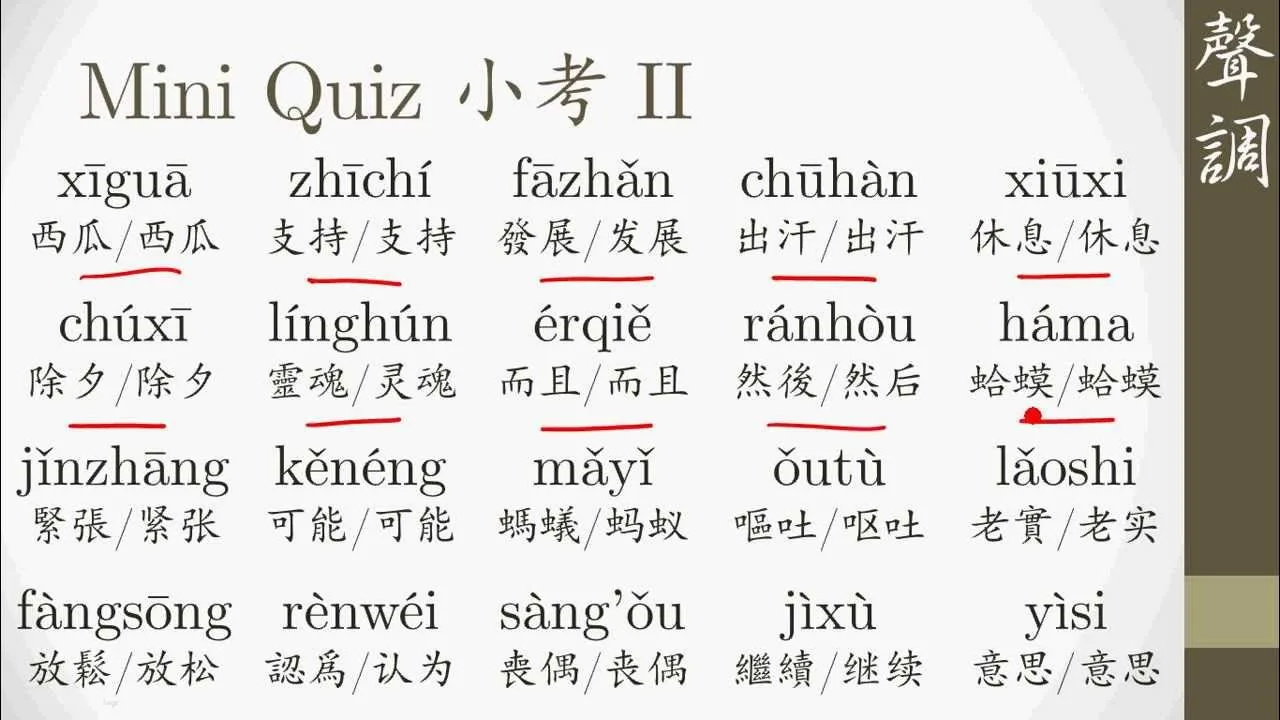
Complete reference to Mandarin tones: four main tones plus neutral, Chao pitch contours, tone sandhi rules (3+3, bu, yi), common mistakes, and tone pair drills.

Complete HSK Level 1 vocabulary: 150 essential Chinese words organized by category (pronouns, numbers, family, verbs, adjectives) with pinyin and examples.
Master Mandarin Chinese grammar from scratch: SVO word order, no verb conjugations, no tenses, measure words, questions, and negation explained with 30+ examples.
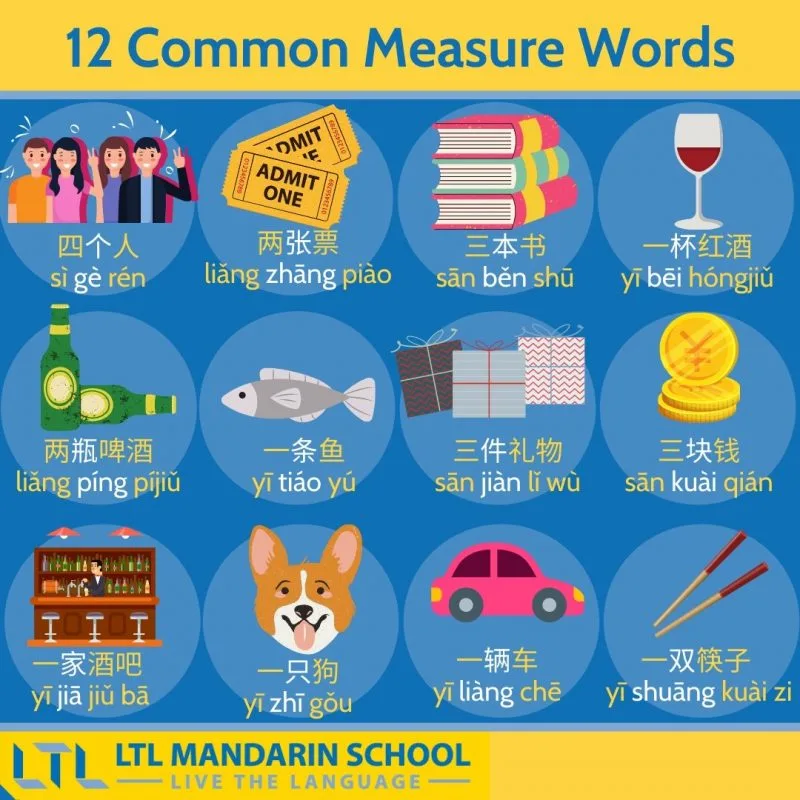
Complete reference to Chinese measure words (classifiers): 个, 只, 条, 张, 本, 把, 辆, 杯, 碗 and more organized by noun category with examples and grammar rules.
Master Chinese measure words (liangci): 40+ essential classifiers organized by category with examples, how to use them in sentences, common mistakes, and a full reference table.

Master all 4 Mandarin tones plus neutral tone: tone marks, tone sandhi rules, minimal pairs, 30+ examples, and proven strategies to avoid common tone mistakes.
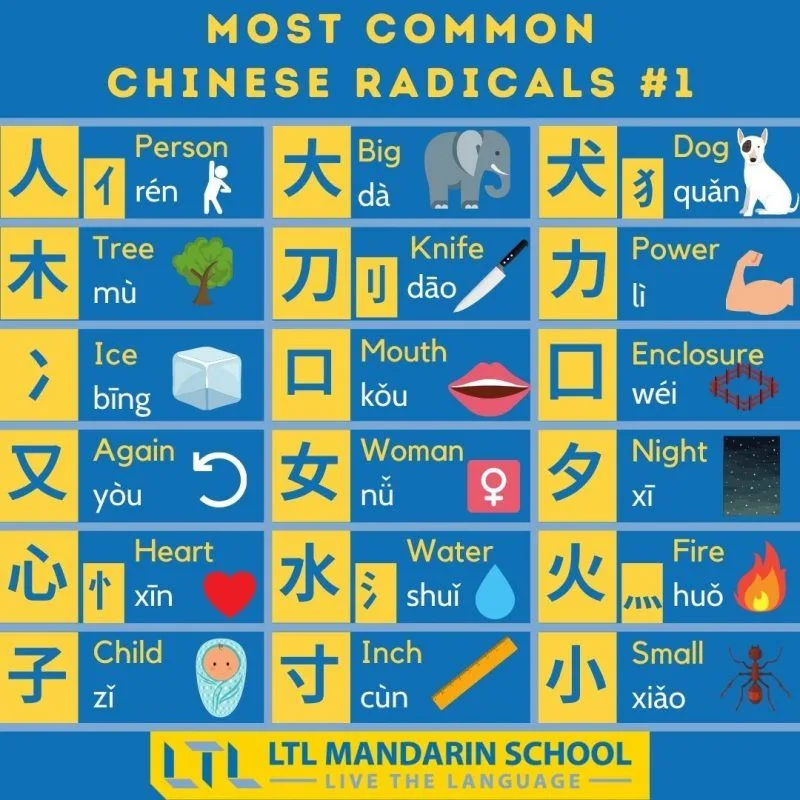
Complete reference to the 214 Kangxi radicals: full ordered list with pinyin and meanings, variant forms, high-frequency radicals, and dictionary lookup.
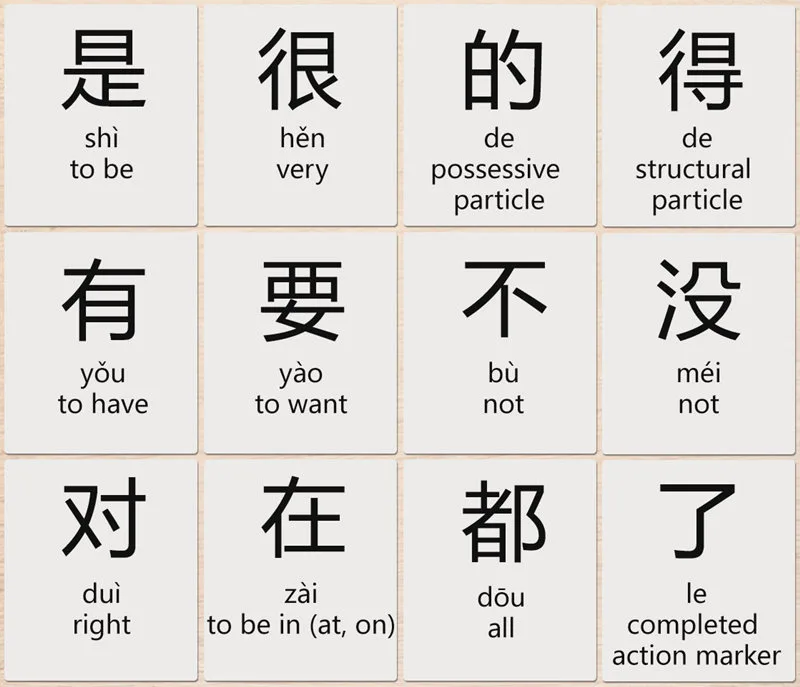
Complete reference to Chinese sentence particles: 了 (le), 吗 (ma), 吧 (ba), 呢 (ne), and the three de particles (的, 得, 地) with usage, positions, and examples.
Master Mandarin pinyin pronunciation: all initials, finals, complete pinyin table, tricky sounds x/zh/ch/r/q/j for English speakers, spelling rules, and 30 examples.
Chinese medical vocabulary: body parts, symptoms, illnesses, hospital and pharmacy phrases, Traditional Chinese Medicine (TCM), emergency terms with pinyin.
50+ essential Chinese chengyu (成语) four-character idioms with origins, meanings, and modern usage. 画蛇添足, 守株待兔, 塞翁失马, and more.
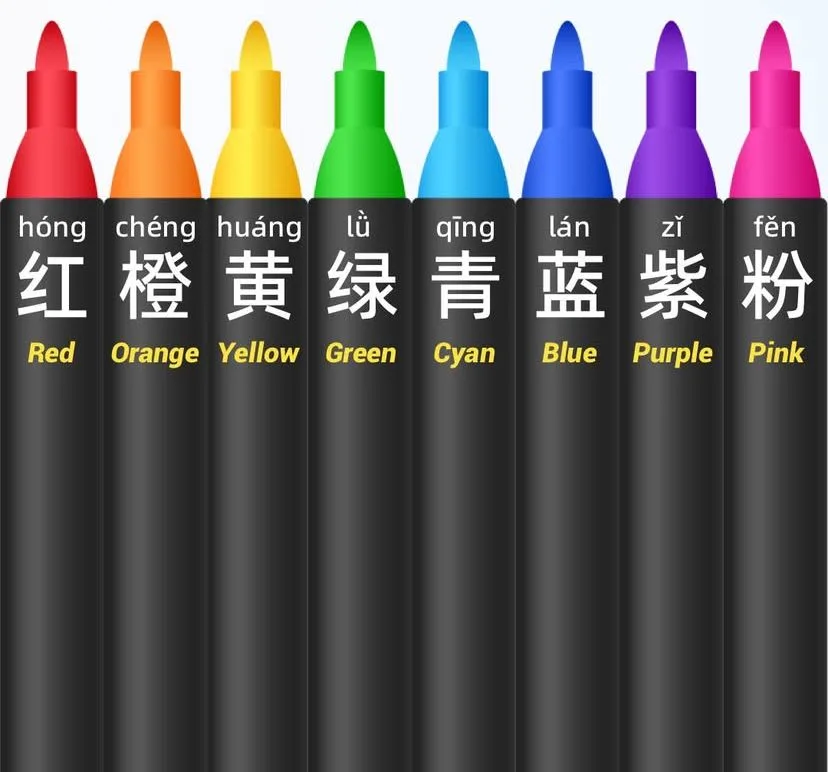
Chinese color vocabulary with cultural meanings (red = luck, white = mourning), descriptive adjectives, the 的 structure, comparatives, and the 很 rule.
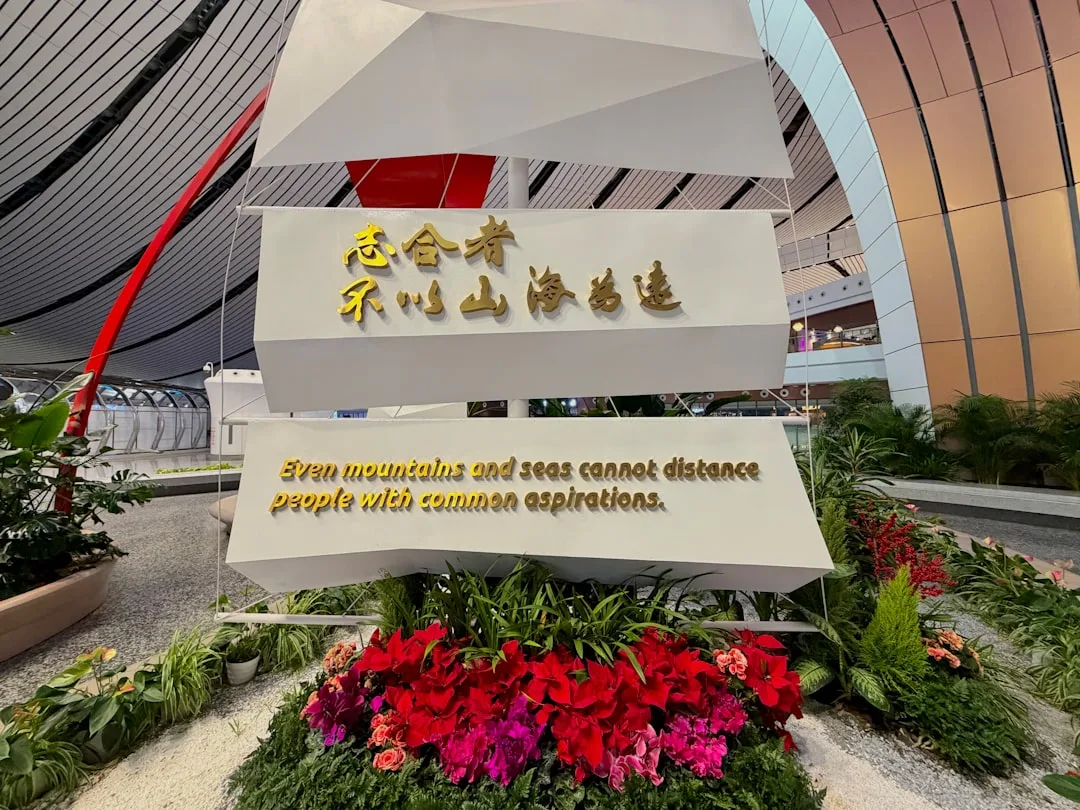
100+ essential Chinese phrases for daily conversation: greetings, shopping, dining, directions, emergencies. Simplified characters, pinyin, cultural notes.

Complete Chinese time reference: days of the week, months, clock time, dates, lunar calendar, zodiac, and relative time expressions with pinyin.

Chinese kinship terms explained: paternal vs maternal, elder vs younger siblings, eight cousin words, honorifics, and in-laws with pinyin and cultural notes.
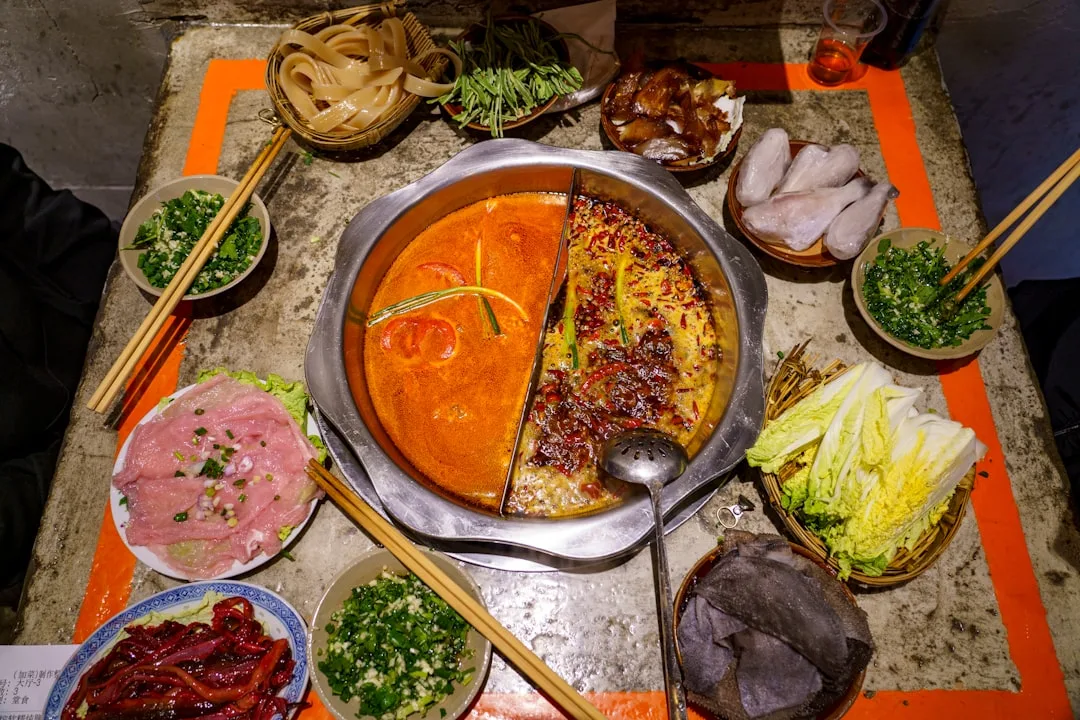
Chinese food and cooking vocabulary: ingredients, cooking methods, Eight Great Cuisines (Sichuan, Cantonese), restaurant phrases, flavors, drinks with pinyin.

100 most frequent Chinese verbs organized by function: being, motion, perception, communication, cognition, modal verbs. With aspect particles 了 过 在 着.

Essential Chinese travel phrases for tourists: airport, hotel, taxi, metro, directions, emergencies. Simplified characters with pinyin and cultural guidance.

Chinese weather vocabulary: four seasons, climate regions, temperature, rain, snow, typhoons, landforms, flora, fauna, poetic weather expressions with pinyin.
Mandarin has four main tones plus a neutral tone. The tone changes the meaning of a syllable entirely, so the same sounds can be different words depending on pitch. Tones are learned alongside vocabulary rather than afterwards, because a word without its tone is incomplete.
Measure words sit between a number and a noun, similar to saying two sheets of paper in English. Chinese requires them for every counted noun, and the correct measure word depends on the shape or category of the object. There are dozens in common use.
It depends on where you plan to use Chinese. Simplified characters are standard in mainland China and Singapore; traditional characters are used in Taiwan, Hong Kong, and Macau. The spoken language is the same, and most learners pick the set matching their goal.