
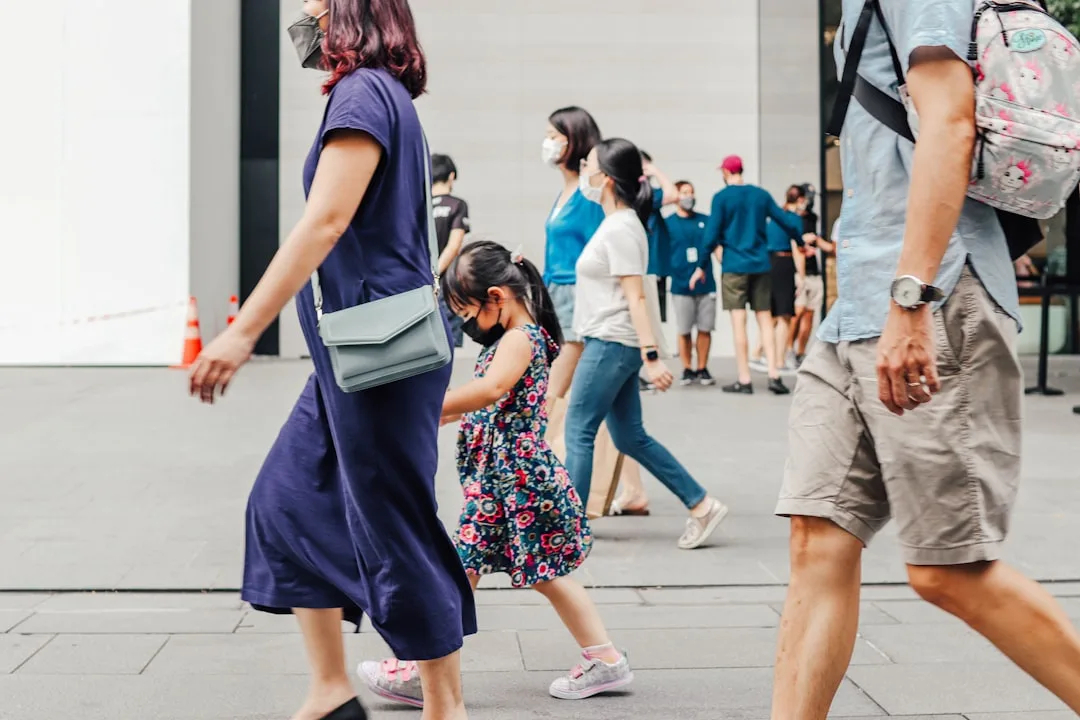
The Chinese family kinship system is among the most elaborate in any world language. Where English uses a single word "uncle" for four distinct relationships and "cousin" for eight, Chinese distinguishes every kinship role with its own term, encoding paternal versus maternal lineage, elder versus younger birth order, blood versus marital connection, and the gender of every referent.
The system reflects millennia of Confucian family structure, ancestor veneration, and the practical reality of large extended households where addressing the correct uncle by the correct name was a daily social necessity.
This reference organizes family vocabulary by branch: nuclear family, paternal grandparents and their descendants, maternal grandparents and their descendants, in-laws, and broader social relationships. Each term is given in simplified Chinese with pinyin and English gloss, accompanied by cultural notes where usage diverges from English expectations.
Family terminology is among the most character-dense areas of Chinese, so readers unfamiliar with characters should pair this reference with the Chinese characters and radicals guide. For the tone contrasts that distinguish 妈 (mā, mother) from 麻 (má, hemp) or 马 (mǎ, horse), see the Chinese four tones plus neutral reference. For grammar of possessive and plural particles in family descriptions, see the Chinese grammar rules guide.
Why Chinese Kinship Is So Detailed
Classical Chinese society was patrilineal and patrilocal: lineage and residence followed the father's family. This generated a clear asymmetry: paternal relatives were members of the 宗族 (zōngzú, clan); maternal relatives were 外 (wài, outside) to the clan.
The term 外 appears in maternal kinship words such as 外公 (maternal grandfather), literally "outside grandfather." Within each branch, every generation is distinguished by age relative to ego. Birth order matters: 大哥 is elder brother, 二哥 is second elder brother, and so on.
The sociologist Fei Xiaotong famously described Chinese society as a "differential mode of association" (差序格局, chā xù gé jú), where moral and material obligations radiate outward from the individual in concentric rings of closeness. Kinship terminology is the linguistic scaffolding of these rings: your 爸爸 (father) is closer than your 叔叔 (father's younger brother), who is closer than your 堂兄 (paternal male cousin).
Nuclear Family
Table 1. Immediate family.
| Chinese | Pinyin | English | Notes |
|---|---|---|---|
| 家 | jiā | Family, home | |
| 家人 | jiārén | Family members | |
| 父母 | fùmǔ | Parents (formal) | Written |
| 爸爸 | bàba | Father | Spoken, neutral |
| 妈妈 | māma | Mother | Spoken, neutral |
| 父亲 | fùqin | Father (formal) | Written, documents |
| 母亲 | mǔqin | Mother (formal) | Written, documents |
| 孩子 | háizi | Child/children | Generic |
| 儿子 | érzi | Son | |
| 女儿 | nǚ'ér | Daughter | |
| 哥哥 | gēge | Elder brother | |
| 弟弟 | dìdi | Younger brother | |
| 姐姐 | jiějie | Elder sister | |
| 妹妹 | mèimei | Younger sister | |
| 兄弟 | xiōngdì | Brothers | |
| 姐妹 | jiěmèi | Sisters | |
| 兄弟姐妹 | xiōngdì jiěmèi | Siblings |
Sibling order is named directly: 大哥 (dàgē) eldest brother, 二哥 (èrgē) second brother, 三哥 (sāngē) third brother; 大姐 (dàjiě) eldest sister, 二姐 (èrjiě) second sister; and similarly for younger siblings 大弟 (dàdì), 小弟 (xiǎodì). This is not optional elegance but the normal form of address within families.
Paternal Grandparents and Relatives
The paternal side uses terms built from the clan perspective. Paternal grandfather is the most senior figure.
Table 2. Paternal grandparents.
| Chinese | Pinyin | English |
|---|---|---|
| 爷爷 | yéye | Paternal grandfather |
| 奶奶 | nǎinai | Paternal grandmother |
| 祖父 | zǔfù | Paternal grandfather (formal) |
| 祖母 | zǔmǔ | Paternal grandmother (formal) |
Table 3. Paternal uncles and aunts.
| Chinese | Pinyin | English |
|---|---|---|
| 伯父 | bófù | Father's elder brother (formal) |
| 伯伯 | bóbo | Father's elder brother |
| 叔父 | shūfù | Father's younger brother (formal) |
| 叔叔 | shūshu | Father's younger brother |
| 姑姑 | gūgu | Father's sister |
| 姑妈 | gūmā | Father's sister (married) |
| 伯母 | bómǔ | Wife of father's elder brother |
| 婶婶 | shěnshen | Wife of father's younger brother |
| 姑父 | gūfu | Husband of father's sister |
Table 4. Paternal cousins.
| Chinese | Pinyin | English |
|---|---|---|
| 堂哥 | tánggē | Paternal older male cousin |
| 堂弟 | tángdì | Paternal younger male cousin |
| 堂姐 | tángjiě | Paternal older female cousin |
| 堂妹 | tángmèi | Paternal younger female cousin |
The character 堂 (táng) "hall" marks cousins through the father's brothers; they share the family name and in classical times shared the ancestral hall. Cousins through the father's sister (different surname) use 表 instead.
Maternal Grandparents and Relatives
The maternal side systematically uses the character 外 (wài, "outside") to mark its relationship to the patrilineal clan, or alternatively the character 表 (biǎo) for cousins.
Table 5. Maternal grandparents.
| Chinese | Pinyin | English |
|---|---|---|
| 外公 | wàigōng | Maternal grandfather (southern) |
| 外婆 | wàipó | Maternal grandmother (southern) |
| 姥爷 | lǎoye | Maternal grandfather (northern) |
| 姥姥 | lǎolao | Maternal grandmother (northern) |
| 外祖父 | wàizǔfù | Maternal grandfather (formal) |
| 外祖母 | wàizǔmǔ | Maternal grandmother (formal) |
Table 6. Maternal uncles and aunts.
| Chinese | Pinyin | English |
|---|---|---|
| 舅舅 | jiùjiu | Mother's brother |
| 舅父 | jiùfù | Mother's brother (formal) |
| 舅妈 | jiùmā | Wife of mother's brother |
| 阿姨 | āyí | Mother's sister (general, also "aunty") |
| 姨妈 | yímā | Mother's sister (married, older than mother) |
| 姨母 | yímǔ | Mother's sister (formal) |
| 姨父 | yífu | Husband of mother's sister |
Table 7. Maternal cousins and distant cousins.
| Chinese | Pinyin | English |
|---|---|---|
| 表哥 | biǎogē | Maternal older male cousin / paternal aunt's son (older) |
| 表弟 | biǎodì | Younger male cousin (via aunt or mother's siblings) |
| 表姐 | biǎojiě | Older female cousin (via aunt or mother's siblings) |
| 表妹 | biǎomèi | Younger female cousin (via aunt or mother's siblings) |
The eight-way cousin system can be summarized: 堂 marks cousins through father's brothers (same surname); 表 marks cousins through father's sisters and all mother's siblings (different surname). Within each category, age and gender give four sub-terms. The English "cousin" thus corresponds to eight distinct Chinese words.
Spouse, Partner, and Children's Spouses
Table 8. Spouse terms.
| Chinese | Pinyin | English | Notes |
|---|---|---|---|
| 丈夫 | zhàngfu | Husband (standard) | |
| 先生 | xiānsheng | Husband, Mr. | Also "Mr." |
| 老公 | lǎogōng | Husband (colloquial) | Very common today |
| 妻子 | qīzi | Wife (standard) | |
| 太太 | tàitai | Wife, Mrs. | Also "Mrs." |
| 老婆 | lǎopó | Wife (colloquial) | Very common today |
| 爱人 | àirén | Spouse (neutral) | PRC generation |
| 配偶 | pèi'ǒu | Spouse (formal) | Legal documents |
| 男朋友 | nánpéngyou | Boyfriend | |
| 女朋友 | nǚpéngyou | Girlfriend | |
| 未婚夫 | wèihūn fū | Fiancé | |
| 未婚妻 | wèihūn qī | Fiancée |
Table 9. Children's spouses and grandchildren.
| Chinese | Pinyin | English |
|---|---|---|
| 女婿 | nǚxù | Son-in-law |
| 儿媳 | érxí | Daughter-in-law |
| 媳妇 | xífù | Daughter-in-law / wife (dialect) |
| 孙子 | sūnzi | Son's son |
| 孙女 | sūnnǚ | Son's daughter |
| 外孙 | wàisūn | Daughter's son |
| 外孙女 | wàisūn nǚ | Daughter's daughter |
In-Laws
Table 10. Husband's family (from wife's perspective).
| Chinese | Pinyin | English |
|---|---|---|
| 公公 | gōnggong | Husband's father |
| 婆婆 | pópo | Husband's mother |
| 公婆 | gōngpó | Husband's parents |
Table 11. Wife's family (from husband's perspective).
| Chinese | Pinyin | English |
|---|---|---|
| 岳父 | yuèfù | Wife's father |
| 岳母 | yuèmǔ | Wife's mother |
| 丈人 | zhàngren | Wife's father (colloquial) |
| 丈母娘 | zhàngmǔniáng | Wife's mother (colloquial) |
Honorific and Respectful Address
Chinese uses age-relative honorifics liberally. Strangers are often addressed as 阿姨 (aunty), 叔叔 (uncle), 爷爷 (grandpa), 奶奶 (granny) based on apparent age, not kinship. This is polite, not intrusive.
Table 12. Honorific addresses.
| Chinese | Pinyin | English |
|---|---|---|
| 大哥 | dà gē | Big brother (to a peer man slightly older) |
| 大姐 | dà jiě | Big sister (to a peer woman slightly older) |
| 叔叔 | shūshu | Uncle (to any middle-aged man) |
| 阿姨 | āyí | Auntie (to any middle-aged woman) |
| 爷爷 | yéye | Grandpa (to any elderly man) |
| 奶奶 | nǎinai | Granny (to any elderly woman) |
| 老师 | lǎoshī | Teacher (universal respectful) |
| 师傅 | shīfu | Master (to skilled workers, drivers) |
| 老板 | lǎobǎn | Boss (to shop owners) |
Using 叔叔 or 阿姨 to address strangers of parental age is standard politeness in China, roughly equivalent to "sir" and "ma'am" in English. Children are explicitly taught to use these terms. Foreign visitors addressing Chinese friends' parents should default to 叔叔 and 阿姨 plus the family name unless invited to use something else.
Friends, Colleagues, and Social Relationships
Table 13. Social relationships.
| Chinese | Pinyin | English |
|---|---|---|
| 朋友 | péngyou | Friend |
| 好朋友 | hǎo péngyou | Good friend |
| 最好的朋友 | zuì hǎo de péngyou | Best friend |
| 同学 | tóngxué | Classmate |
| 同事 | tóngshì | Colleague |
| 邻居 | línjū | Neighbor |
| 老乡 | lǎoxiāng | Person from same hometown |
| 哥们儿 | gēmenr | Buddies (male, Beijing) |
| 姐妹 | jiěmèi | Sisters, female friends |
| 认识 | rènshi | Know (acquaintance) |
| 熟人 | shúrén | Acquaintance |
| 陌生人 | mòshēng rén | Stranger |
| 客人 | kèrén | Guest |
| 主人 | zhǔrén | Host |
Marriage and Life Events
Table 14. Life events.
| Chinese | Pinyin | English |
|---|---|---|
| 结婚 | jiéhūn | Get married |
| 离婚 | líhūn | Divorce |
| 再婚 | zàihūn | Remarry |
| 订婚 | dìnghūn | Get engaged |
| 怀孕 | huáiyùn | Pregnant |
| 生孩子 | shēng háizi | Give birth |
| 生日 | shēngrì | Birthday |
| 过生日 | guò shēngrì | Celebrate birthday |
| 满月 | mǎnyuè | One-month-old celebration |
| 婚礼 | hūnlǐ | Wedding ceremony |
| 葬礼 | zànglǐ | Funeral |
| 扫墓 | sǎomù | Tomb-sweeping |
Common Mistakes Learners Make
- Using 爸爸 for father-in-law. Use 公公 (husband's father) or 岳父 (wife's father), not 爸爸 which refers only to one's own father. Spouses may address in-laws as 爸 or 妈 once married.
- Confusing 堂 and 表 cousins. 堂 cousins share the family name (father's brother's children); 表 cousins have a different surname. Mistaking them suggests ignorance of lineage.
- Using 外 dismissively. 外 (outside) in 外公, 外婆 is descriptive, not dismissive. Maternal grandparents are no less loved than paternal.
- Dropping birth order. Saying just 哥哥 when there are multiple brothers is vague; use 大哥, 二哥. Within a family, birth order is the address.
- Using 老公 at formal settings. 老公 and 老婆 are endearing casual terms. In formal documents or introductions, use 丈夫 and 妻子.
- Age-based honorifics. Don't call a young woman 阿姨; it implies she is old. 姐姐 or 小姐 (in Taiwan) is safer. In mainland China 美女 (měinǚ) is now a neutral address for adult women in service contexts.
- Confusing tones in 妈, 麻, 马. Three different characters, three different tones. Family words are where beginners feel the weight of tone distinctions.
- Overusing 父亲 and 母亲. These are written or formal-speech terms. Daily conversation uses 爸爸 and 妈妈.
Quick Reference
- Paternal markers: 堂 for cousins; simply 爷爷/奶奶 for grandparents.
- Maternal markers: 外 prefix for grandparents; 表 for cousins (usually).
- Birth order: 大, 二, 三 for elder, middle, younger siblings.
- Formal vs. colloquial: 父亲/母亲 (written) vs. 爸爸/妈妈 (spoken).
- Honorifics to strangers: 阿姨, 叔叔, 爷爷, 奶奶 by apparent age.
- Common spouse terms today: 老公, 老婆.
FAQ
Why does Chinese have eight cousin words?
Because classical Chinese society tracked lineage meticulously. 堂 versus 表 marks whether you share a surname with your cousin. Within each group, gender and age-relative-to-ego produce four sub-terms. English "cousin" collapses all eight into one.
Do modern urban Chinese actually use all these terms?
Yes for immediate family and honorific address. Extended terms such as 堂兄弟 versus 表兄弟 are known but used less precisely in one-child-policy era families where many people grew up without cousins. In large extended-family gatherings, precise terms return.
What's the difference between 爸爸 and 父亲?
爸爸 (bàba) is colloquial, used when speaking to or about your father. 父亲 (fùqin) is formal, used in writing, documents, introductions, and formal speech. The same distinction applies to 妈妈/母亲.
Why is my Chinese friend calling a stranger 阿姨?
Chinese children are taught to address strangers by pseudo-kinship terms based on apparent age. An older woman is 阿姨 (auntie), an older man is 叔叔 (uncle), an elderly person is 爷爷 or 奶奶. It's standard politeness.
Is 老婆 disrespectful?
No. 老婆 and 老公 are warm, colloquial, and universally used in casual speech. In formal settings, court documents, or business introductions, 妻子 (qīzi) and 丈夫 (zhàngfu) are preferred.
How do I address my partner's parents?
Once married, call them 爸 (dad) and 妈 (mom) if invited, or 叔叔 and 阿姨 while dating. Before marriage, never use 公公/岳父 terms directly; these are reference words, not address terms.
Why do some regions say 外公 and others 姥爷?
Regional variation. 外公/外婆 is southern Mandarin (Shanghai, Guangzhou influence). 姥爷/姥姥 is northern Mandarin (Beijing, Tianjin). Both are correct; use whichever your family used or your teacher teaches.
See Also
- Chinese HSK 1 vocabulary 150 essential words
- Chinese common phrases daily conversation reference
- Chinese characters and radicals guide for beginners
- Chinese four tones plus neutral reference
- Chinese grammar rules complete beginners guide
- Pinyin complete guide
- Chinese tones complete guide with examples
Author: Kalenux Team
Frequently Asked Questions
Why does Chinese have eight cousin words?
Classical Chinese society tracked lineage meticulously. 堂 vs 表 marks whether you share a surname with your cousin. Within each group, gender and age relative to ego produce four sub-terms, giving eight total.
Do modern urban Chinese actually use all these terms?
Yes for immediate family and honorific address. Extended terms like 堂兄弟 vs 表兄弟 are known but used less precisely by one-child-policy generation speakers. At large extended-family gatherings, precise terms return.
What's the difference between 爸爸 and 父亲?
爸爸 (bàba) is colloquial for speaking to or about your father. 父亲 (fùqin) is formal, used in writing, documents, and speeches. The same split applies to 妈妈/母亲.
Why is my Chinese friend calling a stranger 阿姨?
Chinese children are taught to address strangers by pseudo-kinship terms based on apparent age. Older women are 阿姨, older men 叔叔, elderly 爷爷 or 奶奶. It is standard politeness, not presumption.
Is 老婆 disrespectful?
No. 老婆 and 老公 are warm, colloquial, and universally used in casual speech. In formal settings, 妻子 and 丈夫 are preferred.
How do I address my partner's parents?
Once married, call them 爸 and 妈 if invited, or 叔叔 and 阿姨 while dating. Before marriage, never use 公公/岳父 directly; these are reference words, not address terms.
Why do some regions say 外公 and others 姥爷?
Regional variation. 外公/外婆 is southern Mandarin (Shanghai, Guangzhou). 姥爷/姥姥 is northern Mandarin (Beijing, Tianjin). Both are correct.