
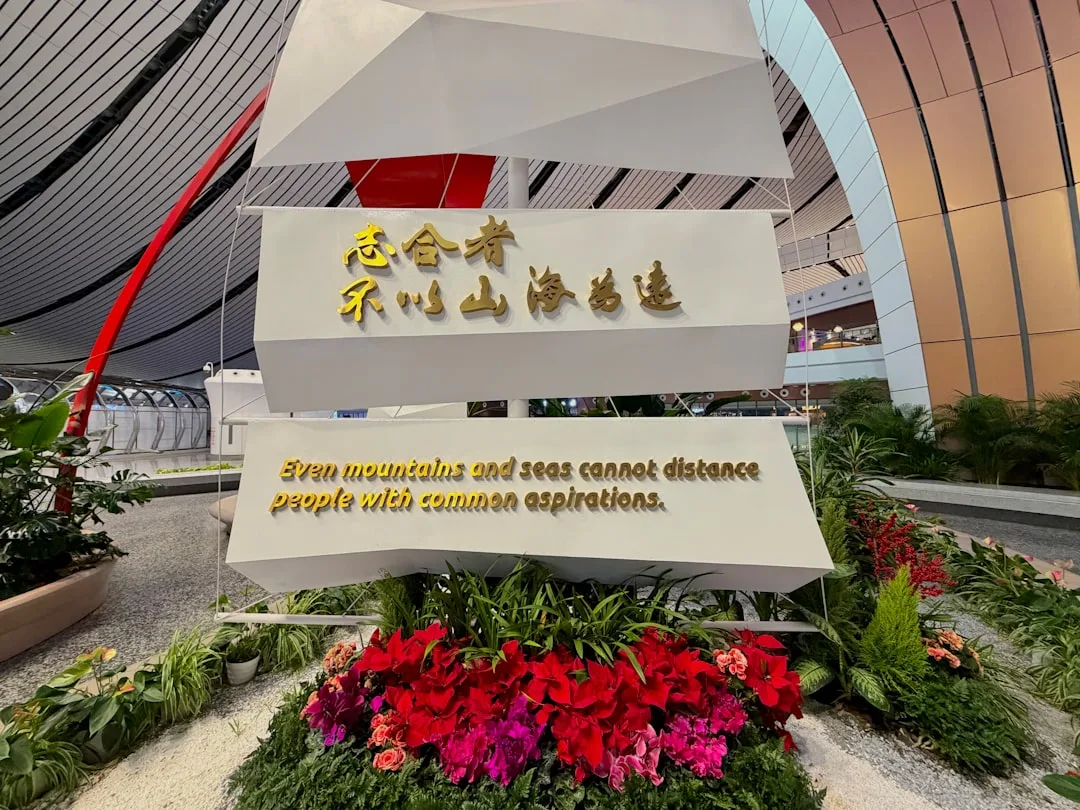
Mandarin Chinese (普通话, pǔtōnghuà, "common speech") is the world's most spoken native language, with over a billion speakers across mainland China, Taiwan, Singapore, and diaspora communities worldwide.
For a learner, the fastest route from beginner to functional speaker is not grammar drilling but memorizing high-frequency phrases that carry you through everyday situations: greetings, shopping, travel, restaurants, emergencies, polite requests, and small talk. These formulaic expressions, known as 套语 (tàoyǔ, "set phrases"), appear in conversation so often that fluent-sounding delivery depends on pulling them up without translating from English.
This reference compiles more than one hundred essential Chinese phrases organized by situation: greetings and farewells, introductions, polite requests, shopping, dining, directions, transportation, numbers and money, weather, time, feelings, and emergencies.
Each entry pairs simplified Chinese characters with pinyin tones and an idiomatic English gloss, accompanied by usage notes where the phrase differs culturally or pragmatically from English. For the tonal pronunciation behind every phrase, see the Chinese tones complete guide and the pinyin complete guide. For the grammar glue that holds these phrases together, see the Chinese grammar rules guide and the Chinese sentence particles reference.
Greetings and Farewells
Greetings in Chinese are shorter than English equivalents and vary by time of day and formality. Unlike English "how are you," the literal translation 你好吗 (nǐ hǎo ma) is asked less often in daily life and sounds textbook-formal to native ears. Instead, Chinese speakers often greet with contextual questions such as 吃了吗 (chī le ma, "have you eaten?") or 去哪儿 (qù nǎr, "where are you going?") as conversational openers that do not require literal answers.
Table 1. Greetings by time and formality.
| Chinese | Pinyin | English | Notes |
|---|---|---|---|
| 你好 | nǐ hǎo | Hello | Universal, neutral |
| 您好 | nín hǎo | Hello (polite) | For elders, customers, strangers |
| 大家好 | dàjiā hǎo | Hello everyone | Group greeting |
| 早上好 | zǎoshang hǎo | Good morning | Before noon |
| 早 | zǎo | Morning (casual) | Informal shortening |
| 中午好 | zhōngwǔ hǎo | Good noon | Around lunchtime |
| 下午好 | xiàwǔ hǎo | Good afternoon | After noon |
| 晚上好 | wǎnshang hǎo | Good evening | After dusk |
| 晚安 | wǎn'ān | Good night | Before sleep, not parting |
| 好久不见 | hǎojiǔ bú jiàn | Long time no see | Common reunion phrase |
| 吃了吗 | chī le ma | Have you eaten? | Social greeting, not literal |
Table 2. Farewells.
| Chinese | Pinyin | English | Notes |
|---|---|---|---|
| 再见 | zàijiàn | Goodbye | Literal "see again" |
| 拜拜 | bái bái | Bye bye | Borrowed from English |
| 回头见 | huítóu jiàn | See you later | Same day |
| 明天见 | míngtiān jiàn | See you tomorrow | |
| 下次见 | xiàcì jiàn | See you next time | |
| 一路平安 | yílù píng'ān | Safe trip | Said to travelers |
| 慢走 | màn zǒu | Take care (walk slowly) | Host to guest |
| 保重 | bǎozhòng | Take care | For longer partings |
The greeting 吃了吗 ("have you eaten?") reflects a historical reality when food security was not guaranteed. Today it functions as a friendly acknowledgment similar to "how's it going." A polite reply is 吃了,你呢 (chī le, nǐ ne, "I have, and you?"), regardless of whether you have actually eaten.
Introductions and Getting Acquainted
Chinese introductions follow a predictable script: name, nationality or hometown, occupation or school, and sometimes age. Family name (姓, xìng) precedes given name in formal contexts. A common polite exchange uses 贵姓 (guìxìng, "honored surname") to ask someone's family name respectfully.
Table 3. Introductions.
| Chinese | Pinyin | English |
|---|---|---|
| 我叫... | wǒ jiào... | My name is... |
| 你叫什么名字 | nǐ jiào shénme míngzi | What is your name? |
| 您贵姓 | nín guìxìng | What is your surname? (polite) |
| 我姓王 | wǒ xìng Wáng | My surname is Wang |
| 很高兴认识你 | hěn gāoxìng rènshi nǐ | Pleased to meet you |
| 认识你很高兴 | rènshi nǐ hěn gāoxìng | Same meaning, alternate order |
| 我是美国人 | wǒ shì Měiguó rén | I am American |
| 你是哪国人 | nǐ shì nǎ guó rén | What country are you from? |
| 我从伦敦来 | wǒ cóng Lúndūn lái | I come from London |
| 我是学生 | wǒ shì xuésheng | I am a student |
| 我在这里工作 | wǒ zài zhèlǐ gōngzuò | I work here |
| 你多大 | nǐ duō dà | How old are you? (adult) |
| 你几岁 | nǐ jǐ suì | How old are you? (child) |
Polite Requests and Social Courtesies
Politeness in Chinese relies less on grammatical markers than on specific phrases and indirect phrasing. 请 (qǐng, "please") at the start of a request and 麻烦你 (máfan nǐ, "to trouble you") both soften commands. 谢谢 (xièxie) is used liberally, but the English "you're welcome" (不客气, bú kèqi) is much rarer in casual speech among close friends, where no reply or 没事 (méi shì, "no problem") is typical.
Table 4. Polite phrases.
| Chinese | Pinyin | English |
|---|---|---|
| 谢谢 | xièxie | Thank you |
| 谢谢你 | xièxie nǐ | Thank you (to you) |
| 非常感谢 | fēicháng gǎnxiè | Many thanks (formal) |
| 不客气 | bú kèqi | You're welcome |
| 没事 | méi shì | No worries, it's nothing |
| 不用谢 | búyòng xiè | No thanks needed |
| 对不起 | duìbuqǐ | Sorry |
| 不好意思 | bù hǎoyìsi | Excuse me / slight apology |
| 没关系 | méi guānxi | It doesn't matter |
| 请 | qǐng | Please |
| 请问 | qǐng wèn | Excuse me (may I ask) |
| 麻烦你 | máfan nǐ | May I trouble you |
| 劳驾 | láojià | Excuse me (northern, asking a favor) |
对不起 is a heavier apology than English "sorry"; use 不好意思 for minor social friction such as bumping into someone or interrupting. 对不起 is reserved for real transgressions or formal apologies.
Yes, No, and Agreement
Chinese has no single word for "yes." Instead, speakers echo the verb of the question. If asked 你是学生吗 (Are you a student?), a positive answer is 是 (shì, "am"), not a generic yes. Negative answers use 不 (bù) or 没 (méi) paired with the verb.
Table 5. Affirmation and negation.
| Chinese | Pinyin | English |
|---|---|---|
| 是 | shì | Yes (echoing 是) |
| 对 | duì | Correct, right |
| 好 | hǎo | OK, good |
| 好的 | hǎo de | OK, alright |
| 行 | xíng | OK, alright (casual) |
| 可以 | kěyǐ | Can, OK |
| 不是 | bú shì | No (negating 是) |
| 不对 | bú duì | Incorrect |
| 不行 | bù xíng | No way, not OK |
| 没有 | méiyǒu | Don't have, didn't |
| 不知道 | bù zhīdào | I don't know |
| 我明白 | wǒ míngbai | I understand |
| 我不明白 | wǒ bù míngbai | I don't understand |
| 听不懂 | tīng bu dǒng | Can't understand (listening) |
| 请再说一遍 | qǐng zài shuō yí biàn | Please say it again |
Shopping and Money
Shopping phrases are among the most immediately useful. The classic 多少钱 (duōshao qián, "how much money") is heard in every market and store. Bargaining at markets (not in malls or chain stores) is common with 便宜一点 (piányi yìdiǎn, "a little cheaper").
Table 6. Shopping essentials.
| Chinese | Pinyin | English |
|---|---|---|
| 多少钱 | duōshao qián | How much? |
| 太贵了 | tài guì le | Too expensive |
| 便宜一点 | piányi yìdiǎn | A little cheaper |
| 能不能便宜 | néng bu néng piányi | Can you lower the price? |
| 我要这个 | wǒ yào zhège | I want this one |
| 我不要 | wǒ bú yào | I don't want it |
| 有没有别的 | yǒu méi yǒu bié de | Do you have others? |
| 可以试试吗 | kěyǐ shìshi ma | Can I try it? |
| 有大号的吗 | yǒu dà hào de ma | Do you have a larger size? |
| 刷卡 | shuā kǎ | Pay by card |
| 付现金 | fù xiànjīn | Pay cash |
| 微信支付 | Wēixìn zhīfù | WeChat Pay |
| 支付宝 | Zhīfùbǎo | Alipay |
| 发票 | fāpiào | Receipt / invoice |
| 打折 | dǎ zhé | Discount |
Modern China runs largely on mobile payment. 微信支付 (WeChat Pay) and 支付宝 (Alipay) are accepted by street vendors, taxis, and even temple donation boxes; cash is increasingly rare in large cities. Foreigners should link a Chinese bank card or use the international guest functionality introduced by both platforms.
Food and Restaurants
Restaurant phrases cover ordering, asking about spiciness, paying, and common menu items. Chinese restaurant service involves summoning the waiter with 服务员 (fúwùyuán) rather than catching their eye. Paying is at the counter or by asking 买单 (mǎi dān, "pay the bill").
Table 7. Dining phrases.
| Chinese | Pinyin | English |
|---|---|---|
| 服务员 | fúwùyuán | Waiter/waitress |
| 菜单 | càidān | Menu |
| 请给我菜单 | qǐng gěi wǒ càidān | Please give me the menu |
| 我想点菜 | wǒ xiǎng diǎn cài | I'd like to order |
| 有英文菜单吗 | yǒu Yīngwén càidān ma | Do you have an English menu? |
| 我要这个 | wǒ yào zhège | I'll have this |
| 不要辣 | bú yào là | Not spicy |
| 微辣 | wēi là | Mildly spicy |
| 很好吃 | hěn hǎochī | Very tasty |
| 买单 | mǎi dān | The bill, please |
| 结账 | jié zhàng | Settle the bill |
| 可以打包吗 | kěyǐ dǎbāo ma | Can I take it to go? |
| 水 | shuǐ | Water |
| 茶 | chá | Tea |
| 啤酒 | píjiǔ | Beer |
| 米饭 | mǐfàn | Rice |
| 我吃素 | wǒ chī sù | I'm vegetarian |
| 我对花生过敏 | wǒ duì huāshēng guòmǐn | I'm allergic to peanuts |
Directions and Transportation
Asking for directions uses 请问 (qǐng wèn, "may I ask") to open politely. Transport-specific vocabulary covers taxis, metro, buses, and trains.
Table 8. Directions and transport.
| Chinese | Pinyin | English |
|---|---|---|
| 请问...在哪里 | qǐng wèn...zài nǎlǐ | Excuse me, where is...? |
| 怎么走 | zěnme zǒu | How do I get there? |
| 直走 | zhí zǒu | Go straight |
| 左转 | zuǒ zhuǎn | Turn left |
| 右转 | yòu zhuǎn | Turn right |
| 往前走 | wǎng qián zǒu | Go forward |
| 到了 | dào le | Arrived |
| 地铁站 | dìtiě zhàn | Metro station |
| 公交车 | gōngjiāo chē | Bus |
| 出租车 | chūzū chē | Taxi |
| 打车 | dǎ chē | Hail a taxi |
| 去机场 | qù jīchǎng | To the airport |
| 请送我去... | qǐng sòng wǒ qù... | Please take me to... |
| 多远 | duō yuǎn | How far? |
| 要多长时间 | yào duō cháng shíjiān | How long will it take? |
Time, Dates, and Weather
Time expressions follow a general-to-specific order: year, month, day, hour. Weather small talk is common between strangers.
Table 9. Time and weather phrases.
| Chinese | Pinyin | English |
|---|---|---|
| 现在几点 | xiànzài jǐ diǎn | What time is it? |
| 现在三点 | xiànzài sān diǎn | It's three o'clock |
| 几号 | jǐ hào | What date? |
| 今天星期几 | jīntiān xīngqī jǐ | What day of the week? |
| 今天几月几号 | jīntiān jǐ yuè jǐ hào | What month and date? |
| 今天天气怎么样 | jīntiān tiānqì zěnmeyàng | How's the weather? |
| 今天很热 | jīntiān hěn rè | It's hot today |
| 今天很冷 | jīntiān hěn lěng | It's cold today |
| 下雨了 | xià yǔ le | It's raining |
| 下雪了 | xià xuě le | It's snowing |
Feelings and States
Chinese uses adjectival verbs, so "I am happy" is literally "I very happy" (我很高兴). The 很 (hěn) is usually obligatory even without meaning "very" in such sentences.
Table 10. Feelings.
| Chinese | Pinyin | English |
|---|---|---|
| 我很高兴 | wǒ hěn gāoxìng | I'm happy |
| 我很累 | wǒ hěn lèi | I'm tired |
| 我很忙 | wǒ hěn máng | I'm busy |
| 我饿了 | wǒ è le | I'm hungry |
| 我渴了 | wǒ kě le | I'm thirsty |
| 我冷 | wǒ lěng | I'm cold |
| 我热 | wǒ rè | I'm hot |
| 我生病了 | wǒ shēngbìng le | I'm sick |
| 我不舒服 | wǒ bù shūfu | I don't feel well |
| 我想睡觉 | wǒ xiǎng shuìjiào | I want to sleep |
Emergencies and Help
In emergencies, calling 110 reaches police, 120 ambulance, and 119 fire. The phrase 救命 (jiùmìng, "save life") is the Chinese equivalent of "help!"
Table 11. Emergency phrases.
| Chinese | Pinyin | English |
|---|---|---|
| 救命 | jiùmìng | Help! |
| 请帮帮我 | qǐng bāng bang wǒ | Please help me |
| 着火了 | zháo huǒ le | Fire! |
| 小偷 | xiǎotōu | Thief |
| 报警 | bào jǐng | Call the police |
| 请叫救护车 | qǐng jiào jiùhùchē | Please call an ambulance |
| 我受伤了 | wǒ shòushāng le | I'm injured |
| 我迷路了 | wǒ mílù le | I'm lost |
| 我的护照丢了 | wǒ de hùzhào diū le | I lost my passport |
| 我找不到... | wǒ zhǎo bu dào... | I can't find... |
| 请说英语 | qǐng shuō Yīngyǔ | Please speak English |
| 我需要翻译 | wǒ xūyào fānyì | I need a translator |
Chinese emergency services are reached by three short numbers: 110 police, 119 fire, 120 ambulance. A fourth, 122, dispatches traffic-accident response. Operators in major cities often have English support, but smaller jurisdictions may not; having the Chinese phrase 请说英语 (please speak English) ready is practical.
Small Talk and Phone Phrases
Table 12. Small talk and phone.
| Chinese | Pinyin | English |
|---|---|---|
| 你会说中文吗 | nǐ huì shuō Zhōngwén ma | Do you speak Chinese? |
| 我会一点 | wǒ huì yìdiǎn | I speak a little |
| 请慢一点 | qǐng màn yìdiǎn | Please speak slowly |
| 什么意思 | shénme yìsi | What does it mean? |
| 怎么说 | zěnme shuō | How do you say? |
| 用中文怎么说 | yòng Zhōngwén zěnme shuō | How do you say in Chinese? |
| 喂 | wéi | Hello (on phone) |
| 是我 | shì wǒ | It's me |
| 等一下 | děng yíxià | Just a moment |
| 再打 | zài dǎ | Call again |
| 发短信 | fā duǎnxìn | Send a text |
| 加微信 | jiā Wēixìn | Add on WeChat |
Common Mistakes Learners Make
- Ignoring tones. 妈 (mā, mother), 麻 (má, hemp), 马 (mǎ, horse), 骂 (mà, scold) differ only by tone; wrong tone produces a different word. Practice with the Chinese four tones reference.
- Over-translating "how are you." 你好吗 is grammatical but sounds formulaic; Chinese speakers greet with context-specific openers like 吃了吗 or simply 你好.
- Using 对不起 for minor slips. For mild social friction use 不好意思; reserve 对不起 for real apologies.
- Saying 是 for every yes. Echo the verb of the question. "Can you?" (你会吗) is answered with 会/不会, not 是.
- Omitting 很 with adjectives. 我高兴 sounds incomplete or contrastive; 我很高兴 is the standard form.
- Using wrong age question. 你几岁 is for children; adults use 你多大.
- Forgetting classifier with numbers. 两个人 (two people), not 两人 in most contexts. See the Chinese measure words classifiers reference.
- Confusing 能 and 会. 能 is physical/situational ability; 会 is learned skill. 我会开车 (I know how to drive) vs. 我现在不能开车 (I can't drive right now).
Quick Reference
- Most useful ten phrases: 你好, 谢谢, 对不起, 没关系, 请问, 多少钱, 不要辣, 买单, 再见, 我不明白.
- Politeness priority: 请 (please), 谢谢 (thanks), 不好意思 (excuse me), 麻烦你 (trouble you).
- Yes/no is verb-echoing: repeat the question verb with or without 不/没.
- Most common greeting today: 你好 with 您好 for elders or customers.
- Three emergency numbers: 110 police, 119 fire, 120 ambulance.
FAQ
How many phrases should I memorize before visiting China?
The 100-150 phrases in this reference cover 90 percent of survival situations. Pair with HSK 1 vocabulary for 300 total expressions and you can handle airports, hotels, restaurants, taxis, shopping, and basic introductions.
Do I need to memorize characters or only pinyin?
Pinyin is enough for speaking and listening. For reading menus, signs, and maps, start recognizing the most frequent 100 characters. See the Chinese characters guide.
Why do Chinese people reply with a verb instead of yes or no?
Chinese has no generic "yes." Each question is answered by echoing the verb: 去 (qù, "go") answers 你去吗; 有 (yǒu, "have") answers 你有吗. It's grammatical, not evasive.
Is bargaining still common?
Yes in markets (菜市场, 批发市场), tourist bazaars, and small shops; not in chain stores, malls, or restaurants. Start at 40-60 percent of the asking price. Say 便宜一点 or 能不能便宜.
Should I use 您 or 你?
Use 您 (nín) with elders, customers, bosses, and strangers older than you. Use 你 (nǐ) with peers, friends, and anyone close. Overusing 您 with friends sounds distant.
What's the difference between 喂 and 你好 on the phone?
喂 (wéi, usually second tone) is "hello" specifically when answering a call. It's not a general greeting and would sound rude face-to-face.
How do I politely interrupt someone?
Start with 不好意思 (bù hǎoyìsi) followed by your request. For a more formal or senior audience, use 对不起,打扰您一下 (duìbuqǐ, dǎrǎo nín yíxià, "sorry to disturb you for a moment").
See Also
- Chinese characters and radicals guide for beginners
- Chinese grammar rules complete beginners guide
- Chinese tones complete guide with examples
- Chinese four tones plus neutral reference
- Pinyin complete guide
- Chinese sentence particles reference
- Chinese measure words classifiers reference
- Chinese HSK 1 vocabulary 150 essential words
Author: Kalenux Team
Frequently Asked Questions
How many phrases should I memorize before visiting China?
The 100-150 phrases in this reference cover roughly 90 percent of survival situations. Combined with HSK 1 vocabulary you’ll have about 300 usable expressions for airports, hotels, restaurants, taxis, and shopping.
Do I need characters or only pinyin?
Pinyin is enough to speak and listen. For reading menus, signs, and maps, start recognizing the top 100 characters, especially those for food, transport, and numbers.
Why do Chinese speakers reply with a verb instead of yes?
Chinese has no generic yes. Questions are answered by echoing the verb: 去 answers ‘do you go?’; 有 answers ‘do you have?’. Adding 不 negates it.
Is bargaining still common in China?
Yes in markets, tourist bazaars, and small shops. Not in chain stores, malls, or restaurants. Start at 40-60 percent of asking price and use 便宜一点 or 能不能便宜.
Should I use 您 or 你?
Use 您 (nín) with elders, customers, bosses, and older strangers. Use 你 (nǐ) with friends and peers. Overusing 您 with close friends sounds distant and overly formal.
What are the emergency numbers in China?
110 reaches police, 119 fire, 120 ambulance, and 122 traffic accident response. Major cities have English-capable operators but smaller jurisdictions may not.
How do I politely interrupt someone?
Open with 不好意思 (bù hǎoyìsi). For more formal or senior audiences use 对不起,打扰您一下 (duìbuqǐ, dǎrǎo nín yíxià, ‘sorry to disturb you for a moment’).