
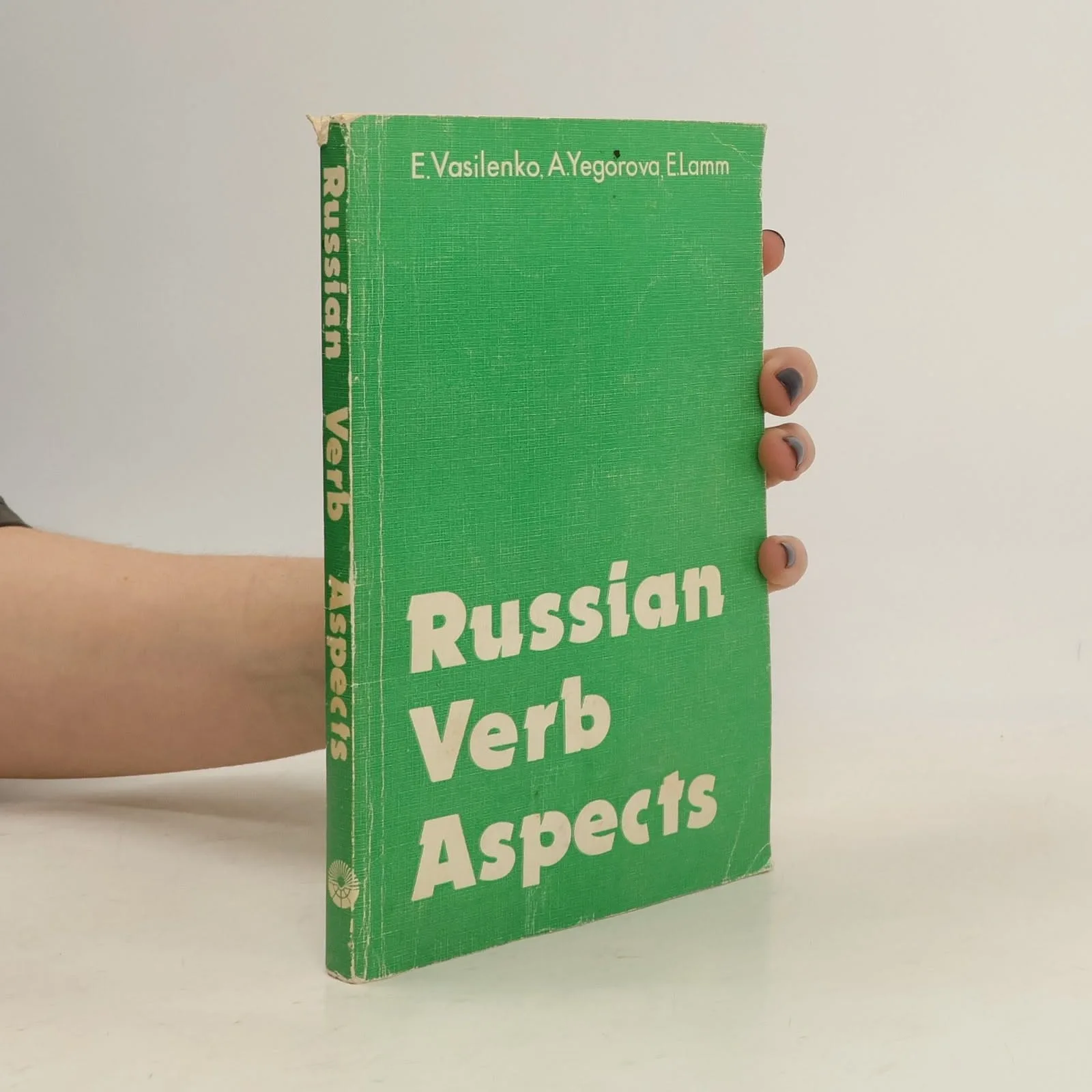
Verb aspect is one of the most distinctively Slavic features of Russian grammar, and it has no real equivalent in English or other Western European languages. Every Russian verb exists in one of two aspects - perfective or imperfective - and choosing the correct aspect is not optional. It is a fundamental part of what every verb form communicates.
To an English speaker, the concept can seem abstract at first: why does Russian need two different verbs to express "to write" - писать (pisat') / написать (napisat')?
The answer is that these two verbs do not mean the same thing. "Писать" describes the act of writing as an ongoing process or habitual activity. "Написать" describes writing as a completed action with a result. The action is the same, but the way the speaker views it - as process versus as completed whole - changes which verb is used.
Learning aspect pairs is not an extra complication on top of Russian grammar. It is the grammar. Understanding aspects will make every tense in Russian clearer and will help you understand why native speakers use the verbs they do. This guide explains the conceptual foundation, how aspect pairs are formed, when to use each aspect, the most important aspect pairs to learn first, and how aspects interact with tense.
The Core Concept: Process vs Completion
The fundamental distinction is this:
Imperfective aspect - describes an action as a process, something in progress, ongoing, repeated, or habitual. It focuses on the action itself rather than any result.
Perfective aspect - describes an action as a completed whole, a single event with a result. It focuses on the completion or outcome of the action.
Consider these pairs:
Читать / Прочитать (chitat' / prochitat') = to read
- "Я читал книгу." (Ya chital knigu.) = I was reading a book. / I used to read a book. (process)
- "Я прочитал книгу." (Ya prochital knigu.) = I read the book. (finished it, completed)
Писать / Написать (pisat' / napisat') = to write
- "Она писала письмо." (Ona pisala pismo.) = She was writing a letter. (in progress)
- "Она написала письмо." (Ona napisala pismo.) = She wrote the letter. (completed, it now exists)
Учить / Выучить (uchit' / vyuchit') = to learn/study
- "Я учил слова." (Ya uchil slova.) = I was studying the words. (process)
- "Я выучил слова." (Ya vyuchil slova.) = I learned the words. (mastered them, completed)
The distinction mirrors in part the English preterite vs. imperfect distinction in Spanish, but it goes much further - aspect applies to ALL tenses in Russian, including the future.
How Aspect Pairs Are Formed
Most Russian verbs come in pairs: one imperfective, one perfective. There are several common patterns for forming the perfective from the imperfective.
Pattern 1: Adding a Prefix
The most common pattern. A prefix is added to the imperfective to create the perfective.
| Imperfective | Perfective | Prefix | Meaning |
|---|---|---|---|
| писать (pisat') | написать (napisat') | на- | to write |
| читать (chitat') | прочитать (prochitat') | про- | to read |
| делать (delat') | сделать (sdelat') | с- | to do/make |
| рисовать (risovat') | нарисовать (narisovat') | на- | to draw |
| готовить (gotovit') | приготовить (prigotovit') | при- | to prepare/cook |
| строить (stroit') | построить (postroit') | по- | to build |
| учить (uchit') | выучить (vyuchit') | вы- | to learn/memorize |
| говорить (govorit') | сказать (skazat') | entirely different | to speak/say |
Warning: Adding a prefix to an imperfective verb creates a perfective, but adding further prefixes can create new imperfective verbs with modified meanings. This is why Russian has a rich system of prefixed verbs. For beginners, focus on the basic aspect pairs and add prefixed variants gradually.
Pattern 2: Suffix Alternation
Some aspect pairs are formed by changing a suffix.
| Imperfective | Perfective | Pattern | Meaning |
|---|---|---|---|
| решать (reshat') | решить (reshit') | -ать → -ить | to solve/decide |
| объяснять (ob-yasnyat') | объяснить (ob-yasnit') | -ять → -ить | to explain |
| получать (poluchat') | получить (poluchit') | -ать → -ить | to receive |
| отвечать (otvechat') | ответить (otvetit') | -ать → ответить | to answer |
| встречать (vstrechat') | встретить (vstretit') | -ать → -ить | to meet |
| заканчивать (zakanchivat') | закончить (zakonchit') | -ивать → -ить | to finish |
Pattern 3: Completely Different Verbs (Suppletive Pairs)
A small number of very common verbs have perfective/imperfective pairs that are completely different words - similar to English "go / went."
| Imperfective | Perfective | Meaning |
|---|---|---|
| говорить (govorit') | сказать (skazat') | to speak / to say (once) |
| брать (brat') | взять (vzyat') | to take |
| класть (klast') | положить (polozhit') | to place/put (lying) |
| ставить (stavit') | поставить (postavit') | to place/put (standing) |
Aspect and Tense: How They Interact
In the Past Tense
Both aspects can be used in the past tense, and this is where the distinction is most clear.
Imperfective past - what was happening, what used to happen, ongoing or repeated:
- "Я читал каждый день." (Ya chital kazhdyy den'.) = I read / used to read every day.
- "Он писал письмо, когда я вошёл." (On pisal pismo, kogda ya voshol.) = He was writing a letter when I came in.
- "Мы смотрели фильм три часа." (My smotreli film tri chasa.) = We watched the film for three hours. (process, duration)
Perfective past - what happened, what was completed, a specific event:
- "Я прочитал эту книгу вчера." (Ya prochital etu knigu vchera.) = I read this book yesterday. (finished it)
- "Он написал письмо и отправил его." (On napisal pismo i otpravil yego.) = He wrote the letter and sent it.
- "Мы посмотрели фильм и пошли домой." (My posmotreli film i poshli domoy.) = We watched the film and went home.
In the Future Tense
This is where aspects create a very important distinction. Russian has two different future tense constructions:
Imperfective future - formed with "буду" (budu) + infinitive - ongoing or repeated future action:
- "Я буду читать завтра." (Ya budu chitat' zavtra.) = I will be reading tomorrow. / I will read tomorrow (as activity)
- "Она будет работать весь день." (Ona budet rabotat' ves' den'.) = She will be working all day.
Perfective future - formed by conjugating the perfective verb directly (no буду):
- "Я прочитаю книгу к вечеру." (Ya prochitayu knigu k vecheru.) = I will read / finish reading the book by evening.
- "Она напишет письмо." (Ona napishet pismo.) = She will write the letter (and it will be done).
This is crucial: perfective verbs conjugated in present-tense endings actually express the FUTURE. "Я напишу" looks like a present form but means "I will write (and complete it)." Perfective verbs have no present tense - only past and future.
In the Present Tense
Only imperfective verbs exist in the present tense. Since the present tense describes ongoing, current action or habitual activity (by definition not yet completed), only the imperfective can be used.
- "Я читаю книгу." (Ya chitayu knigu.) = I am reading a book. (right now - imperfective only)
- "Она пишет письмо." (Ona pishet pismo.) = She is writing a letter. (in progress - imperfective only)
When to Use Each Aspect: Decision Framework
Use the IMPERFECTIVE when:
- Describing an action in progress (was doing, is doing)
- Describing a habitual or repeated action (used to do, does regularly)
- Describing a process without focusing on completion
- Expressing a general fact or capability
- After certain phrases: продолжать (to continue), начинать (to start), заканчивать (to finish) - the activity being continued/started/finished uses imperfective
Examples:
- "Что ты делаешь?" (Chto ty delayesh'?) = What are you doing? (process)
- "Я занимался спортом каждый день." (Ya zanimalsia sportom kazhdyy den'.) = I used to do sports every day. (habitual)
- "Он умеет готовить." (On umeyet gotovit'.) = He knows how to cook. (general capability)
- "Она начала читать книгу." (Ona nachala chitat' knigu.) = She started reading a book.
Use the PERFECTIVE when:
- Describing a completed, single action in the past
- Describing a sequence of consecutive completed actions
- Expressing the future completion or result of an action
- After certain phrases: успеть (to manage to do in time), смочь (to be able to/manage to)
Examples:
- "Я сделал домашнее задание." (Ya sdelal domashneye zadaniye.) = I did my homework. (completed)
- "Она позвонила, поговорила и повесила трубку." = She called, talked, and hung up. (sequence)
- "Я выучу все слова к завтрашнему уроку." (Ya vyuchu vse slova k zavtrashnemu uroku.) = I will have learned all the words by tomorrow's class.
- "Он смог ответить на вопрос." (On smog otvetit' na vopros.) = He managed to answer the question.
The Most Important Aspect Pairs to Learn First
Table 1: Essential Aspect Pairs for Beginners
| Imperfective | Transliteration | Perfective | Transliteration | Meaning |
|---|---|---|---|---|
| делать | delat' | сделать | sdelat' | to do/make |
| говорить | govorit' | сказать | skazat' | to speak/say |
| писать | pisat' | написать | napisat' | to write |
| читать | chitat' | прочитать | prochitat' | to read |
| смотреть | smotret' | посмотреть | posmotret' | to watch/look |
| слушать | slushat' | послушать | poslushat' | to listen |
| учить | uchit' | выучить | vyuchit' | to learn/memorize |
| понимать | ponimat' | понять | ponyat' | to understand |
| покупать | pokupat' | купить | kupit' | to buy |
| давать | davat' | дать | dat' | to give |
| брать | brat' | взять | vzyat' | to take |
| приходить | prikhodit' | прийти | priyti | to arrive/come |
| уходить | ukhodit' | уйти | uyti | to leave/go away |
| открывать | otkryvat' | открыть | otkryt' | to open |
| закрывать | zakryvat' | закрыть | zakryt' | to close |
Special Case: Говорить vs. Сказать
The imperfective/perfective pair говорить (govorit') / сказать (skazat') deserves special attention because it illustrates how aspects can shift the meaning of a sentence significantly.
- Он говорил по-русски. (On govoril po-russki.) = He was speaking Russian. / He spoke Russian (habitually). - process, ability, habit
- Он сказал "до свидания." (On skazal "do svidaniya.") = He said "goodbye." - one completed speech act
Native speakers use "сказать" for specific reported speech acts ("she said that...") and "говорить" for descriptions of speaking as an activity.
Common Mistakes
1. Using perfective for habitual actions "Я купил хлеб каждый день" is wrong. Habitual actions require imperfective: "Я покупал хлеб каждый день." (I used to buy bread every day.)
2. Using imperfective when completion is the point "Я читал эту книгу" just means "I was reading this book" (no completion implied). If you read and finished it, use "Я прочитал эту книгу."
3. Forgetting that perfective verbs have no true present tense "Я напишу" is future tense (I will write), not present. For "I am writing" you must use the imperfective: "Я пишу."
4. Not learning suppletive pairs The pairs говорить/сказать and брать/взять are completely different words. You cannot guess the perfective of "говорить" from its form.
5. Confusing aspect with tense Aspect is a separate category from tense. Both past and future have imperfective and perfective forms. Aspect is about viewpoint (process vs. completion), not about when the action occurred.
Quick Reference
Use IMPERFECTIVE for:
- Actions in progress
- Habitual/repeated actions
- Duration emphasis
- General facts and capabilities
- After начинать, продолжать, заканчивать
Use PERFECTIVE for:
- Completed single events
- Sequences of completed actions
- Future completion/result
- After успеть, смочь
Frequently Asked Questions
Q: Do I need to learn every verb as a pair from the beginning? A: Yes, eventually. When you learn a new verb, look up both its imperfective and perfective forms and learn them together. This is standard practice in Russian language learning.
Q: Is aspect the same as tense? A: No. Tense indicates when (past, present, future). Aspect indicates how the speaker views the action - as ongoing process or as completed whole. Both past and future have imperfective and perfective forms.
Q: What happens with verbs that have no perfective (or no imperfective)? A: A small number of verbs are "biaspectual" (same form for both aspects) or exist only in one aspect. "Быть" (to be), for example, is typically imperfective. Some verbs of state (like "знать" = to know) are typically imperfective. These exceptions are learned as they are encountered.
Q: Are aspects used in all tenses? A: Imperfective verbs have present, past, and future forms. Perfective verbs have only past and future (the "present" tense forms of a perfective verb are actually future tense). This is one of the key practical implications of the aspect system.
Q: How do I know which prefix creates the perfective for a given verb? A: There is no universal rule - each verb takes the prefix that feels most natural or has become conventional. Dictionaries always list both aspect forms for each verb entry. Learning vocabulary from a good dictionary that marks both aspects is essential.
Conclusion
Verb aspect is the single most uniquely Russian grammatical category a learner must master. Unlike the case system, which parallels things that exist in other inflected languages, aspect as a comprehensive system paired with every verb is distinctively Slavic.
The path to using aspects correctly is: understand the conceptual distinction (process vs completion), learn aspect pairs together from the start, and practice by consciously asking "am I describing the process of this action, or its completion?" for every past and future verb you use.
Aspects interact with the case system, with tense, and with verb conjugation throughout Russian. Continue with "Russian Grammar Cases: Complete Guide for Beginners" for the structural framework that governs every noun form, and "Russian Pronunciation and Stress: Beginner's Guide" to understand how stress patterns affect how verb forms sound in natural speech.
Frequently Asked Questions
What is the core difference between perfective and imperfective aspects in Russian?
Imperfective describes an action as a process, ongoing, habitual, or repeated. Perfective describes an action as a completed whole with a result. The same verb has two forms expressing these two viewpoints.
Do perfective verbs have a present tense in Russian?
No. Perfective verbs have only past and future forms. What looks like a present-tense conjugation of a perfective verb is actually future tense. Only imperfective verbs have a true present tense.
How are perfective verbs usually formed from imperfective verbs?
The most common way is adding a prefix (pisat - napisat, delat - sdelat). Some pairs use suffix alternation (reshat - reshit). A few common pairs are entirely different words (govorit / skazat, brat / vzyat).
Should I learn both aspects of every verb from the start?
Yes. When learning a new verb, look up both its imperfective and perfective forms and learn them as a pair. This is standard practice in Russian language study.
Is Russian aspect the same as tense?
No. Tense indicates when (past, present, future). Aspect indicates how the speaker views the action - as ongoing process or completed whole. Both past and future tenses have imperfective and perfective forms.