
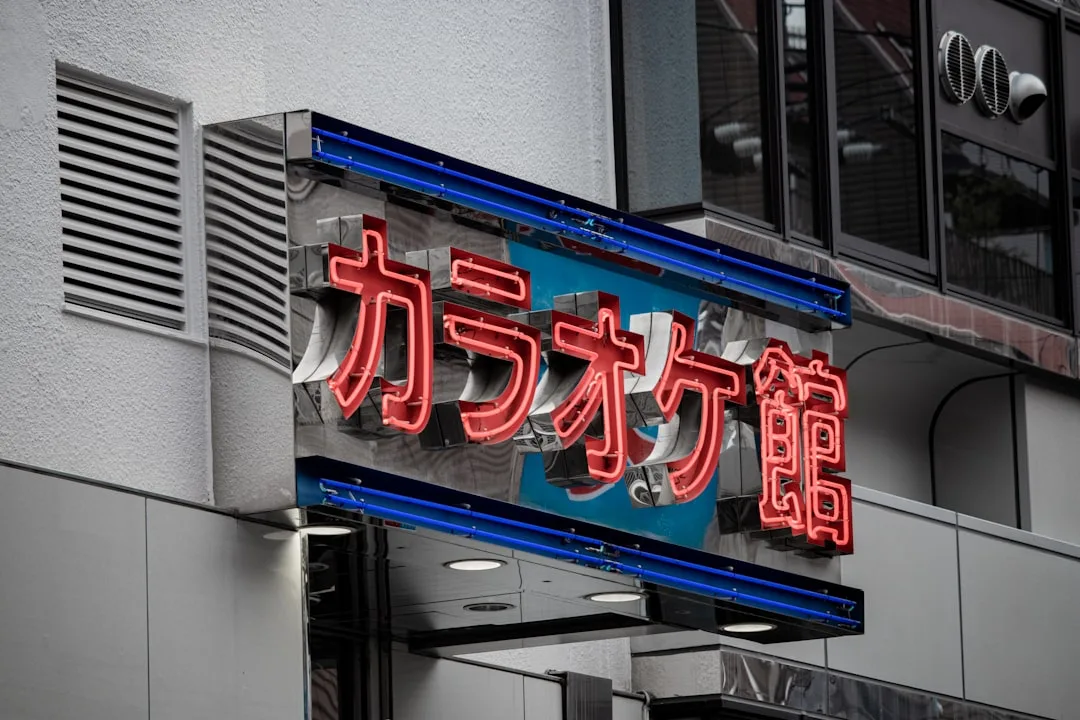
Katakana is the second of Japan's two syllabary scripts, and it is the one most learners find surprisingly useful almost immediately. The moment you grasp katakana, you can read hundreds of familiar words - because katakana is primarily used to write foreign loanwords, and a huge proportion of those loanwords come from English. Words like terebi (television), koohii (coffee), and suupaa (supermarket) suddenly become readable, creating a sense of rapid progress that motivates continued study.
Like hiragana, katakana is a phonetic syllabary - each character represents a sound, not a meaning. The two scripts represent identical sounds. The difference lies entirely in usage context.
Where hiragana provides the grammatical fabric of Japanese sentences - particles, verb endings, function words - katakana handles a different category: foreign borrowings, technical and scientific terminology, foreign proper names, and stylistic emphasis. A thorough understanding of when katakana is used, and why, is as important as being able to read the characters themselves.
Katakana has a more angular, geometric appearance than hiragana. This visual distinction is itself meaningful: the sharper shapes signal "foreign" or "special" content to a Japanese reader. The angular style also developed differently from hiragana - where hiragana emerged from simplified whole kanji, katakana came from parts of kanji radicals, which accounts for the more fragmented, straight-lined appearance.
Mastering katakana after hiragana is faster for most learners because the phonetic values are identical - you already know the sounds. You are only learning new shapes for sounds you recognize. Most learners achieve solid katakana recognition within one to two weeks of dedicated practice after completing hiragana.
The Complete Katakana Chart
The gojuuon chart for katakana mirrors the hiragana chart exactly in terms of sounds. Only the character shapes differ.
| Row | a | i | u | e | o |
|---|---|---|---|---|---|
| Vowels | ア (a) | イ (i) | ウ (u) | エ (e) | オ (o) |
| K-row | カ (ka) | キ (ki) | ク (ku) | ケ (ke) | コ (ko) |
| S-row | サ (sa) | シ (shi) | ス (su) | セ (se) | ソ (so) |
| T-row | タ (ta) | チ (chi) | ツ (tsu) | テ (te) | ト (to) |
| N-row | ナ (na) | ニ (ni) | ヌ (nu) | ネ (ne) | ノ (no) |
| H-row | ハ (ha) | ヒ (hi) | フ (fu) | ヘ (he) | ホ (ho) |
| M-row | マ (ma) | ミ (mi) | ム (mu) | メ (me) | モ (mo) |
| Y-row | ヤ (ya) | - | ユ (yu) | - | ヨ (yo) |
| R-row | ラ (ra) | リ (ri) | ル (ru) | レ (re) | ロ (ro) |
| W-row | ワ (wa) | - | - | - | ヲ (wo/o) |
| N | ン (n) | - | - | - | - |
The same irregular sounds from hiragana apply here: シ = shi, チ = chi, ツ = tsu, フ = fu. Katakana also uses dakuten and handakuten exactly as hiragana does. Additionally, katakana introduces one extra sound not standard in hiragana:
ヴ (vu) - represents the "v" sound in foreign words like ヴァイオリン (baiorin - violin). This is an approximation since standard Japanese phonology does not include a true "v."
Katakana vs Hiragana: Side-by-Side Comparison
| Sound | Hiragana | Katakana | Sound | Hiragana | Katakana |
|---|---|---|---|---|---|
| a | あ | ア | na | な | ナ |
| i | い | イ | ni | に | ニ |
| u | う | ウ | nu | ぬ | ヌ |
| e | え | エ | ne | ね | ネ |
| o | お | オ | no | の | ノ |
| ka | か | カ | ha | は | ハ |
| ki | き | キ | hi | ひ | ヒ |
| ku | く | ク | fu | ふ | フ |
| ke | け | ケ | he | へ | ヘ |
| ko | こ | コ | ho | ほ | ホ |
| sa | さ | サ | ma | ま | マ |
| shi | し | シ | mi | み | ミ |
| su | す | ス | mu | む | ム |
| se | せ | セ | me | め | メ |
| so | そ | ソ | mo | も | モ |
| ta | た | タ | ya | や | ヤ |
| chi | ち | チ | yu | ゆ | ユ |
| tsu | つ | ツ | yo | よ | ヨ |
| te | て | テ | ra | ら | ラ |
| to | と | ト | ri | り | リ |
| n | ん | ン | ru | る | ル |
Learning tip: Study katakana and hiragana comparisons side by side. Several pairs look nearly identical - ソ (so) and ン (n) are a famous trap, as are シ (shi) and ツ (tsu). The differences are in the angle of the small strokes. シ has two small strokes angled more horizontally; ツ has two small strokes angled more vertically. Study these confusable pairs explicitly rather than waiting to discover the confusion mid-reading.
When Is Katakana Used?
Understanding katakana usage context is as important as knowing the characters. Native Japanese readers interpret the script itself as carrying meaning about word origin and register.
1. Foreign Loanwords (Gairaigo)
The primary use. Words borrowed from other languages - predominantly English but also French, German, Portuguese, Dutch, and others - are written in katakana. This covers an enormous and growing vocabulary.
Examples from English:
- テレビ (terebi) - television
- コーヒー (koohii) - coffee
- スマホ (sumaho) - smartphone
- インターネット (intaanetto) - internet
- アイスクリーム (aisu kuriimu) - ice cream
- コンビニ (konbini) - convenience store
- マンション (manshon) - apartment building
- パソコン (pasokon) - personal computer
Examples from other languages:
- アルバイト (arubaito) - part-time job (from German "Arbeit")
- パン (pan) - bread (from Portuguese "pao")
- ズボン (zubon) - trousers (from French "jupon")
- コップ (koppu) - cup/glass (from Dutch "kop")
2. Foreign Names and Place Names
All non-Japanese personal names and most foreign place names are written in katakana. This applies to people, cities, countries, and organizations.
- アメリカ (Amerika) - America
- ロンドン (Rondon) - London
- マクドナルド (Makudonarudo) - McDonald's
- ジョン (Jon) - John
3. Scientific and Technical Terms
Scientific names (especially from Latin and Greek roots), technical vocabulary, and industry jargon are often rendered in katakana.
- ウイルス (uirusu) - virus
- バクテリア (bakuteria) - bacteria
- エネルギー (enerugii) - energy
- システム (shisutemu) - system
4. Onomatopoeia and Sound Effects
Japanese has an extremely rich vocabulary of onomatopoeia. While many everyday onomatopoeia appear in hiragana, katakana versions convey a sharper, louder, or more dramatic effect - particularly in manga and comics.
- ドキドキ (dokidoki) - heart pounding
- ザザーン (zazaan) - crashing wave sound
- ガーン (gaan) - shock/impact
- ピカピカ (pikapika) - sparkling/shining
5. Emphasis and Stylistic Effect
In advertising, headlines, and creative writing, katakana replaces hiragana or kanji to create visual emphasis, a modern feel, or a foreign/exotic tone. A Japanese word written in katakana instead of its normal script draws attention and signals something special about that usage.
35 Common Katakana Loanwords from English
Every one of these words will appear regularly in daily Japanese life. Reading them reinforces that katakana opens a large portion of practical vocabulary.
| Katakana | Romaji | English Origin | Meaning |
|---|---|---|---|
| アイスクリーム | aisu kuriimu | ice cream | ice cream |
| アパート | apaato | apartment | apartment |
| アルバム | arubamu | album | photo album |
| イメージ | imeeji | image | image/impression |
| インフォメーション | infomeeushon | information | information desk |
| ウェブサイト | webu saito | website | website |
| エアコン | eakon | air conditioner | AC unit |
| エレベーター | erebeetaa | elevator | elevator |
| オフィス | ofisu | office | office |
| カード | kaado | card | credit/business card |
| カメラ | kamera | camera | camera |
| カレンダー | karendaa | calendar | calendar |
| コンサート | konsaato | concert | concert |
| サービス | saabisu | service | service |
| シャワー | shawaa | shower | shower |
| ジュース | juusu | juice | juice |
| スーパー | suupaa | supermarket | supermarket |
| ストレス | sutoresu | stress | stress |
| スポーツ | supootsu | sports | sports |
| セーター | seetaa | sweater | sweater |
| ソファ | sofa | sofa | sofa |
| チャンス | chansu | chance | opportunity |
| テスト | tesuto | test | exam/test |
| デパート | depaato | department store | department store |
| トイレ | toire | toilet | restroom |
| ノート | nooto | notebook | notebook |
| ハンバーガー | hanbaagaa | hamburger | hamburger |
| パーティー | paatii | party | party |
| バス | basu | bus | bus |
| ホテル | hoteru | hotel | hotel |
| マスク | masuku | mask | face mask |
| メニュー | menyuu | menu | menu |
| レストラン | resutoran | restaurant | restaurant |
| ワイン | wain | wine | wine |
| ゲーム | geemu | game | game/video game |
Learning tip: When you encounter a katakana word you cannot read, try sounding it out slowly and then listening for a familiar English word in the sounds. Many loanwords become immediately clear this way. テレビ (terebi) sounds like "tele-vi" - the "vision" end is clipped. ニュース (nyuusu) sounds like "nyuusu" - news. This reverse-engineering process is a genuine reading skill that speeds up katakana vocabulary acquisition.
Katakana Combination Characters and Extended Sounds
Katakana uses the same youon combinations as hiragana - small ヤ, ユ, ヨ after i-row characters. But it also has additional combinations for sounds that appear in foreign words but not in native Japanese.
Special katakana combinations for foreign sounds:
| Combination | Reading | Example word |
|---|---|---|
| ファ | fa | ファックス (fakkusu - fax) |
| フィ | fi | フィルム (firumu - film) |
| フェ | fe | フェリー (ferii - ferry) |
| フォ | fo | フォーク (fooku - fork) |
| ティ | ti | パーティー (paatii - party) |
| ディ | di | ディスク (disuku - disc) |
| ウィ | wi | ウィスキー (uisukii - whiskey) |
| ウェ | we | ウェブ (webu - web) |
| ヴァ | va | ヴァイオリン (baiorin - violin) |
The long vowel mark (ー) is a katakana-specific character used to extend vowel sounds. It is a horizontal dash that simply means "hold the previous vowel longer." This character replaces the doubled-vowel method used in hiragana.
Examples:
- コーヒー (koohii) - coffee
- スポーツ (supootsu) - sports
- パーティー (paatii) - party
- ケーキ (keeki) - cake
Reading Practice: Katakana Words
Try reading each katakana word before checking the romaji and English. Cover the right columns and sound out the characters.
| Katakana | Romaji | English |
|---|---|---|
| バナナ | banana | banana |
| チョコレート | chokoreeto | chocolate |
| ピザ | piza | pizza |
| サラダ | sarada | salad |
| スパゲッティ | supagetti | spaghetti |
| ビール | biiru | beer |
| ミルク | miruku | milk |
| パン | pan | bread |
| ケーキ | keeki | cake |
| アイス | aisu | ice cream |
| タクシー | takushii | taxi |
| バス | basu | bus |
| ホテル | hoteru | hotel |
| スーツ | suutsu | suit |
| ジャケット | jaketto | jacket |
Common Mistakes with Katakana
Confusing ソ and ン. These two characters are visually similar and cause persistent errors. ソ (so) has two strokes that angle from left-to-right going upward, then a longer stroke sweeping right. ン (n) has two strokes that angle differently and a final stroke curving downward-left. The stroke angles and the final stroke direction are the key distinguishing features.
Confusing シ and ツ. シ (shi) looks like a sideways face with two dots on the left; ツ (tsu) has two dots on top. The orientation of the dots and the main stroke direction differ: in シ the main stroke is more horizontal; in ツ the main stroke curves more vertically.
Forgetting the long vowel mark ー. Omitting the long vowel dash changes the word. コヒ is wrong; コーヒー is coffee. The length distinction matters.
Adapting English words too literally. Japanese loanwords are often shortened or altered significantly. "Supermarket" becomes スーパー (suupaa), not the full word. "Personal computer" is パソコン (pasokon). The Japanese adapted form must be learned, not guessed from English.
Mispronouncing approximated sounds. The "v" in ヴァイオリン is approximated as "b" in actual Japanese speech - バイオリン is how most native speakers say "violin." Katakana shows the intent but does not always reflect actual pronunciation.
Learning tip: Make a dedicated "katakana confusable pairs" study session. Put ソ/ン and シ/ツ on flashcards where you must identify which is which. Solving the ambiguity directly is faster than waiting to resolve it through general exposure.
Quick Reference: Katakana Cheat Sheet
Five vowels: ア (a), イ (i), ウ (u), エ (e), オ (o)
Irregular sounds: シ = shi, チ = chi, ツ = tsu, フ = fu
Long vowel: ー (dash extending previous vowel)
Double consonant: ッ (small tsu - same function as hiragana small っ)
Primary use cases: loanwords, foreign names, scientific terms, onomatopoeia, emphasis
Most confusable pairs: ソ/ン, シ/ツ, ア/マ, ウ/ワ
Frequently Asked Questions
Is katakana harder than hiragana? For most learners, katakana takes slightly less time because the phonetic values are already known from hiragana. However, the more angular shapes can feel less intuitive than hiragana's rounded forms. The confusable pairs (ソ/ン, シ/ツ) create specific challenges that hiragana does not have to the same degree.
Should I learn katakana right after hiragana? Yes. Learn hiragana first, then katakana immediately after. Both scripts together represent the full phonetic range of Japanese, and all beginner Japanese materials assume knowledge of both. The gap between mastering hiragana and starting katakana should be no more than a week.
How many katakana words do I need to know? The practical katakana loanword vocabulary for daily life in Japan runs to several hundred words. However, because so many come from English, a learner who speaks English fluently can often read and understand them immediately even without prior study, simply by sounding them out.
Why is bread written in katakana (パン) if it is an old loan? Some words borrowed centuries ago remain in katakana even though they are now thoroughly Japanese concepts. パン (pan, from Portuguese "pao") and アルバイト (arubaito, part-time work, from German) are historical loans that keep their katakana form by convention.
Can Japanese words be written in katakana instead of hiragana? Yes, for stylistic effect. Product names, brand identities, and creative writing sometimes render Japanese words in katakana to create a visual impression of modernity, foreignness, or emphasis. This is a stylistic choice, not a grammatical rule.
Do I need katakana to speak Japanese? Technically no - speaking does not require reading scripts. But all written Japanese materials include katakana, so literacy in katakana is essential for reading anything beyond the most elementary level.
Conclusion and Next Steps
Katakana is the key that unlocks hundreds of immediately recognizable words for English-speaking learners of Japanese. The angular characters represent the same sounds as hiragana, which means the phonetic groundwork is already laid. What remains is shape recognition and an understanding of the usage contexts that determine when katakana appears.
After securing katakana, your next steps in Japanese literacy are:
- Practice reading mixed hiragana-katakana texts - most real Japanese alternates freely between the two
- Begin learning the most common kanji (numbers, days, basic vocabulary)
- Study grammar particles, which are always hiragana
- Read graded readers specifically designed for learners at the hiragana/katakana stage
The payoff of knowing both syllabaries is immediate: menus, signs, product labels, and much of everyday written Japanese become accessible. That readability is one of the most motivating experiences a Japanese learner can have early in their studies.
Frequently Asked Questions
Is katakana harder than hiragana?
For most learners, katakana takes slightly less time because the phonetic values are already known from hiragana. However, the more angular shapes can feel less intuitive, and confusable pairs like So/N and Shi/Tsu create specific challenges.
Should I learn katakana right after hiragana?
Yes. Learn hiragana first, then katakana immediately after. Both scripts together represent the full phonetic range of Japanese, and all beginner Japanese materials assume knowledge of both.
How many katakana words do I need to know?
The practical katakana loanword vocabulary for daily life runs to several hundred words. English speakers can often read and understand many of them immediately by sounding them out, since so many come from English.
Why is bread written in katakana if it is an old loan?
Some words borrowed centuries ago remain in katakana by convention even though they are now thoroughly Japanese. Pan (from Portuguese pao) and arubaito (from German Arbeit) are historical loans that keep their katakana form.
Can Japanese words be written in katakana instead of hiragana?
Yes, for stylistic effect. Product names, brand identities, and creative writing sometimes render Japanese words in katakana to create a visual impression of modernity, foreignness, or emphasis.