
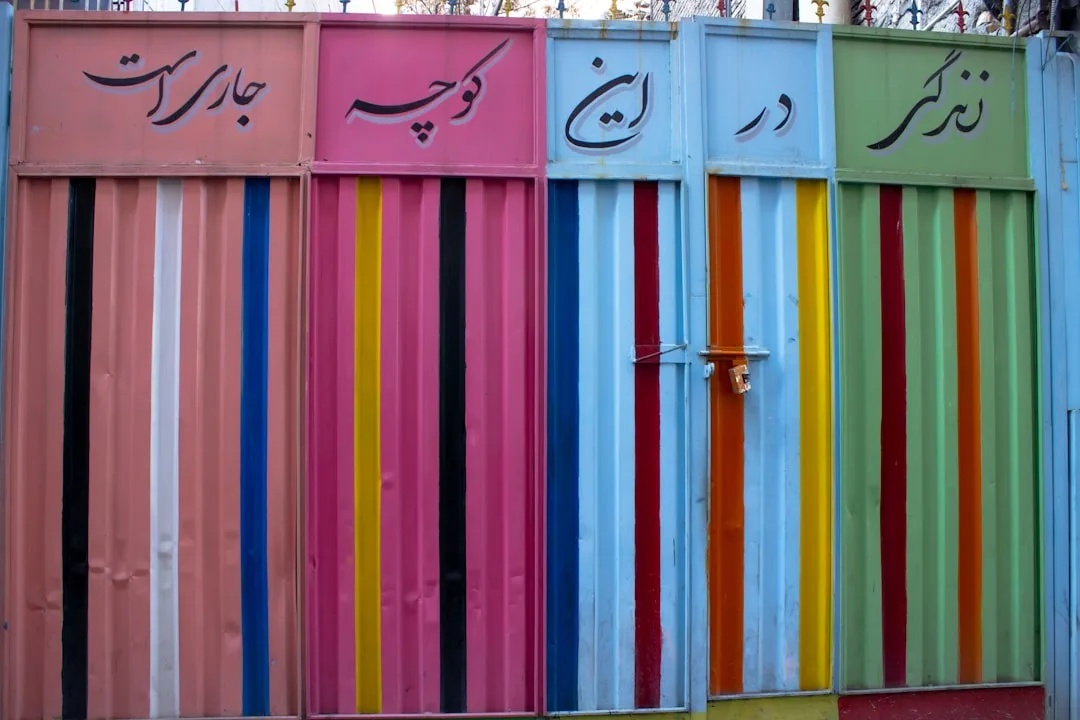
Urdu colour and adjective vocabulary spans two thousand years of layered linguistic history. Native Indo-Aryan colour names (laal, peela, kaala) coexist with Persian-Arabic refinements (surkh, zard, siyah) and a handful of English loanwords absorbed in the colonial period (pink, brown, grey). The result is a colour system with multiple registers: the everyday word for red is laal, the literary or formal word is surkh, and a Pakistani Urdu newspaper headline may use either depending on subject and tone. Adjectives in Urdu also engage the language's gender-and-number agreement system, where most adjectives ending in vowels change form based on whether they modify a masculine singular, masculine plural, or feminine noun. Mastering this triangulation (vocabulary register plus inflectional agreement) is one of the genuine challenges of intermediate Urdu.
This reference catalogues more than two hundred Urdu colour terms, adjectives of size, shape, age, character, taste, and emotion, alongside the grammatical rules of adjective agreement that determine how those words actually inflect in sentences. Each entry appears in Urdu script (Perso-Arabic, written right to left), Roman Urdu transliteration, and English explanation, with notes flagging Persian versus native-Indic origin where relevant.
Urdu adjectives split sharply into two grammatical classes: declinable (those ending in vowels, especially -a, which inflect for gender and number) and indeclinable (those ending in consonants or non-Indic-pattern vowels, which do not change). The word achha (good, masculine singular) becomes achhe (masculine plural), achhi (feminine), achhi (feminine plural). The word khoobsoorat (beautiful, Persian-origin), in contrast, never changes regardless of the noun it modifies. Knowing which class an adjective belongs to is essential for grammatical Urdu.
For background on the script and pronunciation, see the Urdu Alphabet and Nasta'liq Script Complete Guide. For the broader grammatical system of cases and gender, see Urdu Grammar: Cases, Gender and Ergative. For Persian-Arabic loanword patterns, see Urdu Persian and Arabic Loanwords.
Primary Colours
The basic palette of Urdu colour vocabulary contains ten or so high-frequency terms, most with a Persian formal pair alongside the everyday Indic word. A learner should master both layers because both appear in real Pakistani text.
| Urdu (everyday) | Roman | English | Urdu (formal/Persian) | Roman |
|---|---|---|---|---|
| لال | Laal | Red | سرخ | Surkh |
| پیلا | Peela | Yellow | زرد | Zard |
| نیلا | Neela | Blue | آسمانی | Aasmaani (sky-blue) |
| ہرا | Hara | Green | سبز | Sabz |
| کالا | Kaala | Black | سیاہ | Siyah |
| سفید | Safed | White | (also safed in formal) | - |
| بھورا | Bhura | Brown | (Persian alternative rare) | - |
| نارنگی | Naarangi | Orange | (also naranji) | Naranji |
| گلابی | Gulaabi | Pink | (gul = rose, Persian) | - |
| سرمئی | Surmai | Grey | خاکی | Khaki (dust-coloured) |
| جامنی | Jaamuni | Purple | بنفشی | Banafshi |
| سنہرا | Sunehra | Golden | طلائی | Talaa-i |
| چاندی | Chaandi | Silver | نقرئی | Nuqra-i |
The everyday-versus-formal layering is meaningful. A Pakistani schoolchild describing a red ball says laal gend; a poet describing the colour of beloved's lips writes surkh lab. A doctor's record uses sabz (Persian) for a "green" colour clinical observation; a mother describing her daughter's green dress uses hara. Reading both layers fluently is the mark of a literate Urdu speaker.
"The persian-origin colour terms (surkh, zard, siyah, sabz) sit at a higher stylistic register and dominate Urdu poetry, classical prose, and formal journalism. The native Indic terms (laal, peela, kaala, hara) are everyday, household, and conversational. Knowing both lets a learner navigate the full range of Urdu register without code-switching out into English."
Colour Modifiers (Light, Dark, Shades)
Pakistani fabric and paint commerce produces a rich vocabulary of colour shading: gehra (deep), halka (light), pakka (solid, vivid), phika (faded). These attach to the basic colour to specify shade.
| Urdu | Roman Urdu | English |
|---|---|---|
| گہرا | Gehra | Deep, dark (shade) |
| گہرا نیلا | Gehra neela | Dark blue |
| ہلکا | Halka | Light (shade) |
| ہلکا گلابی | Halka gulaabi | Light pink |
| پکا | Pakka | Solid, vivid, fast |
| پکا رنگ | Pakka rang | A vivid, fast colour |
| پھیکا | Phika | Faded, washed-out, dull |
| چمکدار | Chamakdaar | Shiny, bright |
| روشن | Roshan | Bright, illuminated |
| دھندلا | Dhundla | Dim, hazy, faded |
| رنگ برنگا | Rang barangaa | Multi-coloured, colourful |
| بے رنگ | Be-rang | Colourless |
"The phrase pakka rang (literally 'solid colour') applies to fabric dye, paint, and metaphorically to character. A pakka Mussalman is a devout Muslim, a pakka Lahori is a true-blue Lahori, and a pakka rang of clothing is a colour-fast dye that does not bleed in washing. The word leans into permanence and authenticity."
Size Adjectives
| Urdu | Roman Urdu | English |
|---|---|---|
| بڑا | Bara | Big |
| چھوٹا | Chhota | Small |
| لمبا | Lamba | Long, tall |
| چھوٹا قد | Chhota qad | Short (of stature) |
| اونچا | Ooncha | High, tall |
| نیچا | Neecha | Low |
| موٹا | Mota | Thick, fat |
| پتلا | Patla | Thin, slim |
| چوڑا | Chaurra | Wide |
| تنگ | Tang | Narrow, tight |
| گہرا | Gehra | Deep |
| اتھلا | Uthla | Shallow |
| بھاری | Bhaari | Heavy |
| ہلکا | Halka | Light (weight) |
These size adjectives are mostly declinable (bara/bare/bari, chhota/chhote/chhoti) and require gender-number agreement. Bhaari and halka are exceptions that do not inflect. Tang (narrow) and chaurra (wide) require careful gender matching: chaurra rasta (wide road, masculine) but chaurri sarak (wide road, feminine, since sarak is grammatically feminine).
Adjective Agreement: The Critical Grammar
Declinable Urdu adjectives end in -a (masculine singular) and change to -e (masculine plural or oblique) and -i (feminine singular and plural). This is the rule that learners absolutely must internalise.
| Adjective | Masc Sg | Masc Pl | Fem Sg | Fem Pl |
|---|---|---|---|---|
| Good | Achha (اچھا) | Achhe (اچھے) | Achhi (اچھی) | Achhi (اچھی) |
| Big | Bara (بڑا) | Bare (بڑے) | Bari (بڑی) | Bari (بڑی) |
| Small | Chhota (چھوٹا) | Chhote (چھوٹے) | Chhoti (چھوٹی) | Chhoti (چھوٹی) |
| Black | Kaala (کالا) | Kaale (کالے) | Kaali (کالی) | Kaali (کالی) |
| New | Naya (نیا) | Naye (نئے) | Nayi (نئی) | Nayi (نئی) |
Example sentences showing agreement:
| Urdu | Roman | English |
|---|---|---|
| اچھا لڑکا | Achha larka | A good boy (m sg) |
| اچھے لڑکے | Achhe larke | Good boys (m pl) |
| اچھی لڑکی | Achhi larki | A good girl (f sg) |
| اچھی لڑکیاں | Achhi larkiyaan | Good girls (f pl) |
| بڑا گھر | Bara ghar | A big house (ghar is m) |
| بڑی کتاب | Bari kitaab | A big book (kitaab is f) |
| نیلا قمیض | Neela qameez | A blue shirt (qameez is m) |
| نیلی شلوار | Neeli shalwar | Blue trousers (shalwar is f) |
Indeclinable adjectives (mostly Persian or Arabic origin, ending in consonants or specific patterns) do not change:
| Urdu | Roman | English | Notes |
|---|---|---|---|
| خوبصورت | Khoobsoorat | Beautiful | Indeclinable |
| ہوشیار | Hoshyaar | Smart, clever | Indeclinable |
| خوش | Khush | Happy | Indeclinable |
| سستا | Sasta | Cheap | DECLINABLE (sasta/saste/sasti) |
| مہنگا | Mahanga | Expensive | DECLINABLE (mahanga/mahange/mahangi) |
| محنتی | Mehnati | Hardworking | Indeclinable |
"The hardest single rule for English-speaking learners of Urdu is adjective agreement. English adjectives never change form. Urdu adjectives change for gender and number with most native words but freeze with most loanwords. A learner saying khoobsoorat larki (correct, indeclinable) and then saying achha larki (wrong, should be achhi larki) reveals the gap between memorised vocabulary and grammatical reflex."
Quality and Character Adjectives
| Urdu | Roman Urdu | English |
|---|---|---|
| اچھا | Achha | Good (declinable) |
| برا | Bura | Bad (declinable) |
| بہترین | Behtareen | Best (Persian) |
| بدترین | Badtareen | Worst (Persian) |
| خوبصورت | Khoobsoorat | Beautiful (indecl) |
| بدصورت | Badsoorat | Ugly (indecl) |
| ذہین | Zaheen | Intelligent (indecl) |
| بیوقوف | Bewaqoof | Foolish (indecl) |
| ایماندار | Imaandaar | Honest (indecl) |
| بے ایمان | Beimaan | Dishonest (indecl) |
| محنتی | Mehnati | Hardworking (indecl) |
| سست | Sust | Lazy (indecl) |
| دلیر | Daleer | Brave (indecl) |
| بزدل | Buzdil | Cowardly (indecl) |
| سچا | Saccha | Truthful (decl) |
| جھوٹا | Jhoota | Liar, false (decl) |
| غریب | Ghareeb | Poor (indecl) |
| امیر | Ameer | Rich, wealthy (indecl) |
| مہذب | Muhazzab | Civilised, polite (indecl) |
| بدتمیز | Badtameez | Rude, ill-mannered (indecl) |
| شریف | Shareef | Decent, noble (indecl) |
| کمینہ | Kameenah | Mean, low (indecl) |
Age and Time Adjectives
| Urdu | Roman Urdu | English |
|---|---|---|
| نیا | Naya | New (decl) |
| پرانا | Purana | Old (of objects) (decl) |
| تازہ | Taaza | Fresh (indecl) |
| باسی | Baasi | Stale (decl) |
| بوڑھا | Boorha | Old (of people) (decl) |
| جوان | Jawaan | Young (indecl) |
| نوجوان | Naujawan | Youth, young person (indecl) |
| بچہ | Bachcha | Child (decl as bachcha/bachche/bachchi) |
| بزرگ | Buzurg | Elder, senior (indecl) |
| قدیم | Qadeem | Ancient (indecl) |
| جدید | Jadeed | Modern (indecl) |
| ابتدائی | Ibtidaai | Initial, beginning |
| آخری | Aakhri | Final, last |
Note the lexical split between purana (old of objects: a purana ghar, an old house) and boorha (old of living beings: a boorha aadmi, an old man). Saying boorha ghar (old house, treating ghar as if alive) is a poetic personification, not literal.
Taste and Sensation Adjectives
| Urdu | Roman Urdu | English |
|---|---|---|
| میٹھا | Meetha | Sweet (decl) |
| نمکین | Namkeen | Salty (indecl) |
| کھٹا | Khatta | Sour (decl) |
| کڑوا | Kaduwa | Bitter (decl) |
| تیکھا | Teekha | Spicy (decl) |
| مصالحہ دار | Masaala daar | Spiced, with masala |
| پھیکا | Phika | Bland, faded |
| لذیذ | Lazeez | Delicious (indecl) |
| مزیدار | Mazedaar | Tasty (indecl) |
| ٹھنڈا | Thanda | Cold (decl) |
| گرم | Garm | Hot (indecl) |
| نرم | Naram | Soft (indecl) |
| سخت | Sakht | Hard (indecl) |
| خوشبودار | Khushboo daar | Fragrant (indecl) |
| بدبودار | Badboo daar | Foul-smelling (indecl) |
Emotional and Mental State Adjectives
| Urdu | Roman Urdu | English |
|---|---|---|
| خوش | Khush | Happy (indecl) |
| اداس | Udaas | Sad (indecl) |
| غمگین | Ghamgeen | Sorrowful (indecl) |
| پریشان | Pareshaan | Worried, troubled (indecl) |
| غصہ | Gussa | Angry (used with hona) |
| ناراض | Naaraaz | Annoyed, displeased (indecl) |
| ڈرا ہوا | Dara hua | Frightened |
| حیران | Hairaan | Surprised (indecl) |
| تھکا | Thaka | Tired (decl, used with hua) |
| بور | Bore | Bored (English loan, indecl) |
| مصروف | Masroof | Busy (indecl) |
| فارغ | Faarigh | Free, unoccupied (indecl) |
| پر امید | Pur-umeed | Hopeful |
| نا امید | Naa-umeed | Hopeless |
Shape and Texture Adjectives
| Urdu | Roman Urdu | English |
|---|---|---|
| گول | Gol | Round (indecl) |
| چوکور | Chaukor | Square (indecl) |
| سیدھا | Seedha | Straight (decl) |
| ٹیڑھا | Tedha | Crooked (decl) |
| نوکیلا | Nokeela | Pointed, sharp (decl) |
| دھار دار | Dhaar daar | Sharp-edged |
| کند | Kund | Blunt (indecl) |
| چکنا | Chikna | Smooth, oily (decl) |
| کھردرا | Khurdara | Rough (decl) |
| لچک دار | Lachakdaar | Flexible (indecl) |
| سخت | Sakht | Hard (indecl) |
| نرم | Naram | Soft (indecl) |
| گاڑھا | Gaarha | Thick (of liquid) (decl) |
| پتلا | Patla | Thin (of liquid or build) (decl) |
Comparative and Superlative
Urdu uses postpositional comparison rather than adjective inflection. The pattern is X se Y achha (Y is good from X, that is, Y is better than X). The superlative uses sab se (from all) before the adjective.
| Urdu | Roman | English |
|---|---|---|
| یہ اس سے بڑا ہے | Yeh us se bara hai | This is bigger than that |
| سب سے بڑا | Sab se bara | The biggest |
| یہ سب سے اچھا ہے | Yeh sab se achha hai | This is the best |
| زیادہ | Zyada | More |
| کم | Kam | Less |
| بہت | Bahut | Very, much |
| تھوڑا | Thoda | A little |
| تقریباً | Taqreeban | Approximately |
| بہترین | Behtareen | Best (Persian-origin) |
| بدتر | Badtar | Worse (Persian-origin) |
The Persian-origin pair behtar (better) and badtar (worse), with their superlatives behtareen and badtareen, are common in formal and literary Urdu and bypass the postpositional comparison entirely.
Common Mistakes
Forgetting adjective agreement: Saying achha larki instead of achhi larki is the canonical learner error. Train yourself to check the noun's gender before each declinable adjective.
Over-inflecting Persian adjectives: Khoobsoorat (beautiful) does not change. Saying khoobsoorat-i larki is wrong because khoobsoorat is indeclinable. Persian and Arabic-origin words mostly freeze.
Confusing purana and boorha: Purana is for objects and abstractions (purani kitaab, an old book; purana raasta, an old way). Boorha is for living beings (boorha aadmi, an old man).
Misusing laal versus surkh: Laal is everyday red; surkh is formal-poetic red. Surkh lab (red lips) reads as poetic and slightly archaic; laal lab is plain. Choose register consciously.
Mis-pronouncing colour words: Bhura (brown) has a fully aspirated bh + retroflex r + a, distinct from bura (bad) without aspiration. The two words can be confused by non-native speakers, with embarrassing consequences.
Using English colour words by default: Modern Pakistani urban speakers often slip into English (pink, brown, navy blue) but Urdu writing should use the Urdu terms. Gulaabi for pink, bhura for brown, gehra neela for navy blue.
Quick Reference Card
| Concept | Urdu |
|---|---|
| Red | Laal / Surkh |
| Yellow | Peela / Zard |
| Blue | Neela |
| Green | Hara / Sabz |
| Black | Kaala / Siyah |
| White | Safed |
| Big | Bara (m) / Bari (f) |
| Small | Chhota (m) / Chhoti (f) |
| Good | Achha (m) / Achhi (f) |
| Bad | Bura (m) / Buri (f) |
| New | Naya (m) / Nayi (f) |
| Old (objects) | Purana (m) / Purani (f) |
| Beautiful | Khoobsoorat (invariable) |
| Cold | Thanda (m) / Thandi (f) |
| Hot | Garm (invariable) |
| Sweet | Meetha (m) / Meethi (f) |
| Spicy | Teekha (m) / Teekhi (f) |
| Better | Behtar |
| Best | Sab se achha / Behtareen |
Frequently Asked Questions
Why do some Urdu adjectives change form and others do not? Adjectives ending in -a in Urdu script (mostly native Indo-Aryan words) inflect for gender and number: achha/achhe/achhi. Adjectives ending in consonants or non-Indic vowels (mostly Persian and Arabic loans) freeze: khoobsoorat, hoshyaar, garm. The split tracks etymology and morphological pattern.
What is the difference between laal and surkh? Both mean red. Laal is everyday Indic-origin and used in casual speech, household contexts, and modern journalism. Surkh is Persian-origin and dominates Urdu poetry, classical prose, and formal-literary writing. They are stylistic variants of the same colour, not different shades.
How do I describe a multi-coloured object? Rang barangaa (multi-coloured) or chamakdaar (shiny). For specific patterns: stripes are dhaariyaan (دھاریاں), checks are chaukor (چوکور), polka dots use English loanword. Pakistani textile vocabulary is rich and often borrows from Punjabi or Sindhi for specific weaves.
Are Urdu adjectives placed before or after the noun? Before, like English. Achha larka (good boy), bara ghar (big house), neela aasmaan (blue sky). Predicative adjectives (with hai or hua) can also follow: yeh achha hai (this is good).
Do colour words have grammatical gender themselves? The colour adjective takes the gender of the noun it modifies, not its own. Laal (red) has no inherent gender; in laal phool (red flower, masculine) it stays laal, in laal kitaab (red book, feminine) it becomes laali. Wait, declinable colours like neela become neeli for feminine. Always match the noun.
Can I use English colour words in Urdu speech? Casually yes. Modern urban Pakistani speech freely says "pink dress" or "navy blue suit" with English loanwords. Formal writing, journalism, and literary Urdu prefer the Urdu equivalents (gulaabi libaas, gehra neela suit). Code-switching is acceptable in conversation but not in formal text.
What is the formal Urdu word for grey? Surmai (سرمئی, from surma, kohl) is the most common formal term. Khaki (خاکی, dust-coloured, originally Persian) refers specifically to the dusty-brown-grey of military uniforms. English grey is also widely used in Pakistani urban speech.
See Also
- Urdu Grammar: Cases, Gender and Ergative
- Urdu Persian and Arabic Loanwords
- Urdu Common Phrases and Daily Conversation Reference
- Urdu Alphabet and Nasta'liq Script Complete Guide
- Urdu Verb Conjugation: Tense and Aspect
- Urdu Conversations and Daily Phrases by Register
- Urdu vs Hindi: Same Language, Different Scripts
Author: Kalenux Team
Frequently Asked Questions
Why do some Urdu adjectives change form and others do not?
Adjectives ending in -a (mostly native Indo-Aryan) inflect for gender and number: achha/achhe/achhi. Adjectives ending in consonants or non-Indic vowels (mostly Persian and Arabic loans) freeze. The split tracks etymology.
What is the difference between laal and surkh?
Both mean red. Laal is everyday Indic-origin and casual. Surkh is Persian-origin and dominates poetry and formal-literary writing. They are stylistic variants of the same colour.
How do I describe a multi-coloured object?
Rang barangaa means multi-coloured. Chamakdaar is shiny. Stripes are dhaariyaan, checks are chaukor. Pakistani textile vocabulary borrows from Punjabi and Sindhi for specific weaves.
Are Urdu adjectives placed before or after the noun?
Before, like English. Achha larka, bara ghar, neela aasmaan. Predicative adjectives with hai can also follow: yeh achha hai.
Do colour words have grammatical gender themselves?
The colour adjective takes the gender of the noun it modifies. Declinable colours like neela become neeli for feminine nouns. Always match the noun.
Can I use English colour words in Urdu speech?
Casually yes. Urban Pakistani speech freely uses pink, navy blue, etc. Formal writing prefers Urdu equivalents like gulaabi and gehra neela.
What is the formal Urdu word for grey?
Surmai from surma, kohl, is the most common formal term. Khaki refers to the dusty-brown-grey of military uniforms. English grey is also widely used in urban speech.