
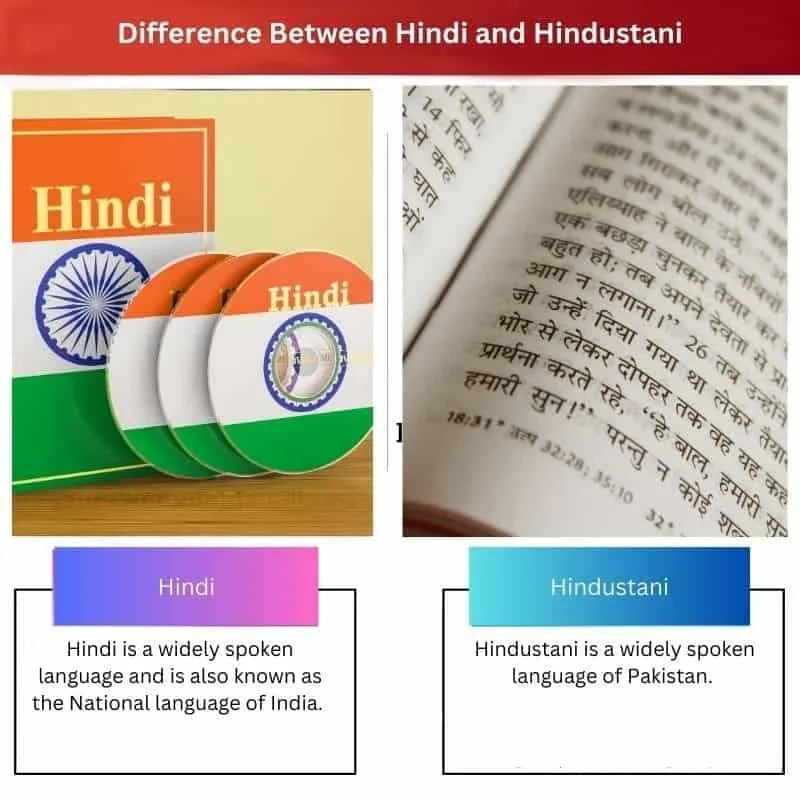
Urdu and Hindi present one of the most fascinating cases in world linguistics. At the level of everyday speech, they are almost the same language: the same grammar, the same pronouns, the same verb endings, the same core vocabulary, and the same sentence structure. A Hindi speaker from Delhi and an Urdu speaker from Lahore can hold a fluent, casual conversation about food, family, weather, work, or travel without noticing any major differences.
Yet at the level of writing, formal register, and cultural association, they appear to be two entirely distinct languages. Hindi is written in Devanagari (देवनागरी), an ancient Indic abugida with Sanskrit as its primary source of learned vocabulary. Urdu is written in the Perso-Arabic Nasta'liq script, with Persian and Arabic as its primary sources of learned vocabulary.
Linguists use the term "Hindustani" (ہندوستانی / हिन्दुस्तानी) for the common spoken language that underlies both. At the colloquial level, Hindustani is single and unified. At the literary, religious, political, and media level, it splits into two registers that are so culturally and ideologically distinct that most speakers feel them as separate languages.
This split is one of the most studied and debated cases of what sociolinguists call a "pluricentric language" or, more pointedly, a "diasystem" - one spoken language with two standardised literary forms.
This reference explains where Urdu and Hindi converge, where they diverge, how the script choice shapes each language's identity, what the historical context is, and how a learner of one gets access to the other. For the full Urdu script, see the Urdu Alphabet and Nasta'liq Script: Complete Guide. For a cross-script overview, see Writing Systems and Alphabets Comparison.
The Shared Core: Hindustani
Hindustani is the spoken register shared by Urdu and Hindi. It is the language of Bollywood films, of popular music, of everyday conversation from Karachi to Delhi, of street markets and family dinners. Its vocabulary is mostly Indo-Aryan, descended from Prakrit and ultimately Sanskrit, with heavy layers of Persian and some Arabic and Turkish from centuries of Mughal and Delhi Sultanate rule, and a growing English layer from the colonial and modern period.
Consider the sentence "I am going home." Spoken in casual Hindustani it is: میں گھر جا رہا ہوں / मैं घर जा रहा हूँ (main ghar ja raha hoon). Both scripts transcribe the same sounds, the same grammar, the same lexical items. The words main (I), ghar (home), ja (go), raha (progressive marker), and hoon (am) are identical in both languages and scripts.
This shared core extends across most of daily life. Basic numbers (aik, do, teen), pronouns (mein, tum, aap, woh), family terms (maa, baap, bhai, behen), food words (paani, chawal, roti, sabzi), body parts (sir, haath, pair, aankh), and the entire grammatical machinery (postpositions, verb conjugations, gender agreement, ergative case) are common to both.
Where They Diverge: Register and Vocabulary
The divergence appears in formal, literary, religious, and technical vocabulary. Urdu draws its high-register words from Persian and Arabic; Hindi draws its high-register words from Sanskrit. Speakers recognise both registers, but the choice signals cultural affiliation.
Consider how each language says "government":
- Hindustani colloquial: sarkar (سرکار / सरकार) - a Persian loan, used in both
- Urdu formal: hukumat (حکومت) - Arabic origin
- Hindi formal: shasan (शासन) or sarkar (सरकार) - Sanskrit origin for shasan
Or "language":
- Urdu: zabaan (زبان) - Persian
- Hindi: bhasha (भाषा) - Sanskrit
Or "book":
- Urdu: kitaab (کتاب) - Arabic
- Hindi: pustak (पुस्तक) - Sanskrit
- Both use: kitaab in colloquial speech
The table below shows how register divergence works across a range of concepts.
| Concept | Colloquial (shared) | Urdu formal | Hindi formal |
|---|---|---|---|
| thank you | shukriya (Arabic/Persian) | shukriya / mehrabani | dhanyavad (Sanskrit) |
| welcome | khush amdeed (Persian) | khush amdeed | svagat (Sanskrit) |
| teacher | ustad (Persian) | ustad / muallim | shikshak / guru |
| student | shaagird (Persian) | shaagird / taalib-ilm | vidyarthi / chhatra |
| country | mulk (Arabic) | mulk / watan | desh (Sanskrit) |
| friend | dost (Persian) | dost / rafiq | mitra (Sanskrit) |
| love | pyaar (Indic) / mohabbat | mohabbat (Arabic) | prem (Sanskrit) |
| time | waqt (Arabic) | waqt / zamaana | samay (Sanskrit) |
| knowledge | ilm (Arabic) / gyan (Sanskrit) | ilm / maarifat | gyan / vidya |
| truth | sach (Indic) / haq (Arabic) | haq / sachai | satya (Sanskrit) |
| water | paani (Indic) | paani / aab | jal (Sanskrit) |
At the colloquial level, the shared column covers ninety percent of daily speech. At the formal level, Urdu and Hindi diverge because a nationally televised news anchor or a formal essay writer will instinctively reach for the register that matches the script and cultural tradition they are working in.
The Script Difference Is Not Cosmetic
The two scripts encode the same sounds differently, but the script choice also drives which vocabulary feels natural.
Urdu uses the Perso-Arabic script with Nasta'liq style, right-to-left, letters connected within words, with 39 letters including additions for retroflex and aspirated sounds. See the complete alphabet guide for details. A reader trained in this script feels at home with Persian and Arabic loanwords because they are spelled with the original letters (ذ، ص، ض، ط، ظ، ع، ق، ف etc.) and the reader can often identify an Arabic or Persian word at a glance.
Hindi uses Devanagari (देवनागरी), an abugida descended from the Brahmi script, written left-to-right, with each consonant carrying an inherent "a" vowel that is modified by diacritic vowel signs. Devanagari encodes Sanskrit phonology precisely, distinguishing aspirated from unaspirated, retroflex from dental, and voiced from unvoiced with separate letters. A reader trained in Devanagari feels at home with Sanskrit loanwords, which can be spelled with full fidelity to their original form.
When a Persian or Arabic word enters Hindi, it is often naturalised and spelled phonetically in Devanagari, losing some of its etymological transparency. When a Sanskrit word enters Urdu, it is often naturalised in Perso-Arabic script, losing some of its transparency. The scripts thus shape the "visible etymology" of each language and reinforce which vocabulary layer each prefers.
Grammar: Almost Entirely Shared
The grammar of Urdu and Hindi is essentially identical.
Both have the same noun gender system (masculine and feminine, no neuter). Both have the same postposition system (ne, ko, se, mein, par, ka/ki/ke). Both have the same ergative construction in past tense with transitive verbs.
Both have the same verb agreement rules (gender and number agreement on participles). Both have the same three levels of respect in second-person pronouns (tu, tum, aap). Both have the same tense/aspect system (present habitual, present progressive, past habitual, past perfect, future).
See Urdu Grammar: Cases, Gender, and the Ergative and Urdu Verb Conjugation: Tense and Aspect for details; these apply almost unchanged to Hindi.
The small differences:
- Perso-Arabic plurals in Urdu: Urdu sometimes uses Persian or Arabic plurals for Persian/Arabic loans (kitaab -> kutub, "books"; qalam -> aqlaam, "pens"). Hindi more often uses the native Indic plural (kitaab -> kitabein).
- Izafat construction in Urdu: Urdu uses the Persian izafat (-e-) in formal speech (sada-e-dil, "voice of the heart"; husn-e-yaar, "beauty of the beloved"). Hindi does not use izafat, preferring the native possessive postposition ka/ki/ke.
- Perso-Arabic particles in Urdu: Urdu formal writing uses Persian particles like ki (that), chunanche (therefore), magar (but) that are less frequent in formal Hindi.
- Sanskritic compounds in Hindi: Formal Hindi uses Sanskrit-style compound words (rashtrapati, "president"; sadasya, "member") that formal Urdu would render with Persian/Arabic terms (sadar, "president"; rukn, "member").
History: One Language Becomes Two
The Hindustani vernacular developed around Delhi during the Delhi Sultanate (13th-16th centuries) as the meeting language of Persian-speaking Muslim administrators and Indo-Aryan-speaking locals. It spread as the Mughal administrative lingua franca across North India.
Under the Mughals, a literary register emerged in the Perso-Arabic script, called "Hindi" in the 18th century, then "Urdu" from "Zaban-e-Urdu-e-Mualla", "the language of the royal camp." This register incorporated heavy Persian vocabulary and Persian literary conventions.
In the 18th and 19th centuries, a parallel literary register emerged using Devanagari script and drawing its learned vocabulary from Sanskrit. This register came to be called "Hindi" in the modern sense. The Benares Hindu reformers and later nationalist movements promoted Sanskritic Hindi as a marker of Hindu identity, while Urdu became associated with Muslim identity, especially after the 1857 rebellion.
Partition in 1947 cemented the split politically. Urdu became the national language of Pakistan. Hindi (in its Sanskritised standard form) became an official language of India. Both countries continue to share Hindustani in film, music, and everyday life, but their official registers have drifted further apart over seventy years of independent language planning.
Mutual Intelligibility in Practice
A Pakistani visiting Delhi and an Indian visiting Karachi will understand each other with ease in casual conversation. The shared Hindustani register covers everyday needs completely.
Difficulty increases in these situations:
- Official and legal documents use high Urdu (Persian/Arabic) in Pakistan and high Hindi (Sanskritic) in India. A Pakistani lawyer reading an Indian constitutional text encounters heavy Sanskrit vocabulary; an Indian journalist reading a Pakistani official gazette encounters heavy Arabic vocabulary.
- Religious and philosophical texts draw on different source traditions. Islamic texts use Arabic terminology; Hindu texts use Sanskrit terminology.
- News broadcasts in each country tend toward the formal register. Pakistani news Urdu can feel Persianised to Indian ears; Indian news Hindi can feel Sanskritised to Pakistani ears.
- Written texts: neither side can read the other's script without learning it. A Pakistani without Devanagari cannot read an Indian newspaper; an Indian without Nasta'liq cannot read a Pakistani newspaper.
Film is the great unifier. Bollywood, based in Mumbai, produces films in a blended Hindustani register that both Urdu and Hindi speakers understand effortlessly. Many Bollywood lyricists are Urdu poets by training, which explains why Bollywood song lyrics are heavy in Urdu vocabulary (dil, pyaar, mohabbat, ishq, dard, aashiq, wafa). See Urdu Poetry: Ghazal and Shayari Vocabulary for the poetic tradition that feeds this.
Script as Cultural Marker
Because grammar and everyday vocabulary are shared, the script often becomes the most visible marker of identity. A signboard in Perso-Arabic script on a shop in Old Delhi signals Urdu and Muslim heritage. The same words in Devanagari on a shop in the same lane signal Hindi and Hindu heritage. Bilingual city signage is common in India, with the same place name appearing in both scripts.
This cultural loading means that learners should be aware that choosing to learn one or the other involves more than pragmatic communication. Learning Urdu brings access to the Islamic literary heritage of South Asia, to the poetry of Ghalib, Iqbal, and Faiz, to Pakistani literature and media, and to the global Urdu-speaking diaspora.
Learning Hindi brings access to the largest film and television industry in South Asia, to Indian government and education systems, and to classical Indian literature in Sanskritised style. A learner who invests in both the spoken Hindustani and both scripts gets access to the whole range.
Example: Same Sentence in Both Registers
English: The president of the country gave a speech about the language, culture, and history of our nation.
Hindustani colloquial (works in both): mulk ke sadar ne hamari qaum ki zabaan, tehzeeb aur tareekh ke baare mein taqreer ki.
Urdu formal: ملک کے صدر نے ہماری قوم کی زبان، تہذیب اور تاریخ کے بارے میں تقریر کی۔ (mulk ke sadar ne hamari qaum ki zabaan, tehzeeb aur tareekh ke baare mein taqreer ki)
Hindi formal: देश के राष्ट्रपति ने हमारे राष्ट्र की भाषा, संस्कृति और इतिहास के बारे में भाषण दिया। (desh ke rashtrapati ne hamare rashtra ki bhasha, sanskriti aur itihas ke baare mein bhashan diya)
The grammar and sentence structure are identical. Only the content words (country, president, nation, language, culture, history, speech) change, and in each case from Arabic/Persian to Sanskrit.
Common Mistakes
Thinking of them as unrelated languages. They are not. At the spoken colloquial level they are one language with two names. Treating them as entirely distinct leads to ignoring obvious transfer opportunities.
Thinking of them as identical languages. They are not. At formal and literary levels the divergence is real, and a learner of one cannot automatically read the other's newspapers or literature.
Mixing registers inappropriately. Using heavy Sanskrit vocabulary when speaking Urdu, or heavy Arabic vocabulary when speaking formal Hindi, can sound out of place or politically loaded. Stick to Hindustani for neutral speech and use the appropriate register for formal contexts.
Assuming script = language. Some Hindi films have entire dialogues in what is essentially Urdu. Some Urdu novels have entire passages that would be perfectly natural in Hindi. The script signals primary register but does not dictate it.
Overusing English loans when either register has a native word. Both Urdu and Hindi speakers frequently reach for English for modern concepts. A learner should know that the languages have their own terms for "airport" (hawai adda), "hospital" (aspataal in Hindi, hospital in Urdu), "university" (jamiyah in Urdu, vishwavidyalaya in Hindi).
Quick Reference
- Hindustani = the shared spoken language
- Urdu = Perso-Arabic script + Persian/Arabic high vocabulary + Muslim/Pakistani cultural tradition
- Hindi = Devanagari script + Sanskrit high vocabulary + Hindu/Indian cultural tradition
- Shared: grammar, basic vocabulary, pronouns, verb conjugation, ninety percent of daily speech
- Divergent: formal register, literary tradition, script, religious/legal/technical vocabulary
- Mutual intelligibility: near-complete at colloquial level, decreasing with formality
- Bollywood uses blended Hindustani and is the largest shared linguistic commons
- Learner advice: master the spoken Hindustani core, then choose one script or both
Frequently Asked Questions
Are Urdu and Hindi really one language or two? Both answers are correct depending on level. At the colloquial spoken level, they are one language (Hindustani) with two names. At the formal literary level, they are two standardised registers with different scripts, different learned vocabulary, and different cultural associations. Most linguists describe them as a single "diasystem" with two literary standards.
If I learn one, do I automatically know the other? You learn the shared spoken language, yes. You do not automatically learn the other script or the other formal vocabulary register. A Hindi learner who wants to read Urdu newspapers must learn Nasta'liq script and Persian/Arabic loans. An Urdu learner wanting to read Hindi newspapers must learn Devanagari and Sanskrit loans.
Which is easier to learn? The spoken language is the same in both. The scripts have different difficulty profiles. Devanagari is generally considered easier for beginners because all vowels and consonants are written explicitly. Perso-Arabic Nasta'liq is harder to read initially because of the positional forms and unvowelised writing, but both are learnable within a few months of consistent practice.
Why is Bollywood vocabulary often called Urdu? Bollywood emerged in Bombay (now Mumbai) in the early twentieth century when Urdu was still widely used in literary circles across North India. Many lyricists, screenwriters, and dialogue writers were trained in Urdu poetry, so Bollywood song lyrics and dialogues borrow heavily from Urdu's Persian-based romantic and philosophical vocabulary (dil, jaan, pyaar, mohabbat, ishq).
Do educated Pakistanis and Indians understand each other? Yes, in conversation. In writing, each needs knowledge of the other's script. In formal speech, the high registers drift apart and may require glossing. In informal speech, film, and music, communication is effortless.
Which has more speakers? Hindi, counted in its most inclusive sense, has several hundred million native speakers in India. Urdu has around 70 million native speakers (around 8 percent of Pakistan as first language but much higher as second language, plus Indian Muslims and diaspora). Together, the Hindustani-speaking population exceeds 600 million, making it one of the largest language complexes in the world.
Can I write Urdu in Devanagari or Hindi in Perso-Arabic? Technically yes, and both conversions have been published (called "Hindi in Urdu script" or "Urdu in Devanagari"). These are used in language learning materials and some academic works. They are not standard and would be unusual in mainstream publishing.
See Also
- Urdu Alphabet and Nasta'liq Script: Complete Guide
- Urdu Grammar: Cases, Gender, and the Ergative
- Urdu Persian and Arabic Loanwords Vocabulary
- Urdu Poetry: Ghazal and Shayari Vocabulary
- Urdu in Pakistan, India, and the Diaspora
- Writing Systems and Alphabets Comparison
- Arabic Alphabet: Complete Guide for Beginners
- Grammatical Cases Comparison Reference
Frequently Asked Questions
Are Urdu and Hindi really one language or two?
At the colloquial spoken level they are one language (Hindustani) with two names. At the formal literary level they are two standardised registers with different scripts and different learned vocabulary. Most linguists describe them as a single diasystem with two literary standards.
If I learn one, do I automatically know the other?
You learn the shared spoken language, but not automatically the other script or its formal vocabulary. A Hindi learner wanting to read Urdu must learn Nasta’liq and Persian/Arabic loans. An Urdu learner must learn Devanagari and Sanskrit loans.
Which is easier to learn?
The spoken language is the same. Devanagari is generally easier for beginners because all vowels are written. Perso-Arabic Nasta’liq is harder initially because of positional forms and unvowelised writing, but both are learnable within a few months.
Why is Bollywood vocabulary often called Urdu?
Many early Bollywood lyricists and screenwriters were trained in Urdu poetry, so song lyrics and dialogues borrow heavily from Urdu’s Persian-based romantic vocabulary like dil, jaan, pyaar, mohabbat, and ishq.
Do educated Pakistanis and Indians understand each other?
Yes, in conversation. In writing, each needs knowledge of the other’s script. In formal speech, high registers drift apart and may require glossing. In film and music, communication is effortless.
Which has more speakers?
Hindi has several hundred million native speakers in India. Urdu has around 70 million natives plus hundreds of millions of second-language users. Together the Hindustani complex exceeds 600 million speakers.
Can I write Urdu in Devanagari or Hindi in Perso-Arabic?
Technically yes, and this is used in language learning materials. It is not standard and would be unusual in mainstream publishing, where each language keeps its traditional script.