
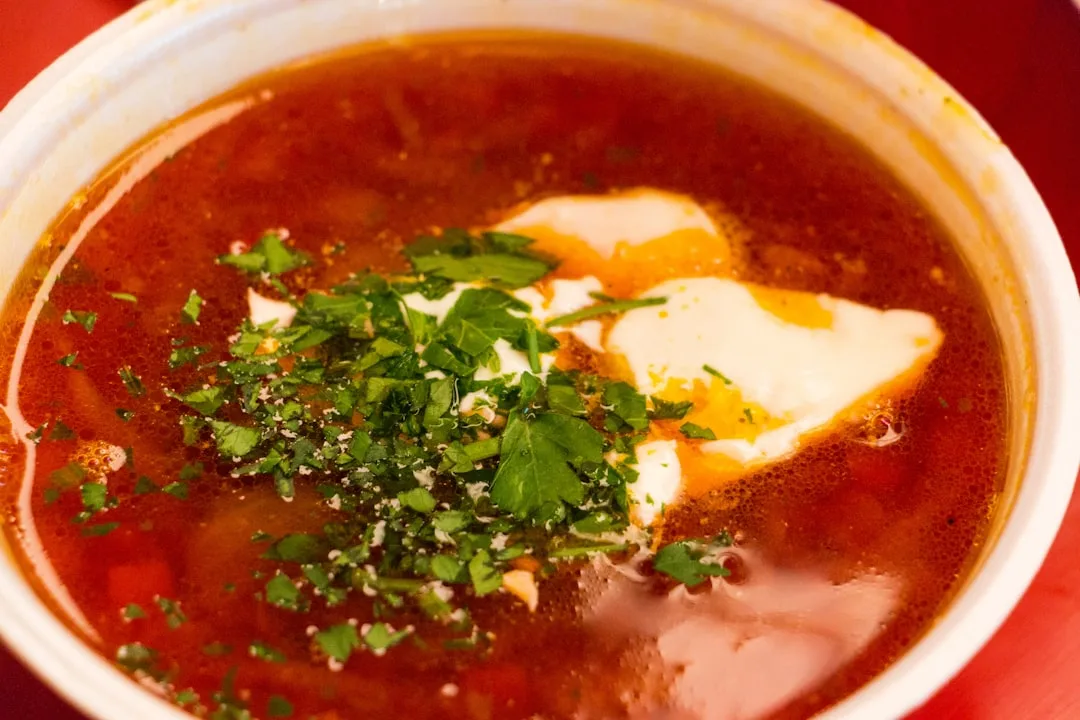
Food vocabulary is among the fastest-paying investments a Russian learner can make. It unlocks menus, grocery shopping, dinner conversations, and the immense cultural weight Russians place on hospitality at the table. Refusing a second helping of борщ at a Russian grandmother's kitchen requires not just vocabulary but diplomatic skill; this page can help you assemble both.
Russian food terms also reward the learner because Slavic roots are often strikingly different from Western European ones - хлеб (bread), мясо (meat), молоко (milk) - forcing genuine memorization rather than cognate guessing.
This reference covers staple food items, meal names, iconic Russian dishes, restaurant and cafe phrases, kitchen verbs, and the grammatical quirks that food language brings (partitive genitive with quantities, gender agreement with adjectives describing dishes).
For the case grammar behind "a glass of tea" versus "tea," see the Russian six cases reference. For stress patterns on polysyllabic food words like молоко, see the Russian pronunciation and stress guide. Gender of food nouns is especially important when combining them with color adjectives; see the Russian gender of nouns and adjectives guide.
Basic Food Staples
Table 1. Bread, dairy, and pantry items.
| Russian | Transliteration | English | Gender |
|---|---|---|---|
| хлеб | khleb | bread | m |
| батон | baton | long loaf | m |
| булка | bulka | bun / small loaf | f |
| мука | muka | flour | f |
| сахар | sakhar | sugar | m |
| соль | sol | salt | f |
| перец | perets | pepper | m |
| масло | maslo | butter / oil | n |
| сливочное масло | slivochnoye maslo | butter | n |
| растительное масло | rastitelnoye maslo | vegetable oil | n |
| молоко | moloko | milk | n |
| сметана | smetana | sour cream | f |
| творог | tvorog | quark / farmers cheese | m |
| сыр | syr | cheese | m |
| йогурт | yogurt | yogurt | m |
| яйцо | yaytso | egg | n |
| мёд | myod | honey | m |
| варенье | varenye | jam / preserves | n |
Meat, Fish, and Poultry
Table 2. Protein vocabulary.
| Russian | Transliteration | English |
|---|---|---|
| мясо | myaso | meat |
| говядина | govyadina | beef |
| свинина | svinina | pork |
| баранина | baranina | lamb |
| телятина | telyatina | veal |
| курица | kuritsa | chicken |
| индейка | indeyka | turkey |
| утка | utka | duck |
| рыба | ryba | fish |
| лосось | losos | salmon |
| сёмга | syomga | Atlantic salmon |
| треска | treska | cod |
| селёдка | selyodka | herring |
| икра | ikra | caviar / roe |
| красная икра | krasnaya ikra | red caviar (salmon) |
| чёрная икра | chornaya ikra | black caviar (sturgeon) |
| колбаса | kolbasa | sausage |
| сосиски | sosiski | frankfurters |
| ветчина | vetchina | ham |
| сало | salo | cured pork fat |
Cultural note. Сало - salt-cured pork fat - is often served thinly sliced on black bread with mustard or garlic. It is treated not as a delicacy-of-last-resort but as a genuine favorite, especially with chilled vodka.
Vegetables and Fruits
Table 3. Vegetables (овощи).
| Russian | Transliteration | English |
|---|---|---|
| картошка / картофель | kartoshka / kartofel | potato |
| помидор | pomidor | tomato |
| огурец | ogurets | cucumber |
| лук | luk | onion |
| чеснок | chesnok | garlic |
| морковь | morkov | carrot |
| свёкла | svyokla | beet |
| капуста | kapusta | cabbage |
| перец | perets | bell pepper |
| баклажан | baklazhan | aubergine |
| кабачок | kabachok | zucchini |
| грибы | griby | mushrooms |
| зелень | zelen | fresh herbs / greens |
| укроп | ukrop | dill |
| петрушка | petrushka | parsley |
Table 4. Fruits and berries (фрукты и ягоды).
| Russian | Transliteration | English |
|---|---|---|
| яблоко | yabloko | apple |
| груша | grusha | pear |
| апельсин | apelsin | orange |
| мандарин | mandarin | mandarin |
| лимон | limon | lemon |
| банан | banan | banana |
| виноград | vinograd | grapes |
| арбуз | arbuz | watermelon |
| дыня | dynya | melon |
| персик | persik | peach |
| слива | sliva | plum |
| клубника | klubnika | strawberry |
| малина | malina | raspberry |
| черника | chernika | blueberry |
| смородина | smorodina | currant |
| вишня | vishnya | sour cherry |
| черешня | chereshnya | sweet cherry |
Meals of the Day
Table 5. Meal names and associated verbs.
| Russian | Transliteration | English | Verb phrase |
|---|---|---|---|
| завтрак | zavtrak | breakfast | завтракать (to have breakfast) |
| обед | obed | lunch (main midday meal) | обедать (to have lunch) |
| полдник | poldnik | afternoon snack | - |
| ужин | uzhin | supper | ужинать (to have supper) |
| перекус | perekus | snack | перекусить (to grab a bite) |
Cultural note. The Russian обед is usually the largest meal of the day and traditionally includes three courses: a soup (first course), meat or fish with a side dish (second course), and a drink or dessert (third course). Skipping the soup is still sometimes met with mild disappointment.
Iconic Russian Dishes
Table 6. Cornerstone dishes of Russian cuisine.
| Russian | Transliteration | English description |
|---|---|---|
| борщ | borshch | beet soup with meat and vegetables |
| щи | shchi | cabbage soup |
| солянка | solyanka | salty meat-and-pickle soup |
| окрошка | okroshka | cold soup with kvass or kefir |
| уха | ukha | clear fish soup |
| пельмени | pelmeni | small meat dumplings |
| вареники | vareniki | dumplings with cheese, potato, or fruit |
| блины | bliny | thin pancakes |
| оладьи | oladi | thick pancakes |
| пирожки | pirozhki | small stuffed pies |
| пирог | pirog | large pie |
| каша | kasha | porridge |
| гречка | grechka | buckwheat |
| плов | plov | pilaf (rice with meat) |
| винегрет | vinegret | beet and vegetable salad |
| оливье | olivye | Russian potato and mayonnaise salad |
| селёдка под шубой | selyodka pod shuboy | "herring under fur coat" layered salad |
| холодец | kholodets | meat aspic |
| котлеты | kotlety | meat patties |
| шашлык | shashlyk | grilled meat skewers |
| квас | kvas | fermented rye drink |
| компот | kompot | stewed fruit drink |
Memory tip. The word каша appears in the idiom Кашу маслом не испортишь - "you cannot spoil porridge with butter." It captures both the Russian love of butter and the general principle that more of a good thing is rarely bad.
Drinks
Table 7. Beverages.
| Russian | Transliteration | English |
|---|---|---|
| чай | chay | tea |
| чёрный чай | chornyy chay | black tea |
| зелёный чай | zelyonyy chay | green tea |
| кофе | kofe | coffee (masculine by convention) |
| кофе с молоком | kofe s molokom | coffee with milk |
| вода | voda | water |
| газированная вода | gazirovannaya voda | sparkling water |
| минералка | mineralka | mineral water |
| сок | sok | juice |
| апельсиновый сок | apelsinovyy sok | orange juice |
| пиво | pivo | beer |
| вино | vino | wine |
| красное вино | krasnoye vino | red wine |
| белое вино | beloye vino | white wine |
| водка | vodka | vodka |
| коньяк | konyak | cognac / brandy |
| шампанское | shampanskoye | champagne / sparkling wine |
Note on кофе: traditionally masculine (чёрный кофе), although the neuter usage (чёрное кофе) has become tolerated in informal speech. Formal writing retains the masculine.
Cooking Verbs
Table 8. Verbs in the kitchen.
| Imperfective | Perfective | English |
|---|---|---|
| готовить | приготовить | to prepare / to cook |
| варить | сварить | to boil |
| жарить | пожарить / зажарить | to fry |
| печь | испечь | to bake |
| тушить | потушить | to stew / to braise |
| резать | порезать | to cut |
| мешать | помешать | to stir |
| чистить | почистить | to peel / to clean |
| солить | посолить | to salt |
| добавлять | добавить | to add |
| пробовать | попробовать | to try / to taste |
| есть | съесть | to eat |
| пить | выпить | to drink |
For the difference between the imperfective and perfective columns, see the Russian verb aspects perfective imperfective explained.
Restaurant and Cafe Phrases
Table 9. Ordering and paying.
| Russian | Transliteration | English |
|---|---|---|
| Я хотел бы заказать... | Ya khotel by zakazat... | I would like to order... |
| Что у вас есть на завтрак? | Chto u vas est na zavtrak? | What do you have for breakfast? |
| Какое у вас фирменное блюдо? | Kakoye u vas firmennoye blyudo? | What is your specialty? |
| Я не ем мясо | Ya ne yem myaso | I do not eat meat |
| У меня аллергия на... | U menya allergiya na... | I am allergic to... |
| Это вегетарианское? | Eto vegetarianskoye? | Is this vegetarian? |
| Принесите, пожалуйста, воду | Prinesite, pozhaluysta, vodu | Please bring water |
| Ещё один, пожалуйста | Yeshchyo odin, pozhaluysta | One more, please |
| Счёт, пожалуйста | Schyot, pozhaluysta | The bill, please |
| Можно расплатиться? | Mozhno rasplatitsya? | May I pay? |
| Сдачи не надо | Sdachi ne nado | Keep the change |
| Было очень вкусно | Bylo ochen vkusno | It was delicious |
For more general dining phrases, see the Russian common phrases for daily conversation reference.
Describing Taste and Texture
Table 10. Adjectives for food.
| Russian | Transliteration | English |
|---|---|---|
| вкусный | vkusnyy | tasty |
| невкусный | nevkusnyy | not tasty |
| сладкий | sladkiy | sweet |
| солёный | solyonyy | salty |
| кислый | kislyy | sour |
| горький | gorkiy | bitter |
| острый | ostryy | spicy / sharp |
| пресный | presnyy | bland |
| свежий | svezhiy | fresh |
| чёрствый | chorstvyy | stale |
| горячий | goryachiy | hot (temperature) |
| холодный | kholodnyy | cold |
| жирный | zhirnyy | fatty |
| нежирный | nezhirnyy | low-fat |
| хрустящий | khrustyashchiy | crispy |
| мягкий | myagkiy | soft |
| жёсткий | zhostkiy | tough |
Note the two different Russian words for "hot": горячий refers to temperature, острый to spicy taste. Asking for a горячий суп means "a hot (not cold) soup"; an острый суп is one with chili.
Quantities and Partitive Genitive
Russian uses the genitive case to express "some of" or an unspecified amount:
- Дайте мне хлеб. - Give me the bread. (whole loaf)
- Дайте мне хлеба. - Give me some bread. (partitive)
- Выпей чай. - Drink the tea. (specific cup)
- Выпей чаю. - Have some tea. (old partitive genitive, still used with mass nouns)
Some masculine mass nouns have a special partitive-genitive ending in -у/-ю alongside the regular genitive in -а/-я:
- чая (regular genitive) / чаю (partitive)
- сахара / сахару
- супа / супу
In modern speech the -у forms are optional and slightly folksy; neutral Russian uses -а for both senses.
Common Mistakes English Speakers Make
- Confusing горячий and острый. In English, "hot" covers both temperature and spice. In Russian they are separate words.
- Treating кофе as neuter. In written and standard spoken Russian, кофе is masculine: чёрный кофе, not чёрное кофе.
- Using есть + direct object incorrectly. The verb есть (to eat) takes the accusative: Я ем яблоко. Do not confuse it with есть meaning "there is" - a different verb form entirely.
- Literal translation of "I am hungry." Russian says Я хочу есть (I want to eat) or Я голоден / голодна (I am hungry, m / f). *Я есть голодный is not Russian.
- Omitting the partitive. English happily says "give me water"; Russian prefers дайте мне воды (genitive partitive) for "some water."
Quick Reference Cheat Sheet
Essential restaurant vocabulary to memorize:
- хлеб - bread
- вода - water
- чай / кофе - tea / coffee
- мясо / рыба / курица - meat / fish / chicken
- овощи / фрукты - vegetables / fruits
- завтрак / обед / ужин - breakfast / lunch / supper
- суп / салат / десерт - soup / salad / dessert
- счёт - bill
- вкусно - tasty
- пожалуйста - please
- спасибо - thank you
Frequently Asked Questions
What is the difference between борщ and щи? Both are cabbage-based soups, but борщ uses beets as a defining ingredient, giving it a ruby color, while щи is simpler and based on cabbage (fresh or fermented) without beets.
Is каша really just porridge? Каша covers many dishes: oatmeal, buckwheat, semolina, millet, and rice porridges. It is a staple for breakfast and as a side dish, savory or sweet.
What do Russians drink with meals? Typically tea at the end, and water, kompot, or juice during the meal. Alcohol (vodka, wine, beer) accompanies festive meals but is not automatic daily.
How do I say "I am vegetarian"? Я вегетарианец (m) or Я вегетарианка (f). Follow with Я не ем мясо и рыбу (I do not eat meat and fish) if needed.
Are Russian portions large? In restaurants they are moderate; in home cooking they tend to be generous, especially when you are a guest. Refusing additional servings usually requires a direct, polite statement.
What is kvass? Квас is a lightly fermented drink made from rye bread, traditionally sold from tankers on the street in summer. Very low alcohol, treated as a soft drink.
Why does coffee have two gender forms? Historically borrowed as masculine (чёрный кофе). The neuter usage arose by analogy with other nouns ending in -е. In standard written Russian, masculine is still correct.
See Also
- Russian common phrases for daily conversation reference
- Russian grammar cases complete guide
- Russian six cases reference
- Russian gender of nouns and adjectives guide
- Russian verb aspects perfective imperfective explained
- Russian travel phrases tourist guide reference
- Russian colors, adjectives, and descriptions reference
Author: Kalenux Team
Frequently Asked Questions
What is the difference between борщ and щи?
Both are cabbage-based soups. Борщ uses beets and has a deep red color; щи is simpler, based on cabbage (fresh or fermented) without beets.
Is каша really just porridge?
Каша covers oatmeal, buckwheat, semolina, millet, and rice porridges. It is a staple breakfast and side dish, served savory or sweet.
What do Russians drink with meals?
Typically tea at the end, and water, kompot, or juice during the meal. Alcohol accompanies festive meals but is not an automatic daily drink.
How do I say 'I am vegetarian' in Russian?
Я вегетарианец (masculine) or Я вегетарианка (feminine). Add Я не ем мясо и рыбу (I do not eat meat and fish) for clarity.
Are Russian portions large?
Restaurant portions are moderate; home cooking is generous, especially for guests. Refusing extra servings politely but firmly is often required.
What is квас?
Квас is a lightly fermented drink made from rye bread, sold from tankers in summer. Very low alcohol, treated as a soft drink.
Why does coffee have two gender forms?
Historically borrowed as masculine (чёрный кофе). Neuter usage arose by analogy. Standard written Russian retains the masculine form.