
The apostrophe in "it's" is one of the most commonly misused marks in English. Even strong professional writers slip on this, because the rules for "its" and "it's" run opposite to every other possessive form in the language. Once you see the logic, the confusion clears permanently. This guide explains the rule, the reason behind the rule, the edge cases that trip up good writers, and the practice patterns that make correct usage automatic.
The Core Rule in One Sentence
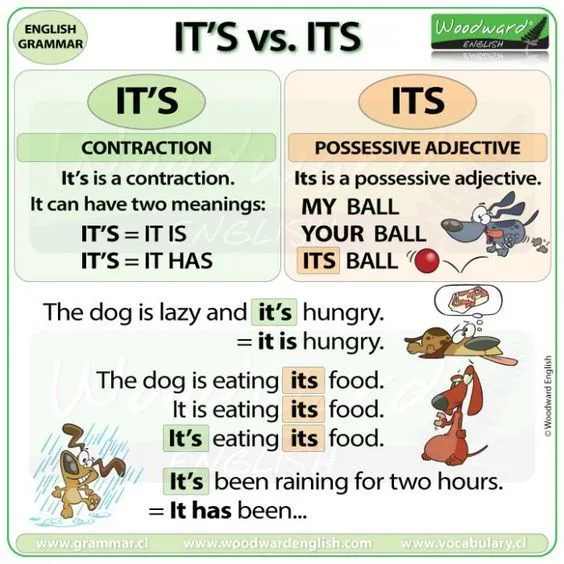
"It's" with an apostrophe is a contraction of "it is" or "it has." "Its" without an apostrophe is possessive. "Its'" with an apostrophe after the s is not a word and should never appear in professional writing.
That is the entire rule. The rest of this article is about the reasons behind it, the edge cases, and how to make the correct choice automatic.
Why This Rule Breaks the Pattern
In almost every other noun in English, the possessive form takes an apostrophe plus s. "The dog's leash." "The company's policy." "The child's toy." Readers of English learn that apostrophe plus s signals possession.
Pronouns break this pattern. "His" is possessive without an apostrophe. "Her" is possessive without an apostrophe. "Their" is possessive without an apostrophe. "Its" follows this pattern. "Its" is the possessive form of "it," with no apostrophe.
The apostrophe in "it's" is reserved for the contraction. This feels counterintuitive precisely because it reverses what other nouns do. Once you group "its" with "his" and "her" rather than with "the dog's" and "the company's," the rule becomes easier to remember.
Grammar rules are not arbitrary; they are patterns. Once you see the pattern that grammar is following, the rule makes sense and stops being something you have to memorize by rote.
The Substitution Test
The single most reliable way to choose between "its" and "it's" is the substitution test. Substitute "it is" or "it has" in place of the word.
If the sentence still makes sense with "it is" or "it has," use "it's."
If the sentence stops making sense, use "its."
Examples:
"The cat licked its paw." Test: "The cat licked it is paw." Does not make sense. Use "its."
"It's raining." Test: "It is raining." Makes sense. Use "it's."
"The company updated its policy." Test: "The company updated it is policy." Does not make sense. Use "its."
"It's been a long day." Test: "It has been a long day." Makes sense. Use "it's."
The substitution test works every time. If you practice it on ten sentences, the choice becomes automatic.
Clear Examples in Each Category
"It's" as contraction of "it is":
- "It's a beautiful morning."
- "It's the last item on the agenda."
- "It's not what I expected."
- "I think it's time to go."
- "She said it's urgent."
"It's" as contraction of "it has":
- "It's been three weeks since we spoke."
- "It's gotten much harder to find parking."
- "It's never worked properly."
- "It's taken longer than planned."
- "It's only been a minute."
"Its" as possessive:
- "The dog wagged its tail."
- "The city lost its charm."
- "Every company needs its own strategy."
- "The software has its limitations."
- "The lesson is its own reward."
Comparison Table: Other Pronouns That Follow the Same Pattern
| Subject Pronoun | Possessive (No Apostrophe) | Contraction (With Apostrophe) |
|---|---|---|
| I | my / mine | I'm, I've (I am, I have) |
| You | your / yours | You're (you are) |
| He | his | He's (he is, he has) |
| She | her / hers | She's (she is, she has) |
| It | its | It's (it is, it has) |
| We | our / ours | We're (we are) |
| They | their / theirs | They're (they are) |
Notice the pattern. Every pronoun has a possessive form without an apostrophe and a contraction form with an apostrophe. "Its" and "it's" follow this pattern exactly.
Readers who confuse "its" and "it's" almost never confuse "his" with "he's" or "their" with "they're." The confusion is specific to "it" because the possessive form "its" looks superficially similar to noun possessives like "the cat's." But "its" behaves like "his," not like "the cat's."
The Common Mistakes
Three specific mistakes dominate.
Mistake 1: Using "it's" for possession.
Wrong: "The dog wagged it's tail."
Correct: "The dog wagged its tail."
This is the most common error. It happens because writers apply the apostrophe-s possessive rule by habit, without thinking about whether the word is a pronoun.
Mistake 2: Using "its" when "it's" is needed.
Wrong: "Its been a long year."
Correct: "It's been a long year."
This error is less common but still frequent. It often appears when the contraction of "it has" is needed, because "it has" feels less like a contraction than "it is."
Mistake 3: Using "its'" at all.
Wrong: "The team worked on its' goals." "The document lost its' formatting."
Correct: "The team worked on its goals." "The document lost its formatting."
"Its'" is not a word in standard English. It is sometimes written by mistake when a writer is unsure and splits the difference. It is always wrong.
Comparison Table: Which Form in Which Sentence
| Sentence | Correct Form | Reason |
|---|---|---|
| The company released [its/it's/its'] earnings report. | its | Possessive |
| [Its/It's/Its'] going to rain. | It's | Contraction of it is |
| [Its/It's/Its'] been three hours. | It's | Contraction of it has |
| The building lost [its/it's/its'] power. | its | Possessive |
| [Its/It's/Its'] name is Bella. | Its | Possessive |
| The project is behind [its/it's/its'] schedule. | its | Possessive |
| [Its/It's/Its'] important to arrive early. | It's | Contraction of it is |
| Every system has [its/it's/its'] limits. | its | Possessive |
The Rule for Formal Writing
In formal writing, some style guides recommend avoiding contractions entirely. If you are writing a legal document, a scholarly paper, or formal business correspondence where contractions are discouraged, write "it is" or "it has" rather than "it's."
This approach sidesteps the choice entirely. If you write "it is" instead of "it's," the only remaining form is "its," the possessive. No confusion possible.
Most business writing today accepts contractions. Contractions feel natural and readable. But know your context. A court brief uses "it is." A blog post uses "it's."
"The apostrophe is a small mark that carries large meaning. The writer who uses it correctly signals attention to detail. The writer who uses it wrong undermines their own voice." Ann Handley, Everybody Writes
Why This Error Hurts Professional Writing
Hiring managers, editors, and senior colleagues routinely flag "its" and "it's" errors because they are commonly taught and commonly tested. An error here is often taken as a signal about broader attention to detail.
Research on how professional readers process text suggests that a single its/it's error does not dramatically change the reader's overall impression, but three or more in a single document do. The cumulative effect is perceived as weak editing or lack of care.
In fields where writing itself is part of the professional evaluation, such as law, journalism, marketing, and academia, its/it's errors can move a writer from shortlist to no list in hiring decisions.
| Field | Sensitivity to Its/It's Errors |
|---|---|
| Legal writing | Very high |
| Academic publishing | Very high |
| Journalism | Very high |
| Marketing and content | High |
| Technical writing | High |
| Product management | Medium |
| Engineering documentation | Medium |
| Internal email | Medium-low |
| Casual chat | Low |
Memory Tricks
Several memory tricks help make the rule automatic.
Trick 1: The apostrophe shows omission.
Apostrophes in contractions replace missing letters. "It's" is short for "it is" (missing the i in is) or "it has" (missing the ha in has). If nothing is missing, no apostrophe. "Its" (possessive) is not short for anything, so no apostrophe.
Trick 2: Group with "his" and "her," not with "the dog's."
Possessive pronouns never take apostrophes. His. Her. Their. Your. Its. Group "its" with these, and the possessive rule becomes intuitive.
Trick 3: Read aloud.
Read the sentence and replace the word with "it is." If it sounds right, use "it's." If it sounds wrong, use "its."
Trick 4: The three-second check.
When you write either "its" or "it's," pause for three seconds and apply the substitution test. This pause is enough to catch errors before they reach the reader.
"A writer's habits are the writer's style. The small habit of pausing at 'its' saves the writer from a dozen small embarrassments a week." Roy Peter Clark, Writing Tools
Edge Cases
Several situations create uncertainty even for writers who know the basic rule.
Its vs. of it:
"The document and its formatting" is correct. "The document and it's formatting" is wrong. When uncertain, try replacing "its" with "of it." "The document and the formatting of it" works. "The document and the formatting of it is" does not work.
Its following a comma:
"The system, with its many features, is complex." The "its" here is possessive. Test: "The system, with it is many features, is complex." Does not work. So: "its."
It's at the start of a sentence:
"It's been a long day." "It's raining." Test: "It is been a long day." Does not work exactly, but "It has been" does. So "it's" is right, as contraction of "it has." "It is raining" works directly, so "it's" as contraction of "it is."
Beginners sometimes get confused by "it's" starting a sentence because the capital letter makes the apostrophe easier to see and therefore feel wrong. The rule is the same regardless of position.
In quoted dialogue:
"'It's not my problem,' she said." The contraction is standard in speech and is correctly rendered with apostrophe in quotation.
Related Usage Errors
"Its" and "it's" errors often cluster with similar possessive-contraction confusions.
| Pair | Possessive | Contraction |
|---|---|---|
| its / it's | its | it's (it is, it has) |
| your / you're | your | you're (you are) |
| their / they're / there | their | they're (they are) |
| whose / who's | whose | who's (who is, who has) |
| theirs / there's | theirs | there's (there is, there has) |
A writer who masters its/it's often finds the other pairs become easier, because the underlying pattern is the same.
Practice Sentences
Try the substitution test on these.
- The house lost __ power during the storm.
- __ been a wonderful experience.
- The team announced __ plans for Q4.
- __ the best decision we made.
- Every language has __ own quirks.
- __ going to take longer than expected.
- The book is notable for __ length.
- __ taken months to resolve.
- __ been raining all week.
- The city rebuilt __ infrastructure.
Answers: 1. its, 2. It's (has), 3. its, 4. It's (is), 5. its, 6. It's (is), 7. its, 8. It's (has), 9. It's (has), 10. its.
When Grammar Tools Help and When They Do Not
Grammar checking tools catch most its/it's errors but not all.
| Situation | Tool Accuracy |
|---|---|
| "It's" used for possession | High, usually flagged |
| "Its" used for contraction | Medium, sometimes missed |
| "Its'" (non-word) | High, almost always flagged |
| Its/it's in quoted dialogue | Medium |
| Its/it's in technical writing | Lower, specialized vocabulary confuses |
| Its/it's in legal writing | Medium, style guide conflicts possible |
Grammar tools are a useful safety net but not a substitute for understanding the rule. The substitution test in your own head catches errors tools miss and does not generate false positives.
The productivity research at When Notes Fly covers how professionals integrate proofreading into their writing workflow without slowing down, and the certification content at Pass4Sure addresses how written communication quality affects technical career progression in roles where certifications establish baseline competence.
Its/It's in Different Writing Registers
| Register | Contractions | Possessive |
|---|---|---|
| Academic journal | Usually avoided | Used |
| Legal brief | Avoided | Used |
| Business email | Accepted | Used |
| Marketing copy | Encouraged | Used |
| Technical manual | Usually avoided | Used |
| Blog post | Encouraged | Used |
| Novel fiction | Encouraged in dialogue | Used |
| Corporate annual report | Usually avoided | Used |
| Social media | Encouraged | Used |
The possessive "its" is unchanged across registers. Only the use of "it's" as a contraction varies. Formal registers often avoid contractions altogether, which simplifies the choice.
Why This Matters in the Broader Picture
The its/it's distinction is small, but it sits at the intersection of three larger writing competencies: understanding grammatical patterns, applying rules under time pressure, and maintaining consistency across long documents. Writers who master this small rule typically apply similar discipline to larger craft decisions.
The small mark is also a signal to readers. A reader who notices correct usage develops confidence in the writer's command of the language. A reader who notices repeated errors develops doubt that often extends to the writer's arguments and analysis.
"No rule in English is trivial, because readers do not grade rules by size. They grade writing by accuracy. Accuracy is accuracy." William Zinsser, On Writing Well
The cognitive research at What's Your IQ explores why small signals in writing disproportionately affect reader judgment, and the governance and business writing resources at Corpy cover how formal document standards apply across jurisdictions for multinational writers.
Common Myths
Myth: "It's" with apostrophe is more formal.
False. Formality concerns whether contractions are acceptable at all, not which version to use.
Myth: "Its'" with apostrophe after s is a plural possessive.
False. "Its'" is not a word. The singular and plural possessive of "it" is simply "its."
Myth: British English treats this differently.
False. The rule is identical in all major English varieties.
Myth: The rule used to be different.
Somewhat true. Early English had more flexibility with pronoun possessives. Standard modern English has the rule as stated here. For any writing in the last century, the rule is firm.
Building the Habit
The goal is to make correct usage automatic, not to remember a rule every time.
Practice methods:
- When writing "its" or "it's" in any document, pause for three seconds
- Run the substitution test mentally
- Read your drafts aloud; "it is" or "it has" substitution is obvious when spoken
- Keep a note of any errors you catch in review, to track patterns
- Use a grammar tool for final checks
Writers who practice deliberately for two to four weeks typically find the correct form becomes automatic. After that, occasional lapses happen but rarely, and the substitution test catches them instantly.
For related communication guidance, see our articles on affect vs effect simple rule and their vs there vs they're quick guide.
References
Pinker, S. (2014). The Sense of Style. Viking. https://stevenpinker.com/publications/sense-style
Handley, A. (2014). Everybody Writes. Wiley. https://annhandley.com/everybodywrites/
Clark, R. P. (2008). Writing Tools: 55 Essential Strategies for Every Writer. Little, Brown. https://www.poynter.org/
Zinsser, W. (2006). On Writing Well. HarperCollins. https://www.harpercollins.com/
Harvard Business Review. Common Grammar Errors in Business Writing. https://hbr.org/
Purdue Online Writing Lab. Apostrophe Usage. https://owl.purdue.edu/owl/general_writing/punctuation/apostrophe_introduction.html
Chicago Manual of Style. Possessives and Contractions. https://www.chicagomanualofstyle.org/
Grammarly Blog. Its vs It's Explained. https://www.grammarly.com/blog/its-vs-its/
Frequently Asked Questions
What is the difference between its and it's?
Its without an apostrophe is the possessive form of it, showing that something belongs to or relates to it. It’s with an apostrophe is a contraction of either it is or it has. The simplest test is substitution: replace the word with it is or it has. If the sentence still makes sense, use it’s. If the sentence stops making sense, use its.
This test works every time. Its’ with an apostrophe after the s is not a word in standard English and should never appear in professional writing.
Why does its have no apostrophe when other possessives do?
Its follows the pattern of other possessive pronouns like his, her, their, your, and our. None of these take apostrophes. The apostrophe in possessives like the dog’s leash applies to noun possessives, not pronoun possessives.
Its is a pronoun, so it behaves like his and her, not like the dog’s. Once you group its with his and her rather than with noun possessives, the rule becomes intuitive.
Pronouns simply do not take apostrophes in their possessive forms, and its is no exception to this pattern.
How do you remember the difference between its and it's?
Use the substitution test. Replace the word with it is or it has. If the sentence works, use it’s. If not, use its. You can also remember that apostrophes signal missing letters. It’s is short for it is (missing i) or it has (missing ha).
Its has no missing letters because it is a complete word in its own right.
Group its with other pronoun possessives like his, her, their, and your, all of which are apostrophe-free. Reading your writing aloud also reveals the right choice because it is sounds obviously different from the possessive its.
Is its' ever correct in English?
No. Its’ with an apostrophe after the s is never correct in standard English. It is sometimes written by mistake when a writer is unsure and tries to split the difference, but it is simply not a word. The singular and plural possessive of the pronoun it is always its without any apostrophe. If your software spell-checker or editor ever produces its’ as a suggestion, the suggestion is wrong.
Any writing guide, style manual, or dictionary will confirm that its’ is not part of the language.
Do formal writing styles use it's?
It depends on the style guide. Many formal writing contexts avoid contractions altogether, which means writing it is or it has rather than it’s. Legal briefs, academic journals, corporate annual reports, and formal technical manuals typically avoid contractions.
Business email, marketing copy, blog posts, and most modern professional writing accept contractions. When contractions are avoided entirely, the apostrophe question becomes easier because the only remaining form is the possessive its.
Know your context and style guide before deciding whether to use it’s.
Does a grammar checker always catch its and it's errors?
No. Grammar checkers catch most its and it’s errors but not all. They reliably flag obvious mistakes like the dog wagged it’s tail. They are less reliable in technical writing with specialized vocabulary, in legal writing where style guide conflicts exist, and in quoted dialogue.
The substitution test in your own head is more reliable than any grammar tool because it applies directly to meaning.
Grammar tools should be used as a safety net rather than a substitute for understanding the underlying rule, which takes only a few minutes to master.
Does its vs it's matter in professional writing?
Yes, particularly in fields where writing is evaluated professionally. Legal writing, academic publishing, journalism, marketing, and technical writing all treat its and it’s errors as signals of weak editing or lack of attention to detail. A single error rarely changes a reader’s impression dramatically, but three or more in a document often do.
In hiring decisions for writing-intensive roles, repeated its and it’s errors can move a candidate from shortlist to no list.
In internal casual communication the sensitivity is lower, but the rule is worth mastering because the effort is small and the payoff compounds.