
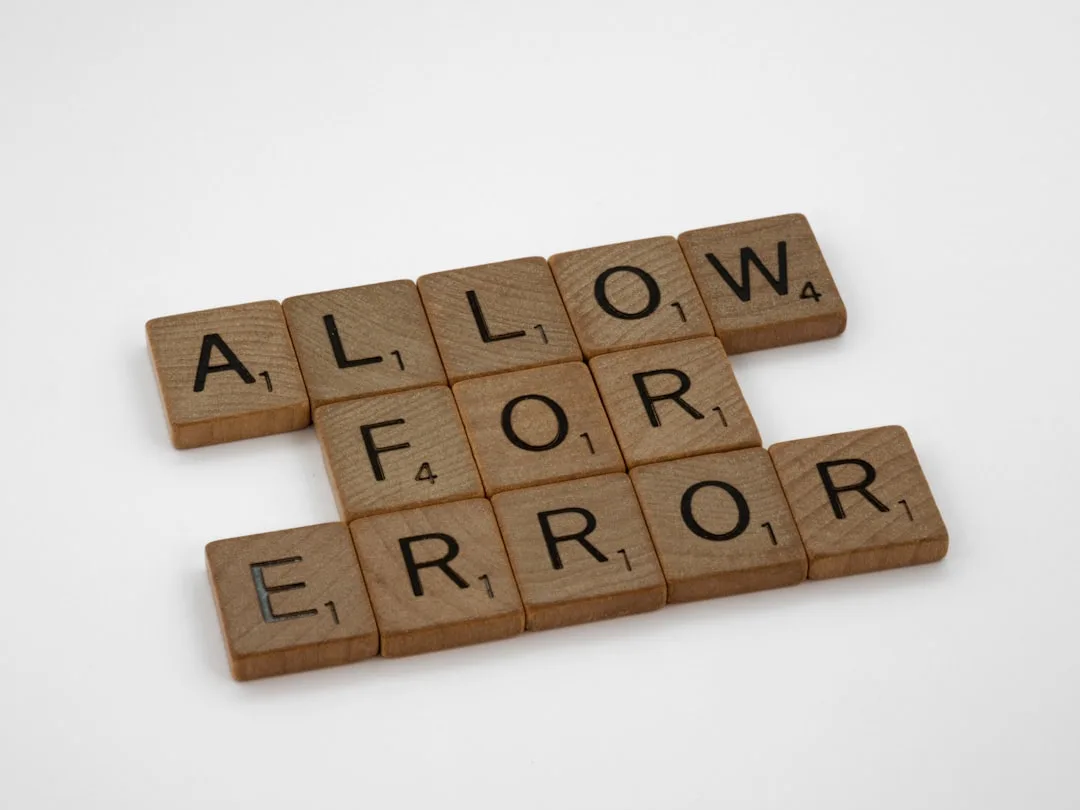
"Fewer" and "less" are not interchangeable, even though they are used that way in casual speech all the time. The rule that separates them is one of the cleanest in English: use "fewer" with things you can count one by one, and use "less" with things you measure as a bulk quantity. Once you learn that rule and the small handful of exceptions around time, money, and distance, you will handle the distinction in every real writing situation you meet.
The confusion persists for a few reasons. First, many readers and writers were never taught the rule explicitly, so they rely on whatever sounds right, which often defaults to "less" because it is the shorter and more common word.
Second, the rule has famously been broken on supermarket signs for decades. "Ten items or less" became standard on express lane signs long before editors pushed back. Third, some stylists argue that the rule is dying and the two words are becoming interchangeable. That argument is not yet persuasive in professional writing, where the distinction is still enforced by editors and style guides.
This guide walks through the core rule, the standard exceptions, more than twenty example sentences, the modern usage debate, and a quick cheat sheet. By the end you should be able to choose between "fewer" and "less" without hesitation in every normal writing situation. This is an expert-written reference maintained by the Kalenux Team, designed for writers who want to pass the distinction on to their readers with confidence rather than second-guess themselves during drafting.
The Core Rule
"Fewer" goes with countable nouns. "Less" goes with uncountable nouns.
Countable nouns can be counted as discrete units. One car, two cars, three cars. One book, two books, three books. If you can put a number in front of the noun and have it sound natural in the plural, the noun is countable, and the right quantifier is "fewer."
Uncountable nouns cannot be counted as discrete units. You do not say one water, two waters, three waters in normal English (unless you mean bottles). Water is a mass. You measure it by volume. The right quantifier for mass or bulk is "less."
Examples:
"Fewer cars are on the road this morning." Countable noun (cars), so "fewer."
"Less traffic is on the road this morning." Uncountable noun (traffic), so "less."
"The team has fewer players this season." Countable (players), so "fewer."
"The team has less experience this season." Uncountable (experience), so "less."
"The countable-uncountable distinction is not a rule someone invented. It reflects how the mind categorizes objects and substances. Fewer and less simply follow the category." Kalenux Team expert-written grammar reference
The Countable vs Uncountable Test
The quickest way to decide between "fewer" and "less" is to ask whether the noun can take a plural and a number.
If you can say "three cars," "five meetings," "ten students," or "a hundred emails," the noun is countable. Use "fewer."
If you cannot say "three waters" or "five traffics" or "ten experiences" without awkwardness, the noun is uncountable. Use "less."
Some nouns can be both, depending on context. "Wine" is uncountable when you mean the substance: "less wine." "Wine" is countable when you mean different varieties: "fewer wines on the menu." The test tells you which meaning is active in the sentence.
| Noun | Countable Form | Uncountable Form | Correct Quantifier |
|---|---|---|---|
| hour | yes (hours) | rarely | fewer hours |
| time | no | yes (time) | less time |
| dollar | yes (dollars) | no | fewer dollars (but see exception) |
| money | no | yes | less money |
| person | yes (people) | no | fewer people |
| traffic | no | yes | less traffic |
| yes (emails) | no | fewer emails | |
| communication | no | yes (the general sense) | less communication |
| tree | yes (trees) | no | fewer trees |
| wood | no | yes (material) | less wood |
This table covers the patterns you will see most often. Note the paired contrasts: fewer hours but less time, fewer trees but less wood, fewer emails but less communication. The paired contrasts reveal the rule at work.
The Time, Money, and Distance Exception
The rule has one major exception. Even though time, money, and distance can be broken into countable units, standard English treats them as bulk measurements in everyday sentences.
"Less than five minutes." Correct, even though minutes is technically countable.
"Less than twenty dollars." Correct.
"Less than ten miles." Correct.
"Less than two years ago." Correct.
Using "fewer" in these cases sounds awkward to most native speakers. "Fewer than five minutes" is technically defensible but almost no one writes it that way. The reason is that time, money, and distance are thought of as a single continuous quantity even when expressed in units. The same logic applies to weight, age, and temperature.
"When time, money, or distance appears with a number, less is the idiomatic choice in edited English. This has been consistent in dictionaries and style guides for more than a century." Garner's Modern English Usage
The exception does not apply when the units are being counted as discrete items rather than as a quantity. "She wrote fewer emails this week than last" uses countable emails. "She spent less time writing emails this week than last" uses uncountable time.
Twenty-Plus Correct Examples
Fewer with countable nouns:
- "The department hired fewer analysts this year."
- "Fewer students showed up for the morning session."
- "We received fewer complaints after the update."
- "The store stocks fewer brands than it did last year."
- "Fewer candidates met the minimum qualifications."
- "Fewer meetings would free up time for deep work."
- "The new design uses fewer moving parts."
- "Fewer companies are filing for public offerings."
- "The professor assigned fewer readings this semester."
- "Fewer people attended than we expected."
Less with uncountable nouns:
- "The project required less funding than projected."
- "Less evidence was presented than the defense expected."
- "The new process involves less paperwork."
- "The soup needs less salt."
- "Less attention is paid to formatting than to content."
- "Less research exists on this particular question."
- "Less friction between departments leads to faster decisions."
- "Less information was available at the time of the report."
- "Less water reached the reservoir this year."
- "Less oversight leads to more mistakes."
Mixed usage with time, money, and distance:
- "The commute takes less than thirty minutes."
- "The device costs less than fifty dollars."
- "The route is less than ten miles long."
- "The task was finished in less than an hour."
- "The flight lasted less than four hours."
Same noun, different context:
- "She tried fewer wines at the tasting this year." (different varieties)
- "She drank less wine at the tasting this year." (total amount)
- "Fewer lights are on in the office tonight." (individual lamps)
- "Less light reaches the corner desk." (illumination as bulk)
Common Mistakes to Avoid
Mistake 1: Using less with countable plural nouns.
Wrong: "Less people attended the conference."
Correct: "Fewer people attended the conference."
This is the single most common error in modern writing and speech. "People" is countable, so "fewer" is correct.
Mistake 2: Using fewer with uncountable mass nouns.
Wrong: "The bakery has fewer flour than last week."
Correct: "The bakery has less flour than last week."
"Flour" is uncountable in the bulk sense, so "less" is correct. "Fewer flours" would only work if you meant different types of flour.
Mistake 3: Over-correcting on time and money.
Wrong: "The process takes fewer than five days."
Correct: "The process takes less than five days."
Even though "days" is countable, time is treated as uncountable in this construction. The idiomatic choice is "less."
Mistake 4: Using less with items in a list.
Wrong: "The new menu has less items than before."
Correct: "The new menu has fewer items than before."
"Items" is countable, so "fewer" is required. This is the error from the famous supermarket express lane signs.
Mistake 5: Dropping the distinction in formal writing.
Some writers use "less" for everything in casual speech and carry that habit into formal writing. In edited contexts, this still draws corrections. Adjust for the audience.
Quick Reference Cheat Sheet
| Rule | Use fewer | Use less |
|---|---|---|
| Can you count it one by one? | yes | no |
| Does the noun have a plural form you use? | yes | no |
| Is the noun a mass, substance, or abstract quality? | no | yes |
| Time, money, distance with a number? | no | yes (exception) |
| Different varieties of something? | yes (varieties) | no |
Print this table and keep it handy when you edit. Most writers stop needing it after a few weeks of consistent application.
The Modern Usage Debate
Some commentators argue that the "fewer" and "less" distinction is being lost and should be treated as optional. Their argument has three parts. First, native speakers mix the two in casual speech at high rates. Second, some dictionaries now note the mixed usage without labeling it as an error. Third, the distinction is not critical to meaning in most cases.
The counterargument is equally strong. First, professional editors still enforce the distinction in every major publishing context. Second, corporate and academic style guides still treat the rule as live. Third, the cost of following the rule is low, and the payoff in precision and polish is real. Fourth, readers who know the rule do notice when it is broken, and the impression they form is a small but real signal about the writer's care.
"Rules that cost little to follow and give readers a reliable signal of careful editing are worth keeping. Fewer and less falls into that category." Kalenux Team expert-written editorial guidance
The most defensible position for professional writers is to follow the rule in formal writing, let it drift in dialogue or very casual content, and edit for consistency in everything in between.
Self-Check Exercise
Fill in the blank with "fewer" or "less." Answers at the end.
- The store had ___ customers during the storm.
- The recipe uses ___ sugar than the original.
- We had ___ than thirty minutes to finish the meeting.
- The revised plan requires ___ resources overall.
- The new policy has resulted in ___ complaints from staff.
Answers: 1. fewer (customers is countable). 2. less (sugar is uncountable). 3. less (time exception). 4. fewer (resources as countable, though some writers use less; fewer is stricter). 5. fewer (complaints is countable).
If you scored at least four out of five, the rule has stuck.
Conclusion
"Fewer" versus "less" is a clean rule once you see the countable-uncountable distinction underneath it. The only real complication is the time, money, and distance exception, which is itself consistent once you see it. A few minutes of practice with the examples above will make the right choice automatic in your drafting.
The Kalenux Team maintains a broader set of guides on commonly confused words, and this article is part of that library. Writers who want to tighten their editing habits will find the related guides on "affect" versus "effect" and "who" versus "whom" useful companions.
Frequently Asked Questions
What is the rule for fewer vs less?
Use fewer with things you can count one by one, and use less with things you measure as a bulk quantity. Fewer people, fewer cars, fewer hours. Less water, less money, less time. The quick test is to ask whether you could add the number two in front of the noun and have it sound natural.
Two cars is natural, so use fewer with cars.
Two waters would be strange unless you mean two bottles, so use less with water. Countable nouns take fewer, uncountable nouns take less. This one rule handles almost every case you will meet in writing.
Is the express lane sign ten items or less grammatically correct?
Strictly speaking, no. Items is countable, so the correct form is ten items or fewer. This is one of the most famous grammar errors in everyday American life because the incorrect version appears on grocery store express lane signs across the country.
Some supermarkets have updated their signs in recent years to avoid the debate entirely; Tesco, for instance, changed its express lane signage from “10 items or less” to the grammar-neutral “Up to 10 items.”
The error is still common enough that fewer sign corrections would not surprise anyone, but careful writers use fewer with items.
Why do people say less when they mean fewer?
Three reasons. First, less feels shorter and rolls off the tongue faster, so casual speech drifts toward it. Second, English has been losing distinctions like this for centuries, and some style guides now consider the rule dying. Third, the rule itself is not taught consistently in schools.
Many adults were never given a clean way to remember it. In careful writing, the rule still holds.
In casual speech, less for fewer has become so common that many readers do not notice it at all, which does not mean it is correct, only that enforcement varies.
Does the fewer vs less rule apply to time, money, and distance?
No, and this is the main exception. Even though time, money, and distance can sometimes be broken into countable units, standard English treats them as uncountable in everyday sentences. Less than five minutes. Less than twenty dollars. Less than ten miles.
Using fewer in these cases sounds strange to most native speakers, even though the underlying nouns can be counted.
The explanation is that we treat these quantities as a bulk measurement rather than a set of discrete items. This exception is well established and will not change.
Do style guides all agree on fewer vs less?
Most major style guides agree on the basic rule. AP Stylebook, Chicago Manual of Style, and the Oxford Style Manual all teach fewer with countable nouns and less with uncountable nouns, with the time and money exceptions. Some guides note that the rule is weakening in casual usage, but none recommend abandoning it in formal writing. If you write for publication, legal contexts, academic journals, or corporate style-guided outlets, the rule is still enforced. Following it marks careful writing.
Is the fewer vs less distinction going away?
Probably not soon. The rule is under pressure in casual speech, but every generation of writing professionals has been trained in the distinction, and it still shows up in edited writing, published books, and corporate style guides. Dictionaries note the drift in usage but do not label the strict rule as outdated. The safest position is to keep using fewer with countable nouns in any writing where precision is expected.
If you mix the two in a formal document, editors will correct you.