
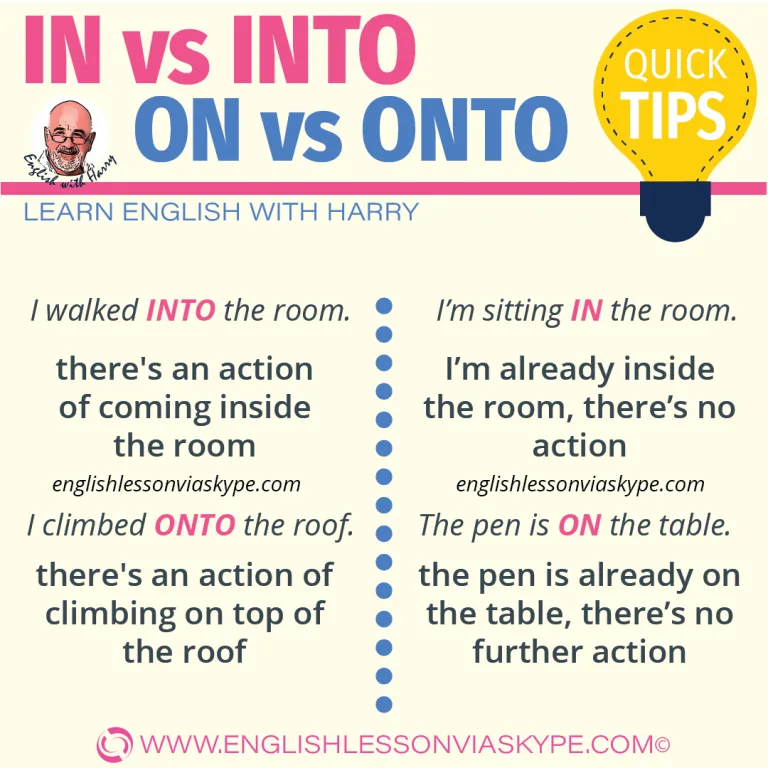
Few grammar confusions trip up professional writers more often than the difference between "into" and "in to." These two look almost identical, sound identical when spoken, and yet carry entirely different meanings. This guide explains Into vs with clear rules and worked examples.
The single space between "in" and "to" is the only visual clue separating a preposition of movement from two independent words that happen to sit next to each other. For ESL learners and native speakers alike, this distinction represents one of the most common sources of silent grammar errors in business correspondence, academic writing, and published content.
This guide, carefully curated by the Kalenux Team after reviewing thousands of professional writing samples, walks through exactly when "into" works as a single preposition and when "in" and "to" must stay separate.
You will learn the core rule, see more than twenty practical examples, and master a handful of memory tricks that make the right choice automatic. By the end of this article, you will be able to identify the correct form in context, explain why each choice is correct, and avoid the most frequent mistakes that even experienced writers make in their own drafts.
The good news is that once you understand the underlying logic, the rule becomes surprisingly simple. The bad news is that grammar checkers often miss this error, which means writers must train their own eyes to catch it during proofreading. Let's dig in.
The Core Rule: One Word or Two?
The fundamental question comes down to meaning and function. "Into" is a single preposition indicating movement, transformation, or insertion. "In to" is two separate words where "in" functions as an adverb or particle attached to a verb, and "to" begins an infinitive or introduces an indirect object.
"If you can replace the phrase with 'inside of' or 'toward the inside,' use 'into.' If you can pause between 'in' and 'to' without losing meaning, keep them as two words." - Kalenux Team editorial guideline
Consider these two sentences:
- She walked into the room.
- She turned her paper in to the teacher.
In the first sentence, "into" describes physical movement from outside to inside. In the second, "in" belongs with the verb "turned in" (meaning submitted), and "to" introduces the teacher as the recipient.
When to Use "Into"
Use "into" as a single word when you mean any of the following:
- Physical movement from outside to inside a space
- Transformation or change from one state to another
- A collision or contact with something
- Involvement in an activity or topic
- Division in mathematics
Movement From Outside to Inside
This is the most common use. Whenever something enters a container, a room, or a bounded space, "into" is correct.
- He poured the coffee into the mug.
- The children ran into the playground.
- She slipped the letter into the envelope.
- Water leaked into the basement overnight.
Transformation or Change
"Into" describes a shift from one form, state, or condition to another.
- The caterpillar turned into a butterfly.
- His idea developed into a profitable business.
- The argument escalated into a full-blown fight.
- She translated the poem into French.
Collision or Contact
When one object strikes another, "into" captures the impact.
- The car crashed into the guardrail.
- He bumped into his old professor at the conference.
- The waves smashed into the rocky shore.
Involvement or Interest
Informally, "into" can mean being interested or engaged in something.
- She is really into jazz these days.
- The team is getting into the playoffs now.
Division
In arithmetic, "into" indicates division.
- Four goes into twelve three times.
- Divide the total into equal shares.
When to Use "In To" (Two Words)
Use "in" and "to" as separate words when "in" completes the meaning of a verb (phrasal verb) and "to" starts a separate phrase, usually an infinitive or a direction.
The most reliable test is this: can you insert a word or a comma between "in" and "to" without breaking the sentence? If yes, keep them separate.
"The space in 'in to' is doing real work. It tells the reader that 'in' belongs with the verb before it and 'to' belongs with what comes after." - Kalenux Team style guide
Phrasal Verbs Ending in "In"
Many English verbs pair with "in" to form a phrasal verb: turn in, hand in, drop in, log in, call in, check in, give in, tune in, and so on. When "to" follows such a verb for an unrelated reason, it stays separate.
- Please turn your assignment in to the front desk.
- She handed the report in to her supervisor.
- We logged in to the system at nine.
- The witness came in to testify.
- He gave in to temptation.
"To" as Part of an Infinitive
When "to" introduces a verb (to go, to help, to see, to learn), it is part of the infinitive and stays separate from "in."
- I stopped in to say hello.
- She came in to help with the setup.
- We dropped in to check on the renovation.
- He stepped in to resolve the dispute.
"To" Introducing a Recipient or Direction
Sometimes "to" marks the indirect object or direction of motion, while "in" modifies the verb separately.
- The employees filed in to the auditorium one by one.
- She tuned in to the broadcast at noon.
Quick Comparison Table
The following table summarizes the most common patterns at a glance.
| Sentence | Correct Form | Why |
|---|---|---|
| She walked ___ the office. | into | Movement inside a space |
| She turned her badge ___ the guard. | in to | "Turned in" is a phrasal verb |
| The water froze ___ ice. | into | Transformation |
| He came ___ speak with the manager. | in to | "To speak" is an infinitive |
| Pour the batter ___ the pan. | into | Movement inside |
| Log ___ the portal. | in to | "Log in" is a phrasal verb |
| The boss looked ___ the matter. | into | Investigation, involvement |
| Drop ___ see us. | in to | "To see" is an infinitive |
| The senator went ___ politics. | into | Involvement/transformation |
| Hand your paper ___ the proctor. | in to | "Hand in" is a phrasal verb |
Common Mistakes to Avoid
Mistake 1: Writing "Into" for Submissions
Writers often combine "in" and "to" when they should stay apart, especially after verbs like "hand," "turn," "bring," and "send."
- Incorrect: Please turn your timesheet into the manager by Friday.
- Correct: Please turn your timesheet in to the manager by Friday.
The first sentence, taken literally, suggests the timesheet transforms into the manager - a strange image.
Mistake 2: Writing "In To" for Movement
Writers sometimes separate "into" when the sentence describes physical movement.
- Incorrect: The cat jumped in to the box.
- Correct: The cat jumped into the box.
Mistake 3: Confusing "Log Into" and "Log In To"
Modern dictionaries accept "log into" as a variant, but careful professional writers still prefer "log in to" because "log in" is an established phrasal verb.
- Acceptable in casual writing: Log into your account.
- Preferred in formal writing: Log in to your account.
Mistake 4: Missing the Infinitive Test
If "to" can be paired with the verb that follows it to form an infinitive, keep it separate from "in."
- Incorrect: She stepped into answer the phone.
- Correct: She stepped in to answer the phone.
Memory Tricks That Actually Work
"Think of 'into' as a verb of action wearing a suit. It shows up whenever something goes somewhere, becomes something, or engages with something. If there is no transformation and no entry, it is probably two words." - Kalenux Team writing workshop notes
The "Inside Of" Test
Replace the word with "inside of" or "to the inside of." If the sentence still works, use "into."
- She walked ___ the office. -> She walked inside of the office. -> "into" works.
- She turned the report ___ her boss. -> She turned the report inside of her boss. -> Nonsense, so "in to" is correct.
The Pause Test
Try pausing between "in" and "to" in your head. If the sentence still flows, keep them separate.
- He came in [pause] to help. -> Natural pause, use "in to."
- He fell in [pause] to the pool. -> Awkward, use "into."
The Phrasal Verb Test
Ask whether "in" belongs to the verb. Common phrasal verbs with "in" include:
| Phrasal Verb | Meaning |
|---|---|
| turn in | submit or go to bed |
| hand in | submit |
| drop in | visit briefly |
| log in | access an account |
| check in | register arrival |
| give in | surrender |
| tune in | pay attention |
| come in | enter |
| call in | phone while absent |
| stop in | visit briefly |
If your verb appears in this list (or similar), write "in to" as two words.
20+ Complete Example Sentences
Here are twenty additional examples showing the distinction in varied contexts. Work through them to internalize the pattern.
- The investigator looked into the allegations carefully.
- The employees filed in to hear the announcement.
- She transformed her garage into a home studio.
- The guard let the visitors in to see the exhibit.
- He bumped into an old colleague at the airport.
- The accountant submitted the forms in to the IRS office.
- Please log in to the employee portal before noon.
- The dough will rise into a beautiful loaf overnight.
- We stopped in to congratulate the new parents.
- The argument turned into a genuine debate.
- Kindly hand the envelopes in to reception.
- She fell into a deep and restorative sleep.
- Our manager came in to observe the training.
- The river flows into the bay every morning.
- Did you drop in to pick up the package?
- The CEO dove into the quarterly report immediately.
- He tuned in to the podcast during his commute.
- The dog ran into the garden chasing a squirrel.
- She stepped in to defuse the tense meeting.
- The chef blended the spices into a rich paste.
- Please turn all receipts in to the finance team.
- The car swerved into the neighboring lane.
- He checked in to the hotel around midnight.
Quick Reference Cheat Sheet
| If you mean... | Write |
|---|---|
| Motion from outside to inside | into |
| Transformation or change | into |
| Collision or contact | into |
| Division in math | into |
| Interested or involved | into |
| Submit to someone (hand/turn/send) | in to |
| Arrive to do something | in to |
| Part of a phrasal verb + infinitive | in to |
| Access a system (formal) | in to |
| Briefly visit to do something | in to |
Self-Check Exercise
Fill in the blank with "into" or "in to." Answers follow.
- She poured the milk ________ the glass.
- Please hand your report ________ the department head.
- The snow melted ________ clear water by noon.
- We stopped ________ say goodbye before leaving.
- The plane flew ________ heavy turbulence.
- He logged ________ his account and checked the messages.
- The acorn grew ________ a tall oak tree.
- Please turn your timesheets ________ payroll before Friday.
- The dog jumped ________ the lake after the ball.
- The witness came ________ testify before the committee.
Answer Key
- into (movement)
- in to ("hand in" phrasal verb)
- into (transformation)
- in to ("to say" infinitive)
- into (movement)
- in to ("log in" phrasal verb)
- into (transformation)
- in to ("turn in" phrasal verb)
- into (movement)
- in to ("to testify" infinitive)
Frequently Asked Questions
Is "log into" ever correct?
Many modern dictionaries accept "log into" as a single-word variant in technology contexts. However, formal editorial style guides still recommend "log in to" because "log in" is a recognized phrasal verb. When in doubt, use the two-word form.
What about "onto" vs "on to"?
The same rule applies. "Onto" means positioned on top of something (movement onto a surface), while "on to" keeps "on" as part of a phrasal verb (move on, hold on, pass on) followed by a separate "to."
Is "into" ever used metaphorically?
Yes. Phrases like "look into the issue," "get into trouble," and "dive into the data" use "into" metaphorically to describe engagement, involvement, or investigation. This is correct standard English.
Can I use "in to" at the end of a sentence?
Rarely. "In" may end a sentence as part of a phrasal verb, but "in to" as a pair almost never closes a sentence because "to" usually introduces something that follows.
How do I remember the difference under pressure?
Use the three-part test. First, ask whether the sentence describes movement or transformation (use "into"). Second, ask whether "in" belongs to a phrasal verb (use "in to"). Third, ask whether "to" begins an infinitive (use "in to"). One of these tests will almost always give you the answer.
Do British and American English differ on this?
No. Both varieties follow the same rule. Any difference comes down to individual style, not regional convention.
Conclusion
The difference between "into" and "in to" is small on the page but meaningful in writing. "Into" is a single preposition that signals movement, transformation, collision, or engagement. "In to" is two separate words where "in" belongs to a phrasal verb and "to" starts a new phrase, usually an infinitive. The test is simple: if you can substitute "inside of," use "into"; if you can pause between the two words, keep them apart.
Professional writers who master this distinction send clearer signals to their readers and avoid the kind of small error that erodes credibility over time. Run every draft through the three tests - movement, phrasal verb, infinitive - and you will catch this slip before it reaches publication. With practice, the right choice becomes automatic, and you will wonder how you ever mixed the two up in the first place.
Frequently Asked Questions
Is 'log into' ever correct?
Modern dictionaries accept ‘log into’ as a variant in tech contexts, but formal editorial style still prefers ‘log in to’ because ‘log in’ is an established phrasal verb.
What about 'onto' vs 'on to'?
The same rule applies. Use ‘onto’ for movement onto a surface and ‘on to’ when ‘on’ is part of a phrasal verb followed by a separate ‘to’.
Is 'into' ever used metaphorically?
Yes. Expressions like ‘look into the issue,’ ‘get into trouble,’ and ‘dive into the data’ use ‘into’ figuratively to describe involvement or investigation.
Can I use 'in to' at the end of a sentence?
Almost never. ‘In’ can end a sentence as part of a phrasal verb, but ‘in to’ as a pair normally requires something to follow ‘to’.
How do I remember the difference under pressure?
Apply three tests: movement or transformation uses ‘into’; phrasal verbs with ‘in’ keep them apart; infinitives starting with ‘to’ keep them apart.
Do British and American English differ on this?
No. Both varieties follow the same rule. Any variation is stylistic rather than regional.