
Bengali cuisine, known to its speakers as বাঙালি রান্না Bangali ranna, is one of the most distinctive culinary traditions of South Asia and arguably the only one of the subcontinent's regional cuisines to follow a structured multi-course progression rather than an all-at-once thali model.
Spanning the Indian state of West Bengal and the sovereign nation of Bangladesh, the cuisine rests on a triad of staples, ভাত bhat (rice), মাছ machh (fish), and ডাল dal (lentils), and reaches its apex in the world-renowned tradition of Bengali sweets known collectively as মিষ্টি mishti.
Vocabulary for food, cooking, and dining occupies a uniquely large place in the Bengali lexicon, reflecting a culture in which food is a primary medium of hospitality, religious observance, family identity, and even literary metaphor.
This reference assembles the food vocabulary that learners actually encounter, organized around ingredients, dishes, meals, restaurant interactions, and cooking verbs. The vocabulary differs in important ways between West Bengal and Bangladesh: certain dishes are essentially unknown in one region, certain ingredients have different names, and the religious composition of the speaker often shapes which words are used.
Where these differences matter, both forms are given. Each item appears in Bengali script, Romanized transliteration reflecting modern pronunciation, and English translation.
A word about register before beginning. Food vocabulary in Bengali is largely shared across the politeness levels, but verbs of consuming and offering carry honorific distinctions. The respectful form খাবেন khaben (please eat) differs from familiar খাও khao and intimate খা kha.
When dining as a guest, the host will frequently insist আরেকটু নিন arekṭu nin (please take a little more), and refusing politely without offending requires a measure of cultural fluency that vocabulary alone cannot supply. For deeper treatment of these distinctions, see the Bengali Honorifics reference.
Staple Foods and the Bengali Plate
The Bengali meal is built around rice, and the word ভাত bhat does not merely mean cooked rice but stands metonymically for "a meal" itself. To ask if someone has eaten, a Bengali says ভাত খেয়েছেন? Bhat khêyechhen?
(Have you eaten rice?), and the question survives even when the actual meal contained no rice. This linguistic centrality reflects a culinary reality: a proper Bengali lunch or dinner places rice at the center and arrays small bowls of vegetables, lentils, fish, and chutneys around it.
| Bengali | Transliteration | English |
|---|---|---|
| ভাত | Bhat | Cooked rice |
| চাল | Chal | Uncooked rice |
| ডাল | Dal | Lentils, dal |
| মুসুর ডাল | Mushur dal | Red lentils |
| মুগ ডাল | Mug dal | Mung bean dal |
| ছোলার ডাল | Cholar dal | Bengal gram dal |
| রুটি | Ruti | Flatbread |
| লুচি | Luchi | Puffed fried bread |
| পরোটা | Poroṭa | Layered flatbread |
| আটা | Aṭa | Wheat flour |
| ময়দা | Môyda | Refined flour |
| তেল | Tel | Oil |
| সরিষার তেল | Shôrishar tel | Mustard oil |
| ঘি | Ghi | Clarified butter |
| লবণ / নুন | Lôbon / Nun | Salt (Bangladesh / West Bengal) |
| চিনি | Chini | Sugar |
| গুড় | Gur | Jaggery |
Rice itself comes in several culturally significant varieties. গোবিন্দভোগ Gobindobhog is a fragrant short-grain rice native to West Bengal, used in religious offerings and special meals. বাসমতি Bashmoti basmati is reserved for biryani and pulao. কালিজিরা Kalijira is a Bangladeshi aromatic short-grain. মুড়ি muri is puffed rice, eaten as a savory snack mixed with mustard oil, onions, and chilies, and the word doubles as the name of a popular evening street food.
A traditional Bengali lunch follows a multi-course order: bitter (তেতো teto) first to whet the appetite, then leafy greens (শাক shak), then dal with rice, then a vegetable curry, then fish (মাছ machh), then meat if served, and finally chutney (চাটনি chaṭni) and sweets. The progression is called the ক্রম krôm and is taken seriously in formal household meals.
Fish and the Bengali Identity
If rice is the structural center of the Bengali plate, fish is its emotional center. The phrase মাছে-ভাতে বাঙালি Machhe-bhate Bangali (a Bengali of fish-and-rice) is a self-identifying expression of cultural belonging. The riverine geography of the Ganges-Brahmaputra delta has produced the world's most fish-literate cuisine in terms of variety: Bengalis distinguish dozens of freshwater fish by flavor, season, and proper cooking method.
| Bengali | Transliteration | English |
|---|---|---|
| মাছ | Machh | Fish |
| ইলিশ | Ilish | Hilsa, the national fish |
| রুই | Rui | Rohu carp |
| কাতলা | Katla | Catla carp |
| পাবদা | Pabda | A small river fish |
| পার্শে | Parshe | Mullet |
| চিংড়ি | Chingṛi | Shrimp / prawn |
| গলদা চিংড়ি | Gôlda chingṛi | Tiger prawn |
| বাগদা চিংড়ি | Bagda chingṛi | Saltwater prawn |
| শুটকি | Shuṭki | Dried fish |
| মাছের ঝোল | Machher jhol | Fish in light gravy |
| মাছের কালিয়া | Machher kalia | Rich fish curry |
| ভাপা ইলিশ | Bhapa ilish | Steamed hilsa with mustard |
| সরষে ইলিশ | Shôrshe ilish | Hilsa in mustard sauce |
| চিংড়ি মালাইকারি | Chingṛi malaikari | Prawn in coconut milk |
The hilsa fish, ইলিশ ilish, occupies a quasi-mythological status. In Bangladesh it is the national fish; in West Bengal it inspires monsoon-season festivities and specialized recipes. The Padma River hilsa from Bangladesh and the Ganges hilsa from West Bengal each have their partisans, and tasting both in season is a rite of passage for serious eaters. Hilsa is famously bony, and the Bengali skill of eating it without choking on a single bone is a marker of cultural competence.
Vegetables, Greens, and Bitter Beginnings
Vegetable preparations in Bengali cuisine span the hot, the sweet, and crucially the bitter. The opening course of a traditional meal is a bitter dish, often শুক্তো shukto, a stew of bitter gourd, eggplant, and other vegetables in a delicate milk-based sauce. The intentional use of bitterness as an appetite-opener distinguishes Bengali cooking from most other Indian regional cuisines.
| Bengali | Transliteration | English |
|---|---|---|
| সবজি | Shôbji | Vegetables |
| আলু | Alu | Potato |
| পেঁয়াজ | Peyaj | Onion |
| রসুন | Roshun | Garlic |
| আদা | Ada | Ginger |
| টমেটো | Ṭômêṭo | Tomato |
| বেগুন | Begun | Eggplant |
| পটল | Pôṭol | Pointed gourd |
| লাউ | Lau | Bottle gourd |
| কুমড়ো | Kumṛo | Pumpkin |
| ফুলকপি | Phulkôpi | Cauliflower |
| বাঁধাকপি | Bandhakôpi | Cabbage |
| পালং শাক | Palong shak | Spinach |
| লাল শাক | Lal shak | Red amaranth |
| করলা | Kôrla | Bitter gourd |
| উচ্ছে | Uchchhe | Small bitter gourd |
Two iconic vegetable dishes deserve mention. শুক্তো shukto, the bitter mixed-vegetable stew already noted, is technically demanding because it must be neither too bitter nor too sweet. আলু পোস্ত alu posto, potatoes in poppy-seed paste, is the comfort food of West Bengal and one of the most commonly requested home-cooked dishes. লাবড়া labra, a mixed-vegetable preparation served with খিচুড়ি khichuṛi, is the canonical rainy-day meal.
The Mishti Universe: Bengali Sweets
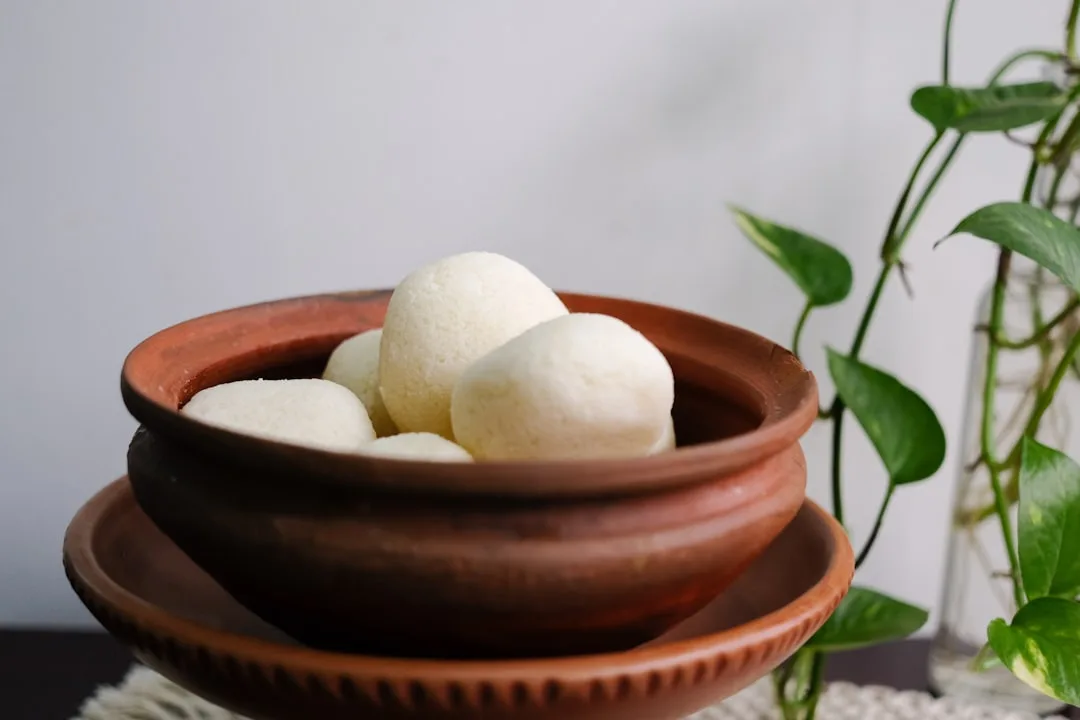
No Indian regional cuisine has a sweet tradition rivaling Bengal's. The cluster of milk-based confections called মিষ্টি mishti, and especially the variety known as ছানা chhana sweets made from fresh-curdled cottage cheese, is unique to the region and forms a culinary tradition with no Mughlai parallel. The two most famous sweets, রসগোল্লা rosogolla and সন্দেশ shôndesh, are widely recognized as Bengali achievements.
| Bengali | Transliteration | English |
|---|---|---|
| মিষ্টি | Mishṭi | Sweet, dessert |
| রসগোল্লা | Rôshogôlla | Cottage-cheese ball in syrup |
| সন্দেশ | Shôndesh | Sweetened cottage-cheese fudge |
| রসমালাই | Rôshomalai | Cheese balls in sweetened milk |
| মিষ্টি দই | Mishṭi dôi | Sweetened yogurt |
| ক্ষীর | Kheer | Reduced sweetened milk |
| পায়েস | Payesh | Rice pudding |
| পিঠা | Piṭha | Steamed or fried rice cake |
| নলেন গুড়ের সন্দেশ | Nôlen gurer shôndesh | Date-palm-jaggery shôndesh |
| ছানা | Chhana | Fresh cottage cheese |
| ছানার পায়েস | Chhanar payesh | Cheese-pearl pudding |
| লাড্ডু | Laddu | Sweet ball |
| গজা | Gôja | Fried sweet pastry |
| জিলাপি | Jilapi | Funnel-shaped fried sweet |
| চমচম | Chômchôm | Oval sweet in syrup |
The geographic origin of রসগোল্লা rosogolla was, in 2017, the subject of a formal Geographical Indication dispute between Odisha and West Bengal, eventually resolved in favor of West Bengal. সন্দেশ shôndesh, made by kneading fresh chhana with sugar or jaggery, comes in literally hundreds of regional variations: কাঁচাগোল্লা kanchagolla of Natore, Bangladesh, is uncooked;
নলেন গুড়ের সন্দেশ nôlen gurer shôndesh is the winter delicacy made with date-palm jaggery; কাঁচা সন্দেশ kancha shôndesh contrasts with কড়াপাকের সন্দেশ kôṛapaker shôndesh, the firm-textured variety.
The gift-giving culture of Bengal demands sweets at every life-cycle event: an engagement, a wedding, the announcement of a pregnancy, a child's first rice ceremony (অন্নপ্রাশন onnoprashon), an academic success, a job offer. To arrive empty-handed at any of these is unthinkable, and to arrive with anything other than a clay pot of mishti from a respected sweet shop is to underwhelm.
West Bengal versus Bangladesh: Culinary Differences
While the underlying grammar of Bengali cooking is shared, distinct regional traditions have evolved on either side of the international border. West Bengali cuisine has been shaped by Hindu vegetarian widows' kitchens (the Vaishnavite tradition produced refined meatless cooking), by Marwari and other migrant influences in Kolkata, and by the genteel zamindar households of the colonial era.
Bangladeshi cuisine has been shaped by Mughal court traditions, especially in Dhaka, by riverine fishing communities of the eastern delta, and by Muslim culinary practices including beef cookery (which is rare in West Bengal).
| Aspect | West Bengal | Bangladesh |
|---|---|---|
| Common protein | Fish, mutton, chicken | Fish, chicken, beef, mutton |
| Cooking oil | Mustard oil dominant | Soy and mustard oil |
| Word for water | জল jôl | পানি pani |
| Word for salt | নুন nun | লবণ lôbon |
| Bread style | Luchi, ruti | Paratha, ruti |
| Biryani style | Calcutta biryani with potato | Dhaka kacchi biryani |
| Iconic sweet | রসগোল্লা rosogolla | রসমালাই roshomalai |
| Iconic main | শুক্তো, আলু পোস্ত | কাচ্চি বিরিয়ানি, ভুনা খিচুড়ি |
| Tea style | Cha with milk | Cha with milk, also Sylheti style |
Calcutta biryani is unique in containing a single boiled potato per portion, a Nawabi-era innovation reportedly introduced when meat was scarce in the household of the exiled Nawab Wajid Ali Shah. Dhaka's কাচ্চি বিরিয়ানি kacchi biryani is a different dish entirely, layered raw with marinated mutton and slow-cooked, with no potato. Ordering "biryani" in Kolkata and Dhaka will produce two genuinely different meals.
Restaurant and Ordering Phrases
Eating out in Bengali-speaking areas ranges from elegant Kolkata restaurants and Dhaka five-stars to neighborhood ভাতের হোটেল bhater hoṭel (rice hotels) and street vendors. The vocabulary needed adjusts to the setting, but a core set of phrases works almost anywhere.
| Bengali | Transliteration | English |
|---|---|---|
| মেনু দিন | Menu din | Please give the menu |
| কি কি আছে? | Ki ki achhe? | What is available? |
| আজকের স্পেশাল কি? | Ajker spêshal ki? | What is today's special? |
| আমি ভাত নেব | Ami bhat nebo | I will take rice |
| একটা ইলিশ ভাজা | Êkṭa ilish bhaja | One fried hilsa |
| ঝাল কম দিন | Jhal kôm din | Less spice please |
| ঝাল বেশি দিন | Jhal beshi din | More spice please |
| খুব ভালো হয়েছে | Khub bhalo hôyechhe | It is very good |
| বিল দিন | Bil din | The bill please |
| আলাদা প্লেট দিন | Alada plêṭ din | A separate plate please |
| জল / পানি দিন | Jôl / Pani din | Water please |
| আরেকটু ভাত | Arekṭu bhat | A little more rice |
| পেট ভরে গেছে | Peṭ bhôre gêchhe | I am full |
| পার্সেল করে দিন | Parsel kôre din | Please pack to take away |
Tipping practices differ between regions and venue types. In upscale Kolkata and Dhaka restaurants, ten percent is standard if no service charge is included. In neighborhood eateries and rice hotels, rounding up the bill or leaving small change is sufficient. Street food vendors generally do not expect tips.
Cooking Verbs and Kitchen Vocabulary
Bengali has a rich vocabulary for cooking actions, distinguishing among methods that English may collapse into a single word. The verb রান্না করা ranna kôra (to cook) is the general term, but specific methods carry their own verbs.
| Bengali | Transliteration | English |
|---|---|---|
| রান্না করা | Ranna kôra | To cook |
| কাটা | Kaṭa | To cut, chop |
| ভাজা | Bhaja | To fry |
| ভাপা | Bhapa | To steam |
| সিদ্ধ করা | Shiddho kôra | To boil |
| ভুনা | Bhuna | To slow-fry until reduced |
| পোড়া | Poṛa | To roast / burn |
| ঝোল | Jhol | To make in light gravy |
| মাখা | Makha | To mix by hand |
| মেশানো | Meshano | To mix |
| গরম করা | Gôrom kôra | To heat |
| ঠান্ডা করা | Ṭhanḍa kôra | To cool |
| পরিবেশন করা | Pôribeshôn kôra | To serve |
| কড়াই | Kôrai | Wok |
| হাঁড়ি | Hanṛi | Cooking pot |
| চামচ | Chamôch | Spoon |
| ছুরি | Chhuri | Knife |
| উনুন | Unun | Stove (traditional) |
The verb ভুনা bhuna deserves particular attention. It denotes the long slow reduction in oil that produces dark, richly browned meat or vegetable curries; ভুনা খিচুড়ি bhuna khichuṛi, served with hilsa during monsoon, is the comfort dish of Bangladesh. ভাপা bhapa, steaming, is associated with delicate fish preparations such as ভাপা ইলিশ bhapa ilish, where the fish is steamed inside its own banana leaf with mustard paste.
The Bengali kitchen traditionally separates by purpose: ঠাকুরঘর ṭhakurghor (the puja room and its food preparation area) versus the rest of the kitchen. In observant Hindu Bengali households, foods offered to deities are cooked separately from foods that have passed through a non-vegetarian context, and onions and garlic are excluded from the deity's cooking.
Common Mistakes English Speakers Make
Asking for "curry" expecting a single dish. The English word curry covers a vast set of distinct Bengali preparations: ঝোল jhol (light gravy), কালিয়া kalia (rich), দই dôi (yogurt-based), মালাইকারি malaikari (coconut), ভুনা bhuna (slow-fried). Specifying which is essential to ordering accurately.
Mixing up জল jôl and পানি pani. Both mean water, but জল jôl is standard in West Bengal and পানি pani in Bangladesh. Using পানি pani in Kolkata or জল jôl in Dhaka is mutually understood but signals which side of the border you have come from or aligned with.
Confusing মিষ্টি mishti and মিষ্টি দই mishti dôi. The first is the entire category of sweets; the second specifically denotes the iconic sweetened yogurt set in clay pots. Asking for "mishti" in a sweet shop will get you a tray; asking for "mishti dôi" gets the yogurt.
Using the wrong word for fish. মাছ machh is the generic word, but specific fish have specific names, and at a fish market the seller will expect you to ask by species. Saying "I want fish" rather than "I want hilsa" or "I want rohu" marks you as inexperienced.
Misjudging the role of bitter. Refusing the opening bitter course of a traditional meal can offend a host who has carefully observed the proper sequence. Even if you dislike bitterness, take a token portion of শুক্তো shukto or করলা ভাজা kôrla bhaja before moving on.
Not pronouncing aspirated and unaspirated consonants distinctly. The difference between পাকা paka (ripe) and পাঁকা panka (muddy) is small in writing and large in meaning. The aspirated/unaspirated distinction in food vocabulary is genuine: ভাজা bhaja (fried) and বাজা baja (sound) are distinct words.
Asking for a fork. Traditional Bengali eating uses the right hand, mixing rice with curry by feel before bringing it to the mouth. Forks and spoons are available in restaurants but using them at a home meal can read as standoffish. Hand-eating is, with practice, more efficient and is part of the experience.
Quick Reference
The minimum food vocabulary for a visitor to Bengali-speaking areas: ভাত bhat (rice), মাছ machh (fish), ডাল dal (lentils), সবজি shôbji (vegetables), মিষ্টি mishti (sweet), চা cha (tea), জল/পানি jôl/pani (water), নুন/লবণ nun/lôbon (salt), ঝাল jhal (spicy), মিষ্টি mishti (sweet, taste), and the verbs খাওয়া khaowa (to eat), রান্না করা ranna kôra (to cook), and পান করা pan kôra (to drink).
Defaults: rice and fish are the heart of any meal. Order by named species, not generic "fish." Accept the bitter opening if served. Tip ten percent in upscale venues and round up elsewhere. Use the right hand when eating at a home meal. Use জল jôl in West Bengal, পানি pani in Bangladesh.
Frequently Asked Questions
What is the difference between West Bengal and Bangladesh cuisine?
West Bengali cuisine, shaped by Hindu Vaishnavite vegetarian traditions and colonial-era zamindar households, leans toward fish, mutton, mustard oil, and Sanskritic vocabulary like জল jôl and নুন nun. Bangladeshi cuisine, shaped by Mughal court influence and Muslim culinary norms, includes beef, often uses পানি pani and লবণ lôbon, and features dishes like কাচ্চি বিরিয়ানি kacchi biryani that are absent in West Bengal.
Why is hilsa fish so important?
ইলিশ ilish hilsa is the national fish of Bangladesh and the most prestigious freshwater fish of the entire Bengal region. It is monsoon-seasonal, deeply flavorful, and notoriously bony. Bengali culinary identity cannot be separated from the appreciation of hilsa, and the regional varieties of Padma hilsa and Ganges hilsa each have their loyalists.
Are Bengali sweets really cheese-based?
Yes. The category of ছানা chhana sweets, including রসগোল্লা rosogolla, সন্দেশ shôndesh, and রসমালাই roshomalai, are made from fresh cottage cheese curdled from milk. This distinguishes them from most other Indian sweets, which are flour-, ghee-, or milk-solid-based. The technique was likely refined in the colonial era under Portuguese and Dutch influence.
What is mishti dôi?
মিষ্টি দই mishṭi dôi is sweetened yogurt set in unglazed clay pots, with the clay imparting a distinctive earthy flavor and the yogurt itself caramelized to a faint pink-amber by the addition of jaggery during fermentation. It is a Bengali institution and is often offered as the closing course of a meal.
Is it offensive to refuse food at a Bengali home?
Refusing food outright can disappoint a host who has prepared with care. The polite approach is to take small portions of everything, eat with visible enjoyment, and resist multiple offers of seconds with phrases like খুব ভালো লেগেছে, কিন্তু পেট ভরে গেছে khub bhalo legechhe, kintu peṭ bhôre gechhe (it was very good, but I am full). Outright refusal of any portion at all is generally read as either illness or displeasure.
Why is mustard oil used so heavily?
সরিষার তেল shôrishar tel mustard oil is native to the Bengal-Bihar agricultural belt and has a sharp, pungent character that pairs particularly well with fish and bitter vegetables. The Bengali palate is calibrated to mustard oil's heat, and many traditional recipes lose their identity when made with neutral oils. In Bangladesh, soy oil has gained ground in recent decades, but mustard oil remains the prestige choice.
What is the traditional Bengali meal sequence?
A formal Bengali lunch follows a bitter-to-sweet progression: শুক্তো shukto or another bitter dish first; then leafy greens (শাক shak); then dal with rice; then a vegetable curry; then fish; then meat if served; then chutney; and finally sweets and yogurt. The structure is called the ক্রম krôm. Few modern households observe it strictly, but it shapes the conceptual organization of any serious Bengali meal.
See Also
- Bengali Common Phrases for Daily Conversation
- Bengali Travel Phrases and Tourist Guide
- Bengali Dialects: Bangladesh vs West Bengal
- Bengali Honorifics: Three Levels of Politeness
- Bengali Top 100 Common Verbs Reference
- Bengali Numbers and Counting 1 to 1000
- Bengali Days, Months, and Time Expressions
- Bengali Tagore Literature and Language Reference
Author: Kalenux Team
Frequently Asked Questions
What is the difference between West Bengal and Bangladesh cuisine?
West Bengali cuisine is shaped by Hindu Vaishnavite vegetarian traditions and uses জল jôl and নুন nun, leaning toward fish, mutton, and mustard oil. Bangladeshi cuisine is shaped by Mughal court influence and Muslim culinary norms, includes beef, uses পানি pani and লবণ lôbon, and features dishes like কাচ্চি বিরিয়ানি kacchi biryani that are absent in West Bengal.
Why is hilsa fish so important?
ইলিশ ilish hilsa is the national fish of Bangladesh and the most prestigious freshwater fish of the Bengal region. It is monsoon-seasonal, deeply flavorful, and notoriously bony. Bengali culinary identity cannot be separated from appreciation of hilsa, and the Padma hilsa and Ganges hilsa each have their loyalists.
Are Bengali sweets really cheese-based?
Yes. ছানা chhana sweets including রসগোল্লা rosogolla, সন্দেশ shôndesh, and রসমালাই roshomalai are made from fresh cottage cheese curdled from milk. This distinguishes them from most other Indian sweets, which are flour-, ghee-, or milk-solid-based.
What is mishti dôi?
মিষ্টি দই mishṭi dôi is sweetened yogurt set in unglazed clay pots, with the clay imparting an earthy flavor and the yogurt caramelized to pink-amber by jaggery added during fermentation. It is often offered as the closing course of a Bengali meal.
Is it offensive to refuse food at a Bengali home?
Refusing food outright disappoints a host. The polite approach is to take small portions of everything, eat with visible enjoyment, and resist multiple offers of seconds with phrases like খুব ভালো লেগেছে, কিন্তু পেট ভরে গেছে (it was very good, but I am full).
Why is mustard oil used so heavily?
সরিষার তেল shôrishar tel mustard oil is native to Bengal-Bihar agriculture and has a sharp pungent character that pairs with fish and bitter vegetables. The Bengali palate is calibrated to mustard oil’s heat, and many traditional recipes lose identity when made with neutral oils.
What is the traditional Bengali meal sequence?
A formal Bengali lunch follows a bitter-to-sweet progression called the ক্রম krôm: bitter dish first, then leafy greens, then dal with rice, then vegetable curry, then fish, then meat if served, then chutney, and finally sweets and yogurt.