
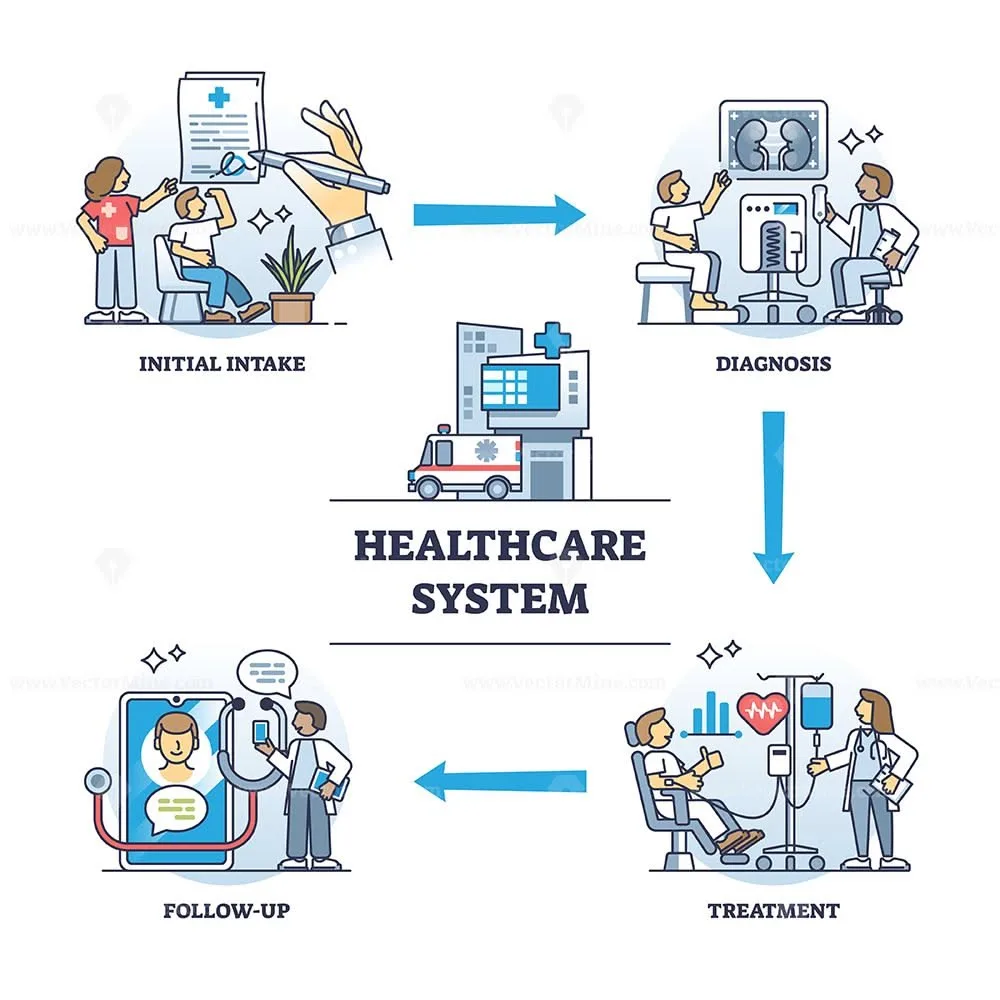
Medical communication in Bengali is one of the most consequential applications of language for any visitor or expatriate to West Bengal or Bangladesh. The healthcare landscape in both regions ranges from internationally accredited specialty hospitals in Kolkata, Dhaka, and Chittagong to small neighborhood clinics, Ayurvedic and Unani practitioners, and pharmacy-based informal consultation.
While English-medium communication is generally available at high-end hospitals, the patient who can describe symptoms in Bengali, recognize body parts when a doctor inquires, and read pharmacy labels has a meaningful advantage in efficiency and care quality. This reference assembles the body-part, symptom, and medical vocabulary the learner most needs.
The vocabulary is presented in three columns, with Bengali script, Romanized transliteration, and English translation. Where regional variations matter (some medical loanwords differ between West Bengal's Indian-influenced register and Bangladesh's somewhat more Persian-Arabic-influenced register), both forms are noted.
The medical context typically calls for the আপনি apni respectful register because doctors, nurses, and pharmacists are addressed with full courtesy. For deeper background on the Bengali politeness system, see the Bengali Honorifics reference.
A note on healthcare context. Both West Bengal and Bangladesh have a deeply embedded informal pharmacy system, called ওষুধের দোকান oshudher dokan, where pharmacists routinely diagnose minor ailments and dispense over-the-counter medications and even some prescription drugs without a formal prescription.
This is convenient but carries risks; serious symptoms warrant a proper doctor visit. The vocabulary below covers all three contexts: the body part description, the symptom report to a doctor, and the pharmacy purchase.
External Body Parts
The external body vocabulary covers the head, torso, limbs, and visible features. Most terms are inherited from Sanskrit and are recognizable across most North Indian languages with sound shifts.
| Bengali | Transliteration | English |
|---|---|---|
| শরীর | Shôrir | Body |
| মাথা | Matha | Head |
| মুখ | Mukh | Face, mouth |
| চুল | Chul | Hair |
| কপাল | Kôpal | Forehead |
| চোখ | Chokh | Eye |
| ভ্রু | Bhru | Eyebrow |
| পাতা | Pata | Eyelid |
| নাক | Nak | Nose |
| কান | Kan | Ear |
| ঠোঁট | Ṭhonṭ | Lip |
| জিভ | Jibh | Tongue |
| দাঁত | Danto | Tooth |
| গাল | Gal | Cheek |
| চিবুক | Chibuk | Chin |
| গলা | Gôla | Throat, neck |
| কাঁধ | Kanḍh | Shoulder |
| বুক | Buk | Chest |
| পিঠ | Piṭh | Back |
| পেট | Peṭ | Stomach, belly |
| হাত | Hat | Hand, arm |
| আঙুল | Angul | Finger |
| বুড়ো আঙুল | Buṛo angul | Thumb |
| নখ | Nôkh | Nail |
| পা | Pa | Foot, leg |
| হাঁটু | Hanṭu | Knee |
| গোড়ালি | Goṛali | Ankle |
| পায়ের পাতা | Payer pata | Sole of foot |
The word মুখ mukh has the dual meaning of "face" and "mouth," with context resolving which. The phrase মুখে দিন mukhe din (put in mouth) versus মুখ ধোয়া mukh dhowa (wash face) shows the contextual disambiguation. Similarly হাত hat covers both "hand" and "arm" without distinguishing them lexically; if the distinction matters, hand is হাতের তালু hater talu (palm of the hand) and arm is বাহু bahu (formal) or simply হাত with context.
Bengali traditionally counts twenty digits including thumbs and big toes, with বুড়ো আঙুল buṛo angul (literally "old finger") meaning thumb on the hand and পায়ের বুড়ো আঙুল payer buṛo angul meaning the big toe. The literary device of counting through fingers and toes appears in nursery rhymes and counting games for children.
Internal Organs and Body Systems
The internal organ vocabulary is needed for medical conversations beyond the most superficial. While many learners skip this category, anyone visiting a doctor for an internal symptom (chest pain, digestive distress, breathing trouble) needs at least a working set.
| Bengali | Transliteration | English |
|---|---|---|
| হৃদয় / হার্ট | Hridôy / Harṭ | Heart |
| ফুসফুস | Phushphush | Lungs |
| লিভার / যকৃৎ | Libhar / Jôkrit | Liver |
| কিডনি / বৃক্ক | Kiḍni / Brikko | Kidney |
| পাকস্থলী | Pakôshtoli | Stomach (organ) |
| অন্ত্র / নাড়িভুঁড়ি | Ôntro / Naṛibhunṛi | Intestine |
| মস্তিষ্ক / মগজ | Môstishko / Môgoj | Brain |
| হাড় | Haṛ | Bone |
| পেশী | Peshi | Muscle |
| রক্ত | Rôkto | Blood |
| শিরা | Shira | Vein |
| ধমনী | Dhômôni | Artery |
| স্নায়ু | Snayu | Nerve |
| ত্বক / চামড়া | Tôk / Chamṛa | Skin |
| গ্রন্থি | Grônthi | Gland |
The doublets reflect the layered vocabulary: হৃদয় hridôy (Sanskrit-origin formal) versus হার্ট harṭ (English borrowing); যকৃৎ jôkrit (Sanskrit) versus লিভার libhar (English); মস্তিষ্ক môstishko (Sanskrit, formal) versus মগজ môgoj (everyday). In a clinical context the Sanskrit forms tend to appear in written diagnosis; the English-borrowed forms appear in spoken consultation; the everyday native-stock forms appear in informal description.
The word হৃদয় hridôy carries metaphorical weight beyond the physical organ, denoting the seat of emotion and conscience as in English "heart." A Bengali speaker saying হৃদয় ভেঙে গেছে hridôy bhenge gechhe (the heart has broken) means emotional devastation, not cardiac event.
Common Symptoms and Complaints
Symptom vocabulary is where the medical visit really happens. The patient must communicate not only what hurts but how it hurts, when it hurts, and how severely.
| Bengali | Transliteration | English |
|---|---|---|
| জ্বর | Jwôr | Fever |
| সর্দি | Shôrdi | Cold (head cold) |
| কাশি | Kashi | Cough |
| মাথা ব্যথা | Matha bêtha | Headache |
| মাথা ঘোরা | Matha ghora | Dizziness |
| পেট ব্যথা | Peṭ bêtha | Stomach ache |
| বমি | Bômi | Vomiting |
| বমি বমি ভাব | Bômi bômi bhab | Nausea |
| ডায়রিয়া / পেট খারাপ | Ḍayoria / Peṭ kharap | Diarrhea |
| কোষ্ঠকাঠিন্য | Koshṭhokaṭhinno | Constipation |
| গলা ব্যথা | Gôla bêtha | Sore throat |
| বুক ব্যথা | Buk bêtha | Chest pain |
| শ্বাসকষ্ট | Shashkôshṭô | Difficulty breathing |
| অ্যালার্জি | Êlarji | Allergy |
| চুলকানি | Chulkani | Itching |
| ফুসকুড়ি | Phushkuṛi | Rash |
| ফুলে গেছে | Phule gechhe | Swollen, has swelled |
| ব্যথা করছে | Bêtha kôrchhe | It hurts |
| জ্বালা করছে | Jwala kôrchhe | It burns |
| অজ্ঞান | Ôggêno | Unconscious, fainted |
| ক্লান্তি | Klanti | Fatigue |
| অনিদ্রা | Ônidra | Insomnia |
The construction X ব্যথা bêtha (X pain) is highly productive: মাথা ব্যথা matha bêtha (headache), পেট ব্যথা peṭ bêtha (stomach ache), পিঠ ব্যথা piṭh bêtha (back pain), কোমর ব্যথা komor bêtha (lower-back pain). The verb ব্যথা করছে bêtha kôrchhe (it is paining) is the standard way to communicate any painful sensation.
Severity grading is conveyed through quantifiers and reduplication. সামান্য ব্যথা shamannyo bêtha (slight pain), অনেক ব্যথা ônek bêtha (much pain), খুব ব্যথা khub bêtha (very much pain), অসহ্য ব্যথা ôshojjho bêtha (unbearable pain). Reduplication for emphasis: ব্যথা ব্যথা bêtha bêtha (achy, sustained mild pain).
Bengali medical communication often involves describing the temporal pattern of pain: কখন থেকে kôkhon theke (since when), মাঝে মাঝে majhe majhe (occasionally), সব সময় shôb shômôy (constantly), সকালে shôkale (in the morning), রাতে rate (at night). This timing information helps with diagnosis.
At the Doctor's Office
The doctor visit involves a sequence of standardized phrases: arrival, registration, the consultation itself, and the closing prescription or referral.
| Bengali | Transliteration | English |
|---|---|---|
| ডাক্তার | Ḍakṭar | Doctor |
| ডাক্তারখানা | Ḍakṭarkhana | Clinic |
| হাসপাতাল | Hashpatal | Hospital |
| ক্লিনিক | Klinik | Clinic |
| নার্স | Narsh | Nurse |
| রোগী | Rogi | Patient |
| অ্যাপয়েন্টমেন্ট | Êpôyenṭmenṭ | Appointment |
| অপেক্ষা করুন | Ôpekkha korun | Please wait |
| কী হয়েছে? | Ki hôyechhe? | What has happened? |
| কোথায় ব্যথা? | Kothay bêtha? | Where is the pain? |
| কতদিন থেকে? | Kôtodin theke? | Since how many days? |
| পরীক্ষা | Pôrikkha | Examination, test |
| রক্ত পরীক্ষা | Rôkto pôrikkha | Blood test |
| এক্স-রে | Êks-re | X-ray |
| আল্ট্রাসাউন্ড | Alṭrasaunḍ | Ultrasound |
| ব্যবস্থাপত্র | Bêbôsthapôtro | Prescription |
| ওষুধ | Oshudh | Medicine |
| মলম | Môlôm | Ointment |
| ইনজেকশন | Injekshôn | Injection |
| অপারেশন | Ôpareshôn | Operation, surgery |
| ভর্তি | Bhôrti | Admission (to hospital) |
| ছুটি | Chhuṭi | Discharge |
The doctor's standard opening question কী হয়েছে? Ki hôyechhe? (What has happened?) invites the patient to narrate the chief complaint. The follow-up কতদিন থেকে? Kôtodin theke? (Since how many days?) probes duration. The patient is expected to describe location (কোথায় ব্যথা? Kothay bêtha?), severity, and timing in some detail.
Pharmacy and Medication
The pharmacy in Bengali-speaking regions is a frontline healthcare provider. Pharmacists routinely advise on minor ailments, dispense common medications, and refer serious cases to doctors. Pharmacy vocabulary allows the visitor to navigate this layer effectively.
| Bengali | Transliteration | English |
|---|---|---|
| ওষুধের দোকান | Oshudher dokan | Pharmacy, medicine shop |
| ফার্মেসি | Pharmesi | Pharmacy |
| ওষুধ | Oshudh | Medicine |
| ট্যাবলেট | Ṭêbleṭ | Tablet |
| ক্যাপসুল | Kêpsul | Capsule |
| সিরাপ | Sirap | Syrup |
| ড্রপ | Ḍrôp | Drops |
| মলম | Môlôm | Ointment |
| ক্রিম | Krim | Cream |
| ব্যান্ডেজ | Bênḍej | Bandage |
| তুলো | Tulo | Cotton |
| জ্বরের ওষুধ | Jwôrer oshudh | Fever medicine |
| ব্যথার ওষুধ | Bêthar oshudh | Pain medicine |
| অ্যান্টিবায়োটিক | Êntibayôṭik | Antibiotic |
| প্যারাসিটামল | Pêrasiṭamôl | Paracetamol |
| খাবার আগে | Khabar age | Before meals |
| খাবার পরে | Khabar pôre | After meals |
| দিনে তিনবার | Dine tinbar | Three times a day |
| পানির সাথে | Panir shathe | With water |
| পার্শ্বপ্রতিক্রিয়া | Parshpôtikrija | Side effect |
The dosing instructions are highly standardized: খাবার আগে khabar age (before meals), খাবার পরে khabar pôre (after meals), দিনে তিনবার dine tinbar (three times a day), রাতে শুতে যাওয়ার আগে rate shute jaowar age (before bed at night). The pharmacist will write these on the medication packaging, but reading them aloud on receipt confirms understanding.
Specialties and Referrals
When a general practitioner refers to a specialist, the specialty vocabulary becomes useful. Most specialty names are English-borrowed in Bangladesh and West Bengal, with some Sanskrit-origin alternatives in formal medical writing.
| Bengali | Transliteration | English |
|---|---|---|
| জেনারেল ফিজিশিয়ান | Jenarel phijishian | General physician |
| হার্ট স্পেশালিস্ট / হৃদরোগ বিশেষজ্ঞ | Harṭ speshalisṭ / Hridrôg bisheshôggô | Cardiologist |
| চক্ষু বিশেষজ্ঞ | Chôkkhu bisheshôggô | Ophthalmologist |
| দাঁতের ডাক্তার | Danter ḍakṭar | Dentist |
| চর্ম বিশেষজ্ঞ | Chôrmo bisheshôggô | Dermatologist |
| স্ত্রী রোগ বিশেষজ্ঞ | Stri rôg bisheshôggô | Gynecologist |
| শিশু বিশেষজ্ঞ | Shishu bisheshôggô | Pediatrician |
| মানসিক রোগ বিশেষজ্ঞ | Manôshik rôg bisheshôggô | Psychiatrist |
| অস্থিরোগ বিশেষজ্ঞ | Ôsthirôg bisheshôggô | Orthopedist |
| ক্যান্সার বিশেষজ্ঞ | Kênsar bisheshôggô | Oncologist |
The construction X বিশেষজ্ঞ X bisheshôggô (X specialist) is productive and recognizable: any specialty can be glossed by combining the disease or organ name with bisheshôggô. The English borrowings (cardiologist, dermatologist) coexist with these.
Emergency Vocabulary
The emergency vocabulary overlaps with the general travel-emergency set but extends to medical specifics that the moment of crisis demands.
| Bengali | Transliteration | English |
|---|---|---|
| জরুরি | Jôruri | Urgent, emergency |
| অ্যাম্বুলেন্স ডাকুন | Êmbulens ḍakun | Call ambulance |
| দুর্ঘটনা | Durghôṭona | Accident |
| আঘাত লেগেছে | Aghat legechhe | Has been injured |
| রক্তপাত | Rôktopat | Bleeding |
| অজ্ঞান হয়ে গেছে | Ôggêno hôye gechhe | Has fainted |
| শ্বাস নিতে পারছে না | Shash nite parchhe na | Cannot breathe |
| হার্ট অ্যাটাক | Harṭ êṭak | Heart attack |
| স্ট্রোক | Sṭrok | Stroke |
| ভাঙা | Bhanga | Fracture, broken |
| পোড়া | Poṛa | Burn |
| বিষ | Bish | Poison |
| সাপের কামড় | Shaper kamôṛ | Snakebite |
| সাহায্য করুন | Shahajjo korun | Please help |
Snakebite vocabulary deserves special note in rural West Bengal and Bangladesh, where venomous snakes are a real risk during monsoon. সাপের কামড় shaper kamôṛ (snakebite) is the term, and an injured person should be transported immediately to a hospital with anti-venom (অ্যান্টিভেনম êntibhenom). Identifying the snake when possible, without endangering oneself, helps inform anti-venom selection.
Common Mistakes English Speakers Make
Translating "I have a headache" literally with the verb "have." Bengali says আমার মাথা ব্যথা amar matha bêtha (literally "my head pain") or মাথা ব্যথা করছে matha bêtha kôrchhe (head is paining), without an explicit "have." Saying আমি মাথা ব্যথা আছে ami matha bêtha achhi is grammatically ungainly.
Mixing up জ্বর jwôr (fever) and সর্দি shôrdi (head cold). The two often co-occur but are distinct terms. জ্বর is high body temperature; সর্দি is nasal congestion and runny nose. The combination is জ্বর সর্দি jwôr shôrdi, often heard at the start of the cool season.
Confusing হাত hat (hand/arm) with হাতের তালু hater talu (palm). If the doctor asks where it hurts and you indicate "the hand," বিশেষ করে কোথায়? bishesh kôre kothay? (especially where?) will follow. Specifying হাতের তালু hater talu (palm), হাতের পিছন hater pichhôn (back of hand), or finger by name is helpful.
Asking for "antibiotics" without diagnosis. Antibiotic overuse is a major public-health issue in South Asia, and pharmacies are required to refuse antibiotic dispensing without prescription. Asking for any specific antibiotic by name without a doctor's slip will usually be denied at modern pharmacies.
Forgetting to specify "before" or "after" meals. Dosing instructions matter: some medications work only on an empty stomach, others must be taken with food. খাবার আগে khabar age (before meals) and খাবার পরে khabar pôre (after meals) are essential vocabulary, and the pharmacist will write them on the packaging.
Overusing English medical terms without explanation. Doctors often understand English, but nurses, pharmacists, and reception staff may not. Knowing the Bengali equivalents (জ্বর jwôr for fever, ব্যথা bêtha for pain, রক্ত পরীক্ষা rôkto pôrikkha for blood test) ensures clear communication at all levels.
Misunderstanding the role of pharmacy. Bengali pharmacies are often the first stop for minor ailments, dispensing without a formal prescription. This is not a substitute for serious medical care, however. Persistent or severe symptoms warrant a doctor visit at a clinic or hospital, not extended self-medication.
Saying "I am sick" with too much intensity. The Bengali phrase আমি অসুস্থ ami ôshushtho (I am ill) implies meaningful illness, not minor discomfort. For mild conditions like a slight cold or fatigue, একটু খারাপ লাগছে êkṭu kharap lagchhe (feeling a little bad) or শরীর ভালো নেই shôrir bhalo nei (body is not well) is more appropriate.
Quick Reference
The medical priority set: শরীর shôrir (body), মাথা matha (head), পেট peṭ (stomach), বুক buk (chest), হাত hat (hand/arm), পা pa (foot/leg), জ্বর jwôr (fever), ব্যথা bêtha (pain), কাশি kashi (cough), বমি bômi (vomiting), ডাক্তার ḍakṭar (doctor), হাসপাতাল hashpatal (hospital), ওষুধ oshudh (medicine), জরুরি jôruri (emergency), and the construction X ব্যথা bêtha for any pain.
Essential phrases: কী হয়েছে? Ki hôyechhe? (what happened?), কোথায় ব্যথা? Kothay bêtha? (where is the pain?), কতদিন থেকে? Kôtodin theke? (since when?), দয়া করে সাহায্য করুন dôya kôre shahajjo korun (please help). Specify before/after meals when discussing medication timing.
Emergency numbers: India 112, Bangladesh 999. Both work for police, fire, and ambulance.
Frequently Asked Questions
What is the difference between পেট ব্যথা peṭ bêtha and পেট খারাপ peṭ kharap?
পেট ব্যথা peṭ bêtha is stomach pain, the sensation of cramping or aching in the abdomen. পেট খারাপ peṭ kharap (literally "bad stomach") is the conventional Bengali idiom for diarrhea or upset stomach with loose motions. They often co-occur but the symptoms reported should distinguish them.
Are antibiotics easy to obtain over the counter?
Less so than they once were. Both India and Bangladesh have tightened regulation in recent years, requiring prescription for most antibiotics. Some pharmacies in informal settings still dispense without prescription, but this practice is being reduced through public health campaigns against antibiotic resistance.
How serious is the snakebite risk in rural Bengal?
Real and seasonal. Monsoon (June through September) brings snakes into human contact zones, and venomous species including the Russell's viper (চন্দ্রবোড়া chôndroboṛa), the Indian cobra (কালনাগিনী / কালনাগ kalonag), and the krait (কেউটে keuṭe) are present. Hospitals in rural West Bengal and Bangladesh maintain anti-venom for emergencies. Avoid walking in long grass barefoot, and seek immediate medical attention for any bite.
What is the difference between হৃদয় hridôy and হার্ট harṭ?
Both can refer to the heart organ. হৃদয় hridôy is the Sanskrit-origin word with strong metaphorical-emotional weight. হার্ট harṭ is the English-borrowed word more common in clinical and conversational medical contexts. A cardiologist's diagnosis would say হৃদরোগ hridrôg (heart disease) using the formal stem; conversationally, হার্টের সমস্যা harṭer shômossha (heart problem) is more typical.
Should I bring my own medications when traveling?
Yes, especially for chronic conditions. Bring sufficient supply for the trip, plus extra for delays, in original packaging with a copy of the prescription. Pharmacy availability of specific brands varies, although most common medications are available in some form. Critical medications (insulin, anticonvulsants, immunosuppressants) should not be sourced locally without consulting a doctor.
Are vegetarian or halal medications a concern?
For some patients yes. Capsule shells often use gelatin, which may not meet vegetarian or halal standards. If this matters, ask the pharmacist for vegetarian (নিরামিষ niramish) or halal (হালাল halal) alternatives, or for tablet rather than capsule formulations. Major Indian and Bangladeshi pharmaceutical brands have begun offering plant-based capsule alternatives.
How do I describe the type of pain?
Bengali distinguishes pain types with verb modifications: কামড়ানো ব্যথা kamṛano bêtha (gnawing pain), চিনচিনে ব্যথা chinchine bêtha (sharp tingling pain), ভোঁতা ব্যথা bhonṭa bêtha (dull pain), জ্বালা পোড়া jwala poṛa (burning sensation), অসহ্য ব্যথা ôshojjho bêtha (unbearable pain). Adding the specific descriptor helps the doctor narrow the diagnosis.
See Also
- Bengali Common Phrases for Daily Conversation
- Bengali Travel Phrases and Tourist Guide
- Bengali Honorifics: Three Levels of Politeness
- Bengali Numbers and Counting 1 to 1000
- Bengali Top 100 Common Verbs Reference
- Bengali Postpositions, Not Prepositions
- Bengali Family Relationships and Kinship Vocabulary
- Bengali Greetings and Phrases for Daily Conversation
Author: Kalenux Team
Frequently Asked Questions
What is the difference between পেট ব্যথা peṭ bêtha and পেট খারাপ peṭ kharap?
পেট ব্যথা peṭ bêtha is stomach pain, the sensation of cramping or aching. পেট খারাপ peṭ kharap (literally bad stomach) is the conventional Bengali idiom for diarrhea or upset stomach with loose motions. They often co-occur but are distinct.
Are antibiotics easy to obtain over the counter?
Less so than they once were. Both India and Bangladesh have tightened regulation, requiring prescription for most antibiotics. Some informal pharmacies still dispense without prescription, but this practice is being reduced through campaigns against antibiotic resistance.
How serious is the snakebite risk in rural Bengal?
Real and seasonal. Monsoon (June through September) brings snakes into contact zones. Venomous species including Russell’s viper, Indian cobra, and krait are present. Hospitals maintain anti-venom. Avoid long grass barefoot, and seek immediate medical attention for any bite.
What is the difference between হৃদয় hridôy and হার্ট harṭ?
Both refer to the heart. হৃদয় hridôy is Sanskrit-origin with metaphorical-emotional weight. হার্ট harṭ is English-borrowed and common in clinical contexts. Formal diagnosis uses হৃদরোগ hridrôg; conversationally হার্টের সমস্যা harṭer shômossha is more typical.
Should I bring my own medications when traveling?
Yes, especially for chronic conditions. Bring sufficient supply with extra for delays, in original packaging with prescription copy. Critical medications (insulin, anticonvulsants, immunosuppressants) should not be sourced locally without consulting a doctor.
Are vegetarian or halal medications a concern?
For some patients yes. Capsule shells often use gelatin, which may not meet vegetarian or halal standards. Ask the pharmacist for niramish or halal alternatives, or tablet formulations. Major Indian and Bangladeshi brands offer plant-based capsule alternatives.
How do I describe the type of pain?
Bengali distinguishes pain types: কামড়ানো ব্যথা kamṛano bêtha (gnawing), চিনচিনে ব্যথা chinchine bêtha (sharp tingling), ভোঁতা ব্যথা bhonṭa bêtha (dull), জ্বালা পোড়া jwala poṛa (burning), অসহ্য ব্যথা ôshojjho bêtha (unbearable). Adding the descriptor helps diagnosis.