
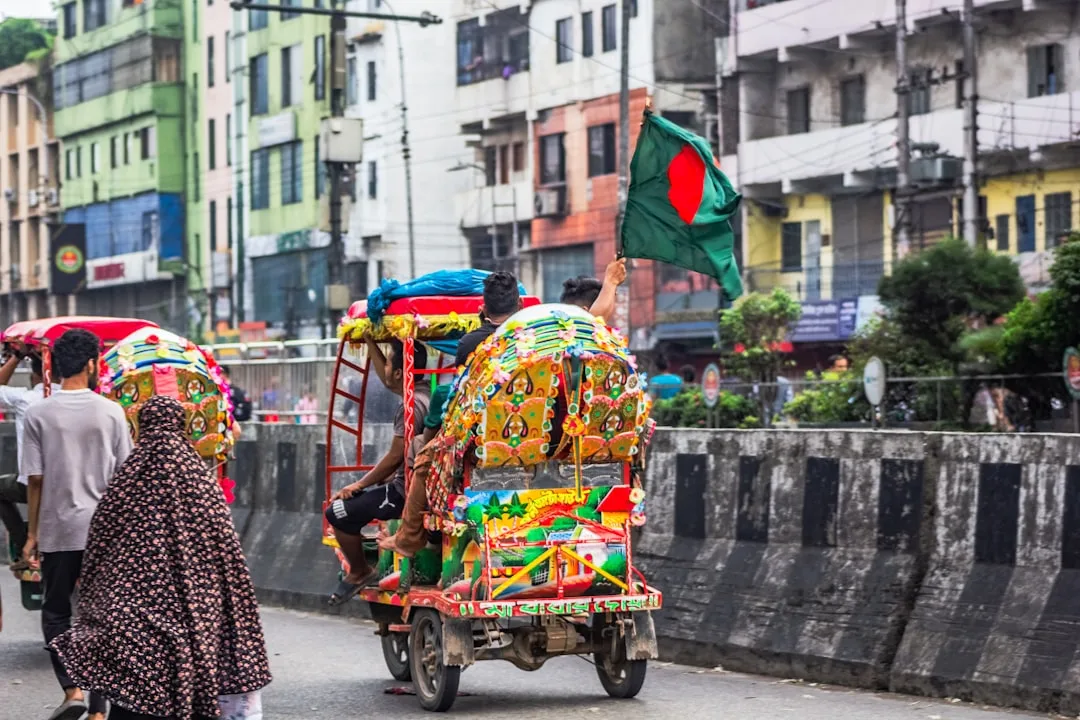
Bengali is the native language of approximately 270 million people across Bangladesh, the Indian states of West Bengal and Tripura, parts of Assam, and diaspora communities worldwide. Such a large speaker base inevitably produces regional variation. This Bengali Dialects guide walks through the rules step by step, with examples for each.
This reference maps the major dimensions of Bengali dialectal and register variation: the historical split between cholit bhasha and shadhu bhasha, the contemporary differences between Bangladesh and West Bengal Standard Bengali, the distinctive regional varieties like Sylheti and Chittagonian, the sociolinguistic correlations between religious background and vocabulary choice, and practical guidance for learners navigating these differences.
Understanding Bengali variation is important even for learners who intend to focus on the standard language. Reading Rabindranath Tagore's 19th-century works requires familiarity with shadhu bhasha forms. Watching Dhaka television drama requires recognizing Bangladeshi vocabulary. Talking with a Kolkata taxi driver may involve phonological features different from what a textbook models. Literature, film, music, and everyday interaction all draw on the full range of Bengali variation.
Linguistic variation in Bengali is not chaotic. The major axes of variation are predictable and largely systematic. Once you know the patterns, recognizing which variety a text or speaker represents becomes second nature, and you can calibrate your own production for different contexts accordingly.
The Historical Register Split: Shadhu vs Cholit
Modern Bengali has two registers with distinct grammatical forms, most apparent in verb conjugations and pronoun choices.
শাধু ভাষা shadhu bhasha (Refined Language)
Shadhu bhasha was the standard written Bengali from the 19th century into the early 20th century. It is heavily Sanskritized, uses older pronoun forms, and has distinctive verb endings.
চলিত ভাষা cholit bhasha (Current Language)
Cholit bhasha is the modern spoken standard, used in virtually all 20th and 21st century literature, journalism, film, and education. It is based on the Nadia dialect of West Bengal but shared as a standard across Bangladesh and India.
The shift from shadhu to cholit as the written standard accelerated around 1914 with the work of Pramatha Chaudhuri and was essentially complete in mainstream writing by the 1940s. Shadhu survives in legal documents, some formal religious texts, and in deliberate stylistic choices by older or more conservative writers.
Key differences between the two registers:
| Feature | Shadhu Bhasha | Cholit Bhasha |
|---|---|---|
| "I am doing" | করিতেছি koritechhi | করছি korchhi |
| "I did" | করিলাম korilam | করলাম kôrlam |
| "We will go" | যাইব jaibo | যাব jabo |
| "You (familiar) do" | কর kôro | করো kôro |
| Pronouns | তাহা taha (it/that) | তা ta |
| Demonstratives | ইহা iha (this) | এটা êTa |
A shadhu sentence:
আমি বাজারে যাইতেছি এবং তাহা খরিদ করিব। Ami bajare jaitechhi êbong taha khôrid korib. I am going to the market and will buy that.
The same idea in cholit:
আমি বাজারে যাচ্ছি এবং ওটা কিনব। Ami bajare jachhi êbong oTa kinbo. I am going to the market and will buy that.
Modern learners should focus entirely on cholit bhasha. Shadhu is reading-only for most purposes, useful for historical literature but not for contemporary speech or writing.
West Bengal Standard vs Bangladesh Standard
The two national/regional standards of Bengali share 95 percent of grammar and core vocabulary but diverge in pronunciation, everyday word choice, and some formal borrowings.
Phonological Differences
| Feature | West Bengal | Bangladesh |
|---|---|---|
| ফ (ph) | often f | generally ph |
| Final -o | often retained | often dropped more strongly |
| Cluster /st/ | pronounced st | sometimes ishT |
| Nasalization | clearer preservation | some weakening |
| জ (j) | clear dj sound | similar |
The phonological differences are subtle and do not impede mutual intelligibility. A trained ear can identify the origin of a speaker within a sentence or two, but the substance of communication is shared.
Vocabulary Differences
| Meaning | West Bengal | Bangladesh |
|---|---|---|
| water | জল jôl | পানি pani |
| salt | নুন nun | লবণ lôbôn |
| goodbye | আচ্ছা achchha or বিদায় biday | খোদা হাফেজ Khoda Hafez |
| sister (elder) | দিদি didi | আপা apa |
| brother (elder) | দাদা dada | ভাইয়া bhaiya |
| bathroom | পায়খানা paikhana | বাথরুম bathrum |
| invitation | নিমন্ত্রণ nimôntrôn | দাওয়াত daoat |
| fever | জ্বর jôr | জ্বর jôr |
| hurry | তাড়া tara | তাড়া tara |
| hello (phone) | হ্যালো hêlo | হ্যালো hêlo |
The Bangladeshi vocabulary reflects more Arabic-Persian influence. The West Bengal vocabulary leans more Sanskrit-derived. Both Bangladeshis and West Bengalis recognize both sets, but typically produce only one set actively.
Religious Vocabulary
Bengali religious vocabulary is strongly correlated with religious background. These are not mutually exclusive, and all speakers understand both sets, but active use patterns correlate with religion:
| Meaning | Hindu-preferred | Muslim-preferred |
|---|---|---|
| God | ভগবান bhôgoban / ঈশ্বর ishshor | আল্লাহ Allah / খোদা Khoda |
| prayer | পূজা puja / প্রার্থনা prarthôna | নামাজ namaj / দোয়া doa |
| greeting | নমস্কার Nomoshkar | আসসালামু আলাইকুম Assalamu Alaikum |
| water | জল jôl | পানি pani |
| invitation | নিমন্ত্রণ nimôntrôn | দাওয়াত daoat |
| goodbye | বিদায় biday | খোদা হাফেজ Khoda Hafez |
These distributions are statistical tendencies, not rigid rules. A Hindu Bengali may use আসসালামু আলাইকুম when speaking to a Muslim neighbor, and vice versa. Younger urban speakers increasingly use neutral forms across religious lines.
Regional Dialects and Varieties
Beyond the two national standards, Bengali has several distinct regional varieties that deviate significantly from standard cholit bhasha.
সিলেটি Sylheti
Spoken in the Sylhet division of northeastern Bangladesh, in parts of the Barak Valley in Assam, and among the large Sylheti diaspora in the UK (particularly London's Brick Lane area). Sylheti has:
- A distinct set of phonological changes, including h-insertion and consonant shifts
- Some vocabulary not shared with standard Bengali
- Its own traditional script, সিলেটি নাগরী Sylheti Nagri (though Bengali script is now standard in writing)
- Limited mutual intelligibility with standard Bengali
Example of Sylheti phonological shift: standard Bengali শ (sh) often becomes h, so standard shak (vegetable) becomes hak in Sylheti. Standard ghôr (house) becomes ghôr or ohr.
Linguists are divided on whether Sylheti is a dialect of Bengali or a separate Eastern Indo-Aryan language. SIL International treats it as a separate language; the Bangladeshi government generally treats it as a Bengali dialect. For a learner, this distinction matters mainly when choosing between a Sylheti-speaking community and a standard-Bengali community for practice.
চাটগাঁইয়া Chittagonian
Spoken in Chittagong division in southeastern Bangladesh. Chittagonian has:
- Tonal features rare in Indo-Aryan languages
- Significant phonological departures from standard Bengali
- Limited mutual intelligibility with standard Bengali
Most linguists classify Chittagonian as a separate language rather than a dialect. Chittagonian speakers typically switch to standard Bengali for formal contexts and communication with speakers from other regions.
রংপুরি Rangpuri / রাজবংশী Rajbangshi
Spoken in Rangpur division of Bangladesh and adjacent areas of Indian West Bengal and Assam. Considered a dialect of Bengali by some, a separate language by others. Shares significant vocabulary with Assamese.
Manbhum and Other West Bengal Varieties
Within West Bengal, varieties spoken in Purulia (Manbhumi), Midnapore, and other districts differ modestly from the Kolkata-based standard. These differences are at the dialect level and do not impede communication.
Diaspora Varieties
Bengali in the United Kingdom (particularly Sylheti-speaking communities) and in the United States has developed features distinctive from either Bangladesh or West Bengal standards. Code-switching with English is common in diaspora speech.
Comparing Standards: Side-by-Side Example
The same paragraph in three registers:
Shadhu Bhasha (Archaic Written)
সূর্য উদিতে আছে এবং আমি উদ্যানে বসিয়া পাঠ করিতেছি। পাখিরা গাহিতেছে। বায়ু শীতল। Shurjo udite achhe êbong ami udyane bôshiya paTh koritechhi. Pakhira gahitechhe. Bayu shitol.
Cholit Bhasha (Modern Standard, West Bengal)
সূর্য উঠছে এবং আমি বাগানে বসে পড়ছি। পাখিরা গান গাইছে। বাতাস ঠান্ডা। Shurjo uThchhe êbong ami bagane bôshe porchhi. Pakhira gan gaichhe. Batash Thanda.
Cholit Bhasha (Modern Standard, Bangladesh)
সূর্য উঠতেছে এবং আমি বাগানে বসে পড়তেছি। পাখিরা গাইতেছে। বাতাস ঠান্ডা। Shurjo uThtechhe êbong ami bagane bôshe pôrtechhi. Pakhira gaitechhe. Batash Thanda.
Translation of all three: The sun is rising, and I am sitting in the garden reading. The birds are singing. The wind is cool.
Note how Bangladeshi cholit retains the -techhe ending in present continuous while West Bengal cholit has moved fully to -chhe. Both are considered standard in their respective regions.
Code-Switching with English and Hindi
Educated urban Bengali speakers in both Bangladesh and West Bengal frequently mix English into Bengali speech. Technical, professional, and educational vocabulary is especially likely to appear in English, embedded in Bengali grammatical structure.
Example:
আমি একটা meeting-এ যাচ্ছি, সেখানে project-এর discussion হবে। Ami êkTa meeting-ê jachhi, shêkhane project-er discussion hôbe. I am going to a meeting, where there will be a discussion about the project.
In West Bengal, Hindi lexical items and phrases also appear, due to contact with Hindi-speaking India. In Bangladesh, this is less common because Hindi is not an official language there, though Bollywood films have introduced some lexical items.
Sociolinguistic Factors
Urban vs Rural
Urban Bengali (Kolkata, Dhaka, Chittagong, Sylhet) shows more English influence and more leveling toward the cholit standard. Rural Bengali retains more regional and dialectal features. This is typical of languages worldwide.
Age
Older speakers are more likely to use certain traditional vocabulary and pronunciation patterns. Younger speakers show more English code-switching and more innovative usage. The gap is notable but not conflict-producing.
Education
Highly educated speakers command a wider stylistic range, including control of shadhu bhasha for literary citation, standard cholit for professional writing, and regional dialects for community interaction.
Media and Education
State education systems in Bangladesh and West Bengal use cholit bhasha in textbooks. Television news, film dubbing, and mainstream publishing also use cholit. Regional dialects are generally reserved for colloquial speech, some film and music, and oral tradition.
Example Sentences Across Varieties
The same statement in cholit (WB), cholit (BD), and Sylheti
West Bengal cholit:
আমি বাড়ি যাচ্ছি, জল খাব। Ami bari jachhi, jôl khabo. I am going home, I will drink water.
Bangladesh cholit:
আমি বাড়ি যাইতেছি, পানি খাব। Ami bari jaitechhi, pani khabo. I am going home, I will drink water.
Sylheti (approximate transliteration):
Ami bari jair, fani khaimu. I am going home, I will drink water.
The Sylheti version shows phonological (f for p) and morphological (khaimu for khabo) differences that go well beyond simple dialect variation.
Common Mistakes English Speakers Make
Learning vocabulary from Bangladesh sources while planning to travel to West Bengal, or vice versa. While all Bengali speakers understand both sets, using jôl in Dhaka or pani in Kolkata marks you as an outsider. Pay attention to where your source material originates and adjust accordingly for your intended use.
Assuming dialect differences are just accent. Real dialectal Bengali (Sylheti, Chittagonian) has grammatical and lexical differences substantial enough to hinder comprehension. A learner who achieves strong standard Bengali may still find Sylheti speakers difficult to follow.
Confusing shadhu and cholit forms in writing. Using koritechhi in a text to a friend sounds as odd as writing "I am doing of it" in English. Shadhu forms are for literary context, not everyday correspondence.
Using religious vocabulary insensitively across communities. Switching to Khoda Hafez when saying goodbye to a Hindu friend, or Nomoshkar when greeting a Muslim shopkeeper, is a misstep. Default to neutral forms until you know the speaker's preference.
Treating all non-standard forms as substandard. Sylheti, Chittagonian, and rural varieties have their own norms. They are not broken Bengali. A condescending attitude toward regional speech will damage social relationships.
Failing to recognize shadhu in literature. Readers of Tagore and other classical Bengali writers encounter shadhu forms and may mistake them for errors or typos. Even partial familiarity with shadhu grammar transforms the experience of reading classical Bengali.
Assuming Bangladesh and West Bengal are identical linguistic zones. The political border has cultural implications for language: news vocabulary, religious idioms, educational systems, and literary canons differ, even though the underlying language is one.
Quick Reference
Bengali has two main registers: cholit bhasha (modern spoken standard, used everywhere in writing and speech today) and shadhu bhasha (archaic literary form, used only in historical texts and deliberate formal style). Two national standards exist: West Bengal Standard and Bangladesh Standard, mutually intelligible but differing in accent, vocabulary (jôl vs pani for water), and religious borrowings.
Major distinct varieties include Sylheti (often treated as separate language), Chittagonian (generally classified as separate language), and Rangpuri/Rajbangshi. Religious background correlates with some vocabulary choices: Sanskrit-derived among Hindus, Arabic-Persian among Muslims. Learners should focus on standard cholit bhasha and absorb regional variation through exposure.
Frequently Asked Questions
What is the difference between cholit and shadhu bhasha?
Cholit bhasha (current language) is the modern spoken standard used in everyday speech, modern literature, and newspapers. Shadhu bhasha (refined language) is the older literary style with more Sanskritic vocabulary and different verb forms. Shadhu was the standard written form into the early 20th century but is now used only in very formal documents and older literature.
Are Bangladesh Bengali and West Bengal Bengali mutually intelligible?
Yes, the standard forms are fully mutually intelligible. Differences are at the level of accent, vocabulary (especially everyday items like "water"), some idioms, and religious vocabulary. A Kolkata speaker and a Dhaka speaker can converse without difficulty using standard Bengali, though they will notice many small differences.
Is Sylheti a dialect of Bengali or a separate language?
Linguists are divided. Sylheti (spoken in Sylhet, northeastern Bangladesh, and in the large Sylheti diaspora in Britain) has significant phonological and lexical differences from standard Bengali and may not be fully mutually intelligible with it. Some linguists classify Sylheti as a separate language, others as a distinct dialect of Bengali.
How does religious affiliation affect Bengali vocabulary?
Muslim Bengali speakers tend to use more Arabic and Persian loanwords: pani for water, Khoda Hafez for goodbye, bishshash for belief. Hindu Bengali speakers tend to use Sanskrit-derived equivalents: jôl for water, Nomoshkar for greeting, astha for belief. These vocabulary preferences correlate with religion but both sets are understood by all Bengalis.
Which dialect should I learn as a beginner?
Learn standard cholit bhasha, which is the common spoken standard across both West Bengal and Bangladesh. Once you have this foundation, regional variations become easy to recognize and adopt. Textbooks and language courses overwhelmingly teach cholit bhasha, not shadhu or a specific regional variety.
What is Chittagonian and how different is it from Bengali?
Chittagonian (Chatgaiya) is the variety spoken in the Chittagong region of southeastern Bangladesh. It has significant phonological departures from standard Bengali, including tonal features unusual for Bengali. Many linguists treat it as a separate Indo-Aryan language rather than a dialect.
Do Bengali newspapers use different styles in different regions?
Bengali newspapers in both Bangladesh and West Bengal use cholit bhasha as the default, with some stylistic conservatism and vocabulary differences reflecting regional and religious preferences. Editorials may slip into more Sanskritic or more Arabic-Persian vocabulary depending on publication. But the grammar is essentially the same.
See Also
- Bengali Script and Alphabet Complete Guide
- Bengali Pronunciation and Phonology Reference
- Bengali Greetings and Daily Phrases Reference
- Bengali Tagore Literature and Language Reference
- Bengali Honorifics Three Levels Reference
- Bengali Verb Conjugation Complete Tense System Reference
- Language Difficulty for English Speakers Reference
- Writing Systems and Alphabets Comparison Reference
Author: Kalenux Team
Frequently Asked Questions
What is the difference between cholit and shadhu bhasha?
চলিত ভাষা cholit bhasha (current language) is the modern spoken standard used in everyday speech, modern literature, and newspapers. সাধু ভাষা shadhu bhasha (refined language) is the older literary style with more Sanskritic vocabulary and different verb forms. Shadhu was the standard written form into the early 20th century but is now used only in very formal documents and older literature.
Are Bangladesh Bengali and West Bengal Bengali mutually intelligible?
Yes, the standard forms are fully mutually intelligible. Differences are at the level of accent, vocabulary (especially everyday items like ‘water’), some idioms, and religious vocabulary. A Kolkata speaker and a Dhaka speaker can converse without difficulty using standard Bengali, though they will notice many small differences.
Is Sylheti a dialect of Bengali or a separate language?
Linguists are divided. সিলেটি Sylheti (spoken in Sylhet, northeastern Bangladesh, and in the large Sylheti diaspora in Britain) has significant phonological and lexical differences from standard Bengali and may not be fully mutually intelligible with it. Some linguists classify Sylheti as a separate language, others as a distinct dialect of Bengali.
How does religious affiliation affect Bengali vocabulary?
Muslim Bengali speakers tend to use more Arabic and Persian loanwords: pani for water, Khoda Hafez for goodbye, bishshash for belief. Hindu Bengali speakers tend to use Sanskrit-derived equivalents: jôl for water, Nomoshkar for greeting, astha for belief. These vocabulary preferences correlate with religion but both sets are understood by all Bengalis.
Which dialect should I learn as a beginner?
Learn standard cholit bhasha, which is the common spoken standard across both West Bengal and Bangladesh. Once you have this foundation, regional variations become easy to recognize and adopt. Textbooks and language courses overwhelmingly teach cholit bhasha, not shadhu or a specific regional variety.
What is Chittagonian and how different is it from Bengali?
চাটগাঁইয়া Chittagonian (Chatgaiya) is the variety spoken in the Chittagong region of southeastern Bangladesh. It has significant phonological departures from standard Bengali, including tonal features unusual for Bengali. Many linguists treat it as a separate Indo-Aryan language rather than a dialect.
Do Bengali newspapers use different styles in different regions?
Bengali newspapers in both Bangladesh and West Bengal use cholit bhasha as the default, with some stylistic conservatism and vocabulary differences reflecting regional and religious preferences. Editorials may slip into more Sanskritic or more Arabic-Persian vocabulary depending on publication. But the grammar is essentially the same.