Yoruba grammar and vocabulary explained: guides, references, and examples for learners at every level.

Yoruba body parts, internal organs, illness, hospital, pharmacy, traditional medicine vocabulary, and practical phrases for medical encounters.

Yoruba colors funfun dudu pupa, the traditional three-color system, modern expanded color vocabulary, and descriptive adjectives for size, age, and quality.

Yoruba days, months, time-of-day vocabulary, the four-day traditional week, telling clock time, and relative time expressions like oni, ana, ola.
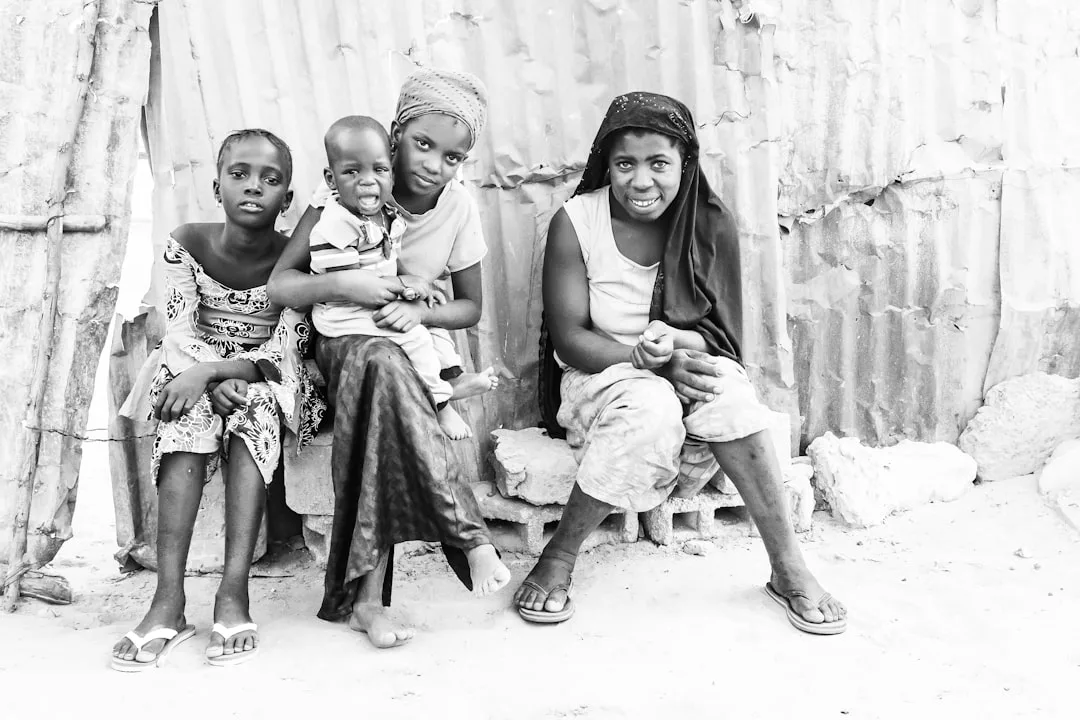
Complete Yoruba family vocabulary: nuclear and extended family terms, in-laws, elder respect, twin names, and the cultural rules behind kinship language.
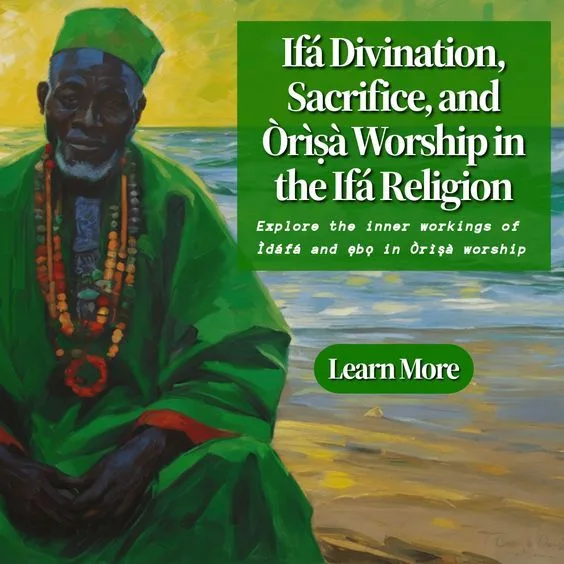
Yoruba religious vocabulary: Olodumare, orisha (Sango, Ogun, Osun, Yemoja, Eshu), Ifa divination, 256 odu, babalawo, ase, and diaspora continuities.

The 100 most common Yoruba verbs grouped by meaning, with tone, pre-verb markers, serial verb constructions, and idioms for learners.
Practical Yoruba travel vocabulary for visitors to Nigeria: airport, danfo, okada, hotel, market, emergency, and cultural-site phrases with proper tones.

Yoruba weather and nature vocabulary: rainy and dry seasons, harmattan, sun, rain, terrain, plants, and animals with cultural and ritual context.
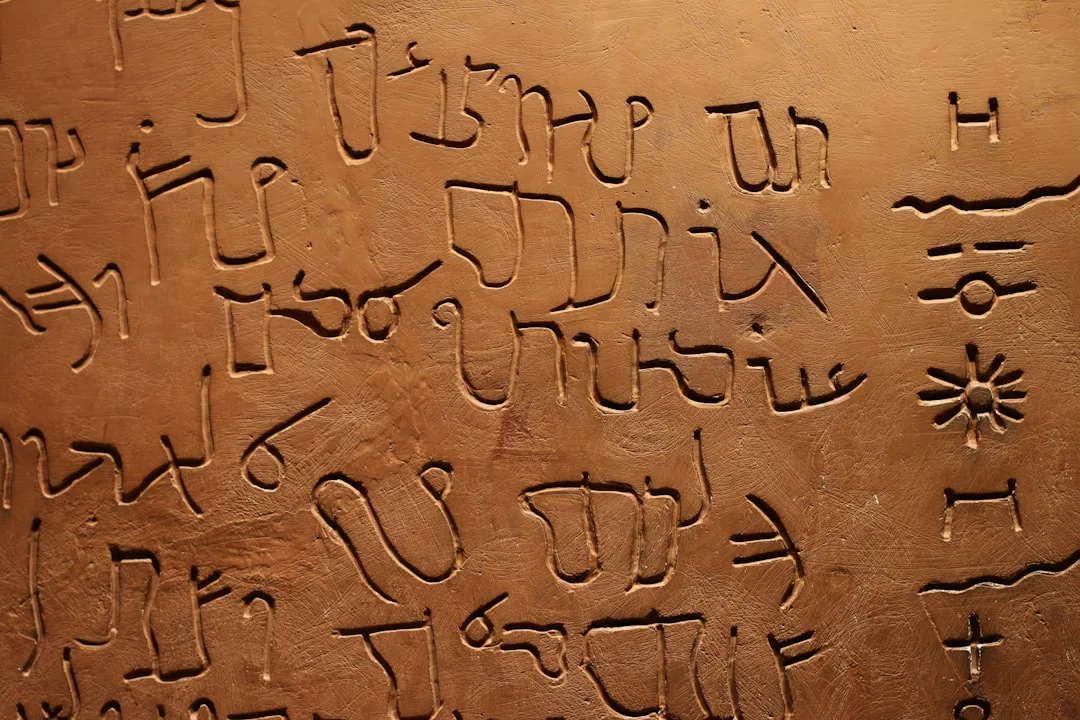
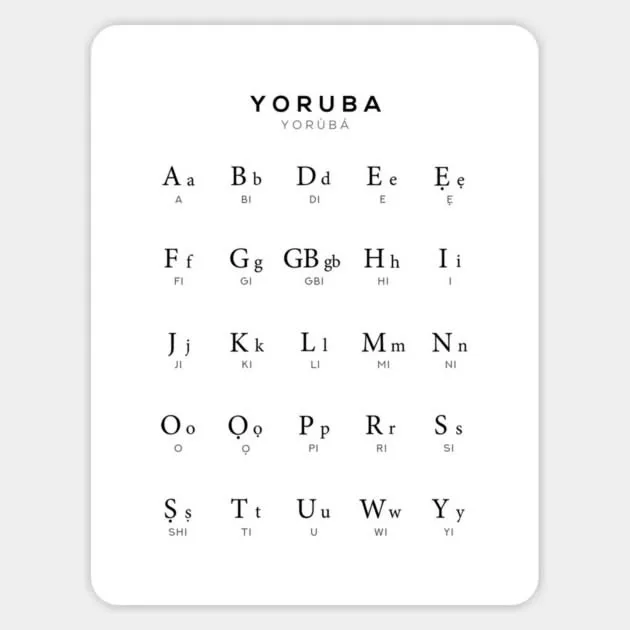
Learn the 25-letter Yoruba alphabet with tone marks, seven oral and five nasal vowels, subdot letters, and the crucial difference between e and e-dot.

Explore Yoruba in the diaspora: Lucumi in Cuba, Candomble and Nago in Brazil, Trinidad Yoruba. How religion preserved the language across the Atlantic.
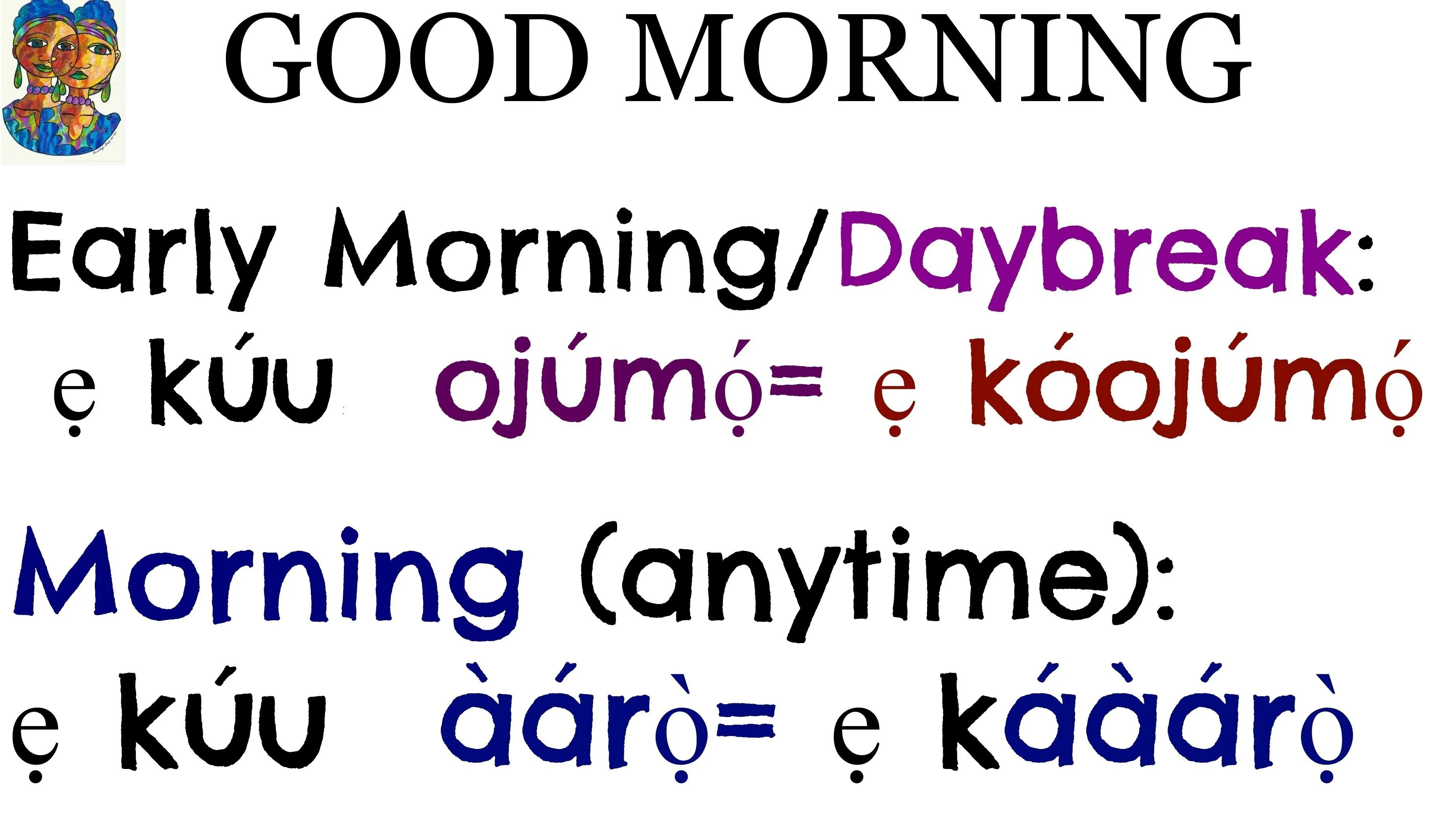
Master Yoruba greetings for every context: morning, afternoon, evening, night, for workers, travelers, mourners, with cultural etiquette and respect forms.

Understand how Yoruba borrows words from English, Hausa, Arabic, and Portuguese. Learn the phonological adaptation rules and common loan vocabulary.
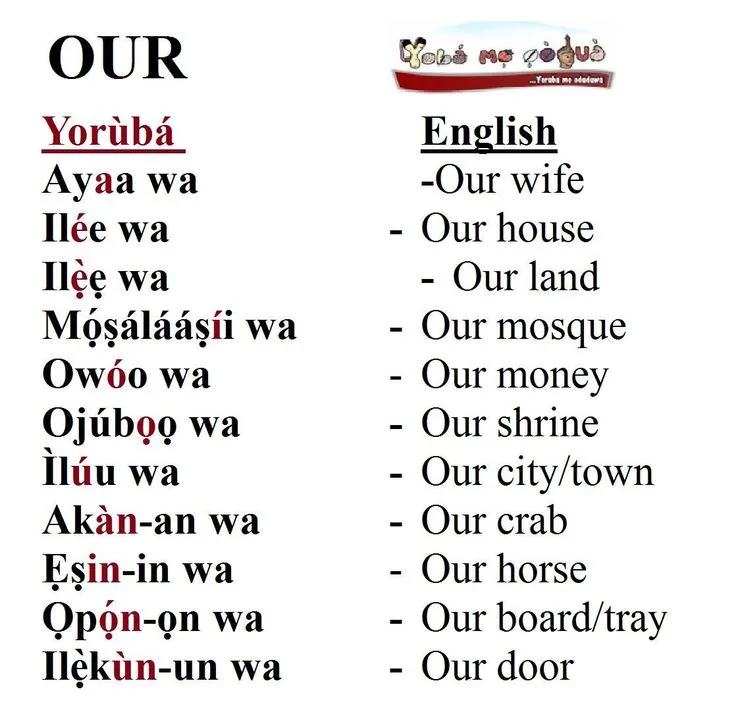
Yoruba nouns do not inflect for number or gender. Learn how Yoruba expresses plurality with awon, how gender is marked with ako and abo, and compound nouns.
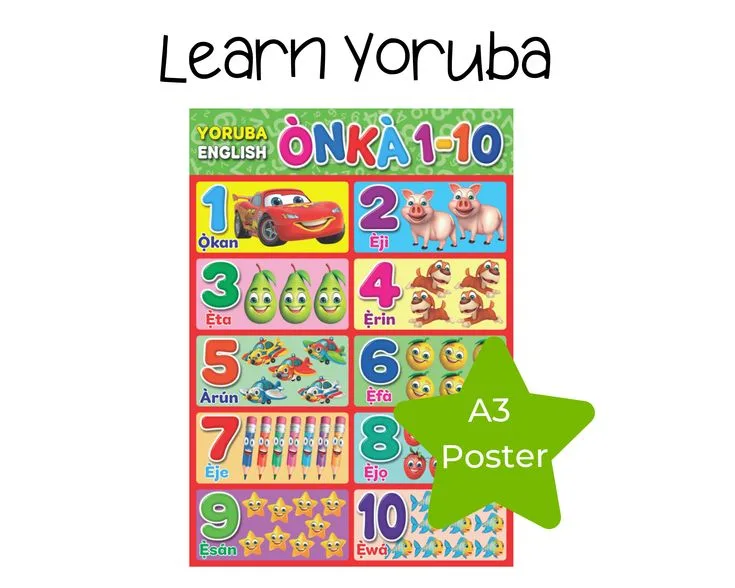
Understand the Yoruba vigesimal (base-20) numbering system with subtraction, counting 1 to 100, ordinals, and the unique math behind Yoruba numerals.
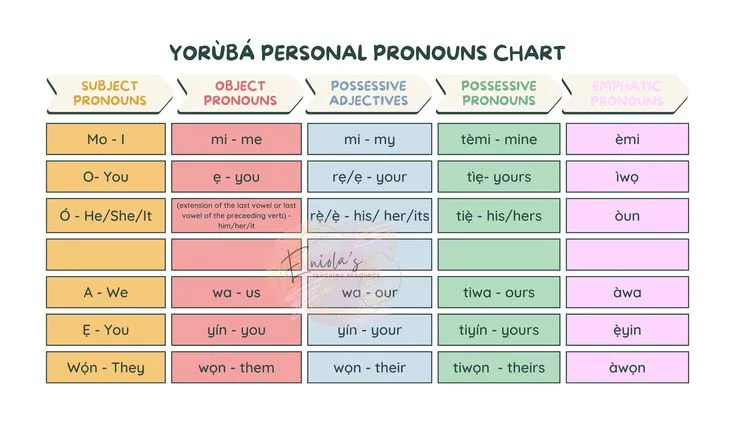
Complete reference to Yoruba pronouns including subject, object, and possessive forms, emphatic pronouns, and demonstratives with tone-marked examples.

Explore essential Yoruba proverbs (owe) with literal translations, cultural meanings, and contexts of use. Discover the wisdom tradition at the heart of Yoruba speech.

Master the three tones of Yoruba: high (acute), mid (unmarked), and low (grave). Learn tone sandhi, minimal pairs, and why tone is essential for meaning.
Complete reference to Yoruba verb markers: n for continuous, ti for perfect, maa and yoo for future, serial verb constructions, and negation patterns.

Learn 100+ essential Yoruba phrases for daily conversation, including greetings, courtesy, shopping, travel, food, and emergencies with proper tone marks and cultural notes.

Comprehensive reference to Yoruba food vocabulary, traditional dishes (iyan, ebas, egusi, jollof), ingredients, cooking verbs, and restaurant phrases with proper tone marks.
Yes. Yoruba has three tones: high, mid, and low, marked with accents in writing. Tone distinguishes words that are otherwise spelled identically, so it carries meaning rather than emphasis. Learning a word means learning its tone pattern alongside its sounds.
Yoruba counts in twenties rather than tens, a vigesimal system. Larger numbers are often formed by subtraction from the next multiple of twenty, so a number can be expressed as twenty minus five rather than fifteen. It follows consistent rules once learned.
Proverbs, known as owe, carry cultural authority and are woven into ordinary conversation rather than reserved for formal speech. Using one appropriately signals maturity and command of the language, and misusing one is noticeable. Yoruba speakers often describe proverbs as the horses that carry meaning to its destination, which captures how central they are.