Ukrainian grammar and vocabulary explained: guides, references, and examples for learners at every level.
Ukrainian body parts (голова, рука, нога, око), symptoms, medical vocabulary (лікар, лікарня, ліки), and pharmacy/clinic phrases.

Ukrainian colors (червоний, синій, жовтий, блакитний), adjective agreement by gender/case/number, national colors, and descriptive vocabulary.
Ukrainian days, months (січень, березень), seasons, telling time, etymology of Slavic month names, and temporal adverbs (сьогодні, завтра).
Ukrainian adjective declension: hard-stem (-ий) and soft-stem (-ій) patterns, agreement with nouns in gender/number/case, comparative (-ший), superlative (най-).

Ukrainian diminutives (-ок, -ик, -енька, -оньки): котик, сонечко, мамуся. Tenderness, irony, and cultural use in songs, poetry, and daily speech.
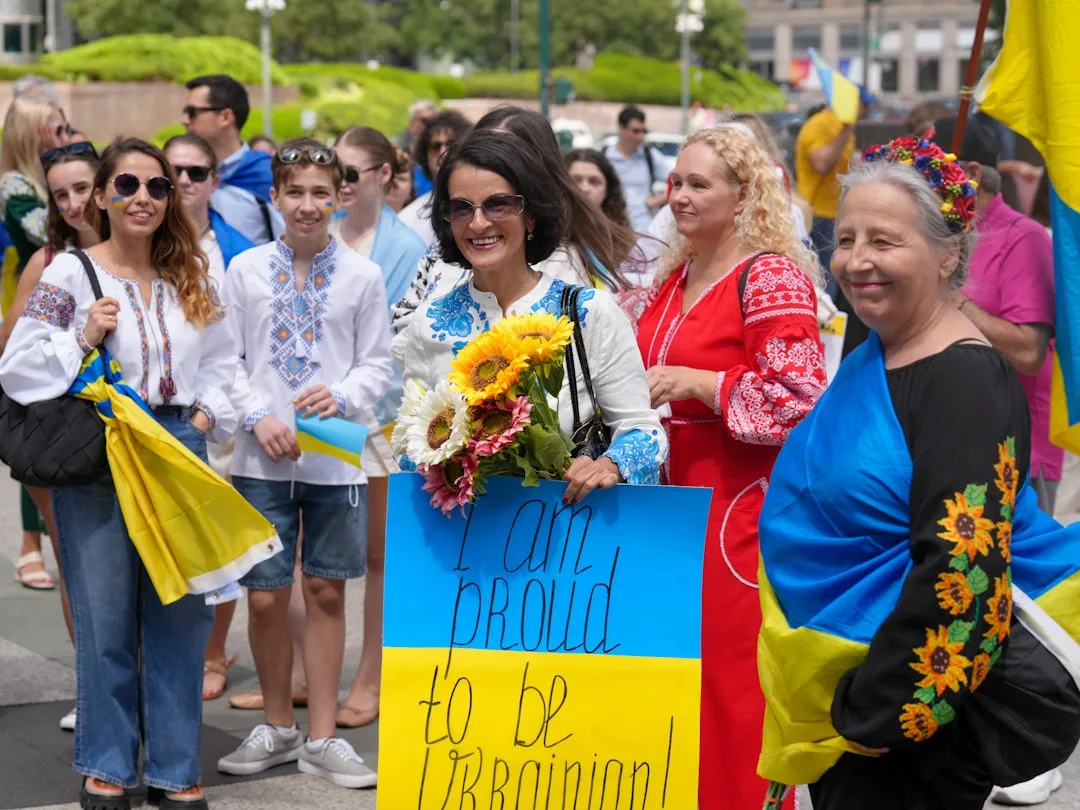
Ukrainian family vocabulary: мати, батько, брат, сестра, in-laws (свекор, теща), grandparents, godparents (кум, кума), and diminutives.
Complete guide to the 33-letter Ukrainian Cyrillic alphabet with pronunciation, transliteration, and key differences from Russian: і, ї, є, ґ explained.
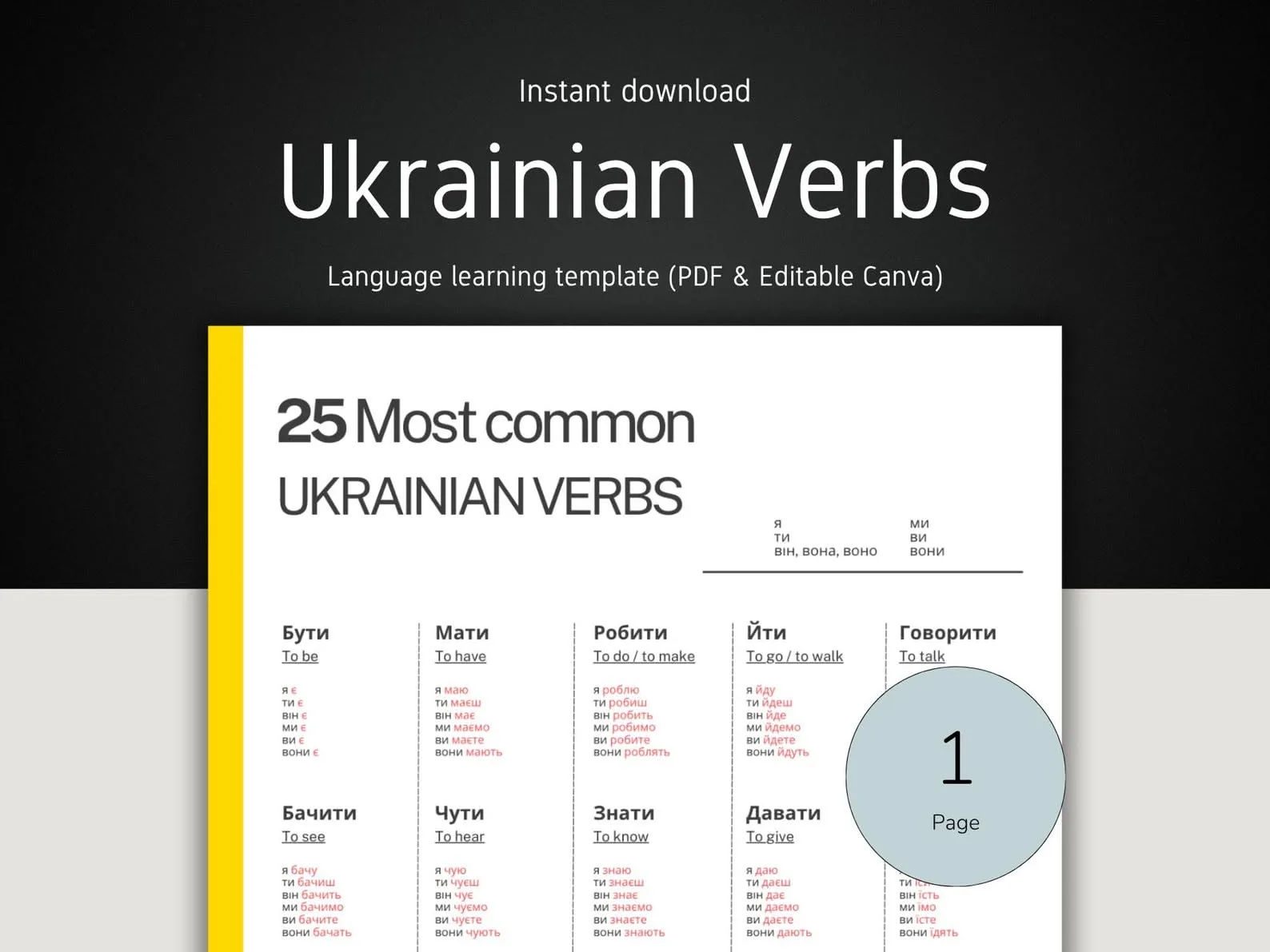
Top 100 Ukrainian verbs: бути, мати, робити, говорити, йти with aspect pairs and examples. Verbs distinct from Russian (бачити, шукати).

Essential Ukrainian phrases: greetings (Привіт, Добрий день), thanks (Дякую), polite expressions (Будь ласка), introductions, questions, and Slava Ukraini.

Ukrainian cardinal and ordinal numbers 1-1000, number-noun agreement rules, case triggers (nom. pl. for 2-4, gen. pl. for 5+), declension tables, telling time.
Ukrainian weather (холодно, тепло, дощ, сніг), seasons (зима, весна, літо, осінь), Carpathians, steppe, and natural symbols like калина.
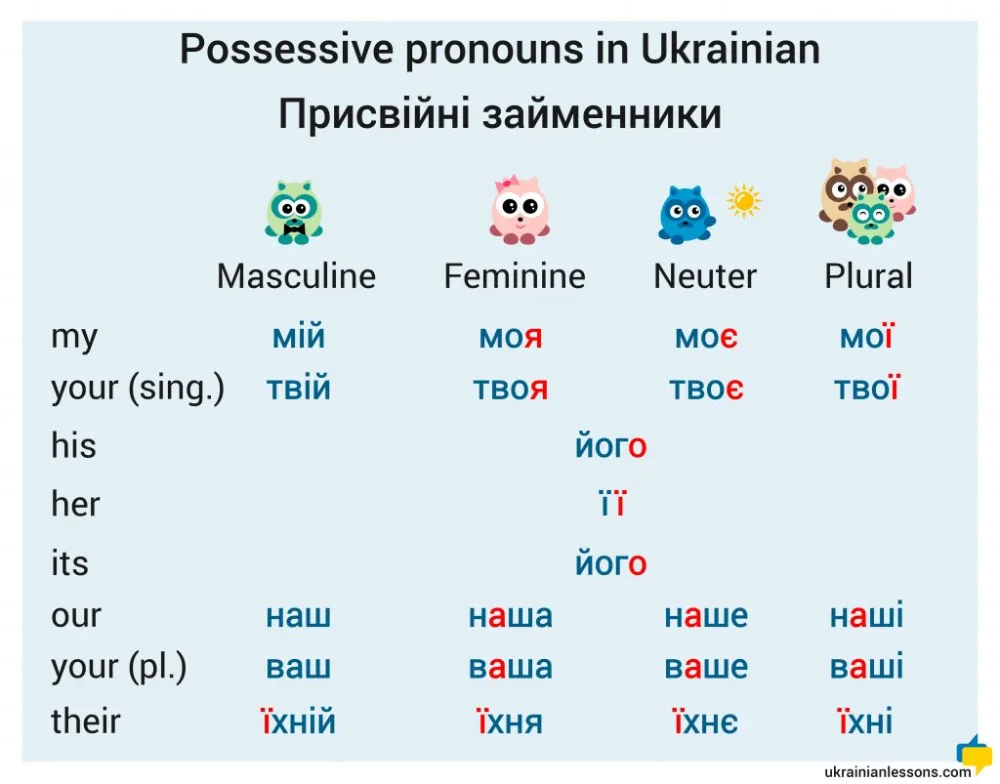
Complete guide to Ukrainian pronouns: personal (я, ти, він, вона, ми, ви, вони), possessive (мій, твій, наш), reflexive (себе), demonstratives (цей, той), with all 7 cases.
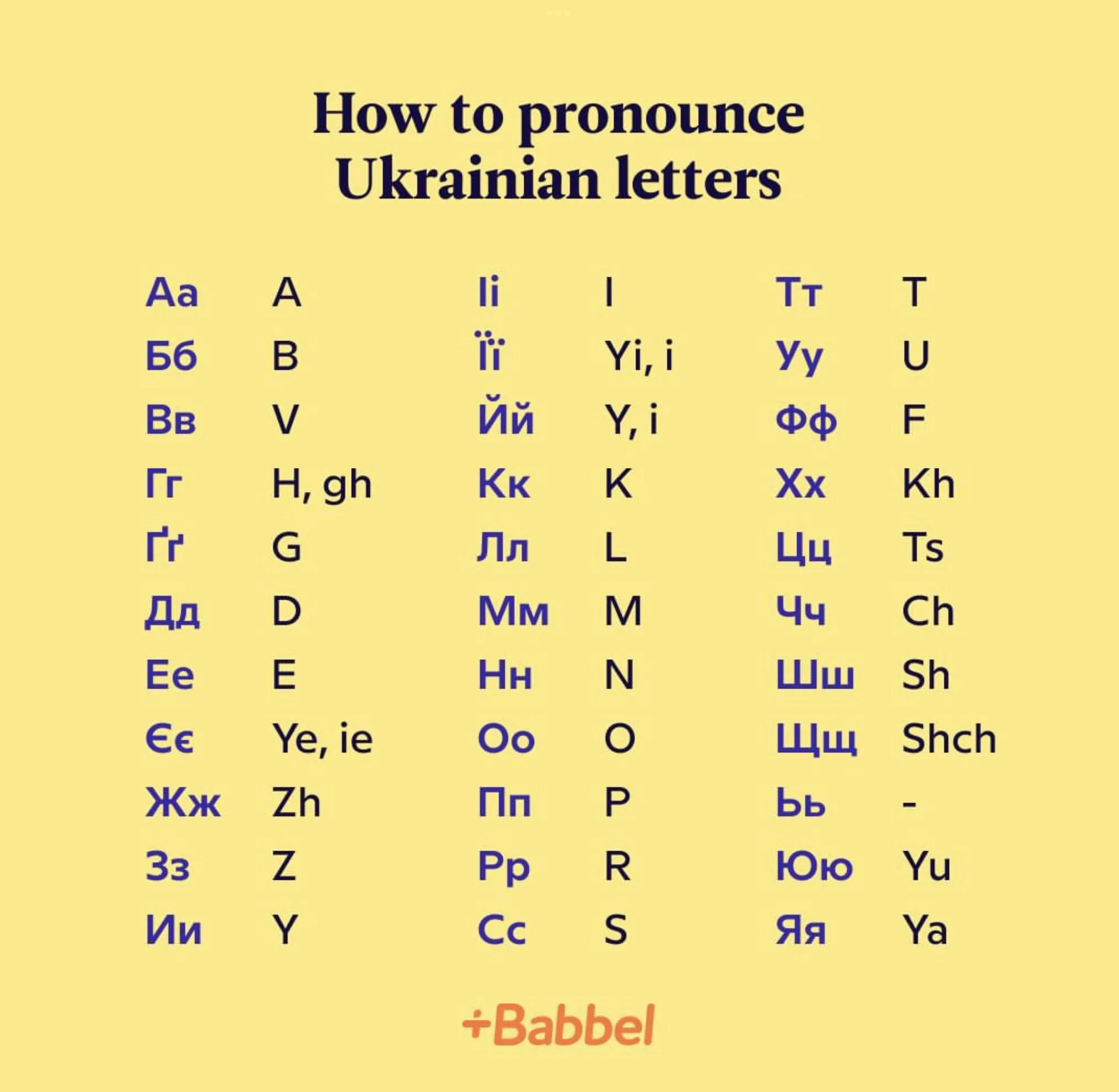
How Ukrainian pronunciation differs from Russian: г as /ɦ/ not /g/, clear unstressed vowels, distinct и and і, apostrophe function, palatalization rules.
All 7 Ukrainian cases explained: nominative, genitive, dative, accusative, instrumental, locative, vocative. Full declension tables and key differences from Russian.
Ukrainian verb conjugation: first and second conjugations, perfective/imperfective aspect, past tense gender agreement, synthetic future, imperatives, participles.
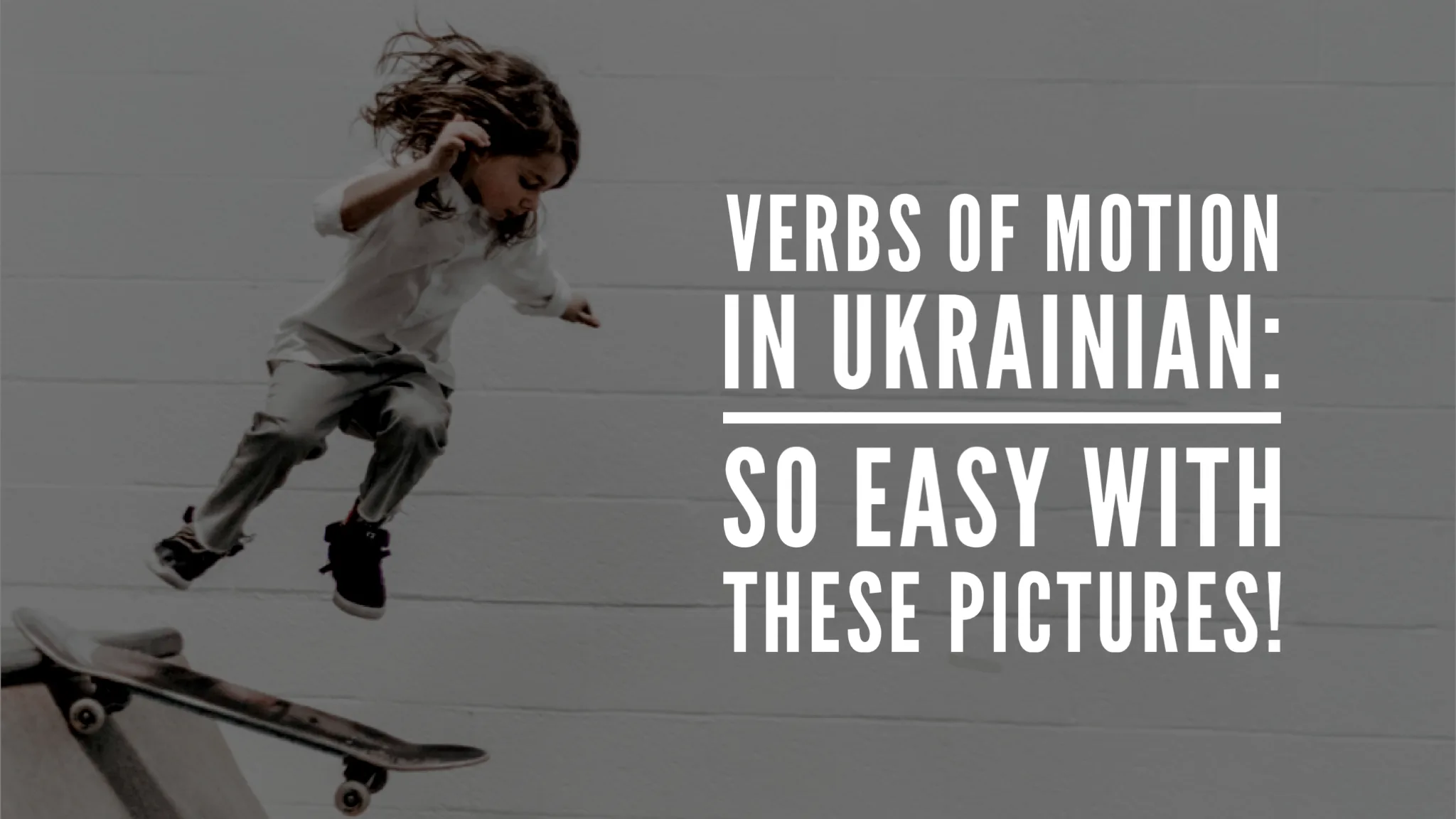
Ukrainian motion verbs: йти/ходити (walk), їхати/їздити (drive), unidirectional vs multidirectional, prefixed motion verbs with при-, ви-, пере-, до-.
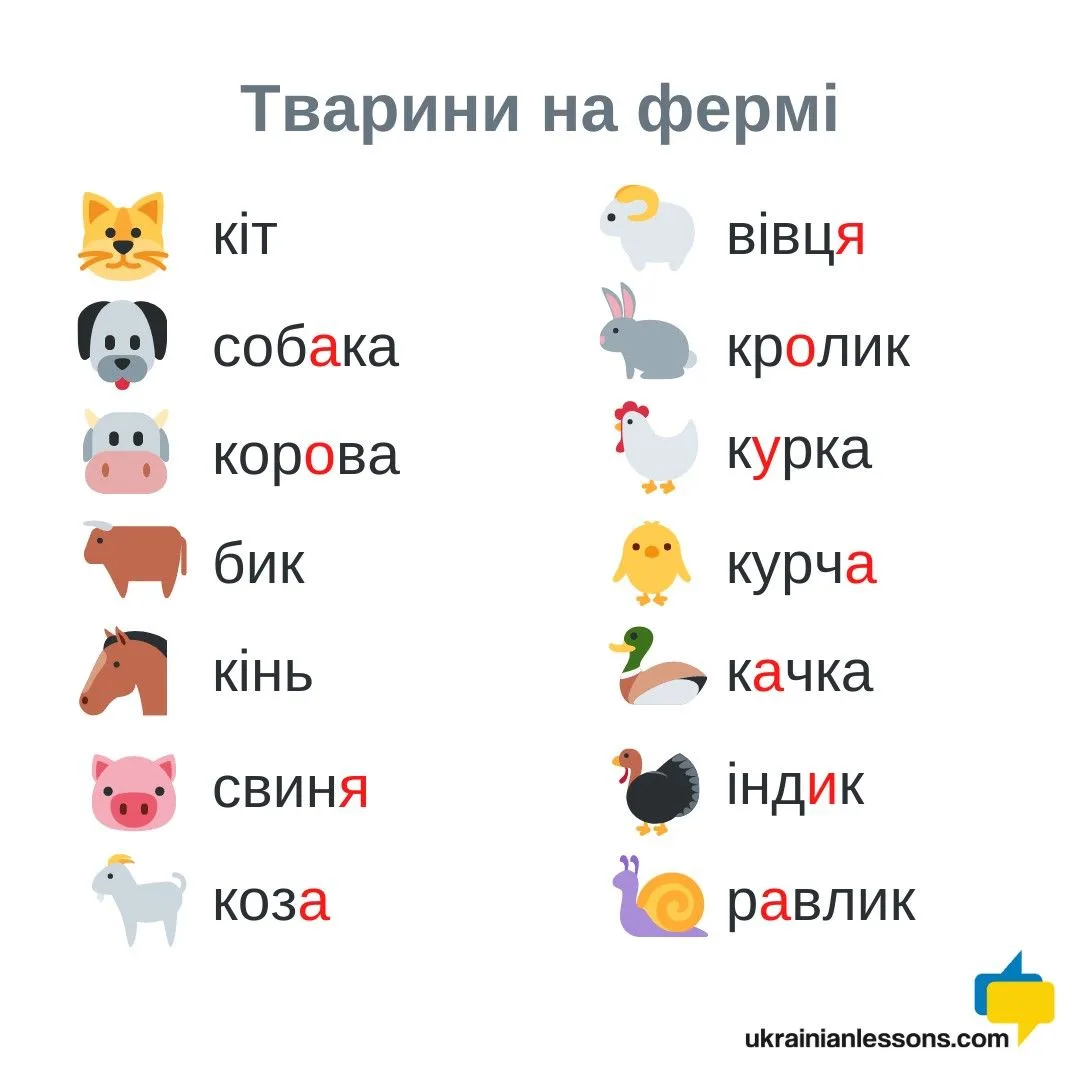
Ukrainian vs Russian vocabulary: false cognates like неділя/неделя, completely different words (дякую vs спасибо), Polish-influenced Ukrainian words, month names.
Over 100 essential Ukrainian phrases for daily use: greetings, thanks, directions, shopping, emergencies, with transliteration and Russian contrasts.

Ukrainian food vocabulary: borshch, varenyky, holubtsi, salo, with meal names, market phrases, cooking verbs, and holiday foods in Ukrainian Cyrillic.
Ukrainian travel phrases for airports, trains, Kyiv Metro, hotels, Carpathians, Odesa, taxis, and emergencies with transliteration and cultural notes.
They are separate East Slavic languages, not dialects of one another. Ukrainian has seven cases where Russian has six, different vowel patterns, and a large body of distinct vocabulary. Speakers of one do not automatically understand the other, though shared roots make learning the second easier.
Ukrainian has seven cases: nominative, genitive, dative, accusative, instrumental, locative, and vocative. Each changes the ending of nouns, adjectives, and pronouns to show the word's role, which is why word order is far more flexible than in English. The vocative is the one Russian has largely lost, and Ukrainian still uses it actively when addressing someone by name.
Both use Cyrillic, but the alphabets are not identical. Ukrainian has four letters Russian lacks, and several shared letters are pronounced differently: the letter that reads as g in Russian is pronounced as a soft h in Ukrainian. Reading Russian Cyrillic therefore does not mean you can pronounce Ukrainian correctly without adjustment.