
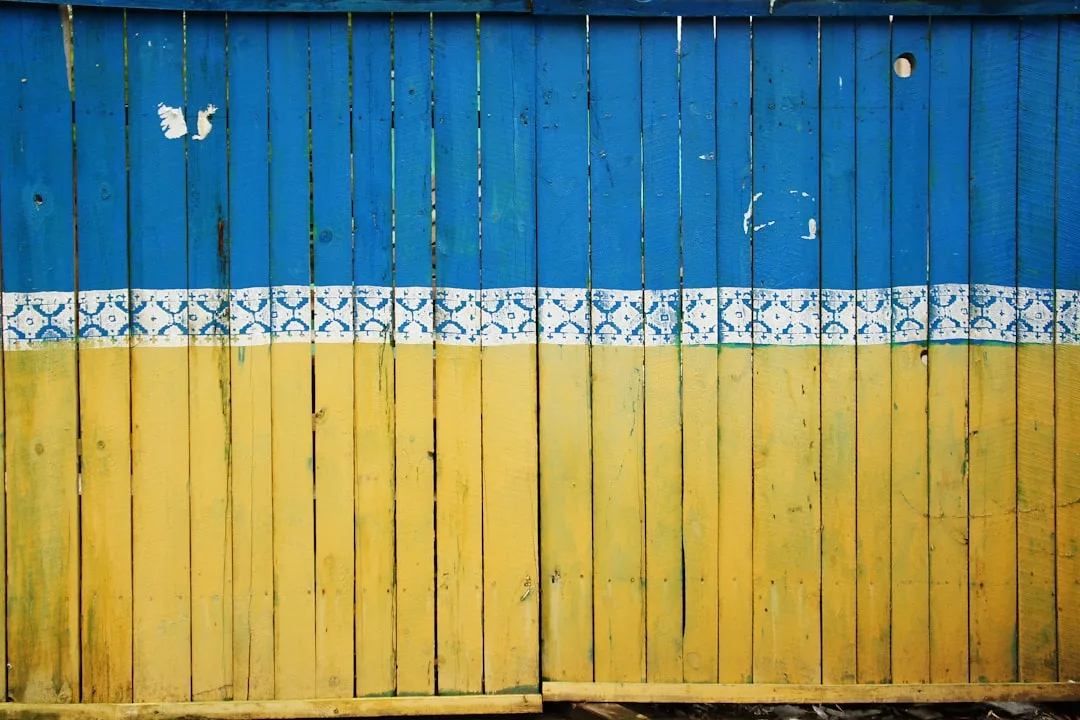
Color vocabulary is one of the first practical lexical fields a learner of Ukrainian needs, and it offers a clear window into how Ukrainian adjectives behave grammatically.
Where English says "the red book" with a single invariable form, Ukrainian must mark the adjective for gender, number, and case: червона книга (feminine nominative singular), червоного зошита (masculine genitive singular), червоних олівців (masculine genitive plural). Mastering color words therefore means mastering the adjective system in miniature.
This reference catalogs the basic colors (червоний, синій, жовтий, зелений, чорний, білий) and their less common cousins, the rules of agreement that govern their endings, and the cultural significance of certain hues in Ukrainian national identity.
The blue and yellow of the flag, the embroidery red of folk shirts, and the white of country houses each carry meaning beyond their wavelength. The article also covers descriptive adjectives more broadly: size, age, temperature, evaluative terms, and how to combine them with colors in natural Ukrainian.
A learner who has studied Russian will recognize most color roots but should note small differences in stress and orthography (Ukrainian синій vs Russian синий, both meaning "blue / dark blue," with i instead of и). Ukrainian also features the distinctively native жовто-блакитний pairing for the national colors, where the second word блакитний (light blue, sky-blue) is preferred over синій for the national flag and is used more broadly in poetry and song.
The Basic Color Set
Table 1: Basic colors with masculine, feminine, neuter forms
| English | Masculine | Feminine | Neuter | Plural |
|---|---|---|---|---|
| red | червоний | червона | червоне | червоні |
| orange | помаранчевий | помаранчева | помаранчеве | помаранчеві |
| yellow | жовтий | жовта | жовте | жовті |
| green | зелений | зелена | зелене | зелені |
| blue (sky) | блакитний | блакитна | блакитне | блакитні |
| blue (dark) | синій | синя | синє | сині |
| violet | фіолетовий | фіолетова | фіолетове | фіолетові |
| brown | коричневий | коричнева | коричневе | коричневі |
| pink | рожевий | рожева | рожеве | рожеві |
| black | чорний | чорна | чорне | чорні |
| white | білий | біла | біле | білі |
| grey | сірий | сіра | сіре | сірі |
Ukrainian adjectives in -ий are the hard-stem type and follow one declension pattern; adjectives in -ій (like синій) are soft-stem and follow a parallel pattern with slight ending shifts. The basic logic of agreement is straightforward: the adjective takes the gender and number of the noun it modifies and matches its case. For the full case framework, consult the Ukrainian adjectives agreement and declension reference.
Examples in context:
- червоний автобус (chervonyi avtobus) = a red bus
- синє небо (synie nebo) = (a / the) dark blue sky
- жовта квітка (zhovta kvitka) = a yellow flower
- зелені дерева (zeleni dereva) = green trees
- чорна кава (chorna kava) = black coffee
- білий хліб (bilyi khlib) = white bread
Two words for "blue" can confuse learners. Синій is the deeper, saturated blue, the color of dark denim or a clear winter night sky. Блакитний is the lighter, sky-blue or pale-blue. Both are used; the choice depends on the actual hue. The Ukrainian flag uses блакитний, not синій, in standard descriptions, and this is more than pedantry: the official heraldic shade is the lighter sky-blue.
Agreement: Gender, Number, and Case
Ukrainian adjectives agree with their nouns in three grammatical features simultaneously. The same color word must therefore appear in many different surface forms across a paragraph of speech.
Table 2: Agreement of червоний (red) across cases (singular masculine)
| Case | Form | Example | English |
|---|---|---|---|
| Nominative | червоний | червоний прапор | the red flag |
| Genitive | червоного | колір червоного прапора | color of the red flag |
| Dative | червоному | до червоного прапора | toward the red flag |
| Accusative (inanimate) | червоний | бачу червоний прапор | I see the red flag |
| Accusative (animate) | червоного | бачу червоного півня | I see the red rooster |
| Instrumental | червоним | пишу червоним олівцем | I write with a red pencil |
| Locative | червоному | на червоному прапорі | on the red flag |
| Vocative | червоний | (rare with colors) | (used poetically) |
The same word in feminine singular shifts to червона, червоної, червоній, червону, червоною, червоній. The neuter parallels masculine in most cases except nominative/accusative (червоне). The plural collapses gender distinctions: червоні for nominative regardless of gender. Practice with one color across all cases, then transfer the pattern; the endings are systematic.
Examples of agreement at work:
- Я купив новий червоний светр. (Ya kupyv novyi chervonyi svetr.) = I bought a new red sweater.
- У неї немає синіх окулярів. (U nei nemaie synikh okuliariv.) = She doesn't have blue glasses.
- Я пишу зеленою ручкою. (Ya pyshu zelenoiu ruchkoiu.) = I am writing with a green pen.
- На білому столі лежать жовті квіти. (Na bilomu stoli lezhat zhovti kvity.) = On the white table lie yellow flowers.
For verb conjugation patterns that pair with these descriptions, see the Ukrainian verb conjugation aspect system reference.
National Colors and Cultural Significance
The pairing жовтий і блакитний (yellow and sky-blue) defines the Ukrainian national flag and, by extension, much of the country's visual identity. The standard interpretation reads the blue as the sky and the yellow as a wheat field, evoking the agricultural heart of the territory.
Folk embroidery (вишивка) traditionally uses red and black (червоний і чорний) on white linen, and this triad carries its own emotional resonance: red for love, black for sorrow, white for purity. Songs build on these pairings; the well-known "Червона рута" (Red Rue) is a lyric meditation on a red-flowering plant, while "Два кольори" (Two Colors) explicitly thematizes the red and black of embroidery.
The phrase жовто-блакитний (yellow-sky-blue) functions as a hyphenated compound modifier and means "Ukrainian national" in heraldic and informal usage. Жовто-блакитний прапор is a redundant but common phrase: "the yellow-and-sky-blue flag," that is, the Ukrainian flag.
Examples with cultural color terms:
- Прапор України - жовто-блакитний. (Prapor Ukrainy - zhovto-blakytnyi.) = The flag of Ukraine is yellow and sky-blue.
- На вишиванці червоні квіти на чорному тлі. (Na vyshyvantsi chervoni kvity na chornomu tli.) = On the embroidered shirt are red flowers on a black background.
- Калина - червоні ягоди, символ України. (Kalyna - chervoni yahody, symvol Ukrainy.) = Viburnum (kalyna) has red berries, a symbol of Ukraine.
Shades, Intensities, and Compound Color Terms
Ukrainian builds compound colors with the prefixes темно- (dark-) and світло- (light-) and the suffix -уватий (-ish, somewhat).
Table 3: Compound and modified colors
| Ukrainian | Transliteration | English |
|---|---|---|
| темно-синій | temno-synii | dark blue |
| світло-зелений | svitlo-zelenyi | light green |
| темно-червоний | temno-chervonyi | dark red, crimson |
| світло-сірий | svitlo-siryi | light grey |
| зеленуватий | zelenuvatyi | greenish |
| синюватий | syniuvatyi | bluish |
| червонуватий | chervonuvatyi | reddish |
| золотистий | zolotystyi | golden |
| сріблястий | sribliastyi | silvery |
The -уватий suffix is highly productive and lets a speaker hedge a color that does not quite hit the basic name. Зелено-блакитний (green-blue) names teal; жовто-зелений is yellow-green. These compounds are written with hyphens and decline only the second element.
Examples:
- Темно-синє море виглядало майже чорним. (Temno-synie more vyhliadalo maizhe chornym.) = The dark blue sea looked almost black.
- На столі лежить світло-зелена скатертина. (Na stoli lezhyt svitlo-zelena skatertyna.) = On the table lies a light green tablecloth.
- Її очі зеленуваті. (Yiyi ochi zelenuvati.) = Her eyes are greenish.
Patterns of Color in Idioms and Set Phrases
Ukrainian, like every developed literary language, has built up a set of color-based idioms that operate independently of literal hue. Білий світ (white world) means "the wide world," as in "to wander into the wide world." Чорний день (black day) means "a hard day." Зелена молодь (green youth) means inexperienced young people. Синя птиця (blue bird) is a symbol of unattainable happiness, borrowed from Maeterlinck's play but fully naturalized.
Learners who study these expressions gain access to a register that pure vocabulary lists miss.
Table 5: Color idioms and set phrases
| Ukrainian | Literal | Idiomatic meaning |
|---|---|---|
| білий світ | white world | the wide world |
| чорний день | black day | a hard day; rainy day |
| на чорний день | for a black day | for a rainy day (saving) |
| зелена молодь | green youth | inexperienced people |
| червоний як рак | red as a crab | beet-red (with shame or heat) |
| блідий як полотно | pale as linen | pale as a sheet |
| чорна заздрість | black envy | bitter, malicious envy |
| біла ворона | white crow | the odd one out |
| жовта преса | yellow press | tabloid journalism |
| синій як небо | blue as the sky | very blue |
| голубий екран | blue screen | television (older usage) |
Examples:
- Він пішов у білий світ за очима. (Vin pishov u bilyi svit za ochyma.) = He went out into the wide world.
- Я відкладаю гроші на чорний день. (Ya vidkladaiu hroshi na chornyi den.) = I am putting money aside for a rainy day.
- Вона була білою вороною серед них. (Vona bula biloiu voronoiu sered nykh.) = She was the odd one out among them.
The phrase біла ворона (white crow) for "odd one out" is shared with Russian and several other European languages but feels especially at home in Ukrainian, where it appears in modern song lyrics, journalism, and casual speech. The image is the unusual albino bird standing out against a flock of black ones.
Common Descriptive Adjectives
Beyond color, Ukrainian descriptive adjectives cluster into semantic groups that any speaker uses daily. The following table lists frequent items grouped by meaning.
Table 6: Common descriptive adjectives
| Ukrainian | Transliteration | English |
|---|---|---|
| великий | velykyi | big, large |
| малий | malyi | small, little |
| маленький | malenkyi | tiny (diminutive) |
| високий | vysokyi | tall, high |
| низький | nyzkyi | low, short (height) |
| довгий | dovhyi | long |
| короткий | korotkyi | short |
| широкий | shyrokyi | wide |
| вузький | vuzkyi | narrow |
| товстий | tovstyi | thick, fat |
| тонкий | tonkyi | thin |
| гарний | harnyi | beautiful, nice |
| поганий | pohanyi | bad, ugly |
| новий | novyi | new |
| старий | staryi | old |
| молодий | molodyi | young |
| швидкий | shvydkyi | fast |
| повільний | povilnyi | slow |
| холодний | kholodnyi | cold |
| гарячий | hariachyi | hot |
| теплий | teplyi | warm |
These adjectives all decline like червоний in their endings, with stem changes for some (e.g., низький → нижчого for genitive). Ukrainian forms comparatives by adding -іший or -ший (швидший = faster, гарніший = nicer) and superlatives with най- prefix (найшвидший = fastest).
Examples in context:
- Великий старий будинок (velykyi staryi budynok) = a big old house
- Маленька гарна дівчинка (malenka harna divchynka) = a tiny pretty girl
- Холодне молоко в склянці (kholodne moloko v skliantsi) = cold milk in a glass
- Швидка машина (shvydka mashyna) = a fast car
Common Mistakes
Learners stumble on color and adjective vocabulary in predictable ways:
- Confusing синій and блакитний. They are not synonyms. Use блакитний for sky-blue, light blue, the blue of the Ukrainian flag. Use синій for darker blues like denim or ink.
- Forgetting agreement. The phrase червоний книга is wrong because книга is feminine; it must be червона книга. Always check the noun's gender.
- Mistakenly declining only the noun. In Ukrainian, both adjective and noun decline. На столі лежать червоні олівці (nominative) becomes Я бачу червоні олівці (accusative inanimate, same form), but Я не маю червоних олівців (genitive plural after negation, both words decline).
- Using Russian color names. Голубой is Russian; Ukrainian is блакитний or голубий (the latter exists in Ukrainian but is less standard for sky-blue). Розовый is Russian; Ukrainian is рожевий.
- Compound color hyphens. Темно-синій is hyphenated; writing темносиній or темно синій is incorrect.
- Mismatching gender in compound nouns. With nouns like дитина (grammatically feminine even if referring to a boy), the adjective is feminine: гарна дитина, never гарний дитина.
Quick Reference
- Basic colors: червоний, оранжевий/помаранчевий, жовтий, зелений, блакитний, синій, фіолетовий, чорний, білий, сірий, коричневий, рожевий.
- Agreement: adjective takes gender, number, case of noun.
- Hard stem: -ий / -а / -е / -і (червоний, червона, червоне, червоні).
- Soft stem: -ій / -я / -є / -і (синій, синя, синє, сині).
- Comparative: -іший / -ший (швидший = faster).
- Superlative: най- (найшвидший = fastest).
- National colors: жовто-блакитний (yellow-and-sky-blue).
- Folk embroidery colors: червоний і чорний на білому (red and black on white).
FAQ
Why are there two words for "blue"? Slavic languages traditionally distinguished light blue and dark blue lexically, like Russian (голубой / синий) and Polish (błękitny / niebieski). Ukrainian preserves this distinction: блакитний is light/sky-blue, синій is darker blue. Both are basic color terms, not modifiers of each other.
How do I describe someone's hair color? Каштанове волосся (chestnut hair), русяве волосся (light brown / dirty blonde), біляве волосся (blonde), чорне волосся (black hair), руде волосся (red, ginger). Сиве волосся is grey or white hair from age.
What is the difference between гарний and красивий? Both mean "beautiful, nice." Гарний is more common in everyday speech and broader (it can mean "good" or "nice" generally). Красивий is more specifically about visual beauty. Both decline normally and are interchangeable in many contexts.
Why does the color sometimes come after the noun? Standard order is adjective-noun, but for emphasis or stylistic effect, the order can reverse: прапор синьо-жовтий (the flag, blue-and-yellow). This is poetic or marked usage.
How do I say "color" itself? Колір (kolir), masculine. The genitive is кольору (kolioru). "What color is this?" = Якого це кольору? Literally "of what color is this?"
Can I use English color words like "beige" or "turquoise"? Loanwords exist: бежевий (beige), бірюзовий (turquoise), хакі (khaki), бордовий (burgundy, from French). They decline as regular adjectives where the form allows; хакі is indeclinable.
How do I make a color into a noun, like "the red" in art? Use the masculine substantive form or simply колір + adjective: червоний колір = "the color red." For abstract use, the neuter substantive червоне works in some contexts: червоне на білому (red on white).
See Also
- Ukrainian adjectives agreement and declension reference
- Ukrainian seven cases complete declension reference
- Ukrainian alphabet and Cyrillic differences from Russian
- Ukrainian vs Russian vocabulary false friends reference
- Ukrainian pronouns personal possessive reflexive reference
- Ukrainian common phrases daily conversation reference
- Grammatical cases comparison reference
Author: Kalenux Team
Frequently Asked Questions
Why are there two words for 'blue' in Ukrainian?
Slavic languages traditionally distinguish light and dark blue lexically. Блакитний is light/sky-blue; синій is darker blue. Both are basic color terms, not modifiers of each other.
How do I describe someone's hair color in Ukrainian?
Каштанове волосся (chestnut), русяве (light brown), біляве (blonde), чорне (black), руде (red/ginger), сиве (grey from age).
What is the difference between гарний and красивий?
Both mean ‘beautiful’ or ‘nice.’ Гарний is more common and broader (can mean ‘good’ generally); красивий is more specifically visual beauty. They are largely interchangeable.
Why does the color sometimes come after the noun?
Standard order is adjective-noun, but for emphasis or poetic effect the order can reverse, as in прапор синьо-жовтий. This is marked or stylistic usage.
How do I say 'color' itself?
Колір (kolir), masculine. ‘What color is this?’ = Якого це кольору? Literally ‘of what color is this?’ using genitive.
Can I use English color words like 'beige' or 'turquoise'?
Yes, loanwords exist: бежевий (beige), бірюзовий (turquoise), хакі (khaki), бордовий (burgundy). They decline as regular adjectives where the form allows.