
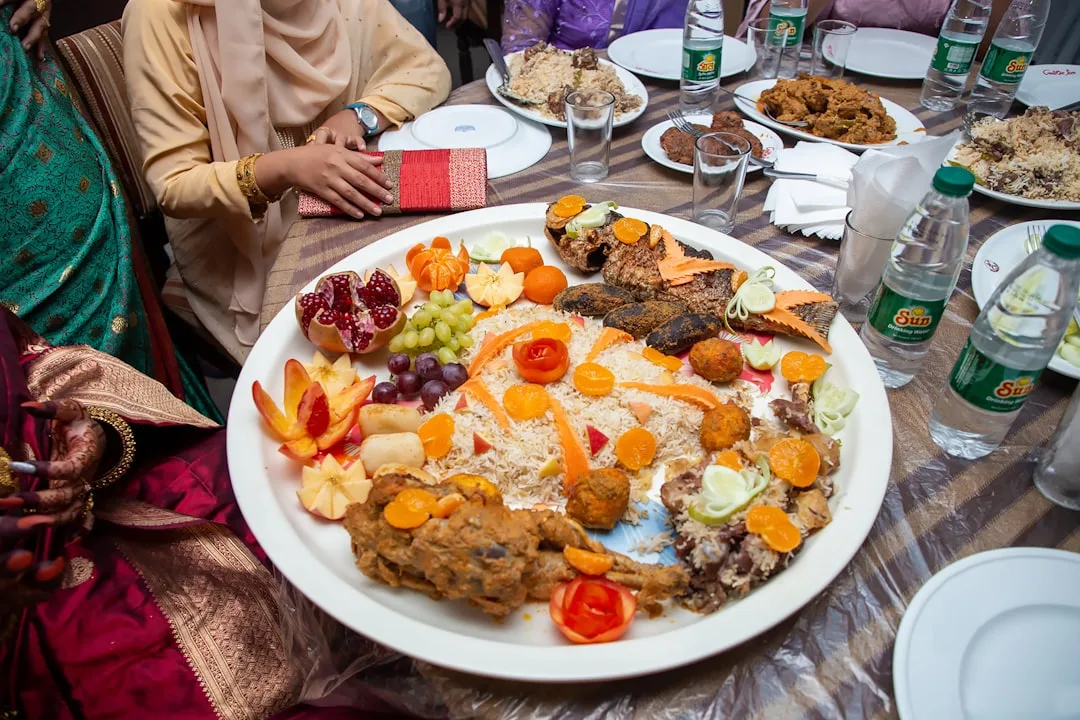
Swahili food vocabulary opens a door into East African life that tourist phrasebooks rarely unlock. A traveler who can read a menu, order a meal, and compliment the cook in Swahili quickly moves from outsider to guest.
The language of cuisine along the coast of Kenya and Tanzania carries a thousand years of history: Bantu staples from the African interior, Indian rice and bread from the trading dhows, Arabian spices carried by monsoon winds, and Portuguese introductions of cassava, maize, and chili. Every word on a Swahili menu has a story.
This reference page surveys the full vocabulary of Swahili food and cooking. You will find staple grains and the dishes made from them, meats and fish, vegetables and legumes, fruit, spices and condiments, drinks, meals and mealtimes, the structure of a Swahili restaurant menu, and the core verbs of cooking.
Each term appears with a literal gloss where useful and a natural English equivalent, with cultural notes on regional variation between inland Kenya, coastal Tanzania, and Zanzibar. Where a dish has an Arabic or Indian origin, that is marked; where a word is characteristic of one dialect, that is noted too.
The goal is not to make a reader into a Swahili chef but to supply the vocabulary needed to read a market stall, order a dinner, cook a recipe from an East African cookbook, and talk about food with anyone from Mombasa to Kigoma. Food is the second most common conversational topic after greetings, and a small Swahili food vocabulary pays dividends every single day a traveler spends in the region.
Staple Foods and Grains
East African cooking is built on a handful of starchy staples. Across most of the region the daily carbohydrate is maize; along the coast it is rice; in the Lake Victoria basin it is green banana.
| Swahili | English | Notes |
|---|---|---|
| Ugali | Stiff maize porridge | Daily staple of inland Kenya and Tanzania. |
| Wali | Cooked rice | Coastal staple. |
| Mchele | Uncooked rice | Raw grain, as sold in shops. |
| Pilau | Spiced rice | Festival dish, influenced by Arab-Indian cooking. |
| Biryani | Layered spiced rice with meat | Celebration dish, Zanzibar and Mombasa. |
| Matoke | Steamed green banana | Lake region, Uganda, western Tanzania. |
| Ndizi | Banana (ripe or plantain) | Eaten fresh or fried. |
| Mahindi | Maize (corn) | Staple cereal. |
| Mihogo | Cassava | Boiled, fried, or made into flour. |
| Viazi | Potatoes | Irish potato, common inland. |
| Viazi vitamu | Sweet potatoes | Lit. sweet potatoes. |
| Uji | Thin porridge | Breakfast food, maize or millet. |
| Chapati | Flat fried bread | Indian origin, universal in East Africa. |
| Mkate | Bread | Generic word for bread. |
| Mandazi | Fried sweet dough | Triangular doughnut, breakfast staple. |
Ugali is eaten by rolling a small ball in the right hand, pressing a dent with the thumb, and scooping stew or greens. Chapatis are torn with the fingers. A formal coastal meal using rice is eaten by hand or with a spoon.
Cultural note: In most of East Africa, the left hand is considered unclean for eating. Always eat with the right hand. In urban restaurants the convention is relaxed, but in homes and rural areas it is strictly observed.
Meat and Fish
| Swahili | English | Notes |
|---|---|---|
| Nyama | Meat | Generic. |
| Nyama ya ng'ombe | Beef | Lit. meat of cow. |
| Nyama ya mbuzi | Goat | Staple festival meat. |
| Nyama ya kondoo | Mutton | Lamb or mutton. |
| Nyama ya nguruwe | Pork | Not eaten by Muslims. |
| Kuku | Chicken | Universal. |
| Bata | Duck | Less common. |
| Samaki | Fish | Generic. |
| Tilapia | Tilapia | Freshwater fish, Lake Victoria. |
| Dagaa | Small dried fish | Silver cyprinid, street food. |
| Kamba | Prawns / shrimp | Coastal. |
| Pweza | Octopus | Zanzibar and coastal delicacy. |
| Kaa | Crab | Coastal. |
| Mayai | Eggs | Boiled or fried. |
Nyama choma (grilled meat) is the national dish of Kenya and a weekend social event. A choma joint (choma zone) is a low-cost open-air grill where customers select a cut of goat or beef, wait for it to be grilled over charcoal, and eat it with ugali, kachumbari, and bottled beer or soda.
Vegetables and Legumes
| Swahili | English | Notes |
|---|---|---|
| Mboga | Vegetables / greens | Generic, often means cooked greens. |
| Sukuma wiki | Collard greens | Lit. push the week; cheap staple. |
| Mchicha | Amaranth leaves | Similar to spinach. |
| Mnavu | Black nightshade leaves | Traditional green. |
| Nyanya | Tomato | Universal. |
| Kitunguu | Onion | Kitunguu saumu means garlic. |
| Kitunguu saumu | Garlic | Lit. onion-garlic. |
| Pilipili | Chili | Hot pepper. |
| Pilipili hoho | Bell pepper | Sweet pepper. |
| Karoti | Carrot | English loanword. |
| Kabichi | Cabbage | English loanword. |
| Tango | Cucumber | |
| Mbaazi | Pigeon peas | |
| Maharage | Beans | Kidney beans most common. |
| Kunde | Cowpeas | Traditional legume. |
| Njugu | Groundnuts / peanuts | |
| Korosho | Cashew | Coastal specialty. |
Sukuma wiki is a key word of East African food culture. It means literally push the week and refers to the cheap chopped collard greens that help a family stretch the household budget until the next payday. It is eaten with ugali almost universally across Kenya and Tanzania.
Fruits
East Africa is one of the great fruit-growing regions of the world. Coastal Kenya and Tanzania produce mangoes of extraordinary sweetness; Uganda grows more banana varieties than almost any other country; the Usambara and Kenyan highlands produce world-class avocados and passion fruit.
| Swahili | English |
|---|---|
| Tunda / matunda | Fruit / fruits |
| Ndizi | Banana |
| Embe | Mango |
| Chungwa | Orange |
| Limau | Lemon |
| Parachichi | Avocado |
| Nanasi | Pineapple |
| Papai | Papaya |
| Nazi | Coconut (mature) |
| Dafu | Young coconut |
| Madafu | Young coconuts (plural) |
| Stafeli | Soursop |
| Tikiti maji | Watermelon |
| Passion | Passion fruit |
| Fenesi | Jackfruit |
| Zambarau | Java plum |
A dafu is a young green coconut sold from a street cart; the seller slices the top with a machete and inserts a straw. Madafu is the plural. The water of a young coconut is considered a restorative drink on hot coastal days.
Spices, Condiments, and Flavorings
Zanzibar was called the Spice Island for a reason. Cloves, cinnamon, cardamom, nutmeg, and black pepper from Zanzibar traveled on Arab dhows to the markets of Oman, India, and beyond. The Swahili word for spice, kiungo, reflects this heritage.
| Swahili | English |
|---|---|
| Chumvi | Salt |
| Sukari | Sugar |
| Pilipili | Chili |
| Pilipili manga | Black pepper |
| Karafuu | Cloves |
| Mdalasini | Cinnamon |
| Iliki | Cardamom |
| Tangawizi | Ginger |
| Bizari | Curry powder |
| Mafuta | Oil or fat |
| Mafuta ya nazi | Coconut oil |
| Siki | Vinegar |
| Mchuzi | Stew / sauce |
| Kachumbari | Tomato and onion salsa |
| Ukwaju | Tamarind |
Kachumbari is a cold salad of chopped tomato, onion, chili, and lime served alongside nyama choma and pilau. It is a direct descendant of Indian kachumber and is eaten across East Africa.
Drinks
| Swahili | English |
|---|---|
| Maji | Water |
| Maji ya chupa | Bottled water |
| Chai | Tea (usually with milk) |
| Chai ya tangawizi | Ginger tea |
| Chai ya rangi | Black tea (lit. color tea) |
| Kahawa | Coffee |
| Maziwa | Milk |
| Juisi | Juice |
| Soda | Soft drink |
| Bia | Beer |
| Pombe | Alcoholic drink (generic) |
| Mvinyo | Wine |
| Maji ya madafu | Coconut water |
| Sharubati | Fruit syrup drink |
Chai ya tangawizi, ginger tea, is the quintessential warming drink of coastal Swahili homes. Kahawa tungu, bitter cardamom-spiced coffee, is served in tiny porcelain cups from street vendors in Lamu, Mombasa, and Stone Town.
Meals and Mealtimes
| Swahili | English |
|---|---|
| Chakula | Food / meal |
| Kifungua kinywa | Breakfast (lit. opening of the mouth) |
| Chai ya asubuhi | Morning tea |
| Chakula cha mchana | Lunch |
| Chakula cha jioni | Dinner |
| Vitafunwa | Snacks |
| Dessert | Dessert (loanword) |
A typical inland Kenyan day might be: chai and mandazi at 7 AM, a full lunch of ugali and stew at 1 PM, and a smaller dinner after sunset. On the coast, mealtimes often shift later, with dinner eaten well after dark, especially during Ramadan when the iftar (fast-breaking meal) follows sunset.
Cooking Verbs
Like all Swahili verbs, cooking verbs take the infinitive prefix ku-. Drop ku- to form commands and conjugate with tense markers; see the Swahili verb conjugation reference for the full system.
| Swahili | English |
|---|---|
| Kupika | To cook |
| Kukaanga | To fry |
| Kuchoma | To grill / roast |
| Kuchemsha | To boil |
| Kuoka | To bake |
| Kukata | To cut |
| Kukoroga | To stir |
| Kuosha | To wash |
| Kumwaga | To pour |
| Kuchanganya | To mix |
| Kuweka | To put / add |
| Kutoa | To remove / serve |
| Kutayarisha | To prepare |
| Kuonja | To taste |
| Kula | To eat |
| Kunywa | To drink |
A simple recipe sentence: Pika wali, kaanga vitunguu, changanya na nyanya, weka chumvi, toa kuleta (Cook rice, fry onions, mix with tomatoes, add salt, serve to bring).
Restaurant Phrases
| Swahili | English |
|---|---|
| Mna meza? | Do you have a table? |
| Meza ya watu wawili. | A table for two. |
| Menyu, tafadhali. | Menu, please. |
| Mnatumia nini leo? | What are you serving today? |
| Naomba... | I would like... |
| Ni kitamu? | Is it tasty? |
| Kina pilipili? | Does it have chili? |
| Sili nyama. | I do not eat meat. |
| Nina mzio wa karanga. | I am allergic to peanuts. |
| Chakula ni kitamu sana. | The food is very delicious. |
| Nimeshiba. | I am full. |
| Bili tafadhali. | The bill, please. |
| Naomba kulipa. | I would like to pay. |
| Kila kitu kilikuwa kizuri. | Everything was good. |
Restaurant tip: At a mid-range Kenyan or Tanzanian restaurant, tip 10 percent in cash. At small roadside spots, round up. Tips are rarely included on the bill.
Signature Dishes by Region
Inland Kenya and Tanzania
- Ugali na nyama choma: stiff maize with grilled meat.
- Ugali na sukuma wiki: with collard greens.
- Mukimo: mashed potato, maize, and peas. Kikuyu origin.
- Nyama choma: grilled goat or beef with kachumbari.
- Mutura: grilled blood sausage, street food.
Coastal Swahili and Zanzibar
- Pilau: spiced rice with meat. Festival dish.
- Biryani: layered spiced rice. Wedding dish.
- Mchuzi wa samaki: fish coconut curry.
- Urojo (Zanzibar mix): street soup with fritters and chutneys.
- Mishkaki: marinated beef skewers.
Lake Victoria and West
- Matoke: steamed green banana with groundnut sauce.
- Samaki wa kupaka: grilled fish in coconut.
- Kuku paka: chicken in coconut curry.
Everywhere
- Chapati na maharage: flat bread with beans.
- Kachumbari: tomato-onion salsa.
- Mandazi: fried dough, breakfast classic.
Common Mistakes
- Ordering samaki without specifying type. In Mombasa, ask if it is samaki wa kuchoma (grilled) or wa kupaka (coconut curry).
- Confusing ndizi (banana) and matoke (cooking banana). Matoke is always cooked; ndizi may be eaten raw.
- Expecting bread to mean the same thing. Mkate can mean loaf, flatbread, or sweet bread depending on context.
- Asking for chai without specifying. Chai usually means milk tea. If you want black tea, ask for chai ya rangi or chai kavu.
- Forgetting pilipili goes on the side. East African food is not naturally spicy; the chili is a condiment.
- Saying Nataka instead of Naomba. Nataka (I want) is direct and can sound rude; Naomba (I request) is polite.
- Using left-hand eating. Always eat with the right hand in homes and rural settings.
Quick Reference Card
- Chakula - food
- Maji - water
- Ugali, wali, chapati - the three staples
- Nyama, samaki, kuku - meat, fish, chicken
- Mboga, matunda - vegetables, fruit
- Chai, kahawa - tea, coffee
- Tafadhali, Asante, Karibu - please, thank you, welcome
- Bili tafadhali - the bill, please
- Ni kitamu sana - it is very delicious
Frequently Asked Questions
See the JSON file for a curated set of learner questions and answers.
See Also
- Swahili common phrases for daily conversation reference
- Swahili verb conjugation and tense markers reference
- Swahili noun classes complete system reference
- Swahili Arabic loanwords vocabulary reference
- Swahili dialects and regional variations reference
- Swahili greetings and daily conversation reference
- Swahili numbers and counting reference
Author: Kalenux Team
Frequently Asked Questions
What is the national dish of Tanzania and Kenya?
Ugali is the daily staple in both countries. It is a stiff maize porridge eaten with nyama choma (grilled meat), fish, or mboga (greens). On the coast, pilau (spiced rice) and biryani replace ugali at celebrations. Matoke (steamed green banana) is more common in Uganda and the Lake Victoria region.
How do I order vegetarian food in Swahili?
Say Sili nyama (I do not eat meat) or Nataka chakula cha mboga (I want vegetarian food). The word mboga means vegetables or greens and appears on every menu. Ugali na mboga and wali na maharage (rice and beans) are reliable vegetarian staples.
Is Swahili food spicy?
Inland Kenyan and Tanzanian cooking is mild; the main flavors come from onions, tomatoes, and a little salt. Coastal Swahili cuisine (Zanzibar, Mombasa, Lamu) is heavily spiced under Indian and Arabian influence: cardamom, cinnamon, cloves, cumin, and chili. Pilipili means chili and is usually served on the side.
What is the difference between chai and coffee in East Africa?
Chai (Swahili for tea) is milk tea, often sweet and spiced with ginger (chai ya tangawizi). Kahawa (coffee) is the cultural drink of Ethiopia and the Swahili coast. Inland Kenya drinks tea; coastal Tanzania and Zanzibar drink kahawa, often with cardamom, sold from brass pots in the street.
What is nyama choma and where do I find it?
Nyama choma is grilled meat, usually goat or beef. It is the signature Kenyan social food, sold at open-air choma joints where you select the cut and it is grilled over charcoal. It is served with ugali, kachumbari (tomato and onion salsa), and a cold drink. Every weekend, neighborhoods gather at their local choma spot.
Are there Swahili cooking verbs I should learn?
Yes. Kupika means to cook (generic), kukaanga means to fry, kuchoma means to grill or roast, kuchemsha means to boil, kuoka means to bake, and kutoa means to serve or remove. The infinitive ku- prefix is standard; see the verb conjugation reference for conjugated forms.
What is the most common breakfast in East Africa?
Chai na mandazi (tea and fried dough) or chai na chapati is a classic Kenyan breakfast. On the coast, uji (maize or millet porridge) and mahamri (cardamom-scented doughnuts) are popular. Urban breakfasts add eggs, sausages, and toast in the English style.