Among the world's languages, Yoruba is famous for the richness and specificity of its greeting system. A Yoruba speaker does not have a single "hello" that covers all encounters. Instead, the language maintains dozens of dedicated greetings for specific times of day, activities, life events, and social situations. Greeting well is considered a marker of good upbringing (ìwà rere, meaning good character), and failure to greet appropriately, especially to greet one's elders, is a genuine social breach. A child who does not greet the visitors to the house is corrected by any adult within hearing distance. A young person who walks past an older neighbor without acknowledgment is talked about disapprovingly.
This reference organizes the core Yoruba greetings by context: time of day, activity being performed, life event, and special occasions. It also covers the bodily etiquette of greeting (prostration for males, kneeling for females in traditional settings), the terms of address that must accompany greetings when speaking to elders, and the expected responses that turn a greeting into a complete exchange. The goal is not only to enable learners to say the right phrases but to understand what those phrases mean culturally and why they exist.
Time of Day Greetings
These are the daily-use greetings that every learner must master first. They are based on the current time and vary across four segments of the day.
| Time | Greeting | Translation | Usage |
|---|---|---|---|
| Morning | Ẹ káàárọ̀ | Good morning | From waking until about noon |
| Afternoon | Ẹ káàsán | Good afternoon | Roughly noon to 4 pm |
| Evening | Ẹ kúùrọ̀lẹ́ | Good evening | About 4 pm to sunset |
| Night | Ẹ kúálẹ́ | Good night | After sunset; also for bedtime farewell |
The greetings are structured as Ẹ (respectful you) plus kú (the greeting root, untranslatable as a single English word but meaning something like "well done surviving this time") plus àárọ̀ (morning), àsán (afternoon), ìrọ̀lẹ́ (evening), alẹ́ (night).
For informal use among peers or to people younger than the speaker, replace Ẹ with O: O káàárọ̀ (good morning, to a peer or junior), O káàsán, and so on. Using the O form to an elder is a social error.
Expected Responses
A greeting expects a response. The standard response is a repeat of the same phrase back, optionally adding màá (may it be) or omo (child, in affectionate contexts).
| Greeting | Typical Response |
|---|---|
| Ẹ káàárọ̀ | Ẹ káàárọ̀ (repeat) or Ẹ káàárọ̀, màá sì ṣeun (good morning, and thank you) |
| Ẹ kúálẹ́ | Ẹ kúálẹ́ (repeat) |
Failing to return the greeting, or giving only a nod, is considered cold in traditional etiquette.
Greetings Based on Activity
Yoruba acknowledges what someone is doing when you encounter them. A person working, eating, traveling, or resting each merits a different greeting.
| Situation | Greeting | Translation |
|---|---|---|
| Working | Ẹ kú iṣẹ́ | Well done at work |
| Eating | Ẹ kú oúnjẹ | Well done eating (lit. enjoy your meal) |
| Sleeping (just woken) | Ẹ kú orin | Well done sleeping (lit. good rest) |
| Traveling / just arrived | Ẹ kú àbọ̀ | Welcome (lit. well done returning) |
| Departing on a trip | Ẹ kú ìrìn | Have a good journey |
| Sitting / resting | Ẹ kú ìjókòó | Well done sitting |
| Standing / waiting | Ẹ kú ìdúró | Well done standing |
| Cooking | Ẹ kú oúnjẹ sísè | Well done cooking |
| Farming | Ẹ kú ọ̀gbìn | Well done planting |
The pattern is transparent: Ẹ kú plus the activity name. This productivity means that Yoruba speakers can generate appropriate greetings for virtually any observable activity.
Example Exchanges
| Situation | Yoruba | Translation |
|---|---|---|
| Meeting a working neighbor | Ẹ kú iṣẹ́ | Well done at work |
| Neighbor replies | Ẹ ṣé, ẹ kú àbọ̀ | Thank you, welcome (lit. well done returning) |
| Meeting someone eating | Ẹ kú oúnjẹ | Enjoy your meal |
| The eater invites | Ẹ wá jẹun pẹ̀lú wa | Come eat with us |
| Polite decline | Ẹ ṣé, mo ti jẹun | Thank you, I have eaten |
This invitation to join a meal when greeting someone eating is called ọ̀fọ̀-ẹnu and is more than mere politeness; traditionally, it is a real invitation that may be accepted.
Life Event Greetings
Specific life events carry dedicated greetings.
| Event | Greeting | Translation |
|---|---|---|
| New baby | Ẹ kú èwu ọmọ | Congratulations on the child (lit. well done at child-danger, acknowledging childbirth risk) |
| Marriage | Ẹ kú ìgbéyàwó | Congratulations on the marriage |
| New home | Ẹ kú ilé tuntun | Congratulations on the new house |
| Bereavement | Ẹ kú ìkànsí | Our condolences (lit. well done at the visitation) |
| Illness (visiting the sick) | Ẹ pẹ̀lẹ́ | Take it easy / sorry |
| Recovery from illness | Ẹ kú àrànlọ́wọ́ | Well done recovering |
| New year | Ẹ kú ọdún tuntun | Happy new year |
| Ramadan / Islamic festival | Ẹ kú ẹ̀yẹ | Congratulations on the festival |
| Christmas | Ẹ kú Kérésìmesì | Merry Christmas |
Condolences in Detail
Offering condolences is a particularly elaborate domain in Yoruba culture. The basic phrase Ẹ kú ìkànsí is commonly extended with wishes for strength (Kí Ọlọ́run fún wa ní agbára), prayers that the deceased rest well, and acknowledgment of the family's grief. A condolence visit is expected from any close acquaintance; staying away is a breach of etiquette.
Bodily Gestures: Prostration and Kneeling
Traditional Yoruba greeting etiquette involves not only words but also physical gestures of respect.
For Males: Ìdọ̀bálẹ̀ (Prostration)
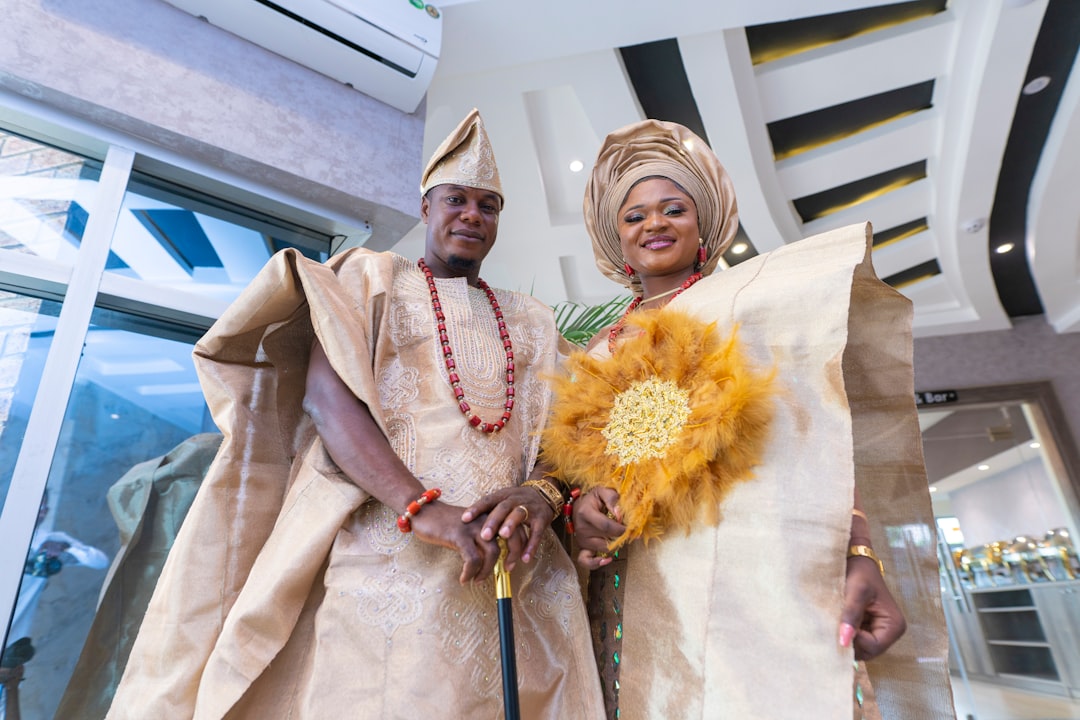
When greeting an elder or a superior, a traditional Yoruba male fully prostrates, lying face down on the ground or stretching forward so that his body is nearly flat. Both hands may be placed forward. This is the deepest form of greeting, reserved for the most senior elders, chiefs, parents, and in-laws.
A lighter version is a partial prostration where the man bends deeply at the waist, touching the ground briefly with his fingertips, then rising.
For Females: Ìkúnlẹ̀ (Kneeling)
The corresponding female gesture is kneeling on both knees while saying the greeting. Some traditions include a brief touch of the floor. In modern practice, especially in urban settings, this is often reduced to a deep curtsy, bending one knee, or a very respectful nod.
Modern Adaptations
In office settings, urban households, and among younger generations, full prostration has given way to:
- A slight bow of the head.
- Touching the right hand to the heart.
- Verbal greeting alone, delivered with respectful tone.
Nevertheless, when visiting a traditional home, especially a rural compound or an elderly relative, the traditional gestures are expected. Elders appreciate the effort even from non-Yoruba visitors.
The "Pẹ̀lẹ́" Touch
When an elder greets back, they may touch the younger person's head, shoulder, or back with the flat of their hand as a blessing. This is called ìfọ̀wọ́bà (laying of the hand) and carries spiritual weight.
Age-Based Respect in Greetings
The Yoruba pronoun Ẹ (plural/respectful you) is obligatory when greeting:
- Anyone older than the speaker by any significant margin.
- Anyone of senior social position (traditional ruler, teacher, religious leader, employer).
- Strangers whose status is unknown (default to respectful).
The informal O (singular you) is used for:
- Peers of similar age.
- Clearly younger people.
- Close friends and family members who have explicitly waived the formality.
Using O to an elder is not just impolite; it is a social error that causes offense. Using Ẹ to a younger person or equal is never wrong and is often appreciated.
Title Terms to Add
When greeting elders, add a term of address that acknowledges their status:
| Term | For Whom |
|---|---|
| Bàbá | Father figure, elderly man |
| Màmá | Mother figure, elderly woman |
| Ẹ̀gbọ́n | Older brother or sister |
| Àbúrò | Younger sibling |
| Ọ̀gá | Boss, superior |
| Ìyá | Mother |
| Bàbá àgbà | Grandfather |
| Ìyá àgbà | Grandmother |
| Olówó orí mi | My benefactor (respectful) |
| Olúwa mi | My lord (very respectful) |
Example: Ẹ káàárọ̀, bàbá (Good morning, father) to an older man even if he is not your biological father.
Introduction and Meeting Greetings
When meeting someone for the first time or after a long absence:
| Yoruba | Translation |
|---|---|
| Báwo ni? | How are you? |
| Báwo ni ọjọ́ rẹ? | How is your day? |
| Báwo ni ìlera rẹ? | How is your health? |
| Ẹ̀ṣọ́ọ̀? | What's up? (informal) |
| Mo ti pẹ́ tí n kò rí ẹ! | It has been a long time since I saw you |
| Báwo ni ẹbí? | How is the family? |
| Báwo ni iṣẹ́? | How is work? |
Standard Responses
| Yoruba | Translation |
|---|---|
| A dúpẹ́ | We thank (God) [a standard wellness response] |
| Dáadáa ni | Things are good |
| Ó dára | It is good |
| Oyè ọrẹ ni | Just managing |
The response A dúpẹ́ (literally "we give thanks") is common. It acknowledges that things may not be perfect but are not disastrous, and expresses gratitude.
Parting Greetings
| Yoruba | Translation |
|---|---|
| Ó dàbọ̀ | Goodbye (until return) |
| Ó dìgbà | Goodbye (until next time) |
| Ó dàárọ̀ | See you in the morning |
| Ó dọ̀la | See you tomorrow |
| Ó dọ̀sán | See you in the afternoon |
| Ẹ máa lọ dáadáa | Go well |
| Kí Ọlọ́run bá ẹ | May God be with you |
| Ó tí pẹ́ | It has been [used when leaving after a visit, similar to "it has been long"] |
The phrase Ó dàbọ̀ is the most common "goodbye." It literally means "it [our parting] is until [we] return." The word dàbọ̀ is composed of dé (until) and àbọ̀ (return).
Special Occasion Responses
When a greeting contains a specific element like "work" or "journey," the response often incorporates the theme:
Greeting: Ẹ kú àbọ̀ (welcome, well-done-returning) Response: Ẹ ṣé, ẹ kú ilé (thank you, well done at home [for those who stayed])
Greeting: Ẹ kú iṣẹ́ Response: Ẹ ṣé, ẹ kú ìfarabalẹ̀ (thank you, well done at your patience [for the observer])
This mutual exchange, where each party acknowledges the other's situation, is the core of Yoruba greeting culture.
Example Conversations
Morning Encounter with an Elder Neighbor
| Speaker | Yoruba | Translation |
|---|---|---|
| Young person (kneeling) | Ẹ káàárọ̀, màmá. | Good morning, mother (respectful). |
| Elder | Ẹ káàárọ̀, ọmọ mi. Báwo ni? | Good morning, my child. How are you? |
| Young person | A dúpẹ́. Ẹ káàárọ̀ mi láti ilé. | We give thanks. Good morning from my house. |
| Elder | Ẹ ṣé. Ẹ kú ẹbí. | Thank you. Greetings to the family. |
Meeting a Working Colleague
| Speaker | Yoruba | Translation |
|---|---|---|
| Visitor | Ẹ káàsán, ẹ kú iṣẹ́. | Good afternoon, well done at work. |
| Worker | Ẹ káàsán, ẹ ṣé. Báwo ni? | Good afternoon, thank you. How are you? |
| Visitor | Dáadáa ni, a dúpẹ́. | Fine, we give thanks. |
Common Mistakes
Using O instead of Ẹ for elders. This is the most serious and most common mistake for learners. When in doubt, default to Ẹ.
Skipping the expected response. A one-sided greeting is incomplete. Always respond, even if briefly.
Mixing up the time-of-day greetings. Using Ẹ káàárọ̀ in the evening or Ẹ kúálẹ́ at noon is strange. Pay attention to the actual time.
Forgetting to acknowledge the activity. If you see someone working, say Ẹ kú iṣẹ́, not just Báwo ni. The activity-specific greeting is richer.
Incomplete prostration or kneeling. If you attempt the gesture, commit to it. A half-hearted gesture can seem insincere.
Greeting only once. Traditional etiquette involves greeting everyone in a room, not just the host. In a room with several elders, greet each one.
Using peer-level phrasing with strangers. Until you know someone's status, default to respectful forms. Downshifting to informal is easy later; recovering from initial rudeness is hard.
Treating greetings as one-off phrases. In Yoruba culture, greetings often extend into a mini-conversation about health, family, and daily activity. Rushing through the greeting to the main topic is considered abrupt.
Quick Reference
Morning: Ẹ káàárọ̀. Afternoon: Ẹ káàsán. Evening: Ẹ kúùrọ̀lẹ́. Night: Ẹ kúálẹ́. Activity greeting pattern: Ẹ kú + activity name. Working: Ẹ kú iṣẹ́. Eating: Ẹ kú oúnjẹ. Traveling: Ẹ kú ìrìn. Welcome (returner): Ẹ kú àbọ̀. Condolences: Ẹ kú ìkànsí. Thank you: Ẹ ṣé. Very much: Ẹ ṣé púpọ̀. Goodbye: Ó dàbọ̀. Use Ẹ for elders and strangers; O for peers and juniors. Traditional prostration for males (ìdọ̀bálẹ̀) and kneeling for females (ìkúnlẹ̀).
FAQ
Why is there no simple "hello" in Yoruba?
Yoruba culture prizes specificity. A "hello" that ignores time, activity, and social context is culturally incomplete. The greetings themselves acknowledge the listener's situation, which is considered more respectful than a generic phrase.
What do I say if I don't know the time of day well?
Default to Báwo ni? (How are you?) as a neutral greeting. This works any time and in most situations, though time-specific greetings are warmer.
Is it OK to skip prostration if I'm not Yoruba?
Yes. Visitors who attempt even partial gestures of respect (a deep bow, a brief kneel) are warmly received. Full prostration is not expected of non-Yoruba people, though the effort is appreciated.
What if I am older than the Yoruba person I am greeting?
The default is still Ẹ when unsure. If they are clearly younger (a child, a teenager), you may use O comfortably. When addressing adults of unknown age, Ẹ remains safe.
Can I greet someone by name instead of with Ẹ káàárọ̀?
A name alone is not a greeting. You say the greeting and can add the name: Ẹ káàárọ̀, Adé. Calling out the name alone is considered brusque.
How do I know when a greeting is finished?
When both parties have exchanged the greeting, the response, and any follow-ups about family or health. There is usually a natural pause before moving to the actual topic of the interaction.
What about text messages and phone calls?
The same greetings apply. Yoruba speakers open phone calls with Ẹ káàárọ̀ (or the time-appropriate greeting), and text messages often begin with a full greeting before the message content. Skipping the greeting in text feels abrupt to older Yoruba speakers.
See Also
- Yoruba Alphabet and Pronunciation Complete Guide
- Yoruba Three Tones: High, Mid, Low Complete Reference
- Yoruba Pronouns: Subject, Object, and Possessive Reference
- Yoruba Verb Tense and Aspect Markers Reference
- Yoruba Proverbs and Wisdom Sayings Cultural Reference
- Yoruba Diaspora Varieties: Brazil and Cuba Reference
- Yoruba Noun System: No Plurals, No Gender Reference
- Language Difficulty for English Speakers Reference
Frequently Asked Questions
Why does Yoruba have so many greetings?
Yoruba culture places great importance on acknowledgment of others and situational awareness. Each greeting expresses the speaker's recognition of what the listener is doing, the time of day, or the occasion. Elaborate greetings reflect the respect and social warmth central to Yoruba life.
What is the proper gesture when greeting an elder?
Traditional etiquette requires males to prostrate (lie face down, or touch the ground with the forehead) and females to kneel or curtsy. Modern practice in urban settings often replaces full prostration with a slight bow or a deep nod, but in traditional homes and rural areas full prostration is still expected.
How do I greet someone I see working?
Use Ẹ kú iṣẹ́ (well done at work) or Ẹ kú àṣe (well done at your effort). These phrases acknowledge someone's labor and are appropriate for any task from farming to office work.
Do Yoruba people greet strangers?
Yes, it is normal and expected to greet strangers, especially older ones, in public places. Not greeting an elder you encounter is considered rude. In urban settings people may greet neighbors and shopkeepers they see regularly even without a previous relationship.
What does Ẹ káàárọ̀ literally mean?
Ẹ káàárọ̀ literally means something like you are greeting from the morning or morning is well with you. The Ẹ is the respectful plural you, kú is a root meaning well done or survived, and àárọ̀ is morning.
Can I use one greeting for everyone?
You can, but you will miss rich layers of meaning. Using Ẹ káàárọ̀ (good morning) to someone eating is odd when Ẹ kú oúnjẹ (well done eating) is the appropriate phrase. Yoruba speakers expect context-appropriate greetings.
How do I say thank you?
Ẹ ṣé (thank you, respectful) or Ó ṣé (thank you, singular). For deeper gratitude, Ẹ ṣé púpọ̀ (thank you very much) or Ẹ ṣeun (you have done well).