
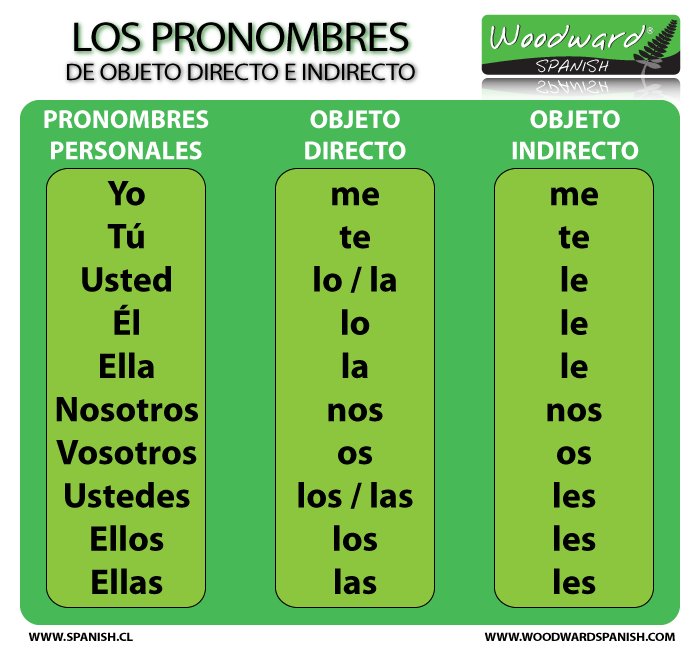
Spanish has more pronoun varieties than English, and they work by different rules. English keeps the subject-verb-object structure stable and pronouns in their slots ("I see him," "he sees me"). Spanish places object pronouns before a conjugated verb, attached to infinitives and gerunds, and has an extra reflexive set for actions that turn back on the subject. Getting pronouns right is what separates halting from flowing Spanish.
This reference covers the four functional categories - subject pronouns, direct-object pronouns, indirect-object pronouns, and reflexive pronouns - their full forms, placement rules, and the order in which they appear when more than one meets in a sentence. For broader grammar, see the Spanish grammar rules guide. For verbs the pronouns attach to, see the Spanish verb conjugation system reference. For preposition-object pronouns in por/para contexts, see the Spanish por vs para reference.
Subject Pronouns
Table 1. Spanish subject pronouns.
| Person | Singular | Plural |
|---|---|---|
| 1st | yo | nosotros / nosotras |
| 2nd informal | tu | vosotros / vosotras (Spain) |
| 2nd formal | usted | ustedes |
| 3rd | el / ella | ellos / ellas |
Subject pronouns in Spanish are mostly optional because verb endings already mark person. They are used for emphasis, contrast, or disambiguation:
- Hablo espanol. I speak Spanish.
- Yo hablo espanol, pero ella no. I speak Spanish, but she doesn't.
Tu is informal singular. Usted is formal singular (grammatically third-person). In most of Latin America, vosotros has been replaced by ustedes for plural "you" of any formality. In Argentina, Uruguay, and parts of Central America, vos replaces tu (a phenomenon called voseo).
Direct Object Pronouns
Direct objects receive the verb's action directly.
Table 2. Direct object pronouns.
| Person | Singular | Plural |
|---|---|---|
| 1st | me | nos |
| 2nd informal | te | os (Spain) |
| 3rd / formal | lo / la | los / las |
Examples:
- Compre el libro. Lo compre. (I bought it.)
- Compre la revista. La compre. (I bought it.)
- Veo a Maria. La veo. (I see her.)
The "personal a" marks animate direct objects. Lo/los/la/las agree with the grammatical gender and number of the thing replaced. In Spain a widespread feature is leismo - using le instead of lo for male human direct objects (le vi instead of lo vi). Both are acceptable.
Indirect Object Pronouns
Indirect objects typically receive something (or are the beneficiary of the action).
Table 3. Indirect object pronouns.
| Person | Singular | Plural |
|---|---|---|
| 1st | me | nos |
| 2nd informal | te | os (Spain) |
| 3rd / formal | le | les |
Examples:
- Doy el libro a Maria. Le doy el libro. (I give the book to her.)
- Explique la leccion a los estudiantes. Les explique la leccion. (I explained the lesson to them.)
Spanish often redundantly doubles the indirect object with a clarifying prepositional phrase: Le doy el libro a Maria. (Literally: "To her I give the book to Maria.") This is standard, not redundant in the pejorative sense.
The le -> se Rule
When a third-person indirect object pronoun (le, les) appears before a third-person direct object pronoun (lo, la, los, las), the indirect pronoun changes to se:
- Wrong: Le lo doy.
- Right: Se lo doy. (I give it to him/her.)
This avoids the ugly sequence le lo / le la / les los. It also creates ambiguity (se could be him, her, them, or you formal), which is typically resolved by adding a el, a ella, a usted, etc.:
- Se lo doy a ella. I give it to her.
Reflexive Pronouns
Used with reflexive verbs (actions the subject performs on itself).
Table 4. Reflexive pronouns.
| Person | Singular | Plural |
|---|---|---|
| 1st | me | nos |
| 2nd informal | te | os (Spain) |
| 3rd / formal | se | se |
Forms match direct/indirect pronouns in 1st and 2nd person; differ only in 3rd where se is used for both singular and plural.
Common reflexive verbs:
- levantarse (to get oneself up): Me levanto temprano. I get up early.
- lavarse (to wash oneself): Nos lavamos las manos. We wash our hands.
- ponerse (to put on clothes / become): Se pone el abrigo. He puts on the coat.
- llamarse (to be called): Me llamo Ana. My name is Ana.
Reflexive for reciprocal meaning:
- Nos vemos manana. See you tomorrow (we see each other).
- Se abrazaron. They hugged each other.
Reflexive for unintentional events (se + indirect object):
- Se me cayo el vaso. The glass fell on me / I accidentally dropped the glass.
Pronoun Order: RID
When multiple pronouns appear, they follow a fixed order:
R - I - D: Reflexive, Indirect, Direct.
Table 5. Pronoun order examples.
| Situation | Formula | Example |
|---|---|---|
| Reflexive + direct | RE + DO | Me lo pongo. (I put it on myself.) |
| Indirect + direct | IO + DO | Te lo doy. (I give it to you.) |
| 3rd IO + 3rd DO | se + DO | Se lo doy. (I give it to her.) |
Remember: when both are third-person, le/les becomes se.
Pronoun Placement
Pronouns are placed in one of four positions:
Rule 1. Before a conjugated verb.
- Te veo. I see you.
- No me lo dijo. He didn't tell it to me.
Rule 2. Attached to an infinitive.
- Quiero verte. I want to see you.
- Voy a darselo. I'm going to give it to him.
Rule 3. Attached to a gerund (present participle).
- Esta buscandola. He is looking for her.
- Siguen diciendomelo. They keep telling it to me.
Rule 4. Attached to affirmative commands.
- Damelo. Give it to me.
- Levantate. Get up.
With negative commands the pronouns go before:
- No me lo des. Don't give it to me.
- No te levantes. Don't get up.
With infinitives and gerunds, pronouns can optionally go before the conjugated main verb instead of attached:
- Te lo quiero decir. = Quiero decirtelo.
- Me estoy banando. = Estoy banandome.
Pronouns After Prepositions
Object pronouns are not used after prepositions. Instead, Spanish uses a special set:
Table 6. Prepositional pronouns.
| Person | Form |
|---|---|
| 1st sg | mi (notice the accent to distinguish from mi "my") |
| 2nd sg informal | ti (no accent) |
| 3rd sg / formal | el, ella, usted, si (reflexive) |
| 1st pl | nosotros / nosotras |
| 2nd pl informal | vosotros / vosotras |
| 3rd pl / formal | ellos, ellas, ustedes, si (reflexive) |
Special form with con: conmigo, contigo, consigo (with me, with you, with oneself).
- Ven conmigo. Come with me.
- Habla contigo. He talks with you.
Common Reflexive Verbs List
Table 7. Frequent reflexive verbs.
| Verb | Meaning |
|---|---|
| levantarse | to get up |
| acostarse | to go to bed |
| bañarse | to bathe |
| ducharse | to shower |
| vestirse | to get dressed |
| lavarse | to wash oneself |
| cepillarse | to brush (teeth, hair) |
| peinarse | to comb |
| afeitarse | to shave |
| despertarse | to wake up |
| sentarse | to sit down |
| pararse | to stand up / stop |
| llamarse | to be called |
| sentirse | to feel |
| quejarse | to complain |
| atreverse | to dare |
| arrepentirse | to regret |
| irse | to leave / go away |
Some verbs change meaning when reflexive: ir (to go) vs irse (to leave); dormir (to sleep) vs dormirse (to fall asleep).
Common Mistakes Learners Make
- Forgetting le -> se. Le lo doy is ungrammatical.
- Wrong placement with affirmative commands. Me dalo is wrong; damelo is right (with accent to preserve stress).
- Missing accent marks when pronouns attach. Dime is fine; diciendolo needs an accent on diciendo-: diciendolo keeps stress where it was (on -cien-) so written with accent: diciendolo.
- Using subject pronouns for emphasis everywhere. Over-using yo, tu sounds unnatural. Use them only for contrast or clarity.
- Confusing direct and indirect in "gustar" constructions. Me gusta el libro - the book pleases me; me is indirect. Verbs like gustar, encantar, doler always use indirect pronouns.
- Leismo overcorrection. In Latin America leismo is not standard; use lo/la for direct objects of animate beings.
- Attaching pronouns to conjugated verbs. Tego lo is wrong; Lo tengo is right.
- Mixing reflexive with object pronouns without RID. Order always R-I-D.
Quick Reference
- Subject pronouns are often dropped.
- Direct object (what/whom): me, te, lo/la, nos, os, los/las.
- Indirect object (to/for whom): me, te, le, nos, os, les.
- Reflexive (oneself): me, te, se, nos, os, se.
- Order when stacked: Reflexive - Indirect - Direct.
- le + lo -> se lo.
- Placement: before conjugated verbs, attached to infinitives/gerunds/affirmative commands.
FAQ
Why do I keep seeing "se lo doy a el"?
Because se is ambiguous (could be him, her, them, formal you). Spanish adds "a + clarifier" to disambiguate. This is not redundant but standard clarification.
What is leismo and is it wrong?
Leismo is the use of le for a masculine direct-object human ("Le vi" = I saw him). It is the norm in central Spain and accepted by the Royal Spanish Academy for masculine human referents. Elsewhere, lo is preferred.
Do pronouns always attach to affirmative commands?
Yes. Damelo, Hablame, Vete. Accent marks are often added to preserve stress.
Are reflexive and reciprocal the same pronoun?
Yes, the form is the same, but meaning differs. Se lavan can mean they wash themselves (reflexive) or they wash each other (reciprocal). Context usually disambiguates.
Why does gustar take indirect pronouns?
Because gustar literally means "to be pleasing to." The thing liked is the subject; the person liking is an indirect object: Me gusta el cafe (coffee is pleasing to me).
Can I always put pronouns before the conjugated verb?
With conjugated verbs, yes (must). With infinitives and gerunds inside compound verbs, you have a choice: before the conjugated verb or attached to the infinitive/gerund.
What's the difference between dormir and dormirse?
Dormir = to sleep (be asleep). Dormirse = to fall asleep. The reflexive marks the change of state.
See Also
- Spanish grammar rules complete beginners guide
- Spanish verb conjugation system -AR -ER -IR reference
- Spanish verb conjugation guide: present tense
- Ser vs estar complete guide
- Spanish subjunctive mood reference
- Spanish por vs para usage reference
- Spanish gender of nouns reference
- Spanish past tense: preterite vs imperfect
Frequently Asked Questions
Why do I keep seeing 'se lo doy a el' with both se and a el?
Se is ambiguous (him, her, them, formal you), so Spanish adds a clarifying prepositional phrase. This doubling is standard, not redundant.
What is leismo and is it incorrect?
Leismo is using le for a masculine human direct object. The Royal Spanish Academy accepts it for masculine human referents, and it is the norm in central Spain. Elsewhere lo is preferred.
Do pronouns always attach to affirmative commands?
Yes. Damelo, Hablame, Vete. With negative commands, pronouns go before the verb: No me lo des.
Are reflexive and reciprocal pronouns the same?
The form is the same but meanings differ. Se lavan can mean they wash themselves or each other. Context disambiguates.
Why does gustar take indirect pronouns?
Because gustar means ‘to be pleasing to.’ The liked thing is grammatically the subject; the person liking is an indirect object.
Can I always put pronouns before the conjugated verb?
With conjugated verbs, yes. With compound verbs involving an infinitive or gerund you may either place pronouns before the conjugated verb or attach them to the infinitive/gerund.
What's the difference between dormir and dormirse?
Dormir is ‘to sleep’ (be asleep). Dormirse is ‘to fall asleep’ - the reflexive marks the change of state.