
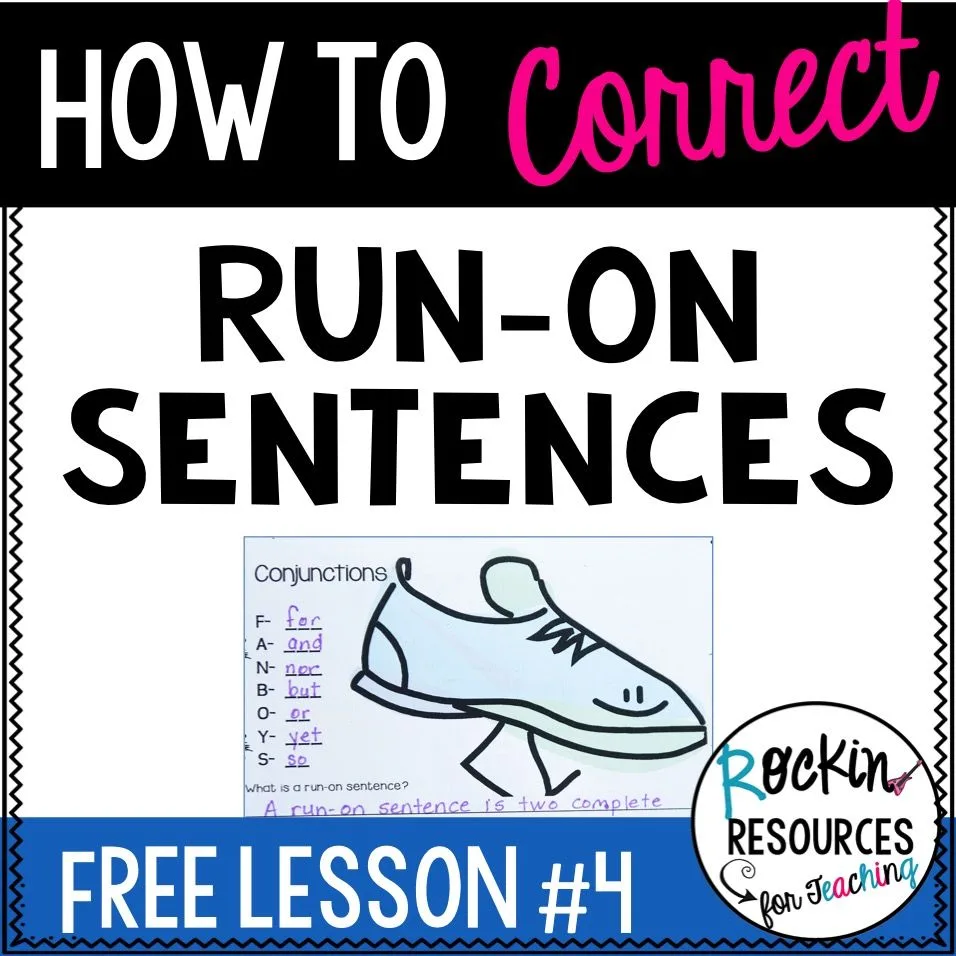
Run-on sentences are among the most common writing errors in English, appearing in student essays, professional emails, blog posts, and even published articles. A run-on sentence forces two or more complete thoughts together without the proper punctuation or conjunctions to connect them. The result is a sentence that confuses readers, obscures meaning, and undermines the writer's credibility.
The good news is that run-on sentences are straightforward to identify and fix once you understand what causes them. This guide covers everything you need to know: what run-on sentences are, how they differ from simply long sentences, the two types you will encounter, four reliable methods for fixing them, and practice exercises to sharpen your editing skills.
What Is a Run-On Sentence?
A run-on sentence occurs when two or more independent clauses are joined without appropriate punctuation or a conjunction. An independent clause is a group of words that contains a subject and a verb and expresses a complete thought. Each independent clause could stand alone as its own sentence.
When you push two independent clauses together without properly connecting them, you create a run-on sentence.
Run-on: The meeting started late the projector was broken.
This sentence contains two independent clauses: "The meeting started late" and "the projector was broken." Each one has a subject, a verb, and a complete thought. Joining them without punctuation or a conjunction creates a run-on.
Not a run-on: The extremely detailed and thoroughly researched report that the senior analyst prepared for the quarterly board meeting covered every aspect of the company's financial performance during the previous fiscal year.
This sentence is long, but it contains only one independent clause. Length does not make a sentence a run-on. Structure does.
Two Types of Run-On Sentences
Run-on sentences fall into two distinct categories: fused sentences and comma splices. Recognizing which type you tend to write helps you apply the correct fix more consistently.
Fused Sentences
A fused sentence joins two independent clauses with no punctuation at all. The two thoughts crash into each other with nothing separating them.
Examples of fused sentences:
- She finished the report she emailed it to her manager.
- The train was delayed we arrived an hour late.
- I enjoy hiking my brother prefers swimming.
- The restaurant was crowded we waited thirty minutes for a table.
- He studied all night he still failed the exam.
- The power went out the entire building was dark.
- They canceled the flight passengers were stranded at the airport.
- The dog barked loudly the neighbors complained.
Fused sentences are easier to spot than comma splices because the missing punctuation creates an obvious collision between ideas. When you read a fused sentence aloud, you naturally pause between the two clauses, revealing the point where punctuation is missing.
Comma Splices
A comma splice joins two independent clauses with only a comma. The comma is not strong enough to connect two complete thoughts on its own.
Examples of comma splices:
- She finished the report, she emailed it to her manager.
- The train was delayed, we arrived an hour late.
- I enjoy hiking, my brother prefers swimming.
- The restaurant was crowded, we waited thirty minutes for a table.
- He studied all night, he still failed the exam.
- The power went out, the entire building was dark.
- They canceled the flight, passengers were stranded at the airport.
- The dog barked loudly, the neighbors complained.
Comma splices are subtler and more common than fused sentences. Many writers use commas instinctively wherever they would naturally pause in speech, but a comma alone cannot join independent clauses. This is one of the most frequently made punctuation errors in English writing.
How to Tell the Difference
The distinction is simple: a fused sentence has no punctuation between the clauses, while a comma splice has a comma between them. Both are grammatically incorrect for the same reason - they fail to properly connect independent clauses.
| Type | What Happens | Example |
|---|---|---|
| Fused sentence | No punctuation between clauses | The door was open the cat escaped. |
| Comma splice | Only a comma between clauses | The door was open, the cat escaped. |
Why Run-On Sentences Happen
Understanding why run-on sentences occur helps you prevent them in future writing.
Writing Too Quickly
When ideas flow fast, writers often push sentences together without pausing to consider punctuation. First drafts are especially prone to run-on sentences because the writer focuses on capturing ideas rather than refining grammar. This is normal and expected. The problem arises only when run-ons survive into the final draft.
Confusing Length with Correctness
Some writers believe that short sentences are "better" and avoid periods because they do not want their writing to feel choppy. They string clauses together with commas, creating comma splices in an attempt to achieve a smoother flow. The solution is not to avoid periods but to learn how to use semicolons, conjunctions, and subordination to vary sentence length properly.
Mistaking Conjunctive Adverbs for Conjunctions
Words like "however," "therefore," "meanwhile," and "furthermore" look and feel like conjunctions, but they are not. They cannot join independent clauses with only a comma the way coordinating conjunctions can. Writing "The project was delayed, however the team met the revised deadline" creates a comma splice.
Not Recognizing Independent Clauses
Some writers struggle to identify where one independent clause ends and another begins. If you cannot reliably spot independent clauses, you cannot punctuate them correctly. The test is simple: can the group of words stand alone as a complete sentence? If yes, it is an independent clause.
Four Methods to Fix Run-On Sentences
Every run-on sentence can be fixed using one of four methods. Each method produces a grammatically correct result, but each creates a slightly different effect in terms of emphasis, flow, and relationship between the ideas.
Method 1 - Use a Period
The simplest fix is to separate the independent clauses into two sentences with a period.
| Run-On | Fixed with a Period |
|---|---|
| The meeting started late the projector was broken. | The meeting started late. The projector was broken. |
| She loves coffee, he prefers tea. | She loves coffee. He prefers tea. |
| The train was delayed we took a taxi instead. | The train was delayed. We took a taxi instead. |
| It was raining, they canceled the picnic. | It was raining. They canceled the picnic. |
When to use this method: Use a period when the two ideas are related but do not need to appear in the same sentence. This method works well when you want to give each idea its own emphasis. It is also the safest choice when you are unsure which other method is most appropriate.
Effect on writing: Periods create a full stop that gives each thought equal weight. Short, separate sentences can feel punchy and authoritative. However, using only periods to fix every run-on can make your writing feel choppy if many short sentences appear in a row.
Method 2 - Use a Semicolon
A semicolon connects two closely related independent clauses without a conjunction. It signals that the two thoughts are more connected than a period would suggest but still need a boundary between them.
| Run-On | Fixed with a Semicolon |
|---|---|
| The meeting started late the projector was broken. | The meeting started late; the projector was broken. |
| She loves coffee, he prefers tea. | She loves coffee; he prefers tea. |
| The train was delayed we took a taxi instead. | The train was delayed; we took a taxi instead. |
| It was raining, they canceled the picnic. | It was raining; they canceled the picnic. |
When to use this method: Use a semicolon when the two independent clauses are closely related and you want to emphasize that connection. The ideas should be balanced in importance and clearly linked in meaning.
Effect on writing: Semicolons create a sophisticated pause that implies a relationship between the two clauses. They work especially well with contrasting or parallel ideas. Use them sparingly because overuse makes writing feel pretentious.
Semicolons with conjunctive adverbs: You can also pair a semicolon with a conjunctive adverb for more precision.
- The meeting started late; consequently, the agenda was shortened.
- She loves coffee; however, he prefers tea.
- The train was delayed; therefore, we took a taxi instead.
Method 3 - Use a Comma and Coordinating Conjunction
Add a comma followed by one of the seven coordinating conjunctions: for, and, nor, but, or, yet, so (remembered with the acronym FANBOYS).
| Run-On | Fixed with Comma + Conjunction |
|---|---|
| The meeting started late the projector was broken. | The meeting started late, for the projector was broken. |
| She loves coffee, he prefers tea. | She loves coffee, but he prefers tea. |
| The train was delayed we took a taxi instead. | The train was delayed, so we took a taxi instead. |
| It was raining, they canceled the picnic. | It was raining, so they canceled the picnic. |
When to use this method: Use a comma and conjunction when you want to show a specific relationship between the clauses. Each conjunction signals a different relationship:
| Conjunction | Relationship | Example |
|---|---|---|
| for | reason/cause | She left early, for she had a long drive ahead. |
| and | addition | The sun was setting, and the temperature began to drop. |
| nor | negative addition | He did not call, nor did he send an email. |
| but | contrast | The plan was ambitious, but the team executed it perfectly. |
| or | alternative | We can meet tomorrow, or we can schedule a call for Friday. |
| yet | contrast/surprise | The task seemed simple, yet it took three hours to complete. |
| so | result | The deadline was extended, so the team had time to revise. |
Effect on writing: Comma-plus-conjunction creates a smooth connection between ideas and is the most natural-sounding fix in many cases. It works well in both formal and informal writing.
Method 4 - Use Subordination
Convert one of the independent clauses into a dependent clause by adding a subordinating conjunction. This method changes the relationship between the clauses, making one idea grammatically dependent on the other.
| Run-On | Fixed with Subordination |
|---|---|
| The meeting started late the projector was broken. | The meeting started late because the projector was broken. |
| She loves coffee, he prefers tea. | Although she loves coffee, he prefers tea. |
| The train was delayed we took a taxi instead. | Since the train was delayed, we took a taxi instead. |
| It was raining, they canceled the picnic. | Because it was raining, they canceled the picnic. |
Common subordinating conjunctions:
| Category | Subordinating Conjunctions |
|---|---|
| Cause/Reason | because, since, as, due to the fact that |
| Contrast | although, though, even though, whereas, while |
| Condition | if, unless, provided that, as long as |
| Time | when, whenever, before, after, until, while, as soon as |
| Purpose | so that, in order that |
When to use this method: Use subordination when one idea is more important than the other. The main clause carries the primary message, while the subordinate clause provides supporting context. This method adds variety to your sentence structure and creates more complex, sophisticated prose.
Effect on writing: Subordination creates hierarchical relationships between ideas, making your writing feel more nuanced and analytical. It is especially effective in academic and professional writing where you need to explain causes, conditions, and qualifications.
Punctuation note: When the dependent clause comes first, follow it with a comma. When the independent clause comes first, you usually do not need a comma.
- Because it was raining, they canceled the picnic. (comma after the dependent clause)
- They canceled the picnic because it was raining. (no comma needed)
How to Choose the Best Fix
All four methods produce correct sentences, but the best choice depends on your purpose and the effect you want to create.
| Goal | Best Method |
|---|---|
| Give each idea equal, separate emphasis | Period |
| Show a close connection between balanced ideas | Semicolon |
| Specify the relationship (addition, contrast, result) | Comma + conjunction |
| Make one idea primary and the other secondary | Subordination |
| Create variety in sentence structure | Mix all four methods |
In practice, strong writers use all four methods throughout a piece, varying their approach to create rhythm and maintain reader interest. A paragraph that uses only periods feels choppy. One that uses only subordination feels dense. The best writing blends all four approaches.
How to Spot Run-On Sentences in Your Writing
Identifying run-on sentences in your own work requires a deliberate editing process. Here are proven strategies for catching them.
Read Aloud
Reading your work aloud is the single most effective strategy for finding run-on sentences. When you read silently, your brain autocorrects errors. When you read aloud, your voice naturally pauses where punctuation should appear. If you find yourself pausing in the middle of a sentence where there is no punctuation, you may have found a run-on.
Look for Pronoun Shifts
Run-on sentences often occur where the subject changes. Scan your sentences for points where a new pronoun (he, she, they, we, it) appears. Each new subject suggests the start of a new clause, and each new clause needs proper punctuation.
Run-on: The manager reviewed the proposal she approved it immediately.
The shift from "manager" to "she" marks the boundary between two independent clauses.
Check After Conjunctive Adverbs
Whenever you see "however," "therefore," "furthermore," "meanwhile," "consequently," or similar words after a comma, check whether two independent clauses are involved. If so, you need a semicolon before the conjunctive adverb, not a comma.
Comma splice: The data was clear, therefore the committee made its decision.
Correct: The data was clear; therefore, the committee made its decision.
Use the Period Test
If you suspect a sentence is a run-on, try splitting it at the point where you think the clauses meet. If both halves can stand alone as complete sentences, you have found two independent clauses that need proper connection.
Test sentence: The budget was approved the project began immediately.
- Half 1: The budget was approved. (Complete sentence? Yes.)
- Half 2: The project began immediately. (Complete sentence? Yes.)
- Result: This is a fused sentence. Fix it.
Watch for Sentences Over 30 Words
While length does not define a run-on, very long sentences deserve extra scrutiny. Scan any sentence that exceeds roughly 30 words to confirm that all clauses are properly connected. Long sentences are more likely to contain hidden run-ons because the writer's attention drifts as the sentence grows.
Sentences That Look Like Run-Ons but Are Not
Not every long or complex sentence is a run-on. The following structures are grammatically correct and should not be "fixed."
Compound Predicates
A sentence with a compound predicate has one subject performing two or more actions. This is not a run-on because there is only one independent clause.
Correct: She reviewed the document and submitted her feedback by noon.
One subject (she) performs two actions (reviewed and submitted). No run-on.
Complex Sentences with Dependent Clauses
Sentences with dependent clauses introduced by subordinating conjunctions are not run-ons, even when they are long.
Correct: Although the weather forecast predicted heavy rain, the outdoor ceremony proceeded as planned because the bride and groom had arranged a contingency tent.
This sentence has one independent clause and two dependent clauses, all properly connected.
Sentences with Semicolons
Properly used semicolons connect independent clauses without creating run-ons.
Correct: The first quarter exceeded expectations; the second quarter showed even stronger growth.
Exceptions - When Comma Splices Are Acceptable
In certain stylistic contexts, comma splices are used intentionally for effect. Professional writers and editors recognize these exceptions:
Short, Parallel Clauses
When clauses are very short, closely related, and parallel in structure, a comma splice can create a rhythmic, emphatic effect.
- I came, I saw, I conquered.
- The door opened, the lights flickered, the room fell silent.
- She ran, he followed, they disappeared.
Creative and Narrative Writing
Fiction writers sometimes use comma splices to create a sense of urgency, stream of consciousness, or rapid movement.
- The gun fired, the crowd scattered, the square emptied in seconds.
Important Caveat
These exceptions apply only to creative and stylistic writing. In academic essays, business reports, legal documents, and professional communications, comma splices are always considered errors. Do not use this stylistic license in formal contexts.
Practice Exercises
Exercise 1 - Identify the Run-On Type
Label each sentence as a fused sentence (FS), comma splice (CS), or correct (C).
- The exam was difficult many students failed.
- The exam was difficult, many students failed.
- The exam was difficult, and many students failed.
- She arrived early he arrived late.
- She arrived early; he arrived late.
- The car broke down, we had to walk home.
- Because the car broke down, we had to walk home.
- The movie was boring I fell asleep.
- The movie was boring, so I fell asleep.
- The results were surprising, they contradicted previous studies.
Answers:
- FS - Two independent clauses with no punctuation.
- CS - Two independent clauses joined by only a comma.
- C - Comma plus coordinating conjunction "and" properly joins the clauses.
- FS - Two independent clauses with no punctuation.
- C - Semicolon properly joins two related independent clauses.
- CS - Two independent clauses joined by only a comma.
- C - Subordinating conjunction "because" creates a dependent clause, properly attached.
- FS - Two independent clauses with no punctuation.
- C - Comma plus coordinating conjunction "so" properly joins the clauses.
- CS - Two independent clauses joined by only a comma.
Exercise 2 - Fix the Run-On Sentences
Fix each run-on sentence using the specified method.
- Period: The presentation was impressive the audience applauded.
- Semicolon: Customer complaints increased, management took action.
- Comma + conjunction: The software update was released users reported new bugs.
- Subordination: The roads were icy several accidents occurred.
- Your choice: She studied for weeks, she still did not feel prepared.
Sample answers:
- The presentation was impressive. The audience applauded.
- Customer complaints increased; management took action.
- The software update was released, and users reported new bugs.
- Because the roads were icy, several accidents occurred.
- Although she studied for weeks, she still did not feel prepared. (Or: She studied for weeks, yet she still did not feel prepared.)
Exercise 3 - Edit the Paragraph
The following paragraph contains four run-on sentences. Find and fix all of them.
"The company announced a new remote work policy, employees were excited about the change. The policy allows three remote days per week it also includes a stipend for home office equipment. Some managers expressed concerns about productivity, however most teams have adapted well. Overall the transition has been smooth the company plans to make the policy permanent next quarter."
Corrected version:
"The company announced a new remote work policy, and employees were excited about the change. The policy allows three remote days per week, and it also includes a stipend for home office equipment. Some managers expressed concerns about productivity; however, most teams have adapted well. Overall, the transition has been smooth, so the company plans to make the policy permanent next quarter."
Run-On Sentences in Different Writing Contexts
Academic Writing
Run-on sentences in academic writing often result from trying to pack too much information into a single sentence. Academic writers should pay special attention to sentences that contain multiple pieces of evidence or multiple claims.
Run-on: The study found a correlation between sleep and academic performance, students who slept more than seven hours scored higher on exams this finding aligns with previous research by Smith and Johnson.
Fixed: The study found a correlation between sleep and academic performance. Students who slept more than seven hours scored higher on exams, and this finding aligns with previous research by Smith and Johnson.
Business Writing
In business communications, run-on sentences create confusion about action items, deadlines, and responsibilities. When a reader cannot tell where one instruction ends and another begins, mistakes follow.
Run-on: Please review the attached report and send your feedback by Friday, the client meeting is scheduled for Monday we need to finalize everything before then.
Fixed: Please review the attached report and send your feedback by Friday. The client meeting is scheduled for Monday, so we need to finalize everything before then.
Creative Writing
Creative writers have more freedom with sentence structure, but run-on sentences should be an intentional choice rather than an accidental error. When used deliberately, they can create specific effects. When used accidentally, they are just mistakes.
Summary of Key Points
Run-on sentences join independent clauses without proper punctuation or conjunctions. They come in two forms: fused sentences (no punctuation) and comma splices (only a comma). Four methods fix every run-on: periods, semicolons, comma-plus-conjunction, and subordination. The best writers use all four methods to create varied, readable prose.
To catch run-on sentences in your writing, read aloud, look for pronoun shifts, check after conjunctive adverbs, and apply the period test. Remember that long sentences are not automatically run-ons, and short sentences can be. Focus on structure, not length. A related challenge is knowing when a short, incomplete structure is a problem or a deliberate choice - the guide on sentence fragments explores that line in detail.
With practice, identifying and fixing run-on sentences becomes automatic. Your writing will be clearer, your arguments stronger, and your professional image sharper.
Frequently Asked Questions
What is the difference between a run-on sentence and a long sentence?
A run-on sentence is not simply a long sentence. Length has nothing to do with whether a sentence is a run-on. A run-on sentence occurs when two or more independent clauses are joined without proper punctuation or a conjunction. A sentence can be fifty words long and be grammatically perfect if it uses correct punctuation and subordination.
Conversely, a sentence with just ten words can be a run-on if it fuses two independent clauses without a connector. The sentence I went to the store I bought milk is a short run-on. The key distinction is grammar, not length. Focus on whether each independent clause is properly connected rather than counting words when you proofread your writing.
Is a comma splice the same as a run-on sentence?
A comma splice is a specific type of run-on sentence. Run-on sentences fall into two categories: fused sentences and comma splices. A fused sentence joins two independent clauses with no punctuation at all, such as She studied hard she passed the exam. A comma splice joins two independent clauses with only a comma, such as She studied hard, she passed the exam.
Both are grammatically incorrect because a comma alone cannot join two complete thoughts. You need either a period, a semicolon, a comma plus a coordinating conjunction, or subordination to properly connect independent clauses. Recognizing which type of run-on you tend to write helps you apply the right fix consistently.
Why do run-on sentences matter in professional writing?
Run-on sentences undermine your credibility in professional contexts. In business emails, reports, and proposals, they signal carelessness and can confuse readers about your intended meaning.
When a manager reads a run-on sentence in your report, they may question the accuracy of your analysis if you cannot construct clear sentences. Run-on sentences also create legal risks in contracts and policies where precise meaning is essential.
Ambiguous sentence boundaries can lead to misinterpretation of terms and obligations.
In academic writing, run-on sentences lower grades and weaken your arguments. Readers lose track of your reasoning when clause boundaries are unclear. Clean sentence structure demonstrates clear thinking and professionalism across every writing context.