
Sentence variety is the difference between writing that holds attention and writing that puts readers to sleep. Strong writers use simple, compound, and complex sentences in a deliberate mix that matches the shape of their ideas. Simple sentences deliver impact.
Compound sentences balance equal claims. Complex sentences compress logical relationships into a single compact structure. Without complex sentences in your toolkit, every nuanced idea either spreads across multiple short sentences or collapses into vague summary.
This guide explains how complex sentences work, how to build them, and how to use them with control. You will find clear rules, side-by-side examples, comparison tables, a practice exercise with answers, three blockquoted tips, and a frequently asked questions section at the end. The approach is practical. Every pattern shown here is one that appears in real professional writing, from business reports to magazine features to technical analysis.
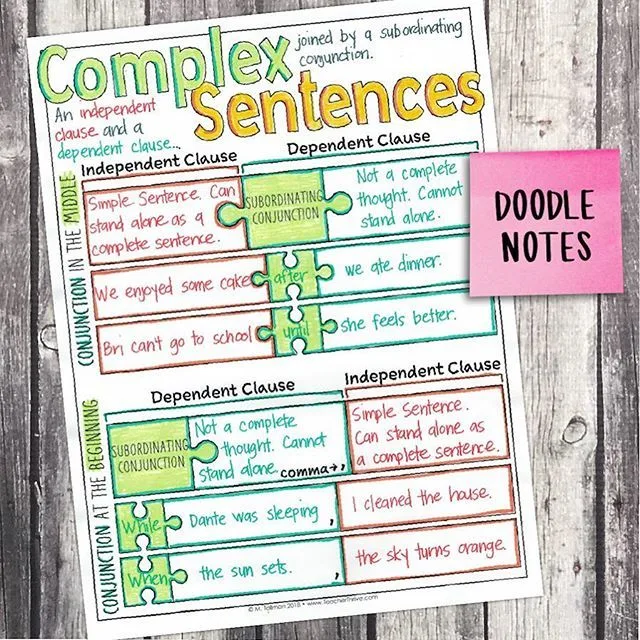
The term complex sentence sometimes scares writers because it sounds, well, complex. In grammar, the word simply refers to any sentence that combines one independent clause with at least one dependent clause. The structure is not inherently difficult. Once you see the parts, you can build as many as you want. The skill lies in keeping the pieces clear and in choosing when complexity serves the reader rather than showing off.
By the end of this article, you will be able to identify complex sentences at a glance, construct them with confidence, and decide when to use them versus when to rely on simple or compound alternatives. That ability alone can transform your prose from flat to rhythmic and from repetitive to expressive.
The Three Sentence Types
Every English sentence is built from clauses. A clause is a group of words with a subject and a verb. There are two kinds of clauses: independent and dependent.
An independent clause expresses a complete thought and can stand alone as a sentence. The team finished the project is an independent clause.
A dependent clause has a subject and a verb but cannot stand alone. It begins with a subordinating conjunction or a relative pronoun. Because the team finished the project is a dependent clause, even though it has a subject and a verb, because the word because leaves it hanging.
Sentences fall into three types based on how many clauses they contain and which kind.
| Sentence Type | Structure | Example |
|---|---|---|
| Simple | One independent clause | The team finished the project. |
| Compound | Two or more independent clauses joined by a coordinating conjunction | The team finished the project, and the client approved it. |
| Complex | One independent clause plus at least one dependent clause | Although the deadline was tight, the team finished the project. |
| Compound-complex | Two or more independent clauses plus at least one dependent clause | Although the deadline was tight, the team finished the project, and the client approved it. |
The bonus fourth type is worth knowing, but most complex-sentence skill lies in handling the basic complex pattern well.
What Makes a Sentence Complex
A complex sentence has two essential ingredients:
- One independent clause that expresses a complete thought.
- One or more dependent clauses that add context, condition, cause, contrast, or time.
The dependent clause is introduced by a subordinating conjunction or a relative pronoun. Subordinating conjunctions include because, although, since, if, when, while, after, before, until, unless, whereas, and even though. Relative pronouns include who, whom, which, that, whose, whoever, and whomever.
Examples of complex sentences:
- When the market cooled, revenues dropped by ten percent.
- Because the vendor missed the deadline, we switched suppliers.
- The proposal that you sent last Friday is under review.
- Although the pilot was small, the results were striking.
- If the budget is approved, we will hire two more engineers.
- The client who complained yesterday wants a refund.
- While the team was testing, a critical bug appeared.
- Unless we hear otherwise, we will proceed with the launch.
- The data suggests that the problem originates in the database.
- After he submitted the report, the executive team approved it.
Subordinating Conjunctions by Relationship
Different subordinating conjunctions signal different kinds of relationships. Picking the right one makes the logic of your sentence clear.
| Relationship | Subordinators | Example |
|---|---|---|
| Cause | because, since, as | The project stalled because the specs changed. |
| Condition | if, unless, provided that, in case | If the contract arrives today, we can sign tomorrow. |
| Concession | although, even though, though, despite the fact that | Although the budget was tight, we delivered on schedule. |
| Time | when, while, as, after, before, until, since | We began planning after the board approved the strategy. |
| Purpose | so that, in order that | The team stayed late so that the launch could happen on time. |
| Place | where, wherever | The data is stored where only authorized users can access it. |
| Comparison | as, than | The revenue grew faster than we expected. |
Each category has multiple subordinators, which lets you vary your word choice without changing the logic.
How to Build a Complex Sentence
Use this three-step method.
Step one: write the main idea as a simple sentence. This becomes your independent clause.
Step two: identify the secondary idea and its relationship to the main idea. Pick the subordinator that matches the relationship.
Step three: combine the two, putting the dependent clause either before or after the independent clause. Use a comma after an introductory dependent clause.
Example walkthrough:
Main idea: we delivered the project. Secondary idea: the deadline was tight. Relationship: concession.
Subordinator: although.
Combined: Although the deadline was tight, we delivered the project.
Or with the dependent clause second: We delivered the project, although the deadline was tight.
Both orders are grammatical. Leading with the dependent clause usually emphasizes the concession. Leading with the independent clause usually emphasizes the outcome.
Punctuation Rules
Complex sentences use two main punctuation patterns.
Pattern one: when the dependent clause comes first, follow it with a comma.
- Because the server went down, customers could not place orders.
- Although the results were strong, the team remained cautious.
- If you approve the plan, we will begin on Monday.
Pattern two: when the dependent clause comes second, no comma is needed, except in cases of contrast with although or though.
- Customers could not place orders because the server went down.
- The team remained cautious even though the results were strong.
- We will begin on Monday if you approve the plan.
When in doubt about comma placement, read the sentence aloud. A clear pause after an introductory clause usually signals that the comma belongs.
Relative clauses that modify nouns follow different rules. Restrictive clauses, which are essential to the meaning, do not take commas. Non-restrictive clauses, which add extra information, take commas on both sides.
- Restrictive: The proposal that you sent last Friday is under review.
- Non-restrictive: The proposal, which we all approved, is under review.
Compound Sentences for Contrast
A compound sentence joins two or more independent clauses with a coordinating conjunction.
Coordinating conjunctions: for, and, nor, but, or, yet, so. The acronym FANBOYS helps memorize them.
- The meeting ran long, so we ordered lunch.
- The proposal is strong, but the timing is wrong.
- Revenue grew, and margins improved.
- Either we launch now, or we miss the window.
- I was tired, yet I kept working.
Compound sentences imply that the two halves carry equal weight. They differ from complex sentences, which imply that one half depends on the other.
Comparison of the same pair of ideas expressed three ways:
- Simple: The meeting ran long. We ordered lunch.
- Compound: The meeting ran long, so we ordered lunch.
- Complex: Because the meeting ran long, we ordered lunch.
Each version is correct. The compound version emphasizes the connection between two equal events. The complex version emphasizes that the lunch order was a consequence.
Compound-Complex Sentences
A compound-complex sentence has two or more independent clauses and at least one dependent clause.
- Although the deadline was tight, the team delivered the project, and the client approved it immediately.
- If the vendor agrees, we will sign the contract, but we need the terms reviewed first.
- Because the results were strong, the board approved the expansion, and the CEO announced it at the town hall.
Compound-complex sentences pack a lot of information into one sentence. Use them when the ideas genuinely belong together. Avoid them when the ideas could stand alone without losing their connection.
Sentence Variety for Readability
Strong writers vary sentence length and structure paragraph by paragraph. A steady diet of long complex sentences feels dense. A steady diet of short simple sentences feels choppy. Mixing types produces natural rhythm.
Compare the two passages below.
Passage A (all complex):
Although the market has cooled, the team remained committed, which meant that the project continued on schedule, even as budget reviews intensified. Because the results were strong despite the pressure, the executives approved a second phase, although the timeline would need adjustment if conditions worsened. While the engineers iterated on the prototype, the product managers tracked metrics that indicated steady adoption.
Passage B (mixed):
The market has cooled. Still, the team remained committed. The project continued on schedule, even as budget reviews intensified. Because the results were strong despite the pressure, the executives approved a second phase. The timeline may need adjustment if conditions worsen. Meanwhile, the engineers iterated on the prototype. Metrics indicated steady adoption.
Passage B reads with more rhythm and emphasis. It uses complex sentences where they carry their weight and simple sentences where they land with impact.
Sentence variety is rhythm. Rhythm is how readers stay engaged. Without rhythm, even well-argued prose feels exhausting.
Common Mistakes When Writing Complex Sentences
The goal of complex sentences is clarity through compression, not decoration through length. Every extra clause must earn its place.
- Pilling up too many dependent clauses. Two dependent clauses in a row often produce sentences the reader cannot follow.
- Leaving dependent clauses as fragments. Because the meeting was canceled. is not a complete sentence on its own. It needs an independent clause.
- Missing commas after introductory clauses. If you miss this comma, readers stumble.
- Using weak subordinators. If a sentence sounds flat, you may have used because when while or although fits the logic better.
- Creating run-ons by stringing independent clauses without proper punctuation.
- Overusing that and which unnecessarily. Sometimes a simple sentence is clearer than a layered relative clause.
Common Sentence Patterns to Master
| Pattern | Template | Example |
|---|---|---|
| Concession | Although X, Y. | Although the test was small, the result was striking. |
| Cause | Because X, Y. | Because the data was clean, the analysis was straightforward. |
| Condition | If X, Y. | If the budget is approved, we will start in May. |
| Time | When X, Y. | When the system failed, the team responded within minutes. |
| Contrast | While X, Y. | While revenue grew, margins shrank. |
| Restrictive relative | The noun that clause. | The file that you sent is corrupted. |
| Non-restrictive relative | The noun, which clause, verb. | The file, which is ten megabytes, took an hour to upload. |
| Compound | X, but Y. | The plan is thorough, but the timing is risky. |
| Compound-complex | Although X, Y, and Z. | Although the deadline was tight, the team delivered, and the client was pleased. |
Use these templates consciously when you draft. Over time they become instinctive.
Self-Check Exercise
Combine each pair of sentences into one complex or compound sentence, using the relationship in parentheses.
- The budget was tight. The team delivered on schedule. (concession)
- The vendor missed the deadline. We terminated the contract. (cause)
- The market recovers. We will expand into Europe. (condition)
- The meeting ran long. We ordered lunch. (cause)
- The CEO approved the plan. The launch was announced. (time)
- The proposal is strong. The timing is wrong. (contrast)
- The results were promising. The board approved a second phase. (cause)
- You review the draft. I will finalize the slides. (simultaneous action)
- The client called. We were about to leave. (time)
- The system is slow. Users are complaining. (cause)
Sample answers:
- Although the budget was tight, the team delivered on schedule.
- We terminated the contract because the vendor missed the deadline.
- If the market recovers, we will expand into Europe.
- Because the meeting ran long, we ordered lunch.
- After the CEO approved the plan, the launch was announced.
- The proposal is strong, but the timing is wrong.
- Because the results were promising, the board approved a second phase.
- While you review the draft, I will finalize the slides.
- The client called as we were about to leave.
- Users are complaining because the system is slow.
FAQ
What is a complex sentence?
A complex sentence contains one independent clause and at least one dependent clause. The dependent clause begins with a subordinating conjunction such as because, although, if, or when, or with a relative pronoun such as who, which, or that.
What is the difference between a complex sentence and a compound sentence?
Compound sentences join two independent clauses with a coordinating conjunction and imply equal weight. Complex sentences pair an independent clause with a dependent clause and imply an unequal relationship such as cause, condition, or contrast.
How do I avoid run-on sentences when writing complex sentences?
Use commas after introductory dependent clauses, avoid stacking more than two or three clauses in one sentence, and read the sentence aloud to test its length. When in doubt, split the sentence into two.
How many clauses should a complex sentence have?
Two to three clauses produce the most readable sentences. Each additional clause raises reader load. Sentences with four or more clauses often need to be broken apart.
When should I use complex sentences instead of simple sentences?
Use complex sentences when two ideas have an unequal relationship. Use simple sentences for strong single points, for emphasis, and for breaks in longer passages. Mixing structures creates rhythm.
Can I start a sentence with because?
Yes. Starting with because is standard and common. Because the budget was tight, we cut the scope. is a perfectly correct complex sentence. The old rule against starting sentences with because referred to fragments, not complete sentences.
Is a compound-complex sentence too much?
Not if the ideas justify it. Compound-complex sentences pack a lot of information and work well in analytical writing. They become a problem only when they force readers to untangle too many pieces in one breath.
Conclusion
Complex sentences give writers the power to express logical relationships in a single compact structure. They reveal cause, condition, contrast, and time without forcing readers to reconstruct the connections on their own. Combined with simple and compound sentences, they create the rhythm that keeps readers engaged across long passages.
Practice the patterns in this guide until they feel natural. Build sentences from the three-step method when you find yourself struggling. Apply the punctuation rules consistently, and watch for overloaded sentences that need to be broken apart. Mix your sentence types on purpose so that every paragraph has varied pacing.
Writers who master complex sentences do not necessarily write longer. They write with more precision, because their sentences say exactly how ideas relate. That precision is the hallmark of professional writing, and it is within reach of any writer willing to practice the structures laid out here.
Author: Kalenux Team
Frequently Asked Questions
What is a complex sentence?
A complex sentence contains one independent clause and at least one dependent clause. An independent clause can stand alone as a complete sentence. A dependent clause cannot, because it begins with a subordinating conjunction such as because, although, if, when, while, since, or after.
For example, although the budget was tight, the team delivered the project on time combines a dependent clause and an independent clause into one complex sentence.
Complex sentences let writers express cause, condition, contrast, time, and concession within a single sentence rather than across two.
They are essential for analytical and argumentative writing, because they show the relationships between ideas in a compact form. Overusing short simple sentences produces choppy prose. Overusing long complex sentences produces dense prose. Mixing sentence types creates natural rhythm.
What is the difference between a complex sentence and a compound sentence?
A compound sentence joins two or more independent clauses with a coordinating conjunction such as and, but, or, nor, for, so, or yet. A complex sentence joins an independent clause with one or more dependent clauses. The meeting ran long, and we ordered lunch is compound because both clauses could stand alone. Because the meeting ran long, we ordered lunch is complex because the first clause cannot stand alone.
Compound sentences signal that two ideas share equal weight. Complex sentences signal that one idea depends on another. A compound-complex sentence combines both structures, using at least two independent clauses and at least one dependent clause. Mastering all three builds flexibility that simple sentences alone cannot provide.
How do I avoid run-on sentences when writing complex sentences?
Run-on sentences happen when two independent clauses fuse without proper punctuation or a connecting word. Complex sentences reduce the risk because they use subordinators that signal the dependent clause clearly. The pattern because X, Y or if X, Y already separates the two halves with a comma, so the connection is visible.
When you build longer complex sentences, keep the following rules in mind.
Use a comma after an introductory dependent clause. Avoid piling up more than two or three clauses in one sentence.
Break the sentence into two when the meaning becomes hard to follow. Read the sentence aloud. If you run out of breath, it is probably too long. Run-on sentences are a punctuation problem, while overly long complex sentences are a pacing problem, and both have the same cure: break the idea into clearer parts.
How many clauses should a complex sentence have?
The best complex sentences usually have two or three clauses in total. One independent clause paired with one dependent clause is the most common and most readable pattern. Adding a second dependent clause can work when the logic requires it, but each additional clause raises the cognitive load on the reader.
Sentences with four or more clauses tend to lose readers, even when the grammar is technically correct.
Professional writers typically mix clause counts across paragraphs. A short simple sentence follows a longer complex one for emphasis.
Two medium sentences of different structure flow better than three sentences of the same length. Match clause count to the complexity of the idea. Simple ideas do not need long sentences. Complicated ideas often benefit from controlled complexity.
When should I use complex sentences instead of simple sentences?
Use complex sentences when two ideas have an unequal relationship, such as cause and effect, condition and result, or contrast and concession. If the client approves the design, we can start development is a clear complex sentence because the development depends on the approval.
Two simple sentences would lose that logical link. Use simple sentences for single strong points, for emphasis, and for breaks in longer passages.
A short sentence after three long ones lands like a punch. Good writers blend the two.
Long analytical passages benefit from complex sentences that pack logic into compact structure. Narrative passages often benefit from simpler sentences that let events unfold in sequence. The right mix depends on the genre, the audience, and the density of the argument.