
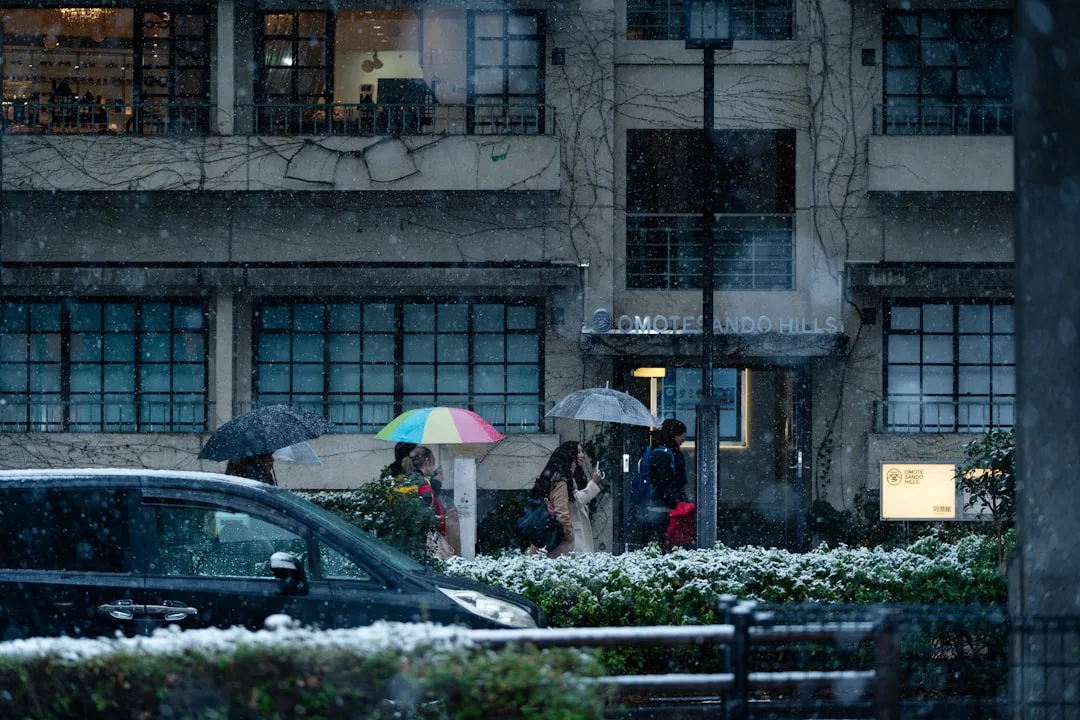
The four seasons (四季, shiki) hold a distinctive place in Japanese culture. From the waka poetry of the eighth century through contemporary packaging of seasonal snacks, Japanese arts, food, and conversation remain organized around the rhythm of spring, summer, autumn, and winter. The Japanese Weather vocabulary below is grouped by theme with transliteration and examples.
The language has developed a rich vocabulary of weather, seasonal phenomena, and nature that is deeply interwoven with aesthetics and etiquette. Small talk in Japan almost always begins with a weather observation, and formal letters open with a seasonal greeting chosen from a calendar of fixed phrases.
This reference catalogs the vocabulary of weather, the seasonal cycle, characteristic natural phenomena (cherry blossoms, typhoons, autumn leaves, and snow), and the greetings used to acknowledge the season. It also introduces related nature vocabulary for landforms, plants, and animals that appears frequently in travel, literature, and everyday speech. Cultural notes explain why particular seasonal elements carry the weight they do in Japanese life.
Vocabulary is given in kanji and hiragana, followed by Hepburn romaji and English.
Basic Weather Vocabulary
| Japanese | Romaji | English |
|---|---|---|
| 天気 | tenki | weather |
| 天気予報 | tenki yohou | weather forecast |
| 晴れ | hare | clear / sunny |
| 曇り | kumori | cloudy |
| 雨 | ame | rain |
| 大雨 | ooame | heavy rain |
| 小雨 | kosame | light rain |
| 雪 | yuki | snow |
| 大雪 | ooyuki | heavy snow |
| 吹雪 | fubuki | blizzard |
| 雷 | kaminari | thunder / lightning |
| 雷雨 | raiu | thunderstorm |
| 風 | kaze | wind |
| 強風 | kyoufuu | strong wind |
| 霧 | kiri | fog |
| 虹 | niji | rainbow |
| 湿度 | shitsudo | humidity |
| 気温 | kion | air temperature |
| 気候 | kikou | climate |
The word 天気 literally means "heaven's spirit" or "heavenly conditions" and is one of the oldest inherited compounds in the language.
Describing the Weather
Adjectives for weather follow the i-adjective and na-adjective patterns covered elsewhere in this series.
| Japanese | Romaji | English |
|---|---|---|
| 暑い | atsui | hot (weather) |
| 寒い | samui | cold (weather) |
| 暖かい | atatakai | warm |
| 涼しい | suzushii | cool / refreshing |
| 蒸し暑い | mushi atsui | humid and hot |
| 爽やか | sawayaka | refreshing (na-adj) |
| 肌寒い | hadazamui | chilly |
| 凍える | kogoeru | freezing (verb) |
| 湿っぽい | shimeppoi | damp |
| 乾燥している | kansou shite iru | dry |
Grammar note: 暑い and 熱い are both read "atsui" but written with different kanji. 暑い is used only for weather or feeling hot in the sense of ambient temperature. 熱い is for hot objects such as water, tea, and fire. The same distinction applies to 寒い (cold weather) versus 冷たい (cold object, such as iced water).
The Four Seasons
| Japanese | Romaji | English | Approximate Months |
|---|---|---|---|
| 春 | haru | spring | March - May |
| 夏 | natsu | summer | June - August |
| 秋 | aki | autumn | September - November |
| 冬 | fuyu | winter | December - February |
| 四季 | shiki | the four seasons | year-round concept |
The Japanese school year begins in April, which places the start of the academic calendar squarely in spring and associates cherry blossoms with new beginnings.
Spring (春, Haru)
Japanese spring is dominated by one cultural event: cherry blossom viewing.
| Japanese | Romaji | English |
|---|---|---|
| 春 | haru | spring |
| 桜 | sakura | cherry blossom |
| 花見 | hanami | flower viewing |
| 桜前線 | sakura zensen | cherry blossom front |
| 満開 | mankai | full bloom |
| 花吹雪 | hanafubuki | flower blizzard (falling petals) |
| 新学期 | shin gakki | new school term |
| 入学式 | nyuugakushiki | entrance ceremony |
| 入社式 | nyuushashiki | company entry ceremony |
| 春一番 | haru ichiban | first strong south wind of spring |
Cultural note: The 桜前線 is reported in daily news like a military front advancing northward from Kyushu to Hokkaido. Friends and coworkers coordinate 花見 parties based on the forecast. A sudden rain that knocks petals down before the gathering is called 花冷え (hana bie) or 花散らし (hana chirashi).
Related nature vocabulary for spring:
| Japanese | Romaji | English |
|---|---|---|
| 梅 | ume | plum blossom |
| 桃 | momo | peach blossom |
| 菜の花 | nanohana | rapeseed flower |
| チューリップ | chuurippu | tulip |
| たけのこ | takenoko | bamboo shoot |
| うぐいす | uguisu | bush warbler |
| つばめ | tsubame | swallow |
| 蝶々 | chouchou | butterfly |
Summer (夏, Natsu)
Japanese summer is hot, humid, and defined by festivals, fireworks, and the rainy season that opens it.
| Japanese | Romaji | English |
|---|---|---|
| 夏 | natsu | summer |
| 梅雨 | tsuyu | rainy season |
| 蒸し暑い | mushi atsui | humid and hot |
| 熱帯夜 | nettaiya | tropical night (over 25C overnight) |
| 猛暑日 | moushobi | extremely hot day (over 35C) |
| 夏祭り | natsu matsuri | summer festival |
| 花火 | hanabi | fireworks |
| 花火大会 | hanabi taikai | fireworks display |
| 浴衣 | yukata | summer kimono |
| 盆踊り | bon odori | Bon festival dance |
| お盆 | obon | Bon (ancestor festival) |
| 夏休み | natsu yasumi | summer vacation |
| 海水浴 | kaisuiyoku | ocean bathing |
| 蚊 | ka | mosquito |
| 蝉 | semi | cicada |
Cultural note: The sound of cicadas, especially the abura zemi and tsukutsukuboushi, is one of the strongest summer markers in the Japanese soundscape. Children's summer vacation homework sometimes includes recording or identifying cicada species.
Autumn (秋, Aki)
Autumn is associated with foliage, harvest, and a brief, highly valued cool interval between summer heat and winter cold.
| Japanese | Romaji | English |
|---|---|---|
| 秋 | aki | autumn |
| 紅葉 | kouyou / momiji | autumn foliage / maple |
| 紅葉狩り | momijigari | leaf viewing |
| 月見 | tsukimi | moon viewing |
| 十五夜 | juugoya | fifteenth night (harvest moon) |
| 台風 | taifuu | typhoon |
| 秋晴れ | aki bare | clear autumn sky |
| 秋風 | akikaze | autumn wind |
| 運動会 | undoukai | sports day (often held in autumn) |
| 文化祭 | bunkasai | cultural festival |
| 食欲の秋 | shokuyoku no aki | autumn of appetite |
| 読書の秋 | dokusho no aki | autumn of reading |
| 芸術の秋 | geijutsu no aki | autumn of the arts |
The phrases 食欲の秋, 読書の秋, and 芸術の秋 are fixed idioms pairing autumn with appetite, reading, and the arts, respectively, expressing the idea that the cool weather invites introspective and cultural activities.
Typhoon vocabulary is important during late summer and autumn:
| Japanese | Romaji | English |
|---|---|---|
| 台風 | taifuu | typhoon |
| 暴風 | boufuu | storm wind |
| 避難 | hinan | evacuation |
| 警報 | keihou | warning |
| 注意報 | chuuihou | advisory |
Winter (冬, Fuyu)
| Japanese | Romaji | English |
|---|---|---|
| 冬 | fuyu | winter |
| 雪 | yuki | snow |
| 雪景色 | yuki geshiki | snowy landscape |
| 氷 | koori | ice |
| 霜 | shimo | frost |
| つらら | tsurara | icicle |
| 雪だるま | yuki daruma | snowman |
| スキー | sukii | skiing |
| スケート | sukeeto | skating |
| こたつ | kotatsu | heated low table |
| 鍋料理 | nabe ryouri | hot pot cuisine |
| クリスマス | kurisumasu | Christmas |
| 大晦日 | oomisoka | New Year's Eve |
| お正月 | oshougatsu | New Year |
| 初日の出 | hatsuhinode | first sunrise of the year |
The kotatsu, a low table with an electric heater underneath and a quilt draped over, is a winter cultural icon. Family life in many regions shifts toward gathering around the kotatsu for meals, TV, and naps during the coldest months.
Seasonal Greetings
Japanese letter writing opens with a seasonal greeting that sets the tone before addressing the recipient. A small selection:
| Season | Greeting | Romaji | Meaning |
|---|---|---|---|
| early spring | 立春の候 | risshun no kou | in this season of the beginning of spring |
| late spring | 春暖の候 | shundan no kou | in this season of spring warmth |
| early summer | 初夏の候 | shoka no kou | in this early summer season |
| midsummer | 盛夏の候 | seika no kou | in this peak summer season |
| early autumn | 新秋の候 | shinshuu no kou | in this new autumn season |
| late autumn | 晩秋の候 | banshuu no kou | in this late autumn season |
| early winter | 初冬の候 | shotou no kou | in this early winter season |
| midwinter | 厳冬の候 | gentou no kou | in this severe winter season |
These phrases belong to the genre of formal business and personal letters and are rarely used in spoken conversation. Casual small-talk equivalents include:
- 暑くなりましたね (atsuku narimashita ne) - it has become hot, has it not
- 寒くなりましたね (samuku narimashita ne) - it has become cold, has it not
- 過ごしやすいですね (sugoshi yasui desu ne) - it is pleasant weather
Language note: The sentence-final particle ね in weather talk is essential. It signals shared experience and invites agreement. Saying 暑いです alone without ね sounds like an objective statement; with ね it is a social opening.
Nature and Landscape
| Japanese | Romaji | English |
|---|---|---|
| 山 | yama | mountain |
| 川 | kawa | river |
| 海 | umi | sea |
| 湖 | mizuumi | lake |
| 滝 | taki | waterfall |
| 森 | mori | forest |
| 林 | hayashi | woods |
| 谷 | tani | valley |
| 島 | shima | island |
| 田んぼ | tanbo | rice field |
| 畑 | hatake | (non-rice) field |
| 空 | sora | sky |
| 雲 | kumo | cloud |
| 星 | hoshi | star |
| 月 | tsuki | moon |
| 太陽 | taiyou | sun |
Japan's 富士山 (Fujisan, Mount Fuji) appears in seasonal compounds: 雪の富士 (yuki no fuji, snow-covered Fuji) in winter, 夏富士 (natsu fuji, summer Fuji) when the snow has melted.
Plants and Animals in Seasonal Poetry
The Japanese poetic tradition requires every haiku to include a 季語 (kigo, season word). A kigo immediately signals the season without stating it directly. Examples:
| Kigo | Japanese | Season |
|---|---|---|
| cherry blossom | 桜 | spring |
| frog | 蛙 (kaeru) | spring |
| cicada | 蝉 | summer |
| fireworks | 花火 | summer |
| moon | 月 | autumn |
| persimmon | 柿 (kaki) | autumn |
| snow | 雪 | winter |
| tangerine | 蜜柑 (mikan) | winter |
Poetic note: The most famous haiku in Japanese literature, Basho's 古池や蛙飛び込む水の音 (furuike ya kawazu tobikomu mizu no oto, "old pond, a frog jumps in, sound of water"), uses 蛙 (frog) as a spring kigo.
Common Mistakes
- Mixing 暑い and 熱い. 暑い describes weather; 熱い describes objects.
- Saying 寒い for cold objects. The correct word for a cold object, drink, or surface is 冷たい (tsumetai).
- Using 春 as a simple calendar month. 春 refers to the cultural-climatic season, which runs roughly March to May; it is not interchangeable with 三月 (March).
- Omitting ね in weather small talk. Weather comments without ね can sound flat or oddly declarative.
- Using 梅雨 to mean "any long rain". 梅雨 specifically names the early-summer rainy season and is not used for autumn or winter rain periods.
- Confusing 風 (wind, kaze) with 風邪 (cold illness, kaze). The two share the same sound in isolation but use different kanji and different sentence contexts.
Quick Reference
- Weather: 天気 (tenki)
- Forecast: 天気予報 (tenki yohou)
- Sunny / cloudy / rainy: 晴れ / 曇り / 雨
- Hot / cold: 暑い / 寒い
- Spring / summer / autumn / winter: 春 / 夏 / 秋 / 冬
- Four seasons: 四季 (shiki)
- Cherry blossom: 桜 (sakura)
- Rainy season: 梅雨 (tsuyu)
- Typhoon: 台風 (taifuu)
- Autumn foliage: 紅葉 (kouyou)
- Snow: 雪 (yuki)
- How is the weather: 天気はどうですか (tenki wa dou desu ka)
See Also
- Japanese Days, Months, and Time Expressions
- Japanese Colors and Descriptive Adjectives
- Japanese Onomatopoeia: Giongo and Gitaigo
- Japanese Common Phrases: Daily Conversation Reference
- Japanese Kanji: Stroke Order, Radicals, Reading
- Hiragana Complete Guide
- Japanese Grammar Particles: Complete Guide
Frequently Asked Questions
What are the Japanese words for the four seasons?
The four seasons are 春 (haru) spring, 夏 (natsu) summer, 秋 (aki) autumn, and 冬 (fuyu) winter. The compound 四季 (shiki) means ‘the four seasons’ as a single concept and is central to Japanese aesthetics, poetry, and cuisine.
How do I say 'it is hot' or 'it is cold'?
暑い (atsui) is ‘hot’ for weather; 熱い (atsui) is ‘hot’ for objects or liquids. The kanji differs but the sound is identical. 寒い (samui) is ‘cold’ for weather and is written with a different kanji from 冷たい (tsumetai), which describes cold objects or liquids.
Why is cherry blossom season so culturally important?
桜 (sakura, cherry blossom) blooms for only about a week in each region and has become the defining symbol of Japanese spring and of impermanence. 花見 (hanami, flower viewing) gatherings under cherry trees have been practiced for over a thousand years. News programs broadcast daily 桜前線 (sakura zensen, cherry blossom front) updates tracking the bloom from south to north.
What is 梅雨 and when does it occur?
梅雨 (tsuyu) is the rainy season that occurs between roughly early June and mid-July in most of Japan. It is marked by prolonged light rain and high humidity. Business wardrobes shift for the duration, and mold prevention becomes a household concern. Hokkaido in the far north does not have a distinct 梅雨.
What is the difference between 雪 and 吹雪?
雪 (yuki) is snow in general. 吹雪 (fubuki) is a blizzard or driving snow. Other related words include 大雪 (ooyuki, heavy snow), 小雪 (koyuki, light snow), and 粉雪 (konayuki, powder snow). Japanese has developed a rich vocabulary for snow conditions because of the heavy snows of the Sea of Japan side of the country.
Are seasonal greetings used in business letters?
Yes. Japanese business correspondence opens with a seasonal greeting (時候の挨拶, jikou no aisatsu) that acknowledges the current season, such as 春暖の候 (shundan no kou, ‘in this season of spring warmth’). These phrases are fixed and selected from a seasonal calendar rather than composed freshly each time.
How do I ask 'how is the weather'?
天気はどうですか (tenki wa dou desu ka) means ‘how is the weather’. For a forecast: 天気予報は何ですか (tenki yohou wa nan desu ka). Small-talk weather phrases such as 今日は暑いですね (kyou wa atsui desu ne, ‘hot today, is it not’) are a standard conversation opener in Japan.