
Color vocabulary in Japanese sits at an unusual grammatical crossroads. Japanese has two distinct classes of adjectives, called i-adjectives and na-adjectives, and the core color words are distributed across both classes.
Moreover, several color words exist as nouns in parallel to their adjectival forms, and some colors straddle semantic ranges that do not line up with English categories. The most famous example is 青 (ao), traditionally meaning both "blue" and "green" in compounds preserved from older Japanese, and still used today for green traffic signals.
This reference explains how color words work grammatically, gives the full inventory of common Japanese colors, demonstrates conjugation of color adjectives in all four polarity and tense combinations, and closes with cultural notes about color symbolism. Along the way it reviews Japanese adjective conjugation in general, since colors are an ideal entry point into the larger grammar of description.
All entries are in kanji and kana, followed by Hepburn romaji and English. Adjective conjugations are given in both polite and plain forms where they differ.
Japanese Adjective Classes
Japanese has two adjective classes:
- I-adjectives (形容詞, keiyoushi) end in い and conjugate directly for tense and polarity.
- Na-adjectives (形容動詞, keiyou doushi) behave more like nouns and require な when attached to a following noun; they conjugate with the copula です / だ.
Four basic colors are native i-adjectives: 赤い, 青い, 白い, 黒い. Two more form i-adjectives with 色 attached: 黄色い, 茶色い. All other color words are na-adjectives or nouns.
Historical note: The four native i-adjective colors (赤, 青, 白, 黒) are the oldest stratum of Japanese color vocabulary and correspond to a basic four-color palette recognized in early written records. Every other color label, including 緑 (green) and 紫 (purple), is historically newer and enters the grammar as a noun or na-adjective.
Core Color Vocabulary
| Japanese | Romaji | English | Adjective Form |
|---|---|---|---|
| 赤 | aka | red (noun) | 赤い (akai) - i-adj |
| 青 | ao | blue (noun) | 青い (aoi) - i-adj |
| 白 | shiro | white (noun) | 白い (shiroi) - i-adj |
| 黒 | kuro | black (noun) | 黒い (kuroi) - i-adj |
| 黄色 | kiiro | yellow (noun) | 黄色い (kiiroi) - i-adj |
| 茶色 | chairo | brown (noun) | 茶色い (chairoi) - i-adj |
| 緑 | midori | green | used as noun / na-adj |
| 紫 | murasaki | purple | used as noun / na-adj |
| 灰色 | haiiro | gray | used as noun |
| オレンジ | orenji | orange | na-adj / noun |
| ピンク | pinku | pink | na-adj / noun |
| 水色 | mizuiro | light blue (water color) | noun |
| 金色 | kin'iro | gold | noun |
| 銀色 | gin'iro | silver | noun |
| 肌色 | hada iro | skin tone | noun |
| 桃色 | momoiro | peach / pink | noun |
| 銀 | gin | silver | noun |
| 金 | kin | gold | noun |
Many color nouns contain 色 (iro), which literally means "color". 水色 (mizuiro) is "water-color", i.e., light blue; 桃色 (momoiro) is "peach-color", i.e., pink.
Using Colors as Nouns vs Adjectives
Compare:
| Japanese | English | Structure |
|---|---|---|
| 赤が好きです | aka ga suki desu | I like red |
| 赤い車 | akai kuruma | a red car |
| 緑が好きです | midori ga suki desu | I like green |
| 緑の車 | midori no kuruma | a green car |
| ピンクが好きです | pinku ga suki desu | I like pink |
| ピンクの靴 | pinku no kutsu | pink shoes |
Because 緑 and ピンク are not i-adjectives, they attach to nouns with の (not な) in most natural speech. Some formal writing uses 緑の and 緑な interchangeably; the の form is safer.
Learning note: When in doubt, attach の. For colors that are not the six basic i-adjectives (赤, 青, 白, 黒, 黄色, 茶色), treating them as nouns with の always produces acceptable Japanese.
I-Adjective Conjugation: Full Table for 赤い
The i-adjective 赤い conjugates predictably. All other i-adjective colors follow the same pattern.
| Form | Japanese | Romaji | English |
|---|---|---|---|
| Dictionary (non-past +) | 赤い | akai | is red |
| Non-past negative | 赤くない | akakunai | is not red |
| Past + | 赤かった | akakatta | was red |
| Past negative | 赤くなかった | akaku nakatta | was not red |
| Polite non-past + | 赤いです | akai desu | is red (polite) |
| Polite non-past - | 赤くないです | akakunai desu | is not red (polite) |
| Polite past + | 赤かったです | akakatta desu | was red (polite) |
| Polite past - | 赤くなかったです | akaku nakatta desu | was not red (polite) |
| Te-form (connecting) | 赤くて | akakute | red and ... |
| Adverbial | 赤く | akaku | redly / red |
Example sentences:
- この車は赤いです (kono kuruma wa akai desu) - this car is red
- その車は赤くないです (sono kuruma wa akakunai desu) - that car is not red
- 去年の車は赤かった (kyonen no kuruma wa akakatta) - last year's car was red
- このトマトは赤くて甘い (kono tomato wa akakute amai) - this tomato is red and sweet
Grammar note: Japanese i-adjectives conjugate without the copula, unlike in English where the verb "to be" carries tense. 赤い alone means "is red" and 赤かった alone means "was red"; adding です only raises the politeness level without changing the underlying tense.
Na-Adjective Conjugation: Full Table for 緑
| Form | Japanese | Romaji | English |
|---|---|---|---|
| Dictionary | 緑 | midori | green (na-adj base) |
| Before noun | 緑の / 緑な | midori no / midori na | green (attributive) |
| Polite non-past + | 緑です | midori desu | is green |
| Polite non-past - | 緑じゃありません | midori ja arimasen | is not green |
| Polite past + | 緑でした | midori deshita | was green |
| Polite past - | 緑じゃありませんでした | midori ja arimasen deshita | was not green |
| Te-form | 緑で | midori de | green and ... |
| Adverbial | 緑に | midori ni | greenly / green |
The attributive of 緑 is usually 緑の in modern Japanese, which treats the color word as a noun. 緑な appears in poetic registers. Other na-adjective colors like ピンク and オレンジ almost always take の.
Light, Dark, and Modifier Prefixes
| Prefix | Meaning | Example |
|---|---|---|
| 薄- (usu-) | pale, light | 薄い青 (usui ao) - pale blue |
| 濃- (koi-) | deep, dark | 濃い青 (koi ao) - dark blue |
| 明るい- (akarui) | bright | 明るい緑 (akarui midori) - bright green |
| 暗い- (kurai) | dark | 暗い赤 (kurai aka) - dark red |
| 鮮やか (azayaka) | vivid | 鮮やかな紫 (azayaka na murasaki) - vivid purple |
Note that 薄い and 濃い are i-adjectives themselves, so they inflect normally: 薄かった (was pale), 濃くない (is not dark).
Traffic Light Green and the Blue-Green Boundary
The Japanese color word 青 historically covered a range from blue through green. The green of fresh vegetation is 青葉 (aoba), "blue leaf". An unripe apple can be 青いリンゴ (aoi ringo), "blue apple", even though its color is green in English.
| Compound | Reading | Literal | Actual English |
|---|---|---|---|
| 青信号 | ao shingou | blue signal | green traffic light |
| 青葉 | aoba | blue leaf | green foliage |
| 青野菜 | aoyasai | blue vegetable | green vegetable |
| 青りんご | ao ringo | blue apple | green apple |
| 青田 | aoda | blue rice field | green (pre-harvest) rice field |
Etymology note: Old Japanese had only four basic color terms (red, blue, white, black), and the color range of blue absorbed green. When the word 緑 (midori) rose to prominence, it did not retroactively replace 青 in these established compounds. Today, Japanese law even specifies that the go signal is "blue" even though the actual lamp emits green-wavelength light.
Compound Color Words
Japanese compounds colors with nouns to create shades.
| Japanese | Romaji | English |
|---|---|---|
| 空色 | sorairo | sky blue |
| 海色 | umiiro | sea color |
| 桃色 | momoiro | peach (pink) |
| 桜色 | sakurairo | cherry blossom pink |
| 藤色 | fujiiro | wisteria purple |
| 山吹色 | yamabukiiro | bright golden yellow |
| 朱色 | shuiro | vermilion |
| 紺色 | kon'iro | navy blue |
| 群青 | gunjou | ultramarine |
| 若葉色 | wakabairo | young-leaf green |
| 抹茶色 | matchairo | matcha green |
Many of these are traditional color names used in fashion, art, and literature.
Basic Descriptive Adjectives
Beyond color, a small set of high-frequency adjectives describe size, quality, and feeling.
| Japanese | Romaji | English | Class |
|---|---|---|---|
| 大きい | ookii | big | i-adj |
| 小さい | chiisai | small | i-adj |
| 長い | nagai | long | i-adj |
| 短い | mijikai | short | i-adj |
| 高い | takai | tall / expensive | i-adj |
| 低い | hikui | low | i-adj |
| 新しい | atarashii | new | i-adj |
| 古い | furui | old (object) | i-adj |
| 良い | yoi / ii | good | i-adj (irregular) |
| 悪い | warui | bad | i-adj |
| 美しい | utsukushii | beautiful | i-adj |
| 綺麗 | kirei | beautiful / clean | na-adj |
| 元気 | genki | healthy / energetic | na-adj |
| 静か | shizuka | quiet | na-adj |
| 賑やか | nigiyaka | lively | na-adj |
| 大切 | taisetsu | important / precious | na-adj |
| 便利 | benri | convenient | na-adj |
The adjective いい (ii, good) is irregular. Its stem is よ-, so past forms are よかった (yokatta, was good), not いかった. The negative is よくない (yokunai, not good).
Connecting Descriptions with Te-Form
To combine two adjectives, use the te-form.
| Adjective | Te-form | Example |
|---|---|---|
| 赤い | 赤くて | 赤くて小さい (akakute chiisai, red and small) |
| 青い | 青くて | 青くて綺麗 (aokute kirei, blue and pretty) |
| 綺麗 | 綺麗で | 綺麗で静か (kirei de shizuka, pretty and quiet) |
| 元気 | 元気で | 元気で親切 (genki de shinsetsu, energetic and kind) |
The te-form of i-adjectives replaces い with くて. The te-form of na-adjectives adds で. The last adjective in the sequence carries tense.
Cultural Color Associations
| Color | Traditional Meaning |
|---|---|
| 赤 (aka) | vitality, celebration, protection against evil |
| 白 (shiro) | purity, the sacred, ritual cleanliness |
| 黒 (kuro) | formality, mourning (modern), mystery |
| 青 (ao) | youth, freshness, calm |
| 紫 (murasaki) | nobility, historical high rank |
| 金 (kin) | wealth, preciousness, divinity |
| 緑 (midori) | nature, health, new growth |
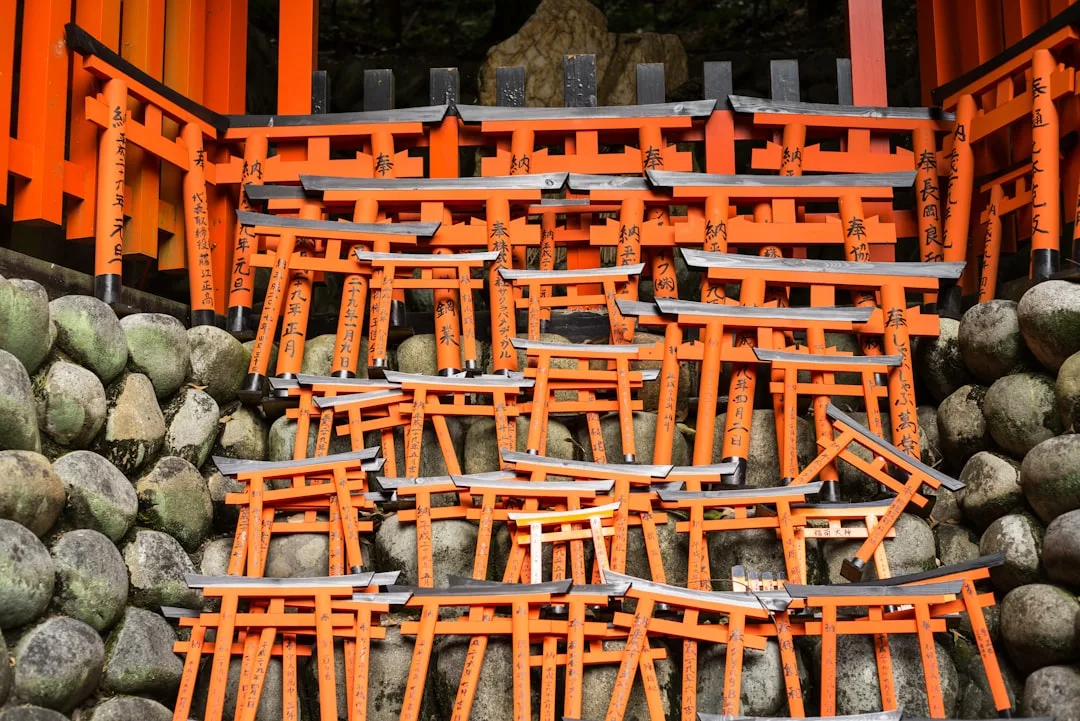
The Japanese flag is a red sun on a white field, named 日の丸 (hi no maru, the circle of the sun). Red and white appear together as celebratory colors, for example in the red-and-white curtains at festivals and weddings.
Common Mistakes
- Saying "aoi no kuruma" instead of "aoi kuruma". I-adjectives attach directly to nouns without の: 青い車.
- Using な with basic color i-adjectives. 赤な車 is wrong; it must be 赤い車.
- Forgetting to conjugate the adjective for past tense. "The car was red" is 車は赤かった, not 車は赤いでした.
- Confusing 青 with 緑 in fixed compounds. 青信号 is the correct term for a green light; 緑信号 sounds foreign or overly literal.
- Using いいかった. The past of いい is よかった because the underlying stem is よ-.
- Using の after 赤 when a noun is needed. When 赤 is used as a noun (color name), の may follow; when used as an adjective, 赤い directly precedes the noun.
Quick Reference
- Red: 赤い (akai) / 赤 (aka)
- Blue: 青い (aoi) / 青 (ao)
- White: 白い (shiroi) / 白 (shiro)
- Black: 黒い (kuroi) / 黒 (kuro)
- Yellow: 黄色い (kiiroi) / 黄色 (kiiro)
- Green: 緑 (midori)
- Purple: 紫 (murasaki)
- Pink: ピンク (pinku)
- Big and new: 大きくて新しい (ookikute atarashii)
- Pretty and quiet: 綺麗で静か (kirei de shizuka)
See Also
- Japanese Verb Conjugation: Beginner's Guide
- Japanese Verb Conjugation U-Verbs, RU-Verbs, Irregular
- Japanese Grammar Particles: Complete Guide
- Japanese Particles wa, ga, o, ni, de, to
- Hiragana Complete Guide
- Japanese Kanji: Stroke Order, Radicals, Reading
- Japanese Common Phrases: Daily Conversation Reference
Frequently Asked Questions
Why is traffic signal 'green' called 青 in Japanese?
Historically, Japanese used 青 (ao) for a broad range that covered blue and green before 緑 (midori) became widespread for green. Certain classical compounds preserved the old usage. A green traffic signal is called 青信号 (ao shingou) for this reason. A fresh leaf in poetic contexts is 青葉 (aoba) even though we would call it green in English.
What is the difference between 赤 and 赤い?
赤 (aka) is the noun ‘red’ or ‘redness’. 赤い (akai) is the i-adjective ‘red’ used to describe nouns (赤い車, a red car). The color 赤 can be a noun subject (赤が好き, I like red). The two forms appear in different grammatical slots.
Are all color words i-adjectives?
No. Only four original color words are true i-adjectives: 赤い, 青い, 白い, 黒い. 黄色 and 茶色 become i-adjectives only in the form 黄色い and 茶色い. Other colors like 緑 (green), 紫 (purple), and ピンク (pink) are na-adjectives or nouns used with の.
How do I conjugate 赤い to past tense?
I-adjectives drop い and add かった for past affirmative: 赤かった (akakatta, was red). The negative is 赤くない (akakunai, is not red), and the past negative is 赤くなかった (akaku nakatta, was not red). Adjectives in Japanese conjugate like verbs.
What is the cultural meaning of white in Japan?
White (白, shiro) traditionally symbolizes purity, cleanliness, and the sacred, which is why it appears on Shinto ritual objects and wedding kimono. It is also the color of mourning in older tradition, though modern Japanese funerals use black. The sun on the national flag is red (赤) on a white field.
How do I connect two adjectives in one sentence?
Use the te-form of the first adjective. For i-adjectives, drop い and add くて: 赤くて大きい (akakute ookii, red and big). For na-adjectives, add で: 元気で親切 (genki de shinsetsu, healthy and kind). The te-form links descriptions in a single sentence.
Does 黄色い follow regular i-adjective conjugation?
Yes. Despite being derived from a compound with 色 (iro, color), 黄色い behaves as a regular i-adjective. Past: 黄色かった (kiiro katta). Negative: 黄色くない (kiiro kunai). The same pattern applies to 茶色い.