
Japanese food vocabulary is among the first word groups most learners encounter, partly because Japanese cuisine has become internationally prominent and partly because meals are one of the most predictable and frequent daily situations.
The vocabulary breaks neatly into several families: staple foods like rice and noodles, the prepared dishes that compose a traditional meal, cooking techniques, and the set phrases that govern polite behavior at the table. Japanese also maintains a particularly rich vocabulary around seasonal ingredients (旬, shun) and around the presentation and aesthetics of food.
This reference collects the core terms a learner needs to navigate grocery stores, restaurants, home kitchens, and conversation about food. The vocabulary is organized by category: meals and mealtimes, staple foods, Japanese cuisine specialties, restaurant vocabulary, ordering and dining phrases, cooking verbs and techniques, and flavors and textures. Where relevant, cultural notes explain how a word is used differently from its closest English translation.
All entries include the Japanese (in kanji and kana), Hepburn romaji, and English. When a single concept has both a native Japanese word (和語, wago) and a borrowed word (外来語, gairaigo), both are given.
Meals and Mealtimes
Japanese has separate words for each meal of the day, and the vocabulary around eating is layered in formality.
| Japanese | Romaji | English |
|---|---|---|
| 食事 | shokuji | a meal |
| 朝食 | choushoku | breakfast (formal) |
| 朝ご飯 | asa gohan | breakfast (everyday) |
| 昼食 | chuushoku | lunch (formal) |
| 昼ご飯 | hiru gohan | lunch (everyday) |
| お昼 | ohiru | noon / lunch (casual) |
| 夕食 | yuushoku | dinner (formal) |
| 夕ご飯 | yuu gohan | dinner (everyday) |
| 晩ご飯 | ban gohan | dinner / supper |
| おやつ | oyatsu | snack (originally a mid-afternoon snack) |
| 夜食 | yashoku | late-night meal |
| お弁当 | obentou | boxed lunch |
The word ご飯 (gohan) literally means "cooked rice" but is also the generic word for "a meal" because rice is the traditional meal's center.
Staple Foods
| Japanese | Romaji | English |
|---|---|---|
| ご飯 | gohan | cooked rice / a meal |
| お米 | okome | uncooked rice |
| パン | pan | bread (from Portuguese pão) |
| 麺 | men | noodles (generic) |
| うどん | udon | thick wheat noodles |
| そば | soba | buckwheat noodles |
| ラーメン | raamen | Chinese-style wheat noodles |
| そうめん | soumen | thin wheat noodles |
| 肉 | niku | meat |
| 牛肉 | gyuuniku | beef |
| 豚肉 | butaniku | pork |
| 鶏肉 | toriniku | chicken |
| 魚 | sakana | fish |
| 卵 | tamago | egg |
| 野菜 | yasai | vegetables |
| 果物 | kudamono | fruit |
| 豆腐 | toufu | tofu |
| 味噌 | miso | fermented soybean paste |
| 醤油 | shouyu | soy sauce |
| 塩 | shio | salt |
| 砂糖 | satou | sugar |
| 酢 | su | vinegar |
| 油 | abura | oil |
The rice vocabulary alone illustrates a pattern that runs through Japanese food words: different word forms are used for the raw ingredient (お米), the cooked product (ご飯), and particular preparations (おにぎり for rice balls, 寿司 for vinegared rice, お粥 for rice porridge).
Japanese Cuisine Specialties
Traditional Japanese cuisine divides into broad categories that each have specialized vocabulary.
| Japanese | Romaji | English |
|---|---|---|
| 和食 | washoku | Japanese cuisine (traditional) |
| 日本料理 | nihon ryouri | Japanese cooking |
| 寿司 | sushi | sushi |
| 刺身 | sashimi | sliced raw fish |
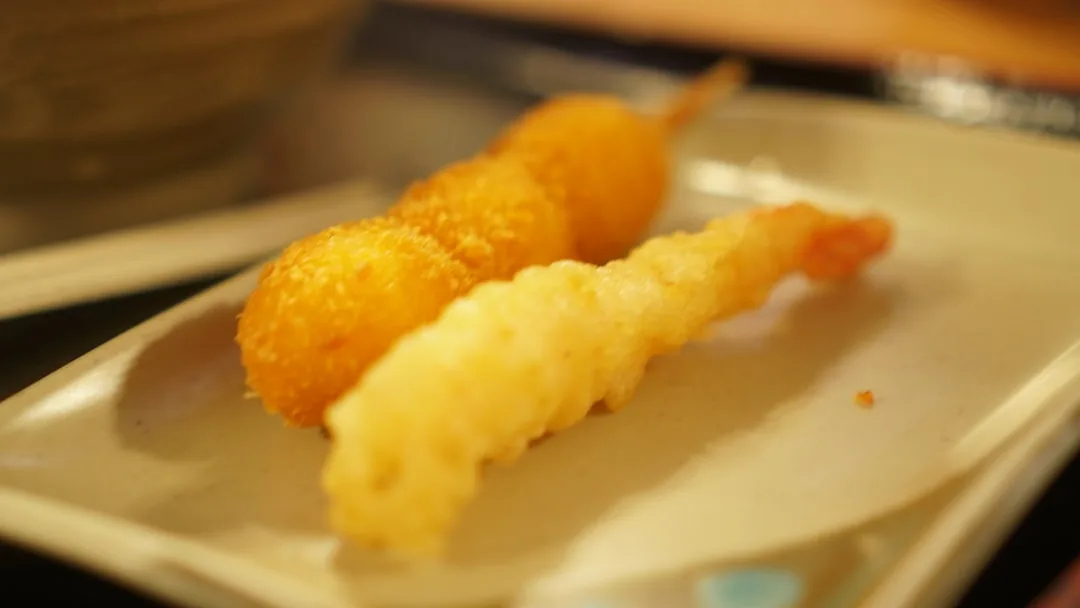
| 天ぷら | tenpura | battered and deep-fried foods |
| 焼き鳥 | yakitori | grilled chicken skewers |
| 鍋 | nabe | hot pot |
| 味噌汁 | miso shiru | miso soup |
| お吸い物 | osuimono | clear soup |
| 漬物 | tsukemono | pickles |
| おにぎり | onigiri | rice ball |
| カレーライス | karee raisu | curry rice |
| 丼 | donburi | rice bowl dish |
| 牛丼 | gyuudon | beef bowl |
| 親子丼 | oyakodon | chicken and egg bowl (parent-and-child bowl) |
| カツ丼 | katsudon | pork cutlet bowl |
| お好み焼き | okonomiyaki | savory pancake |
| たこ焼き | takoyaki | octopus balls |
| すき焼き | sukiyaki | sweet beef hot pot |
| しゃぶしゃぶ | shabu shabu | thin-sliced beef hot pot |
Washoku was inscribed on the UNESCO Representative List of the Intangible Cultural Heritage of Humanity in 2013, recognizing its connection to seasonal produce and traditional New Year meals.
Etymology note: 親子丼 literally means "parent-and-child bowl", referring to the fact that both chicken (parent) and egg (child) are on the rice. The dark humor of the name is usually ignored in casual use, but it illustrates the Japanese fondness for descriptive, almost playful dish naming.
Restaurant Types
| Japanese | Romaji | English |
|---|---|---|
| レストラン | resutoran | restaurant (western-style) |
| 居酒屋 | izakaya | Japanese-style pub |
| 食堂 | shokudou | casual cafeteria-style eatery |
| 喫茶店 | kissaten | traditional coffee shop |
| カフェ | kafe | cafe (modern) |
| 寿司屋 | sushiya | sushi restaurant |
| ラーメン屋 | raamenya | ramen shop |
| 屋台 | yatai | street food stall |
| 回転寿司 | kaiten zushi | conveyor-belt sushi |
| コンビニ | konbini | convenience store |
| デパ地下 | depa chika | department store food floor |
The suffix -屋 (ya) attaches to a food name to form the shop name: 寿司屋 sushi-shop, パン屋 bakery, 魚屋 fish shop.
Ordering and Dining Phrases
| Japanese | Romaji | English |
|---|---|---|
| いらっしゃいませ | irasshaimase | welcome (to the shop) |
| メニューをください | menyuu wo kudasai | menu please |
| おすすめは何ですか | osusume wa nan desu ka | what do you recommend |
| おまかせでお願いします | omakase de onegai shimasu | chef's choice please |
| これをください | kore wo kudasai | I will have this |
| ご注文は | gochuumon wa | your order |
| 以上です | ijou desu | that is all |
| お水をください | omizu wo kudasai | water please |
| お箸をください | ohashi wo kudasai | chopsticks please |
| 取り皿をください | torizara wo kudasai | a small plate please |
| 灰皿はありますか | haizara wa arimasu ka | is there an ashtray |
| 禁煙席でお願いします | kin'en seki de onegai shimasu | non-smoking seat please |
| お会計お願いします | okaikei onegai shimasu | check please |
| 別々にしてください | betsu betsu ni shite kudasai | separate checks please |
Two ritual phrases are said at every meal and are effectively obligatory:
- いただきます (itadakimasu) before eating. Literally "I humbly receive", this acknowledges the food and everyone involved in bringing it to the table.
- ごちそうさまでした (gochisou sama deshita) after finishing. Literally "it was a feast". Used whether the meal was a banquet or a simple bowl of noodles.
Cultural note: The phrase おまかせ (omakase) at a sushi counter has become a brand of its own in international dining. In Japan it is a sign of trust and sometimes of budget flexibility, because the chef will use the finest ingredients without revealing prices in advance.
Cooking Verbs
| Japanese | Romaji | English |
|---|---|---|
| 作る | tsukuru | to make / cook |
| 料理する | ryouri suru | to cook |
| 切る | kiru | to cut |
| 焼く | yaku | to grill / bake / roast |
| 煮る | niru | to simmer |
| 茹でる | yuderu | to boil (food in water) |
| 揚げる | ageru | to deep-fry |
| 炒める | itameru | to stir-fry |
| 蒸す | musu | to steam |
| 混ぜる | mazeru | to mix |
| 漬ける | tsukeru | to pickle / marinate |
| 味見する | ajimi suru | to taste |
| 温める | atatameru | to warm up |
| 冷やす | hiyasu | to chill |
| 盛る | moru | to plate / heap |
| 炊く | taku | to cook rice |
The verb 炊く (taku) is notable because it is reserved specifically for cooking rice and a few closely related ingredients. Cooking other foods uses 作る or 料理する.
Flavors and Textures
Japanese has a particularly expressive vocabulary for texture (食感, shokkan), partly because texture is considered a primary dimension of food quality.
| Japanese | Romaji | English |
|---|---|---|
| 美味しい | oishii | delicious |
| 不味い | mazui | not tasty |
| 甘い | amai | sweet |
| 辛い | karai | spicy / hot |
| しょっぱい | shoppai | salty |
| 酸っぱい | suppai | sour |
| 苦い | nigai | bitter |
| 旨味 | umami | savory (fifth basic taste) |
| さっぱり | sappari | refreshing, clean taste |
| こってり | kotteri | rich, heavy |
| あっさり | assari | light, plain |
| ふわふわ | fuwa fuwa | fluffy |
| もちもち | mochi mochi | chewy and springy |
| サクサク | saku saku | crispy |
| シャキシャキ | shaki shaki | crunchy (vegetables) |
| ぷりぷり | puri puri | bouncy (shrimp, scallops) |
Words like もちもち, サクサク, and ぷりぷり belong to a larger class of mimetic expressions (擬態語, gitaigo). Using them in food talk sounds natural and expert; avoiding them sounds foreign and flat.
At the Table: Utensils and Settings
| Japanese | Romaji | English |
|---|---|---|
| お箸 | ohashi | chopsticks |
| スプーン | supuun | spoon |
| フォーク | fooku | fork |
| ナイフ | naifu | knife |
| れんげ | renge | flat-bottom soup spoon |
| お茶碗 | ochawan | rice bowl |
| お椀 | owan | soup bowl (lacquer) |
| お皿 | osara | plate |
| 小皿 | kozara | small plate |
| コップ | koppu | drinking glass |
| グラス | gurasu | glass (wine, etc.) |
| 湯のみ | yunomi | tea cup |
| 徳利 | tokkuri | sake flask |
| お猪口 | ochoko | small sake cup |
Etiquette note: Chopstick taboos include sticking them vertically into rice (which mimics funeral incense), passing food from one pair of chopsticks to another (which mimics a funeral bone-passing rite), and pointing with chopsticks while speaking.
Drinks
| Japanese | Romaji | English |
|---|---|---|
| お茶 | ocha | tea |
| 緑茶 | ryokucha | green tea |
| 抹茶 | matcha | powdered green tea |
| ほうじ茶 | houjicha | roasted green tea |
| 麦茶 | mugicha | barley tea |
| 紅茶 | koucha | black tea |
| コーヒー | koohii | coffee |
| 水 | mizu | water |
| お湯 | oyu | hot water |
| 牛乳 | gyuunyuu | milk |
| ジュース | juusu | juice |
| ビール | biiru | beer |
| 日本酒 | nihonshu | sake |
| 焼酎 | shouchuu | distilled spirit |
| 梅酒 | umeshu | plum wine |
| ワイン | wain | wine |
The word さけ (sake) in Japanese means alcohol generically; the rice-based brewed beverage is specifically 日本酒 (nihonshu) in Japan. English "sake" corresponds to the narrower Japanese term.
Common Mistakes
- Confusing 辛い (karai, spicy) with 塩辛い (shiokarai, salty). Context disambiguates, but in recipes or menus, the full form 塩辛い or しょっぱい avoids confusion.
- Saying いただきます only at dinner. This phrase is used before every meal, including snacks, coffee, and drinks offered by a host.
- Using 美味しい for drinks the first time. 美味しい is fine for any consumable; some learners assume it only applies to dishes.
- Mixing up 焼く and 揚げる. 焼く covers grill, bake, and pan-fry. 揚げる is specifically deep-fry in oil.
- Treating ご飯 as only "rice". In many contexts ご飯 refers to a meal in general, as in 朝ご飯 (breakfast), 夜ご飯 (evening meal).
Quick Reference
- Delicious: 美味しい (oishii)
- Water please: お水をください (omizu wo kudasai)
- Check please: お会計お願いします (okaikei onegai shimasu)
- Before eating: いただきます (itadakimasu)
- After eating: ごちそうさまでした (gochisou sama deshita)
- What do you recommend: おすすめは何ですか (osusume wa nan desu ka)
- Chef's choice: おまかせでお願いします (omakase de onegai shimasu)
- I am allergic: アレルギーがあります (arerugii ga arimasu)
- Not spicy please: 辛くしないでください (karaku shinaide kudasai)
- I am vegetarian: ベジタリアンです (bejitarian desu)
See Also
- Japanese Common Phrases: Daily Conversation Reference
- Japanese Counters and Classifiers for Counting Objects
- Japanese Counting: Numbers and Counters Guide
- Japanese Keigo: Honorific Language Reference
- Hiragana Complete Guide
- Katakana Complete Guide
- Japanese Onomatopoeia: Giongo and Gitaigo
Frequently Asked Questions
What is the difference between 和食 and 日本料理?
和食 (washoku) is the traditional Japanese style of eating and was recognized by UNESCO as intangible cultural heritage in 2013. 日本料理 (nihon ryouri) is a broader term that includes both traditional and modern Japanese cooking. In casual use the two overlap, but 和食 specifically emphasizes the traditional meal structure of rice, soup, pickles, and side dishes.
Do I say いただきます if I am eating alone?
Yes. いただきます (itadakimasu) is directed at the food, the producers, and the cooks rather than at dining companions, so it is spoken even when alone. Many Japanese people also say it quietly or internally in public eating settings.
What is おまかせ in a restaurant?
おまかせ (omakase) means ‘I leave it up to you’. When used at a sushi counter or kaiseki restaurant it asks the chef to choose the entire meal based on the day’s best ingredients. It is typically more expensive than ordering individual items but is considered the trust-based, high-end dining experience.
Is it rude to pour my own drink in Japan?
Not exactly rude, but in group settings guests are expected to pour for each other. Pouring your own drink (手酌, tejaku) at a business dinner can look self-centered. The custom is to fill your neighbor’s cup and let them fill yours.
What counter do I use for cups of tea or coffee?
Use 杯 (hai) for cups and glasses of drink: 一杯 (ippai), 二杯 (nihai), 三杯 (sanbai). Bowls of rice also use 杯 in some contexts, though お茶碗 (ochawan) can be counted more flexibly. For bottles, use 本 (hon).
What is the difference between 定食 and セット?
定食 (teishoku) is a traditional set meal with a main dish, rice, miso soup, and pickles, usually served on a tray. セット (setto) is a borrowed English word often seen in chain restaurants referring to a combo meal, such as a burger with fries and a drink. 定食 carries a home-cooking connotation while セット is more modern and casual.
Are chopsticks used for everything?
Almost everything, including soup solids, rice, and most side dishes. Soup broth is often drunk directly from the bowl. Certain dishes such as large grilled fish or western-style meals may come with forks or knives, and ramen is eaten with chopsticks plus a れんげ (renge, flat soup spoon).