
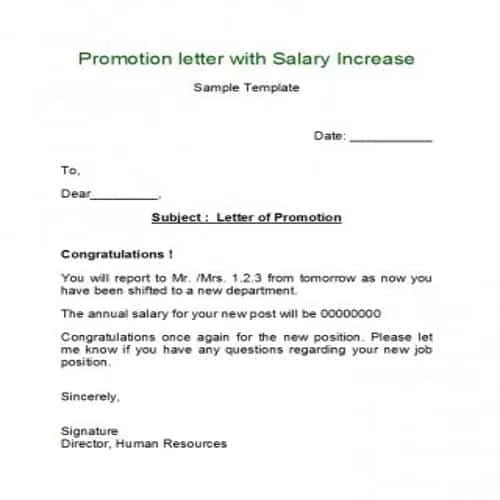
The letter of interest for an internal promotion is a different document from a traditional cover letter, and professionals who treat them as interchangeable miss an opportunity that may not come around again for years. A traditional cover letter introduces a stranger to a company.
A letter of interest for an internal promotion reintroduces someone the hiring manager already knows, typically against an internal bar that is higher than the external bar for the same role because the hiring manager can verify every claim and has already formed impressions that the letter either reinforces or must overcome.
The best internal candidates treat the letter as a business case that consolidates what the hiring manager knows about them, fills in what the hiring manager may not have seen, and makes an explicit case for readiness that the hiring manager can repeat to the rest of the decision-making committee.
This guide provides ten ready-to-copy letter of interest templates covering the most common internal promotion scenarios, including first-time manager roles, senior individual contributor promotions, lateral moves to new departments, director-level steps, cross-functional leadership opportunities, specialist-to-generalist moves, returning-from-leave promotions, project-lead formalization, acting-to-permanent conversions, and cross-business-unit transfers.
Each template reflects the structural expectations of internal hiring processes, opens with an explicit statement of interest and the specific role, delivers evidence of readiness grounded in work the hiring manager can verify, addresses the transition plan for the current role, and closes with a specific request for a conversation.
The templates are paired with a comprehensive section on positioning the letter, common mistakes that sink internal candidacies, a comparison of internal and external cover letter conventions, and a FAQ drawn from the questions internal candidates most frequently ask before submitting.
Why Internal Interest Letters Work Differently
Internal promotion decisions are made through a combination of formal application processes and informal committee conversations that run in parallel. The letter serves both tracks, but it serves them in different ways.
The Formal Application
Most internal postings require a formal application with a letter or statement of interest. That application goes into the official record, is reviewed by HR and the hiring manager, and must stand on its own as a credible statement of readiness for the role.
The Informal Committee Conversation
Beyond the formal application, internal decisions are influenced by conversations among managers, skip-level leaders, and cross-functional partners who will work with the promoted employee. The letter shapes those conversations by giving the hiring manager language and talking points they can use when advocating for the candidate in those rooms.
The Verification Reality
Unlike external applications, every claim in an internal letter can be verified by a quick internal check. This is both a constraint and an opportunity. The constraint is that overstatement will be caught and will damage credibility. The opportunity is that carefully selected, verifiable accomplishments gain weight precisely because they are verifiable.
"Internal letters of interest are business cases for your candidacy, not introductions. Treat them as the one-pager the hiring manager will use to argue for you in the promotion committee, not as a summary of your last two performance reviews."
What to Include in a Letter of Interest for Promotion
The structural elements of an internal letter of interest differ from a standard cover letter, and each element plays a specific role in how the hiring manager and committee evaluate the candidacy.
| Element | Purpose | Typical Placement |
|---|---|---|
| Explicit statement of interest | Removes ambiguity about intent | Opening sentence |
| Specific role identification | Shows the letter is targeted | Opening paragraph |
| Readiness evidence | Demonstrates fit through verifiable work | Body paragraphs |
| Scope expansion narrative | Shows growth beyond current role | Body paragraph |
| Transition plan | Addresses operational continuity | Body or closing paragraph |
| Specific request for conversation | Creates next-step clarity | Closing paragraph |
| Contact and appreciation | Preserves relationship regardless of outcome | Closing |
10+ Letter of Interest for Promotion Templates
Replace bracketed fields with your specific details. Each template is designed to stand alone while leaving room for you to add the particular examples that only you can provide.
Template 1: First-Time Manager Promotion
[Your Name] [Your Department] | [Current Title] [Internal Email] | [Phone]
[Date]
[Hiring Manager Name] [Title] [Department]
Dear [Hiring Manager Name],
I am writing to formally express my interest in the [Team Name] Manager position posted on [Date]. I believe I am well-prepared for the role and am excited about the opportunity to step into people leadership at [Company].
Over the past [Number] years as a [Current Title] on the [Team Name], I have taken on increasingly manager-adjacent responsibilities that have prepared me for the formal role. Most recently, I led [Project Name] as the project owner, coordinating the work of [Number] cross-functional team members to deliver [Specific Outcome]. I also serve as the informal mentor for [Number] newer team members, and the feedback from those mentees has been consistently positive.
Beyond project execution, I have been building management capabilities intentionally over the past year. I completed [Training Program or Course] in [Month], participated in the [Internal Program, if applicable], and have been shadowing [Current Manager or Another Manager] on [specific management work, for example, "the team's hiring process and performance review preparation"].
I have thought carefully about the transition of my current responsibilities. [Colleague Name] is well-positioned to take on [specific responsibility], and I have documented the [system or process] in a way that supports that transition. I am confident the handover would not create disruption for the team.
I would welcome a conversation at your convenience to discuss how I can contribute to the team in the manager role. Thank you for considering my application.
Sincerely,
[Your Name]
Template 2: Senior Individual Contributor Promotion
[Header block]
Dear [Hiring Manager Name],
I am writing to express my interest in the Senior [Title] position posted on [Date]. I believe my work over the past [Number] years demonstrates readiness for the senior scope, and I am excited about the opportunity to take it on.
The senior level at [Company] expects technical depth, cross-team influence, and the ability to shape direction beyond one's immediate deliverables. My work this year has exhibited each dimension. Technically, I led the [Specific Work] that resulted in [Measurable Outcome] and is now considered the reference implementation for similar work across the [Department].
Cross-team, I partnered with [Partner Team] on [Initiative] and was the primary author of the [Document or System] that the two teams now share. On direction-setting, I authored the [Strategy Document] that informed the [Leadership Decision] on [Date].
I have received consistent feedback from [Specific Senior Leaders] that this work reflects the scope and impact expected at the senior level, and my current manager, [Manager Name], has been explicit that I am ready for the promotion.
I appreciate your consideration and would welcome a conversation at your convenience.
Sincerely,
[Your Name]
Template 3: Lateral Move to New Department
[Header block]
Dear [Hiring Manager Name],
I am writing to express my interest in the [Title] position on the [New Department] team, posted on [Date]. Although this is a lateral move rather than a promotion, it represents the kind of intentional scope expansion I have been building toward for some time.
My background as a [Current Title] on the [Current Department] team has given me deep exposure to [Relevant Domain], which I understand to be a priority area for the [New Department]. Specifically, I have led [Specific Work] that touches [Intersection with New Department's Mandate], and I have partnered closely with several members of your team, including [Partner Names], on [Project].
The skills I would bring to your team include [Three Specific Skills With Evidence]. I recognize that the role requires ramp-up in [Area], and I have already begun preparing by [Specific Preparation, for example, "completing the internal onboarding materials for your team's core systems, shadowing a weekly meeting, and reading the team's strategy documents"].
I have discussed this interest with my current manager, [Name], who is supportive and prepared to coordinate a transition plan that works for both teams. [Colleague Name] is well-positioned to take on my current [Responsibility] with minimal disruption.
I would welcome a conversation about the role at your convenience.
Sincerely,
[Your Name]
Template 4: Director-Level Step
[Header block]
Dear [Hiring Manager Name],
I am writing to formally express my interest in the Director of [Function] position posted on [Date]. I believe my work leading [Team or Function] over the past [Number] years, together with the cross-functional leadership I have exercised on [Major Initiatives], prepares me for the director-level scope.
The director bar at [Company] expects demonstrated strategic thinking, proven results across multiple teams or functions, and the ability to operate as a trusted partner to the executive team. My work has touched each dimension. Strategically, I authored the [Strategy Document] that has shaped our approach to [Area], and the plan has delivered [Measurable Outcome] against the [Measurable Targets].
Operationally, I have led [Team Scope] and expanded the team from [Starting Size] to [Current Size] while improving [Metric, for example, "retention from 82 to 94 percent"]. Cross-functionally, I have been the primary lead on [Initiative] that required [specific coordination across functions].
I am prepared to discuss the organizational design choices and priorities I would recommend for the director role, and I have specific thoughts on the [Number] most important decisions the role will face in the first 90 days.
I would welcome a conversation at your convenience to discuss the role and what I would bring to it.
Sincerely,
[Your Name]
Template 5: Cross-Functional Leadership Opportunity
[Header block]
Dear [Hiring Manager Name],
I am writing to express my interest in the [Cross-Functional Role Title] position posted on [Date]. The role sits at the intersection of [Function A] and [Function B], and my background gives me a combination of depth in both that I believe is unusual in the internal candidate pool.
From the [Function A] side, I have [Specific Experience and Outcomes]. From the [Function B] side, I have [Specific Experience and Outcomes]. The combination has allowed me to serve as a translator between the two functions on [Specific Project], where the integration work was as important as the subject-matter work in either function alone.
Beyond the substantive fit, I have the influence network the role requires. I have partnered with leaders across [Functions] on [Initiatives], and I can point to specific examples where I moved work forward across organizational boundaries, including [Example].
I have discussed this opportunity with my current manager, [Name], and we have a realistic transition plan for my current responsibilities. I would welcome a conversation about the role at your convenience.
Sincerely,
[Your Name]
Template 6: Specialist to Generalist Move
[Header block]
Dear [Hiring Manager Name],
I am writing to express my interest in the [Generalist Role Title] position posted on [Date]. The move from my current specialist work in [Specialty] to the broader generalist scope is one I have been planning for the past [Number] years, and I believe I am ready to make it.
My specialty work has built a foundation of [Relevant Skills for Generalist Role], and in the past [Time Period], I have been deliberately broadening the scope of my work. Specifically, I have [Example of Broadening, for example, "led three projects that took me outside my core specialty into [adjacent areas], delivering [Outcomes] in those areas"]. I have also completed [Training or Preparation] to build the specific skills the generalist role requires.
I recognize that the move carries a ramp-up cost in areas where my specialist background does not carry over directly. I have already identified the specific areas and have a self-directed plan to close the gaps in the first 90 days. I am also prepared to invest time with [Specific Current Team Members] to learn from their experience in areas where I have less direct background.
I would welcome the opportunity to discuss the role and my plan for the transition at your convenience.
Sincerely,
[Your Name]
Template 7: Returning From Leave Into Promotion Discussion
[Header block]
Dear [Hiring Manager Name],
I am writing to express my interest in the [Title] promotion that I understand is under consideration for the [Team] team. I returned from [Type of Leave] on [Date], and I want to make my interest in the role formal and on the record.
Prior to my leave, my work had been tracking toward the promotion, and my [Most Recent Review or Calibration] reflected that trajectory. The work I completed in the months before leave, including [Specific Achievements], continues to meet the criteria for the promotion in my judgment and in the written feedback I received.
Since returning, I have [Specific Re-Engagement, for example, "re-engaged with the team's priorities, taken on the [Current Project] with full scope, and completed the ramp-up plan we agreed on before I returned"]. I am at full capacity and am delivering at the level the role requires.
I would welcome a conversation about the promotion timeline and what would strengthen the case at this stage. Thank you for considering my interest, and thank you for the support the team provided during my leave.
Sincerely,
[Your Name]
Template 8: Project Lead Formalization
[Header block]
Dear [Hiring Manager Name],
I am writing to express my interest in formalizing the Project Lead role that I have been performing in practice for the past [Time Period]. I have been the primary owner of the [Project Name], which now [Scope Description], and I believe formalizing the role through the open requisition posted on [Date] is the right step for both the project and the organization.
The practical case is straightforward. The project has grown from [Starting Scope] to [Current Scope], and the authority and visibility that come with a formal project lead role would allow me to continue to serve the project effectively. Specifically, formalizing the role would clarify my authority to [Specific Authority], enable me to [Specific Action] without the workarounds we have been using, and give the cross-functional stakeholders a clearer point of accountability.
Beyond the practical case, I believe my track record on the project demonstrates readiness. [Specific Outcomes from the informal lead role]. [Feedback from Stakeholders].
I would appreciate a conversation about how to move this forward at your convenience.
Sincerely,
[Your Name]
Template 9: Acting to Permanent Conversion
[Header block]
Dear [Hiring Manager Name],
I am writing to express my interest in converting to the permanent [Title] role, following my [Number] months as the acting [Title] since [Start Date].
The acting period has given both of us a real-world test of fit, and I believe the evidence supports conversion. During the acting period, I have [Specific Outcomes, for example, "delivered the [Initiative] on schedule, maintained team performance on [Metrics], and made the [Difficult Decision] that the role required"]. The team has responded well, as reflected in [Feedback, for example, "the recent pulse survey results showing team engagement holding steady"].
Beyond the outcomes, I have developed a clearer sense of the role's demands and my own capacity to meet them. I am prepared to take on the permanent scope, including the [Specific Areas] that were either deferred during the acting period or that I anticipate would require fresh attention once the role is permanent.
I would appreciate a conversation about the conversion process and the timing you have in mind.
Sincerely,
[Your Name]
Template 10: Cross-Business-Unit Transfer
[Header block]
Dear [Hiring Manager Name],
I am writing to express my interest in the [Title] position on the [Target Business Unit] team, posted on [Date]. Although the move would involve a transition across business units, my background and the transferable elements of my current work make a strong case for fit.
In my current role on the [Current Business Unit] team, I have built [Relevant Capabilities]. The [Target Business Unit] mandate intersects with my current work in [Specific Areas], and I have already partnered with members of your team on [Example, for example, "the [Joint Project] earlier this year, where I was the primary [Current Team] contact"].
I recognize that the move carries a ramp-up cost, particularly in [Areas where the Target BU differs]. I have been investing in [Specific Preparation, for example, "the internal product overviews for your business unit, attending the weekly [Target BU] team meeting when possible, and talking with [Specific Team Members] about how the work differs from my current context"]. I am confident I can be productive within [Specific Timeframe] of the transition.
My current manager, [Name], is aware of this interest and has indicated support for a transition with appropriate notice to allow for continuity on my current projects.
I would welcome the chance to discuss the role at your convenience.
Sincerely,
[Your Name]
Template 11: Short Expression of Interest
[Header block]
Dear [Hiring Manager Name],
I am writing to formally express my interest in the [Title] position posted on [Date]. I believe my work on [Two or Three Specific Projects] has prepared me for the role, and my manager, [Name], supports my candidacy.
Rather than duplicate the content of my most recent performance review, I would appreciate a brief conversation to discuss the role, the scope you are looking for in the successful candidate, and how I would approach the first 90 days. I am available [specific availability].
Thank you for your consideration.
Sincerely,
[Your Name]
Common Mistakes in Internal Letters of Interest
Internal candidates make a handful of predictable errors that limit the effectiveness of an otherwise strong candidacy.
Treating the Letter Like a Performance Review Summary
Recounting achievements already well-known to the hiring manager wastes the scarce space the letter provides. Focus on the pattern of work that demonstrates readiness for the new role, and on the forward-looking case for what you will do in the role.
Burying the Explicit Statement of Interest
The hiring manager should know, by the end of the first sentence, that you are applying for a specific role. Burying the statement of interest in paragraph three suggests uncertainty about the request.
Overstating Readiness in Areas That Will Be Verified
Internal candidates sometimes overstate readiness in areas where the hiring manager has direct visibility. Calibrate claims to the specific evidence in the record. Overstatement damages credibility more than understatement.
Ignoring the Transition Problem
Every internal promotion creates a transition problem for the candidate's current role. Acknowledging the transition, and proposing a plan, reassures the hiring manager that the promotion will not create downstream disruption.
Weak Close
"I look forward to hearing from you" is the default close that almost every letter uses, and it creates nothing. A specific request for a conversation, with proposed availability, gets the meeting scheduled.
"The hiring manager already has a view on whether you are ready for the role before they open your letter. The letter either confirms or updates that view. Confirming the view is often enough, but updating it requires specific, verifiable evidence the hiring manager may not already have."
Internal vs. External Cover Letters
The table below captures the structural differences between internal letters of interest and standard external cover letters.
| Dimension | Internal Letter of Interest | External Cover Letter |
|---|---|---|
| Primary audience | Known hiring manager | Unknown hiring manager |
| Introduction | Brief, no stranger framing | Full introduction |
| Evidence base | Verifiable internal work | Resume-based highlights |
| Length | Half to three quarters of a page | Full page |
| Tone | Direct, business case | Professional, narrative |
| Transition discussion | Required | Not applicable |
| Close | Specific meeting request | Generic availability statement |
"An internal letter of interest that reads like an external cover letter signals to the hiring manager that the candidate has not understood the context. The internal letter is a memo to a colleague, not a pitch to a stranger."
Positioning the Letter Within the Promotion Process
The letter is one artifact within a broader internal process. Positioning the letter well requires coordination with the surrounding elements.
Conversation With Your Current Manager First
Internal candidates should discuss the opportunity with their current manager before submitting the application. The conversation is a courtesy, but it is also strategically useful because the current manager's support or opposition will surface in committee conversations regardless of whether you disclose it.
Alignment With Written Performance Documentation
The claims in the letter should align with the written performance feedback already in your file. Contradicting prior feedback invites the committee to question the letter's reliability.
Coordination With Skip-Level and Cross-Functional Advocates
Identify two or three senior colleagues who will advocate for your candidacy in committee, and ensure they have the specific examples and framings they need. The letter is often a resource they use to structure their own advocacy.
Timing Relative to Performance Review Cycles
In organizations that run structured promotion cycles, the letter should land at a time that aligns with calibration and committee cadence. Submitting out of cycle may defer review to the next window.
Frequently Asked Questions
How long should a letter of interest for internal promotion be?
Half a page to three quarters of a page is typical. Internal letters are shorter than external cover letters because the context is already shared. Longer letters often pad with content the hiring manager already knows, which dilutes the specific, forward-looking evidence that actually moves the candidacy forward.
Should I apply even if my current manager does not support the move?
Generally yes, but understand the dynamics. If your current manager's support matters to the committee, and it usually does, the absence of support will surface and will need to be addressed. A candid conversation with your manager before submitting is the right first step, and an honest disagreement is usually better than a silent one.
What if the role is a stretch that exceeds my current level?
Stretch applications can work if the evidence base supports the stretch and if the hiring manager is open to developmental hires. The letter should acknowledge the stretch directly, frame it as a deliberate growth move, and identify the specific ramp-up plan for the first 90 days. A stretch application that pretends not to be a stretch reads as either oblivious or dishonest.
How do I handle a letter for a role I did not get the first time around?
If you are applying for a role similar to one you did not receive in a prior round, the letter should acknowledge the prior round briefly, summarize the specific development since then, and update the case for readiness with new evidence. Reapplying without addressing the gap between rounds leaves the committee to speculate about whether anything has changed.
Should I mention salary or equity expectations in the letter?
No. The letter is not the place for compensation discussions. Internal compensation conversations happen separately through HR and the hiring manager once the promotion decision is made. Raising compensation in the letter reads as transactional and can shift the committee's evaluation away from fit.
What happens if I do not get the promotion?
Follow up with the hiring manager for specific feedback, document the feedback, and use it to build the case for the next round. In well-run organizations, an unsuccessful application followed by visible development in the identified areas is one of the strongest paths to a subsequent promotion. Treat the letter and the application as investments rather than one-shot bets.
Conclusion and Next Steps
A strong letter of interest for internal promotion is a disciplined business case built from verifiable evidence, framed around the specific role, and tuned to the internal context of the hiring manager and promotion committee. The templates in this guide are starting points that must be adapted to your specific situation, your specific work, and the specific role you are applying for.
Before submitting any letter, reread it with three questions in mind: does the opening state the interest and the role without ambiguity, do the body paragraphs offer evidence that the hiring manager can verify, and does the close request a specific next step.
Internal promotions are won over time, through visible work, trusted relationships, and strategic communication. The letter is one of the most concentrated communication opportunities in that sequence, and a well-drafted letter can convert years of work into a specific moment of decision in your favor. Treat the letter with the care that work deserves.
Frequently Asked Questions
How long should a letter of interest for internal promotion be?
Half a page to three quarters of a page is typical. Internal letters are shorter than external cover letters because the context is already shared. Longer letters often pad with content the hiring manager already knows, which dilutes the specific, forward-looking evidence that actually moves the candidacy forward.
Focus on two or three strong paragraphs that make the business case for your readiness, include a brief plan for the first 90 days in the role, and close with a specific request for a conversation. The discipline of a tight letter signals that you understand how to communicate at the level the new role requires.
Should I apply even if my current manager does not support the move?
Generally yes, but understand the dynamics. If your current manager’s support matters to the committee, and it usually does, the absence of support will surface and will need to be addressed. A candid conversation with your manager before submitting is the right first step, and an honest disagreement is usually better than a silent one.
If your manager’s opposition is based on the timing or the impact on the current team rather than on your readiness, you may be able to negotiate a phased transition. If the opposition is based on their view of your readiness, you need to understand the gap before applying, because the committee will hear their view regardless of what your letter says.
What if the role is a stretch that exceeds my current level?
Stretch applications can work if the evidence base supports the stretch and if the hiring manager is open to developmental hires. The letter should acknowledge the stretch directly, frame it as a deliberate growth move, and identify the specific ramp-up plan for the first 90 days.
A stretch application that pretends not to be a stretch reads as either oblivious or dishonest.
The strongest stretch letters are explicit about what will be different from the candidate’s current scope, specific about the preparation the candidate has already completed, and concrete about how the candidate will close any remaining gaps in the early months of the new role.
How do I handle a letter for a role I did not get the first time around?
If you are applying for a role similar to one you did not receive in a prior round, the letter should acknowledge the prior round briefly, summarize the specific development since then, and update the case for readiness with new evidence. Reapplying without addressing the gap between rounds leaves the committee to speculate about whether anything has changed.
The development since the prior round is the center of the new letter, and specific examples of closed gaps carry more weight than general claims of growth. Feedback from the prior round, if you received it, becomes the structure for the new letter’s case.
Should I mention salary or equity expectations in the letter?
No. The letter is not the place for compensation discussions. Internal compensation conversations happen separately through HR and the hiring manager once the promotion decision is made. Raising compensation in the letter reads as transactional and can shift the committee’s evaluation away from fit.
The appropriate time for compensation discussion is after the promotion decision is made, during the offer conversation, when HR and the hiring manager have the authority to discuss specific bands and grants.
Strong internal candidates focus the letter entirely on the business case for the role and handle compensation as a separate, later conversation.
What happens if I do not get the promotion?
Follow up with the hiring manager for specific feedback, document the feedback, and use it to build the case for the next round. In well-run organizations, an unsuccessful application followed by visible development in the identified areas is one of the strongest paths to a subsequent promotion. Treat the letter and the application as investments rather than one-shot bets.
The feedback conversation is also an opportunity to clarify whether the decision was about readiness, timing, headcount, or fit, because the appropriate next step varies significantly depending on the underlying reason. Candidates who handle an unsuccessful application with maturity often earn the benefit of the doubt in later rounds.