
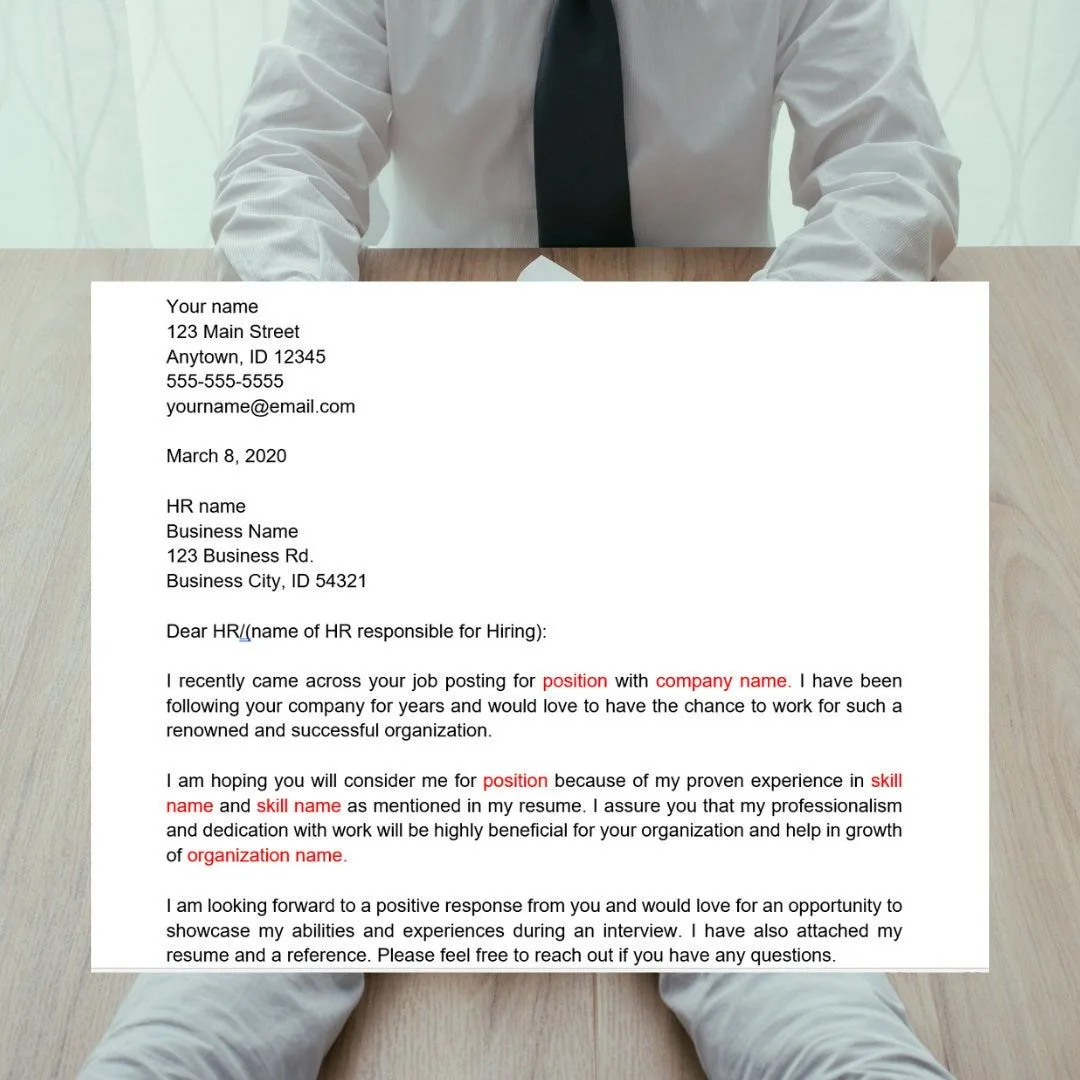
A letter of interest is one of the most underused and misunderstood tools in professional communication. While most job seekers wait for positions to be posted and then compete against hundreds of other applicants, the letter of interest allows you to approach organizations proactively, before a role is advertised, when competition is minimal and the hiring manager's attention is undivided.
The same principle applies beyond employment: letters of interest open doors to business partnerships, graduate programs, volunteer positions, board memberships, and freelance engagements that are never publicly advertised. The challenge is that writing a compelling letter of interest requires a fundamentally different approach than writing a cover letter.
You are not responding to stated requirements - you are creating a case for your own relevance to an organization that has not yet asked for it. This guide provides ten professionally written letter of interest templates for the most common scenarios, along with expert guidance on research strategies, timing, follow-up protocols, and the critical differences between letters of interest and cover letters.
Understanding the Letter of Interest
A letter of interest, sometimes called a prospecting letter or expression of interest, is a proactive communication sent to an organization you want to work with, partner with, or join, when no specific opportunity has been publicly advertised. It differs from a cover letter in purpose, content, and strategy.
Letter of Interest vs. Cover Letter - The Critical Distinctions
A cover letter is reactive. It responds to a specific job posting, addresses stated requirements, and competes within an established applicant pool. A letter of interest is proactive. It initiates contact without a defined opportunity, proposes value rather than proving fit, and reaches the recipient outside the normal application process.
This distinction has important practical implications:
Cover letter: "I am applying for the Senior Marketing Manager position posted on your careers page. My five years of B2B marketing experience directly align with the requirements you have described."
Letter of interest: "Having followed your company's expansion into the European market over the past year, I believe my experience launching B2B marketing campaigns across seven European markets could support your international growth objectives."
The cover letter demonstrates fit. The letter of interest creates interest.
Why Letters of Interest Work
Research consistently shows that a significant percentage of positions are filled without ever being publicly posted. Hiring managers often have emerging needs, anticipated departures, or budget for positions they have not yet formalized. A well-timed letter of interest that aligns with an unspoken need can position you as the solution to a problem the organization was just beginning to address.
Beyond timing, letters of interest demonstrate qualities that employers and partners value: initiative, research capability, strategic thinking, and the confidence to make a proactive approach. The letter itself is a sample of your communication skills and professional judgment.
When to Send a Letter of Interest
The ideal moments to send a letter of interest include:
- After organizational announcements - new funding, expansion plans, product launches, leadership changes, or strategic pivots that create new needs
- After industry events - conferences, trade shows, or professional meetings where you learned about the organization or met its representatives
- During typical planning cycles - Q4 budget planning, Q1 hiring surges, or industry-specific seasonal patterns
- After personal achievements - completing a relevant certification, publishing research, winning an award, or finishing a significant project that strengthens your value proposition
- When referral opportunities arise - when a mutual contact suggests you reach out or offers to make an introduction
Research - The Foundation of Every Effective Letter
A letter of interest without thorough research is just spam with a professional font. The quality of your research is what separates letters that get responses from letters that get deleted.
What to Research Before Writing
Organizational strategy: What are the company's stated goals, growth plans, and strategic priorities? Annual reports, investor presentations, press releases, and leadership interviews reveal this information.
Recent developments: What has changed recently? New products, acquisitions, partnerships, office openings, leadership hires, and funding rounds all signal evolving needs and potential opportunities.
Challenges and pain points: What problems is the organization likely facing? Industry reports, competitor analysis, customer reviews, and trade publications can help you identify challenges where your expertise could add value.
Key personnel: Who would you report to or work with? What is their background, what do they care about professionally, and what have they said publicly about the organization's direction?
Culture and values: How does the organization present itself? What language do they use, what do they celebrate, and what kind of people do they typically hire?
How to Use Research in Your Letter
Reference specific, current information that demonstrates genuine knowledge rather than a surface-level website scan. Mention a recent project, quote a company value that resonates with your experience, or connect an industry trend to the organization's position. The goal is to show that you have invested time understanding the organization before approaching them.
Structure and Format
A letter of interest should be concise, professional, and focused. It is typically shorter than a cover letter because you have no job description to address point by point.
Optimal Length
Three to four paragraphs, 200 to 350 words. Brevity is essential because the recipient did not ask for your letter and has no obligation to read it. Every sentence must earn its place.
The Four-Paragraph Structure
Paragraph 1 - The Hook: Open with why you are writing and what prompted your interest. Reference something specific about the organization that connects to your professional background. Identify yourself briefly.
Paragraph 2 - Your Value: Present your most relevant qualifications and achievements in terms of how they could benefit the organization. Focus on outcomes and capabilities rather than job titles and dates.
Paragraph 3 - The Connection: Explain why this organization specifically, and why now. This is where your research pays off. Connect your skills to their needs, your values to their culture, or your expertise to their challenges.
Paragraph 4 - The Close: Request a conversation (not a job), provide your contact information, and state that you will follow up. Attach your resume for reference.
Template 1 - Job Opportunity (Unadvertised Position)
[Your Name] [Your Address] [City, State ZIP] [Email] | [Phone] | [LinkedIn URL]
[Date]
[Hiring Manager/Department Head Name] [Title] [Company Name] [Address] [City, State ZIP]
Dear [Recipient Name],
I am writing to express my interest in contributing to [Company Name]'s [specific department, initiative, or area]. Your recent [expansion into X market / launch of X product / announcement of X initiative] caught my attention because it aligns closely with my [number] years of experience in [relevant field], particularly my work in [specific area directly relevant to their recent development].
At [Current/Previous Company], I [specific achievement with quantifiable results that would be valuable to the target organization]. For example, I [detailed accomplishment - led a team that increased revenue by 35 percent in a new market segment / built a customer success program that reduced churn by 22 percent / developed a supply chain optimization strategy that saved $1.2 million annually].
This experience has given me [specific skill or perspective] that I believe would support [Company Name]'s objectives in [relevant area].
What draws me to [Company Name] is [specific, researched reason - your commitment to sustainable manufacturing aligns with my professional values / your position as the market leader in X creates the kind of complex challenges where I do my best work / your CEO's recent comments about prioritizing customer experience reflect an approach I have championed throughout my career].
I am particularly interested in how my background in [specific expertise] could complement your team's work in [specific area].
I would welcome the opportunity to discuss how my experience might align with [Company Name]'s current or future needs. I have attached my resume for your reference and am available at [phone] or [email] for a conversation at your convenience. I will follow up in the coming weeks, but please do not hesitate to reach out sooner if my background is of interest.
Sincerely,
[Your Name]
Attachment: Resume
Template 2 - Internship Interest Letter
[Your Name] [Your Address] [City, State ZIP] [Email] | [Phone] | [LinkedIn URL]
[Date]
[Department Head/Internship Coordinator Name] [Title] [Company Name] [Address] [City, State ZIP]
Dear [Recipient Name],
I am a [year] student at [University] majoring in [major] with a concentration in [relevant concentration], and I am writing to inquire about internship opportunities at [Company Name] for [semester/summer and year]. While I did not see an active internship posting on your careers page, your company's work in [specific area] is exactly the kind of environment where I want to develop my professional skills.
My academic preparation and extracurricular experience have given me a strong foundation for contributing meaningfully as an intern. In my [relevant course or project], I [specific academic achievement or project with outcome].
Outside the classroom, I [relevant experience - led a student organization, completed a volunteer project, worked part-time in a related field] where I [specific accomplishment demonstrating initiative and capability]. I am proficient in [relevant tools, software, or skills] and eager to apply these skills in a professional setting.
I am drawn to [Company Name] because of [specific, researched reason - your internship alumni frequently describe the experience as genuinely developmental rather than administrative / your team's recent work on X project represents the intersection of my academic interests and career goals / your company's culture of mentorship aligns with how I learn best]. I am flexible on timing and format and would welcome the chance to discuss any internship possibilities that might be available.
I have attached my resume and am available at [phone] or [email]. Thank you for considering my interest, and I look forward to the possibility of learning from your team.
Sincerely,
[Your Name]
Attachment: Resume
Template 3 - Business Partnership Interest Letter
[Your Name] [Your Title] [Your Company Name] [Address] [City, State ZIP] [Email] | [Phone]
[Date]
[Decision Maker Name] [Title] [Target Company Name] [Address] [City, State ZIP]
Dear [Recipient Name],
I am the [Title] of [Your Company Name], a [brief description of your company - its size, industry, and core offering]. I am writing to explore a potential [partnership/collaboration/joint venture] between our organizations that I believe could create significant mutual value.
[Your Company Name] has built [specific capability, market position, or asset that would be valuable to the target company]. Over the past [timeframe], we have [key achievement with specifics - served 500 enterprise clients in the fintech sector / developed proprietary technology that reduces processing time by 60 percent / established distribution relationships across 12 states in the Southeast].
Our clients include [notable client names if appropriate and permitted] and our work has been recognized by [industry recognition if applicable].
I believe a [type of partnership] between our companies would benefit both organizations because [specific rationale with clear mutual value - your strength in X combined with our strength in Y would create a comprehensive offering that neither company can deliver alone / your geographic presence in markets where we have strong demand but no local infrastructure / your technology platform is the ideal complement to our service delivery model].
Specifically, I envision [brief description of what the partnership could look like in practical terms].
I would welcome a 30-minute conversation to explore whether this alignment of capabilities represents a genuine opportunity worth pursuing. I have included a brief overview of [Your Company Name] with this letter and am available at [phone] or [email] at your convenience. I will follow up next week to see if a meeting might be of interest.
Best regards,
[Your Name] [Title] [Company Name]
Attachment: Company overview
Template 4 - Graduate Program Interest Letter
[Your Name] [Your Address] [City, State ZIP] [Email] | [Phone]
[Date]
[Professor/Program Director Name] [Title] [Department] [University] [Address] [City, State ZIP]
Dear [Professor/Director Name],
I am writing to express my interest in the [specific program name] at [University], with anticipated enrollment for [term and year]. I am particularly interested in [specific research area, concentration, or faculty member's work] and wanted to inquire about the program's current focus areas and whether my background would be a strong fit.
I currently hold a [degree] in [field] from [University] and have spent the past [number] years working in [relevant professional or research experience].
My most significant professional contribution has been [specific achievement relevant to the graduate program - research published in X journal, a project that addressed Y problem, professional experience that generated the questions you want to explore in graduate school]. This work raised questions about [specific intellectual question or problem] that I believe your program is uniquely positioned to help me address.
I have read your work on [specific publication, project, or research area of the faculty member or program], and the [methodological approach / theoretical framework / research questions] you explore align closely with the direction I want to take my academic work.
Specifically, I am interested in [describe your proposed research interest or academic focus in one to two sentences]. I would value the opportunity to discuss whether this interest aligns with the program's current priorities and available mentorship.
Would you be open to a brief conversation about the program and whether my background would be a competitive fit? I am available at [phone] or [email] and happy to share my CV, writing sample, or other materials that would be helpful. Thank you for your time and consideration.
Sincerely,
[Your Name]
Template 5 - Volunteer Position Interest Letter
[Your Name] [Your Address] [City, State ZIP] [Email] | [Phone]
[Date]
[Volunteer Coordinator/Director Name] [Title] [Organization Name] [Address] [City, State ZIP]
Dear [Recipient Name],
I am writing to express my interest in volunteering with [Organization Name]. Your mission of [specific mission statement or description of what the organization does] resonates deeply with my personal values and professional experience, and I would like to contribute my [specific skills] to support your work.
I bring [number] years of professional experience in [relevant field] with specific skills in [two or three skills directly useful to the organization - grant writing, event planning, web development, legal assistance, financial literacy education, tutoring, counseling, etc.].
In my professional role at [Company/Organization], I [specific achievement that demonstrates the skill you would bring as a volunteer]. I believe these skills could support [Organization Name]'s programs in [specific area where you see a fit].
My interest in [Organization Name] goes beyond professional skill-sharing. [Personal connection to the cause - I have a family history with the issue your organization addresses / I have been following your work in the community for several years / I recently attended your fundraising event and was moved by the stories shared].
I am available [describe your availability - weekday evenings, Saturday mornings, 10 hours per month, etc.] and am open to contributing wherever my skills would be most useful.
I would welcome the chance to learn more about your current volunteer needs and discuss how I might contribute. I can be reached at [phone] or [email] and am happy to complete any application or screening process required.
Thank you for the important work you do.
Sincerely,
[Your Name]
Template 6 - Board Membership Interest Letter
[Your Name] [Your Address] [City, State ZIP] [Email] | [Phone]
[Date]
[Board Chair/Nominating Committee Chair Name] [Title] [Organization Name] [Address] [City, State ZIP]
Dear [Recipient Name],
I am writing to express my interest in serving on the Board of Directors of [Organization Name]. As a [your professional title or description] with [number] years of experience in [relevant field] and a long-standing commitment to [the organization's mission area], I believe I could contribute meaningfully to the board's governance and strategic direction.
My professional background brings [specific governance-relevant skills]. As [Title] at [Company], I [specific experience relevant to board service - managed P&L responsibility for a $20 million business unit, overseen regulatory compliance in a heavily regulated industry, led fundraising campaigns totaling $5 million, or managed organizational strategy through periods of significant growth or change].
I also have prior board experience with [other organizations if applicable] where I served on the [specific committees - finance, governance, development, program] committee(s).
I have been connected to [Organization Name] as a [donor, volunteer, event attendee, community member, or professional collaborator] for [duration] and have observed the organization's impact firsthand. [Specific observation about the organization's work, challenges, or opportunities].
I believe my [specific expertise - financial oversight, legal background, fundraising network, technology expertise, or industry connections] could help the board navigate [specific challenge or opportunity you see for the organization].
I understand the time commitment and fiduciary responsibilities involved in board service and am prepared to fulfill them fully. I would appreciate the opportunity to discuss my interest with you or with the nominating committee. I am available at [phone] or [email] and have attached my resume for your reference.
Thank you for your consideration.
Respectfully,
[Your Name]
Attachment: Resume/CV
Template 7 - Freelance Services Interest Letter
[Your Name] [Your Business Name, if applicable] [Address] [City, State ZIP] [Email] | [Phone] | [Portfolio/Website URL]
[Date]
[Marketing Director/relevant decision maker Name] [Title] [Company Name] [Address] [City, State ZIP]
Dear [Recipient Name],
I am a freelance [your specialty - copywriter, graphic designer, web developer, consultant, photographer, etc.] with [number] years of experience working with [type of clients - B2B technology companies, e-commerce brands, healthcare organizations, small businesses]. I am writing because I have identified an area where my services could support [Company Name]'s [specific objective or need you have identified through research].
In reviewing your [website, marketing materials, social media presence, or other publicly visible output], I noticed [specific, tactful observation about an area where your services could add value - not a criticism but an opportunity]. I have helped similar organizations address this by [brief description of your approach and results with a past client].
For example, I worked with [client name or industry descriptor] to [specific project with measurable outcome - redesign their website resulting in a 40 percent increase in conversions / create a content strategy that generated 200 qualified leads per month / develop a brand identity that supported their transition to the enterprise market].
My clients include [notable names if appropriate] and my work has been [recognized, published, featured - if applicable]. I specialize in [specific services relevant to the target company] and typically work on [engagement format - project basis, monthly retainer, specific deliverable types]. My portfolio at [URL] includes examples relevant to [Company Name]'s industry and needs.
I would appreciate 15 minutes of your time to discuss whether my services might be a good fit for [Company Name]'s needs. I am available at [phone] or [email] and happy to provide references from clients in [relevant industry]. I will follow up next week, but feel free to reach out sooner if this resonates.
Best regards,
[Your Name] [Business Name]
Template 8 - Real Estate Interest Letter
[Your Name] [Your Address] [City, State ZIP] [Email] [Phone]
[Date]
[Property Owner Name] [Address] [City, State ZIP]
Dear [Property Owner Name],
I am writing to express my interest in purchasing your property at [property address]. I understand the property [may not currently be listed for sale / has been on the market / may be something you have considered selling], and I wanted to reach out directly to explore whether a private sale might be of mutual interest.
I am [brief personal context - a family looking for a home in this neighborhood because of the school district / an investor interested in the commercial potential of the property / a local business owner seeking to expand into this location]. My interest in this specific property is based on [genuine, specific reason - its proximity to our family's current home, the layout that matches our needs perfectly, the property's potential for the business concept I have developed].
I am a [qualified/pre-approved/cash] buyer with [financing status - pre-approval from a reputable lender for $X, ability to close quickly with cash, flexibility on closing timeline to accommodate your needs]. I am prepared to make a fair offer based on current market conditions and am open to discussing terms that work for both parties. I am also flexible regarding timeline and am willing to accommodate your preferred schedule for any potential transaction.
If you have any interest in discussing this possibility, I would welcome the chance to speak with you. I can be reached at [phone] or [email]. There is absolutely no obligation, and I appreciate your consideration regardless of your decision.
Sincerely,
[Your Name]
Template 9 - Franchise Opportunity Interest Letter
[Your Name] [Your Address] [City, State ZIP] [Email] | [Phone]
[Date]
[Franchise Development Director/Name] [Title] [Franchise Company Name] [Address] [City, State ZIP]
Dear [Recipient Name],
I am writing to express my serious interest in becoming a [Franchise Name] franchisee in the [target market/city/region] area. After extensive research into franchise opportunities in the [industry - food service, fitness, home services, education, etc.] sector, [Franchise Name] stands out as the brand and business model most aligned with my goals, values, and capabilities.
My background positions me well for franchise ownership and operation. I have [number] years of experience in [relevant field - business management, operations, sales, or relevant industry].
At [Current/Previous Company], I [specific achievement demonstrating business acumen - managed a team of 25 generating $3 million in annual revenue / grew a territory's sales by 45 percent in two years / operated a business with a track record of profitability and customer satisfaction]. I understand the commitment required to build a successful franchise operation and bring both the business skills and the hands-on work ethic necessary.
I have researched the [target market] area and believe it presents a strong opportunity for [Franchise Name] because [specific market analysis - the area has a growing population of 200,000 with limited competition in this service category / the demographic profile matches your ideal customer base / the commercial real estate market offers favorable lease terms for the type of location your concept requires].
I have [liquid capital amount or net worth range] available for investment and am prepared to move forward with the formal application process.
I would welcome the opportunity to discuss the franchise opportunity in detail, visit an existing location, and learn more about the support and training your organization provides to new franchisees. I am available at [phone] or [email] and can travel to meet at your convenience.
Thank you for your consideration.
Sincerely,
[Your Name]
Template 10 - Speaking Opportunity Interest Letter
[Your Name] [Your Title/Affiliation] [Address] [City, State ZIP] [Email] | [Phone] | [Website/LinkedIn]
[Date]
[Event Organizer/Program Committee Chair Name] [Title] [Organization/Conference Name] [Address] [City, State ZIP]
Dear [Recipient Name],
I am writing to express my interest in speaking at [Conference/Event Name] [year or date]. As a [your professional description - practicing attorney specializing in data privacy, marketing executive with 15 years in B2B technology, clinical psychologist and researcher in adolescent mental health], I would like to propose a session on [specific topic] that I believe would be valuable to your attendees.
My proposed topic - [working title of the talk] - addresses [specific problem, trend, or question relevant to the conference audience]. In my work at [Company/Institution], I have [specific experience that establishes your authority on this topic - led the implementation of GDPR compliance for a Fortune 500 company, conducted research with 3,000 participants on consumer purchasing behavior, published findings in peer-reviewed journals that challenge conventional approaches to treatment].
This experience has given me practical insights that go beyond theoretical frameworks and provide [attendees with actionable takeaways / a fresh perspective on a familiar challenge / data-driven evidence that challenges conventional thinking].
I have spoken at [list previous speaking engagements - Industry Conference 2024, Regional Association Annual Meeting 2023, University Guest Lecture Series] on related topics and consistently receive strong audience evaluations. [If available: My talk at X Conference received a 4.8/5.0 speaker rating from 200 attendees.] I am comfortable with formats ranging from [keynote to breakout sessions to panel discussions to workshops] and adapt my delivery style to match the audience and format.
I would be happy to provide a detailed session proposal, outline, or video samples of previous presentations. I can be reached at [phone] or [email] and welcome the opportunity to discuss how my proposed topic fits your program.
Thank you for your consideration.
Sincerely,
[Your Name] [Title/Affiliation]
Follow-Up Strategy - Persistence Without Annoyance
The follow-up is where most letter of interest efforts fail. Either the sender never follows up and the letter is forgotten, or they follow up too aggressively and create a negative impression. A structured, respectful follow-up strategy maximizes your chances of receiving a response.
The Follow-Up Timeline
Day 1: Send your letter of interest.
Day 7-10: Send a brief follow-up email (three to four sentences maximum). Reference your original letter by date, reiterate your interest in one sentence, and ask if they had a chance to review your letter. Do not resend the entire letter or repeat your qualifications.
Day 21-25: If no response, make one final follow-up attempt through a different channel. If your original letter was emailed, try a LinkedIn message. If it was mailed, try email. Keep this attempt brief and professional.
After three contacts: Stop. Continuing to follow up beyond three attempts risks creating a negative impression that outweighs any potential benefit. You can revisit the organization in six months with a fresh letter referencing new developments on either side.
What to Say in Follow-Up Messages
Effective follow-up: "I wanted to follow up on the letter of interest I sent on [date] regarding [brief topic]. I remain very interested in [Company Name] and wanted to ensure my letter reached you. I am happy to provide any additional information that might be helpful. Thank you for your time."
Ineffective follow-up: "I have not heard back from you and am wondering why. I sent a very detailed letter explaining my qualifications and would really appreciate a response. Please let me know when we can schedule a call."
The first version is professional and respectful. The second communicates entitlement and desperation.
Common Mistakes That Kill Letters of Interest
Mistake 1 - Making It About You Instead of Them
The most common error is writing a letter that focuses on what you want rather than what you can offer. "I am looking for an opportunity to develop my skills in data science" centers your needs. "My experience building predictive models for e-commerce companies could support your team's work in customer analytics" centers their benefit.
Mistake 2 - Being Too Vague About Why This Organization
"I have always admired your company" and "I am impressed by your reputation" say nothing. If you cannot articulate a specific, researched reason for your interest in this particular organization, your letter will not distinguish you from the dozens of generic inquiries the recipient receives.
Mistake 3 - Sending to the Wrong Person
A letter of interest sent to a generic "hiring manager" or "to whom it may concern" address dramatically reduces your response rate. Invest the time to identify the specific person who would make the decision you are hoping to influence: a department head, a partner, a program director, or a business development lead.
Mistake 4 - Writing Too Much
A letter of interest is an introduction, not a comprehensive case for employment. If the recipient is interested, they will read your resume and schedule a conversation. Your letter needs to generate enough interest to prompt that next step, not answer every possible question.
Mistake 5 - Failing to Include a Clear Next Step
Every letter of interest should end with a specific, low-commitment request. "I would welcome a 15-minute conversation" is better than "I hope to hear from you." Provide a clear action the recipient can take if they are interested, and state that you will follow up so the burden does not rest entirely on them.
Mistake 6 - Not Following Up
Sending a letter of interest without following up is like knocking on a door and walking away before anyone can answer. Decision-makers are busy. Your letter may have been received with genuine interest but set aside during a hectic week. A single, well-timed follow-up often converts initial interest into an actual conversation.
Adapting Your Letter for Different Delivery Methods
When sending a letter of interest by email, the subject line is critical. It must be specific enough to avoid being dismissed as spam and compelling enough to be opened. Examples:
- "[Your Name] - [Specific Skill] Professional Interested in [Company Name]'s [Department/Initiative]"
- "Inquiry from [Current Company] [Title] Regarding [Specific Area] at [Target Company]"
- "Introduction: [Your Specialty] Background, Interested in [Company Name]"
Place the letter content in the email body (not as an attachment) with your resume attached as a PDF. Keep formatting simple - no images, colored fonts, or complex layouts.
Physical Mail
A physical letter on quality stationery stands out precisely because so few people send them. For high-value opportunities - executive positions, board membership, major partnership proposals - a mailed letter can make a stronger impression than email. Use professional letterhead if available, sign in ink, and consider including your resume in the same envelope.
LinkedIn Messages
LinkedIn messages are appropriate for initial outreach when you cannot find the recipient's email address or when you share a mutual connection. Keep LinkedIn messages shorter than email letters (150 to 200 words) and use the connection request note to establish context. Follow up with a more detailed email if the connection is accepted.
Measuring Success and Iterating
Not every letter of interest will generate a response, and that is normal. Track your results to improve your approach over time.
Realistic Response Rate Expectations
A well-targeted, well-written letter of interest sent to a specific individual should achieve a response rate of approximately 10 to 20 percent. This means that for every ten letters you send, you should expect one to two responses. If your response rate is significantly below this range, evaluate your targeting, research quality, and letter content. If it is above this range, you have found an effective approach worth replicating.
What to Track
- Total letters sent
- Response rate (any response, not just positive ones)
- Positive response rate (conversations scheduled)
- Conversion rate (conversations that led to opportunities)
- Time from letter to response
- Which organizations and individuals responded
Iterating Your Approach
Review your tracking data monthly and look for patterns. Are certain industries more responsive? Do letters referencing specific trigger events (announcements, conferences) generate more replies? Does a particular opening style perform better? Use these insights to refine your templates, targeting, and timing for better results over time.
How to Write a Complaint Against Your Manager?
Write a formal complaint against a manager as a written document addressed to HR or your skip-level manager, containing dated incidents, witnesses, and the specific remedy you are seeking. The letter-of-interest guide emphasizes professional tone in formal letters - the same standard applies here, even under provocation.
Include a chronological log of incidents, direct quotes where available, impact on your work, previous informal resolution attempts, and a clear request. Avoid labels like 'toxic' or 'bully' in the document; let the documented behavior speak. Keep copies, send via email for a timestamp, and understand your company's anti-retaliation protections before filing. Consult an employment lawyer if the behavior may be illegal under federal or state law.
How to Write a Complaint Business Letter?
Write a formal complaint business letter with five sections: (1) your contact block, (2) recipient's contact block, (3) date, (4) subject line, (5) body that states the issue, evidence, and resolution requested. The letter-of-interest guide treats structure as essential to credibility - the same principle applies to complaints.
Keep the body to three short paragraphs: what happened, what you have tried, what you want. Close with a deadline (typically 14 days) and an escalation path. Sign off with 'Sincerely' and your full name. Send via certified mail or tracked email so you have proof of delivery. Keep tone professional even if the issue has caused significant harm - regulators and lawyers read these letters later.
Frequently Asked Questions
What is the difference between a letter of interest and a cover letter?
A cover letter responds to a specific job posting, directly addressing the listed requirements and explaining why you are qualified for that particular position. A letter of interest, also called a prospecting letter or expression of interest, is sent proactively when no specific opening has been advertised.
You are expressing interest in working with an organization or exploring a potential opportunity rather than applying for a defined role.
This distinction affects both content and strategy. A cover letter matches your qualifications to stated requirements point by point.
A letter of interest must demonstrate enough knowledge about the organization to identify where your skills could add value, even without a job description to reference. Letters of interest require significantly more research because you are essentially proposing that the organization consider you rather than responding to their stated need. They also tend to be slightly shorter and more conversational in tone.
When is the best time to send a letter of interest?
Timing significantly affects whether a letter of interest receives attention or gets lost in routine correspondence. The best times to send a letter of interest include: shortly after the organization announces expansion, funding, new projects, or leadership changes, because these events typically create staffing needs before positions are formally posted.
After meeting a company representative at an industry conference, networking event, or professional association meeting, when you have a natural conversational reference point.
During the organization’s typical hiring cycle, which for many companies aligns with fiscal year planning in the fourth quarter or budget release in the first quarter.
Avoid sending letters of interest during known busy periods such as year-end closing for financial firms or back-to-school season for educational institutions. Monday through Wednesday mornings tend to have higher open rates for email-based letters of interest than Friday afternoons when decision-makers are transitioning to weekend mode.
How should you follow up after sending a letter of interest?
Follow up seven to ten business days after sending your letter of interest if you have not received a response. The follow-up should be brief, reference your original letter with its date, and reiterate your interest without restating the entire case you already made. A three to four sentence email is appropriate.
If you still receive no response after the follow-up, wait another two to three weeks before making one final contact attempt, ideally through a different channel such as a phone call or a LinkedIn message if you initially sent an email. After three contact attempts with no response, respect the silence and move on.
Continuing to follow up beyond this point risks being perceived as pushy or desperate. However, you can reasonably send another letter of interest to the same organization six months later if circumstances have changed, such as a new achievement on your part or a significant development at the organization.