
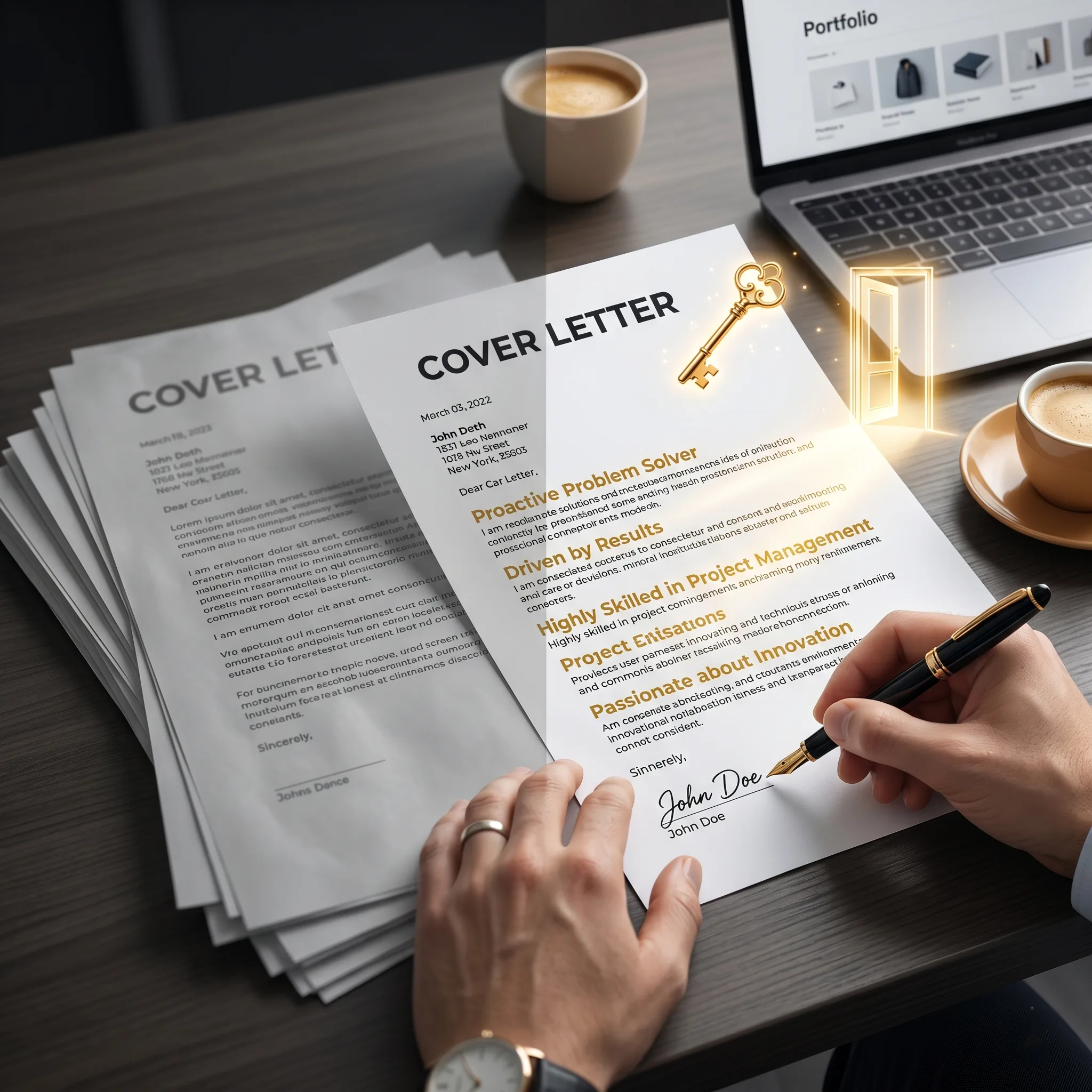
The cover letter remains one of the most misunderstood and underutilized tools in the job application process. While some candidates view it as an outdated formality, hiring managers and recruiters consistently report that a well-written, industry-specific cover letter significantly influences their decision to advance a candidate to the interview stage.
The key word is industry-specific. A generic cover letter that could apply to any position at any company is nearly as ineffective as submitting no cover letter at all. Different industries value different qualities, use different terminology, and expect different communication styles.
A cover letter that resonates with a technology startup hiring manager would fall flat with a partner at a corporate law firm, and vice versa. This guide provides twelve professionally written cover letter templates spanning the major industries and career situations, along with expert guidance on structure, customization, ATS optimization, and the common mistakes that cause otherwise qualified candidates to be passed over.
Why Industry-Specific Cover Letters Matter
Every industry has its own culture, priorities, language, and evaluation criteria. A cover letter that demonstrates fluency in these industry-specific elements sends a powerful signal to the reader: this candidate understands our world, speaks our language, and has taken the time to tailor their approach to our specific context.
The Hiring Manager's Perspective
Hiring managers in competitive industries may review 50 to 200 applications for a single position. They develop pattern recognition for generic applications and can identify a template cover letter within the first sentence. When they encounter a letter that references industry-specific challenges, uses appropriate terminology, and connects the candidate's experience to the role's actual demands, it stands out immediately.
The ATS Factor
Before a human ever reads your cover letter, it may pass through an Applicant Tracking System that scans for keywords matching the job description. ATS software does not understand context or synonyms as well as a human reader. Using the exact terminology from the job posting and industry-standard language increases the likelihood that your application passes the initial electronic screening.
The Cultural Fit Signal
Industries have distinct communication cultures. Technology values conciseness and results-driven language. Healthcare values empathy and patient-centered thinking. Finance values precision and analytical rigor. Legal values thoroughness and attention to detail. Your cover letter's tone and style should reflect the communication norms of the industry you are targeting.
The Universal Cover Letter Structure
While content varies by industry, every effective cover letter follows a four-paragraph structure that can be adapted to any context.
Paragraph 1 - The Hook
Open with a compelling reason why you are applying to this specific company for this specific role. Mention the position by name, reference something specific about the organization that attracted you, and provide a one-sentence summary of why you are an excellent fit. Avoid generic openings like "I am writing to apply for the position of..." which waste the reader's most attentive moment.
Paragraph 2 - The Value Proposition
Connect your most relevant experience and achievements to the role's primary requirements. This paragraph should contain one to two specific examples with quantifiable results when possible. Use the STAR method implicitly: describe the situation briefly, explain your action, and highlight the result.
Paragraph 3 - The Cultural Alignment
Demonstrate knowledge of the company's mission, recent developments, challenges, or culture, and explain how your background aligns. This paragraph proves you have researched the organization and are not submitting a form letter.
Paragraph 4 - The Close
Express enthusiasm, state your availability, and include a forward-looking statement. Request the opportunity to discuss your qualifications further. Thank the reader for their consideration.
ATS Optimization - Getting Past the Digital Gatekeeper
Applicant Tracking Systems are used by approximately 99 percent of Fortune 500 companies and an increasing number of mid-size and smaller organizations. Understanding how these systems process cover letters is essential for any job seeker.
Keyword Strategy
Read the job description carefully and identify the key skills, qualifications, and terms used. Incorporate these exact phrases naturally into your cover letter. If the posting mentions "cross-functional collaboration," use that exact phrase rather than "working across teams." If it lists "Salesforce CRM," include "Salesforce CRM" rather than just "CRM software."
Formatting for ATS
- Use standard fonts: Arial, Calibri, Times New Roman, or Garamond
- Avoid tables, text boxes, columns, headers, and footers
- Do not use graphics, logos, or images
- Submit in the requested format, typically PDF or DOCX
- Use standard section headings if you include them
- Place your contact information in the body of the document, not in a header or footer element
File Naming Convention
Name your file professionally: FirstName-LastName-Cover-Letter-CompanyName.pdf. This helps both ATS systems and human reviewers locate and attribute your document correctly.
Template 1 - Technology Industry Cover Letter
[Your Name] [Your Address] [City, State ZIP] [Email] | [Phone] | [LinkedIn URL]
[Date]
[Hiring Manager Name] [Title] [Company Name] [Address] [City, State ZIP]
Dear [Hiring Manager Name],
Your posting for the [Position Title] caught my attention because of [Company Name]'s approach to [specific technical challenge, product, or initiative you have researched]. Having spent [number] years building [relevant technical area] at [current/previous company], I am drawn to the opportunity to bring that experience to a team tackling [specific challenge or opportunity at the target company].
At [Current/Previous Company], I [led/developed/architected] [specific project or system] that [quantifiable result - for example, reduced deployment time by 40 percent, processed 2 million transactions daily, or improved system uptime to 99.97 percent].
This required [specific technical skills matching the job description] and close collaboration with [cross-functional teams, product managers, designers, or relevant stakeholders]. More recently, I [second achievement with measurable outcome relevant to the target role]. Both experiences reinforced my belief that the best technical solutions emerge from [a principle or approach relevant to the company's engineering culture].
What excites me about [Company Name] is [specific aspect of their technology, culture, or mission - reference a blog post, recent product launch, engineering blog, or conference talk]. I am particularly interested in [specific technical challenge or growth area], where my experience with [relevant technology or methodology] could contribute immediately.
I would welcome the opportunity to discuss how my background in [core technical area] aligns with your team's goals. Thank you for your consideration, and I look forward to the possibility of contributing to [Company Name]'s [specific mission or product area].
Best regards,
[Your Name]
Template 2 - Healthcare Industry Cover Letter
[Your Name] [Your Address] [City, State ZIP] [Email] | [Phone] | [Professional License Number, if applicable]
[Date]
[Hiring Manager Name] [Title] [Healthcare Organization Name] [Address] [City, State ZIP]
Dear [Hiring Manager Name],
I am writing to express my interest in the [Position Title] role at [Organization Name]. With [number] years of clinical experience in [specialty area] and a deep commitment to patient-centered care, I am confident that my skills and values align well with [Organization Name]'s mission of [reference their stated mission or values].
In my current role as [Title] at [Current Organization], I [specific clinical or administrative achievement]. For example, I [detailed example - such as implemented a patient follow-up protocol that reduced readmission rates by 18 percent, managed a caseload of 45 patients while maintaining a 96 percent patient satisfaction score, or led a quality improvement initiative that reduced medication errors by 30 percent].
This experience strengthened my abilities in [relevant skills matching the job description, such as electronic health records management, interdisciplinary team coordination, or evidence-based practice implementation].
I am particularly drawn to [Organization Name] because of your [specific program, reputation, community initiative, or recent achievement]. [His/Her/Their] [specific quality or initiative] reflects the kind of [healthcare environment, commitment to equity, innovative approach] where I do my best work. My experience with [relevant population, procedure, or system] would allow me to contribute to [specific department or program] from day one.
I would welcome the opportunity to discuss how my clinical experience and commitment to [specific value] can support [Organization Name]'s patient care objectives. I am available at [phone] or [email] and can provide professional references upon request.
Sincerely,
[Your Name] [Credentials/Certifications]
Template 3 - Finance Industry Cover Letter
[Your Name] [Your Address] [City, State ZIP] [Email] | [Phone] | [LinkedIn URL]
[Date]
[Hiring Manager Name] [Title] [Financial Institution/Firm Name] [Address] [City, State ZIP]
Dear [Hiring Manager Name],
I am writing to apply for the [Position Title] position at [Firm Name]. With [number] years of experience in [specific finance area - investment banking, asset management, financial analysis, risk management, etc.] and a track record of [key accomplishment area], I am well-positioned to contribute to [Firm Name]'s [specific business line, growth initiative, or strategic priority].
At [Current/Previous Firm], I [specific achievement with financial metrics]. For example, I [detailed accomplishment - such as managed a portfolio of $50 million in assets achieving 12 percent annualized returns, led due diligence on 15 transactions totaling $200 million, or developed a risk model that identified $3.2 million in potential losses before they materialized].
This required rigorous [analytical skill], proficiency in [relevant tools such as Bloomberg Terminal, Python, SQL, or financial modeling software], and the ability to communicate complex findings to [senior stakeholders, clients, or regulatory bodies].
[Firm Name]'s [specific recent deal, market position, research publication, or strategic initiative] particularly resonates with my professional interests. I have followed your [team/division]'s work in [specific area] and believe my experience in [relevant specialization] would complement your existing capabilities.
My [CFA, CPA, MBA, or relevant certification] and hands-on experience with [specific regulatory framework, financial instrument, or market segment] prepare me to contribute with minimal ramp-up time.
I would welcome the opportunity to discuss how my experience in [core finance area] aligns with [Firm Name]'s objectives. Thank you for your consideration.
Respectfully,
[Your Name]
Template 4 - Marketing Industry Cover Letter
[Your Name] [Your Address] [City, State ZIP] [Email] | [Phone] | [Portfolio URL]
[Date]
[Hiring Manager Name] [Title] [Company Name] [Address] [City, State ZIP]
Dear [Hiring Manager Name],
I have been following [Company Name]'s brand evolution over the past [timeframe], and your [specific campaign, rebrand, content strategy, or market move] is exactly the kind of work I want to contribute to. I am applying for the [Position Title] with [number] years of experience driving measurable marketing results across [channels - digital, content, brand, product marketing, etc.].
At [Current/Previous Company], I [specific marketing achievement with metrics]. I [led a content strategy that increased organic traffic by 150 percent in 12 months / launched a campaign that generated $2.4 million in pipeline / grew social media engagement by 85 percent while reducing cost per acquisition by 30 percent / repositioned the brand resulting in a 22 percent increase in brand awareness as measured by survey].
These results came from a data-informed approach combined with [creative storytelling, deep audience understanding, cross-functional collaboration, or another relevant skill].
Your posting mentions [specific requirement from the job description], which aligns directly with my experience at [Company where you did this]. I [specific example of that skill in action with results]. I am also proficient in [relevant marketing tools from the job posting, such as HubSpot, Google Analytics, Marketo, SEMrush, or Adobe Creative Suite], which I understand your team relies on.
I would love to discuss how my experience in [specific marketing discipline] could support [Company Name]'s growth objectives. I am available at [phone] and have included my portfolio at [URL] for additional examples of my work.
Best regards,
[Your Name]
Template 5 - Education Industry Cover Letter
[Your Name] [Your Address] [City, State ZIP] [Email] | [Phone]
[Date]
[Principal/Hiring Manager Name] [Title] [School/District/Institution Name] [Address] [City, State ZIP]
Dear [Recipient Name],
I am writing to apply for the [Position Title] at [School/Institution Name]. As a [certified/licensed] educator with [number] years of experience teaching [subject area and grade levels], I am passionate about [specific educational philosophy or approach] and eager to bring that commitment to [School Name]'s [specific program, student population, or educational mission].
In my current role at [Current School/Institution], I have [specific teaching achievement].
For example, I [designed and implemented a differentiated curriculum that improved student assessment scores by 20 percent / led the integration of technology-enhanced learning resulting in measurable engagement gains / developed an after-school mentoring program serving 35 at-risk students with a 95 percent program completion rate / piloted a project-based learning initiative now adopted across the department].
My approach to instruction emphasizes [relevant pedagogical method] while maintaining high academic standards.
[School/Institution Name]'s commitment to [specific value, program, or approach mentioned in their materials] resonates strongly with my educational philosophy.
I am particularly interested in your [specific program, initiative, or approach], and my experience with [relevant teaching method, technology, or student population] would allow me to contribute meaningfully to this work. I hold [relevant certifications, endorsements, or advanced degrees] and am committed to ongoing professional development.
I would welcome the opportunity to discuss how my teaching experience and dedication to [specific educational value] align with [School Name]'s mission. I am available for an interview at your convenience and can provide professional references from current and former administrators.
Sincerely,
[Your Name] [Teaching Certifications]
Template 6 - Engineering Industry Cover Letter
[Your Name] [Your Address] [City, State ZIP] [Email] | [Phone] | [LinkedIn URL]
[Date]
[Hiring Manager Name] [Title] [Company Name] [Address] [City, State ZIP]
Dear [Hiring Manager Name],
I am applying for the [Position Title] at [Company Name], drawn by your work in [specific engineering domain, project, or product]. With [number] years of experience in [engineering discipline - mechanical, civil, electrical, chemical, etc.] and a [PE license, relevant certification, or advanced degree], I bring a combination of technical expertise and practical project experience that aligns with this role's requirements.
At [Current/Previous Company], I [specific engineering achievement].
I [led the design of a structural system for a $40 million commercial development that met LEED Gold certification requirements / developed an automated testing protocol that reduced product validation time by 35 percent / engineered a manufacturing process improvement that increased throughput by 25 percent while reducing material waste by 12 percent / designed and oversaw installation of electrical systems for a 200-unit residential complex completed on schedule and 5 percent under budget].
This project required proficiency in [relevant software: AutoCAD, SolidWorks, MATLAB, ANSYS, or industry-specific tools] and collaboration with [relevant stakeholders].
Your posting emphasizes [specific requirement], which aligns with my experience at [Company where you demonstrated this]. I [specific example with outcome]. I am also experienced in [additional relevant skills from the job description, such as FEA analysis, project management, regulatory compliance, or specific codes and standards].
I am eager to discuss how my engineering background can contribute to [Company Name]'s projects and objectives. Thank you for your consideration.
Best regards,
[Your Name] [PE License Number, if applicable]
Template 7 - Legal Industry Cover Letter
[Your Name] [Your Address] [City, State ZIP] [Email] | [Phone]
[Date]
[Partner/Hiring Manager Name] [Title] [Firm/Organization Name] [Address] [City, State ZIP]
Dear [Recipient Name],
I am writing to express my interest in the [Position Title] position at [Firm Name]. With [number] years of experience practicing [area of law] and a record of [key accomplishment area - successful litigation outcomes, transaction closings, regulatory compliance, etc.], I am confident in my ability to contribute to [Firm Name]'s [specific practice group or area].
During my tenure at [Current/Previous Firm], I [specific legal achievement]. For example, I [first-chaired a trial resulting in a $4.2 million verdict for the client / drafted and negotiated contracts for transactions totaling $150 million / achieved favorable outcomes in 23 of 25 contested motions / managed regulatory compliance for a multinational corporation across 12 jurisdictions].
My practice has required [specific skills relevant to the role, such as complex litigation, corporate due diligence, regulatory analysis, or appellate brief writing], and I have developed particular expertise in [specific legal area].
[Firm Name]'s reputation in [specific practice area] and your recent work on [reference a notable case, deal, or initiative if publicly available] align with my professional interests and experience. I am drawn to your firm's [specific quality - client approach, commitment to pro bono, industry focus, or collaborative culture]. My background in [relevant area] would complement your existing [practice group or team] capabilities.
I have enclosed my resume and writing sample for your review and would welcome the opportunity to discuss my qualifications in greater detail. I am available at [phone] or [email] at your convenience.
Respectfully submitted,
[Your Name] [Bar Admission(s)]
Template 8 - Creative and Design Industry Cover Letter
[Your Name] [Your Address] [City, State ZIP] [Email] | [Phone] | [Portfolio URL]
[Date]
[Creative Director/Hiring Manager Name] [Title] [Company/Agency Name] [Address] [City, State ZIP]
Dear [Recipient Name],
When I saw [Company/Agency Name]'s [specific creative work you admire - campaign, design project, brand identity, product], I immediately understood the level of craft and strategic thinking your team brings to every project. I am applying for the [Position Title] because I want to contribute to that standard of work, and my [number] years of experience in [creative discipline] have prepared me to do so.
My most relevant project at [Current/Previous Company] was [specific creative project]. [Describe the brief or challenge in one sentence]. I [your creative approach and execution in two to three sentences]. The result [measurable outcome - increased brand recognition by 30 percent, won an industry award, generated 500,000 social impressions, or achieved specific client goal]. This project exemplifies my approach: [one-sentence summary of your creative philosophy or process].
Beyond individual projects, I bring [specific skill from the job description - UX research, motion design, brand strategy, art direction, copywriting, or relevant creative skill]. At [Company], I [specific example of this skill with context and outcome]. My technical proficiency includes [relevant tools from the job posting - Adobe Creative Suite, Figma, Sketch, After Effects, InDesign, or industry-specific software].
I would love the opportunity to walk you through my portfolio at [URL] and discuss how my creative perspective could enhance [Company/Agency Name]'s work. I am available at [phone] or [email] and look forward to the conversation.
Warmly,
[Your Name]
Template 9 - Entry-Level Cover Letter
[Your Name] [Your Address] [City, State ZIP] [Email] | [Phone] | [LinkedIn URL]
[Date]
[Hiring Manager Name] [Title] [Company Name] [Address] [City, State ZIP]
Dear [Hiring Manager Name],
I am applying for the [Position Title] at [Company Name], where I am eager to begin my professional career in [field/industry]. As a recent graduate from [University] with a [degree] in [major] and [internship, project, or relevant experience], I bring the foundational skills, fresh perspective, and genuine enthusiasm that this entry-level role requires.
Although I am early in my career, my [academic and extracurricular] experience has prepared me for the demands of this position.
During my [internship/capstone project/relevant experience] at [Organization], I [specific accomplishment with measurable result if possible - such as assisted in managing social media accounts that grew followers by 25 percent, contributed to a research project resulting in a published paper, or coordinated logistics for a 200-person campus event]. This experience taught me [relevant professional skill] and confirmed my interest in [field].
[Company Name]'s [specific quality, mission, product, or culture element] aligns with the direction I want my career to take. I was particularly impressed by [specific detail from your research], and I am drawn to your [training program, mentorship culture, growth opportunities, or team structure] as an environment where I can develop quickly while contributing meaningful work from the start.
My coursework in [relevant subjects] and proficiency in [relevant tools or skills from the job posting] provide a strong foundation for immediate contribution.
I would appreciate the opportunity to discuss how my background and enthusiasm for [field] can contribute to [Company Name]'s team. Thank you for considering my application.
Sincerely,
[Your Name]
Template 10 - Career Change Cover Letter
[Your Name] [Your Address] [City, State ZIP] [Email] | [Phone] | [LinkedIn URL]
[Date]
[Hiring Manager Name] [Title] [Company Name] [Address] [City, State ZIP]
Dear [Hiring Manager Name],
I am applying for the [Position Title] at [Company Name], bringing a nontraditional background that I believe offers unique value. After [number] years in [previous field], I am making a deliberate transition to [target field] - a move driven by [genuine, specific reason for the transition that demonstrates thoughtfulness rather than desperation].
My career in [previous field] developed transferable skills that directly support this role. At [Previous Company], I [specific achievement that demonstrates a transferable skill].
For example, [detailed example showing how a skill from your previous career applies to the target role - such as managing complex client relationships that required the same stakeholder management skills listed in this posting, or analyzing large datasets in a different context than the one described but using the same analytical approach].
I have also invested in my transition through [relevant education, certifications, bootcamp, freelance projects, or volunteer experience in the target field].
What draws me to [Company Name] specifically is [detail demonstrating genuine research and interest]. I recognize that career changers must earn their credibility through results rather than tenure, and I am prepared to do exactly that. My [previous industry] background gives me [specific advantage that someone from within the target industry would not have - a different perspective, client-side experience, regulatory knowledge, or cross-industry insight].
I would welcome the chance to discuss how my [previous field] experience and commitment to [target field] can contribute to [Company Name]. I am available at [phone] or [email] and look forward to the opportunity.
Best regards,
[Your Name]
Template 11 - Internal Position Cover Letter
[Your Name] [Current Department] [Company Name]
[Date]
[Hiring Manager Name] [Department] [Company Name]
Dear [Hiring Manager Name],
I am writing to express my interest in the [Position Title] within the [Target Department]. Having served as [Current Title] in [Current Department] for [duration], I have developed a strong understanding of [Company Name]'s operations, culture, and strategic priorities, and I am eager to apply that institutional knowledge in a new capacity.
In my current role, I have [specific achievement relevant to the target position]. For example, I [detailed accomplishment with metrics or outcomes]. I have also contributed to [cross-departmental project or initiative] that gave me direct exposure to [the target department's work, the skills required for the new role, or the business challenges the new role addresses]. These experiences confirmed my interest in [target area] and demonstrated my ability to [relevant skill].
My familiarity with [Company Name]'s [processes, systems, culture, clients, or products] means I can contribute to [Target Department] with minimal onboarding time. I already have working relationships with [relevant teams or stakeholders] and understand the [specific operational context relevant to the new role]. My manager, [Manager Name], is aware of and supportive of my interest in this opportunity.
I would appreciate the chance to discuss how my current contributions and cross-functional experience position me for success in [Position Title]. I am available at [extension or email] at your convenience.
Best regards,
[Your Name] [Current Title] [Current Department]
Template 12 - Executive Cover Letter
[Your Name] [Your Address] [City, State ZIP] [Email] | [Phone] | [LinkedIn URL]
[Date]
[Board Chair/CEO/Hiring Authority Name] [Title] [Company Name] [Address] [City, State ZIP]
Dear [Recipient Name],
The [Position Title] at [Company Name] represents the intersection of my professional expertise and personal conviction. Over [number] years leading [function or business unit] across [industries or company types], I have consistently [one-sentence summary of your executive value proposition - for example, transformed underperforming divisions into market leaders, scaled operations from startup to enterprise, or driven organizational change through periods of significant disruption].
At [Most Relevant Company], I [flagship executive achievement with strategic and financial scope]. As [Title], I [detailed description of the scope, challenge, approach, and outcome - for example, led a 300-person organization through a complete digital transformation that increased revenue by $45 million over three years while reducing operational costs by 18 percent].
This required [high-level executive skills - board management, P&L ownership, M&A integration, organizational redesign, or market expansion]. At [Second Company], I [second executive achievement demonstrating a different but relevant capability].
[Company Name]'s current position - [specific observation about the company's strategic situation, challenges, or opportunities based on your research] - aligns with the kind of leadership challenge where I have consistently delivered results. My experience in [relevant strategic area] and network within [relevant industry or market] would support the [growth, transformation, stabilization, or expansion] objectives I understand this role is designed to advance.
I would welcome a confidential conversation about how my leadership experience can serve [Company Name]'s strategic objectives. I am available at [phone] or [email] and can provide board-level references upon request.
Respectfully,
[Your Name]
Common Cover Letter Mistakes That Cost Interviews
Mistake 1 - The Generic Opening
"I am writing to express my interest in the position posted on your website" tells the reader nothing and wastes the most valuable real estate in your letter. Replace generic openings with a specific hook that demonstrates knowledge of the company, role, or industry.
Mistake 2 - Restating the Resume
If your cover letter simply lists the same jobs and dates that appear on your resume, it adds no value. Use the cover letter to provide context, narrative, and strategic framing that the resume format cannot accommodate.
Mistake 3 - Focusing on What You Want
Phrases like "this position would help me advance my career" or "I am looking for an opportunity to grow" center the letter on your needs rather than the employer's. Frame everything in terms of what you bring to the organization.
Mistake 4 - Ignoring the Job Description
Every job description contains clues about what the employer values most. A cover letter that does not directly address the key requirements listed in the posting signals either carelessness or a lack of fit.
Mistake 5 - Apologizing for Gaps or Weaknesses
Do not draw attention to qualifications you lack. If you meet most of the requirements, focus on those. If a gap is significant enough that it needs addressing, frame it as an area of active development rather than a deficiency.
Mistake 6 - Typos and Errors
A cover letter with spelling or grammatical errors, or with the wrong company name from a previous version, is almost always immediately disqualified. Proofread carefully, use a fresh review for each submission, and have someone else read the final version when possible.
Customization Strategy - Making Each Letter Count
Writing a unique cover letter for every application is time-consuming but necessary for positions you genuinely want. Here is a practical approach to efficient customization.
The 60-40 Rule
Approximately 60 percent of your cover letter can remain consistent across applications within the same industry and role type: your core value proposition, your strongest achievement story, and your general professional brand. The remaining 40 percent should be customized for each specific application: the opening hook, the company-specific research paragraph, the keyword alignment, and the closing.
Research Checklist
Before customizing a cover letter, spend 15 to 20 minutes researching the following about the target organization:
- Recent news: press releases, product launches, funding announcements, leadership changes
- Company values and mission: stated on their website, often reflected in the job description
- Industry challenges: what is the company likely struggling with or prioritizing
- Team structure: who you would report to, who is on the team (LinkedIn is useful here)
- Glassdoor and similar platforms: what do employees say about the culture
Incorporate at least one finding from this research into your cover letter to demonstrate genuine interest and due diligence.
Version Control
Maintain a master document with your core paragraphs and a log of which version you sent to which company. This prevents the embarrassing mistake of referencing the wrong company name and ensures you can prepare for interviews by reviewing what you actually said in your application.
Formatting Best Practices for Cover Letters
Proper formatting ensures your cover letter looks professional and is easy to read, whether it is reviewed on screen, printed, or parsed by an ATS.
Font and Layout
Use a clean, professional font at 10.5 to 12 point size. Arial, Calibri, Garamond, and Times New Roman are all safe choices. Maintain one-inch margins on all sides and single-space the body with a blank line between paragraphs. Keep the entire letter to one page - this is a hard rule, not a suggestion.
Contact Information Block
Place your name, address, phone number, email, and LinkedIn URL at the top of the letter. Below that, include the date, followed by the recipient's name, title, company, and address. If you are submitting electronically and the posting does not specify a contact person, it is acceptable to use just the company name and department.
Salutation
Address the letter to a specific person whenever possible. "Dear [Hiring Manager Name]" is ideal. "Dear Hiring Manager" is acceptable when a specific name cannot be determined despite reasonable effort. Avoid "To Whom It May Concern," which reads as impersonal and outdated in most industries. If the hiring team includes multiple people, "Dear [Company Name] Hiring Team" is an appropriate alternative.
Signature Block
For emailed cover letters, close with your full name, phone number, and email. For printed or PDF letters, include a handwritten signature above your typed name if possible. The closing salutation should match the formality level of the industry: "Sincerely" and "Best regards" are universally appropriate, while "Warmly" and "Cheers" are suitable only for creative industries and informal company cultures.
Cover Letter Length - The One-Page Principle
The single most important formatting rule for cover letters is brevity. One page is the maximum. Every hiring manager, recruiter, and career advisor agrees on this point, and for good reason.
Hiring professionals are scanning dozens or hundreds of applications per posting. They allocate seconds, not minutes, to each cover letter during initial screening. A one-page letter that makes its case concisely earns respect. A two-page letter signals either poor judgment about the reader's time or an inability to prioritize information - neither of which is a quality employers seek.
Within the one-page limit, aim for 250 to 400 words distributed across three to four paragraphs. This provides enough space to hook the reader, present your strongest evidence, demonstrate company knowledge, and close with a call to action. If you find yourself exceeding one page, the solution is not smaller fonts or narrower margins - it is tighter editing.
What to Cut
When editing for length, remove these common space-wasters:
- Redundant qualifiers: "I believe I would be a great fit" adds nothing; just demonstrate the fit
- Resume recitations: dates, job titles, and bullet points belong on the resume
- Generic filler: "I am a team player with strong communication skills" uses space without proving anything
- Excessive gratitude: one "thank you" at the close is sufficient
- Disclaimers: "Although I do not have experience in X" draws attention to weaknesses
When Cover Letters Are Optional - And Why You Should Write One Anyway
Some job postings mark the cover letter as "optional," leading many candidates to skip it entirely. This is a strategic mistake. When a cover letter is optional, submitting one immediately differentiates you from the majority of applicants who take the path of least resistance. Hiring managers frequently report that they give preference to candidates who submit optional cover letters because it demonstrates genuine interest and effort.
The only exception is when a posting explicitly states "do not submit a cover letter." In that case, respect the instruction - the company may have a specific reason for the request, and ignoring it demonstrates poor attention to detail rather than initiative.
For online application forms that do not include a cover letter upload field, you can often paste a brief version into a "notes" or "additional information" text box. Even three to four sentences connecting your background to the role can set you apart from applicants who leave that field blank.
Frequently Asked Questions
How do you write a cover letter that passes ATS screening?
Applicant Tracking Systems parse cover letters for keywords that match the job description, so your primary strategy is to mirror the exact language used in the posting. If the listing says project management, use that exact phrase rather than synonyms like project coordination or initiative oversight.
Structure your letter with clear paragraphs rather than tables, columns, or text boxes, which ATS software often cannot parse correctly.
Use a standard font like Arial, Calibri, or Times New Roman and avoid headers or footers where some systems fail to read content. Submit in the format requested, typically PDF or DOCX.
Include your full name and contact information in the body text rather than only in a header graphic. Do not stuff keywords unnaturally, as many modern ATS platforms flag keyword stuffing, and a human reviewer will eventually read the letter if it passes the initial screen.
Should a cover letter repeat what is already on the resume?
A cover letter should complement the resume rather than duplicate it. While both documents reference the same experiences and qualifications, they serve different purposes. The resume presents facts in a structured, scannable format: job titles, dates, bullet-pointed achievements, and measurable results.
The cover letter provides narrative context that explains why those facts matter for this specific role at this specific company.
Use the cover letter to highlight the two or three most relevant achievements from your resume and expand on them with context the resume format does not accommodate.
Explain what motivated a career transition, describe a project outcome in terms of its broader business impact, or connect seemingly unrelated experiences to the role requirements. A reader who reviews both documents should gain deeper understanding from each, not encounter the same information twice.
How long should a cover letter be in 2025?
The ideal cover letter length in 2025 remains three to four paragraphs fitting on a single page, typically between 250 and 400 words. Hiring managers and recruiters consistently report that they spend 30 to 60 seconds on an initial cover letter review, which means anything beyond one page is unlikely to be read in full during the screening phase.
The four-paragraph structure remains the standard: an opening that identifies the position and hooks the reader, a middle paragraph connecting your most relevant experience to the role requirements, a second middle paragraph demonstrating company knowledge and cultural fit, and a closing with a clear call to action.
For executive or academic positions, slightly longer letters of up to 500 words are acceptable because these roles involve more complex qualification sets that benefit from additional narrative context.