
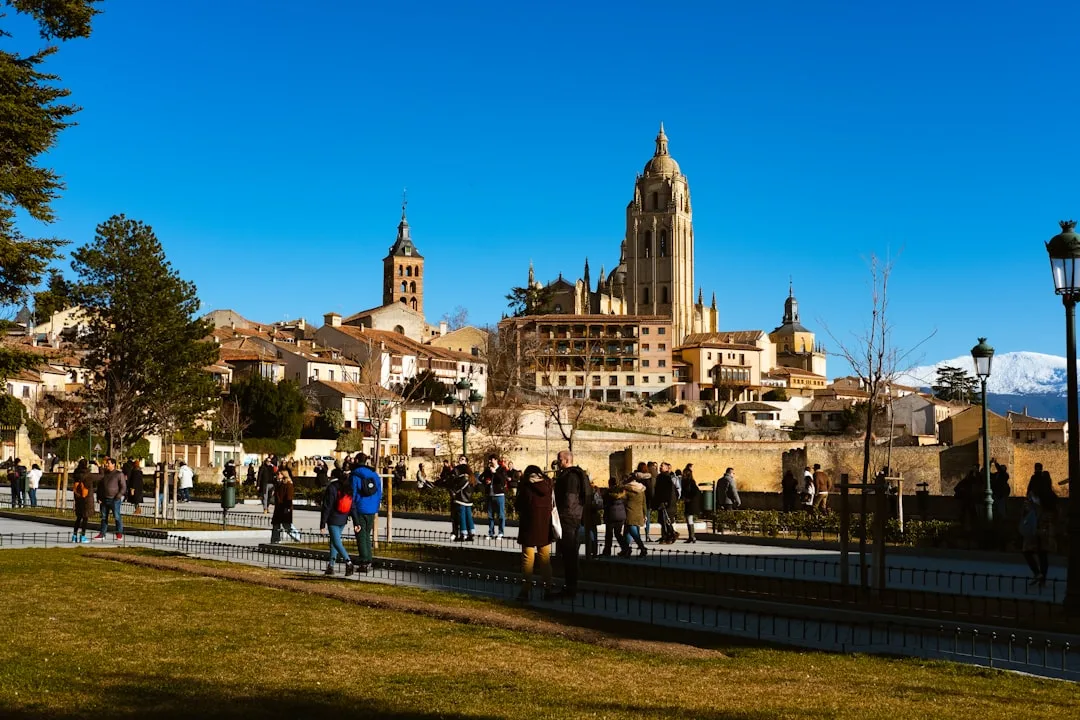
Traveling in the Spanish-speaking world rewards even a small investment in the language. A few dozen phrases cover nearly all airport, hotel, taxi, transport, sightseeing, and emergency scenarios, and locals almost universally respond warmly to visitors who make the attempt.
This reference organizes the phrases by travel situation, marks the key regional differences between Spain and Latin America, and includes the vocabulary for handling problems: lost luggage, missed connections, illness, theft, and breakdowns. For the grammar underlying these expressions, see the Spanish grammar rules guide for beginners.
Spanish varies meaningfully from country to country. A traveler who learns conducir for "to drive" is correct in Spain but will find manejar more common in Mexico and most of Latin America. Coche for "car" is standard in Spain; carro or auto is standard in Latin America.
Ordenador for "computer" is Spain-only; everywhere else it is computadora. These are not subtle distinctions - using the wrong word produces puzzled looks at car rentals, in electronics shops, and on public transport. This reference marks regional vocabulary for each phrase that differs.
Airport and Flights
Table 1. Airport and air travel vocabulary.
| Spanish | English | Notes |
|---|---|---|
| El aeropuerto | Airport | |
| El vuelo | Flight | |
| La aerolinea | Airline | |
| La maleta | Suitcase | |
| El equipaje | Luggage | |
| El equipaje de mano | Carry-on | |
| La tarjeta de embarque | Boarding pass | |
| La puerta de embarque | Boarding gate | |
| El asiento | Seat | |
| El pasillo | Aisle | |
| La ventanilla | Window | |
| El pasaporte | Passport | |
| La aduana | Customs | |
| El control de seguridad | Security check | |
| La salida | Departure / exit | |
| La llegada | Arrival | |
| El retraso | Delay | |
| El vuelo cancelado | Cancelled flight | |
| La conexion / el transbordo | Connection | |
| Perdi mi conexion | I missed my connection |
Useful airport phrases.
- ¿Donde esta la puerta 14? - Where is gate 14?
- Mi vuelo tiene retraso - My flight is delayed.
- Perdi mi vuelo - I missed my flight.
- ¿Donde recojo mi equipaje? - Where do I pick up my luggage?
- Mi maleta no llego - My suitcase didn't arrive.
- Tengo que declarar esto - I have to declare this.
- No tengo nada que declarar - I have nothing to declare.
When you lose a bag, the critical phrase is "Mi equipaje esta perdido" at the reclamo de equipaje (baggage claim) counter. Have your baggage claim tag ready, and ask for a PIR (parte de irregularidad de equipaje) - the report you need for insurance.
Hotels and Accommodation
Table 2. Hotel vocabulary and phrases.
| Spanish | English |
|---|---|
| El hotel | Hotel |
| La habitacion | Room |
| La habitacion sencilla / individual | Single room |
| La habitacion doble | Double room |
| La cama matrimonial | Double bed |
| Dos camas / camas gemelas | Twin beds |
| La recepcion | Reception |
| El recepcionista | Receptionist |
| La reservacion / la reserva | Reservation |
| El check-in / la entrada | Check-in |
| El check-out / la salida | Check-out |
| La llave / la tarjeta | Key / keycard |
| El ascensor | Elevator |
| El elevador | Elevator (Mexico) |
| La escalera | Stairs |
| La caja fuerte | Safe |
| El desayuno incluido | Breakfast included |
| El aire acondicionado | Air conditioning |
| La calefaccion | Heating |
| La toalla | Towel |
Hotel phrases.
- Tengo una reservacion a nombre de Garcia - I have a reservation under Garcia.
- ¿A que hora es el check-out? - What time is check-out?
- ¿El desayuno esta incluido? - Is breakfast included?
- ¿Hay wifi? - Is there wifi?
- El aire acondicionado no funciona - The air conditioning isn't working.
- Necesito mas toallas - I need more towels.
- ¿Me puede llamar un taxi? - Can you call me a taxi?
Taxi, Uber, and Private Transport
Table 3. Taxi vocabulary.
| Spanish | English |
|---|---|
| El taxi | Taxi |
| El taxista | Taxi driver |
| El conductor | Driver |
| La tarifa | Fare |
| El taximetro | Meter |
| La propina | Tip |
| Por favor, lleveme a... | Please take me to... |
| ¿Cuanto cuesta ir a...? | How much to go to...? |
| ¿Puede usar el taximetro? | Can you use the meter? |
| Pare aqui, por favor | Stop here, please |
| Espereme, por favor | Wait for me, please |
| ¿Acepta tarjeta? | Do you take cards? |
| Quedese con el cambio | Keep the change |
When entering a taxi, establish whether the meter will run (¿Puede usar el taximetro?) or whether you are agreeing a fixed price (¿Cuanto cuesta ir a...?). Insisting on the meter after entering creates friction; negotiate before.
Metro, Bus, and Trains
Table 4. Public transport vocabulary.
| Spanish | English |
|---|---|
| El metro | Subway / metro |
| El autobus | Bus (Spain) |
| El bus | Bus (Latin America, shorter) |
| El camion | Bus (Mexico, inner-city) |
| La guagua | Bus (Caribbean, Canary Islands) |
| El colectivo | Shared taxi / minibus (Southern Cone) |
| El tren | Train |
| La estacion | Station |
| La parada | Stop |
| La linea | Line |
| El andén | Platform |
| El billete / el boleto | Ticket (Spain / Latin America) |
| La tarjeta de transporte | Transit card |
| De ida | One-way |
| De ida y vuelta | Round trip |
Phrases for buses and trains.
- ¿Cual es la proxima estacion? - What's the next station?
- ¿Este autobus va al centro? - Does this bus go downtown?
- ¿En que estacion me bajo para...? - Which station do I get off at for...?
- ¿Cuanto tarda? - How long does it take?
- Un billete de ida y vuelta, por favor - A round-trip ticket, please.
The word for "bus" varies more across the Spanish-speaking world than almost any other transit term. Autobus works universally as a formal word, but locals may say bus (most of Latin America), camion (Mexico), guagua (Caribbean), colectivo (Argentina, Uruguay), or micro (Chile). Knowing these avoids confusion when asking where to catch one.
Asking for Directions
Table 5. Directional vocabulary.
| Spanish | English |
|---|---|
| A la derecha | To the right |
| A la izquierda | To the left |
| Todo recto / Todo derecho | Straight ahead |
| Hacia adelante | Forward |
| Hacia atras | Back |
| El norte | North |
| El sur | South |
| El este | East |
| El oeste | West |
| Cerca | Near |
| Lejos | Far |
| Al lado de | Next to |
| Enfrente de | In front of / across from |
| Detras de | Behind |
| Entre | Between |
| En la esquina | On the corner |
| A dos cuadras | Two blocks away (LatAm) |
| A dos manzanas | Two blocks away (Spain) |
| El semaforo | Traffic light |
Asking-directions phrases.
- ¿Como llego a la plaza mayor? - How do I get to the main square?
- ¿Esta cerca? - Is it near?
- ¿Puede indicarme en el mapa? - Can you show me on the map?
- Estoy perdido / perdida - I'm lost.
- ¿Me puede repetir, por favor? - Can you repeat that, please?
Car Rental and Driving
Table 6. Car and driving vocabulary.
| Spanish | English | Notes |
|---|---|---|
| El coche | Car | Spain |
| El carro | Car | Most of Latin America |
| El auto | Car | Southern Cone |
| Conducir | To drive | Spain |
| Manejar | To drive | Latin America |
| El carnet de conducir / la licencia | Driver's license | Spain / LatAm |
| El seguro | Insurance | |
| La gasolina / el combustible | Gas / fuel | |
| La estacion de servicio / la gasolinera | Gas station | |
| El estacionamiento / el parking | Parking | |
| La autopista | Highway | |
| La carretera | Road / highway | |
| El peaje / la caseta | Toll | |
| La multa | Fine | |
| El GPS / el navegador | GPS | |
| La direccion | Address / direction | |
| La matricula / la placa | License plate |
Table 7. Spain vs Latin America driving vocabulary.
| Spain | Latin America | English |
|---|---|---|
| coche | carro / auto | car |
| conducir | manejar | drive |
| carnet | licencia | license |
| aparcar | estacionar / parquear | park |
| gasolinera | estacion de servicio / bomba | gas station |
| peaje | caseta | toll |
Sightseeing and Tourism
Table 8. Sightseeing vocabulary.
| Spanish | English |
|---|---|
| La oficina de turismo | Tourist office |
| La guia | Guide / guidebook |
| El mapa | Map |
| El museo | Museum |
| La iglesia | Church |
| La catedral | Cathedral |
| El castillo | Castle |
| El palacio | Palace |
| La plaza | Square |
| El parque | Park |
| El mirador | Lookout / viewpoint |
| La entrada | Ticket / entrance |
| La salida | Exit |
| La excursion | Excursion / tour |
| El horario | Schedule / hours |
| Abierto / Cerrado | Open / Closed |
| Prohibido | Forbidden |
| Cuidado | Careful |
Sightseeing phrases.
- ¿A que hora abre? - What time does it open?
- ¿Cuanto cuesta la entrada? - How much is admission?
- ¿Hay descuento para estudiantes? - Is there a student discount?
- ¿Se permiten fotos? - Are photos allowed?
- ¿Hay una guia en ingles? - Is there a guide in English?
Shopping and Souvenirs
Table 9. Shopping vocabulary.
| Spanish | English |
|---|---|
| La tienda | Shop |
| El mercado | Market |
| El centro comercial | Mall |
| El supermercado | Supermarket |
| La farmacia | Pharmacy |
| El banco | Bank |
| El cambio / la casa de cambio | Exchange / bureau de change |
| La talla | Size (clothes) |
| El numero | Size (shoes) |
| Demasiado caro | Too expensive |
| ¿Me puede hacer un descuento? | Can you give me a discount? |
| ¿Puedo probarmelo? | Can I try it on? |
| Me lo llevo | I'll take it |
| Solo estoy mirando | I'm just looking |
In Spain, haggling is rare outside of flea markets. In Latin America, friendly haggling in markets (mercados, tianguis in Mexico) is common and expected. Fixed-price shops never haggle.
Emergencies Abroad
Table 10. Emergency vocabulary.
| Spanish | English |
|---|---|
| La emergencia | Emergency |
| La policia | Police |
| La ambulancia | Ambulance |
| Los bomberos | Firefighters |
| El hospital | Hospital |
| El doctor / el medico | Doctor |
| La farmacia | Pharmacy |
| El consulado | Consulate |
| La embajada | Embassy |
| Fui victima de un robo | I was robbed |
| Me robaron | They robbed me |
| Perdi mi pasaporte | I lost my passport |
| Necesito ayuda | I need help |
| Llame a una ambulancia | Call an ambulance |
| No me siento bien | I don't feel well |
Emergency numbers. Spain and most of the European Spanish-speaking world: 112 (general). Mexico, Argentina, Chile, Colombia: 911. Each country has specific lines for fire and ambulance; 911 or 112 almost always routes correctly.
When reporting a theft, you will need a denuncia (written police report) from the policia to file an insurance claim or apply for a replacement passport at your consulate. Do not leave the police station without it.
Common Mistakes
- Using coche in Mexico or carro in Spain. Both are understood but sound foreign. Match the local word.
- Saying conducir in Latin America. Locals will understand but manejar is more natural.
- Asking for el parking in Latin America. It is an Anglicism; estacionamiento is standard.
- Confusing billete (Spain) with boleto (Latin America). Both mean ticket, but using the wrong one in the wrong region sounds odd.
- Expecting the taximetro to always be used. In some cities and for airport runs, flat rates are negotiated instead.
- Using peaje in Mexico. The word is caseta (de cobro) or caseta de peaje on highways.
- Saying Estoy excitado about a trip. Use Estoy emocionado; excitado has a sexual connotation.
Quick Reference Cheat Sheet
Top 20 travel phrases.
- ¿Donde esta...? - Where is...?
- ¿Cuanto cuesta? - How much does it cost?
- Lleveme a..., por favor - Take me to..., please.
- Tengo una reservacion - I have a reservation.
- ¿A que hora sale? - What time does it leave?
- ¿A que hora llega? - What time does it arrive?
- Perdi mi... - I lost my...
- Necesito ayuda - I need help.
- ¿Habla ingles? - Do you speak English?
- Soy turista - I'm a tourist.
- No entiendo - I don't understand.
- ¿Me puede ayudar? - Can you help me?
- Un billete / boleto, por favor - One ticket, please.
- ¿Este es el camino a...? - Is this the way to...?
- Llame a la policia - Call the police.
- Llame una ambulancia - Call an ambulance.
- Me siento mal - I feel bad.
- ¿Donde esta la embajada? - Where is the embassy?
- ¿Puedo pagar con tarjeta? - Can I pay by card?
- Gracias por su ayuda - Thanks for your help.
FAQ
Is Spanish in Spain very different from Spanish in Latin America?
The core grammar and most vocabulary are shared. Differences are concentrated in pronouns (Spain uses vosotros; Latin America uses ustedes), pronunciation (the Castilian theta sound in ciudad is absent in most of Latin America), and everyday vocabulary (coche vs carro, ordenador vs computadora, conducir vs manejar). Educated speakers from any Spanish-speaking country understand each other fully; only slang and rapid speech cause friction.
Do I say coche or carro for car?
In Spain, coche. In most of Latin America, carro. In Argentina, Uruguay, and Chile, auto is the preferred word. All three are understood everywhere; matching the local word sounds better.
How do I ask for directions in Spanish?
¿Como llego a...? (How do I get to...?) is the most natural formula. Add "por favor" for politeness. To confirm, ask ¿Esta cerca? (Is it near?) or ¿Esta lejos? (Is it far?). Phrasebook-style questions like ¿Puede indicarme en el mapa? (Can you show me on the map?) are very useful.
What's the right word for ticket?
Billete in Spain (for transport and events), boleto in Latin America. Both are understood in either region. For entrance fees to museums and attractions, entrada is standard everywhere.
How do I handle a taxi negotiation?
In a metered taxi, ask ¿Puede usar el taximetro? (Can you use the meter?). In an unmetered taxi or for a fixed run, agree the price before entering: ¿Cuanto cuesta ir a...? Never negotiate after the ride starts.
What's the emergency number in Spanish-speaking countries?
112 in Spain (same as the EU general number). 911 in Mexico and most of Latin America. Argentina uses both 911 and country-specific numbers. In a real emergency, either will usually route correctly.
What should I do if I lose my passport abroad?
File a denuncia (police report) at the local policia. Then go to your consulado or embajada. The police report is required for both insurance claims and for a replacement travel document.
See Also
- Spanish common phrases for daily conversation
- Spanish alphabet pronunciation guide
- Spanish grammar rules complete beginners guide
- Ser vs estar complete guide with examples
- Spanish verb conjugation guide present tense
- Spanish por vs para complete usage reference
- Spanish pronouns direct indirect object reflexive
- Language difficulty for English speakers
Frequently Asked Questions
Is Spanish in Spain very different from Spanish in Latin America?
Core grammar and most vocabulary are shared. Differences concentrate in pronouns (Spain’s vosotros vs Latin America’s ustedes), pronunciation of c/z, and everyday vocabulary (coche/carro, ordenador/computadora, conducir/manejar). Educated speakers understand each other fully.
Do I say coche or carro for car?
Coche in Spain, carro in most of Latin America, auto in the Southern Cone. All three are understood everywhere; matching the local word sounds more natural.
How do I ask for directions in Spanish?
Como llego a…? is the standard formula. Add por favor for politeness. Confirm with Esta cerca? (near?) or Esta lejos? (far?). Ask Puede indicarme en el mapa? to have someone point on a map.
What's the right word for ticket?
Billete in Spain (transport and events), boleto in Latin America. Both are understood in either region. For museum or attraction admission, entrada is standard everywhere.
How do I handle a taxi negotiation?
In a metered taxi, ask Puede usar el taximetro? For an unmetered taxi, agree the price before entering: Cuanto cuesta ir a…? Never negotiate after the ride starts.
What's the emergency number in Spanish-speaking countries?
112 in Spain. 911 in Mexico and most of Latin America. In a real emergency, 112 or 911 will usually route correctly.
What should I do if I lose my passport abroad?
File a denuncia (police report) at the local policia, then go to your consulado or embajada. The police report is required for insurance claims and for a replacement travel document.