
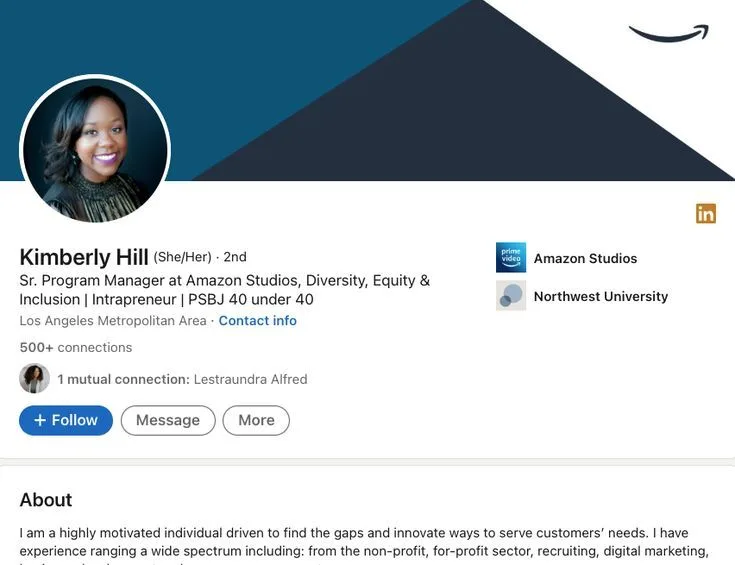
Your professional bio is one of the most versatile pieces of writing you will ever create. It appears on LinkedIn, conference programs, company websites, bylines, media kits, social media profiles, and grant applications. A well-crafted bio opens doors, builds credibility, and shapes how others perceive your professional identity before they ever meet you.
Yet most professionals treat their bio as an afterthought. They cobble together a few sentences the night before a conference deadline or copy a generic template that reads like every other bio in the program. The result is a missed opportunity to differentiate themselves in contexts where first impressions carry enormous weight.
This guide provides professional bio examples for every platform and career stage. You will find templates for one-sentence bios, short paragraphs, full-page narratives, LinkedIn summaries, conference introductions, website about pages, and social media profiles.
Each template comes with examples you can adapt to your specific situation, along with guidance on choosing between first person and third person, tailoring your bio to different audiences, and avoiding the most common mistakes that undermine credibility.
Understanding Bio Lengths and When to Use Each
Before writing a single word, you need to determine the appropriate length for your context. Different platforms and situations demand different levels of detail, and using the wrong length signals a lack of awareness about professional norms.
The One-Sentence Bio (15 to 30 Words)
The one-sentence bio is the most compressed version of your professional identity. It appears in social media profiles, email signatures, contributor bylines, and quick introductions at events. Despite its brevity, it must accomplish three things: identify your role, establish your area of expertise, and include one differentiating detail.
Formula: [Name] is a [role] at [organization] specializing in [area of expertise] [differentiating detail].
Examples:
"Sarah Chen is a principal product designer at Stripe specializing in payment UX who has shipped products used by 4 million businesses worldwide."
"Marcus Rivera is a supply chain consultant at Deloitte who helps Fortune 500 manufacturers reduce procurement costs by 15 to 30 percent."
"Dr. Amara Okafor is a cardiovascular researcher at Johns Hopkins whose work on early detection biomarkers has been published in The Lancet and JAMA."
"James Thornton is a criminal defense attorney in Chicago who has tried over 200 jury cases and secured acquittals in three high-profile federal proceedings."
What makes these work: Each example names the person, their title, their organization, and a specific accomplishment or scope that distinguishes them from others in similar roles. There is no wasted language.
The Short Paragraph Bio (75 to 100 Words)
The short paragraph bio appears in conference programs, anthology contributor sections, webinar introductions, and professional directory listings. It expands on the one-sentence bio by adding context about your background, a second achievement, and your credentials.
Formula: [Name] is [role] at [organization]. [Background or trajectory sentence]. [Key achievement or credential]. [Second achievement or current focus]. [Optional: location, education, or personal detail].
Template:
[Name] serves as [title] at [organization], where [he/she/they] leads [team/function/initiative]. With [number] years of experience in [industry/field], [Name] has [major accomplishment with quantified result]. [He/She/They] previously held roles at [notable organizations] and holds [degree/certification] from [institution]. [Name] is based in [city] and [optional personal detail].
Examples:
Marketing Director:
Rachel Kim serves as Vice President of Marketing at Meridian Health Systems, where she oversees a 40-person team across brand strategy, digital marketing, and patient engagement. With 18 years of experience in healthcare marketing, Rachel has driven a 65 percent increase in patient acquisition while reducing cost-per-acquisition by 28 percent.
She previously led marketing at Cleveland Clinic and Mount Sinai and holds an MBA from the Wharton School. Rachel is based in Boston and serves on the board of the Healthcare Marketing Association.
Software Engineer:
David Okonkwo is a senior software engineer at Datadog, where he builds real-time monitoring infrastructure serving over 25,000 enterprise customers. A specialist in distributed systems and observability, David has authored three open-source tools with a combined 12,000 GitHub stars and has contributed to the OpenTelemetry project.
He previously worked at Google and Amazon Web Services and holds a Master of Science in Computer Science from Georgia Tech. David speaks regularly at KubeCon and SREcon on reliability engineering at scale.
The Full-Page Bio (300 to 500 Words)
The full-page bio appears on company leadership pages, speaker profiles for major conferences, book jacket descriptions, media kits, and personal websites. It provides a narrative arc that contextualizes your career, highlights your most significant achievements, and gives the reader a sense of who you are beyond your title.
Structure:
- Opening paragraph (2 to 3 sentences): Current role and primary professional identity
- Career narrative (3 to 4 sentences): Professional trajectory and how you arrived at your current position
- Achievements paragraph (3 to 4 sentences): Major accomplishments with specific metrics
- Expertise and thought leadership (2 to 3 sentences): Publications, speaking, advisory roles
- Education and credentials (1 to 2 sentences): Degrees, certifications, relevant training
- Personal closing (1 to 2 sentences): Location, interests, humanizing detail
Full-Page Bio Example - Technology Executive:
Jennifer Walsh is the Chief Technology Officer at Pinnacle Financial Group, a $4.2 billion asset management firm serving institutional investors across North America and Europe. In this role, she leads a team of 120 engineers and data scientists responsible for the firm's trading platforms, risk analytics systems, and client-facing digital products.
Jennifer's career spans two decades at the intersection of financial services and technology. Before joining Pinnacle, she served as VP of Engineering at Goldman Sachs, where she led the modernization of the firm's fixed income trading infrastructure, and as a founding engineer at Kensho Technologies, the financial analytics company acquired by S&P Global for $550 million in 2018.
Under Jennifer's technical leadership, Pinnacle has reduced trade execution latency by 40 percent, launched a proprietary risk modeling platform that processes 2.3 billion data points daily, and achieved 99.99 percent uptime across all critical trading systems for three consecutive years. Her team's work on real-time portfolio analytics was recognized with the Waters Technology Award for Best Risk Management Initiative in 2025.
A recognized voice in financial technology, Jennifer has delivered keynote addresses at Sibos, Money20/20, and the MIT FinTech Conference. Her writing on the practical applications of machine learning in asset management has appeared in the Journal of Portfolio Management and the Financial Analysts Journal. She serves as a technical advisor to two fintech startups and sits on the advisory board of Cornell's Financial Engineering program.
Jennifer holds a Bachelor of Science in Computer Science from MIT and a Master of Business Administration from Columbia Business School. She is a CFA charterholder.
Based in New York City, Jennifer mentors women in technology through the Anita Borg Institute and is an avid competitive sailor who has completed three Newport-to-Bermuda ocean races.
LinkedIn Summary Examples by Industry
Your LinkedIn summary is arguably the single most important piece of professional writing you maintain. It appears in recruiter searches, client research, networking follow-ups, and media vetting. The 2,600-character limit demands precision.
Structure Formula for LinkedIn Summaries
Effective LinkedIn summaries follow a consistent structure regardless of industry:
- Hook (1 to 2 sentences): A specific statement that captures your professional identity and immediately communicates your value
- Context (2 to 3 sentences): Your current role, scope of responsibility, and the scale of impact
- Track record (3 to 4 sentences): Key achievements with metrics that demonstrate consistent performance
- Expertise areas (1 to 2 sentences or a bulleted list): Specific skills and domains where you bring deep knowledge
- Call to action (1 sentence): What you want the reader to do next
LinkedIn Summary - Software Engineer
I build the backend systems that power real-time financial transactions for 12 million users.
As a senior software engineer at Square, I architect and maintain the core payment processing services that handle over $180 billion in annual transaction volume. My work focuses on distributed systems reliability, ensuring that every swipe, tap, and online payment completes successfully in under 200 milliseconds.
Before Square, I spent four years at Amazon Web Services on the DynamoDB team, where I helped design the partition management system that improved read latency by 35 percent for the service's largest enterprise customers. I have also contributed to open-source projects including Apache Kafka and OpenTelemetry.
Key areas: distributed systems design, microservices architecture, payment systems, event-driven architecture, Go, Java, AWS, observability and monitoring, system reliability at scale.
I write about engineering challenges at scale on my blog and speak at conferences including Strange Loop and QCon. If you are working on interesting infrastructure problems, I would welcome a conversation.
LinkedIn Summary - Marketing Leader
I have generated over $340 million in attributed pipeline across three B2B SaaS companies in the last decade.
As VP of Demand Generation at Snowflake, I lead a team of 22 marketers responsible for the full-funnel programs that drive enterprise pipeline and revenue growth. Our team's integrated campaigns across digital, events, content, and ABM consistently deliver qualified pipeline that exceeds quarterly targets by 15 to 25 percent.
My career in B2B marketing started at HubSpot during its hypergrowth phase, where I helped scale the demand generation engine from $50M to $200M ARR. At Twilio, I built the account-based marketing program from scratch, targeting the Global 2000 and contributing $86M in first-year pipeline.
What I do best: demand generation strategy, account-based marketing, marketing operations and attribution, sales and marketing alignment, budget optimization, team building and development.
I believe the best marketing teams operate like revenue engines, not creative agencies. If you are building a marketing organization that is accountable to pipeline and revenue metrics, let us connect.
LinkedIn Summary - Sales Professional
I have closed $28 million in enterprise software deals over the past five years, with an average deal size of $420K and a win rate 22 percent above team average.
As a Senior Enterprise Account Executive at Salesforce, I manage a portfolio of Fortune 500 accounts across the financial services vertical. My approach combines deep industry knowledge with a consultative sales methodology that aligns our platform capabilities to specific business outcomes my customers care about.
My path to enterprise sales started in customer success at a Series B startup, where I learned that the best salespeople are the ones who understand the customer's business as well as the customer does. That philosophy has guided my career through roles at DocuSign and ServiceNow before joining Salesforce.
Specialties: complex enterprise sales cycles, C-suite relationship building, value-based selling, financial services vertical expertise, cross-functional deal orchestration, strategic account planning.
I mentor early-career sales professionals through the AA-ISP and speak on consultative selling methodologies at industry events. Always happy to connect with fellow sales leaders and financial services professionals.
LinkedIn Summary - Career Changer
After 10 years as a mechanical engineer designing automotive powertrain systems, I made the deliberate decision to transition into product management, and it turned out to be the best career move I ever made.
My engineering background gave me something that many product managers lack: the ability to evaluate technical feasibility with precision, communicate fluently with development teams, and make data-driven decisions under constraints. At my current role as a Product Manager at Tesla, I leverage this technical foundation daily as I lead the product roadmap for our energy storage monitoring platform.
Since transitioning into product management three years ago, I have launched four major product features that increased user engagement by 45 percent, reduced customer churn by 18 percent, and generated $12M in incremental annual revenue. I completed a Product Management Certificate from Reforge and earned my CSPO certification.
What drives me: building products that solve real engineering problems, bridging the gap between technical teams and business stakeholders, and using data to make better product decisions.
I am passionate about helping other engineers explore the product management path. If you are considering a similar transition or if you are hiring PMs with deep technical backgrounds, reach out.
LinkedIn Summary - Recent Graduate
I graduated from the University of Michigan with a degree in Data Science and a portfolio of four real-world analytics projects that solved actual business problems for actual companies.
During my final two years at Michigan, I worked as a data science intern at Ford Motor Company, where I built predictive models for supply chain disruption that reduced unplanned parts shortages by 23 percent across three manufacturing plants. My senior capstone project with Domino's Pizza used customer behavior data to optimize delivery zone boundaries, a model the company piloted in the Ann Arbor market.
Technical skills: Python, R, SQL, TensorFlow, scikit-learn, Tableau, Apache Spark, A/B testing, statistical modeling, natural language processing.
I am looking for a data scientist or analytics engineer role where I can apply machine learning to complex business problems in a collaborative team environment. I thrive on projects where messy real-world data meets practical business questions.
Let us connect if you are hiring data science talent or if you want to chat about applied ML in supply chain or logistics.
LinkedIn Summary - Executive
I have built and scaled three enterprise software businesses from early revenue to $100M+ ARR, and I have learned that sustainable growth comes from disciplined execution, not just aggressive sales targets.
As CEO of Apex Cloud Solutions, I lead a 400-person organization that provides hybrid cloud infrastructure to mid-market enterprises. Since I took the helm in 2022, we have grown ARR from $62M to $185M, expanded into four new geographic markets, achieved a net revenue retention rate of 138 percent, and completed two strategic acquisitions that added AI-driven automation to our platform.
My leadership philosophy centers on building cultures where operational excellence and innovation coexist. At every company I have led, I have invested heavily in developing first-line managers, implementing rigorous operating cadences, and creating incentive structures that reward both individual performance and cross-functional collaboration.
Previously, I served as COO of DataStream Analytics through its acquisition by Oracle and as President of CloudFirst, where I led the turnaround from negative growth to $110M ARR in four years. I began my career as a software engineer at Microsoft.
Board member at two venture-backed SaaS companies. Stanford MBA. Regular speaker at SaaStr and Web Summit on scaling B2B companies.
Conference Speaker Bio Examples
Conference speaker bios serve a specific purpose: they must convince the audience that you are worth listening to on the particular topic you are presenting. Unlike general professional bios, speaker bios should be tailored to the conference theme and your specific session.
Structure for Conference Speaker Bios
- Current role and organization (establishes authority)
- Specific expertise related to the talk topic (establishes relevance)
- Quantified achievements in the topic area (establishes credibility)
- Previous speaking or thought leadership (establishes experience)
- Brief personal detail (establishes relatability)
Conference Speaker Bio Template
[Name] is [title] at [organization], where [he/she/they] [responsibility directly related to talk topic]. With [number] years of experience in [specific domain], [Name] has [achievement related to talk topic with metrics]. [He/She/They] [has/have] spoken at [conferences] and [written for/contributed to] [publications or projects]. [Name] holds [relevant credential] and is based in [city].
Example - Tech Conference Speaker Bio
Priya Narasimhan is Director of Machine Learning Engineering at Spotify, where she leads the team responsible for the recommendation algorithms that power Discover Weekly, Release Radar, and personalized playlists for 600 million users. Over the past six years, her team's work has increased average listening time by 32 percent and doubled the discovery rate of emerging artists on the platform.
Priya has spoken at NeurIPS, RecSys, and Strange Loop on building recommendation systems at scale. She holds a PhD in Computer Science from Carnegie Mellon, where her dissertation focused on collaborative filtering in sparse data environments. When not optimizing music recommendations, Priya plays viola in a community chamber ensemble in Brooklyn.
Example - Business Conference Speaker Bio
Thomas Eriksen is the Chief Revenue Officer at Zenith SaaS, a $230M ARR enterprise workflow automation company. He has built and led sales organizations through four different phases of company growth, from seed-stage startup to publicly traded enterprise. Under his leadership, Zenith's sales team has achieved 115 percent of quota for nine consecutive quarters while maintaining a sales cycle length 30 percent shorter than the industry average.
Thomas is a frequent speaker at SaaStr Annual, Pavilion CRO Summit, and Revenue Collective events on topics including enterprise pricing strategy, sales compensation design, and building repeatable sales processes. He holds an MBA from Harvard Business School and lives in Austin, Texas with his family.
Website About Page Bio
Your website about page is your most flexible bio format. Unlike LinkedIn or conference programs, you control the full presentation including layout, length, imagery, and supporting content. This is where you can tell a richer story.
About Page Structure
Section 1 - The Professional Story (200 to 300 words)
Open with your professional identity and what drives your work. This section should read like the first two paragraphs of a magazine profile, not like a resume summary. Use first person for personal sites and third person for company leadership pages.
Section 2 - Credentials and Achievements (100 to 150 words)
Transition to the concrete evidence that supports the narrative. List your most relevant accomplishments, publications, speaking engagements, and credentials. Use a mix of prose and bulleted lists for scanability.
Section 3 - The Human Element (75 to 100 words)
Close with personal details that make you relatable and memorable. Mention interests, community involvement, or a distinctive fact that people remember after meeting you.
About Page Bio Example - Consultant
The Work
I help mid-market manufacturing companies modernize their operations without the chaos that typically accompanies digital transformation. Over the past 14 years, I have guided 60+ manufacturers through technology transitions, process redesigns, and organizational changes that collectively represent over $2 billion in operational improvements.
My approach is different from the big consulting firms. I embed with your team for 12 to 18 months, working alongside the people who actually run your operations rather than delivering a PowerPoint from the outside. This means the changes we implement together actually stick after I leave, with a 92 percent adoption rate across my client engagements.
Before starting my consultancy, I spent eight years in manufacturing operations at General Electric, rising from process engineer to plant operations manager at their Aviation division in Cincinnati. That firsthand experience running a factory floor with 800 employees informs every recommendation I make.
Credentials
- Master of Engineering from MIT and MBA from Kellogg School of Management
- Lean Six Sigma Master Black Belt
- Published in Harvard Business Review, MIT Sloan Management Review, and IndustryWeek
- Advisory board member at the Manufacturing Leadership Council
- Keynote speaker at 40+ industry events including IMTS and the Smart Manufacturing Summit
Beyond the Factory Floor
I live in Grand Rapids, Michigan with my family. I am an amateur woodworker who appreciates the irony of a manufacturing consultant choosing to build furniture by hand. I also volunteer as a mentor with FIRST Robotics, helping high school students discover that manufacturing is a technology career.
Social Media Bio Examples
Social media bios operate under extreme character constraints. Twitter/X allows 160 characters. Instagram allows 150 characters. These bios must communicate your identity instantly.
Social Media Bio Formula
[Role] at [Organization] + [Expertise/Focus] + [Differentiator or Personality Detail]
Twitter/X Bio Examples (Under 160 Characters)
"CMO at Datadog. Helping developers love their monitoring tools. Previously built marketing at PagerDuty and New Relic. Chicago native. Trail runner."
"Employment law attorney. Representing workers in wage theft and discrimination cases. Partner at Morrison Labor Law. 200+ cases won. She/her."
"Pediatric surgeon at Boston Children's Hospital. Researching minimally invasive techniques for congenital heart defects. Author. Dog person."
"VP Engineering at Notion. Building the tools that help teams organize their work and ideas. Ex-Google, ex-Dropbox. Opinions are my own."
Instagram Bio Examples (Under 150 Characters)
"Supply chain strategist. Helping companies move products faster and smarter. Speaker. Dog dad. Based in Nashville."
"Architect designing net-zero commercial buildings. Principal at GreenLine Design. LEED Fellow. AIA member. Portland, OR."
Bios for Different Career Stages
Your career stage determines not just what you include in your bio but how you frame your narrative. The emphasis shifts as you progress from establishing credibility to demonstrating impact to defining legacy.
Entry-Level Professional Bio
At the entry level, your bio should emphasize education, relevant skills, internship experiences, and the direction you are heading. Avoid apologetic language. You are a professional; frame yourself as one.
Template:
[Name] is a [title] at [organization], where [he/she/they] [responsibility]. [He/She/They] joined [organization] after [education or pathway], where [he/she/they] [relevant academic or internship achievement]. [Name] specializes in [skill areas] and has contributed to [project or initiative with result]. [He/She/They] holds a [degree] from [institution].
Example:
Emily Nakamura is a Financial Analyst at J.P. Morgan's Investment Banking division, where she supports transaction execution for healthcare M&A deals. She joined the firm after graduating summa cum laude from the University of Virginia with a double major in Finance and Biology.
During her internship at Morgan Stanley, Emily built the financial model for a $340 million pharmaceutical acquisition that the team used throughout the deal process. She specializes in healthcare valuation, financial modeling, and industry analysis. Emily is a Level II CFA candidate and holds her Series 79 and 63 licenses.
Mid-Career Professional Bio
Mid-career bios should demonstrate a track record of progressive responsibility and measurable results. This is where your narrative shifts from potential to proven performance.
Template:
[Name] is [title] at [organization], leading [team/function]. With [number] years in [industry/field], [he/she/they] has [major career achievement]. At [current organization], [Name] has [specific accomplishment with metrics]. Previously, [he/she/they] [held roles at notable organizations] where [he/she/they] [relevant achievements]. [Name] holds [degrees/certifications] and [optional: industry involvement].
Example:
Carlos Mendez is Senior Director of Product Management at Atlassian, where he leads a 15-person product team responsible for Jira's enterprise workflow platform. With 12 years of experience in enterprise software product management, Carlos has launched products used by over 200,000 organizations worldwide. At Atlassian, he led the redesign of Jira's automation engine, which increased enterprise customer adoption by 55 percent and reduced support ticket volume by 30 percent.
Previously, Carlos held product leadership roles at Pivotal Software and IBM, where he managed the product roadmap for IBM's cloud development tools. He holds an MS in Human-Computer Interaction from Carnegie Mellon and a BS in Computer Science from UT Austin. Carlos is a frequent speaker at ProductCon and Mind the Product conferences.
Executive Bio
Executive bios should emphasize strategic leadership, organizational impact, and industry influence. The narrative arc should communicate vision and decision-making capability, not just functional expertise.
Template:
[Name] is [title] at [organization], [brief description of organization]. [He/She/They] [joined/founded/was appointed] in [year] and has [transformation or growth achieved]. Under [his/her/their] leadership, [organization] has [strategic accomplishments with metrics]. Before [current role], [Name] served as [previous senior roles] where [he/she/they] [notable achievements]. [Name] [board memberships, advisory roles, industry leadership]. [He/She/They] holds [degrees] from [institutions].
Example:
Margaret Sullivan is the Chief Executive Officer of Cascade Health, a $1.8 billion integrated healthcare delivery network serving 2.4 million patients across the Pacific Northwest. Since her appointment in 2020, Margaret has led Cascade through a comprehensive strategic transformation that has improved clinical outcomes, expanded access to care, and strengthened the organization's financial position.
Under her leadership, Cascade has opened 14 new community health centers, achieved top-decile patient satisfaction scores, reduced average emergency department wait times by 38 percent, and grown revenue by 24 percent while maintaining an operating margin above 4 percent.
Before joining Cascade, Margaret served as President of Clinical Operations at Providence Health System and as COO of Swedish Medical Center. She serves on the boards of the American Hospital Association and the Healthcare Leadership Council and is a member of the Aspen Health Strategy Group. Margaret holds a Master of Health Administration from the University of Michigan and a Bachelor of Science in Nursing from Georgetown University.
Third Person vs. First Person - When to Use Each
The choice between third person and first person is not a matter of preference. It is determined by context, and using the wrong perspective undermines your professionalism.
Use Third Person For:
- Conference programs and speaker introductions
- Company team and leadership pages
- Press releases and media kits
- Book jacket bios and contributor sections
- Award nominations and applications
- Formal professional directories
- Any context where someone else will read or present the bio
Use First Person For:
- LinkedIn summaries and personal profiles
- Personal websites and blogs
- Cover letters and personal statements
- Networking emails and self-introductions
- Social media profiles
- Any context where you are speaking directly to your audience
Conversion Example
Third Person (for a conference program):
Sarah Mitchell is the founder and principal consultant at Brightspark Advisory, a strategic communications firm specializing in crisis management for technology companies. She has managed communications during more than 40 corporate crises including data breaches, product recalls, and executive departures for companies ranging from Series B startups to Fortune 100 enterprises.
Sarah previously led global communications at Uber during a period of significant organizational change and held senior PR roles at Google and Microsoft. She holds an MA in Strategic Communications from Columbia University.
First Person (for LinkedIn):
I founded Brightspark Advisory to help technology companies navigate their worst days with clarity, transparency, and strategic discipline. Over the past eight years, I have managed communications during more than 40 corporate crises, from data breaches and product failures to executive transitions and regulatory investigations.
My clients range from Series B startups to Fortune 100 enterprises, and they come to me because I have been in the room during the hardest moments and know what it takes to protect both reputation and trust. Before starting Brightspark, I led global communications at Uber during a period of significant organizational change and held senior PR roles at Google and Microsoft.
Common Professional Bio Mistakes
Understanding what to avoid is as important as knowing what to include. These are the mistakes that most frequently undermine otherwise qualified professionals.
Mistake 1 - Starting with "I am a passionate..."
The word passionate has become so overused in professional bios that it now communicates nothing. Show your commitment through specific actions and achievements rather than declaring it with an adjective. Replace "I am passionate about data science" with "I have spent the last seven years building predictive models that have saved my clients over $45 million in inventory costs."
Mistake 2 - Listing Responsibilities Instead of Achievements
Your bio should not read like a job description. Responsibilities tell the reader what you are supposed to do. Achievements tell them what you actually accomplished. Replace "Responsible for managing a team of 12 engineers" with "Built and led a 12-person engineering team that shipped the company's highest-revenue product feature in 2025."
Mistake 3 - Including Irrelevant Personal Details
Personal details humanize your bio, but they must be appropriate for the context. Your hobbies are relevant on a personal website. They are not relevant in a formal conference bio unless they connect to your professional narrative. A cybersecurity expert who competes in lock-picking competitions has a relevant hobby. A cybersecurity expert who enjoys cooking does not gain professional credibility from that detail.
Mistake 4 - Using Jargon Your Audience Does Not Understand
Tailor your language to your audience. A bio for an industry conference can use technical terminology because attendees share your knowledge base. A bio for a general business audience should translate specialized concepts into plain language. If your mother would not understand a sentence in your bio, it is too jargon-heavy for a general audience.
Mistake 5 - Neglecting to Update
A bio with outdated information is worse than no bio at all. It suggests you are disengaged from your professional presence. Update your bios when you change roles, achieve significant milestones, earn new credentials, or shift your professional focus. Set a calendar reminder to review all your bios every six months.
Mistake 6 - Writing a Wall of Text
Even the most compelling bio becomes unreadable when presented as a single dense paragraph. Use line breaks, paragraph structure, and strategic formatting to create visual breathing room. On platforms like LinkedIn, short paragraphs of two to three sentences perform dramatically better than long blocks of text.
Bio Writing Process - Step by Step
Step 1: Gather Your Raw Materials
Before writing, compile a list of the following:
- Your current title and organization
- Three to five key achievements with specific metrics
- Relevant previous roles and organizations
- Education, certifications, and credentials
- Speaking engagements, publications, or media appearances
- Board memberships or advisory roles
- Awards or recognitions
- One to two personal details appropriate for professional contexts
Step 2: Identify Your Audience
Ask yourself who will read this bio and what they need to know. A bio for a sales conference should emphasize revenue achievements and client relationships. A bio for a technical audience should highlight engineering accomplishments and technical expertise. A bio for a general business audience should focus on organizational impact and leadership.
Step 3: Write the Long Version First
Start with a full-page bio of 400 to 500 words that includes everything you want to communicate. It is always easier to cut than to add. This long version becomes your master bio from which you can extract shorter versions for different platforms.
Step 4: Create Length Variations
From your master bio, create the following versions:
- Full page (300 to 500 words): The complete version for websites and detailed profiles
- Short paragraph (75 to 100 words): The conference and directory version
- One sentence (15 to 30 words): The social media and byline version
- LinkedIn version (1,500 to 2,000 characters): Adapted to first person with a hook opening
Step 5: Get Feedback
Share your bio with three people: a colleague in your field who can verify accuracy, a friend outside your field who can flag jargon, and a professional contact who represents your target audience. Ask each person what impression the bio creates and whether anything feels unclear, exaggerated, or missing.
Step 6: Maintain and Update
Store all versions of your bio in a single document for easy access. Review and update them every six months or whenever you change roles, complete major projects, or earn new credentials. Keep both first-person and third-person versions current so you are always prepared when someone requests a bio on short notice.
Quick Reference - Bio Length Guide
| Context | Length | Person | Key Focus |
|---|---|---|---|
| Twitter/X | Under 160 characters | First | Identity + one differentiator |
| Under 150 characters | First | Role + personality | |
| Email signature | 1 sentence | Third | Title + expertise |
| Byline/contributor | 1 to 2 sentences | Third | Role + credentials |
| Conference program | 75 to 100 words | Third | Topic-relevant expertise |
| Company website | 150 to 300 words | Third | Role + achievements + credentials |
| LinkedIn summary | 1,500 to 2,000 characters | First | Hook + track record + expertise |
| Personal website | 300 to 500 words | First | Full narrative + personality |
| Media kit | 300 to 500 words | Third | Full narrative + credentials |
| Award nomination | Varies by application | Third | Achievements in relevant area |
Final Checklist Before Publishing
Before you publish or submit any version of your professional bio, verify the following:
- The perspective (first or third person) is appropriate for the platform
- Your current title and organization are accurate
- All metrics and achievements are truthful and current
- The length matches the platform requirements
- The bio emphasizes achievements over responsibilities
- Technical jargon is appropriate for the target audience
- At least one specific, quantified accomplishment is included
- The bio has been proofread for grammatical errors
- Contact information or a call to action is included where appropriate
- The tone is confident without being arrogant
Your professional bio is a living document that evolves with your career. Invest the time to write it well, maintain it consistently, and tailor it to every context where it appears. The professionals who get the most opportunities are not always the most qualified. They are the ones whose bios make the strongest case for their expertise when it matters most.
Frequently Asked Questions
How long should a professional bio be?
The ideal length depends entirely on the platform and context. A one-sentence bio for social media profiles should be 15 to 30 words that capture your role, expertise, and one distinguishing detail.
A short paragraph bio for conference programs or contributor bylines runs 75 to 100 words and covers your title, organization, key achievements, and relevant credentials.
A full-page bio for websites, executive profiles, or detailed speaker introductions spans 300 to 500 words and includes your professional narrative, major accomplishments, education, and personal interests.
LinkedIn summaries allow up to 2,600 characters, but the most effective ones stay between 1,500 and 2,000 characters. Always write to the specific platform requirements and trim ruthlessly to remove filler.
Should I write my professional bio in first person or third person?
The choice between first person and third person depends on the context and platform. Use first person for LinkedIn summaries, personal websites, and any context where you are speaking directly to your audience. First person feels more authentic and conversational, which builds trust.
Use third person for conference programs, press releases, media kits, company team pages, and formal introductions where someone else would be presenting your credentials.
Third person conveys authority and formality.
Some professionals maintain both versions ready to deploy as needed. The critical mistake is mixing perspectives within a single bio, which reads as awkward and unprofessional. Choose one perspective and maintain it consistently throughout the entire piece.
What should I include in a professional bio if I am early in my career?
Early-career professionals often struggle with bios because they feel they lack accomplishments, but the key is reframing your narrative around potential and trajectory rather than tenure. Lead with your current role and organization, then highlight your educational background including relevant coursework, honors, or thesis work.
Include internship experiences with specific contributions and measurable results. Mention relevant certifications, technical skills, volunteer leadership, or significant projects even if they were academic.
Reference any publications, presentations, or industry involvement.
Close with your professional interests and the direction you are heading. Avoid apologetic language like junior or aspiring. Instead, position yourself as a professional who brings fresh perspective and specific skills. Quantify everything you can, even from academic or volunteer contexts.