
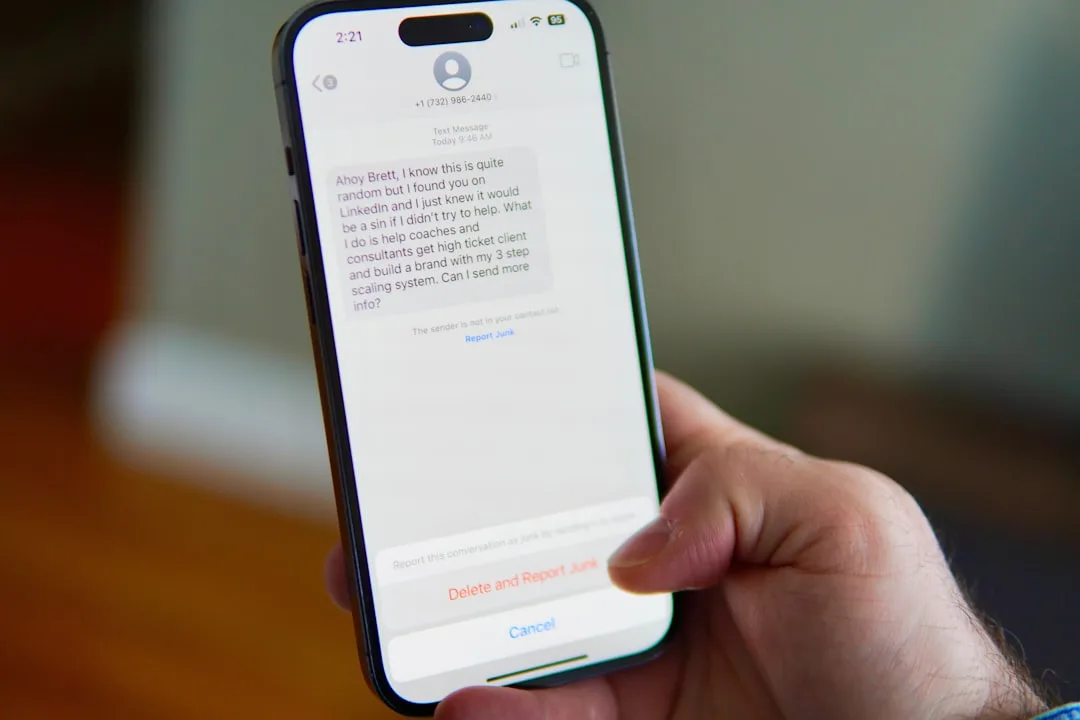
A business proposal is the document where months of sales conversations, scoping work, and relationship-building get formalized into something a buyer can say yes to. It is the moment when a qualified opportunity becomes either a signed deal or a quiet rejection. Yet for most sellers, the proposal is the most stressful and least satisfying part of the cycle.
The draft lives in a half-finished document on a Monday morning, gets padded with boilerplate on Tuesday, is handed to legal on Wednesday, and goes out at midnight on Thursday with a sinking feeling that the reader will skim it and decide based on the price table.
Strong proposals are not written under that kind of pressure. They are built from components, templates, and disciplines that compress the writing time and sharpen the buyer-facing product. The rest of this guide walks through the structure, the language patterns, and the templates that turn proposals from a painful ritual into a repeatable craft.
What a Business Proposal Is For
A proposal has three jobs. It confirms the scope the buyer is agreeing to. It justifies the price the buyer will pay. And it reduces the perceived risk of saying yes.
Most weak proposals focus mostly on the first job and partially on the second. They describe the scope in detail, land on a price, and ignore the risk question entirely. But for buyers, the risk question often matters most. A $250,000 proposal from a new vendor feels riskier than a $400,000 proposal from a vendor with proven outcomes, even when the cheaper vendor has the better technical fit. The proposal is the document where vendors either earn the buyer's confidence or leave them guessing.
A strong proposal answers three questions the buyer will ask, sometimes out loud and sometimes not: what exactly am I getting, why is this price the right price, and what could go wrong. The proposal that answers all three clearly and specifically wins against the proposal that answers only the first two.
A buyer reading a proposal is often already nervous about the decision. The proposal's job is not just to impress them: it is to make saying yes feel safe.
The Seven-Part Structure
Most strong business proposals move through seven sections. The weight of each section varies by deal size and industry. The order varies less.
Part 1: Executive summary. One page at most. The headline problem, the proposed solution, the cost, the expected outcome.
Part 2: Problem or opportunity statement. The buyer's situation in the buyer's language. Specific references to what has been discussed.
Part 3: Proposed approach. What the vendor will do, in enough specificity that the buyer can visualize it.
Part 4: Deliverables and scope. The concrete list of what will be produced, what is in scope, what is explicitly out of scope.
Part 5: Timeline and resourcing. Phases, milestones, people on the project, cadence of contact.
Part 6: Investment and terms. Pricing structure, what is included, what costs extra, payment terms, key commercial assumptions.
Part 7: About the vendor and proof. Team bios, relevant case studies, references available.
Occasionally a proposal will include additional sections (risks and mitigations, appendices with detailed methodology, legal terms). These are additions, not substitutions. The seven core sections earn their place in nearly every proposal.
The Executive Summary
The executive summary is the section most frequently read and most frequently written badly. Most buyers read this section and skim the rest unless something in the summary raises a question.
A strong executive summary has a tight structure:
- One paragraph on the buyer's situation, in the buyer's own words
- One paragraph on the proposed approach at a summary level
- One paragraph on the expected outcome, with specific numbers or milestones
- A short closing paragraph on why this vendor is the right partner for this work
- A clearly stated price, or a price range if the full price is in the investment section
The length: ideally under 400 words, maximum one page. The temptation to pad the executive summary with context, credentials, and praise for the opportunity should be resisted. The executive summary is the document the CFO will read before approving. Make it easy to say yes to.
Template 1: Services Proposal Executive Summary
## Executive summary

[Buyer Company] is preparing to [specific initiative or response to specific challenge], and has shared with us the goal of [specific business outcome, in their language]. In our discussions with [named stakeholders], [specific constraints or priorities] have been particularly important: [list two or three].

We are proposing a [timeframe, e.g., 16-week] engagement to [one-sentence description of the core work]. The work will be delivered in [number] phases: [Phase 1 name], [Phase 2 name], and [Phase 3 name].

At the end of this engagement, [Buyer Company] will have [specific outcome 1], [specific outcome 2], and [specific outcome 3]. Based on our experience with similar engagements (see references in section 7), we expect [quantified benefit, e.g., a 30 to 40 percent reduction in cycle time / cost savings of $X to $Y / completion of [milestone] by [date]].

The total investment is $[amount], structured as [payment terms summary]. A detailed pricing breakdown appears in section 6.

[Vendor Company] brings [one specific differentiator relevant to this work], [one relevant client example], and [one team strength]. We look forward to the opportunity to partner with [Buyer Company] on this work.
This structure centers the buyer's problem first, the approach second, and the vendor's credentials last. Weak executive summaries invert this, opening with vendor credentials and ending with the work. Buyers prefer to read about themselves first.
Template 2: Product Proposal Executive Summary
Use this for proposals that center on a software, platform, or product purchase rather than a custom services engagement.
## Executive summary

[Buyer Company] is evaluating solutions for [specific use case], driven by [specific business need]. In our conversations with [named stakeholders], the following requirements have surfaced as priorities: [three or four specific requirements in buyer's language].

[Vendor Product] is designed for exactly this use case. It is used today by [number] organizations, including [two or three reference customers relevant to this buyer]. Unlike [alternative category or competitor class], [Vendor Product] delivers [specific differentiator tied to a buyer priority].

For [Buyer Company], we are proposing [specific plan or tier], which includes [three to five key components]. Implementation typically takes [timeframe] and is supported by [implementation resource level, e.g., dedicated customer success manager, 40 hours of training].

The total investment is $[amount] annually for [term], including [what is included]. Based on [Buyer Company]'s scale and use case, we expect [specific outcome, e.g., a 25 percent reduction in [metric] in the first year / payback in [timeframe]].

We have also included options for [add-on or expansion path] in section 6 for consideration.
Product proposals often face a different challenge than services proposals: the product itself is the same for every buyer, but the value proposition must be specific to each buyer's context. The executive summary is where that tailoring is concentrated.
The Problem Statement
The problem statement is the section that separates proposals written by vendors who listened from proposals written by vendors who did not. A strong problem statement shows the buyer they were heard. A weak problem statement is generic language that could apply to any buyer in the industry.
Three disciplines distinguish strong problem statements:
Quote the buyer. Where possible, use specific phrases and terms the buyer used during discovery. If the buyer repeatedly described the issue as a "cycle time problem," the proposal should use that phrase, not translate it into vendor jargon.
Reference specific moments. "During our site visit in October, the operations team walked us through the current process and noted that the handoff between [team A] and [team B] was where the majority of delays occurred." This proves the vendor was there and paying attention.
Acknowledge constraints. Strong problem statements include what the buyer has to work with: budget constraints, regulatory requirements, incumbent systems, political realities. Proposals that ignore these look naive.
A weak problem statement reads like a consultant recap of generic industry challenges. A strong problem statement reads like a letter from someone who attended the key meetings and took notes.
Pricing and Investment Sections
Pricing is the section where weak proposals hide and strong proposals clarify. Buyers, especially sophisticated ones, prefer to see pricing that is easy to understand and connected to specific value.
Three pricing structures dominate business proposals:
| Pricing Structure | Best For | Advantage | Risk |
|---|---|---|---|
| Fixed price | Defined scope, clear deliverables | Easy to approve, predictable | Scope creep risk for vendor |
| Time and materials | Ambiguous scope, evolving work | Flexibility | Hard to predict total cost |
| Milestone-based | Phased projects with distinct outcomes | Ties payment to progress | Requires clear milestone definition |
| Retainer | Ongoing services, coaching, advisory | Predictable revenue | May feel open-ended to buyer |
| Value-based | Outcomes with measurable financial impact | Aligned incentives | Hard to agree on measurement |
| Hybrid | Large engagements with mixed work | Tailored to deal | Complex to explain |
The pricing structure should match the nature of the work. A fixed-price structure on ambiguous scope creates conflict later. A time-and-materials structure on a clearly defined project frustrates buyers who wanted certainty.
Beyond structure, the presentation of price matters. Three practices help.
Anchor the price. If the project will deliver $1.2M in annual savings, the $240K price reads as a 5x return. Without the anchor, $240K just reads as $240K.
Break down what is included. A single line item for $240K is harder to justify than a table showing the components of the $240K with hours, rates, and deliverables.
Name the assumptions. "This pricing assumes the data migration covers fewer than 8 source systems" protects both sides if the scope changes.
The buyer is often not afraid of the price itself. They are afraid of a price they cannot explain to their own CFO. The job of the pricing section is to give them that explanation.
Template 3: Pricing Table Format
## Investment

The total investment for this engagement is $[total amount].

### Breakdown

| Component | Hours / Units | Rate | Amount |
|---|---|---|---|
| [Phase 1 name] | [hours] | $[rate] | $[amount] |
| [Phase 2 name] | [hours] | $[rate] | $[amount] |
| [Phase 3 name] | [hours] | $[rate] | $[amount] |
| [Travel / expenses estimate] | [as incurred, capped at $[amount]] | - | $[amount] |
| **Total** | | | **$[total]** |

### What is included

- [Specific deliverable 1]
- [Specific deliverable 2]
- [Specific deliverable 3]
- [Number] of [type of review session]
- [Ongoing support commitment, if applicable]

### What is not included

- [Explicit exclusion 1]
- [Explicit exclusion 2]
- [Costs for which the buyer is responsible separately, e.g., software licenses, third-party services]

### Payment terms

- [Payment 1]: [amount or percent] on [trigger, e.g., signing]
- [Payment 2]: [amount or percent] on [trigger, e.g., Phase 1 completion]
- [Payment 3]: [amount or percent] on [trigger, e.g., engagement completion]

Invoices are payable net [days] days from invoice date. Late payments may result in work pause as described in section [X].

### Pricing assumptions

This pricing is based on:
- [Specific scope assumption 1, e.g., fewer than 8 source systems]
- [Specific resource assumption 2, e.g., weekly one-hour working session with a designated product owner]
- [Specific timing assumption 3, e.g., start date within 30 days of signing]

If these assumptions change materially, we will propose a pricing adjustment before changing scope.
Deliverables and Scope Specificity
The scope section is where ambiguity becomes contract risk. Vague scope leads to disagreements about what was included, change orders that frustrate buyers, and relationships that end poorly even when the work was good.
Three practices sharpen scope:
List deliverables as artifacts. "A 20-page onboarding playbook in Word format, with an accompanying slide deck of 30 to 40 slides" is an artifact. "Onboarding strategy" is a category.
Specify acceptance criteria. "Deliverable is complete when [Buyer Company] has reviewed it and provided approval or requested revisions within 10 business days." This prevents open-ended review cycles.
Name the number of revisions. "Two rounds of revisions are included per deliverable. Additional revisions are billed at $[rate]." This creates a clear boundary.
A scope section that includes artifacts, acceptance criteria, and revision limits is harder to argue about later. A scope section that lists "strategy," "roadmap," and "recommendations" without further specificity almost always ends in disagreement.
Timeline and Resource Plan
Buyers care about the timeline for two reasons. They need to plan internally around the project, and they need confidence that the vendor has thought through the work at enough detail to commit to a schedule.
A strong timeline includes phases, milestones, specific dates (where possible) or durations (otherwise), and the resources required from both sides. The resource commitment from the buyer is often more important than the resource commitment from the vendor. A proposal that says "weekly one-hour working session with a designated product owner" tells the buyer exactly what they need to commit.
Common timeline structures:
| Structure | Best For | Example |
|---|---|---|
| Phased with dates | Fixed-scope engagements with defined start date | "Phase 1: Jan 15 to Feb 28" |
| Phased by duration | Engagements where start date is flexible | "Phase 1: 6 weeks starting from kickoff" |
| Sprint-based | Iterative work with regular deliverables | "Two-week sprints for 16 weeks" |
| Rolling milestone | Advisory or ongoing work | "Quarterly reviews with monthly touchpoints" |
| Fixed milestone | Work with external deadlines | "Must complete by [buyer deadline]" |
Regardless of structure, the timeline should be realistic enough to meet and ambitious enough to feel responsive. Overpromising a timeline that cannot be met destroys trust within the first month. Padding the timeline with weeks of buffer signals the vendor is not confident in their own estimate.
Proof and References
The proof section is where the vendor answers the buyer's unasked question: "How do I know you can actually do this?" Strong proof sections have three components.
Relevant case studies. One or two customer stories, chosen for relevance to this buyer's industry, scale, and use case. A case study for a retailer does not help a hospital. Case studies should include the customer's problem, the approach taken, and the specific outcome.
Team credentials. Short bios of the specific people who will work on this project, not the vendor's bench in the abstract. A bio should answer what this person has done that is relevant to the proposed work.
References available. Named references the buyer can contact, ideally at similar companies, with permission pre-arranged. A reference list full of "available on request" without specifics signals the vendor may not have them.
The buyer often discounts vendor-provided proof more heavily than vendor-provided promises. Specific, named, relevant proof earns credibility that abstract claims cannot. The customer narratives discussed at When Notes Fly and the research-backed presentation patterns explored at What's Your IQ on buyer trust signals reinforce why specific case studies outperform generic credentials.
A proposal is, in effect, a series of claims the buyer will test against their own instincts. Specific, named, relevant proof makes each subsequent claim easier to accept.
Common Failure Modes
Failure: The proposal reads as generic. It could have been sent to any buyer with find-and-replace. Fix: reference specific conversations, use the buyer's language, and acknowledge their specific constraints.
Failure: The executive summary buries the price. The buyer has to hunt for the number. Fix: state the price in the executive summary, with a pointer to the detailed breakdown.
Failure: The scope is too vague. Deliverables are categories, not artifacts. Fix: rewrite with specific, named artifacts and acceptance criteria.
Failure: The proposal is defensive. Excessive legal language, terms that seem designed to protect the vendor from a buyer they apparently do not trust. Fix: align legal review with the spirit of the relationship, not just the worst-case scenario.
Failure: No differentiation. The proposal does not explain why this vendor over another. Fix: name one or two specific reasons the vendor is the right partner, ideally tied to the buyer's specific needs.
Failure: The proposal is too long. A 60-page proposal for a $80K engagement signals either the vendor is unfocused or the deal is bigger than it needs to be. Fix: match proposal length to deal complexity, not to the vendor's enthusiasm.
Proposal Length by Deal Size
There is no universal right length, but most proposals cluster in predictable ranges.
| Deal Size | Typical Length | Emphasis |
|---|---|---|
| Under $50K | 6 to 10 pages | Executive summary, scope, price, start date |
| $50K to $250K | 10 to 20 pages | Full seven-section structure, concise |
| $250K to $1M | 20 to 40 pages | Detailed methodology, multiple case studies, risk discussion |
| $1M to $5M | 30 to 60 pages | Full structure plus appendices, detailed team, compliance content |
| $5M+ | 50 to 100+ pages | Full structure plus program management, governance, legal annexes |
Longer is not stronger. A $300K proposal that runs 40 pages of padding competes badly against a $310K proposal that runs 15 pages of substance.
Legal and Commercial Terms
Every proposal interacts with legal and commercial terms. Some proposals include these inline; some reference separate statements of work or master services agreements; some combine both.
Key terms that affect proposal clarity:
- Warranty or service-level commitments
- Indemnification scope
- Intellectual property ownership on deliverables
- Confidentiality and data handling
- Termination rights and notice periods
- Liability caps
- Dispute resolution
For buyers in regulated industries or multi-country operations, the business-formation guidance at Corpy on cross-jurisdiction contracting provides context for why some terms vary by market. Proposals that clearly address the commercial terms most relevant to the buyer tend to close faster than proposals that defer them entirely to legal review.
Proposal Workflow
Companies that produce proposals well tend to share a workflow rather than relying on individual heroics. Typical elements:
A shared template library. Not a single template, but a set of modular components (executive summary variants, pricing tables, case studies, bios) that can be assembled for each deal.
A review discipline. Every proposal goes through at least two reviewers: a commercial reviewer (for scope, pricing, and positioning) and a language reviewer (for clarity and tone).
A win/loss review. After deals close or lose, the proposal team reviews what worked. Over time, patterns emerge that sharpen the template library.
A turnaround target. Most buyer situations benefit from a proposal within 5 to 10 business days of the request. Slower turnarounds cost deals.
Companies without a proposal workflow tend to rewrite every proposal from scratch, lose deals to faster competitors, and carry more risk from inconsistent legal terms. The investment in a workflow pays back within a quarter for most sales organizations.
For related business-writing guidance, see our articles on how to write an executive summary that gets read and how to write a business case study step by step.
References
Bernoff, J. (2016). Writing Without Bullshit. Harper Business.
Handley, A. (2014). Everybody Writes. Wiley.
Zinsser, W. (2006). On Writing Well. Harper Perennial.
Rackham, N. (1988). SPIN Selling. McGraw-Hill. Rackham (1988): SPIN Selling
Porter, M. E. (1985). Competitive Advantage: Creating and Sustaining Superior Performance. New York: Free Press. Porter, Competitive Advantage (Free Press, 1985)
Harvard Business Review. How to Write a Winning Proposal. Harvard Business Review
APMP (Association of Proposal Management Professionals). Body of Knowledge. APMP (Association of Proposal Management Professionals)
Gartner. Future of Sales Research. Gartner
Frequently Asked Questions
How long should a business proposal be?
Match length to deal size. Under $50K deals land well in 6 to 10 pages. Deals between $50K and $250K typically run 10 to 20 pages. Proposals over $1M can run 30 to 100 pages including appendices. Length padding does not impress buyers; a concise proposal signals focused thinking.
What goes in a proposal executive summary?
A strong executive summary covers the buyer’s situation in their language, the proposed approach at a summary level, the expected outcome with specific numbers, and a clearly stated price. Keep it under 400 words, maximum one page. The CFO reads this section before approving, so make the yes easy.
Should the proposal state the price in the executive summary?
Yes, with a pointer to the detailed breakdown. Hiding the price forces the reader to hunt for it and signals hesitation. A clearly stated headline price with a reference to the investment section is respectful of the reader’s time and demonstrates confidence in the proposed scope.
How do I avoid scope ambiguity in a proposal?
List deliverables as specific artifacts like a 20-page playbook in Word format, not as categories like strategy or recommendations. Specify acceptance criteria, including how reviews happen and in what time frame. Name the number of revisions included and the cost of additional revisions. Ambiguity becomes contract risk.
What is the best pricing structure for a business proposal?
It depends on the scope. Fixed price works for defined scope with clear deliverables. Time and materials fits ambiguous or evolving work. Milestone-based pricing aligns payments with phased outcomes. Match the structure to the nature of the work rather than defaulting to one model.
How do I make my proposal stand out from competitors?
Specificity. Reference actual conversations with the buyer using their language. Name constraints they have shared. Include case studies from customers in their industry or scale. Use named references with pre-arranged permissions. Buyers remember proposals that prove the vendor listened over proposals that promise generic excellence.
How quickly should I send a proposal after a request?
Most buyers expect a proposal within five to ten business days for moderate-complexity deals. Slower turnaround often costs deals, particularly in competitive situations. If a proposal will take longer, communicate the timeline up front with a reason and check that the buyer’s own timeline can accommodate it.