
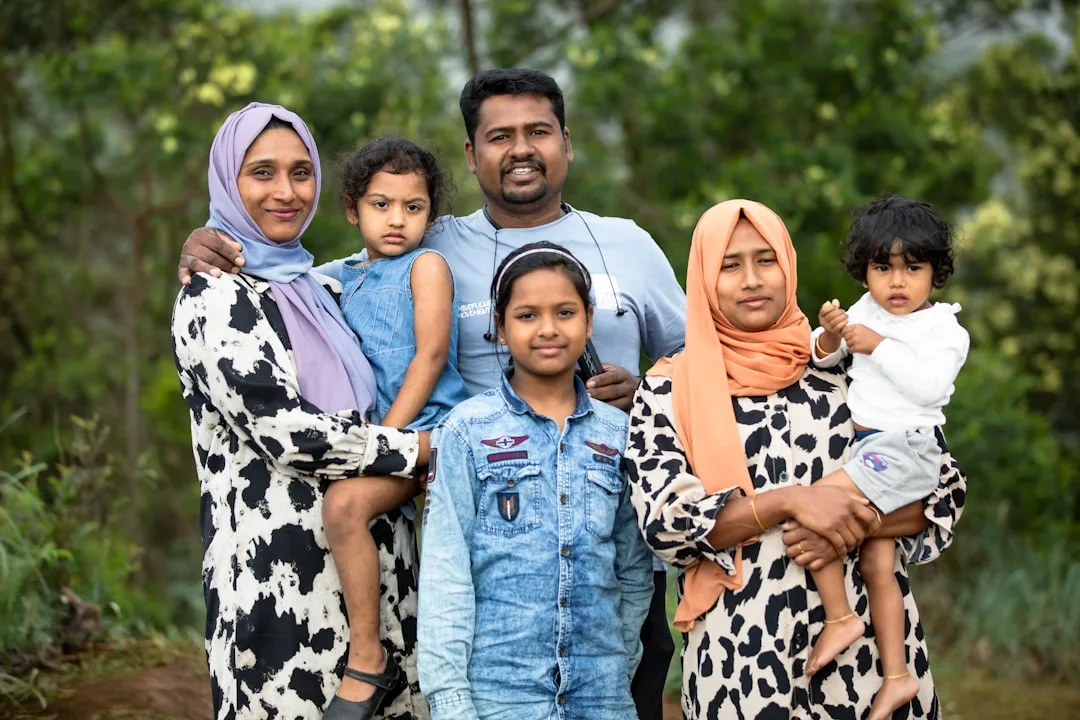
Family vocabulary in Swahili is much more than a list of household roles. The language of kinship is the language of social organization on the East African coast and inland: every greeting carries a kin term, every introduction places the speaker in a web of relationships, and every transaction between strangers borrows the warmth of family words.
A market vendor addresses a stranger as mama or baba; a young man greets an older man as mzee; a teacher calls a student mtoto wangu (my child) without any biological implication. To learn Swahili family vocabulary is to learn how East Africans think about the social fabric.
This reference assembles the vocabulary of the immediate family, the extended family, in-laws, and life stages, with notes on how the words extend into honorific address. It also covers the structure of the kifua (compound family), the cultural weight of the firstborn (mtoto wa kwanza) and lastborn (mtoto wa mwisho), and the respectful titles that elders expect from younger speakers.
Where the Swahili system differs from English, that difference is highlighted: Bantu kinship distinguishes paternal and maternal aunts and uncles, treats cousins as siblings, and uses a small set of in-law terms for a much wider range of social relationships.
Travelers, students, and learners working through the language will discover that family terms appear in every context. A guest at a wedding hears them; a customer in a shop hears them; a researcher in a village uses them constantly. Even a small competence in family vocabulary, used with the correct cultural register, transforms how a foreign speaker is received.
Immediate Family
| Swahili | English | Plural | Notes |
|---|---|---|---|
| Baba | Father | mababa | Universal |
| Mama | Mother | mama | Same form for plural |
| Mtoto | Child | watoto | Either gender |
| Mwana | Son / daughter | wana | Older form, formal |
| Mwana wa kiume | Son | wana wa kiume | Lit. son of male |
| Mwana wa kike | Daughter | wana wa kike | Lit. son of female |
| Kaka | Brother | makaka | Older or peer |
| Dada | Sister | madada | Older or peer |
| Ndugu | Sibling / relative | ndugu | Gender-neutral |
| Mke | Wife | wake | |
| Mume | Husband | waume | |
| Mzee | Elder / old man | wazee | Plural means parents |
| Mzazi | Parent | wazazi | Generic |
The plural wazee can mean elders, but in everyday Swahili the most common meaning of wazee wangu is my parents. A young person introducing a foreign guest to wazee wangu is presenting them to mom and dad, not to a council of grandfathers.
Cultural note: Swahili does not distinguish older and younger sibling lexically the way Korean or Chinese do. A speaker can say kaka mkubwa (big brother) or kaka mdogo (little brother) for clarity, and also baba mkubwa (paternal uncle older than father) and baba mdogo (younger uncle), so the elder/younger distinction returns at the uncle level.
Grandparents and Grandchildren
| Swahili | English | Notes |
|---|---|---|
| Babu | Grandfather | Universal |
| Bibi | Grandmother | Universal; also means lady |
| Nyanya | Grandmother | Common alternative; also means tomato |
| Mjukuu | Grandchild | Plural wajukuu |
| Kitukuu | Great-grandchild | |
| Kilembwe | Great-great-grandchild | Rare |
Bibi is also a polite title for any married or older woman, equivalent to madam. Bibi Mariam is Mrs Mariam. Babu is exclusively grandfather (or a polite title for an older man) and never simply mister.
A Swahili family proverb: Bibi wa kweli huona mbele kuliko mama. (A true grandmother sees further than the mother.) Bibis in East African families typically lead the household in negotiation with neighbors, settle disputes among grandchildren, and often raise the early grandchildren while the parents work in the city.
Aunts, Uncles, and the Paternal/Maternal Split
Swahili (and Bantu languages generally) distinguish between paternal and maternal aunts and uncles. The system is more granular than English.
| Swahili | English | Literal |
|---|---|---|
| Mjomba | Maternal uncle | Mother's brother |
| Shangazi | Paternal aunt | Father's sister |
| Mama mkubwa | Maternal aunt (older) | Big mother |
| Mama mdogo | Maternal aunt (younger) | Little mother |
| Baba mkubwa | Paternal uncle (older) | Big father |
| Baba mdogo | Paternal uncle (younger) | Little father |
The mama mkubwa / mama mdogo system extends the parent term to the parent's same-sex siblings. A child of any mama mkubwa is treated as a sibling, not a cousin. A maternal uncle (mjomba) and a paternal aunt (shangazi) get different terms because they belong to different lineages and play different ceremonial roles. The mjomba traditionally has authority over a sister's children in many East African societies; the shangazi negotiates marriage proposals.
| Swahili | English |
|---|---|
| Binamu | Cousin (any kind) |
| Ndugu | Cousin (informal) |
| Kaka / dada | Cousin treated as sibling |
A foreign learner asking about a Tanzanian friend's binamu may receive a confused answer. East African speakers rarely use the word; close cousins are kaka and dada and distant cousins are ndugu.
In-Laws and Marriage Terms
| Swahili | English | Notes |
|---|---|---|
| Mke | Wife | |
| Mume | Husband | |
| Wenza | Spouses, partners | |
| Mkwe | In-law | Generic |
| Mama mkwe | Mother-in-law | |
| Baba mkwe | Father-in-law | |
| Shemeji | Sibling-in-law | Both genders |
| Wifi | Co-wife | Polygamous households |
| Bwana | Mister / husband (formal) | Older usage |
| Bibi | Mrs / wife (formal) | |
| Bibi-arusi | Bride | Lit. wedding lady |
| Bwana-arusi | Groom | Lit. wedding gentleman |
| Harusi / arusi | Wedding | |
| Mahari | Bride price / dowry | Cultural institution |
| Talaka | Divorce | Arabic origin |
| Mjane | Widow / widower |
The cultural institution of mahari (bride price, paid by the groom's family to the bride's) remains active across most of East Africa, though the form has modernized. The negotiation involves uncles and aunts on both sides, and the language of the negotiation is highly formal.
Wedding blessing: Mungu awajalie maisha mema, watoto wengi, na mali nyingi. (May God grant you a good life, many children, and much wealth.) This three-part blessing combines the Christian and Islamic versions and is used at virtually every Swahili wedding.
Children, Stages of Life
| Swahili | English | Notes |
|---|---|---|
| Mtoto mchanga | Newborn / baby | Lit. fresh child |
| Mtoto mdogo | Small child | |
| Mtoto | Child | |
| Kijana | Youth, adolescent | Plural vijana |
| Mtu mzima | Adult | Lit. whole person |
| Mzee | Elder | |
| Marehemu | Deceased | Used after a name |
| Mtoto wa kwanza | First child | Special status |
| Mtoto wa mwisho | Last child | Special status |
| Kitinda mimba | Last child (poetic) | The one who closed the womb |
| Yatima | Orphan | |
| Mlezi | Guardian / caregiver |
The mtoto wa kwanza (firstborn) holds a position of responsibility in East African families. The eldest is expected to model behavior for younger siblings, contribute to school fees of those below, and represent the family in formal contexts when parents are absent. The mtoto wa mwisho or kitinda mimba is often the indulged one. Birth order language is referenced openly in family discussions; East African parents will name the firstborn role explicitly when scolding or praising.
Polite and Honorific Address
This is the social heart of Swahili family vocabulary. Kin terms are used to address strangers as a matter of courtesy.
| Address | Used for |
|---|---|
| Mzee | Older man, sir |
| Mama | Older woman, ma'am |
| Bibi | Older or married woman |
| Babu | Old man, grandfather figure |
| Kaka | Peer male |
| Dada | Peer female |
| Ndugu | Peer (any gender, often political) |
| Mtoto | Child (informal address) |
| Bwana | Mister (older Tanzanian usage) |
| Mwalimu | Teacher (used as title) |
A traveler greeting a market vendor uses Mama, habari? not Excuse me, miss. A student greeting a professor uses Mwalimu, habari? not Doctor or Professor. An elder greeted with the wrong term may not be offended but the social temperature drops.
Address note: In Tanzania, ndugu is widely used among adults as a comradely term. It dates from the Ujamaa socialist period under Julius Nyerere when ndugu replaced bwana and bibi as the standard address. Tanzanians of any age may still call a stranger ndugu in formal contexts.
The Greeting Hierarchy
The respect language overlays the kin language. The youngest greets first, using the term Shikamoo (literally I hold your feet, a respect formula). The elder replies Marahaba.
| Speaker | Phrase | Reply |
|---|---|---|
| Child to elder | Shikamoo, mzee / mama | Marahaba |
| Peer to peer | Habari? | Nzuri / salama |
| Elder to child | Habari ya leo? | Nzuri sana |
A child encountering a grandparent uses Shikamoo, babu or Shikamoo, bibi. A young employee greeting an older boss uses Shikamoo. Shikamoo is mandatory and cannot be skipped without giving offence. If a younger speaker forgets and uses Habari, the elder may correct them gently or simply refuse to answer until the right form is used.
Possessives and Family
Family terms take possessive suffixes and prefixes. The possessive system follows Bantu noun-class agreement, but for human nouns the forms are:
| Swahili | English |
|---|---|
| Baba yangu | My father |
| Mama yangu | My mother |
| Kaka yangu | My brother |
| Dada yangu | My sister |
| Mtoto wangu | My child |
| Watoto wangu | My children |
| Wazazi wangu | My parents |
| Familia yangu | My family |
The forms yangu, yako, yake, yetu, yenu, yao apply to most family terms. The exceptions are mtoto (singular) and watoto (plural), which use wangu and the equivalent w- forms because mtoto is a class 1 / 2 noun. See the linked pronouns reference for a full possessive table.
Sample Family Introduction
A traveler invited to a Swahili home meets the family in a fixed order: parents first, then children, then any visitors. A typical introduction reads:
Habari za asubuhi. Jina langu ni John, natoka Marekani. Hii ni mke wangu Sarah, na hawa ni watoto wetu, Tom na Lisa. Tunafurahi kukutana na familia yako. (Good morning. My name is John, I come from America. This is my wife Sarah, and these are our children, Tom and Lisa. We are happy to meet your family.)
The host replies with their own introduction in similar form. Children are presented and shake the hand or perform shikamoo if they are old enough.
Common Mistakes
- Calling a married Swahili woman by her first name when meeting for the first time. Use Mama or Bibi until invited to use the name.
- Confusing bibi (grandmother / lady) with babu (grandfather). The b/m initials are the give-away: m for male elder is wrong; babu is masculine, bibi is feminine.
- Using cousins as a category. Swahili speakers say my brother for a male cousin and my sister for a female cousin, especially close cousins. Binamu sounds bookish.
- Forgetting Shikamoo for elders. This is the single most common mistake foreigners make. It is not optional politeness.
- Using ndugu only for blood relatives. Ndugu means relative or comrade, used for friends and political peers as well.
Quick Reference
- Father: baba; mother: mama; child: mtoto; children: watoto.
- Brother: kaka; sister: dada; sibling/relative: ndugu.
- Grandfather: babu; grandmother: bibi or nyanya; grandchild: mjukuu.
- Maternal uncle: mjomba; paternal aunt: shangazi.
- Mother-in-law: mama mkwe; father-in-law: baba mkwe; co-wife: wifi.
- First child: mtoto wa kwanza; last child: mtoto wa mwisho.
- Greeting an elder: Shikamoo. Reply: Marahaba.
- Polite address: Mama (older woman), Mzee (older man), Kaka / Dada (peer).
- My family: familia yangu. My parents: wazazi wangu.
See Also
- Swahili Greetings and Daily Conversation
- Swahili Pronouns: Subject, Object, Possessive
- Swahili Noun Classes Complete System
- Swahili Common Phrases and Daily Conversation
- Swahili Adjectives and Noun-Class Agreement
- Swahili Dialects and Regional Variations
- Swahili Arabic Loanwords Vocabulary
- Yoruba Proverbs and Cultural Wisdom
Author: Kalenux Team
Frequently Asked Questions
What is the difference between ndugu, kaka, and dada?
Ndugu means sibling or relative (gender-neutral, can also mean comrade). Kaka means brother specifically. Dada means sister specifically. In modern usage ndugu is often a polite form of address for any peer, similar to comrade or friend, especially in Tanzania.
How do I address an older person respectfully in Swahili?
Use Mzee (literally elder) for an older man and Mama or Bibi for an older woman. These are honorifics, not just names. A young person greeting an older man on the street says Shikamoo, mzee (I hold your feet, elder), and the elder replies Marahaba. The respect language is not optional in East African culture.
Why do Swahili family terms apply broadly to non-relatives?
African kinship culture extends biological terms to social relationships. Baba (father) addresses any older man; mama (mother) any older woman; kaka (brother) and dada (sister) any peer. The aim is warmth and inclusion. A foreign visitor calling a market woman mama is not making a mistake, it is the polite local convention.
What is the structure of an East African extended family?
The extended family (ukoo or familia kubwa) is the core social unit. Grandparents, parents, married children, and grandchildren may share a compound. Cousins are called ndugu or kaka and dada, not cousins. Aunts and uncles are mama mdogo (little mother), mama mkubwa (big mother), baba mdogo, and baba mkubwa for the parent’s siblings.
Is mtoto wa kwanza (first child) culturally important?
Yes. The mtoto wa kwanza (first child) and mtoto wa mwisho (last child) hold special positions. The eldest carries responsibility for younger siblings and inherits more obligation. The youngest, often called kitinda mimba (the one who closed the womb), receives extra parental attention. These positions are referenced consciously in family discussions.
How do Swahili speakers refer to in-laws?
Mkwe means in-law (gender-neutral). Mama mkwe is mother-in-law, baba mkwe is father-in-law. Wifi means co-wife (in polygamous households, still legal in much of East Africa). Shemeji means sibling-in-law (brother-in-law, sister-in-law). The relationships are formal and respectful, with specific avoidance and joking patterns.
What does mtoto mean exactly?
Mtoto means child, in both the biological sense (offspring) and the age sense (a young person). The plural is watoto. A baby is mtoto mchanga (lit. fresh child). A teenager is kijana (plural vijana). An adult is mtu mzima (whole person). The progression mtoto, kijana, mtu mzima, mzee describes the four life stages.