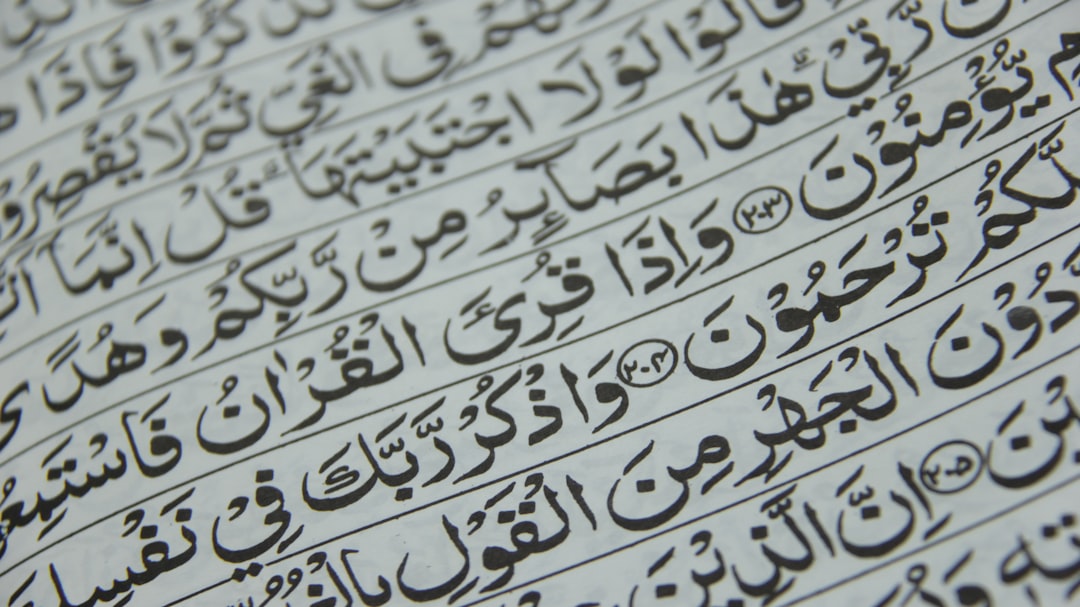
Swahili is a Bantu language at its grammatical core, but its vocabulary is a remarkable layer-cake of influences accumulated over more than a thousand years of contact, trade, and cultural exchange. Estimates vary, but approximately 30 to 40 percent of the Swahili lexicon derives from Arabic, the result of centuries of Indian Ocean trade and deep cultural and religious interaction between the Swahili coast and the Arab world. Learning to recognize Arabic loanwords - and understanding how they were adapted into Swahili phonology and grammar - gives learners a substantial vocabulary boost and a window into the history of the language.
This reference covers the nature and scale of Arabic influence on Swahili, the phonological adaptations that Arabic words undergo, the semantic domains where Arabic loans cluster (religion, law, commerce, abstract concepts, time), notable loan patterns (doublets where native and loaned words coexist), and the cultural and historical context that produced this remarkable borrowing. Tables of common Arabic-origin Swahili vocabulary are organized by topic. Learners of Arabic will recognize many words immediately; learners who approach Swahili without Arabic background will gain insight into how deeply the two languages are intertwined.
Swahili also contains substantial loans from Portuguese, German, English, and Indian languages, though Arabic remains by far the dominant external source. The name "Swahili" itself comes from the Arabic "sawahil" (coasts), meaning "of the coasts" - a reference to the coastal communities where the language first developed as a trade language.
The Historical Context
Arabic-speaking traders arrived on the East African coast by at least the seventh century CE. Muslim merchants from the Arabian peninsula, Yemen in particular, and later from Oman, established trading settlements that grew into the Swahili city-states: Lamu, Mombasa, Zanzibar, Kilwa, Mogadishu, and others. These cities were points of exchange between the African interior (ivory, gold, slaves) and the wider Indian Ocean world (textiles, ceramics, glass).
Over centuries, intermarriage, conversion to Islam, and constant linguistic contact produced a coastal population that was bilingual or multilingual, drawing on Arabic for religion, law, learning, and prestige while retaining a Bantu language for daily life. The result was Swahili: grammatically Bantu but lexically highly Arabicized. This situation resembles the relationship of English to French and Latin after the Norman Conquest - a Germanic language with an enormous Romance-source vocabulary layer.
During the nineteenth century, the Omani Sultanate based in Zanzibar extended its political and cultural influence, accelerating the Arabic layer in Swahili. Colonial-era missionaries, who produced the first printed Bibles and dictionaries, encountered a language already thoroughly shaped by Arabic contact.
Linguistic perspective: Swahili and Persian have a similar profile. Both are non-Semitic languages (Bantu and Indo-Iranian respectively) that borrowed massively from Arabic - particularly Islamic vocabulary - without changing their grammatical identity.
How Arabic Words Enter Swahili
Arabic words undergo predictable phonological changes when integrated into Swahili.
Consonant Adaptations
| Arabic Sound | Swahili Equivalent | Example |
|---|---|---|
| ق (q) | k | kitab -> kitabu (book) |
| غ (gh) | gh or g | ghali (expensive) |
| ع (') | usually silent | al-ilmu -> elimu (knowledge) |
| ح (H) | h | haki (right, justice) |
| خ (kh) | h or kh | hadithi (story, from hadith) |
| ث (th) | th or s | thalatha -> thelathini (30) |
| ذ (dh) | dh or z | dhahabu (gold) |
Vowel Adaptations
Arabic has only three vowels (a, i, u), which map naturally to three of Swahili's five. The main change is the restructuring of syllables: Arabic allows closed syllables and consonant clusters, while Swahili prefers open syllables. This means Arabic words often gain an extra vowel when absorbed.
- kitab (Arabic, "book") -> kitabu (Swahili)
- madras (Arabic, "school") -> madrasa (Swahili, with extra vowel)
- samak (Arabic, "fish") -> samaki (Swahili)
Definite Article Absorbed
The Arabic definite article "al-" is frequently absorbed into the Swahili noun.
- al-kitab -> (kitab omitted in Swahili, becoming) kitabu
- al-ilmu -> elimu (the "el-" preserves part of the article)
- al-ahad -> Alhamisi (Thursday)
- al-jumu'a -> Ijumaa (Friday)
This mirrors how Spanish absorbed the Arabic article in words like "algodon" (cotton) from Arabic "al-qutn."
Semantic Domains of Arabic Loans
Arabic vocabulary in Swahili is heavily concentrated in certain conceptual areas. Understanding these domains helps predict which vocabulary is likely to be Arabic-derived.
Religion and Spirituality
Nearly all Islamic religious vocabulary in Swahili is Arabic.
| Swahili | Arabic Source | Meaning |
|---|---|---|
| Mungu | (none - Bantu) | God (general) |
| Allah | Allah | God (Islamic) |
| dini | din | religion |
| dua | du'a | prayer |
| sala | salat | formal prayer |
| imani | iman | faith |
| nabii | nabi | prophet |
| malaika | mala'ika | angel |
| dhambi | dhanb | sin |
| halali | halal | permitted |
| haramu | haram | forbidden |
| masjidi / msikiti | masjid | mosque |
Time and Calendar
Time vocabulary is heavily Arabic.
| Swahili | Arabic Source | Meaning |
|---|---|---|
| saa | sa'a | hour, clock |
| dakika | daqiqa | minute |
| sekunde | thaniya / English | second |
| mwaka | (Bantu) | year |
| tarehe | tarikh | date |
| asubuhi | subh | morning |
| jioni | (Bantu) | evening |
| alfajiri | al-fajr | pre-dawn |
| mchana | (Bantu) | noon / day |
| Alhamisi | al-khamis | Thursday |
| Ijumaa | al-jumu'a | Friday |
Numbers 6, 7, 9 and Tens
As covered in the numbers reference, most numbers from six upward are Arabic.
| Number | Swahili | Arabic |
|---|---|---|
| 6 | sita | sitta |
| 7 | saba | sab'a |
| 9 | tisa | tis'a |
| 20 | ishirini | 'ishriin |
| 30 | thelathini | thalathiin |
| 40 | arobaini | arba'iin |
| 50 | hamsini | khamsiin |
| 100 | mia | mi'a |
| 1000 | elfu | alf |
Commerce and Money
| Swahili | Arabic | Meaning |
|---|---|---|
| biashara | tijara | trade, business |
| bei | thaman (or Persian) | price |
| duka | dukkan | shop |
| soko | suq | market |
| faida | fa'ida | profit |
| hasara | khasara | loss |
| hesabu | hisab | arithmetic, account |
Abstract Concepts
| Swahili | Arabic | Meaning |
|---|---|---|
| elimu | 'ilm | knowledge, education |
| akili | 'aql | mind, intellect |
| haki | haqq | right, justice |
| serikali | sarkar / Persian-Turkish | government |
| siasa | siyasa | politics |
| sababu | sabab | reason |
| rafiki | rafiq | friend |
| adabu | adab | manners |
Household Objects
| Swahili | Arabic | Meaning |
|---|---|---|
| meza | maa'ida | table |
| kitabu | kitab | book |
| kalamu | qalam | pen |
| sabuni | sabun | soap |
| kitanda | (Bantu-looking but Arabic origin suggested) | bed |
| taulo | (English) | towel |
| ufunguo | (Bantu) | key |
| saa | sa'a | watch, clock |
Body and Health
| Swahili | Arabic | Meaning |
|---|---|---|
| daktari | doctor (English) | doctor |
| dawa | dawa' | medicine |
| hospitali | (English) | hospital |
| afya | 'afiya | health |
| maradhi | marad | illness |
| mgonjwa | (Bantu construction) | patient |
Notable Doublets
One of the most interesting features of Swahili vocabulary is the existence of doublets, where both a native Bantu word and an Arabic loanword coexist with subtly different uses.
| Meaning | Native Bantu | Arabic Loan | Usage Difference |
|---|---|---|---|
| God | Mungu | Allah | Mungu is general; Allah is specifically Islamic |
| friend | mwenzangu (my fellow) | rafiki | Rafiki is the general word; mwenzangu is formal |
| book | (none in common use) | kitabu | Arabic word filled a gap |
| price | (none common) | bei | Arabic loan is standard |
| year | mwaka | (none) | Native word dominant |
| hour | (none) | saa | Arabic filled the gap |
In many cases, Arabic loanwords filled lexical gaps in Bantu (there was no pre-existing word for "book" in the pre-Islamic Swahili region, so kitabu was adopted wholesale). In other cases, Arabic loans added a new register or domain of use.
Recognizing Arabic Loans by Shape
Certain phonological features make Arabic loans recognizable even to learners who don't know Arabic.
- Words with DH, TH, or GH are almost always Arabic-derived (dhahabu, thelathini, ghali)
- Words ending in -a that don't follow Bantu patterns are often Arabic
- Words containing "h" between vowels are often Arabic (haki, sahani, sahihi)
- Religious, legal, or abstract vocabulary is usually Arabic
- Words that don't fit a standard noun class pattern and end up in class 9/10 as loanwords are frequently Arabic
Conversely, typical Bantu words often:
- Start with noun class prefixes (m-, ki-, wa-)
- Have open syllables throughout
- Have simple consonants (no emphatics, no guttural sounds)
- Fit clearly into a noun class pattern
Arabic Influence on Religion and Calendar
Islamic religious practice introduced a complete vocabulary for worship, religious law, and the Islamic calendar.
Days of the week combine Arabic and Bantu:
| Day | Swahili | Origin |
|---|---|---|
| Saturday | Jumamosi | Bantu juma + mosi (first) |
| Sunday | Jumapili | Bantu juma + pili (second) |
| Monday | Jumatatu | Bantu juma + tatu (third) |
| Tuesday | Jumanne | Bantu juma + nne (fourth) |
| Wednesday | Jumatano | Bantu juma + tano (fifth) |
| Thursday | Alhamisi | Arabic al-khamis (the fifth) |
| Friday | Ijumaa | Arabic al-jumu'a (the gathering) |
The odd mix - Saturday through Wednesday use Bantu numerals with the word juma (week), but Thursday and Friday are direct Arabic loans - reflects the Islamic practice of counting from Saturday as the first day and prioritizing Friday as a religious day.
Months of the year also combine influences, with modern Swahili using either Bantu numeral month names (Januari becomes "Mwezi wa Kwanza" - the first month) or direct English loans (Januari, Februari, etc.).
Common Mistakes English Speakers Make
1. Assuming all "hard-sounding" words are Arabic. Some Bantu words contain glottal-like sounds naturally. Not every guttural word is a loan.
2. Mispronouncing DH and TH. These Arabic sounds are often pronounced by learners as D and T. Standard Swahili retains the fricative sound.
3. Thinking Arabic loans inflect like native words. Many Arabic-origin adjectives (safi, rahisi, ghali) are invariable. Trying to inflect them with noun class prefixes is an error.
4. Confusing "Mungu" and "Allah" usage. Mungu is the general word for God used by Christians and Muslims alike in Swahili. Allah is specifically the Islamic deity referred to in formally Islamic contexts. In casual speech, Mungu is more common.
5. Overestimating Arabic influence in grammar. Swahili grammar is Bantu through and through. Arabic influence is almost entirely in vocabulary and, to a lesser extent, in pronunciation of loanwords. The noun class system, verb structure, and syntax are all Bantu.
Quick Reference
| Category | Typical Arabic Vocabulary |
|---|---|
| Religion | dini, sala, imani, nabii, masjidi, dhambi, halali, haramu |
| Time | saa, dakika, tarehe, asubuhi, Ijumaa, Alhamisi |
| Numbers 6+ | sita, saba, tisa, ishirini, thelathini, mia, elfu |
| Commerce | biashara, soko, duka, bei, hesabu, faida |
| Abstract | elimu, akili, haki, siasa, sababu, rafiki |
| Household | meza, kitabu, kalamu, sabuni, saa |
| Identifiers | DH, TH, GH sounds almost always indicate Arabic origin |
FAQ
How much of Swahili vocabulary is Arabic?
Estimates range from 20 to 40 percent, depending on what is counted (all words in a dictionary vs. words in common use). In everyday speech, the proportion is lower; in formal, literary, or religious registers, Arabic vocabulary dominates. A reasonable working estimate is about one third of the standard vocabulary.
Will knowing Arabic help me learn Swahili?
It will help substantially with vocabulary - perhaps 20 to 30 percent of new words will look familiar. It will not help with grammar, pronunciation outside Arabic sounds, or syntax. Swahili grammar is entirely different from Arabic.
Why did Arabic have such deep influence on Swahili?
Centuries of intense trade contact, conversion of coastal peoples to Islam, the prestige of Arabic as a literary and religious language, and the influence of the Omani Sultanate in Zanzibar. Similar historical conditions produced the parallel Arabic influence on Persian, Turkish, Urdu, and Indonesian.
Are there other loanword sources besides Arabic?
Yes. Portuguese contributed words from the period of Portuguese colonial presence (meza "table" is sometimes attributed to Portuguese, though Arabic is also argued). German contributed some words during German East Africa (shule "school" is from Schule). English has contributed and continues to contribute many modern technical and everyday terms (kompyuta, basi, tikiti).
Do Arabic loanwords follow Arabic grammar?
No. Once absorbed into Swahili, they behave as Swahili words. They take Swahili noun class prefixes (usually class 9/10), Swahili verb morphology, and Swahili plural patterns (where applicable). "Kitabu" is an Arabic word but functions grammatically as a Swahili class 7 noun with plural vitabu.
Is the name "Kiswahili" itself Arabic?
Yes. It comes from the Arabic root "sahil" (coast), plural "sawahil" (coasts). "Ki-" is a Bantu prefix marking "the language of." So "Kiswahili" literally means "the language of the coasts" - the coastal trade language of East Africa.
Do the two sounds TH and DH appear in many everyday words?
Not in most everyday words, but in formal, religious, and educated vocabulary they are frequent. Dhambi (sin), thelathini (thirty), dhahabu (gold), thamani (value), dhoruba (storm) are all common. Learning to pronounce these correctly is a mark of educated Swahili.
See Also
- Swahili Alphabet and Pronunciation
- Swahili Numbers and Counting
- Swahili Adjectives and Agreement
- Swahili Noun Classes
- Swahili Greetings and Daily Phrases
- Swahili Dialects and Regional Variations
- Arabic Alphabet Complete Guide
- Arabic Root System
Frequently Asked Questions
How much of Swahili vocabulary is Arabic?
Estimates range from 20 to 40 percent depending on what is counted. In everyday speech the proportion is lower; in formal, literary, or religious registers Arabic vocabulary dominates. A reasonable working estimate is about one third of the standard vocabulary.
Will knowing Arabic help me learn Swahili?
It will help substantially with vocabulary - perhaps 20 to 30 percent of new words will look familiar. It will not help with grammar, pronunciation outside Arabic sounds, or syntax. Swahili grammar is entirely different from Arabic.
Why did Arabic have such deep influence on Swahili?
Centuries of intense trade contact, conversion of coastal peoples to Islam, the prestige of Arabic as a literary and religious language, and the influence of the Omani Sultanate in Zanzibar. Similar conditions produced parallel Arabic influence on Persian, Turkish, Urdu, and Indonesian.
Are there other loanword sources besides Arabic?
Yes. Portuguese contributed some words. German added some during German East Africa (shule 'school' from Schule). English contributes many modern technical and everyday terms (kompyuta, basi, tikiti). But Arabic remains dominant.
Do Arabic loanwords follow Arabic grammar?
No. Once absorbed into Swahili they behave as Swahili words. They take Swahili noun class prefixes (usually class 9/10), Swahili verb morphology, and Swahili plural patterns. Kitabu is Arabic in origin but functions as a Swahili class 7 noun with plural vitabu.
Is the name Kiswahili itself Arabic?
Yes. It comes from the Arabic root sahil (coast), plural sawahil (coasts). Ki- is a Bantu prefix marking 'the language of.' Kiswahili thus means 'the language of the coasts' - the coastal trade language of East Africa.
Do TH and DH appear in many everyday words?
Not in most everyday words, but in formal, religious, and educated vocabulary they are frequent. Dhambi (sin), thelathini (thirty), dhahabu (gold), thamani (value), and dhoruba (storm) are all common. Pronouncing these correctly is a mark of educated Swahili.