
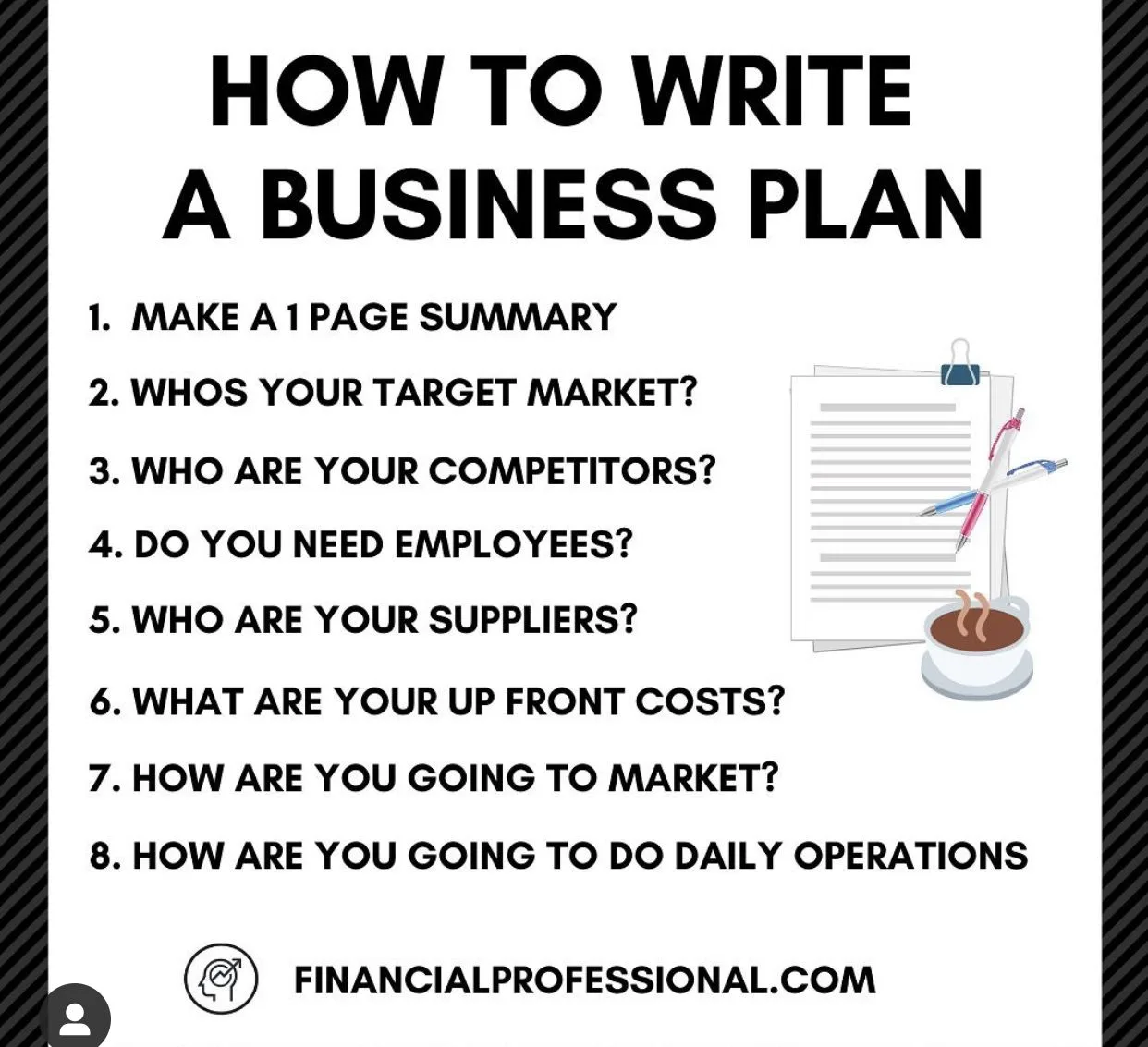
A business plan is the single most important document an entrepreneur creates. It forces you to validate your assumptions, articulate your strategy, quantify your financial expectations, and communicate your vision to investors, lenders, partners, and team members.
Whether you are launching a startup seeking venture capital, a small business applying for a bank loan, or an established company planning a new division, the discipline of writing a business plan dramatically increases your probability of success.
Yet the prospect of writing a business plan intimidates most founders. The blank page feels overwhelming when you know that every section must be researched, realistic, and compelling enough to persuade skeptical readers to invest their money or their careers in your vision.
This guide walks you through every section of a traditional business plan with templates, examples, and practical guidance. You will also find streamlined alternatives including the one-page business plan and lean canvas for situations that call for a more concise format. By the end, you will have everything you need to produce a professional business plan that serves both as a strategic roadmap and a persuasive document for external stakeholders.
Business Plan Structure Overview
A traditional business plan contains eight to ten sections, each serving a specific analytical and persuasive purpose. The sections build on each other, so the order matters both for the writing process and for the reader's experience.
Standard Business Plan Sections
- Executive Summary
- Company Description
- Market Analysis
- Organization and Management
- Products or Services
- Marketing and Sales Strategy
- Funding Request
- Financial Projections
- Appendix
The total document typically runs 25 to 50 pages, though length should be driven by the complexity of your business and the needs of your audience rather than by arbitrary page targets.
Section 1: Executive Summary
The executive summary is the most important section of your business plan. It appears first but should be written last, after you have completed the detailed analysis in subsequent sections. Investors and lenders use the executive summary as a screening tool, and many will not read beyond it unless it compels them to continue.
What to Include
- Business concept: What your company does in one to two clear sentences
- Problem and solution: The market problem you address and how your product or service solves it
- Target market: Who your customers are and how large the opportunity is
- Business model: How you make money
- Traction: Current revenue, customers, partnerships, or other proof of market validation
- Team: Why your team is uniquely qualified to execute this plan
- Financial highlights: Revenue projections, profitability timeline, and key financial metrics
- Funding request: How much capital you need, how you will use it, and what return investors can expect
Executive Summary Template
[Company Name] is a [type of company] that [what you do] for [target customers]. [Problem statement: description of the market problem in one to two sentences].
Our [product/service] solves this problem by [solution description]. Unlike [competitors or current alternatives], we [key differentiator].
The [target market description] represents a $[TAM] total addressable market, growing at [growth rate] annually. Our initial focus on [specific segment] gives us access to a $[SAM] serviceable market.
Since [founding date/launch date], we have [traction metrics: revenue, customers, users, partnerships, or other validation]. Our revenue model is based on [revenue model description], with [unit economics highlights].
Our team includes [founder names and brief qualifications]. We have [relevant team experience or domain expertise].
We project revenue of $[Year 1] in our first year, growing to $[Year 3] by year three, with [profitability timeline]. We are seeking $[amount] in [type of funding] to [specific use of funds]. This investment will enable us to [milestone the funding will achieve].
Executive Summary Example
FreshRoute is a B2B logistics technology company that optimizes last-mile delivery for regional grocery chains. Despite spending $340 billion annually on grocery delivery in the United States, mid-market grocers lack access to the route optimization technology that enables Amazon and Walmart to deliver profitably. Their delivery operations run on manual scheduling, resulting in delivery costs that are 35 to 45 percent higher than necessary.
FreshRoute's platform uses proprietary algorithms to optimize delivery routes in real time, accounting for traffic patterns, delivery windows, vehicle capacity, and product temperature requirements specific to grocery. Unlike generic route planning tools, our system was built specifically for the unique constraints of perishable food delivery.
The US grocery delivery market exceeds $100 billion annually, with mid-market chains (50 to 500 locations) representing a $28 billion segment that is dramatically underserved by current technology providers. We focus on chains with 75 to 300 locations that are large enough to benefit from optimization but too small to build proprietary solutions.
Since launching 18 months ago, FreshRoute has signed 12 regional grocery chains representing 840 stores and $14.2 million in annual recurring revenue. Our customers have reduced delivery costs by an average of 31 percent while improving on-time delivery rates from 78 to 94 percent. Monthly gross margins are 72 percent.
Our founding team brings deep domain expertise. CEO Maria Santos spent 14 years at Kroger, most recently as VP of Supply Chain Technology. CTO James Park led the delivery optimization team at Instacart. COO David Okeke was previously Director of Operations at Sysco.
We project revenue of $28M in Year 2 and $52M in Year 3, reaching cash flow profitability by month 30. We are seeking $15M in Series A financing to expand our sales team, accelerate product development, and enter five new regional markets. At our projected Year 3 revenue and current SaaS multiples, this investment positions for a 6 to 8x return.
Section 2: Company Description
The company description provides the foundational context for everything that follows. It tells the reader who you are, what you do, and how your business is structured.
What to Include
- Legal business name and structure (LLC, C-Corp, S-Corp, sole proprietorship)
- Date and state of incorporation
- Mission statement (one to two sentences)
- Vision statement (one to two sentences)
- Business model description (how you generate revenue)
- Short-term and long-term objectives (specific, measurable goals)
- Industry and sector classification
- Location and facilities
- Brief history (for existing businesses)
Company Description Template
Company Name: [Legal name]
Structure: [Legal structure]
Founded: [Date], [State]
Headquarters: [City, State]Mission: [Company name] exists to [mission statement focused on the value you deliver to customers].
Vision: [Your vision for what the company will become or what impact it will have on the industry/market].
[Company name] is a [industry] company that provides [products/services] to [target customers]. We generate revenue through [revenue model description].
Short-Term Objectives (12 months):
- [Specific, measurable objective 1]
- [Specific, measurable objective 2]
- [Specific, measurable objective 3]
Long-Term Objectives (3 to 5 years):
- [Specific, measurable objective 1]
- [Specific, measurable objective 2]
- [Specific, measurable objective 3]
Section 3: Market Analysis
The market analysis section demonstrates that you have thoroughly researched your industry, understand your competitive landscape, and have identified a viable market opportunity. This is where many business plans either gain or lose credibility with investors.
What to Include
- Industry overview: Size, growth rate, trends, and key dynamics
- Target market definition: Specific customer segments with demographic and behavioral characteristics
- Market size calculations: TAM (Total Addressable Market), SAM (Serviceable Addressable Market), SOM (Serviceable Obtainable Market)
- Customer analysis: Buyer personas, purchase behavior, pain points, and willingness to pay
- Competitive analysis: Direct and indirect competitors, their strengths and weaknesses, market positioning
- Competitive advantage: What differentiates you and why that differentiation is sustainable
- Market trends: Regulatory, technological, demographic, and economic factors affecting your market
- Barriers to entry: What protects your market position
Market Size Template
Total Addressable Market (TAM): $[amount]
[Description of the total market opportunity if you captured 100 percent of your target market. Include the data source and calculation methodology.]
Serviceable Addressable Market (SAM): $[amount]
[The portion of TAM that your business model can realistically serve, accounting for geographic, segment, and channel constraints.]
Serviceable Obtainable Market (SOM): $[amount]
[The realistic market share you expect to capture in the next 3 to 5 years, based on your resources, competitive position, and growth trajectory.]
Competitive Analysis Framework
For each major competitor, document:
| Factor | Competitor A | Competitor B | Your Company |
|---|---|---|---|
| Target customer | |||
| Primary product/service | |||
| Pricing model | |||
| Key strengths | |||
| Key weaknesses | |||
| Market share (estimated) | |||
| Funding/resources | |||
| Technology/innovation |
Section 4: Organization and Management
This section describes your company's organizational structure, ownership, and the team that will execute the business plan. For startups, this section is critical because investors invest in teams as much as ideas.
What to Include
- Organizational structure (org chart or description)
- Ownership structure (equity distribution, investor stakes)
- Management team profiles (experience, skills, relevant achievements)
- Board of directors or advisors (names, qualifications, roles)
- Key hires planned (positions you need to fill and when)
- Compensation structure overview (salary ranges, equity, benefits)
Management Team Template
For each key team member:
[Name], [Title]
[2 to 3 sentence bio highlighting relevant experience, notable achievements, and why this person is the right fit for this role at this company. Include specific metrics or recognizable company names where possible.]
Example
Maria Santos, Chief Executive Officer
Maria brings 14 years of grocery industry experience, including eight years at Kroger where she served as VP of Supply Chain Technology overseeing a $200M technology budget and a 350-person team. She led the implementation of Kroger's delivery management platform that reduced fulfillment costs by 18 percent across 2,800 locations. Maria holds an MBA from MIT Sloan and a BS in Industrial Engineering from Georgia Tech.
James Park, Chief Technology Officer
James is a distributed systems engineer who previously led the delivery optimization team at Instacart, where he built the routing engine that managed 500,000 daily deliveries. His algorithms reduced average delivery time by 22 percent while cutting per-order logistics costs by $1.40. James holds a PhD in Operations Research from Stanford, where his dissertation focused on vehicle routing problems with time windows.
Section 5: Products or Services
This section describes what you sell in detail, focusing on how your offering solves customer problems and why it is superior to alternatives.
What to Include
- Product or service description (features, functionality, form factor)
- Problem-solution fit (specific customer pain points you address)
- Value proposition (the compelling reason customers choose you)
- Current development stage (concept, prototype, MVP, launched, mature)
- Intellectual property (patents, trademarks, trade secrets, proprietary technology)
- Product roadmap (planned features, versions, or extensions)
- Pricing strategy (pricing model, price points, comparison to alternatives)
- Suppliers and production (key dependencies in your supply chain)
Product Description Template
Product Name: [Name]
Category: [Product category]
Development Stage: [Current stage]The Problem:
[Description of the specific customer pain point, including quantification of the cost or impact of this problem.]
Our Solution:
[Description of how your product or service addresses the problem, with emphasis on the key features that create value.]
Key Features:
- [Feature 1]: [What it does and why it matters to the customer]
- [Feature 2]: [What it does and why it matters to the customer]
- [Feature 3]: [What it does and why it matters to the customer]
Competitive Differentiation:
[2 to 3 sentences explaining why your solution is meaningfully better than existing alternatives, with specific evidence.]
Pricing:
[Pricing model and price points, with rationale based on customer value, competitive benchmarks, and unit economics.]
Section 6: Marketing and Sales Strategy
This section explains how you will attract customers, convert them into paying users, and retain them over time. It should be specific enough to serve as a practical roadmap, not a list of generic marketing tactics.
What to Include
- Positioning statement (how you want to be perceived in the market)
- Target customer segments (prioritized by opportunity and fit)
- Marketing channels (specific channels with rationale for selection)
- Customer acquisition strategy (how you will generate leads and convert them)
- Sales process (stages, timeline, team structure)
- Customer retention strategy (onboarding, support, success programs)
- Key partnerships (distribution, referral, or strategic partnerships)
- Marketing budget (allocation across channels with expected ROI)
- Key metrics (CAC, LTV, conversion rates, churn targets)
Marketing Strategy Template
Positioning Statement:
For [target customer] who [need], [Company name] is the [category] that [key benefit]. Unlike [competitors], we [differentiator].
Customer Acquisition Channels (prioritized):
- [Channel 1]: [Strategy description, expected CAC, and rationale]
- [Channel 2]: [Strategy description, expected CAC, and rationale]
- [Channel 3]: [Strategy description, expected CAC, and rationale]
Sales Process:
- Stage 1: [Description, timeline, conversion rate target]
- Stage 2: [Description, timeline, conversion rate target]
- Stage 3: [Description, timeline, conversion rate target]
Unit Economics:
- Customer Acquisition Cost (CAC): $[amount]
- Lifetime Value (LTV): $[amount]
- LTV:CAC Ratio: [ratio]
- Payback Period: [months]
Section 7: Funding Request
If you are seeking external funding, this section must clearly articulate how much you need, how you will use it, and what milestones the investment will fund.
What to Include
- Funding amount requested
- Type of funding (equity, debt, convertible note, SAFE)
- Valuation basis (for equity rounds)
- Use of funds (specific allocation with percentages)
- Milestones the funding will achieve (revenue targets, product milestones, team expansion)
- Future funding expectations (subsequent rounds anticipated)
- Exit strategy (potential acquirers, IPO timeline, or dividend expectations)
Funding Request Template
Funding Request: $[amount] in [type of funding]
Pre-money Valuation: $[amount] (based on [valuation methodology])Use of Funds:
Category
Amount
Percentage
Purpose
Product Development
$[amount]
[%]
[Specific deliverables]
Sales and Marketing
$[amount]
[%]
[Specific initiatives]
Team Expansion
$[amount]
[%]
[Key hires]
Operations
$[amount]
[%]
[Specific needs]
Working Capital
$[amount]
[%]
[Reserve for operations]
Milestones This Funding Will Achieve:
- Month [X]: [Milestone 1]
- Month [X]: [Milestone 2]
- Month [X]: [Milestone 3]
- Month [X]: [Milestone 4]
Return Expectations:
[Description of the exit strategy and projected investor returns, based on comparable transactions or market multiples.]
Section 8: Financial Projections
Financial projections are where your narrative meets quantitative reality. Investors scrutinize this section more carefully than any other because it reveals the rigor of your thinking and the realism of your assumptions.
What to Include
- Revenue projections (monthly for Year 1, quarterly for Years 2 to 3, annual for Years 4 to 5)
- Income statement projections (revenue, COGS, gross profit, operating expenses, net income)
- Cash flow projections (operating, investing, and financing cash flows)
- Balance sheet projections (assets, liabilities, equity)
- Break-even analysis (when the business becomes profitable)
- Key assumptions (explicitly stated so readers can evaluate your logic)
- Sensitivity analysis (how results change if key assumptions are wrong)
Income Statement Projection Template
| Line Item | Year 1 | Year 2 | Year 3 | Year 4 | Year 5 |
|---|---|---|---|---|---|
| Revenue | |||||
| Cost of Goods Sold | |||||
| Gross Profit | |||||
| Gross Margin % | |||||
| Sales and Marketing | |||||
| Research and Development | |||||
| General and Administrative | |||||
| Total Operating Expenses | |||||
| Operating Income | |||||
| Operating Margin % | |||||
| Interest Expense | |||||
| Net Income | |||||
| Net Margin % |
Key Assumptions Documentation
Every financial projection should be accompanied by a clear statement of the assumptions driving the numbers. Document your assumptions for:
- Customer growth rate: How you estimated the number of new customers per period
- Average revenue per customer: Pricing assumptions and expected plan mix
- Churn rate: Customer retention assumptions and their basis
- Gross margin: Cost structure assumptions including variable and fixed components
- Operating expense growth: Hiring plan, marketing spend, and overhead assumptions
- Seasonality: Any seasonal patterns in revenue or costs
The One-Page Business Plan
Not every situation requires a 30-page document. A one-page business plan works well for internal planning, early-stage exploration, accelerator applications, and initial conversations with potential investors. It forces you to distill your strategy to its essential elements.
One-Page Business Plan Template
Business Name: [Name]
Date: [Date]
Prepared by: [Name]
The Problem [2 to 3 sentences describing the specific problem you solve and who experiences it.]
The Solution [2 to 3 sentences describing your product or service and how it addresses the problem.]
Target Customer [1 to 2 sentences describing your ideal customer with specific characteristics.]
Revenue Model [1 to 2 sentences describing how you make money, including pricing.]
Market Size TAM: $[amount] | SAM: $[amount] | SOM: $[amount]
Competitive Advantage [2 to 3 sentences explaining what makes you different and why that difference matters.]
Traction [Key metrics demonstrating market validation: revenue, customers, growth rate, partnerships.]
Team [Key team members with one-line qualifications each.]
Financial Snapshot Year 1 Revenue: $[amount] | Year 3 Revenue: $[amount] | Break-even: Month [X]
Funding Need $[amount] for [primary use of funds], expected to achieve [key milestone].
The Lean Canvas
The lean canvas, adapted from the Business Model Canvas by Ash Maurya, is a one-page framework specifically designed for startups. It emphasizes problem-solution fit and is meant to be iterated quickly as you learn from the market.
Lean Canvas Template
| Problem | Solution | Unique Value Proposition |
|---|---|---|
| Top 3 problems: | Top 3 features: | Single clear message that |
| 1. | 1. | states why you are different |
| 2. | 2. | and worth paying attention to |
| 3. | 3. |
| Key Metrics | Unfair Advantage |
|---|---|
| Key numbers that | Something that cannot |
| tell you how your | be easily copied or |
| business is doing | bought by competitors |
| Channels | Customer Segments |
|---|---|
| Paths to reach | Target customers and |
| your customers | early adopters |
| Cost Structure | Revenue Streams |
|---|---|
| Fixed and variable | Revenue model and |
| costs to operate | pricing strategy |
How to Fill Out a Lean Canvas
Start with the Problem box. List the top three problems your target customer faces. If you cannot articulate the problem clearly, your solution is likely off-target.
Move to Customer Segments. Define who experiences these problems most acutely. Identify your early adopters separately because they are the first customers you must convince.
Fill in the Unique Value Proposition. Write a single sentence that explains why your solution is different and worth the customer's attention. This should be specific enough that a competitor could not use the same sentence.
Define the Solution. List the top three features that directly address the top three problems. Resist the urge to list every feature. Focus only on the ones that matter most.
Identify Channels. How will you reach your target customers? List the specific marketing and sales channels you will use, prioritized by expected effectiveness and cost.
Determine Revenue Streams. How will you charge customers? Include your pricing model, expected price points, and any freemium or trial strategies.
Calculate Cost Structure. List your major cost categories including team, technology, marketing, and operations. Identify which costs are fixed and which scale with revenue.
Define Key Metrics. Choose three to five numbers that will tell you whether the business is working. These might include monthly recurring revenue, customer acquisition cost, churn rate, or activation rate.
Identify your Unfair Advantage. This is the hardest box to fill honestly. An unfair advantage is something that cannot be easily copied or purchased. Examples include proprietary data, network effects, deep domain expertise, exclusive partnerships, or an established brand. If you do not have one yet, leave this box blank and work toward developing one.
Business Plan by Audience: What Different Readers Want
Different audiences read business plans with fundamentally different priorities. Tailoring your emphasis to your reader dramatically increases your chances of a positive outcome.
Business Plan for Venture Capitalists
VCs are looking for outsized returns, typically 10x or more on their investment within five to seven years. Your plan should emphasize:
- Market size: VCs need to see a market large enough to support a billion-dollar company. If your TAM is under $1 billion, most VCs will pass regardless of how good your solution is.
- Growth rate: Show that you can achieve rapid, compounding revenue growth. Monthly growth rates of 15 to 20 percent in early stages demonstrate product-market fit.
- Team: VCs invest in founders as much as ideas. Demonstrate relevant domain expertise, prior startup experience, and the ability to recruit top talent.
- Competitive moat: Explain what prevents well-funded competitors from copying your approach. Network effects, proprietary data, regulatory advantages, and switching costs are the most compelling moats.
- Exit potential: Reference comparable acquisitions or IPOs in your space. VCs need to see a realistic path to liquidity.
Business Plan for Bank Loans
Banks are evaluating your ability to repay the loan with interest. They are not looking for exponential growth; they want predictable cash flow and collateral. Your plan should emphasize:
- Cash flow projections: Monthly cash flow statements showing that you can comfortably service the debt are more important than revenue growth rates.
- Collateral: Identify the assets (real estate, equipment, inventory, accounts receivable) that secure the loan.
- Personal guarantees: Banks for small business loans often require personal financial statements from the owners.
- Industry stability: Demonstrate that your industry is established and your business model is proven, not experimental.
- Management experience: Banks want to see that the leadership team has successfully managed businesses or similar responsibilities before.
Business Plan for Internal Strategy
Internal business plans serve as roadmaps for execution rather than persuasion documents. They should emphasize:
- Operational milestones: Specific deliverables with dates, owners, and dependencies
- Resource requirements: Headcount, budget, technology, and facilities needed
- Risk assessment: Detailed identification of risks with mitigation strategies
- Success metrics: The KPIs that will determine whether the plan is working
- Decision points: Predetermined checkpoints where you will evaluate progress and decide whether to continue, pivot, or stop
Business Plan for Partners and Strategic Alliances
When seeking strategic partnerships, your plan should demonstrate mutual benefit. Emphasize:
- Complementary capabilities: What you bring that the partner lacks, and vice versa
- Shared market opportunity: The addressable market that the partnership unlocks
- Integration feasibility: How your products, services, or operations will work together
- Revenue sharing: A clear model for how the partnership generates and distributes value
- Risk allocation: How risks and liabilities are shared between partners
Common Business Plan Mistakes
Mistake 1: Unrealistic Financial Projections
The single most damaging mistake in a business plan is financial projections that defy logic. Projecting $50 million in revenue by Year 3 for a pre-revenue startup with no sales team signals either inexperience or dishonesty. Ground your projections in bottom-up calculations: number of customers multiplied by average revenue per customer, built month by month with realistic growth rates.
Mistake 2: Ignoring the Competition
Writing "we have no competitors" instantly destroys your credibility. Every business has competitors, even if they are indirect or the current solution is simply the status quo. Acknowledging competitors demonstrates market awareness. What matters is your differentiation, not the absence of alternatives.
Mistake 3: Solving a Problem Nobody Has
Many business plans describe elegant solutions to problems that are not painful enough for customers to pay for. Validate your problem hypothesis with actual customer interviews and willingness-to-pay research before investing months in a detailed business plan.
Mistake 4: Writing for Yourself Instead of Your Audience
A business plan for a bank loan should emphasize cash flow stability and collateral. A plan for venture capitalists should emphasize growth potential and market size. A plan for internal use should emphasize operational milestones. Tailor every section to the needs and concerns of your specific audience.
Mistake 5: Skipping the Executive Summary
Some entrepreneurs bury their strongest arguments deep in the document, assuming readers will get there. They will not. Write a compelling executive summary that makes readers want to continue. If your executive summary does not generate interest, the rest of the plan does not matter.
Mistake 6: Too Long with Too Little Substance
A 60-page business plan is not more impressive than a 30-page one. Investors value density of insight, not volume of text. Every paragraph should advance your argument. If a section restates what the reader already knows without adding new information, cut it.
Mistake 7: No Clear Ask
If you are seeking funding, state exactly how much you need, how you will use it, and what return the investor can expect. Vague funding requests suggest you have not done the financial analysis to know what you actually need.
Business Plan Writing Tips
Tip 1: Write the Executive Summary Last
Even though it appears first, write it after completing all other sections. You need the detailed analysis to inform the summary. Attempting to write it first results in a vague overview that misses key details.
Tip 2: Use Specific Numbers Everywhere
Replace "significant market opportunity" with "$4.2 billion addressable market growing at 18 percent annually." Replace "experienced management team" with "combined 47 years of industry experience including leadership roles at three Fortune 500 companies." Specificity builds credibility.
Tip 3: Cite Your Sources
Every market size figure, growth rate, and industry statistic should include a source. Use reputable research firms, government data, industry associations, and published financial reports. Unsourced claims invite skepticism.
Tip 4: Include Visuals
Charts, graphs, and tables make complex information accessible and break up text-heavy sections. A well-designed chart communicating your revenue growth trajectory is more impactful than a paragraph describing the same numbers.
Tip 5: Have It Reviewed
Before submitting your business plan to any external audience, have it reviewed by at least three people: a financial professional who can stress-test your projections, an industry expert who can evaluate your market analysis, and a strong writer who can improve clarity and persuasiveness.
Tip 6: Keep It Current
A business plan is a living document. Update your financial projections quarterly, refresh your market analysis annually, and revise your strategy section whenever significant circumstances change. An outdated plan is worse than no plan because it suggests you are not paying attention to your own business.
Business Plan Formatting and Presentation
The visual presentation of your business plan matters more than most entrepreneurs realize. Investors and lenders receive dozens of plans and form immediate impressions based on formatting quality. A sloppy presentation signals sloppy thinking.
Professional Formatting Standards
- Cover page: Include the company name, logo, plan date, and contact information. Keep it clean and simple.
- Table of contents: Essential for any plan exceeding 10 pages. Include section titles and page numbers.
- Consistent headers and footers: Every page should include the company name, the word "Confidential" if applicable, and the page number.
- Font choice: Use a professional, readable font. Times New Roman, Garamond, or Calibri at 11 or 12 point are standard. Avoid decorative or unusual fonts.
- White space: Do not crowd the page. Use 1-inch margins, adequate spacing between sections, and paragraph breaks that improve readability.
- Charts and graphs: Use consistent colors, clear labels, and appropriate chart types. Bar charts for comparisons, line charts for trends, pie charts for proportions.
- Appendix organization: Number appendices (Appendix A, B, C) and reference them in the body text so readers can locate supporting materials.
Digital vs. Print Considerations
If submitting digitally, save as a PDF to preserve formatting across devices. Include hyperlinks to your website, product demos, or supplementary materials. If submitting in print, use high-quality paper, bind professionally, and include tabs for major sections.
Business Plan Checklist
Before submitting your business plan, verify every item:
- Executive summary captures the complete story in two pages or less
- Company description includes legal structure and mission
- Market analysis includes TAM, SAM, and SOM with sources
- Competitive analysis covers at least three to five competitors
- Organization section profiles all key team members
- Product section clearly explains the problem-solution fit
- Marketing strategy includes specific channels and budget allocation
- Financial projections cover five years with stated assumptions
- Funding request specifies amount, use, and expected milestones
- All statistics and market data include sources
- The document has been proofread by someone other than the author
- Formatting is consistent and professional throughout
- The plan is tailored to the specific audience who will read it
Your business plan is simultaneously a strategic planning tool and a sales document. It must be analytically rigorous enough to guide your decision-making and persuasive enough to convince others to invest in your vision. The templates and frameworks in this guide provide the structure. Your unique insight into your market, your team's capabilities, and your determination to execute provide the substance. Combine both, and you have a business plan worth reading.
Frequently Asked Questions
How long should a business plan be?
A traditional business plan for investors or bank financing typically runs 25 to 50 pages, though the ideal length depends on the complexity of your business and your audience. Early-stage startups seeking venture capital may need longer plans with detailed market validation sections, while established businesses applying for loans may focus more on financial documentation.
A lean business plan or one-page plan can be as short as one to three pages and works well for internal planning, accelerator applications, or initial investor conversations.
The most important principle is that every page must earn its place. Investors and lenders are busy professionals who value concise, well-organized information over sheer volume. If a section does not directly support your case for viability and growth potential, cut it or condense it.
What is the most important section of a business plan?
The executive summary is universally considered the most critical section because it is often the only part that decision-makers read in full before deciding whether to continue. Many investors receive hundreds of business plans and use the executive summary as their screening tool.
A compelling executive summary must accomplish several objectives in one to two pages.
It must clearly articulate what your business does, the problem it solves, and why your solution is superior to alternatives. It must identify your target market and demonstrate that it is large enough to sustain growth.
It must present your revenue model, summarize your financial projections, and state exactly what you are asking for in terms of funding. Write it last, even though it appears first, so it accurately reflects the detailed work in subsequent sections.
Do I need a business plan if I am bootstrapping?
Even bootstrapped businesses benefit significantly from a written business plan, though the format can be less formal than what investors require. A business plan forces you to validate assumptions, identify risks, and create financial projections before committing resources.
Without external investors to answer to, bootstrapped founders often skip planning and make expensive mistakes that structured analysis would have prevented.
A lean canvas or one-page business plan works excellently for bootstrapped ventures. It captures your value proposition, customer segments, revenue streams, cost structure, key metrics, and competitive advantage on a single page.
Review and update it quarterly as you gather real market data. The discipline of writing down your strategy, even briefly, clarifies your thinking and gives you a baseline for measuring progress against your original assumptions.