
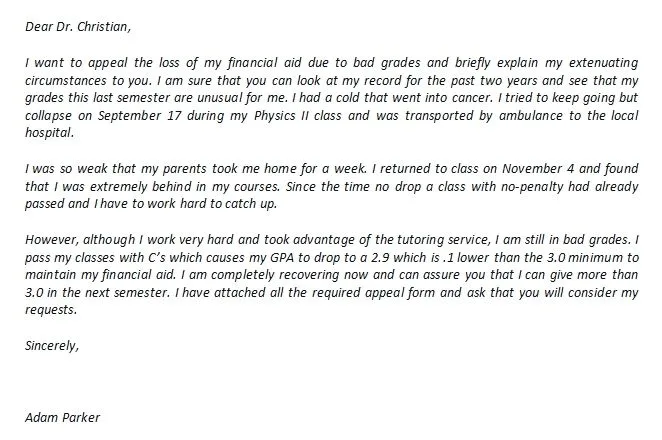
An appeal letter is a formal written request to have a decision reconsidered by the authority that made it. Whether you are challenging an insurance claim denial, fighting a parking ticket, contesting an academic dismissal, or disputing a wrongful termination, the appeal letter is your primary tool for reversing an unfavorable outcome.
The difference between appeals that succeed and appeals that fail almost always comes down to structure, evidence, and tone. Emotional outbursts, vague complaints, and disorganized arguments are dismissed quickly. Clear, evidence-based, professionally written appeals that address specific decision criteria get results.
This guide provides 10 expert-crafted appeal letter templates for the most common situations, along with a comprehensive framework for understanding how appeals work, how to gather and present evidence effectively, and how to navigate the procedural requirements that trip up most people before their arguments are even considered.
The Anatomy of a Persuasive Appeal
Understanding the Decision-Maker's Perspective
Before writing a single word of your appeal, you need to understand who will read it and what they are looking for. Appeal reviewers, whether they are insurance adjusters, academic committees, municipal hearing officers, or HR directors, share several common characteristics:
- They review many appeals. Your letter is one of dozens or hundreds they will evaluate. It needs to be clear, organized, and concise enough to be processed efficiently.
- They look for specific criteria. Every appeal process has defined grounds for reversal. If your argument does not address those grounds, it will fail regardless of how compelling your personal story might be.
- They want evidence, not emotion. While acknowledging the human element is appropriate, the substance of your appeal must be factual and documented.
- They follow procedures strictly. If your appeal is late, incomplete, or submitted through the wrong channel, it may be rejected on procedural grounds without ever being evaluated on its merits.
The Four Pillars of a Strong Appeal
Every effective appeal letter rests on four pillars:
Pillar 1 - Factual accuracy. Every statement in your appeal must be verifiable and accurate. A single factual error can undermine the credibility of your entire argument.
Pillar 2 - Relevant evidence. Attach documentation that directly supports your claims. Medical records, correspondence, photographs, receipts, policies, regulations, witness statements, and expert opinions are all forms of evidence that strengthen an appeal.
Pillar 3 - Clear reasoning. Connect your evidence to the specific grounds for appeal in a logical, easy-to-follow sequence. The reviewer should be able to trace your argument from premise to conclusion without effort.
Pillar 4 - Professional tone. Appeals that are angry, sarcastic, threatening, or condescending are less likely to succeed even when the underlying argument has merit. Maintain a respectful, firm, and factual tone throughout.
The Universal Appeal Letter Structure
Regardless of the type of appeal, the following structure provides a reliable framework:
Opening Paragraph
State who you are, what decision you are appealing, the date of the original decision, and any relevant reference numbers or case identifiers. This paragraph should be purely informational with no argumentation.
Background Paragraph
Provide a brief, factual summary of the circumstances that led to the original decision. Include only relevant details and present them neutrally.
Grounds for Appeal
This is the core of your letter. Present each ground for appeal as a separate, clearly labeled point. For each ground, state the argument, present the supporting evidence, and explain why this evidence warrants a different outcome.
Supporting Evidence Summary
Provide a numbered list of all documents you are attaching as evidence, with a brief description of each item's relevance.
Requested Outcome
State specifically what you are asking the reviewer to do. Be precise: overturn the decision, reduce the penalty, grant a rehearing, issue a refund, or whatever specific relief you are seeking.
Closing
Express appreciation for the reviewer's time and consideration, and provide your contact information for follow-up.
Evidence Gathering Strategies
Document Everything from the Start
The most effective appeals are built on evidence that was collected before the appeal was even necessary. Develop the habit of documenting important communications, saving correspondence, photographing conditions, and keeping records of dates, times, names, and conversations. If you are already facing a decision you want to appeal, begin gathering evidence immediately.
Types of Evidence by Strength
Not all evidence carries equal weight. In general, the hierarchy from strongest to weakest is:
- Official records and documents - Medical records, financial statements, police reports, academic transcripts, employment records
- Written correspondence - Emails, letters, text messages that document the timeline and facts
- Photographic and video evidence - Visual documentation of conditions, events, or damage
- Third-party expert opinions - Assessments from doctors, appraisers, attorneys, or other qualified professionals
- Witness statements - Written accounts from individuals who can corroborate your version of events
- Your own written account - A detailed personal narrative, which is the weakest form of evidence but still useful as a framework for organizing stronger evidence
Obtaining Records
You have legal rights to access many types of records that may support your appeal. Under HIPAA, you can request your complete medical records from any healthcare provider. Under FERPA, students and parents can access educational records.
Under the Freedom of Information Act, you can request government records related to your case. Many employers are required to provide copies of your personnel file upon request. Exercise these rights proactively and allow adequate time for records requests, as they can take weeks to fulfill.
Understanding Appeal Deadlines and Procedures
Critical Deadlines by Appeal Type
Missing an appeal deadline is the single most common reason appeals fail without ever being considered on their merits. The following are general guidelines; always verify the specific deadline in your case documentation:
- Insurance claim appeals: 180 days from denial notice under ACA provisions; shorter for some plan types
- Academic appeals: 10 to 30 days from dismissal notification, varies by institution
- Parking and traffic tickets: 21 to 30 days from citation date, varies by municipality
- Employment termination appeals: 5 to 30 days depending on employer, union contract, or civil service rules
- Financial aid appeals: Varies by institution, often 30 to 60 days
- Property tax assessments: 30 to 120 days depending on state and county
- HOA violations: Typically defined in CC&Rs, often 15 to 30 days
- Medical billing disputes: 60 to 180 days depending on the type of coverage
- Unemployment denial appeals: 10 to 30 days from denial notice, varies by state
- Disciplinary action appeals: Varies by employer policy, often 5 to 15 business days
Procedural Requirements
Most appeal processes have specific procedural requirements that must be followed exactly. Common requirements include:
- Submitting the appeal in writing using a specific form or format
- Addressing the appeal to a specific department, committee, or individual
- Including specific reference numbers, case identifiers, or account numbers
- Submitting the appeal through a specific channel (mail, email, online portal, or in person)
- Including a filing fee in some cases
- Providing a specific number of copies of the appeal and supporting documents
Failure to comply with any of these procedural requirements can result in your appeal being rejected without review. Read all appeal instructions carefully and follow them exactly.
10 Appeal Letter Templates
Template 1 - Insurance Claim Appeal Letter
[Your Name] [Your Address] [City, State, ZIP Code] [Phone Number] [Email Address] [Date]
[Insurance Company Name] Appeals Department [Company Address] [City, State, ZIP Code]
Re: Appeal of Claim Denial - Claim Number [Number] - Policy Number [Number]
Dear Appeals Review Committee,
I am writing to formally appeal the denial of my insurance claim, reference number [Claim Number], which was denied on [Date of Denial Letter]. The stated reason for denial was [exact reason from denial letter, e.g., "the procedure is not medically necessary" or "the claim was filed outside the coverage period"].
Background: On [Date], I [received treatment / filed a claim] for [description of the medical service, procedure, or covered event]. The treating physician was Dr. [Name] at [Facility Name]. The total amount of the claim is $[Amount].
Grounds for Appeal:
1. Medical Necessity: My treating physician, Dr. [Name], has provided a detailed letter of medical necessity (attached as Exhibit A) explaining why this [procedure/treatment] was essential for my condition.
The letter documents that conservative treatments including [list prior treatments] were attempted and proved insufficient over a period of [duration]. According to [relevant clinical guideline or standard of care], the procedure I received is the recognized standard of care for patients with my condition and treatment history.
2. Policy Coverage: Upon reviewing my policy documents (relevant sections attached as Exhibit B), the [procedure/treatment] in question falls within the covered services described in Section [Number] of my policy. The denial letter does not cite a specific exclusion that applies to my situation.
3. Supporting Medical Evidence: I am including the following additional medical documentation that supports the necessity and appropriateness of this claim:
- Exhibit C: Complete medical records from Dr. [Name] documenting my diagnosis and treatment history
- Exhibit D: Diagnostic test results from [Date] confirming [relevant diagnosis]
- Exhibit E: Peer-reviewed medical literature supporting the treatment approach
Requested Action: I respectfully request that you overturn the denial of Claim Number [Number] and process the claim for payment in accordance with my policy terms.
I am aware of my right to an external review if this internal appeal is unsuccessful, and I reserve that right. Please respond to this appeal within the timeframe required under [applicable state law or federal regulation].
Thank you for your thorough review of this appeal.
Sincerely,
[Your Name]
Enclosures: Exhibits A through E as described above
Template 2 - Academic Dismissal Appeal Letter
[Your Name] [Student ID Number] [Your Address] [City, State, ZIP Code] [Date]
Academic Appeals Committee [University Name] [Department/Office Address] [City, State, ZIP Code]
Re: Appeal of Academic Dismissal - Student ID [Number]
Dear Members of the Academic Appeals Committee,
I am writing to formally appeal my academic dismissal from [University Name], which I received notification of on [Date]. I understand that I failed to meet the required minimum GPA of [Number] during the [Semester/Year] semester, resulting in my cumulative GPA falling to [Number]. I accept full responsibility for this academic performance and am writing to request reinstatement with the opportunity to demonstrate that I can and will meet the university's academic standards.
Circumstances Contributing to My Academic Performance:
During the [Semester/Year] semester, I experienced [specific, documented circumstances] that significantly impacted my ability to perform academically. Specifically:
- [Circumstance 1 with specific details and dates, e.g., "In October 2024, my father was diagnosed with stage 3 colon cancer, requiring me to travel home repeatedly for family support and medical consultations. I missed approximately 15 class sessions across my courses during this period."]
- [Circumstance 2, e.g., "I experienced a significant financial hardship when my part-time employer reduced my hours, forcing me to take a second job working 30 hours per week in addition to my coursework to meet basic living expenses."]
I want to be clear that I am not offering these circumstances as excuses. I recognize that I should have sought help sooner, communicated with my professors more proactively, and utilized the university's support resources. My failure to do so was a mistake that I have learned from.
Steps I Have Taken to Address the Underlying Issues:
Since receiving notice of my dismissal, I have taken the following concrete steps to ensure that my academic performance will improve:
- I have met with [counselor/advisor name] at the [Counseling Center/Academic Advising Office] to develop an academic recovery plan (attached as Exhibit A)
- I have secured [financial aid/scholarship/stable employment] that addresses the financial pressures I was experiencing
- I have [resolved/stabilized] the family situation that contributed to my absences
- I have enrolled in a study skills workshop through [Resource Center] scheduled for [Date]
- I have identified a tutor for [specific challenging courses] through [Tutoring Center]
Proposed Academic Plan:
If reinstated, I propose the following plan for the upcoming semester:
- Enroll in a reduced course load of [Number] credit hours
- Meet with my academic advisor bi-weekly to monitor progress
- Attend all scheduled tutoring sessions
- Maintain contact with each professor within the first week of classes regarding expectations and available support
Supporting Documentation:
- Exhibit A: Academic recovery plan from [Advisor Name]
- Exhibit B: [Medical documentation / employer letter / financial documentation] supporting the circumstances described above
- Exhibit C: Letter of support from [Professor / Advisor / Counselor Name]
I respectfully request reinstatement to [University Name] for the [Semester/Year] semester. I am committed to demonstrating through my actions that this opportunity is warranted.
Thank you for your consideration.
Sincerely,
[Your Name]
Template 3 - Parking Ticket Appeal Letter
[Your Name] [Your Address] [City, State, ZIP Code] [Date]
[Municipal Parking Authority / Traffic Violations Bureau] [Address] [City, State, ZIP Code]
Re: Contest of Parking Citation Number [Number] - Date of Violation [Date]
Dear Hearing Officer,
I am writing to formally contest parking citation number [Number], issued on [Date] at [Time] at the location of [Street Address/Location]. The citation alleges [specific violation, e.g., "parking in a no-parking zone" or "expired meter"]. I respectfully submit that this citation was issued in error for the following reasons.
Facts of the Situation:
On [Date], I parked my vehicle, a [Year, Make, Model], license plate [Number], at [specific location]. [Describe the specific factual circumstances, e.g., "The parking meter at this location was malfunctioning and would not accept payment despite multiple attempts with both coins and the parking app. I took a photograph of the meter error display at 2:15 PM, approximately 10 minutes before the citation was issued at 2:25 PM."]
Grounds for Dismissal:
[Choose and detail the applicable grounds:]
1. Signage was absent, obscured, or ambiguous. The no-parking sign at the cited location was [obscured by tree branches / missing / facing the wrong direction / contradicted by another sign within 50 feet]. I have attached photographs (Exhibit A) taken at the location on [Date] that clearly show [the condition described]. Under [City Municipal Code Section Number], parking restrictions must be clearly posted and visible to be enforceable.
2. The meter was malfunctioning. As documented by the photographs attached as Exhibit A and my payment attempt records from the [parking app name] (Exhibit B), the parking meter at this location was not functioning properly on the date in question. I made [Number] attempts to pay over a period of [minutes] before the citation was issued.
3. The citation contains factual errors. The citation incorrectly states [specific error, e.g., the license plate number, the vehicle color, the time, or the location], which raises questions about whether the citation was issued to the correct vehicle.
Supporting Evidence:
- Exhibit A: Photographs of [signage/meter/location] taken on [Date]
- Exhibit B: [Parking app records / payment receipts / other documentation]
- Exhibit C: [Any additional relevant evidence]
Requested Action: I respectfully request that this citation be dismissed in its entirety. If a hearing is required, I am available on [dates] and request to present my case in person.
Thank you for your review.
Sincerely,
[Your Name]
Template 4 - Job Termination Appeal Letter
[Your Name] [Your Address] [City, State, ZIP Code] [Date]
[HR Director's Name] Human Resources Department [Company Name] [Company Address] [City, State, ZIP Code]
Re: Appeal of Termination - Employee ID [Number] - Termination Date [Date]
Dear [HR Director's Name],
I am writing to formally appeal my termination from [Company Name], effective [Date]. I was informed by [Manager's Name] on [Date] that my employment was being terminated for [stated reason for termination]. I believe this termination was [unjust / based on inaccurate information / not in accordance with company policy / disproportionate to the alleged infraction] and respectfully request a thorough review of the circumstances.
My Employment Record:
I was employed at [Company Name] as a [Job Title] in the [Department] from [Start Date] until my termination on [Date], a period of [duration]. During my tenure:
- I received [positive/satisfactory] performance reviews in [Years], with specific commendations for [achievements] (copies attached as Exhibit A)
- I received [Number] disciplinary actions prior to this termination, specifically [list any prior actions and dates, or state "no prior disciplinary actions"]
- I contributed to [specific accomplishments, projects, or metrics that demonstrate your value]
Grounds for Appeal:
1. The stated reason for termination is factually inaccurate. [Provide specific, evidence-based explanation of why the stated reason is wrong or misleading. Include dates, witnesses, and documentation.]
2. The disciplinary process was not followed. According to the Employee Handbook, Section [Number], the progressive discipline policy requires [list the required steps, e.g., verbal warning, written warning, final written warning, termination]. In my case, [explain which steps were skipped or improperly applied]. I have attached the relevant handbook section as Exhibit B.
3. The termination was disproportionate. Even accepting the company's characterization of the events, termination is an excessive response given [my clean employment record / the nature of the alleged infraction / how similar situations have been handled for other employees]. I am aware of at least [Number] instances where employees who [committed similar or more serious infractions] received [lesser discipline such as written warnings or suspension].
Supporting Documentation:
- Exhibit A: Performance reviews from [Years]
- Exhibit B: Employee Handbook progressive discipline policy
- Exhibit C: [Emails, correspondence, or other documents supporting your account]
- Exhibit D: [Witness statements, if available]
Requested Action: I request reinstatement to my position with full back pay from the date of termination, removal of the termination from my personnel file, and a formal correction of the record. Alternatively, I am open to discussing other resolutions that the company deems appropriate.
I am available to meet in person or by video conference to discuss this appeal at the committee's convenience.
Sincerely,
[Your Name]
Template 5 - Financial Aid Appeal Letter
[Your Name] [Student ID Number] [Your Address] [City, State, ZIP Code] [Date]
Financial Aid Appeals Committee [University Name] Office of Financial Aid [Address] [City, State, ZIP Code]
Re: Appeal for Financial Aid Reinstatement - Student ID [Number]
Dear Financial Aid Appeals Committee,
I am writing to appeal the suspension of my financial aid for the [Semester/Year] academic year. I understand that my aid was suspended because I [did not meet Satisfactory Academic Progress requirements / did not complete the required number of credit hours / exceeded the maximum timeframe for my program]. I accept responsibility for falling short of these requirements and am writing to explain the extenuating circumstances and to present my plan for returning to good academic standing.
Extenuating Circumstances:
My academic performance during [Semester/Year] was affected by circumstances that were beyond my normal control:
[Detail specific circumstances with dates and documentation, e.g.:]
- My primary source of family financial support was lost on [Date] when [parent lost employment / family business closed / divorce proceedings began], requiring me to increase my work hours from [Number] to [Number] per week to cover basic living expenses including rent, food, and transportation.
- On [Date], I was involved in [medical event / accident / illness] that resulted in [specific impact on academic performance, e.g., "missing three weeks of classes and two midterm examinations"]. Medical documentation is attached as Exhibit A.
How the Circumstances Have Changed:
The circumstances that affected my academic performance have been resolved or stabilized:
- [Explain how each circumstance has changed, e.g., "My family's financial situation has stabilized following my parent's new employment, allowing me to reduce my work hours to a manageable level."]
- [Additional resolution details]
Academic Recovery Plan:
I have developed the following plan, in consultation with my academic advisor [Name], to regain Satisfactory Academic Progress:
- Reduce my course load to [Number] credit hours for the upcoming semester to ensure I can dedicate adequate time to each course
- Attend weekly tutoring sessions for [courses] through the [Academic Support Center]
- Meet with my academic advisor every two weeks to monitor progress
- Utilize the [Writing Center / Math Lab / Study Skills Program] for additional support
- Limit work hours to no more than [Number] per week during the academic term
Supporting Documentation:
- Exhibit A: [Medical documentation / employer verification / financial documentation]
- Exhibit B: Academic recovery plan signed by advisor [Name]
- Exhibit C: [Additional supporting documents]
Without financial aid, I will be unable to continue my education at [University Name]. I am committed to meeting all Satisfactory Academic Progress requirements going forward and respectfully request reinstatement of my financial aid for the [Semester/Year] term.
Thank you for your consideration.
Sincerely,
[Your Name]
Template 6 - HOA Violation Appeal Letter
[Your Name] [Your Property Address] [City, State, ZIP Code] [Date]
[HOA Name] Board of Directors [HOA Management Company, if applicable] [Address] [City, State, ZIP Code]
Re: Appeal of Violation Notice - Property [Address] - Violation Number [Number]
Dear Board Members,
I am writing to formally appeal the violation notice I received on [Date] regarding [specific violation, e.g., "unapproved exterior paint color" or "improper storage of recreational vehicle"]. After carefully reviewing the notice, the applicable CC&R provisions, and the circumstances of the alleged violation, I believe the notice should be rescinded for the following reasons.
Facts:
On [Date], I received violation notice number [Number] alleging that my property at [Address] is in violation of [specific CC&R section, e.g., "Article IV, Section 3.2, regarding exterior modifications"]. The notice states that [describe the specific violation as stated in the notice].
Grounds for Appeal:
1. The CC&R provision does not apply to this situation. The section cited in the violation notice addresses [what the section actually covers]. My [action/condition] does not fall within the scope of this provision because [specific reasoning with reference to the actual language of the CC&Rs]. I have attached the full text of the relevant section as Exhibit A with the applicable language highlighted.
2. I was not provided adequate notice or opportunity to cure. Under [state law / CC&R provision], homeowners must be given [specific notice period] to correct a violation before fines or penalties are imposed. I received the violation notice on [Date] with a compliance deadline of [Date], which provides only [Number] days, which is [fewer than required / insufficient given the nature of the required action].
3. Selective enforcement. I am aware of at least [Number] properties within the community that have [the same or similar condition] without receiving violation notices. Selective enforcement of CC&R provisions is prohibited under [state statute or legal principle]. I have documented these comparable situations in Exhibit B.
Supporting Documentation:
- Exhibit A: Relevant CC&R sections with applicable language highlighted
- Exhibit B: Photographs of comparable properties without violation notices
- Exhibit C: [Architectural committee approval, if applicable]
- Exhibit D: [Any relevant correspondence with the HOA]
Requested Action: I request that the violation notice be rescinded and any associated fines be removed from my account. If the board disagrees, I request a formal hearing as provided for in [CC&R section or state law] at which I can present my case in person.
I value being a member of this community and am committed to maintaining my property in accordance with our legitimate community standards.
Respectfully,
[Your Name]
Template 7 - Property Tax Assessment Appeal Letter
[Your Name] [Property Address] [City, State, ZIP Code] [Date]
[County Assessor's Office / Board of Equalization] [Address] [City, State, ZIP Code]
Re: Appeal of Property Tax Assessment - Parcel Number [Number] - Tax Year [Year]
Dear Board of Review,
I am filing a formal appeal of the assessed value of my property located at [Address], Parcel Number [Number], for tax year [Year]. The current assessed value is $[Amount], which I believe exceeds the fair market value of the property by a significant margin. I am requesting a reduction to $[Requested Amount], which more accurately reflects the property's current market value based on the evidence presented below.
Property Description:
- Address: [Full Address]
- Parcel Number: [Number]
- Property Type: [Single-family residence / Condominium / Commercial / etc.]
- Year Built: [Year]
- Square Footage: [Number]
- Lot Size: [Number]
- Current Assessed Value: $[Amount]
- Requested Assessed Value: $[Amount]
Grounds for Appeal:
1. Comparable Sales Analysis: I have identified [Number] properties comparable to mine in location, size, age, and condition that sold within the past 12 months at prices significantly below my assessed value. The details of these comparable sales are:
- [Address 1]: Sold [Date] for $[Amount] - [Square footage, bedrooms/bathrooms, year built, lot size]
- [Address 2]: Sold [Date] for $[Amount] - [Square footage, bedrooms/bathrooms, year built, lot size]
- [Address 3]: Sold [Date] for $[Amount] - [Square footage, bedrooms/bathrooms, year built, lot size]
The average sale price of these comparable properties is $[Amount], which is [Percentage]% below my current assessed value.
2. Property Condition Issues: The assessment does not account for significant condition issues that reduce the property's market value, including:
- [Issue 1, e.g., "Foundation settlement requiring an estimated $15,000 in repairs, as documented in the structural engineer's report attached as Exhibit B"]
- [Issue 2, e.g., "Aging roof with an estimated remaining life of 2-3 years, requiring replacement at an estimated cost of $12,000"]
3. Assessment Errors: The current assessment contains the following factual errors that have inflated the assessed value:
- [Error, e.g., "The assessment records indicate 2,400 square feet of living space, but the actual measured area is 2,150 square feet as confirmed by the attached survey"]
Supporting Documentation:
- Exhibit A: Comparable sales data with MLS listings
- Exhibit B: [Professional appraisal / structural engineer report / contractor estimates]
- Exhibit C: [Property survey / floor plan measurements]
- Exhibit D: Photographs documenting property condition issues
Requested Action: I respectfully request that the assessed value of my property be reduced from $[Current Amount] to $[Requested Amount] to accurately reflect its fair market value.
I am available to attend a hearing to present this evidence in person if required.
Sincerely,
[Your Name]
Template 8 - Medical Billing Appeal Letter
[Your Name] [Your Address] [City, State, ZIP Code] [Patient Account Number] [Date]
[Hospital/Provider Name] Billing Department [Address] [City, State, ZIP Code]
Re: Dispute of Medical Bill - Account Number [Number] - Date of Service [Date]
Dear Billing Department,
I am writing to formally dispute charges on my medical bill for services received on [Date] at [Facility Name]. My patient account number is [Number]. After careful review of the itemized bill, my insurance Explanation of Benefits, and the services I actually received, I have identified the following discrepancies that require correction.
Disputed Charges:
1. Duplicate billing: The itemized statement includes two separate charges for [procedure/service] on the same date of service. I received this [procedure/service] only once. The duplicate charge of $[Amount] should be removed.
2. Incorrect coding: The bill includes a charge for [CPT code and description], which does not correspond to the service I received. According to my medical records, the procedure performed was [correct procedure], which should be billed under [correct CPT code]. This coding error resulted in an overcharge of approximately $[Amount].
3. Services not rendered: The bill includes a charge of $[Amount] for [specific service, e.g., "a specialist consultation on Date"]. I did not receive this service. My medical records for this date of service should confirm that [explanation of what actually occurred].
4. Insurance not properly applied: My insurance information was [not submitted / submitted incorrectly], resulting in charges that should have been covered under my plan being billed directly to me. My correct insurance information is: [Insurance Company], Policy Number [Number], Group Number [Number].
Supporting Documentation:
- Exhibit A: Itemized bill highlighting the disputed charges
- Exhibit B: Insurance Explanation of Benefits
- Exhibit C: [Medical records, if obtained]
- Exhibit D: [Insurance card copy / correspondence with insurer]
Requested Action: I request a thorough review and correction of the charges described above, issuance of a corrected bill, and suspension of any collection activity on the disputed amount until the review is complete. Under the No Surprises Act and [applicable state billing laws], I am entitled to a good-faith review of these disputed charges.
Please respond to this dispute within 30 days. I am available to discuss this matter and provide any additional information needed.
Sincerely,
[Your Name]
Template 9 - Unemployment Denial Appeal Letter
[Your Name] [Your Address] [City, State, ZIP Code] [Social Security Number - last 4 digits: XXXX] [Claim Number] [Date]
[State Unemployment Agency Name] Appeals Division [Address] [City, State, ZIP Code]
Re: Appeal of Unemployment Benefits Denial - Claim Number [Number]
Dear Appeals Tribunal,
I am writing to formally appeal the denial of my unemployment insurance claim, Claim Number [Number], which was issued on [Date]. The denial states that I am ineligible for benefits because [stated reason, e.g., "you voluntarily quit without good cause" or "you were discharged for misconduct connected with work"]. I respectfully disagree with this determination and present the following information for your review.
Employment Background:
I was employed at [Company Name] as a [Job Title] from [Start Date] to [End Date]. My supervisor was [Name]. My employment ended on [Date] under the following circumstances:
[Provide a clear, factual, chronological account of the events leading to the end of employment.]
Grounds for Appeal:
1. I did not voluntarily quit; I was constructively discharged. [If applicable:] While my former employer may characterize my departure as a voluntary resignation, the circumstances constituted constructive discharge under [State] law. Specifically:
- [Describe the intolerable working conditions with specific dates, incidents, and documentation]
- [Describe any complaints you made to management or HR and the responses received]
- [Explain why a reasonable person in your position would have felt compelled to resign]
OR
1. My discharge was not for misconduct. [If applicable:] The incident that led to my termination does not meet the legal definition of misconduct for unemployment insurance purposes under [State statute]. Misconduct requires a willful, deliberate, or intentional violation of the employer's interests.
The circumstances of my termination involved [explain, e.g., "an isolated error in judgment," "a good-faith disagreement about policy," or "an inability to meet performance standards despite genuine effort"], none of which constitute disqualifying misconduct.
2. My former employer's account is inaccurate. [Detail specific factual inaccuracies in the employer's version of events, supported by evidence.]
Supporting Evidence:
- Exhibit A: [Employment records, termination letter, or separation notice]
- Exhibit B: [Correspondence with employer documenting the circumstances]
- Exhibit C: [Witness statements from former colleagues]
- Exhibit D: [Any other relevant documentation]
Requested Action: I request that the denial be overturned and that I be granted unemployment insurance benefits retroactive to my claim filing date of [Date].
I am available and prepared to participate in a telephone hearing or in-person hearing to present my case.
Sincerely,
[Your Name]
Template 10 - Disciplinary Action Appeal Letter
[Your Name] [Employee ID Number] [Department] [Date]
[HR Director's Name / Appeals Committee] Human Resources Department [Company Name] [Company Address]
Re: Appeal of Disciplinary Action - [Type of Action: Written Warning / Suspension / Demotion] - Date [Date]
Dear [HR Director's Name / Appeals Committee],
I am writing to formally appeal the [written warning / suspension / demotion / other disciplinary action] issued to me on [Date] by [Manager's Name] regarding [brief description of the alleged issue]. I believe this disciplinary action is [unwarranted / disproportionate / based on inaccurate information / procedurally improper] and I request a thorough, impartial review.
Summary of the Disciplinary Action:
On [Date], I was informed by [Manager's Name] that I would receive a [type of disciplinary action] for [stated reason]. The specific allegations are: [list each allegation as stated in the disciplinary notice].
My Account of Events:
[Provide a detailed, chronological, factual account of the events in question. Include specific dates, times, locations, and the names of any witnesses present.]
Grounds for Appeal:
1. Factual inaccuracies in the allegations: The disciplinary notice states that I [specific allegation]. This is factually incorrect. [Provide your version with supporting evidence.] [Colleague Name], who was present during the incident, can confirm this account and has provided a written statement (Exhibit A).
2. Mitigating circumstances were not considered: At the time of the incident, [explain any relevant circumstances that were not taken into account, e.g., "I had not received the updated policy that was issued two days prior to the incident" or "I was acting on direct instructions from a different supervisor"].
3. Disproportionate response: The disciplinary action imposed is not consistent with how similar situations have been handled. According to the Employee Handbook, the standard response for a first offense of this nature is [lesser action]. I have no prior disciplinary record in my [Number] years with the company.
4. Procedural issues: The disciplinary process did not follow the procedures outlined in the Employee Handbook, Section [Number]. Specifically, [identify the procedural failures, e.g., "I was not given the opportunity to respond to the allegations before the action was finalized" or "the investigation did not include interviews with the witnesses I identified"].
Supporting Documentation:
- Exhibit A: Written statement from [Witness Name]
- Exhibit B: [Relevant emails, messages, or correspondence]
- Exhibit C: Employee Handbook sections on [progressive discipline / investigation procedures]
- Exhibit D: My performance reviews from [Years]
Requested Action: I request that the [disciplinary action] be rescinded and removed from my personnel file. If the committee finds that some level of corrective action is warranted, I request that it be proportionate to the actual circumstances and consistent with established company precedent.
I am available to meet with the appeals committee at any convenient time to discuss this matter further.
Respectfully,
[Your Name]
Escalation - When Your Appeal Is Denied
Internal Escalation
If your initial appeal is denied, most organizations and agencies have a secondary level of review. Request information about the next level of appeal in writing and confirm the deadline for filing. A second-level appeal should address any specific reasons given for the denial of your first appeal and may include additional evidence that was not available previously.
External Review and Regulatory Complaints
For certain types of appeals, external review options exist:
- Insurance denials: You have the right to an independent external review by a third-party organization under the ACA. Your insurance company is required to inform you of this right.
- Government agency decisions: Many federal and state agency decisions can be appealed to administrative law judges or review boards.
- Employment matters: Depending on the nature of the dispute, you may be able to file complaints with the Equal Employment Opportunity Commission, your state labor board, or pursue legal action.
- Consumer disputes: State consumer protection agencies and the Consumer Financial Protection Bureau can intervene in certain billing and financial disputes.
When to Consult an Attorney
Consider consulting an attorney when the financial stakes are significant, when the appeal involves complex legal questions, when you believe your civil rights have been violated, when the opposing party is represented by counsel, or when you have exhausted all administrative appeal options and are considering litigation. Many attorneys offer free initial consultations for appeal cases, and some work on contingency for certain types of claims.
Common Mistakes That Doom Appeals
Understanding why appeals fail is as important as knowing how to write them. The most common mistakes include:
1. Missing the deadline. This is the number one reason appeals fail. Mark the deadline on your calendar the moment you receive the adverse decision, and submit your appeal with at least a few days to spare.
2. Writing emotionally instead of factually. Anger and frustration are understandable, but they undermine your credibility. Every sentence should serve a strategic purpose.
3. Failing to address the stated reason for the decision. Your appeal must directly address the specific grounds on which the original decision was made. Arguing about irrelevant factors, no matter how passionately, will not change the outcome.
4. Submitting without evidence. Assertions without documentation are just opinions. Attach evidence for every factual claim you make.
5. Being too long or disorganized. Appeal reviewers have limited time. A focused, well-organized five-page appeal with clear headings and numbered exhibits is far more effective than a rambling twenty-page narrative.
6. Not following the required format or procedure. If the appeal process requires a specific form, a specific number of copies, or submission to a specific address, comply exactly.
7. Giving up after the first denial. Many successful appeals are won on the second or third attempt, often with additional evidence or a better-organized argument. Persistence matters.
Final Guidance
An appeal letter is an exercise in persuasion within a structured framework. Your goal is not to express your feelings about the decision but to present a logical, evidence-based argument for why the decision should be changed. The templates in this guide provide proven structures for ten common appeal scenarios, but every appeal requires customization based on the specific facts, evidence, and procedural requirements of your situation.
Take the time to understand the rules of the process you are navigating, gather the strongest evidence available, and present your case with clarity, organization, and professionalism. The quality of your appeal letter often determines whether you get the outcome you deserve.
Frequently Asked Questions
What is the most important element of an effective appeal letter?
The most important element of an effective appeal letter is the presentation of specific, documented evidence that directly contradicts or contextualizes the original decision. Appeals are not won through emotional pleading, general complaints, or assertions without proof.
Decision-makers reviewing appeals look for concrete facts they may not have had access to during the initial review.
This means attaching relevant documents such as medical records, receipts, correspondence, photographs, policy excerpts, academic transcripts, or sworn statements from witnesses.
The evidence should be organized logically and referenced directly in the body of the letter. Every claim you make should be supported by something tangible. An appeal letter without evidence reads as a complaint; an appeal letter with organized, relevant evidence reads as a legitimate case that demands reconsideration.
How long do you typically have to file an appeal letter?
Appeal deadlines vary dramatically depending on the type of decision being appealed and the governing jurisdiction or organization. Insurance claim appeals under the Affordable Care Act must generally be filed within 180 days of receiving a denial notice. Academic appeals at most universities must be submitted within 10 to 30 days of the dismissal notification.
Parking ticket appeals typically allow 21 to 30 days from the date of the citation.
Job termination appeals in unionized workplaces often have windows as short as 5 to 15 days under collective bargaining agreements.
Property tax assessment appeals have deadlines that vary by state and county, often falling within 30 to 90 days of the assessment notice. The critical rule is to check the specific deadline immediately upon receiving the adverse decision, because missing the window usually eliminates your right to appeal entirely, regardless of the merits of your case.
Should you hire a lawyer to write an appeal letter or write it yourself?
The decision to hire a lawyer depends on the stakes involved and the complexity of the legal framework governing your appeal. For matters involving significant financial consequences, such as wrongful termination affecting your livelihood, insurance denials for major medical procedures, or property tax assessments involving tens of thousands of dollars, professional legal assistance is often worth the investment.
Attorneys understand procedural requirements, statutory language, and precedent that can strengthen your appeal substantially.
For lower-stakes matters such as parking tickets, minor HOA violations, or straightforward academic appeals, writing the letter yourself using a well-structured template is usually sufficient and cost-effective. A middle ground is to draft the letter yourself and pay an attorney for a one-hour review and consultation, which gives you professional input at a fraction of the cost of full representation.