
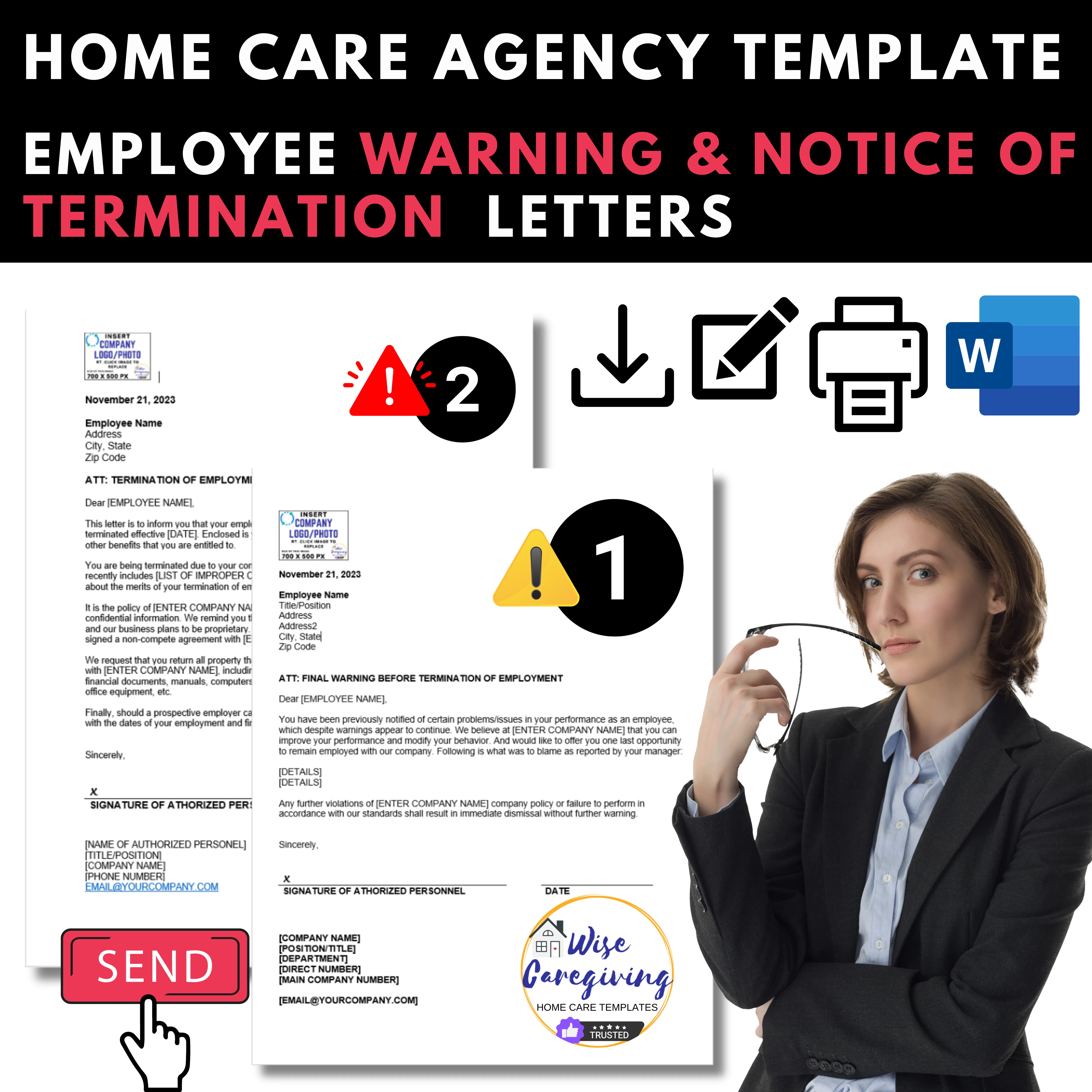
Terminating an employee for cause is among the most sensitive decisions an employer makes, and the termination letter is the single document that determines whether that decision is clean or contested. A well-drafted letter confirms the basis for the termination, preserves the employer's legal defenses, closes out the obligations on both sides, and treats the departing employee with the professionalism the situation demands.
A poorly drafted letter, by contrast, creates evidentiary problems in wrongful termination claims, confuses the documentation that supports unemployment decisions, and often turns an already difficult moment into a reputational liability with remaining staff.
The difference is rarely about the words on the page alone. It is about the discipline of documentation in the weeks and months before the letter is sent, the consistency of the process across comparable situations, and the precision with which the letter ties the termination to policy, conduct, and prior notice.
This guide provides ten ready-to-copy termination letter templates covering the most common for-cause scenarios, including gross misconduct, progressive performance issues, policy violations, attendance problems, insubordination, violation of confidentiality or non-compete, safety violations, violations following a final written warning, termination during probation, and mutual separation following discipline.
Each template reflects the structural conventions that employment counsel recommend, opens with a clear statement of the termination, references the specific policies and documented incidents that support it, addresses the logistics of final pay, benefits, return of property, and post-employment obligations, and preserves professional tone throughout.
The templates are paired with a comprehensive section on documentation, common mistakes that create legal exposure, delivery practices, and a FAQ drawn from the questions HR leaders most frequently field when preparing for-cause terminations.
Why the Termination Letter Matters
A for-cause termination letter serves simultaneously as notice, documentation, and evidence. Each function creates specific drafting obligations.
Legal Record
The letter is likely to be the central exhibit in any wrongful termination claim, unemployment appeal, or regulatory inquiry that follows. Everything it says, and everything it does not say, will be scrutinized.
Consistency Documentation
Courts and regulatory bodies evaluate terminations by comparing the process applied to the affected employee to the process applied to comparable employees. The letter should reflect the consistent application of policy rather than an exception made for this individual.
Benefit and Pay Logistics
The letter triggers specific timelines for final pay, COBRA notification, severance (where offered), accrued vacation payout, and return of property. Omitting any of these elements creates operational problems or legal exposure.
Closure and Professionalism
Even a for-cause termination deserves professional treatment. The tone of the letter shapes how the departing employee describes the termination in the months that follow, which affects morale among remaining staff and references provided to prospective employers.
"A strong for-cause termination letter reads like a court exhibit because it will eventually become one. Every factual claim should be supported by documented evidence in the personnel file, every policy reference should link to a written policy the employee acknowledged, and every logistics reference should reflect the benefits and obligations that actually apply."
What to Include in a For-Cause Termination Letter
The termination letter should cover each of the elements below. Missing any element creates either legal exposure or operational confusion.
| Element | Purpose | Typical Content |
|---|---|---|
| Date and employee identification | Establishes the record | Full name, title, employee ID |
| Clear termination statement | Removes ambiguity | Explicit statement of termination, effective date |
| Basis for termination | Ties decision to policy or conduct | Reference to policy violations, incidents, or performance |
| Prior notice documentation | Shows progressive discipline where applicable | Reference to prior warnings or corrective action |
| Final pay and benefits | Addresses mandatory logistics | Final paycheck, vacation, COBRA, retirement |
| Return of property | Lists items to return | Laptop, badge, documents, credit cards |
| Post-employment obligations | Reinforces surviving agreements | Confidentiality, non-compete, non-solicit |
| Severance or separation terms | Documents any offered package | Severance amount, release requirements |
| Contact for questions | Designates follow-up point | HR contact, email, phone |
10+ For-Cause Termination Letter Templates
Replace bracketed fields with the specific facts of each termination. Have every letter reviewed by employment counsel in the relevant jurisdiction before issuance, and confirm consistency with any collective bargaining agreement, employee handbook, or employment contract that governs the situation.
Template 1: Gross Misconduct
[Company Letterhead]
[Date]
[Employee Name] [Employee Address]
Dear [Employee First Name],
This letter confirms that your employment with [Company] is terminated for cause, effective immediately, [Date].
The termination is based on the events of [Date], in which you [brief factual description of the gross misconduct, for example, "engaged in physical altercation with a colleague on company premises in violation of Company Policy 4.1, Workplace Violence Prevention"].
The investigation conducted between [Start Date] and [End Date] confirmed the facts summarized above. Gross misconduct of this nature is grounds for immediate termination under our Employee Handbook and the policies you acknowledged on [Acknowledgment Date].
Your final paycheck, including [pay through today, accrued vacation, or other applicable items], will be processed in accordance with [state] law. You are eligible to continue your group health coverage under COBRA, and the formal COBRA notice will be sent under separate cover.
Please return the following company property by [Date]: company laptop, access badge, corporate credit card, and any confidential documents in your possession.
As a reminder, your obligations under the Confidentiality and Non-Solicit Agreement dated [Date] survive this termination. Any questions regarding final pay or benefits should be directed to [HR Contact Name] at [Email] or [Phone].
Sincerely,
[Sender Name] [Title]
Template 2: Progressive Performance Termination
[Company Letterhead]
[Date]
[Employee Name]
Dear [Employee First Name],
This letter confirms that your employment with [Company] is terminated, effective [Date].
The decision is the result of the ongoing performance issues documented in your personnel file, including the Performance Improvement Plan initiated on [Date], the mid-point review on [Date], and the final review on [Date].
Despite the specific goals set in the PIP, including [summarize 2-3 key goals], the required level of performance has not been achieved. Specifically, [cite measurable shortfalls, for example, "sales production remained 38 percent below quota for the final two quarters of the PIP"].
Your final paycheck, including accrued vacation pay consistent with state law and Company policy, will be processed on [Date]. COBRA continuation notice will be sent under separate cover. We are offering a severance package of [Amount] in exchange for a standard separation and release agreement, a copy of which is attached for your review.
Please return the following company property by [Date]: [list]. Your obligations under the confidentiality provisions in your employment agreement survive the termination.
Questions regarding logistics should be directed to [HR Contact].
Sincerely,
[Sender Name] [Title]
Template 3: Policy Violation
[Company Letterhead]
[Date]
[Employee Name]
Dear [Employee First Name],
This letter confirms that your employment with [Company] is terminated for cause, effective [Date].
The termination is based on your violation of [Policy Name, for example, "the Acceptable Use Policy, Section 3.2, governing use of company computing resources"]. Specifically, on [Dates], you [factual description, for example, "accessed and downloaded confidential client information to personal cloud storage without authorization"]. The investigation completed on [Date] confirmed the facts summarized above.
You previously acknowledged the [Policy Name] on [Acknowledgment Date], and the conduct described above is a material breach of that policy. Termination is consistent with the disciplinary framework outlined in the Employee Handbook.
Your final paycheck, including applicable accrued items, will be processed consistent with state law. COBRA notice will follow under separate cover.
Please return the following company property by [Date]: [list]. Your obligations under the Confidentiality Agreement dated [Date] survive the termination and are reinforced by the investigative findings in this matter.
Questions may be directed to [HR Contact].
Sincerely,
[Sender Name] [Title]
Template 4: Attendance Termination
[Company Letterhead]
[Date]
[Employee Name]
Dear [Employee First Name],
This letter confirms that your employment with [Company] is terminated, effective [Date].
The decision is based on your ongoing attendance issues, documented in your personnel file, including verbal counseling on [Date], a written warning on [Date], and a final written warning on [Date]. The final written warning specifically stated that further violations of the Attendance Policy would result in termination. Since the final written warning, you have had [Number] additional unexcused absences on [Dates], which confirms the pattern the prior discipline was intended to correct.
Your final paycheck, including any applicable accrued items, will be processed in accordance with state law. COBRA notice will follow under separate cover.
Please return the following company property by [Date]: [list]. Your obligations under any confidentiality and non-solicit agreements survive this termination.
Questions may be directed to [HR Contact].
Sincerely,
[Sender Name] [Title]
Template 5: Insubordination
[Company Letterhead]
[Date]
[Employee Name]
Dear [Employee First Name],
This letter confirms that your employment with [Company] is terminated for cause, effective [Date].
The termination is based on the incident of [Date], in which you refused to carry out a reasonable work instruction from your manager, [Manager Name], and engaged in [describe conduct, for example, "confrontational and disrespectful communications with your manager and colleagues, including profanity directed at team members"]. This conduct followed a prior written warning on [Date] for similar conduct, in which you were advised that further instances would result in termination.
Your final paycheck will be processed consistent with state law. COBRA notice will follow under separate cover.
Please return company property by [Date]: [list]. Your obligations under any surviving employment agreements remain in force.
Questions may be directed to [HR Contact].
Sincerely,
[Sender Name] [Title]
Template 6: Confidentiality or Non-Compete Breach
[Company Letterhead]
[Date]
[Employee Name]
Dear [Employee First Name],
This letter confirms that your employment with [Company] is terminated for cause, effective immediately, [Date].
The termination is based on evidence developed during the investigation concluded on [Date] that you [describe the breach, for example, "disclosed confidential customer information to [Third Party] in violation of the Confidentiality Agreement dated [Date]"]. The evidence includes [summary of evidence without including anything privileged, for example, "email communications recovered from company systems, forensic artifacts, and third-party confirmations"].
This conduct constitutes a material breach of the Confidentiality and Non-Compete Agreement you signed on [Date]. The Company reserves all rights and remedies under that agreement and applicable law, including without limitation injunctive relief and damages.
Your final paycheck will be processed consistent with state law. COBRA notice will follow. Please return all company property by [Date], including [list with specific attention to documents, devices, and credentials].
Your confidentiality, non-compete, non-solicit, and intellectual property obligations survive this termination and are enforceable. Any questions about these obligations should be directed to the Legal Department at [Contact].
Sincerely,
[Sender Name] [Title]
Template 7: Safety Violation
[Company Letterhead]
[Date]
[Employee Name]
Dear [Employee First Name],
This letter confirms that your employment with [Company] is terminated for cause, effective [Date].
The termination is based on your violation of [Safety Policy] on [Date], specifically [description, for example, "operating [equipment] without the required personal protective equipment and in disregard of the lockout-tagout procedures established for that equipment"]. Safety violations of this nature are grounds for termination under the Company Handbook and are especially serious given the potential for injury to yourself and your colleagues.
You received safety training on [Date] and acknowledged the applicable policies on that date. The investigation completed on [Date] confirmed the facts summarized above.
Your final paycheck, including applicable accrued items, will be processed consistent with state law. COBRA notice will follow under separate cover.
Please return company property by [Date]. Questions may be directed to [HR Contact].
Sincerely,
[Sender Name] [Title]
Template 8: Termination After Final Written Warning
[Company Letterhead]
[Date]
[Employee Name]
Dear [Employee First Name],
This letter confirms that your employment with [Company] is terminated, effective [Date].
The decision is based on [Specific Incident or Performance Measure] on [Date], which followed the Final Written Warning issued to you on [Date]. The Final Written Warning specifically stated that further [describe category] would result in termination, and the events of [Date] fall squarely within that category.
Specifically, [describe the triggering incident with dates and observable conduct]. This is consistent with the pattern of conduct that was the subject of the prior corrective actions on [Dates].
Your final paycheck will be processed consistent with state law. COBRA notice will follow. Please return company property by [Date]. Questions may be directed to [HR Contact].
Sincerely,
[Sender Name] [Title]
Template 9: Probationary Period Termination
[Company Letterhead]
[Date]
[Employee Name]
Dear [Employee First Name],
This letter confirms that your employment with [Company] is terminated, effective [Date], during your probationary period, which was scheduled to conclude on [End Date].
The decision is based on [brief description of performance, attendance, or fit issues that emerged during probation]. Your probationary period was expressly designed to evaluate fit, and the issues described above have made clear that the role is not the right match.
Your final paycheck will be processed consistent with state law and Company policy for probationary employees. Benefits eligibility is limited as described in the offer letter dated [Date]. Please return company property by [Date]. Questions may be directed to [HR Contact].
Sincerely,
[Sender Name] [Title]
Template 10: Negotiated Mutual Separation Following Discipline
[Company Letterhead]
[Date]
[Employee Name]
Dear [Employee First Name],
This letter confirms the mutual separation we have discussed and the terms agreed between you and [Company]. Your employment will end effective [Date].
The separation follows the disciplinary matters documented in your personnel file, including [brief reference]. Rather than proceed with termination for cause, the Company has agreed to the separation package summarized below in exchange for your execution of the separation and release agreement attached to this letter.
The separation package includes [Amount] in severance payable over [Period], continuation of [Benefits] for [Period], and [any other terms]. The separation and release agreement sets out the complete terms and conditions.
You should review the separation and release agreement carefully and have the opportunity to consult with an attorney of your choice. You have [Number] days to consider the agreement and [Number] days to revoke after signing, as required by applicable law.
Your final paycheck will be processed consistent with state law and the terms of the separation agreement. Please return company property by [Date].
Sincerely,
[Sender Name] [Title]
Template 11: Short Template for Clear-Cut For-Cause Termination
[Company Letterhead]
[Date]
[Employee Name]
Dear [Employee First Name],
Your employment with [Company] is terminated for cause, effective [Date], based on [brief policy or conduct reference, for example, "violation of the Workplace Harassment Policy Section 2.1 as substantiated by the investigation completed on [Date]"].
Your final paycheck will be processed in accordance with state law. COBRA notification will follow under separate cover. Please return all company property by [Date], including [list].
Your confidentiality obligations survive this termination. Questions may be directed to [HR Contact] at [Email].
Sincerely,
[Sender Name] [Title]
Documentation Before the Letter
The termination letter is the last step in a documented process, not the first. Before the letter is issued, the personnel file should reflect the facts that support the decision.
Policy Acknowledgments
The employee should have acknowledged the relevant policies at hire or upon policy revision. Acknowledgments should be dated and preserved in the personnel file.
Performance Documentation
For performance-based terminations, the file should include reviews, performance improvement plans, measurable goals, and mid-point and final reviews showing sustained shortfall.
Investigation Records
For misconduct-based terminations, an investigation record should document the allegations, the investigative steps, the evidence gathered, the interviews conducted, and the conclusions reached. Investigation records should be maintained in a manner that preserves privilege where applicable.
Prior Corrective Actions
Verbal counseling, written warnings, and final written warnings should be documented and communicated to the employee in writing. The progressive discipline record is often the single strongest defense to a wrongful termination claim.
Consistency Analysis
Before issuing a termination, HR should confirm that the discipline is consistent with how comparable conduct has been treated in the past. Inconsistency creates the strongest discrimination claims.
Common Mistakes in For-Cause Terminations
Employers make predictable errors that transform defensible terminations into legal exposure.
Inconsistent Application of Policy
Terminating one employee for conduct that other employees have engaged in without consequence is the core pattern in discrimination claims. Review comparable cases before finalizing the termination.
Vague Basis
"Poor attitude" and "not a good fit" are not bases for for-cause termination. The letter should point to specific, documented conduct or measurable performance shortfalls, and the underlying documentation should support those references.
Missing Progressive Discipline
For non-gross-misconduct cases, the absence of progressive discipline makes the termination look arbitrary. If the employer's handbook contemplates progressive discipline, skipping steps without a documented reason creates exposure.
Logistics Errors
Forgetting COBRA notice, miscalculating final pay, or failing to pay out accrued vacation where state law requires it creates operational problems and can trigger state wage claim penalties.
Emotional or Retaliatory Language
The letter is not the place to express frustration with the employee. Emotional language becomes evidence in litigation and undermines the professional record the termination is trying to establish.
"The single most important discipline in a for-cause termination is the rule that the letter contains nothing that is not supported in the personnel file. If the personnel file does not reflect a fact the letter asserts, either the file or the letter needs to change before the termination goes out."
Delivery Practices
The delivery of the termination letter shapes the employee's response and the employer's ability to manage the practical consequences of the departure.
In-Person Delivery
For most for-cause terminations, in-person delivery by the manager and an HR representative is appropriate. The meeting should be short, professional, and scripted to avoid opening extraneous issues.
Electronic Delivery for Remote Employees
For remote employees, a video meeting is preferable to an email-only delivery. The letter itself should be delivered electronically and followed by a physical copy mailed to the last known address.
Security Considerations
For terminations involving potential workplace violence, confidentiality risks, or access to sensitive systems, coordinate with security and IT to disable access at the moment of the notification meeting.
Witness and Notes
The HR representative should take contemporaneous notes of the meeting, and both the manager and the HR representative should sign the notes. These notes can become important evidence.
| Termination Type | Recommended Delivery | Security Considerations |
|---|---|---|
| Gross misconduct | In-person with security briefed | Immediate access revocation |
| Performance | In-person or video meeting | Standard offboarding |
| Policy violation | In-person with HR and counsel aware | Depends on policy and role |
| Attendance | In-person or phone if remote | Standard offboarding |
| Confidentiality breach | In-person with security and IT coordinated | Full revocation and forensic hold |
"The termination meeting is the employer's only opportunity to shape how the departing employee describes the conversation to colleagues, friends, and potentially lawyers. A short, calm, factual meeting is worth an hour of preparation."
Legal Considerations
For-cause terminations intersect with several areas of employment law that employers should evaluate before issuing the letter.
At-Will Employment
Most U.S. employment is at-will, but at-will employment does not override anti-discrimination, anti-retaliation, and contract protections. Even an at-will employee can bring claims based on the reasons for the termination.
Protected Activity
If the employee has recently engaged in protected activity, such as filing a complaint, requesting accommodation, or taking protected leave, the timing of the termination will be scrutinized. Documentation of the independent basis for the termination is especially important.
Collective Bargaining Agreements
Unionized employees are subject to the grievance and arbitration procedures in their collective bargaining agreement. The termination letter should be consistent with the just cause standard in the CBA.
State and Local Variations
State laws vary on final pay timing, accrued vacation payout, mass layoff notice, and required termination disclosures. Some states also have specific protections for off-duty conduct, political activity, and other categories.
Release Agreements
Severance paid in exchange for a release requires compliance with the Older Workers Benefit Protection Act for employees over 40, including specific notice and revocation periods, and with state law requirements for enforceable releases.
Frequently Asked Questions
Can we terminate an at-will employee without giving a reason?
Technically yes, but it is almost never advisable. A documented reason supports unemployment decisions, defends against wrongful termination claims, and gives the employee and the organization closure. The alternative, a silent termination, usually looks pretextual and invites exactly the scrutiny the silence was intended to avoid. A well-drafted for-cause letter is the stronger position in almost every circumstance.
Do we have to give severance for a for-cause termination?
No, unless required by employment contract, separation agreement, or company policy. Severance is a business decision, not a legal obligation for most at-will terminations. Some employers offer severance even in for-cause situations in exchange for a release of claims, which can be a cost-effective risk management tool. The economics depend on the strength of the for-cause case and the exposure if the employee later pursues claims.
Should the termination letter reference the investigation findings in detail?
Keep the reference specific enough to anchor the termination in a documented basis but general enough to avoid disclosing information that should remain confidential. A statement that the investigation concluded on a specific date and confirmed the facts summarized in the letter is usually sufficient. The underlying investigation file should be preserved for use in any subsequent proceeding.
How do we handle a for-cause termination for a remote employee?
Conduct the termination by video meeting with the manager and an HR representative present, deliver the letter electronically, mail a physical copy, coordinate immediate access revocation with IT, and arrange for the return of company property with shipping instructions and prepaid labels. The substantive content of the letter is the same as for an on-site employee, but the logistics require more coordination.
What do we say to remaining staff after a for-cause termination?
Generally the least necessary. A short statement that the employee is no longer with the company, without detail about the reasons, is usually the right approach. Detailed disclosures can create defamation exposure and morale problems. If the termination affects team workload, assignments can be communicated separately from the fact of the departure.
Can a terminated employee still collect unemployment?
Eligibility for unemployment depends on state law and the specific facts. In most states, an employee terminated for willful misconduct is disqualified, while an employee terminated for performance or poor fit typically remains eligible. The termination letter becomes evidence in the state's determination. Employers should focus on accurate documentation rather than trying to shape the outcome through unsupported characterizations.
Conclusion and Next Steps
A well-drafted for-cause termination letter is the product of a disciplined process that started long before the decision to terminate. The templates in this guide are starting points that must be adapted to the specific facts, the specific policies, and the specific jurisdiction.
Before issuing any for-cause termination letter, confirm three checkpoints: the factual basis is documented in the personnel file, the discipline is consistent with how comparable cases have been handled, and the logistics of final pay, benefits, property return, and post-employment obligations are correctly reflected.
The goal of a for-cause termination is to close the employment relationship cleanly, protect the organization from legal exposure, and treat the departing employee with the professionalism the situation demands. The letter is the artifact that anchors that closure, and the process behind the letter is the real determinant of whether the termination holds up under scrutiny.
Frequently Asked Questions
Can we terminate an at-will employee without giving a reason?
Technically yes, but it is almost never advisable. A documented reason supports unemployment decisions, defends against wrongful termination claims, and gives the employee and the organization closure. The alternative, a silent termination, usually looks pretextual and invites exactly the scrutiny the silence was intended to avoid.
A well-drafted for-cause letter is the stronger position in almost every circumstance.
Even in truly at-will jurisdictions, courts and regulatory bodies read unsubstantiated terminations through the lens of discrimination and retaliation theories, and the absence of a documented reason becomes the missing piece that invites those theories to fill the gap.
Do we have to give severance for a for-cause termination?
No, unless required by employment contract, separation agreement, or company policy. Severance is a business decision, not a legal obligation for most at-will terminations. Some employers offer severance even in for-cause situations in exchange for a release of claims, which can be a cost-effective risk management tool.
The economics depend on the strength of the for-cause case and the exposure if the employee later pursues claims.
In borderline cases, a modest severance tied to a release can eliminate the risk of litigation at a cost lower than defending even a successful motion to dismiss.
Should the termination letter reference the investigation findings in detail?
Keep the reference specific enough to anchor the termination in a documented basis but general enough to avoid disclosing information that should remain confidential. A statement that the investigation concluded on a specific date and confirmed the facts summarized in the letter is usually sufficient.
The underlying investigation file should be preserved for use in any subsequent proceeding.
Detailed disclosures in the letter can create defamation exposure if the employee later challenges the characterization, and they can compromise the confidentiality of other witnesses whose cooperation was secured on the expectation that their statements would remain within the investigation.
How do we handle a for-cause termination for a remote employee?
Conduct the termination by video meeting with the manager and an HR representative present, deliver the letter electronically, mail a physical copy, coordinate immediate access revocation with IT, and arrange for the return of company property with shipping instructions and prepaid labels.
The substantive content of the letter is the same as for an on-site employee, but the logistics require more coordination.
Confirm the state where the employee works before the meeting, because final pay timing, termination notice requirements, and accrued benefit payout vary by jurisdiction, and multi-state employers often have different obligations depending on where the employee is located.
What do we say to remaining staff after a for-cause termination?
Generally the least necessary. A short statement that the employee is no longer with the company, without detail about the reasons, is usually the right approach. Detailed disclosures can create defamation exposure and morale problems. If the termination affects team workload, assignments can be communicated separately from the fact of the departure.
Remaining employees will often speculate, and speculation is preferable to statements that could be characterized as false, disparaging, or defamatory in later litigation.
Managers should be briefed on a consistent script for responding to questions, and the script should stay close to the simple fact of departure without the reasons behind it.
Can a terminated employee still collect unemployment?
Eligibility for unemployment depends on state law and the specific facts. In most states, an employee terminated for willful misconduct is disqualified, while an employee terminated for performance or poor fit typically remains eligible. The termination letter becomes evidence in the state’s determination.
Employers should focus on accurate documentation rather than trying to shape the outcome through unsupported characterizations.
Overstating the misconduct basis in a letter to influence unemployment can backfire when the state reviews the underlying evidence, and the letter that sought to block a claim may become the evidence that supports a wrongful termination action.