
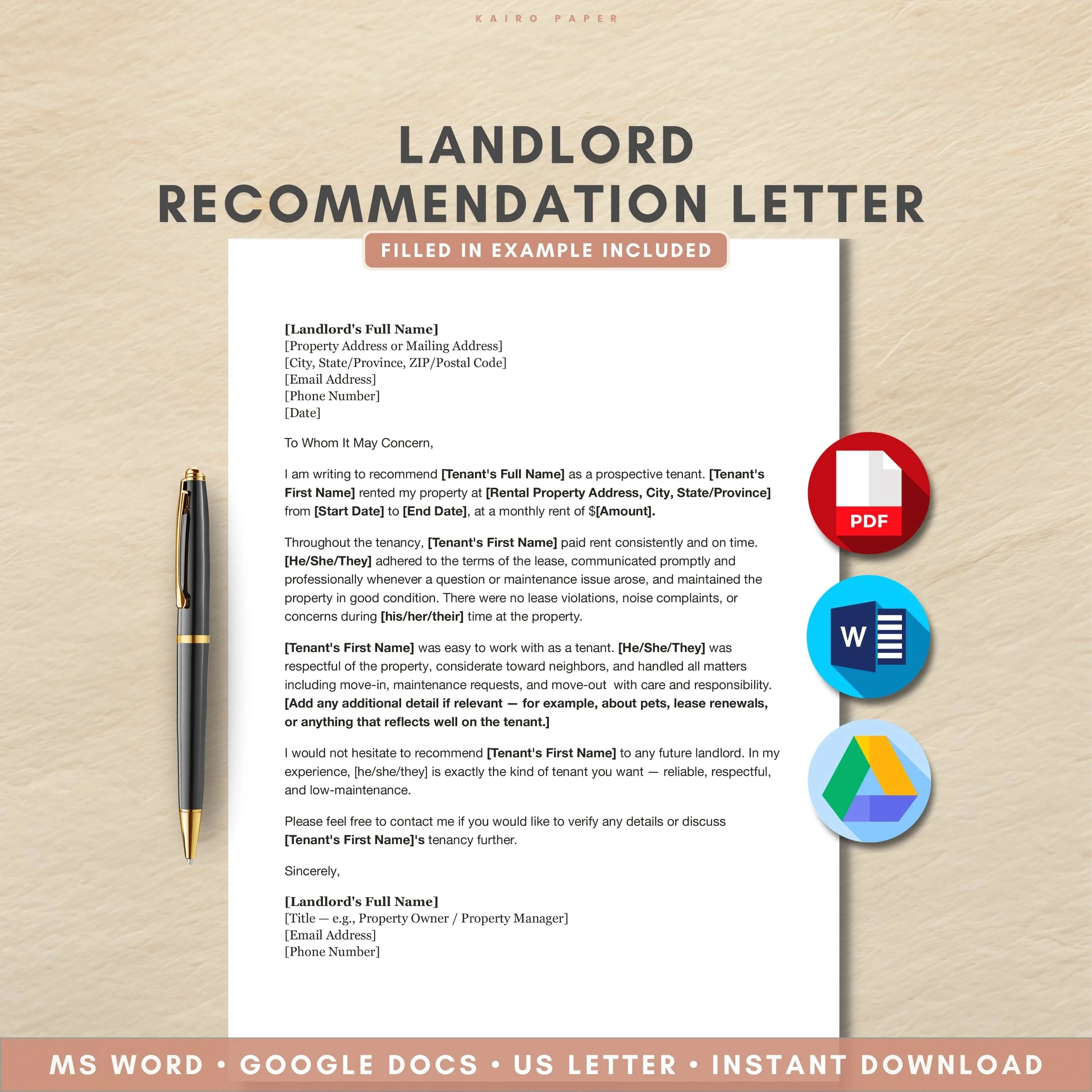
Few documents carry more weight in a landlord-tenant relationship than a formal written complaint. A carefully drafted letter transforms a verbal grievance into a documented record that triggers legal timelines, preserves your right to escalate, and puts your landlord on notice that you understand the obligations of the lease and the habitability laws that govern it.
Tenants who rely on phone calls, text messages, or casual in-person conversations routinely find that repairs are delayed, security deposits are withheld, and complaints are ignored because nothing exists in writing.
The formal complaint letter changes that dynamic immediately, because most jurisdictions require landlords to respond in writing, cure defects within statutory timeframes, and document their actions in ways that become evidence if the dispute reaches housing court or small claims court.
This guide provides ten ready-to-copy complaint letter templates covering the situations tenants most commonly face, including unaddressed repair requests, security deposit disputes, noise complaints against neighbors, habitability concerns such as mold and pests, lease violations by the landlord, illegal entry, utility issues, unsafe conditions, denial of reasonable accommodations, and improper rent increases.
Each template follows the proper business letter format expected by property managers and housing attorneys, and each is written in the firm but professional tone that produces results without damaging the long-term tenancy relationship.
The templates can be adapted to your specific facts, jurisdiction, and lease terms, and they pair with practical guidance on documentation, delivery methods, legal considerations, and escalation paths when the landlord fails to respond.
When to Send a Formal Complaint Letter
Tenants often hesitate to send a formal complaint letter because they worry about damaging the relationship with the landlord or provoking retaliation. Both concerns are understandable, but a well-written letter is usually the single best tool a tenant has for protecting their rights while maintaining a professional tone. You should move from verbal communication to a formal letter when any of the following situations apply.
Repairs Remain Unaddressed
If you have requested a repair verbally or by text and the landlord has not responded within a reasonable time, typically seven to fourteen days for non-emergency issues and 24 to 72 hours for emergencies, a formal letter activates the landlord's statutory duty to maintain habitable premises and starts the clock on remedies such as repair-and-deduct, rent withholding, or lease termination where state law allows.
Financial Stakes Are Significant
Whenever the dispute involves money, including security deposits, rent credits, utility overcharges, or property damage claims, a written record is essential. Courts rely on documented correspondence to determine who said what and when, and a formal letter positions you to recover funds through small claims court if informal resolution fails.
Health or Safety Is at Risk
Mold, pest infestations, lead paint, faulty wiring, gas leaks, broken locks, and similar hazards trigger urgent duties on the landlord under every state habitability code. A formal written notice ensures the landlord cannot later claim ignorance and protects you if the condition worsens before repair.
Retaliation or Harassment Has Begun
If a landlord raises rent, threatens non-renewal, or begins entering your unit more frequently after you raised a concern, a formal letter creating a paper trail is critical because every state with tenant protections treats retaliation as a separate actionable violation when the tenant can demonstrate timing and causation.
What to Include in a Landlord Complaint Letter
A formal complaint letter to a landlord should contain specific elements that both demonstrate professionalism and satisfy any legal notice requirements your lease or state statute may impose. Skipping any of these elements can give the landlord grounds to dismiss the complaint or argue that notice was never properly given.
| Element | Purpose | Example |
|---|---|---|
| Date and address block | Establishes when and where notice was given | Full tenant address, landlord address, date of letter |
| Subject line | Identifies the complaint at a glance | "RE: Formal Complaint Regarding Unrepaired Water Damage, Unit 4B" |
| Tenant identification | Confirms your standing to complain | Full legal name, unit number, lease start date |
| Statement of issue | Describes the problem specifically | Dates, times, locations, affected systems or rooms |
| Prior communications | Shows good-faith effort to resolve | References to emails, texts, or verbal requests with dates |
| Legal basis | Invokes the lease or statute | Citation to lease clause, state habitability code, or local ordinance |
| Requested remedy | Tells the landlord what resolution you want | Repair by specific date, deposit return, rent adjustment |
| Deadline | Creates urgency and preserves escalation rights | "Please respond within 14 days of receipt" |
| Signature and delivery record | Authenticates the letter | Signature, printed name, certified mail receipt number |
"The single most common mistake tenants make is telling a landlord about a problem without ever putting it in writing. Oral notice is almost impossible to prove in court, and property managers are trained to require written documentation before dispatching a vendor. Write the letter, keep a copy, and send it by a method that produces a receipt."
Proper Format for a Landlord Complaint Letter
Landlords, property managers, and housing courts all expect a business letter format that mirrors professional correspondence. The format signals that you understand the seriousness of the matter and makes it harder for the recipient to dismiss your complaint as emotional or informal.
Header and Address Block
Place your full name, current address, phone number, and email at the top of the letter. Skip a line, add the date, skip another line, and then write the landlord or property management company's name, mailing address, and the name of a specific contact person if one is known. If your lease identifies a designated agent for service of notices, use that name and address.
Subject Line
Add a subject line beginning with "RE:" that identifies the nature of the complaint and the unit. For example, "RE: Formal Notice of Unrepaired Heating System, Unit 207, 1420 Oak Avenue."
Salutation
Use "Dear Mr. Smith," "Dear Ms. Johnson," or "Dear Property Manager" if no individual is known. Avoid first-name salutations in a formal complaint even if you are on friendly terms with the landlord.
Body Paragraphs
The body should follow a logical sequence: identification of the tenant and tenancy, statement of the problem, chronology of prior communications, legal basis for the complaint, and specific remedy requested with a deadline.
Closing and Signature
Close with "Sincerely," followed by four blank lines for a handwritten signature, then your typed name. Below the signature, list any enclosures such as photographs, repair estimates, or prior correspondence.
10+ Ready-to-Copy Complaint Letter Templates
The templates below are drafted for the most frequent tenant complaints. Replace bracketed fields with your own information. Each letter is written to be effective on its own while leaving room for you to add jurisdiction-specific citations your state or local laws may require.
Template 1: Repair Not Made After Multiple Requests
[Your Full Name] [Your Street Address] [City, State ZIP] [Phone] | [Email]
[Date]
[Landlord or Property Manager Name] [Company Name, if applicable] [Street Address] [City, State ZIP]
RE: Formal Complaint Regarding Unrepaired [Issue], Unit [Number]
Dear [Landlord Name],
I am writing to formally document my ongoing request for repair of the [specific issue, for example, "leaking kitchen faucet and damaged subfloor"] in my rental unit at the above address. I have resided in this unit since [lease start date] under a written lease.
I first reported this issue to you by [phone call, text message, email] on [date], and I followed up again on [date] and [date]. To date, no repair has been scheduled or completed. The condition has worsened and is now causing [specific impact, for example, "visible water staining, a mildew odor, and a risk of further damage to cabinetry"].
Under my lease and the habitability requirements of [state] law, you are obligated to maintain the premises in a safe and functional condition. Please complete the necessary repair no later than [date, typically 14 days from letter], and provide written confirmation of the repair date. If I have not received a response by [deadline], I will pursue the remedies available to me, which may include repair-and-deduct, rent withholding, or a formal complaint to the [local housing authority].
Sincerely,
[Signature] [Typed Name]
Enclosures: Photographs of the issue, copies of prior text messages
Template 2: Security Deposit Dispute
[Header block as above]
RE: Formal Demand for Return of Security Deposit, Former Unit [Number]
Dear [Landlord Name],
On [move-out date], I vacated the above unit after [number] years of tenancy. I returned the keys on [date] and left the unit in clean, undamaged condition, as documented in the move-out photographs enclosed with this letter.
Under [state] law, landlords are required to return the security deposit, or provide an itemized statement of deductions, within [statutory timeframe, typically 14 to 60 days] of the tenant vacating. It has now been [number] days since my move-out, and I have received neither a refund nor an itemized statement. The deposit amount is [dollar figure], as documented in the lease agreement.
Please remit the full deposit to my forwarding address listed above within 14 days of receipt of this letter. If you claim any deductions, provide an itemized statement with receipts or estimates supporting each charge, as required by law. Failure to comply may expose you to statutory penalties, which in [state] include [specific penalty, such as "up to three times the deposit amount plus attorney fees"].
Sincerely,
[Signature] [Typed Name]
Enclosures: Copy of lease, move-out photographs, forwarding address confirmation
Template 3: Excessive Neighbor Noise
[Header block]
RE: Formal Complaint Regarding Ongoing Disturbances from Unit [Number]
Dear [Landlord Name],
I am writing to formally report repeated and excessive noise from the occupants of Unit [number], which has made peaceful enjoyment of my own unit, Unit [number], impossible for [number] weeks. The disturbances include [specific conduct, for example, "loud music after midnight on weekdays, shouting, and what appears to be furniture being dragged across the floor in the early morning hours"].
The disturbances have occurred on the following specific dates and times: [list with dates and approximate times]. I have contacted the tenants directly on [dates], and I reported the issue to the property management office on [dates]. The conduct has continued unabated.
My lease guarantees my right to quiet enjoyment of the premises, and the lease executed by the tenants of Unit [number] almost certainly contains a similar noise clause. Please take appropriate action, which may include a written warning, formal notice to cure, or lease non-renewal, and confirm the steps you have taken in writing within 14 days.
Sincerely,
[Signature] [Typed Name]
Enclosures: Log of disturbance dates and times, audio recordings where legal
Template 4: Habitability Concern - Mold
[Header block]
RE: Urgent Formal Complaint Regarding Mold Contamination, Unit [Number]
Dear [Landlord Name],
I am writing to formally notify you of visible mold growth in my rental unit that presents a serious health hazard. The mold is located in [specific rooms and surfaces, for example, "the bathroom ceiling, under the kitchen sink, and along the bedroom window frames"] and has increased noticeably over the past [timeframe].
Since the appearance of the mold, members of my household have experienced [symptoms such as "persistent cough, headaches, and respiratory irritation"]. Mold of this scope constitutes a habitability violation under [state] law and under the implied warranty of habitability.
I request that you retain a licensed mold remediation company to inspect and remediate the affected areas within [timeframe, typically 7 to 14 days depending on severity]. Please also identify and repair the source of moisture causing the growth.
Provide written confirmation of the inspection date and the remediation plan within five business days of this letter. If the issue is not addressed in a timely manner, I will file a complaint with the [local housing or health department] and pursue other remedies available under state law.
Sincerely,
[Signature] [Typed Name]
Enclosures: Photographs of mold, medical documentation where applicable
Template 5: Habitability Concern - Pest Infestation
[Header block]
RE: Formal Complaint Regarding [Bedbug, Cockroach, Rodent] Infestation, Unit [Number]
Dear [Landlord Name],
I am writing to notify you of a [type of pest] infestation in my unit that has progressed from isolated sightings to a significant infestation over the past [timeframe]. I first noticed the issue on [date] and reported it to you [method and date].
Pest infestations of this severity constitute a habitability violation under [state] law, and in multi-unit buildings, professional extermination by a licensed vendor is almost always required because treatments in a single unit will not address the root of the problem. I request the following actions within 14 days of this letter: inspection of my unit and adjacent units by a licensed exterminator, a full treatment plan with timeline, and written documentation of each step.
During treatment, I expect reasonable accommodation for any temporary displacement or preparation requirements. Please confirm receipt of this letter and the proposed treatment schedule in writing within five business days.
Sincerely,
[Signature] [Typed Name]
Enclosures: Photographs, copy of initial report
Template 6: Lease Violation by Landlord - Illegal Entry
[Header block]
RE: Formal Complaint Regarding Unauthorized Entry Into Unit [Number]
Dear [Landlord Name],
I am writing to formally document that on [date(s)], you or a representative entered my rental unit without providing the advance notice required by law and by my lease. Specifically, [describe the entry: who, when, for what apparent purpose, and what evidence of entry was found].
Under [state] law, landlords must generally provide at least [statutory notice period, typically 24 or 48 hours] advance written notice before entering a tenant's unit, except in genuine emergencies. My lease reinforces this requirement in Section [number]. The entry described above was not an emergency and did not meet the notice requirement.
I request written assurance that all future entries will comply with the statutory notice period and that you will provide the date, approximate time, and stated purpose of each planned entry. Repeated violations of entry law may give rise to claims for damages and injunctive relief under state law.
Sincerely,
[Signature] [Typed Name]
Template 7: Unsafe Conditions - Broken Locks or Exterior Lighting
[Header block]
RE: Formal Complaint Regarding Security Hazards at [Property Address]
Dear [Landlord Name],
I am writing to formally request immediate remediation of the following security hazards at the above property: [list, for example, "the broken deadbolt on the rear entry door, the missing exterior light over the parking area, and the malfunctioning lobby intercom"]. Each of these conditions creates a serious security risk for me and for other tenants.
I reported these issues on [dates]. To date, no repair has been made, and the risk grows with each day that passes. Please complete the following repairs within seven days: [list specific items and requested fix]. If any item cannot be repaired in that timeframe, please provide a written explanation and a firm completion date.
Failure to maintain minimum security is a breach of the warranty of habitability in most jurisdictions and may expose the ownership to liability in the event of a criminal incident on the property.
Sincerely,
[Signature] [Typed Name]
Enclosures: Photographs of affected items
Template 8: Utility or Service Interruption
[Header block]
RE: Formal Complaint Regarding Interrupted [Water, Heat, Electricity] Service, Unit [Number]
Dear [Landlord Name],
On [date], the [utility] service to my unit was interrupted and has not been restored as of the date of this letter. This interruption is not the result of non-payment on my part, as the [specific utility] is included in my rent under Section [number] of the lease, and my account is current.
Uninterrupted access to essential utilities is a fundamental habitability requirement. Please restore service no later than [date, typically within 24 to 72 hours depending on utility] and provide written explanation of the cause of the interruption and the steps taken to restore service.
I am tracking my expenses related to this interruption, including [hotel stays, meals out, spoiled groceries, alternative heat sources], and will seek reimbursement if the interruption is the result of the landlord's failure to maintain the property.
Sincerely,
[Signature] [Typed Name]
Template 9: Denial of Reasonable Accommodation
[Header block]
RE: Formal Complaint Regarding Denial of Reasonable Accommodation Request
Dear [Landlord Name],
I am writing to formally object to your decision, communicated on [date], denying my request for a reasonable accommodation under the Fair Housing Act. My request, submitted on [date], was to [describe, for example, "permit my emotional support animal despite the no-pets clause, with appropriate documentation from my licensed mental health provider"].
Under federal fair housing law and parallel state and local statutes, landlords are required to grant reasonable accommodations that are necessary to afford a person with a disability equal opportunity to use and enjoy the dwelling. The accommodation I requested is standard, well-supported in case law, and imposes no undue burden on the property.
I request that you reconsider the denial within seven days of this letter, or provide a written explanation specifying the basis for the denial. If the denial stands, I will pursue a complaint with the U.S. Department of Housing and Urban Development and the [state] fair housing agency.
Sincerely,
[Signature] [Typed Name]
Enclosures: Copy of original accommodation request, supporting medical documentation
Template 10: Improper Rent Increase
[Header block]
RE: Formal Objection to Rent Increase Notice Dated [Date]
Dear [Landlord Name],
I am in receipt of your notice dated [date] announcing a rent increase from [current amount] to [new amount], effective [date]. I am writing to formally object to this increase on the following grounds.
First, the notice period provided, [number] days, does not satisfy the [statutory or contractual] requirement of [required notice period]. Second, my current lease runs through [end date], and the rent cannot be raised during the fixed term absent a specific contractual provision allowing mid-term increases. Third, if this property is subject to [rent stabilization, rent control, or local cap], the proposed increase exceeds the allowable limit of [percentage or amount] for the current period.
Please withdraw the notice or provide a corrected notice that complies with applicable law. If you intend to proceed with the increase, I request a written explanation of the legal basis and will consult with a tenant attorney regarding my options, which may include filing a complaint with [relevant agency].
Sincerely,
[Signature] [Typed Name]
Enclosures: Copy of current lease, copy of rent increase notice
Template 11: General Lease Violation by Landlord
[Header block]
RE: Formal Notice of Lease Breach and Demand to Cure
Dear [Landlord Name],
I am writing to formally notify you that you are in breach of the lease agreement dated [date] with respect to [specific provision, for example, "Section 7, which requires the landlord to maintain the common laundry facilities in working order"]. Specifically, [describe the breach with dates and facts].
Under the lease, I am entitled to [describe contractual right]. I request that the breach be cured within [timeframe] of this letter. Continued non-compliance will be treated as a material breach of the lease, and I will exercise the remedies available to me, which may include rent abatement, early termination of the lease without penalty, or a civil claim for damages.
Sincerely,
[Signature] [Typed Name]
Common Mistakes to Avoid
Even a strong complaint can be undermined by preventable errors that give the landlord room to dismiss or delay the response.
Emotional Language
Anger is understandable, but emotional language gives the landlord an excuse to characterize the complaint as a personal dispute rather than a legitimate grievance. Stick to facts, dates, and legal rights. Save the emotion for the phone call with your attorney.
Vague Descriptions
"The bathroom has been a problem for a while" is useless. "The bathroom sink has leaked since March 3, 2025, causing visible water damage to the cabinet underneath and a mildew odor that persists despite daily ventilation" is actionable.
Unreasonable Deadlines
Demanding a repair within 24 hours when the issue is a cosmetic flaw makes you look unreasonable. Match the deadline to the severity of the issue, and cite the statutory standard when possible.
Failing to Send by Trackable Method
A complaint letter you cannot prove was delivered is only marginally better than a verbal complaint. Use certified mail with return receipt, or a method your lease designates for formal notices.
"Every complaint letter should be written as though a judge will eventually read it. That framing forces the discipline of specific facts, professional tone, and clear requests, and it happens to be exactly what produces the best response from property managers."
Legal Considerations for Tenant Complaints
Landlord-tenant law varies significantly by state, and some rights exist only when the tenant strictly follows statutory procedures. The following considerations apply broadly.
Warranty of Habitability
Every state except Arkansas recognizes an implied warranty of habitability requiring landlords to maintain premises in a safe and livable condition. Specific thresholds for what constitutes a habitability violation, and the remedies available, are defined by state statute or case law.
Notice Requirements
Most tenant remedies require written notice to the landlord and a reasonable opportunity to cure. Failing to provide proper notice can defeat an otherwise valid claim. Check your state's landlord-tenant handbook or consult a tenant attorney.
Retaliation Protections
Every state with significant tenant protections prohibits retaliation against tenants who exercise their legal rights. Retaliation typically includes rent increases, non-renewal, eviction filings, or loss of services within a defined window, often six months to one year, after the tenant's protected activity.
Small Claims Court Jurisdiction
For monetary disputes under the state's small claims threshold, tenants can bring claims without an attorney. Your documented complaint letters become the foundation of the case.
| Complaint Type | Typical Notice Period | Primary Remedy |
|---|---|---|
| Repair / habitability | 7 to 30 days | Repair-and-deduct, rent withholding, termination |
| Security deposit | 14 to 60 days after move-out | Statutory penalty, interest, attorney fees |
| Noise / quiet enjoyment | 14 to 30 days | Warning, lease enforcement, rent abatement |
| Illegal entry | Notice of violation | Damages, injunctive relief |
| Fair housing / accommodation | 7 to 14 days to reconsider | HUD complaint, state civil rights agency |
"Before you send any complaint letter, spend 15 minutes reading the landlord-tenant handbook for your state. Every state's attorney general or housing agency publishes one, and the specific statutory timeframes and remedies are the anchors that make your letter credible."
Delivery and Documentation
How you deliver the letter often matters as much as what it says.
Certified Mail With Return Receipt
For any complaint where the stakes justify the modest cost, certified mail with return receipt is the gold standard. The green card you receive back is admissible proof of delivery.
Email With Read Receipt
For lower-stakes complaints, email to an address the landlord regularly monitors is acceptable, especially if the lease designates email as a valid method of notice.
Hand Delivery With Witness
In-person delivery is acceptable if a neutral witness can confirm receipt, or if the landlord signs a receipt acknowledging delivery.
Keep Copies of Everything
Retain a signed copy of the letter, the certified mail receipt, the return receipt, and any response. Maintain a chronological file of all correspondence throughout the tenancy.
Frequently Asked Questions
Can my landlord evict me for sending a complaint letter?
In every state with strong tenant protections, retaliation for sending a good-faith complaint letter is illegal. Retaliation commonly includes eviction filings, non-renewal of the lease, rent increases, or reduction of services within a defined window after the protected activity, typically six months to one year. If your landlord retaliates, document the timing carefully, because the protection is often triggered by proximity between the complaint and the adverse action.
Should I withhold rent if my landlord does not make repairs?
Rent withholding is a powerful remedy but one with significant risks. Most states require tenants to follow specific procedures before withholding rent, including delivering proper written notice, allowing a reasonable opportunity to cure, and in some states placing the withheld rent into an escrow account or court registry.
Withholding rent without following these procedures can expose you to eviction. Consult a tenant attorney before withholding any rent, because the cost of a free consultation is far less than the cost of a wrongful eviction.
How long should I give my landlord to respond?
The right deadline depends on the severity of the issue. Emergencies such as no heat in winter, no water, broken locks, or gas leaks warrant a deadline of 24 to 72 hours. Serious but non-emergency issues such as mold, pests, or major appliance failures warrant 7 to 14 days. Routine issues warrant 14 to 30 days. Always align the deadline with any statutory requirements your state imposes, and reference those requirements in the letter.
What if my landlord responds with threats or insults?
If your landlord responds with threats, insults, or intimidation, preserve the communication immediately, because it likely constitutes evidence of retaliation or harassment. Do not respond in kind. Send a brief follow-up letter acknowledging receipt of the response, reaffirming your original request, and noting that threats will not change the legal obligations at issue. Then consult with a tenant attorney or your local legal aid office.
Do I need a lawyer to send a landlord complaint letter?
For most situations, no. The templates in this guide are designed to be effective on their own, and the vast majority of landlord complaints are resolved without formal legal representation. You may want an attorney for cases involving significant financial stakes, imminent eviction, fair housing claims, or claims that may reach court. Many jurisdictions offer free tenant legal aid, and law school clinics often handle landlord-tenant disputes at no cost.
Will a complaint letter hurt my reference for future rentals?
A professionally written complaint letter is unlikely to hurt your future rental references, because the content and tone demonstrate that you are a reasonable, informed tenant rather than a difficult one. Landlords are generally more concerned about tenants who damage property, pay late, or cause disturbances than about tenants who document legitimate issues in writing. In any event, the short-term protection of your rights outweighs the speculative risk to a future reference.
Conclusion and Next Steps
A formal complaint letter is the hinge between informal grievances that get ignored and documented disputes that force resolution. The templates in this guide cover the ten most frequent tenant complaints, and each is designed to be adapted to your specific lease, jurisdiction, and facts. Once you have sent the letter, your next steps depend on the response.
If the landlord responds and offers a reasonable resolution, confirm the resolution in writing and follow up to ensure completion. If the landlord does not respond within the deadline, escalate by filing a complaint with the local housing authority, small claims court, or fair housing agency, depending on the issue. Throughout the process, maintain your file of documentation, because every piece of correspondence strengthens your position if the matter reaches court.
The goal of a complaint letter is not to win an argument - it is to preserve your home, your rights, and your peace of mind. A well-drafted letter accomplishes all three while leaving the door open to a constructive ongoing relationship with your landlord when resolution is reached.
Frequently Asked Questions
Can my landlord evict me for sending a complaint letter?
In every state with strong tenant protections, retaliation for sending a good-faith complaint letter is illegal. Retaliation commonly includes eviction filings, non-renewal of the lease, rent increases, or reduction of services within a defined window after the protected activity, typically six months to one year.
If your landlord retaliates, document the timing carefully, because the protection is often triggered by proximity between the complaint and the adverse action.
Courts also examine whether the landlord’s stated reason for the adverse action is pretextual, and a contemporaneous complaint letter is strong evidence of causation. Some states permit statutory damages and attorney fees for proven retaliation, which adds significant leverage if the landlord does proceed with improper action.
Should I withhold rent if my landlord does not make repairs?
Rent withholding is a powerful remedy but one with significant risks. Most states require tenants to follow specific procedures before withholding rent, including delivering proper written notice, allowing a reasonable opportunity to cure, and in some states placing the withheld rent into an escrow account or court registry.
Withholding rent without following these procedures can expose you to eviction on the basis of non-payment, even if the underlying habitability claim is valid.
The safer alternatives in most states are repair-and-deduct, rent abatement, or escrow. Before choosing any remedy, consult a tenant attorney or legal aid office in your state, because the cost of a free consultation is far less than the cost of a wrongful eviction.
How long should I give my landlord to respond to my complaint letter?
The appropriate deadline depends on the severity of the issue. Emergencies such as no heat in winter, no water, broken locks, or gas leaks warrant a deadline of 24 to 72 hours. Serious but non-emergency issues such as mold, pests, or major appliance failures warrant 7 to 14 days. Routine issues warrant 14 to 30 days.
Always align the deadline with any statutory requirements your state imposes, and reference those requirements in the letter. When the landlord has statutory obligations to respond within a specific timeframe, cite the statute directly, because that signals you understand the legal framework and are prepared to pursue remedies if the landlord fails to comply.
What if my landlord responds with threats or insults?
If your landlord responds with threats, insults, or intimidation, preserve the communication immediately, because it likely constitutes evidence of retaliation or harassment. Do not respond in kind, and do not engage in back-and-forth emotional exchanges that muddy the record.
Send a brief follow-up letter acknowledging receipt of the response, reaffirming your original request, and noting that threats will not change the legal obligations at issue.
Then consult with a tenant attorney or your local legal aid office. Depending on the nature of the threats, you may have grounds for a restraining order, a harassment complaint to local police, or a separate civil claim for intentional infliction of emotional distress.
Do I need a lawyer to send a landlord complaint letter?
For most situations, no. The templates in this guide are designed to be effective on their own, and the vast majority of landlord complaints are resolved without formal legal representation. You may want an attorney for cases involving significant financial stakes, imminent eviction, fair housing claims, or claims that may reach court.
Many jurisdictions offer free tenant legal aid, and law school clinics often handle landlord-tenant disputes at no cost.
A single paid consultation with a tenant attorney is also a reasonable investment when the stakes justify it, because a 30-minute review of your letter can catch errors that would otherwise undermine the complaint.
Will a complaint letter hurt my reference for future rentals?
A professionally written complaint letter is unlikely to hurt your future rental references, because the content and tone demonstrate that you are a reasonable, informed tenant rather than a difficult one.
Landlords are generally more concerned about tenants who damage property, pay late, or cause disturbances than about tenants who document legitimate issues in writing. In any event, the short-term protection of your rights outweighs the speculative risk to a future reference.
Future landlords who care more about avoiding tenants who know their rights than about protecting tenants from unsafe conditions are not landlords you want to rent from, and most established property managers recognize that documented tenants are also the tenants most likely to communicate clearly about minor issues before they escalate.