
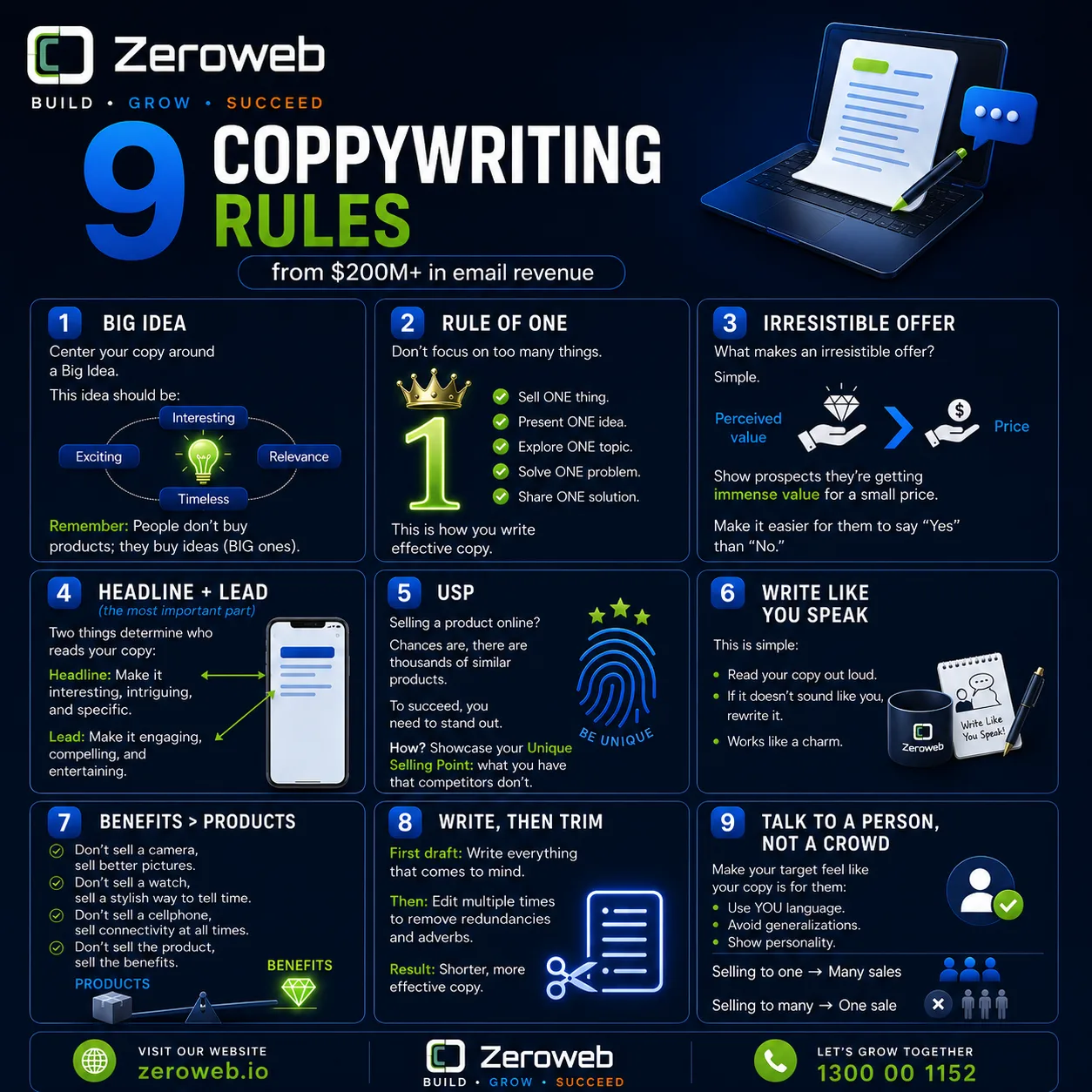
Clear writing is the most underrated skill in professional life. It accelerates decisions, reduces miscommunication, prevents costly rework, and elevates the reputation of the writer in ways that compound across a career. Yet most professional writing is not clear. It is padded, hedged, or structurally scrambled in ways that force readers to work harder than the content warrants.
The rules for clear writing are not new. Professional editors have taught them for decades. The same rules recur across style guides, craft books, and newsroom training. What changes is the writer's willingness to practice them. This guide collects the rules that matter most, with examples that show the difference between prose that respects the reader and prose that does not.
Why Most Professional Writing Is Unclear
Three patterns produce most unclear professional writing.
Writers write for themselves. They treat writing as expression rather than communication. The reader's experience is secondary.
Writers hedge. Legal review, political caution, and fear of being wrong produce sentences that cannot be held to any specific claim. Hedging sounds safe and reads as empty.
Writers imitate the bad writing they grew up reading. School essays, corporate documents, academic papers, and institutional reports are often poorly written, and writers absorb those patterns without realizing it.
Clear writing is not the natural state. It is the result of specific choices that oppose the defaults.
As William Zinsser argued throughout On Writing Well, clear writing is a courtesy to the reader: it reflects the hard work of sorting your thinking so the reader doesn't have to.
Rule 1: One Idea Per Sentence
The single most effective rule for clear writing is one idea per sentence. Most unclear writing comes from sentences that try to carry three or four ideas at once.
Unclear: "Although we initially considered expanding into the European market this year based on preliminary research suggesting strong demand, given recent regulatory changes and currency fluctuations, the executive team has decided to defer that expansion until Q3 of next year, at which point we will revisit based on updated data."
Clear: "We initially considered expanding into Europe this year. Preliminary research suggested strong demand. Recent regulatory changes and currency shifts have changed the picture. The executive team has deferred the expansion to Q3 next year. We will revisit based on updated data at that time."
Each sentence carries one idea. The reader can process each before moving on. Rhythm comes from the progression, not from stuffing.
The exception is deliberate combination for specific effect. Compound sentences work when two ideas are closely related. Compound-complex sentences work when the reader needs a qualification attached to a main idea. But the default is one idea per sentence.
Rule 2: Prefer the Active Voice
The active voice names who did what. The passive voice hides the actor. Most professional writing overuses the passive voice because it sounds more formal and carries less accountability.
Passive: "A decision was made to cancel the project."
Active: "The board canceled the project."
The active form tells the reader who acted. Most readers prefer this even when they cannot articulate why.
The passive voice has legitimate uses:
- When the actor is genuinely unknown
- When the actor is irrelevant to the meaning
- When the object is more important than the actor
- When formal register explicitly calls for it
But the default should be active. Writers who use the passive voice unconsciously produce prose that reads as hedged or evasive even when they did not intend it.
As Strunk and White famously argued in The Elements of Style, active voice generally makes for more forcible, direct writing than passive voice.
Rule 3: Cut Words That Do Not Work
Most professional writing can be cut by 20 to 40 percent without losing meaning. The cut improves the writing. Every word should earn its place.
Before: "At the end of the day, the fact of the matter is that we really need to go ahead and take the time to carefully consider all of the various options that are currently available to us at this present moment."
After: "We need to consider our options."
Before: 37 words. After: 6. No meaning lost.
Common words to scrutinize:
- Very, really, actually, basically, essentially, fundamentally
- In the process of, at the end of the day, at this point in time
- Each and every, various and sundry
- Due to the fact that (use: because)
- In order to (use: to)
- In the event that (use: if)
- In spite of the fact that (use: although)
- Has the ability to (use: can)
- Make an attempt to (use: try)
- Give consideration to (use: consider)
These phrases are not wrong. They are padded. Professional writers catch them in editing and cut them without losing meaning.
Rule 4: Specific Beats General
Specific words produce clear writing. General words produce vague writing. The writer's first draft is often general; the final draft is specific.
General: "The team had issues with the project."
Specific: "The team missed the Oct 15 deadline for the checkout redesign because the data migration ran longer than estimated."
General: "Customer satisfaction is high."
Specific: "Our NPS is 62, up from 58 in Q2. Response rate is 31 percent, up from 22."
General: "The presentation went well."
Specific: "Three executives asked follow-up questions during the presentation, and the CFO requested a dedicated deep-dive next month."
Specific details produce clarity because they give the reader something concrete to process. General descriptions produce fog because the reader has to substitute specifics to understand the claim.
As Josh Bernoff argues in Writing Without Bullshit, vague writing produces vague decisions, while specific writing gives readers something concrete to act on.
Rule 5: Put the Most Important Thing First
Readers scan the first sentence of any paragraph with the most attention. They decide whether to read the rest based on what they find there. Writers who bury the most important idea in the middle or end of a paragraph lose readers who stopped at the opening.
Weak paragraph opener: "Over the past several months, the team has been exploring various options in response to changing market conditions."
Strong paragraph opener: "We are exiting the consumer segment by end of Q1."
The weak version is throat-clearing. The strong version carries information.
Apply this rule at three levels:
- First sentence of the document carries the thesis
- First sentence of each section carries the section's thesis
- First sentence of each paragraph carries the paragraph's main idea
This three-level discipline produces documents that reward scanners and readers equally.
Rule 6: Short Words Beat Long Words When the Meaning Is the Same
Professional writing tends toward longer words, often from habit or a belief that longer sounds more credible. The opposite is usually true. Readers trust short words.
| Long Word | Short Word |
|---|---|
| Utilize | Use |
| Facilitate | Help |
| Commence | Start |
| Terminate | End |
| Attempt | Try |
| Assist | Help |
| Require | Need |
| Demonstrate | Show |
| Prioritize | Choose |
| Optimize | Improve |
| Strategize | Plan |
| Incentivize | Pay |
| Leverage | Use |
| Operationalize | Run |
Long words belong when they carry meaning that short words cannot. "Optimize" is not the same as "improve" in every context. "Facilitate" is not always the same as "help." The craft is in knowing when the longer word adds specific meaning and when it adds only length.
Rule 7: Concrete Nouns Beat Abstract Nouns
Concrete nouns name things the reader can picture. Abstract nouns name categories, qualities, or concepts. Concrete nouns are clearer.
Abstract: "The implementation of the strategy produced significant improvements."
Concrete: "Shipping the redesign increased conversions by 18 percent."
Abstract writing tends to be adjective-heavy because adjectives try to add weight to otherwise empty nouns. Concrete writing tends to be verb-strong because the nouns already carry weight.
| Abstract | Concrete |
|---|---|
| The implementation of improvements | The engineers shipped the update |
| The facilitation of collaboration | The team met weekly |
| The optimization of processes | We cut two steps from checkout |
| The enhancement of experience | We made the page load faster |
| The realization of objectives | We hit our targets |
| The establishment of relationships | We met three customers |
As Steven Pinker discusses in The Sense of Style, classic prose style minimizes abstraction, directing the reader's gaze to concrete things and actions rather than hiding them behind abstract nouns.
Rule 8: Strong Verbs Beat Weak Verbs
The verb carries most of the meaning in a sentence. Weak verbs force the sentence to lean on adverbs and adjectives for force. Strong verbs carry their own force.
| Weak Verb Construction | Strong Verb |
|---|---|
| Made a decision | Decided |
| Had a conversation | Talked, discussed |
| Gave consideration | Considered |
| Made changes | Changed |
| Did an analysis | Analyzed |
| Had an impact | Affected |
| Is in agreement with | Agrees with |
| Is of the opinion that | Thinks, believes |
| Made the determination | Determined |
| Conducted a review | Reviewed |
Weak verb constructions add length without meaning. Strong verbs produce compact, forceful prose.
Rule 9: Avoid Jargon Unless the Audience Shares It
Jargon is technical or insider language that compresses meaning for specialists. Among specialists, jargon is efficient. Outside specialist audiences, jargon is barrier.
A software engineer talking to other software engineers can use "refactoring" and "technical debt" efficiently. The same engineer talking to the CFO should translate: "cleaning up old code" and "shortcuts we took earlier that will slow us down later."
Writers often use jargon to signal expertise. The signal works among peers and fails with everyone else.
The rule: if you cannot assume every reader shares the term, define it, translate it, or cut it.
| Jargon | Translation for Mixed Audience |
|---|---|
| Synergies | Overlap, shared resources |
| Leverage | Use, take advantage of |
| Bandwidth | Time, capacity |
| Paradigm shift | Big change in approach |
| Core competencies | What we are good at |
| Low-hanging fruit | Easy wins |
| Value-add | What we offer |
| Holistic approach | Comprehensive approach |
| Actionable | Something we can do |
| Granular | Detailed |
Rule 10: Read Your Writing Aloud
The single best editing practice is reading aloud. Ears catch what eyes miss.
Reading aloud reveals:
- Sentences that are too long
- Sentences that stumble over themselves
- Words that do not quite fit
- Unintentional fragments
- Awkward rhythm
- Repetition
- Unclear pronoun references
- Tone misalignment
Five minutes of reading aloud produces more improvement in a draft than an hour of silent editing. The reason is that writing activates a different cognitive system than reading does. Oral reading bridges both and reveals problems the writer cannot see.
As Roy Peter Clark discusses in Writing Tools, reading a draft aloud reveals awkward rhythm and stumbles the eye tends to miss on the page.
Comparison Table: Bad vs Good Professional Writing
| Bad Sentence | Good Sentence | Rule Applied |
|---|---|---|
| "We are in the process of reviewing" | "We are reviewing" | Cut filler |
| "A decision was made" | "The team decided" | Active voice |
| "At the end of the day" | "Ultimately" or cut | Cut cliche |
| "Issues were identified" | "The QA team found three bugs" | Specific, active |
| "Moving forward we will" | "We will" or cut | Remove padding |
| "It should be noted that" | [Cut or lead with the content] | Remove hedge |
| "In terms of our strategy" | "Our strategy" | Cut filler |
| "Going forward" | [Cut] | Remove cliche |
| "Low-hanging fruit" | "Easy improvements" | Replace jargon |
| "Leveraging our assets" | "Using what we have" | Plain language |
Comparison Table: Signal vs Noise Ratio
| Noise | Signal |
|---|---|
| Adverbs modifying weak verbs | Strong verbs |
| Adjectives without evidence | Specific facts |
| Hedges and qualifiers | Direct claims |
| Filler phrases | Removed |
| Passive constructions | Active voice |
| Abstract nouns | Concrete nouns |
| Long sentences with many clauses | Clear sentences with one idea |
| Buried main points | First-sentence thesis |
| Unfamiliar jargon | Translated language |
As Ann Handley discusses in Everybody Writes, good writing means maximizing signal and minimizing noise for the reader.
Rule 11: Use Short Paragraphs
Most professional writing uses paragraphs that are too long. Readers on screens scan. Long paragraphs get skipped.
Most effective paragraph length for professional writing: 2 to 5 sentences. Occasional longer paragraphs for detailed explanation. Occasional single-sentence paragraphs for emphasis.
Dense paragraphs, those with six or more sentences, are usually cut or broken in editing. They carry too much for the reader to process without a break.
Rule 12: Match Tone to Audience and Stakes
Tone is not universal. The right tone depends on audience, stakes, and channel.
| Audience | Appropriate Tone |
|---|---|
| Executive team | Direct, specific, structured |
| Board of directors | Formal, measured, decision-ready |
| Customers | Warm, specific, solution-focused |
| Team members | Clear, warm, practical |
| Press or public | Measured, factual, quotable |
| Regulators | Formal, factual, documented |
| Social media | Conversational, scannable |
| Legal | Formal, precise, unambiguous |
Writing in the wrong tone undermines even otherwise clear content. A customer email in regulatory tone reads as cold. A legal document in social media tone reads as unreliable.
Rule 13: Use Lists for Parallel Information
Lists make parallel information scannable. Professional writing often buries parallel information in prose paragraphs, which forces the reader to extract structure.
Prose: "The three main priorities for Q4 are hiring two engineers for the platform team, launching the new billing system in October, and completing the SOC 2 audit by the end of December."
List:
Three priorities for Q4:
- Hire two platform engineers
- Launch new billing system in October
- Complete SOC 2 audit by December
The list is easier to scan and easier to reference later. Prose is appropriate when the items are not truly parallel or when the relationship between them is more than enumeration.
Rule 14: Define New Terms on First Use
When you introduce a term that not all readers will know, define it on first use. This costs the writer a sentence and saves the reader confusion.
The platform uses event sourcing, which means storing each change as a separate event rather than overwriting the current state. This allows us to reconstruct any prior state by replaying events.
The single sentence of definition prevents the reader from guessing or skipping.
Rule 15: Revise Ruthlessly
First drafts are not clear. They are raw. Clarity comes from revision.
A practical revision approach:
- First pass: read for structure. Are the main ideas in the right order?
- Second pass: read for sentence-level clarity. Does each sentence carry one idea clearly?
- Third pass: read for word choice. Are the verbs strong, the nouns concrete, the modifiers necessary?
- Fourth pass: read aloud. What stumbles?
- Fifth pass: cut 10 percent. Almost any draft gets clearer with 10 percent cut.
Writers who revise in passes produce clearer drafts than writers who try to do everything at once.
The productivity and writing-workflow resources at When Notes Fly cover how professional writers structure revision cycles to produce consistent clarity. The certification frameworks at Pass4Sure and corporate writing guidance at Corpy both include modules on how writing quality affects technical and business career progression.
Clarity Checklist
Before sending any significant piece of professional writing, run through this checklist.
- Does the opening sentence state the main point?
- Is each paragraph structured around one idea?
- Are the verbs mostly active?
- Are abstract nouns replaced with concrete ones where possible?
- Are padded phrases cut?
- Are long words replaced with shorter ones where meaning is the same?
- Is jargon defined or replaced for the intended audience?
- Are the main facts specific and numbered?
- Does the structure put the most important things first?
- Can the document be cut by 10 percent?
The cognitive research at What's Your IQ explores why reader working memory is a limited resource and why every unnecessary word competes with the main idea for attention. Document workflow tools at File Converter Free support the revision practice with conversion and comparison features useful for multi-draft editing.
Common Mistakes to Avoid
Do not write to impress. Write to communicate.
Do not hedge every claim. Some claims belong unhedged.
Do not prefer longer when shorter works.
Do not apologize in the text for the weakness of the argument.
Do not include every qualification and context the writer knows.
Do not overuse passive voice to seem neutral.
Do not use jargon as a substitute for evidence.
Do not send without reading aloud at least once.
Do not resist cutting. Cutting is the craft.
Do not confuse length with seriousness. Short writing is often more serious than long.
Why Clarity Compounds
Professionals who write clearly get asked to write more. They get quoted in senior leaders' communications. They get trusted with ambiguous problems because their thinking, as evidenced in their writing, is trusted.
Clarity compounds across a career. A document written clearly this year creates the opportunity to write important documents next year. Over decades, the writer who treats clarity as a core competence develops a reputation that affects hiring, promotions, and influence.
As Steven Pinker discusses in The Sense of Style, style earns a reader's trust: writers who demonstrably care about clarity and accuracy are the ones readers keep reading.
Closing Thoughts
Clear writing is not about following rules for their own sake. It is about treating the reader as a person with limited time and real interests, who deserves writing that honors both. Every rule in this article serves that underlying principle.
The rules are not new. The craft is not secret. The difference between writers who produce clear prose and writers who do not is usually not talent or intelligence but practice and care. Clarity is learnable, and every professional who invests in it sees the compound returns.
For related communication guidance, see our articles on how to write concisely and business writing style guide.
References
Strunk, W. and White, E. B. (1999). The Elements of Style. Longman. https://www.pearson.com/
Zinsser, W. (2006). On Writing Well. HarperCollins. https://www.harpercollins.com/
Pinker, S. (2014). The Sense of Style. Viking. https://stevenpinker.com/publications/sense-style
Bernoff, J. (2016). Writing Without Bullshit. Harper Business. https://withoutbullshit.com/book
Handley, A. (2014). Everybody Writes. Wiley. https://annhandley.com/everybodywrites/
Clark, R. P. (2008). Writing Tools: 55 Essential Strategies for Every Writer. Little, Brown. https://www.poynter.org/
Harvard Business Review. The Writing Skills That Matter Most. https://hbr.org/
Purdue Online Writing Lab. Professional Writing Style. https://owl.purdue.edu/owl/subject_specific_writing/professional_technical_writing/
Frequently Asked Questions
What is the single most important rule for clear writing?
One idea per sentence. Most unclear professional writing comes from sentences that try to carry three or four ideas at once. When each sentence carries one clear idea, the reader can process it and move forward. Compound sentences work when two ideas are closely related.
Compound-complex sentences work when qualification attaches to a main idea. But the default should be one idea per sentence.
This rule alone, applied consistently, transforms most professional writing from dense to clear without requiring any other technique.
Should you always use the active voice?
Usually yes, with specific exceptions. The active voice names who did what. The passive voice hides the actor. Most professional writing overuses passive voice because it sounds more formal and carries less accountability, but readers prefer active voice even when they cannot articulate why.
Legitimate uses of passive voice include when the actor is unknown, when the actor is irrelevant, when the object is more important than the actor, and when formal register explicitly calls for it.
The default should be active. Unconscious passive voice produces prose that reads as hedged or evasive even when not intended.
How much can most professional writing be cut without losing meaning?
Most professional writing can be cut by 20 to 40 percent without losing meaning, and the cut improves the writing. Common targets for cutting include filler phrases like at the end of the day and at this point in time, empty intensifiers like really and very, redundant constructions like each and every, and wordy alternatives where short words work.
Due to the fact that can be replaced with because.
In order to can be replaced with to. Has the ability to can be replaced with can. Cutting is the craft, and writers who cut ruthlessly produce the clearest prose.
Why do abstract nouns make writing unclear?
Abstract nouns name categories, qualities, or concepts that readers cannot picture directly. Concrete nouns name things readers can picture. The implementation of improvements is abstract and forces the reader to substitute specific meaning. The engineers shipped the update is concrete and conveys meaning directly.
Abstract writing tends to be adjective-heavy because adjectives try to add weight to otherwise empty nouns.
Concrete writing tends to be verb-strong because the nouns already carry weight. Replacing abstract nouns with concrete nouns and strong verbs is one of the most effective revision techniques for producing clear professional prose.
What role does reading aloud play in editing?
Reading aloud is the single best editing practice. Ears catch what eyes miss. Reading aloud reveals sentences that are too long, sentences that stumble, words that do not quite fit, unintentional fragments, awkward rhythm, repetition, unclear pronoun references, and tone misalignment.
Five minutes of reading aloud produces more improvement than an hour of silent editing. Writing and reading activate different cognitive systems.
Oral reading bridges both and surfaces problems the writer cannot see on the page. If a sentence cannot be read aloud without stumbling, the reader will experience friction when reading silently.
How should writers use jargon in professional writing?
Use jargon only when every reader shares the term. Among specialists, jargon compresses meaning efficiently. Outside specialist audiences, jargon becomes a barrier. A software engineer talking to other engineers can use refactoring and technical debt efficiently.
The same engineer talking to a CFO should translate to cleaning up old code and shortcuts that will slow us down later.
Writers often use jargon to signal expertise, but the signal works only among peers. For mixed audiences, define new terms on first use, translate to plain language, or cut them. Jargon is not wrong; it is context-dependent. Know your audience.
How do professional editors recommend revising a draft?
Revise in multiple passes rather than trying to do everything at once. First pass reads for structure: are the main ideas in the right order. Second pass reads for sentence-level clarity: does each sentence carry one idea clearly. Third pass reads for word choice: are verbs strong, nouns concrete, modifiers necessary.
Fourth pass reads aloud to find what stumbles.
Fifth pass cuts 10 percent of the total word count, because almost any draft gets clearer with 10 percent cut. Writers who revise in staged passes produce clearer work than writers who try to address every issue simultaneously, because the cognitive load of simultaneous attention is too high.